Mashed up by me from H.R. 1295 text via Congress.gov, Creative Commons photo of White House, and vector graphic of crown
Note: My Apr. 4 blog post—#TeslaTakedown Pt. 1 of 3: Crash course in Elon Musk, the DOGE coup, and resisting same—I published as part one of three. Under my own Douglasian reorganization authority, and to make my own life easier, I hereby declare this post part two of that series. Part three comes—eventually!
On June 4, Rolling Stone published my latest article: Republican bill would legalize DOGE and let Trump dismantle everything: The Reorganizing Government Act is a longshot in the Senate, but that could change—and so would the separation of powers. [Note added July 3: MSN and Yahoo republished it without paywalls.] As usual, I drafted more text than could be squeezed in, so please find below bonus material—mostly concerning statutory presidential reorganization authority’s history and some political philosophy—for the truly autodidactic among ye.
A short history of reorganization authority power struggles
The Reorganizing Government Act of 2025’s House sponsor, Rep. James Comer (R-KY), portrayed his bill during the Mar. 25 House Oversight Committee session as a fairly routine granting of long-gone special powers. “I want to reiterate that between 1932 and 1984,” Comer said, “presidents submitted more than 100 reorganization plans, presidents from Roosevelt to Reagan, used this authority to create or dismantle federal agencies.” While President Reagan did briefly hold Congressionally granted reorganization authority, he didn’t use it to create or dismantle any federal agencies—he didn’t even submit a single reorganization plan to Congress. To give Comer’s Southern drawl the benefit of the doubt, it sounds like he just misplaced the clause “presidents from Roosevelt to Reagan” in his sentence. It should have gone after “between 1932 and 1984″—then it would have been accurate.
Comer also claimed “Presidents Clinton, Bush, and Obama requested renewed and expand[ed] authority” to submit reorganization plans. None of those past presidents obtained the authority, especially because, not to embarrass Comer or anything, Clinton never even asked. At the meeting, no Representative corrected Comer, but the Congressional Research Service report he received unanimous consent to enter into the record, does. (It also explains the accurate Reagan history.)
Clinton in 1993 tasked Al Gore with cutting bureaucratic costs, and in each term, the then-vice president’s National Performance Review pursued that mission. Among the Review’s thousands of pages was indeed the recommendation that the White House seek reorg. authority. But the Clinton administration never took up the idea in earnest, much less formally requested such powers from Congress. Comer’s claim, apparently an attempt to turn such minutiae into a main character to normalize an unprecedented power grab for Trump, is specious.
Back in January, Trump told Congress that DOGE “is headed by Elon Musk”; Musk claimed the austerity team is akin to the concluded National Performance Review, which was a White House-led task force—as DOGE arguably is.
Yet Gore’s crew traveled the country to listen to agency staff and compile their ideas into wonkish suggestions for Congress and Clinton to consider—and faced no serious legal challenges. In contrast, Musk and his 34-timefelon president stand accused, in the AFGE lawsuit, of top-down rogue lawbreaking to dismantle government unilaterally from under the White House cloak of an efficiency task force. In their complaint, the plaintiffs write: “In sum, OMB [Office of Management and Budget], OPM [Office of Personnel Management], and DOGE have usurped agency authority, exceeded their own authority, acted in an arbitrary and capricious manner, and ignored procedural requirements by requiring federal agencies throughout the government” to “Impose cuts to functions and staffing according to ‘targets’ and ‘goals’ imposed by DOGE.”
Musk boasted of his team, “all of our actions are maximally transparent”—yet they tellrequesterssuing for records underthe Freedom of Information Act, No way, even after a federal judge found in March that DOGE is “likely covered by FOIA.”
If the so-called Department of Government Efficiency were actually a cabinet-level department created through Congress, it’d be very subject to FOIA and other obligations. But DOGE’s ‘name’ is a mere label Musk styled after a dog- (or doge-)themed cryptocurrency he’sdeniedowning in a contentous, closed court case. The operatives’ continuing refusal to disclose their names and their literal opacity—papering over windows in a basement conference room—has encouraged accusations, including from Senate Minority Leader Chuck Schumer (D-NY), that the crew of hacker-y twentysomethings is a “shadow government.”
At the Oversight session, Comer ignored or dismissed concerns about DOGE’s doings, painting his bill and the Trump administration as simply cleaning the government up of unnecessary bureaucrats: “We have to have a reorganization of the government—it’s gotten out of hand over the past 4 years! Bureaucracies have grown, bureaucrats have increased in number, and the people taking it on the chin in the federal workforce are the ones who actually do the work at the bottom of the organizational chart. This is a reorganization for them!” (Yeah, sure.)
Curiously, Comer didn’t discuss the first Trump administration’s reorganization authority request. The related Reforming Government Act of 2018 died prior to floor voting. Unlike Comer’s legislation, the Trump 1-erabills expressly forbade plans to ax independent regulatory agencies or all of their statutory programs and would have constrained the presidential powers by limiting them to “consolidation authority.” Like moving a computer file from one directory to another, deleting the former location’s in the process and hoping everything works out with the file in the fresh spot, consolidation authority would have presumably preserved whichever statutory programs’ existence when shifting their position in the org charts.
Consolidation authority similarly made the Trump 1 request less extreme than failed Republican reorg. authority legislation from earlier in the 21st century. President George W. Bush was, like top Trumpers now, pushing maximalist unitary executive theory: flex the presidency by bending or breaking the Constitution. Bush 43 would have obtained statutory reorganization authority—unexpiring—to propose ending departments, independent regulatory agencies, and some/all of either’s statutory programs, but only if his White House deemed the targets intelligence related. Obama’s request for two-year authority, by contrast, would have left independent regulators alone and stayed under consolidation authority for his plan to merge particular executive organizations: he said he’d arrange six of them into a new take on the Commerce Department, eliminating the old one in the process—so he technically needed the power to abolish departments. Republicans feared he wouldn’t stop with the Commerce Department, but that dispute seems minor compared to today’s Trumpian dismantlings: Neither Obama nor Bush 43 were boasting that they were gunning to end the Education Department altogether, as Trump is. And the expansive Reorganizing Government Act of 2025 envisions no consolidation authority constraint for Trump 2, making Comer’s comparison of his bill with Obama’s request bogus.
In hindsight, the Trump 1 effort comes off like a befogged dry run for the Heritage Foundation, much of the brainsbehind it—and behind today’s moreprepared, Project 2025-shaped Trump 2. After all, ideas for reorganization plans that emanated quietly from his relatively inexperienced, disarrayed first administration strangely amalgamized cross-partisan priorites: a smattering of low-profile, quasi-technical moves, among them merging food safety programs; centrist or liberal schemes like spinning off FAA air traffic control into a nonprofit corporation to better procure the latest, best staff and technology with less political interference; and conservative fixations such as prepping the U.S. Postal Service for privatization. That last is a jaw-dropping commonality between the 2018 and 2025 bids. In March, Musk agreed with Trump that the familiar, constitutionally authorized snailmailmen should be delivered to industry, saying, “we should privatize anything that can be[.]”
This most recent of reorg. authority’s three historical phases has seen Congress deny every presidential request for it since the statute last expired in (of all years) 1984.
Sometimes, these 21st-century bids have downplayed their expansive scopes by trading on the authority’s preceding, more widely popular mid-20th-century phase. That’s when Congress, often routinely, blessed most presidential reorg. plans, not infrequently advertised as merely improving the government’s operational mechanics. Reorganizers promised to steer clear of normative beliefs (somehow)—to remain agnostic about what Uncle Sam should do—and instead hyperfocus on tweaking how government operates.
These wonkish middle-phase plans—President Carter’s among them—have been lampooned as nothing more than “boxology”: shuffling agencies around on the org-charts without really fixing anything. Sometimes they have been rather mundane: President Kennedy’s first reorganization plan in 1963 restructured the Franklin D. Roosevelt presidential library with a change-up involving “ten guards, one repairman, and two janitors at a total cost of $87,000 a year.”
Other times, second-phase reorganization authority, largely freeing presidents from lawmakers’ snail-speed deliberations and entrenched dependencies on specific districts and states, facilitated surprising results quickly from a birds-eye view. For example, President Nixon’s third reorganization plan in 1970 created the Environmental Protection Agency, now targeted by DOGE.
Searches for historical evidence of major savings from this better-liked second period—or any period—of presidential reorganization authority will findlittle, aside from some of its uses in winding down World War II. The same report from 2012 that Comer entered into the record states that there have been “few instances in which reorganization plans resulted in documented cost savings.”
Reorganization authority’s earliest phase wasn’t so much about money, but about the first half of the 20th century generating widespread, amped-up hopes that significantly strengthening executive power to advance social goals could lead to sizable restructurings that would help heal the deep, long-lasting traumas of World War I, the Great Depression, and World War II.
The historical analogy isn’t lost entirely even on the unscholarly Donald Trump. He’s repeatedly invoked comparisons between himself and Roosevelt, who during the Great Depression and into the 1940s wielded enormous executive power mainly for very different ends: progressive New Deal social programs and fighting Axis countries instead of Trump’s You’re fired! commands for ever-smaller government and aligning with fascistleaders. Further, whereas Trump’s dismantlings this year have proceeded through a barrage of 150+ executive orders, many legally questionable—some paused by courts pending litigation—Roosevelt revamped government largely by ensuring Congress passed well-crafted, durable legislation.
Vanderbilt political science professor John A. Dearborn, who specializes in power shifts between Congress and presidents, told me that “FDR primarily viewed reorganization authority as a way to make government work more efficiently, and better, rather than simply as a tool to drastically cut back on agencies and functions.” That included a failed 1937 attempt to establish, at the same time as his proposed restructuring legislation would have granted him reorganization authority, a new Department of Public Works and a new Department of Social Welfare.
“Like Trump,” Dearborn said, “FDR was accused of seeking too much power for the presidency. He framed his ambitious reorganization proposal in 1937 as a way to ‘prove to the world that American Government is both democratic and effective’ while authoritarian systems were on the rise abroad. Congress scuttled many of the boldest elements of that plan”—among them not requiring him to seek Congressional review and its lack of an expiration date for his authority (almost always, when Congress extends the preorgative, it’s been on a temporary basis). “Nonetheless,” Dearborn continued, “while the reorganization authority lawmakers granted FDR in 1939 included some important limits on his powers, the law still relied on legislators’ assumption that a president would be uniquely focused on the good of the nation as a whole when formulating and submitting reorganization plans.”
The national culture backing FDR was an enormous facilitator of his reorg. plans and legacy. The culture back then was much more unified than today’s extreme polarization, as illustrated by the song “Why I Like Roosevelt,” originally from the 1940s. It’s embedded below as a 1990s-era recording of the elderly Willie Eason playing guitar in the Sacred Steel tradition and singing.
But another president Trump often mentions, this one trepidatiously, is much less well regarded, particularly due to his tariffs worsening the Great Depression. That’s Herbert Hoover, in 1932 the first president to receive from Congress statutory reorganization authority as presently understood, powers he’d championed as Commerce Secretary in 1924 for his then-boss, President Coolidge. During that year’s relatively mild recession, Commerce Secretary Hoover wrote that the public deserved “little right to complain about our economic situation”—foreshadowing Trump’s own Commerce Secretary, billionaire Howard Lutnick, lecturing this March that if Social Security checks go unsent, it’s “fraudsters” who’d complain, whereas in such dire straits, his elderly relatives would just hope for their next checks in patriotic silence.
Hoover ignored the warning a thousand-plus economists sent him and signed the Smoot-Hawley Tariff Act of 1930 to dramatically hike duties on imports. The Smoot-Hawley Act was a major part of that era’s tariff policy, which Trump said, in his Apr. 2 “Liberation Day” speech, would have stopped the Great Depression had tariffs—Hoover’s among them—been even more aggressive, as his own were: per Fitch Ratings, Trump’s early April effective tariff rate was reaching levels not seen since twenty years prior to 1929’s Black Thursday. His recent tariff de-escalation with China significantly decreased the total effective rate only temporarily and still has investors anxious over yo-yo-ing uncertainties. (On June 3 Trump doubled tariffs on steel and aluminum—from 25% to 50%—which will particularly affect neighbors Canada and México.)
Trump is likewise ignoring the warning of more than 700 economists and other scholars not to “repeat the catastrophic errors of the Smoot-Hawley Tariff of 1930.” Tariffs generally raise prices of imported goods, effectively disrupting manufactural supply chains and taxing consumer demand. In a bankster country that, starting in the later 20th century or so, has compensated for offshoring manufactural production by using the military, the spy-meddlers, Madison Avenue, monetized intellectual property enforcement, and more to manipulate much of the globe into keeping the U.S. dollar the default international currency, it’s particularly perilous to crater the buying power of the planet’s biggest importers at the same time as world leaders are losing faith in dealing with The Donald anyway.
Fears of international de-dollarization—and of saying goodbye to stock market gains and Treasury bonds—among money-capital factions may well undo Trump. In January, the Wall Street Journal Editorial Board called it “The Dumbest Trade War in History,” and even the high school economics teacher in the comedy flick Ferris Bueller’s Day Off managed to succinctly explain a 1986 version of why.
The economy’s bottom falling out would be a catastrophe Trump would presumably blame on anyone cast as his negative image—women, non-whites, poor people, those beyond U.S. borders in the supposed here be dragons lands—and leverage as pseudo-justification for further wrecking-ball powers, much of which the Reorganizing Government Act would legalize.
Akin to Hoover’s years of championing the idea until presidential reorganization authority became for the first time a real prerogative—and in his hands—Trump could claim that, to fix economic and other problems of his own making, Congress should grant him extreme powers, among them unmatched reorganization authority. It’s quite possible his allies would continue to paint it as nothing unusual, perhaps “not fit for camera” and along the lines of second-phase “boxology”—if they justify the authority to the public any more than the little they did at the Mar. 25 Oversight session.
Given such pessimisticprecedents, it’s worth reiterating that Congress has denied presidents the optional reorganization authority for the last four decades and counting.
Vanderbilt University political science professor David E. Lewis, an expert on presidents and the bureaucracy, told me that “In the late 1980s, as the Cold War was ending and the peace dividend beginning, Congress pursued military cuts on their own. They created a commission—the Commission on Base Realignment and Closure—to recommend changes and made themselves vote the recommendation up or down with no amendments allowed. Congress did not need the president to help them improve efficiency via structural changes. They did it themselves.”
Reorganizing the response: extra material about Federalist 51
Standing in the Oval Office on Feb. 11, Musk gave a muddled half-hour speech groping toward political philosophy as his five year old, X Æ A-Xii, rubbedboogers on the Resolute Desk and whispered to a scowling Trump sitting behind it: “You are not the president and you need to go away.”
Musk said that to understand the “whole point of democracy”—according to the FOIA-dodger, it’s being “responsive to the people”—we should imagine “ask[ing] the founders” as if they were alive today. Without specifying any founders or what they said, Musk then criticized the bureaucracy as an unelected fourth branch usurping democratic rule. The Consumer Financial Protection Bureau he seeks to “Delete” would likely qualify as such a bureaucracy in his eyes, though that may have more to do with the consumer-protecting independent regulators’ jurisdiction over his companies Tesla and xAI, probably a conflict of interest for DOGE, than it does with anything approaching political philosophy.
Besides claiming the bureaucracy overpowers voters and Congress—a set of debatable, multifaceted questions, to which he simply asserted an axiomatic answer—Musk didn’t address the Constitution’s separation of powers.
Yet “Publius” did, in 1788.
“Publius” was the pseudonym of the founder—almost certainly James Madison, Bill of Rights champion and later, fourth president—who in Federalist 51 argued for ratifying the Constitution. He explained how the core document, if treated as more than mere magic paper, can defend “liberty” by preventing, or at least forestalling, power-grabs by any of the three branches that might aspire to tyranny. That’s a risk inherent to expansive reorganization authority given to presidents who enjoy compliant Congresses.
Each branch, Publius wrote, “should have a will of its own” with members “as little dependent as possible” on the others. Although the Constitution permits Congress to delegate powers such as reorg. authority to presidents—much as lawmakers may delegate certain other powers to various agents, say, to independent regulators, the task of ascertaining abstruse particulars of complicated regulations—if Congress hands over too much, it risks losing its own will.
In a famous line, Publius wrote that the secret to maintaining the separation of powers is this: “Ambition must be made to counteract ambition.” Congressional ambition to guard its own turf and expertly will its own authority can counteract presidential ambition to apotheosis.
While certainly imperfect, ambition counteracting ambition is a formula leaps and bounds away from Rep. Tim Burchett’s “fully support[ing] any effort that allows President Trump to make government more efficient.” But the Republican from Tennessee isn’t the only one giving himself over to The Donald.
Such toadyism to an autocrat aspirant emerges from right-wing ideologies, among their ideologues Christian Nationalists and Silicon Valley adherents of the “TESCREAL” variety pack of beliefs that often uphold sci-fi-style eugenics.
Crucially, the ideologies mostly unite against another point in Federalist 51: in “republican”—that is, kingless—”government,” Publius wrote, “the legislative authority, necessarily, predominates.”
Most predominant and consequential of the ideologies may be the neo-reactionary movement (NRx)—also called the Dark Enlightenment—which puts an outright despotic bow on the others.
Maximalist unitary executive theory from both Bush 43 and Trump
President George W. Bush was, like top Trumpers now, pushing maximalist unitary executive theory: flex the presidency by bending or breaking the Constitution, and the failed legislation for giving Bush 43 reorganization authority should be seen in that context. Of course, advocates of maximalist unitary executive theory would say they’re simply using the Constitution’s second article to the fullest. For a contemporary statement of the viewpoint, see Project 2025’s Mandate for Leadership policy agenda guidebook drafted by the conservative Heritage Foundation think tank. They don’t use the concept of monarchy, but maximalist unitary executive theory certainly has the effect of facilitating the far-right project of getting the country there.
Soft coup to benefit foreign foes: National Labor Relations Board whistleblower Daniel Berulis
Berulis described DOGE arriving at the NLRB’s D.C. headquarters on Mar. 3 in a police-escorted black SUV to procure highly-privileged accounts on NLRB systems. Soon after, attempts to log in from Russia with those same credentials were geo-blocked, but followed by the DOGE accounts siphoning away reams of sensitive data to U.S.-based servers—final destinations unknown.
Per his lawyer, Berulis was threatened a week prior to filing his sworn whistleblower declaration: an unexplained note mentioning his then-forthcoming disclosure—complete with drone photos of Berulis walking his dog—was taped up on his home door.
In February, Senate Minority Leader Chuck Schumer (D-NY) called DOGE a “shadow government,” a “hostile takeover,” and “part of a troubling pattern of Russian and Chinese Communist sympathizers increasing their influence on American foreign policy.”
U.S. statutes and federal regulations both formally identity, among others, the People’s Republic of China and the Russian Federation as foreign adversaries of the United States.
Note: In 2021, I wrote a new blog post every weekend or so. I skipped Week 51 for various reasons. But here’s the final entry for this year, number 52!
In 2021, I blogged for an entire year consistently for the first time in my life. I wrote a new entry each and every weekend, pretty much. The effort totaled 42 posts.
This post describes what I learned from the experience as well as my writing plans for 2022. Then in closing, a list of all 42 posts from 2021 with their titles and hyperlinks; the ones I recommend most are in bold.
What I learned from a year of blogging
Year 2021 completed
Before 2021, I wrote blog posts often, but I was either rusty (years back) or simply hadn’t yet managed to pull off a full year of nonfiction blogging (2020). That’s now changed with my completed year of blogging in 2021.
My blog entries this year have usually been about matters of social significance … except in many ways, I wrote them for me, primarily to improve my blogging skills and consistency. Putting together an entry remains a lot of underpaid/unpaid work—often a single post, when all is said and done, eats up an entire weekend—but it no longer feels particularly overwhelming. Nowadays I’m confident I can bust out such a blog post easily. Might feel sleep deprived and a bit out-of-body after making phone calls and staring at PDF details for ten hours straight, but such mild nuisances are at this point mere matters of routine.
Regarding writing craft. Readers have told me they don’t have much time to read my posts, what with crumbs to clean and kids to feed. They’ve asked for shorter posts. And I have been shifting toward providing shorter entries. Plus, I usually now include reader-friendly subheads and try to stick to a single point or two, or at least mark where my train of thought diverts to a side topic. That wasn’t the case when I began in January, but now it thankfully is.
Another big lesson I learned was how important the under-the-hood elements of a blog are. For example, this year, for the first time in half a decade, I updated the blogroll (list of links on the right side). To oversimplify, online writers shifted from the blogosphere to social media half a decade or more ago, but now we seem to be returning, at least a very little, to individual URLs, so it was time to spiff mine up. I added, across my website (here and here specifically), images of publicity I’ve received over a decade-plus from various venues. I scrutinized my whole website to upgrade hyperlinks from HTTP to HTTPS. I improved the leave-a-comment area to hopefully make it more enticing for readers to use. For instance, it now optionally sends you a notification email after I approve your comment following its initial hold in the moderation queue. All that stuff took not exactly gigantic, but still significant, amounts of time.
Many of my posts include original research, the result of excitedly engaging sheer curiosity. While writing about the Belarusian dictatorship declaring opposition leader Sviatlana Tsikhanouskaya a terrorist, to take one example of dozens, I found the Belarusian KGB’s online Excel spreadsheet (since taken down) where you could see her designation on Sheet 1, Row 730. It’s my hope that readers might share my curiosity and click through to see such a crazy spreadsheet, and thereby become more invested in themselves (their own curiosity, passion, etc.) as well as in the Belarusian pro-democracy resistance that involves the United States too. Hopefully such research—even if some items, like the online KGB spreadsheet, aren’t exactly revelations—makes my posts unique in a field where journalistic competitors often offer nothing more than speculation. I remembered what I already knew from a decade ago, my days of pouring through Stratfor emails, that it takes quite a lot of time to conduct such research and fit it into a post, especially since researchers never know ahead of time for sure what they will or won’t find.
I don’t like the dumbed-down approach, even if it would generate dolla dolla bill. Yet I’m having to slowly drag myself in that direction, kicking and screaming, since this blog made, in 2021, less than $20 USD in donations. Bear with me for a moment; I’m not going to complain, just point out some facts that impact whether this blog will continue, not in 2022, but in 2023. Too often, audiences haven’t deigned to consider any story wherein they themselves might need to change, including when it comes to forking over cash; since in the blog relationship, audiences monopolize the power of the purse, that leaves us with a story about how independent content creators should alone bear the burden of changing. Have you tried Patreon? Are you on Medium? I’ve heard people are having success on Substack, why aren’t you there yet? When I do comply with those requests, audiences typically move the goalposts, mentioning yet another site they expect me to add a profile to instead of opening their wallets. In the final analysis, just as audiences are slow to change from banal complicity with oligarchs to amazing resistance against them, so they’re likewise slow to warm up to the idea that they could deliver donations instead of unsolicited advice about how I might could milk donations out of some other third party. Well, authors have been complaining, er not complaining, about this for only hundreds of years. And besides, blogging, even unpaid, is a much better way to spend time than being forced to work in a mine or not having any freedom of expression. It’s just, when I leave the United States for the Netherlands in mid- to late 2022 if they approve my business plan (under the Dutch-American Friendship Treaty), there’s every reason to think I just might have to quit blogging in 2023 due to lack of income from it.
I’ve ghostwritten oodles of content marketing pieces in the past decade and I’ve recently begun a highly regarded content marketing certification course—but I hope not to revamp my blog in that style. Thankfully, even putting out verbose, meandering posts routinely led to or at least likely facilitated additional opportunities for me this year, including giving a talk at a college hacker club and a quite sizable, important venue commissioning a nonfiction essay from me for 2022. And I’m not much for another option sometimes seen: the telegraphic, truncated style of listing seemingly endless human rights violations. I hope some readers find the variety of subject matters, quotations, history, literature, etc., threaded together in my posts a valuable and somewhat unique sales point rather than an erroneous lack of message discipline.
Readers separate blogs from diaries, as, uh, Castlevania reminds us …
Speaking of impact, that was the best thing about this year of blogging. In a handful of instances, individuals contacted me, perhaps people I hadn’t heard from in a long time, asking for more information about something in one of my posts. Because of a June entry, for example, pharmaceutical consumers who’d never heard of how and why to use compounding pharmacies until my writings are now getting their pills in custom dosages, whereas they were previously limited to the manufacturers’ increments due to fog of war, lack of knowledge. When I wrote about the Belarusian KGB’s murder of Andrei Zeltser, an employee of a Pennsylvania-based IT firm who like that company opposed the Lukashenko dictatorship, I wrote about how his wife Maryja Uspenskaya, the sole witness to his shoot-out death—about which the regime created propaganda footage that spread around the world—was placed in a psychiatric hospital, with, worryingly, no info available in English about her whereabouts or well-being for more than a month. I mentioned how Uspenskaya had been left off lists of Belarusian political prisoners. The day after my entry, the opposition leader herself tweeted to recognize Maryja Uspenskaya as a political prisoner. (Progress on her case still needs to be made.) The point of these examples is not to humble-brag but to show that, instead of centering a career/life on complying with corporate publishers, DIY bloggers can have impact, so why not try it yourself? And definitely, much thanks to everyone who’s been reading this blog, commenting, contacting me, sharing the entries, critiquing, donating, and more. That’s what separates a blog from a diary.
My writing plans for 2022
There’s more I need to do for my website on the technical side of things. In terms of design, readers understandably want something formatted well on their phones and tablets. I could make improvements there. I need to install and regularly use better analytics so I can observe factually what’s happening with reader traffic, not just imagine things in my needy head. Probably I should provide chatty video with screensharing graphics of open records requests and the like; in 2021, I did start a youtube channel.
In 2022, I’ll aim to post on the same day—maybe even at the same time—every week, as that consistency would probably increase audience loyalty and prevent audience attrition. For the United States, Sunday mornings would likely be best, meaning I could write and line everything up on Saturday, then do a final revision in the morning after a night of sleeping on the prose, then click publish and shoot off the teed-up social media posts.
In 2021, I took off several weekends—ten, to be exact—but some additional weeks I took halfway off, so to speak, putting up short “placeholder” posts instead of leaving the blog blank of new entries. In 2022, I want to hit all 52 Sundays, even if some entries will be very short. That consistency will let you know you can tune in at the same bat time, same bat channel, every single weekend.
I’ll make my final decisions on these matters in the next workweek, but in short, douglaslucas.com/blog will continue more or less as is for 2022, just with the above changes in the pipeline. I’ll even keep the same Note: In 202x… intro, except modified for 2022!
My big news for 2022, however, is that I’ll start writing and self-publishing new flash fiction! That means each item will be 1000 words or less. My web hosting service told me DouglasLucas.com can have more than one WordPress blog installation. Pretty soon, you’ll be able to say hello and leave comments at a new subfolder of this site, probably douglaslucas.com/fiction/2022, which doesn’t exist just yet. At first—in January 2022 and perhaps in February 2022—I’ll simply make available two of my already completed “trunk” stories (old stories) that haven’t ever been published, self- or otherwise. I’ll get the new fiction blog configured and maybe write up some of my research into northeast Oregon and the year 2036, the setting of some of my forthcoming fiction. But the main focus will be new flash fiction pieces. They might or might not connect with my 2036 setting (still thinking that through).
The 2022 fiction blog will mainly be intended to do for my fiction-writing what my 2021 nonfiction blog did for my nonfiction-writing. Get me accustomed to quickly and consistently creating what one of my creative writer friends, Aelius Blythe, calls literary graffiti fiction. To that end, I’ll probably use plot formula, standard tropes, prefab characterizations (e.g., Star Trek characters as in fanfic), and so on. The 2022 fiction blog isn’t supposed to win any prizes; it’s supposed to be fun; it’s supposed to repair the rust on my fiction-writing gears. Though you can still comment, share, donate, etc. if you want! I’ll try to engage a visual artist(s) to sketch. Maybe each entry can have a single, quickly sketched image at the top.
And while the 2022 nonfiction blog (this one) will continue mostly in the same vein as in 2021, I hope to focus more on original investigative journalism work, although that might end up in other-published places since I have some sneaky biz ideas for commissions. Whether the original investigative journalism work is self-published here or other-published, some of my posts here, whatever the content, will remain defiantly noodly, philosophical, random, simply about the moments of our strangely global lives …
List of all 42 posts from 2021
Behold, listed below, all 42 of my 2021 blog posts. The 22 in bold are the entries I most recommend. And what’s this? Ahem, that’s my donation page! So that you and I and anyone else can continue enjoying this site without paywalls, without advertisements, without wrong walls ….
Note: In 2021, I’m writing a new blog post every weekend or so. This is number 40 of 52.I skipped weeks 37, 38, and 39.
Note: My two entries in August providing sleep tips (Part 1 and Part 2) recommended sleep lab founder Matt Walker’s book Why We Sleep. But it turns out the book is sketchy. In November 2019, Moscow-based independent researcher Alexey Guzey, who has a background in economics and math, posted a devastating critique of Walker’s bestseller, which Guzey put together across two months (and updated most recently in April 2021).I updated my two sleep tips posts with this information. I regret the blunder and suggest checking out Guzey’s critique.
When confronting a challenge, I often throw myself into it, paying attention to educational materials on the subject only concurrently, not in advance. It was this way with substitute-teaching or volunteering with Food Not Bombs. “Take these to the dish pit,” a Seattle FNB non-leader leader said during the last decade, handing me dirty trays as we cleaned a Thai buffet in exchange for surplus food to redirect to the dispossessed, including some of our own number. “What’s a dish pit?” I asked. Looking back, such incidents are amusing moments, but at the time, they can be embarrassing, painful. It’s what happens when you throw yourself into things. Thankfully, if a person sticks with something—and has an inquisitive, adaptable mind that stays out of ruts—improvement also happens.
Another doc from planet paperwork
For leaving the United States, I knew if I continued comparing countries via watching youtube videos, and kept on musing endlessly about possibilities, I’d never get anywhere (literally). That’s why, while messing around with Canada’s Express Entry eligibility estimator, I decided to, among other actions, just go take the computer-based IELTS General exam in San Diego to prove English proficiency as required of non-students seeking permanent residency in the northern nation. I crammed for two days and, as expected, aced the reading and speaking sections, but made a sole mistake in the listening part (you hear audio texts only once, so no wandering attention nor confusion with the test format allowed!) and—I bungled the writing component. Despite a summa cum laude bachelor’s—a double-major in philosophy and, wait for it, writing—and despite years and years of paid freelance writing, including multiple news media publications, standardized writing tests and I simply don’t get along. Long ago, I similarly bombed the GRE’s writing section, repeatedly! Yeah, shove it, standardized tests.
I took the IELTS General on September 9 (see previous post); my test report form, dated September 11, eventually arrived in my PO Box showing the following scores: 8.5 overall, 9 reading, 9 speaking, 8.5 listening, and 7.5 writing. Since higher IELTS General scores help a non-student migrant gain admission to Canada and a handful of other Anglosphere countries, I got grumpy about that last grade, and looked to see what my options were for vengeance.
Turns out, there’s a procedure called Enquiry on Results, or equivalently, for the sake of SEO keyword stuffing, Inquiry on Results or simply EoR. Within six weeks of a test report form’s date, an IELTS test-taker can get a section(s) re-marked, for, of course, a fee.
The completely contingent order of things. (Source)
Anecdotal reports suggest EoR cannot lower your score; however, I couldn’t find official documentation from IELTS authorities proving that’s the policy. Google-savvy and forum participants suggested official documentation doesn’t exist, at least not online. I thought briefly about phoning the IELTS authorities overseas, but then decided, whatever, it fits my general knowledge of academia that it’s unlikely for EoR to lower my score, only keep it the same or raise it. Make no mistake, these myriad migration paperwork hurdles have the distinctive reek of academia/intelligentsia. Well, my destination thoughts were shifting from Canada to the Netherlands anyway. Better just to wing it, to purchase an Enquiry on Results for my writing section. YOLO!
I called the testing center and was asked to email the director with EoR in the subject line. I did. After some back-and-forth, my EoR request was officially in and paid for on October 4. Pretty ironic: the first task on the IELTS General’s writing section tells candidates to type an everyday letter, say to a newspaper or in order to complain to a company—and here I was, asking for that task to be re-graded, by means of me writing email letters with the testing center staff, communicating with perfect competence.
The higher-up graders re-marked my writing section and by email I received the new, or rather, not new, score in a PDF on October 6. You can see the outcome in the screenshot starting this post. My score didn’t change a smidge. Blegh. Vengeance denied. Had I prepared better, I would have spent more time with official practice materials or free/low cost courses specifically on the IELTS General writing section available on MOOC platforms such as edX, Udemy, Coursera, etc. Because as we all know, exams don’t evaluate your writing or English proficiency. They test how well you take the test. But the point was to throw myself into the actual emigration process. Psychology score, A+. Home economics score…F.
Well Canada, you and I had a few flirty dates, but it looks like there won’t be any more nights out on the town for the two of us. I don’t have enough points to meet your high standards. That’s okay, I have gray—oops, grey…er, grijs—in my stubble now; I’m no teen who can’t handle rejection. Besides, you have mining companies with active licenses for profiteering off the genocide in Ethiopia’s Tigray region. And your money-laundering transnational criminals in Vancouver are protected by Chinese spies. *Hangs up*
This past workweek in West Seattle, antivaxx and antimask protesters waved signs during five o’clock traffic in my neighborhood. Aside from the bald dude in the, what’s that Dutch word, *scrolls up*, grijs hoodie, who, though he lacks camo pants, sorta resembles a typical contractor you’d find working for a company like Craft International (a merk firm and friend of spy biz Stratfor with a mysterious habit of hanging around events like the Boston Bombing)—I have no idea who the grijs dude is, just sayin’ he looks a bit creepy—it seemed a fairly ordinary group of Seattle rightwingers of the new school. I stopped my car in the parking lot behind these vaccine hesitant folks to get a photo for the blog entry you’re reading now.
When I saw the flag, I knew it was going to be bad
Giving their respiration a wide berth, I walked to a suitable site to hold my phone up at ’em. Seemingly in unison, the women chorused, “Are you going to write about us?!?!” The ;) ;) @}->– @}->– flattery in their voices twisted this writer’s face into an involuntary smile. Like thundering storm clouds above a parched man in a desert dropping rain: acid rain. I told them Yes and continued thumbing my phone. Then one protester lady asked: “Are you going to write ill of us?” Interesting choice of words, there. They asked where to read, so above the noisy traffic I shouted: “DouglasLucas dot com!” Maybe they’ll comment and tell us more about Mister Grijs Hoodie.
A satisfactory photo achieved, I headed back to my car by the same circuitous route in reverse. I crossed the street. Suddenly I was passed by Mister Grijs Hoodie! He had his bald head down, his face sternly focused, and he was powerfully striding alone, whither I know not. I should specify, relative to being a Craft International employee (which I’m including almost entirely for joke and to link readers to stuff), it’s far more likely he’s a complete nobody, for instance a run-of-the-mill bargain bin patriarchy boss of some local Kik group for definitely-not-advisable hookups (read: loss-leads), which, as #OpDeathEaters has been pointing out since 2014, is, like, same diff, or can be, you know, more precisely, the everyday consequences of supranational pedo propaganda from above swamping populations with dolla dolla bill masculinist ideology rebranded to sound like freedom. Not to mention human trafficking. [Hey! Are you an editor or other potential payor reading my blog? Find academics vouching for #OpDeathEaters in that same diff link. That’s the completely contingent order of things—for now!]
Nothing hurts me except bad hair days
A surprisingly high portion of the cars passing the protest were repeatedly honked in favor. Not surprisingly, those one-note vehicles tended to be jacked-up pickups with needless stickers of an out-of-character Calvin urinating. I saw only one person indicate disapproval: a driver doing their daily grind, gripping the steering wheel with one hand and with the other, like a time-warped Roman emperor, presenting an unmistakable thumbs-down.
The wild hyperlocal antivaxx advertising blitz appearing in my neighborhood did not detain me from getting my third Pfizer (booster) jab Friday, courtesy of my public education employment. Although I follow news on twitter, email lists, and elsewhere too much from my own good, even I almost missed last Monday’s study in The Lancet, among the globe’s most prestigious medical journals—a study written up by The Hill. To oversimplify, the research indicates Pfizer-BioNTech protection against novel coronavirus infection drops significantly—approximately in half!—four to six months after the second jab, with the specifics varying depending on the scenario, mutation, etc. Thus, boosters. As with, say, the tetanus shot. According to the CDC and FDA in September, certain Team Pfizer folks can get the third jab once a minimum of six months since their second jabs has elapsed. Hopefully better vaccines (here’s looking at you, University of Washington) will be approved soon and become widely accessible for all, so we can be done with these less than ideal, but still very helpful, interim measures.
I took this photo in West Seattle’s Lincoln Park this past workweek. The image shows happiness
I embed an image from the exam room not to boast, but to model good behavior, to encourage people to get vaccinated. Of course I know Pfizer and other Big Pharma companies have horrifying histories of wrongdoing (an easy peasy first stop, Wikipedia criticism section footnotes, when they exist), but the risks thereof are, in my case, far less than the risks of suffering COVID-19. The Pfizer press release about the third jab has the expected advertising but also a lot of interesting links for people who might want to dig.
I’m too exhausted by the coronavirus vaccination debate to go into more detail, but the big picture might be helpful: if you don’t experience something firsthand (while knowing what you’re looking at, too), you have to decide whether to trust information from others. Documents may be more reliable than most people, but even with documents, you have to trust they’re real and not forgeries. How do we accomplish this as humans?
Like we always have: with trust networks. As far as I know, that’s a term that kinda originated with cryptography, but the phrase intuitively makes sense, right? My unfairly overworked primary care physician, whose performance is usually stellar, recommended the bestseller Why We Sleep to me (see note above starting this entry). I assumed she had read it closely, when probably—I’ll ask next time I see her, because mapping trust networks, even for oneself, is of life-and-death importance—she heard about it on a podcast or something, while HIIT sprinting or Wim Hof breathing. I presume she then passed the recommendation from the podcast (or whatever) to me, and despite the intuitive misgivings I initially felt about Matt Walker’s marketing image, I got swept-up a bit in his glitz. I mostly listened to Why We Sleep, while driving or exercising, meaning I didn’t read individual sentences in print, a way of reading that makes it easier to be careful and critical. I just had it on in the background to learn by osmosis. So I got fooled.
From what I’ve read so far, Walker’s never directly acknowledged his critic, the Moscow-based independent researcher Alexey Guzey.
Corporate spotlight decreasingly needed for winning crushes’ attention … but will our ability to search for non-corporate knowledge-sharers be fully seized by the powers that be?
Example of actual public diplomacy. @TheBoobla versus @sleepdiplomat … Fight! … Boobla wins!
Having read most of the devastating critique by Guzey, who ended up on international news himself to tear apart Walker, I lowered the glitzy guy’s reliability score as a science source in my personal trust network, and updated my blog entries accordingly. Actually, early on, I emailed Walker’s press person once or twice with various questions—on twitter, Walker goes by @sleepdiplomat, and says he wants to spread his message everywhere—and never got a reply; he could have been occupied, of course, but sometimes, mentioning my news publications gets me at least a politer version of He’s too busy for you (e.g., I’ll ask him!! <3 <3 <3 and then they never do). Based on how my primary care physician reacts when I ask her about this, I’ll adjust her trust network reliability score (especially on the topic of book recommendations) down, up, or not at all. Same for whatever podcast (or other source) she got her Why We Sleep info from. Unlike cryptographers, I don’t have actual numbers scoring people in my head (each person would have multiple scores, one per topic). It’s just something I think humans do all the time, semi-automatically, unless they’re effectively brain dead. (Oops, that’s rude to actual brain-dead people, who, uh, won’t be reading this.)
Imagine if IELTS and academia tested people, not on avoiding typos during unrealistic, one-shot English exams, but on the everyday life-and-death practice of adjusting trust networks. You know, critical reasoning and media literacy classes. In fact, spy agencies (public or private) use trust networks too. For a few years, I read thousands of Stratfor emails, and their staff was expected, when relaying to internal email lists the insights they heard from their sources, to give each source a letter grade to indicate their reliability (as well as other information about the source, the reliability of the particular insight, timeliness, and so on). There were similar trust network instances in the zillions of State Department cables and additional public, classified, or otherwise restricted documents I’ve read. We all do this when evaluating information. It’s just that the spies’ goals are antisocial, and mine, and hopefully yours, are prosocial. BTW, spying these days doesn’t merely mean cloak-and-dagger stuff, like car-bombing journalists critical of Belarus dictator Alexander Lukashenko’s regime, as in this April 2012 conversation: a 24-minute excerpt of the bugged recording of Lukashenko’s then-spymaster was published by EUobserver in January 2021 here (see also the 12-page English transcript or the 8-page Russian transcript; this related DW article in English too). Spying also means high-level marketing crap like Stratfor employees writing the majority of this or that article released by your favorite corporate media outlets. That’s an observation still true yet a bit past its sell-by date, since now the Dems openly run CIA and military spy candidates; heck, might as well openly put them on mainstream media mastheads while they’re at it. (If your bar is lesser evil, explain it not to me, but imagine how you’d get ratio’d for explaining it to actual torture victims who use twitter.)
Example of spies using their trust network with sourcing criteria. US714 was Aaron Christopher Grigsby, then a director of the Texas state police Ranger divison. Source a decade ago.
I’ll close this section with three more observations. First, I know wonderful people who are far too busy (perhaps a single mother or a prisoner with limited or no computer access) to do the countless hours of reading required to really evaluate, say, scientific papers. So they often have to go by, for instance, their affinity for a rando shiny podcaster, because again, we all use trust networks. What else are we going to do, not look up information, not sift through reading options by some means? I understand, but get slightly annoyed, when twitter radicals call these people fascists; in a remote-controlled (autogenocide) way they are, but that’s like shooting fish in a barrel, when radicals could try instead to save them from the peril (by aiming at the top authoritarians cuz else, regrowing hydra heads). Similarly for academics who’ve lived their whole lives in the ivory tower and have never stepped foot in a prison, long-term psychiatric lockup facility, non-Western country (me!), and on and on. We’re all in this sort of boat, just for different topics.
1960s international smallpox vaccine records of US citizen
Second, a few short years ago it was fashionable in the hacktivism/transparency realm to fund vaporware websites with a Great Man on top supposedly to change things, but these vaporware projects didn’t employ trust networks (among other problems), just glitzy marketing. We were supposed to trust our emergency-based need to get wrapped up in trusting their machismo. GetGee, the global commons for public data, allows users to employ trust networks when looking at research.
Third, if disinfo feels hopeless, remember it’s startling how effective a) history and b) reframing things can be. For instance, if someone’s para about vaccine passports, you can show them international smallpox vaccination records for US citizens from more than fifty years ago, or reframe the concept by saying, hey, to go into a bar serving alcohol, or to pilot a two-ton metal box powered by explosions down the freeway, we have to show age passports. And yes, I know both the conventional and alternative medical industries can be untrustworthy (see links on my blogroll), everything around ‘securitized’ border enforcement too, and that COVID-19’s origins deserve more investigation; but, uninformed speculation is cheap and funding investigative journalism (which sometimes requires travel to do well) is expensive.
So yeah, I got my third Pfizer jab Friday, and Sunday, 48 hours later, pfno pfside pfeffects pfso pfar.
Blog update
Recently I received a donation for my blog from a reader—thank you! (Hic haec hoc, huius huius huius!) The donation encourages me to keep blogging. For anyone else who might be interested in donating, here are the donation options, to which I just added snailmail.
This past month I made tinkery updates across the website, mostly under the hood; some, though, you might notice. Do tell if you spot any problems or have any suggestions. I overhauled the blogroll (see right sidebar, up) for the first time in years and years. I replaced http:// links across my site with absolute https:// links. Digitizing my belongings to prepare for emigration, I came across a nice print ad for the 2017 bookstore talk I did, and added that to the in the media section, where it looks, um, good! I grumble about the monkey see, monkey do requirement of social proof in marketing (completely contingent social order…for now!), but, whatever, it’s good to have more, how shall I say, self-esteem or something like that, and enjoy these sorts of thingymaboppers, at least while I’m still a loudmouth resident of the loudmouth United States!
By the way, the bookstore I spoke at is called Burning Books; it’s in Buffalo, New York. After over ten years, they’re now expanding, more than tripling their floor plan and adding designated event space, all without leaving their location. Everything will be fully accessible, too. Below, their fundraising video and gofundme link.
Because these blog posts usually take more than a day to write when they’re lengthy, and because offline readers have advised me that shorter posts would be easier for them to take in (time-wise), I need to figure out how to change this blog, and how to modify my time and energy investments in my overall writing more generally. A few weeks ago, I was working on a very long post about Beto O’Rourke and realized I really need to rethink my efforts. Diverting huge chunks of my time and energy away from my longform fiction- and nonfiction-writing goals to pin down, by skimming seemingly identical NPR articles at 3 a.m., the exact date the Del Rio international bridge closed during the ongoing refugee crisis, and who actually issued the order to close it (various local/regional mini-authorities stumbled over each other trying implausibly to claim the ugly credit in the media spotlight), is fascinating, but maybe not the best sort of time-sink every single weekend. I do enjoy writing journalism (especially were I able to do more investigative work uncovering as-yet-unknown ‘revelations’). And summarizing/analyzing other journalists’ work in reframed language weekly is, to borrow from Pokémon Go, super effective, biz-wise and persuasion-wise, in terms of staying in readers’ minds on a regular basis. For example, these posts not infrequently convert into incoming messages from people I haven’t heard from in awhile, asking me what’s up and what do I think of xyz popular issue. Yet such posts should just be a sole theater of war among several, not my only battlefield.
Then there’s the damage to psychophysical health from end-gaining (sacrificing healthy means to ensure ends are achieved, which might compare with emergency-based structures). To write something called lengthy, like this blog post, it helps the writer tremendously to keep the material in short-term memory (RAM for computerheads) while working. Especially if the content’s not strictly outlined (this piece is pretty outlined). The more creative, the more the creator needs to have all the data (even imaginative data) for the piece readily accessible in their minds, even to the point of boiling, such that the energy must be discharged (mixing my engineering metaphors). Taking breaks to tend to houseplants, do the dishes, or complete other sanity- and health-maintaining tasks risks losing the data’s salience. So you find yourself with a hacker hunch, crooked over the laptop, flies circling the sink, and Dutch roommates, if you have those, perhaps eyeing you suspiciously. Good luck with the 9-5 schedule, too. While potentially liberating, such pedal-to-the-metal practices can be risky, especially if an inexperienced and/or broke person doesn’t intersperse them with rest and/or has insufficient social support.
The problem is particularly acute for me in terms of creating a freelance/entrepreneurial business plan to meet migration requirements of the Dutch American Friendship Treaty. I haven’t picked the Netherlands for certain yet, but I imagine I will have in roughly two or three weeks, at which point I’ll buy a one-way overseas plane ticket months ahead of schedule to give me salient countdown timer motivation. (Psychology score, A+; home economics…) The business plan for writing in the Netherlands is mandatory. That’s why, despite frequent exercise and cooking super-healthy veggie-rich meals at home, I’ve been suffering moodiness and lethargy lately: much of it revolves around my fear that I’ll soon have to devote most of my time and energy, i.e.my life, to content-marketing, not the reading and writing I’d rather do. Though it’d perhaps be fun to run a content-marketing business in the Netherlands for vegan restaurants, free software firms, and antipsychiatry / critical psychiatry service providers called something like, Idealistic Content Marketing (how do you say that in Dutch?). With long-term substitute-teaching assignments and CELTA training, I was able to squeze some blog posts and fiction-writing in, but it wasn’t easy, and I found that eventually the employment system—at least in the United States—beats avocational activities out of overworked employees. Optimizing routines, honing goals + plans, and the like can help tremendously, and cutting costs through, say, miraculously finding good roommates, but, also, let’s not kid ourselves.
Another photo I took, same day, same park… lovely place
To close off this section, let’s consider how I’ll blog for this year’s remaining 12 weeks. The last post will of course sum up my 2021 year of blogging. The penultimate entry will explain with bullet points how I made it through a full calendar year, for the first time since 2013, without a manic episode or psych lockup. That leaves 10 weeks. Then there are three series I started in 2021 with a single post and never finished: Meet new president Joe Biden, part 1 of 2; Views of happiness: Journey versus destination, part one of two (this should actually be three parts); and Review of education books, part one of two (this should actually be four parts). That’s six posts needed to conclude those series. Leaving four weeks. I want to post about trees in Seattle, and maybe finish the Beto O’Rourke URL-as-tome. That would leave two weeks … I also wanted to do news blasts for Colombia, and I never finished with the Haitian presidential assassination news blasts, but no one has solved that murder yet, so nobody else finished the story, either.
Division of labor makes an interesting way to look at this business plan, life plan challenge. The titles change, but in the forms of media-writing I know, including print-only fiction and journalism, there are usually four roles in my experience (call them what you want): researcher at the most granular level, then writer, then editor, then producer at the most birds eye-view level. I need better self-production skills, so I imagine there’s, if not an app for that, then quality courses I could check out on the various MOOC platforms, and book recommendations I could ask friends/mentors for. Just not any books by disgraced sleep diplomat Matt Walker.
Maybe the best plan for my blog in 2022 would be the following formula, to which there could be occasional exceptions: one observation from daily life, one philosophical/political/whatever lesson drawn from it, and then an international news blast or two. Heck, maybe even a music and fiction section after the news blasts! (See, I keep adding stuff…) If anyone has thoughts, suggestions, or requests for this blog, I’d love to hear them!
Does it? Much, though not all, wrongdoing is in the open nowadays. Other factors may be more important than darkness, such as lack of good framing, endless grains of news sand staying decontextualized, and the antisocial system of carrots and sticks that corporations condition us for. Oh, and don’t forget cowardice
United States. On September 23, the Washington Post published a lengthy op-ed by influential neocon Robert Kagan, cofounder of the notorious warmonger thinktank Project for the New American Century. Kagan’s op-ed is titled “Our constitutional crisis is already here” (full text at Cryptome) and argues that, unless his health fails entirely, Trump will be the next Republican presidential candidate. Kagan says come November 2024, the United States will reach its biggest crisis since 1861, with widespread mass violence and a federal system breaking completely. He blames the cults of personality surrounding demagogues for the impending doom, and just like the Washington Post itself, he makes the evergreen claim that democracy will die, though Kagan prefers November 2024 as the date to put on the coroner’s report.
While we’re still forced to work, in some senses, alongside liberal states against outright fascism because innovative alternatives to the liberal order need greater amplification and effort and funding (and uh, commissions from editors) and knowledge of self, health, and wealth—the sneak attack, the edutainment style returns like that, my philosophy keeps it plain and simple, the kingdom of hip-hop is within you—it might be a worthy endeavor to introduce some rigor upon these sales slogans about democracies dying and failed states. Nation-state is an incoherent package-deal concept, but to roll with it for a while, the idea of an international order of liberal nation-states is typically traced back to 1648’s Peace of Westphalia. The Peace of Whatphalia? I must have been roaming the hallways that day in AP European History. What criteria must such liberal nation-state countries meet to count as successful or failed, alive or dead? There are of course readable scholarly books on such subjects, for those with time, i.e., not salaried at the Washington Post or Idealistic Content Marketing.
Youtube offers plenty of videos from US individuals who’ve relocated to China as obedient reflectors, playing by the rules and keeping their mouths shut. Footage from these moneymaking individuals suggest they have a pretty good life in China, happy but helpless. Well, good for them. Now let’s talk about the Chinese Communist Party, the CCP, and the propaganda war around it in the United States. Trump, who tweeted in April 2013 that China owns DC, won reactionary hearts by telling his followers he would resist the Chinese government’s encroachments on the United States, but he himself has been a bigly CCP beneficiary. In October 2020, Forbes put together a helpful guide to The Donald’s debt, which astonishingly totaled at least a billion dollars. (And you thought your student loan debt was bad!) The Forbes guide looks at multiple Trump properties, but let’s just consider the 1290 Avenue of the Americas location. More than two hundred million dollars for that New York City property came from the CCP-owned Bank of China. That bank says the debt was sold to Vornado Realty Trust. Maybe so. But without transparency, maybe Bank of China is still a creditor on the building, if say, after the sale, Vornado sold it right back. Opaque transactions we can’t audit don’t help explain. Whoever the current creditors are, guess when the debt comes due: November 2022, the mid-term elections. There are more connections between Trump and China, such as his pledge- and likely constitution-violating hiring of firms with majority CCP ownership in early 2017, and the eighteen trademarks granted to Donald and Ivanka Trump in late 2018 by guess who, the Chinese government. That’s the reality, while they’re telling their fans they hate China. As the top predators block their constituents on social media, they party together and laugh about you wearing their T-shirts, didn’t you know? Meanwhile the US left is misled by garbage-news from channels loyal to the CCP and Putin (see here and especially threads here and here). Note it’s both obviously bad Trump and wrongly beloved Obama who sided with Putin to bring us to this brickbat BRICS point. A busy and hardworking activist asked me the other day to explain what the problem with fake news website The Grayzone is. “Red-brown alliance,” I started off succinctly, meaning the longstanding and continuing pattern of Commies allying with Nazis (see news blast above regarding the thankless duty of grumbling anarchists, when forced to pick between the two, to support the liberal order over the outright fascists, while still shoving reframing, truth-bombs, and nonviolent/self-defense other bom—nevermind, into faces). Grayzone founder and head honcho, your local Assad apologist Max Blumenthal, successfully pressured the Southern Poverty Law Center to take down this article. I dare him to try my website, I’ve shielded myself with lengthy paragraphs! The article explains, on the Internet Archive at least, how presently, fascist propagandists like Steve Bannon use intermediatry hops to convert left-wing resentment (paging Nietzsche, or better, The Creation of Me, Them, and Us on the struggle between reflectors and negative images in Hegelian setups) into unwitting support for Putin-, CCP-, Assad-, etc. aligned talking points. As the first track of Lupe Fiasco’s Birth of the Cool album propounds, check your ingredients before you overdose on the cool. Might be a bit Tatmadaw when those discussing the CCP’s horrifying Uyghur genocide find themselves told by USians that it’s a “Karen” move to feel cross-border, cross-sect empathy: “Yeah, tell us again Karen, how the Uyghur genocide actually affects you” and the like. Nope, empathy across distances is a good thing. Finally, whataboutism is increasingly not accepted online, so I don’t have to put a long disclaimer in here about multiple awful genocides caused by the US.
“What is this garbage you’re watching?” the US fifties father says, thrusting the remote control like a gavel. “I want to watch the news!” (Points for those who know the music video source.)
Well, if there’s anyone still reading after that giga-paragraph, such was my understanding prior to this blast, so now we crank the volume! I’m basing the below largely on the September 28 YAC.news article, “Prelude to war: China’s plot for world domination,” and the links therein. Heather Marsh’s 2014 post “World War III: Pillage and plunder” provides some helpful historical background about power shifting from the British empire / Five Eyes / etc. to the Chinese empire, and then her 2020 post “The catalyst effect of COVID-19,” offers more crucial background, regarding the present attempt at a planetary mono-empire, transcending the Cold War binary and dangerously trying to sublate us all into obedient nothing-humans. Back to the YAC.news post.
The excellent article explains “China’s goal is global ideological and economic domination. To achieve that, it is spreading propaganda, expanding information operations, amassing economic and social influence, and sabotaging democratic political systems.” The article gives backstory and context such as “The CCP has had a monopoly on power in China since Mao Zedong first obtained control in 1949 after a grueling civil war. The CCP currently has more than ninety million members, not including non-Chinese loyalists scattered worldwide. Over 70 percent of the CCP’s members are men” but in 2019, more than 42% of new members are women, contemporary gender parity in joining authoritarian destruction. Here’s a key paragraph from YAC.news:
The CCP does not seek ideological conformity but rather power, security, and global influence. President Xi promotes China’s authoritarian governance as being superior to democratic political systems and seeks to spread “Chinese wisdom” throughout the world as a “contribution to mankind.” Xi speaks of China’s prosperity as proof that the path to prosperity does not lead through democracy. Unlike the United States and the fallen Soviet Union, China is currently not spreading its ideology through the installment of authoritarian strongmen or through military conquest. Instead, it promotes itself as “a new option for other countries and nations who want to speed up their development while preserving their independence”. Chinese officials commonly speak of the “right” of nations to choose their political systems, often advocating the right of countries to be ruled by nondemocratic regimes. When paired with China’s economic and political measures China’s policy reinforces authoritarian regimes and weakens democratic systems around the world.
What does it take to descibe more than just the US as imperial?
Speaking of war, note that like the physically unfit Trump, China is campaigning against effeminate men and other non-machismo experiments with beauty. China’s TV regulator this month banned the “abnormal aesthetics” of “sissy men”; in February, Wang Hailin, the screenwriter vice president of China’s National Film Literature Association, ranted in moronic binary form: “If a man pays too much attention to his outfits and his makeup, it means that he is trying to avoid responsibility and our society is going backward. …If we have more sporty and manly men, it means that our society is moving forward and improving.” Gee, so simple even authoritarians can understand it, unlike, say, cutting their toenails.
The Chinese government harasses Chinese nationals on Canadian soil. The Toronto Starreported last month that a Chinese student located in Canada retweeted three posts critical of the CCP or against its interests, from his fake-name twitter account with only two followers. That was all it took for the Chinese authorities to contact him (in Canada) and his family (in China) with threats. They told him to delete the posts or “face trouble.”
In November 2019, the Toronto Sundetailed how dozens of Chinese in the Vancouver area are getting in person visits on Canadian soil from “Chinese officials” due to their anti-CCP online posts. “When we meet in my office, they want the blinds closed,” Brad West, mayor of Port Coquitlam (just outside Vancouver), told the paper. “They’re that fearful.” He said the Canadian “government has been doubling down on the same approach [to this problem] for decades now and the proof is in the pudding. There hasn’t been a change and things have gotten worse.” The article concludes with the mayor saying, “Maybe I’m being too simplistic in thinking, but when dealing with a bully, there does come a point where you just have to stand up for yourself.”
Wray testifying to Congress. Yeah, I don’t trust his agency or face either, but look. The FBI director isn’t talking to us. Neither is Reuters. They’re both talking to other wack members of the security services, intelligentsia, etc. We’re the (presumed apathetic) public listening in on this particular regional gang giving each other data about another regional gang, the CCP, and we’re deciding not only to care, but to act.
Where else is the CCP harassing Chinese nationals? In the United States. In July 2020, Reuters reported on FBI director Christopher Wray’s explanation of China’s “Fox Hunt” program in an hour-long presentation to the conservative militarists at the Hudson Institute. The program sees Chinese citizens, some also US green card holders or US citizens, who are anti-CCP dissidents, finding themselves blackmailed on US soil—told “return to China promptly or commit suicide” for example—by CCP “emissaries” suddenly showing up and using the Fox Hunt targets’ family members back in China and even in the United States “for leverage.” At the Hudson Institute, Wray said there are “hundreds of [Fox Hunt] victims” in the United States, and the CCP forces use “a variety of means of coercion” against them. “If you use your imagination,” Wray said, “you’re not going to be far off.”
The FBI director points out that any Chinese company is required to give the CCP any information its requests on anything. That includes data of USians using Tik Tok, owned by a Chinese firm that tries to censor mention of the Xinjiang concentration camps where Uyghur and other minorities are incarcerated by the CCP for indoctrination, torture, rape, and death. The CCP has also created an international state-sponsored organ trafficking industry.
Canada and the United States aren’t the only places China’s influence activities reach. As linked in the YAC.news article, intelligentsia guy Larry Diamond and other intelligentsia guy Orville Schell, wrote a November 2018 report at the influential conservative Hoover Institution think tank, on the Stanford campus, about China reaching beyond its borders in nefarious ways. The report’s 48-page second appendix, titled Chinese influence activities in select countries, draws on typical intelligentsia sources (journalists, academics, bureaucrats, yadda) to list example after example of CCP influence and harassment operations in Australia, Canada, France, Germany, Japan, New Zealand, Singapore, and the United Kingdom. Quoting from the second appendix:
China seeks to make itself more palatable to democratic societies by using many of the customary vehicles of soft power—such as state-funded research centers, media outlets, university ties, and people-to-people exchange programs […] In conjunction with the dramatic expansion of Chinese economic interests abroad, the Chinese government has focused its influence initiatives on obscuring its policies and suppressing, to the extent possible, voices beyond China’s borders that are critical of the CCP. Targeting the media, academia, and the policy community, Beijing seeks to penetrate institutions in democratic states that might draw attention or raise obstacles to CCP interests, creating disincentives for any such resistance. Chinese economic activity is another important tool in this effort. Beijing is particularly skilled at using economic leverage to advance political goals in the realm of ideas […]
[For Australia, for instance:] In June 2017, a joint investigation by the Australian Broadcasting Corporation and Fairfax Media revealed that the Australian Security Intelligence Organization (ASIO) had warned the major political parties that two of Australia’s most generous political donors had “strong connections to the Chinese Communisty Party” and that their “donations might come with strings attached.”
More of CCP leader Xi Jinping … I wonder what kind of red wine that is?
YAC.news published a separate article on September 21, “China’s war on global education,” which says: “The Chinese government is actively working towards undermining academic freedom globally. Currently the CCP is influencing academic discussions, monitoring Chinese students abroad, and censoring scholarly inquiry. Chinese nationals have reportedly had to alter their behavior and self-censor to avoid threats, harassment, and authoritative backlash. Individuals who show interest in democracy, pro-democracy movements, or criticize the ruling class are monitored and reported on by CCP informants and spies.” To help combat such CCP coercion on university campuses, Human Rights Watch in March 2019 issued a 12-point code of conduct (3-page PDF). It advises measures such as speaking out in defense of academic freedom, recording instances of CCP infrigements on same, disclosing Chinese funding, and more.
The September 28 YAC.news “Prelude to war” article concludes:
China is not only on the warpath to subvert democracy but also pervert our global social contract built around human rights which was designed to in theory protect us from the blood lust of tyrants after the second world war. While the weakening of the human rights charter has been underway for more than half a century by despots that go unchallenged or democratic countries such as the United States that violate it with impunity, China’s plot for power aims to outright erase it. […]
Any effort to combat the CCP’s growing influence and reach must start with cracking down on transnational organized crime, especially that originating from the Golden Triangle and being spearheaded by China-linked Triads. Aggressive anti-money laundering measures need to be put in place across North America and Europe to cut off CCP funding. Anti-money laundering measures must include an international crackdown on illicit or suspicious real-estate and luxury asset acquisition across major metropolitan cities such as Vancouver, Canada, San Francisco, U.S., and London, U.K, among many others. A serious inquiry and crackdown on the vast network of Triad linked – Chinese diaspora based businesses used as fronts for human trafficking, such as spas, beauty salons, and general stores is also necessary. Any effort to curb China’s dark money should avoid arousing xenophobic sentiments, which would only serve to distance potential allies and disenfranchised Chinese in diaspora leading them back to the grip of the CCP. Legislation must also be amended to hold politicians and officials found to be colluding with the CCP judicially accountable. Those actively receiving funds from CCP linked organizations while promoting the party’s interest also need to be subject to transparency measures and held judicially accountable if found complicit […]
In order to secure democracy journalism across democratic countries must regain independence from CCP complicit media moguls and sponsors. Civil society must also be given the tools and training to allow complete transparency on the whereabouts of its funding and any CCP linked connections of its most vocal members. In order to circumvent China’s financial grip, with the Belt and Road Initiative, on financially strained countries, wealthy democratic countries must provide, corruption free, infrastructure development. Accountability and an end to impunity for officials, royals, and wealthy individuals residing in democratic countries must also gain priority to counter China’s narrative of western hypocrisy and instability […]
Currently some democratic states have sent naval assets to the Pacific to curtail CCP expansionist actions however without serious moves at home China grows bolder and stronger. Ultimately if China’s plot is not stopped and democracy is not reinforced the countdown to military confrontation at a global scale is underway.
Record-breaking numbers of container ships in August 2021 backed up off the coast of southern California (Source)
A year and a half ago, in her post “The catalyst effect of COVID-19,” philosopher Heather Marsh wrote: “We are, or will be, going through the most radical transformation the world has ever seen; people are justly terrified, excited, depressed, heartbroken and hopeful, all at once. […] the [trade] economy is not going to be nearly as important as it was before. This may be unimaginable to people who have been accustomed to framing all of our problems in terms of economics, but think of how religions and states faded as the dominant endogroups [cults, to oversimplify] when new transcendental endogroups appeared. Things that appear essential to society can fade into irrelevance if they are based only on endoreality [cult mindsets, to oversimplify], as economics is. The crash we started the year off with will not simply produce a depression and then recovery. Instead, it will illustrate the fact that economics now is simply an abstracted [consider] power structure with no underlying support in universal reality (like all endoreality). Economics as we know it, is dead. This does not mean it will disappear completely overnight, or that it will not remain in some form in some places, but, like religions, states, families, and other formerly dominant endogroups, it will no longer be the dominant or authoritative power structure in our lives. This is explained in great detail in The Approval Economy which will be published one day.” She then goes on to supply a list of specific opportunities that activists could pursue during the pandemic to establish/defend a world that’s much more exosocial [based on balanced, euphoric interactions rather than predatory, draining transactions].
In Seattle, when I stop by grocery store news-stands for a few moments, the papers are full of the latest headlines about the ongoing implosion of the trade economy. Maybe your area news-stands are similar. Even booksellers are affected, as Quartzreported on September 16: “Publishers are warning sellers and consumers that supply chain issues have forced a major slowdown in book production and threaten a shortage of certain titles for the rest of the year. Supply chain problems have touched almost every aspect of book production, storage, and delivery, mostly as a result of Covid-related bottlenecks. […] because many books are printed in China, the route from printer to the bookstore is currently fraught with bottlenecks. Port congestion, lack of shipping containers, a shortage of dockworkers, and trucking staffing problems are impeding the movement of books from warehouses to store […] publishing delays are likely to hit independent booksellers harder.” On September 13, Tubby & Boo’s, a New Orleans independent bookstore focusing on science fiction and fantasy along with titles of interest to queer communities, put together a 15-tweet thread detailing problems with raw materials, costs of production, distribution/circulation of commodities, and so on.
System collapse — that’s the warning from global supply chain workers according to a September 29 article posted by CNN Business. The piece centers on the joint open letter from International Chamber of Shipping and other shipping industry groups to heads of state attending the United Nations General Assembly last month. The industry organizations asked the UN “that our transport workers are given priority to receive [World Health Organization] recognised vaccines and heads of government work together to create globally harmonised, digital, mutually recognised vaccination certificate and processes for demonstrating health credentials (including vaccination status and COVID-19 test results), which are paramount to ensure transport workers can cross international borders. We also call on the WHO to take our message to health ministries.” The supply chains are expected to buckle further toward the end of the year when employment contracts come up for renewal.
What does trade’s downward spiral mean for how we organize ourselves? Today, wage slavery is compulsory: the completely contingent order of things—for now—is that almost everyone must pick between Employer A or Employer B or Employer C to toil for moneytokens, or feel shame for begging in a world where free essentials aren’t cheerfully shared, or die. Sometimes the authoritarians describe this wage slavery as freedom; other times, they admit it’s compulsory, as in late September, when Gary D. Cohn, chief economic adviser to Donald Trump, also an IBM vice president, told Yahoo Finance that “we need to force people, in many respects, to reenter the workforce.” For more on IBM’s witting complicity with fascists, read investigative journalist Edwin Black’s IBM and the Holocaust: How America’s Most Powerful Corporation Helped Nazi Germany Count the Jews.
I’ll try to make the worldwide trade economy collapse/change a recurring feature of my news blasts. If you feel dismay, remember, as John Donne (sorta) said in other words centuries ago, don’t respond by building emotional walls and blaming yourself for the corporate destruction making our lives difficult. I think I’m taking a little liberty with Mr Donne. Point is, reach out, talk about shame to throw it out the airlock, strengthen yourself, build bridges, and stick up for yourself and others!
Art Blasts: Theodore Sturgeon, Wanda Landowska
Since from now on it might be fun to include blasts, timely and untimely, about all forms of art, let’s look at some fiction and music real quick. Like trying to get a cranky vehicle started, I’ve been having trouble getting my own fiction-writing going as much as I’d like (although it is going, just slowly), so someone (Hoi!) recommend a while back that I do stuff about fiction to build up enthusiasm. Art blasts may help with that. This weekend’s are apropos of nothing; most aren’t timely at all!
Fiction, other) I have a friend who just published a poetry book, and another friend who just sold two fiction tales, but I haven’t read them yet. Sorry for the delay, y’all. I’ll get to your work soon!
Fiction, Theodore Sturgeon) One of my favorite writers is the late Theodore Sturgeon, mostly known for his stories of science fiction and fantasy. His work might be described as a bridge between the so-called Golden Age of Science Fiction (circa 1938 – 1946), in which scientists like Isaac Asimov portrayed cerebral, familyless men exploring the universe and saving it nearly singlehandedly with hard rationality, and the New Wave of Science Fiction (1960s and 1970s), in which anti-authoritarian authors, such as Ursula K. Le Guin and Philip K. Dick, focused on soft sciences (anthropology, sociology, etc.) and promoted/debated counterculture ideals. Sturgeon’s ponderings on love and his lyrical style, seen for instance in his screenplay for the famous Star Trek: TOS Amok Time episode, was a huge influence on the far more famous Ray Bradbury.
This two-minute, 2013 video from Open Road Media, which has been digitizing Sturgeon’s backlist, will vibe you with the author quickly:
The above Sturgeon video and facts have been familiar to me for a long time, but this past week I was delighted to stumble, for the first time, on the last issue of the Steam Engine Time fanzine, from March 2012, which contains a lengthy, well-sourced biographic and analytical essay on Sturgeon’s work by Matthew Davis, and ruminations on Sturgeon’s 1953 story “The World Well Lost” by Dick Jenssen aka Ditmar. Jenssen explores how “The World Well Lost,” written at a time when in the United States homosexuality was still voted by psychiatrists into being a diagnosable mental illness, shows bigoted homophobes as objectifiers obsessed with superficial appearances, while love is shown as a connection between what people have on the inside, regardless of the anatomy of their naughty bits. Before reading Davis’s essay, I already knew a lot about Sturgeon, but his piece told me things even I didn’t know. For instance,Sturgeon wrote for the black-and-white TV show Tales of Tomorrow (1951-1953), which predated The Twilight Zone. I love the latter, but have never seen the former, so I was startled to learn from Davis that Sturgeon wrote the very first Tales of Tomorrow episode, “Verdict from Space.” I haven’t seen it yet, but the full 28 minutes are on youtube, giving me something to watch asap!
Music,Wanda Landowska) At the end of Sturgeon’s best known novel, 1953’s More Than Human, he describes ethereal post-humans inspiring humanity, and one result of the inspiration is “a child Landowska listening to a harpsichord.” He means Wanda Landowska, Polish pianist and harpsichordist, born 1879, died 1959. If you enjoy Bach, as I do, you might be more familiar with the widely available interpretations of his music by eccentric and deceased Canadian pianist Glenn Gould. Yet Landowska was very famous in her day, and still is among those knowledgeable on the musical era. Both keyboardists performed Bach’s 1735 Italian Concerto. We can use Gould’s popular interpretations as a sort of baseline to compare Landowska’s earlier interpretations against.
Glenn Gould, piano, squeaky chair, and mumbles, 1959
Wanda Landowska, harpischord, 1936
Same thing for Bach’s two- and three-part inventions from 1723, pieces I used to annoy my family with by playing them on the piano over and over. Both Gould and Landowska recorded the inventions, Gould in 1963-64 and Landowska in 1959. Hers are all up at the Internet Archive; his are all on youtube here. We might compare Landowska and Gould’s performances of a single piece from that set of compositions, the 13th two-part invention, in A minor:
Gould, piano, squeaky chair, and mumbling, 1963-64
Landowska, harpsichord, 1959
Sorry to disappoint, but I don’t have anything to say about Gould, Landowska, and JS Bach right now—I was just sharing. In future posts, I hope to share music by Debussy, Grimes, Queensrÿche, Savant, and others. It’s been a weekend of typing; now I’m at last spent of words. Until next time!
In last week’s post, I broached the subject of emigrating from the United States. I mentioned two bureaucratic hurdles for obtaining permanent residency in Canada via Express Entry: the Educational Credential Assessment and the General version of the International English Language Testing System. (I’ve been researching other possible destinations as well, such as Costa Rica.)
Since that blog entry, I received my ECA results and flew to and from San Diego — a short trip I arranged just two nights prior to departure — to take the IELTS exam, not offered here in Washington state. Below, after giving three additional reasons for emigration, I discuss how my ECA and IELTS went. In fact, I just got my IELTS scores in while writing this post. The information herein is from my perspective, that of a single guy in middle age; emigration requirements assuredly vary to some extent for families, etc.
But first, a telling experience at the Seattle airport on my way south. My flight was delayed, so I wandered from the gate to a shop. Package of salty cashews in hand, I approached the register. All at once I realized I’d accidentally cut in front of a mother tending to her toddler. With my palm, I acknowledged my error and gestured mildly for the pair to resume their rightful place in line. As I stepped back, the mother, visibly startled at the unusual turn of events, inched forward and purchased her items. Then, leaving the shop, she profusely thanked me, even though it was I who had made the mistake. This latest little example of the systemic injustice of masculinism felt dismaying. As a traveler, just some lone, middle-age guy with a big backpack, I was on easy street, yet here she was, tiredly laboring to create and nurture the next generation of humanity, but compelled to behave a bit as if she’d done something wrong and I’d done something stellar. My dismay quickly turned to optimism, however. After all, I was actually seeing this unfair and ancient imbalance — which I didn’t perceive as a young Texan — and so are increasing millions of others daily, through humanrightsnews, brilliantanalyses, and braveactions. The flood will continue to crash down the barriers.
Now some music to set the tone as the main of this post gets underway.
The 2015 song “E.V.A.” by the London-based band Public Service Broadcasting. “I’m on the edge of the opening … I feel excellent! I see clouds and the sea. I’m beginning to move away …”
Three more reasons for social-emotional treason
From the same Might & Magic game
First, the United States is a gigantic bubble where quality knowledge is difficult to discover. Just look at the emoji menu on your virtual keyboards. In the U.S., it’s rare for even educated people (formally or autodidactically educated) to be able to match more than a very few flags with the correct countries. Elsewhere, it’s a quite common skill for literate people. Besides that example, think of how important it is to have good information. If you want to quit smoking, for instance, excellent advice will lead you to success. Poor advice won’t. If you’re surrounded by misinformation and disinformation, it’s no wonder things are going downhill. Extend that to the quality of knowledge you access on any topic, such as child soldiers. Breaking out of the US prison of anti-info at this point in my life simply feels mandatory.
Second, consider the exceptionality of the United States with regards to worldwide taxation systems, not just for the powerful, but as it applies to everyday individuals. A helpful Wikipedia list shows that, with some tiny exceptions, only four countries tax their citizens residing abroad on their foreign income: Hungary, Eritrea, Myanmar, and the self-proclaimed greatest place on the globe, the United States. The other 190-ish countries don’t; perhaps some think if a citizen isn’t using the domestic roads or hospitals or other public services, they shouldn’t owe tax. Thus, if you’re a Spaniard living in South America selling stories to magazines, you don’t owe taxes back home to Spain. But, if you’re a US citizen and business executive in Ho Chi Minh City, then you do owe money not just to Vietnam, but also to Uncle Sam, on your Vietnamese pay every year, if your income exceeds $108,700 USD (as of this writing). Owing back taxes puts your passport at risk. While the $108,700 threshold is much higher than typical US citizen English teachers or writers ever need to worry about — they can claim the foreign earned income exclusion — simply failing to file a tax return annually will jeopardize half your undeclared assets in civil court. In some circumstances, there may even be criminal penalties. Just as a cop following a car in the United States can find plenty of reasons to pull the driver over after merely a minute or two, aided by the existence of complicated driving laws, so the complicated tax requirements ensure any USian anywhere on the planet is arrestable at any time: it’s likely anyone’s tax returns (or lack thereof) can be read in such a way as to find a (so-called) crime or excuse for inflicting civil pains. (That’s not even bringing up global surveillance and assassinations of US citizens and anyone else by the US.) Meanwhile, taxation for many non-US citizens is much simpler, a half-hour affair once a year rather than days or weeks of trying to decipher snarls like “Go to Part IV of Schedule I to figure line 52 if the estate or trust has qualified dividends or has a gain on lines 18a and 19 of column (2) of Schedule D (Form 1041) (as refigured for the AMT, if necessary).” Switching from US citizenship to another country’s is a way to escape such time-consuming, stressful insanity while getting the hell out of a failed, rogue state. Though there’s a potential irony: What if you switch citizenship to a country that doesn’t tax non-resident citizens on foreign income … until they do, shortly after you become one of their nationals? I suppose countries without a history of doing it would be a safer bet. In short, just like most “developed” countries do not link health insurance to employment, but rather provide it as a right (a better idea especially in a pandemic), most countries do not link taxation to citizenship, but rather to residency. The United States “excels” at yoking health insurance to employment and yoking taxation to citizenship.
Wrongly beloved Obama signing FATCA, part of the HIRE act, into law. As wily as a pickup artist, he did not mention FATCA in his official remarks on the legislation’s passage.
Lastly, if you haven’t already, meet the Foreign Account Tax Compliance Act, which became US law in March 2010. In the words of the IRS (accessed today), besides the impositions on individuals (sorta covered by my paragraph above but see also here and elsewhere), FATCA “generally requires that foreign financial institutions and certain other non-financial foreign entities report on the foreign assets held by their U.S. account holders or be subject to withholding on withholdable payments.” DLA Piper, a global firm of business attorneys, explains in an 11-page PDF FAQ that FATCA’s “direct and profound” impact on foreign financial institutions means that in participating countries, all non-US banks — all of them — with customers born in the United States must search out, identify, and disclose information about those customers’ accounts for reports to Uncle Sam, including details on interest, dividends, and other income. And at the non-US countries’ own expense. In other words, FATCA is a measure to force non-US banks to report to Uncle Sam on their US customers — and foot the bill for it. The individual FATCA agreements between the United States and the many participating countries can be found at the Treasury Department website here. For example, fearing “catastrophic effects” on its financial sector, Canada hands to the US authorities private bank account information of average Canadians, even sometimes for accounts with balances under the $50,000 USD threshold. As another example, the Colombian bank Grupo Bancolombia says it must comply with FATCA by “permanent monitoring” of account holders and by supplying annual FATCA reports to the United States. That again shows how the US-centric law “imposes expansive compliance obligations” (as DLA Piper puts it) on foreign financial institutions. Which is a big reason why, while banks in some countries — Luxembourg and Georgia among them — welcome US citizen customers, some banks in others simply refuse to do business with US persons. Germany’s large Augsburger Aktienbank bank, for instance, announced in January 2021 that, due to FATCA burdens, it would no longer serve US individuals; gauging from social media, it seems to have stopped doing so. They’re not the only ones. News sites catering to US persons living abroad say they’ve received many reports from their readers who have suddenly found their bank accounts closed. Even people with tenuous connections to the United States, such as those who receive citizenship due to birth here but leave as infants never to return, can suddenly find themselves owing a lifetime of tax to Uncle Sam. In sum, FATCA is yet another reason to switch away from US citizenship. A tax consultancy to US citizens abroad says in 2020, a record number of them renounced their citizenship (continuing a multi-year trend that’s easy to find news articles about online); FATCA was often a top reason they cited. People dumping US citizenship over FATCA even include average teachers of English to speakers of other languages. The former US citizens can then provide a Certificate of Loss of Nationality in hopes of keeping their foreign banking service.
Another day, another account closure for law abiding American citizens in Germany.. #AugsburgerAktienbank deciding that they don’t want to deal with the hassle of dealing with US customers @JanetYellen where are US citizens abroad supposed to bank? #endCBT@wallyadeyemopic.twitter.com/CxLT5PccU1
The infamous Trump wall we keep hearing about is not only to keep supposed “undesirables” out…it’s also to keep US citizens in.
To renounce US citizenship, a process that takes about a year, US citizens must undergo interviews with consular officials (which must be nerve-wracking!), perhaps have the last several years of their tax returns audited, and pay the world’s heftiest fee for dumping a so-called nation-state: $2,350 USD. Every year, the US Treasury Department publishes a list of people who break up with the United States — here’s 2021’s. But have no fear. According to an article on the subject at The Conversation, by the year 1796, the sailor James L. Cathcart, aiming to improve his fortunes, changed identities/citizenships/allegiances eight times all before age 30!
Exploring the wider world
Outside the practical difficulties, what about the social-emotional ones? As the link above about child soldiers mentions, growing up in the highly polarized United States resembles growing up in a country at civil war. Some kinda weird, slow-mo, nonstop civil war. A perpetual low-intensity conflict, an unacknowledged counterinsurgency homeland. So maybe it’s no surprise that working on leaving rips a person up. Like long threads inside, representing relationships, turning twisted, dry, dead, and finally disintegrating into mere memories, even as other threads, like spider silk, shoot out into the wider world, expanding, seeking purchase. Or, maybe growing up in a civil war-like country is akin to being in an abusive relationship: trauma bonding and all that.
Sometimes it seems never to change, sometimes it seems inevitable that the United States completely collapses. US reactionaries — those laughably believing they conveniently just happened to be born into the most godly country, most godly religion, most godly everything, despite lacking experience beyond heavily curated bubble excursions, where foreign tour guides put on performances for their wealthy customers by flattering the United States — will say, If you don’t like it leave, and then when you do, tell you you’re a traitor. Meanwhile, US liberals and far left are typically unreachable. Liberals seem convinced the Powers That Be have no idea who Rachel Maddow or Bernie Sanders are, so liberals anticipate Maddow and Sanders will any moment now pull off an unsurveilled sneak campaign to successfully remedy all the problems described above in time for board games this weekend. Finally, the US far left too often uses “systemic forces” as code for “nobody can do anything about anything, so inaction is justified.” Sometimes it seems if you’re going to emigrate, you’re on your own, offline I mean, with those who can relate consisting of glowing text that vanishes once you turn off your device. But in truth, offliners have helped from time to time, and don’t get me wrong, I’ve met some amazing activists in the US who do amazing things!
Despite online encouragement, emigration still feels like a thoughtcrime. I’ve been told I owe it to the United States to stay, since the country “let me” be a teacher, and that I owe it to the US not to throw up my hands at the problems by leaving. It’s strange the grip the US civic religion has on people. As a commenter on last week’s post suggested, compare the US stigma against living elsewhere with the attitude of the British — probably due to their history as a former imperial power (the world is transitioning from British rule to Chinese rule, or maybe already has). Many British haven’t hesitated to live their whole lives in another country (or multiple), and are respected by their fellow British for doing so. That can be seen in Alan Turing’s family, for instance; his father was a member of the Imperial Service for the British Raj.
Let’s emigrate from these unpleasant thoughts with some music, and migrate toward jumping the ECA and IELTS hurdles.
The 2008 song “Ruins of the Realm” by Texas-based James McMurtry. “Dancin’ in the ruins of the Raj, Queen and country’s noble cause … Dancin’ in the ruins of the South, Confederate flag taped over my mouth …”
My WES report on the app. Who’s allowed to live where? A stupid quandary, merely rearranged by states in various forms, till we decide on disobedience, cross borders en masse, and make the decisions
Education: a most powerful weapon you can use to complete paperwork
As I explained last week, Canada uses something fancily called Educational Credential Assessment (ECA) to see if non-Canadian academic degrees are equivalent to those provided by Canadian universities. And for the sake of dolla dolla bill, maybe. Those seeking permanent residency through Express Entry will need to have the transcript from their degree-awarding uni evaluated by one of five designated organizations. In my case, I went to more than one university, but I had to provide the transcript only from the final awarding school. Out of the five options, I picked World Education Services because they apparently have the fastest turnaround time. The other four orgs are Canadian gub’ment entities.
I found the process fairly straightforward. Like you’d expect, I had to carefully work my way through a few bureaucratic websites, but nothing insurmountable. I got TCU (my alma mater), the National Student Clearinghouse, and World Education Services lined up, three ducks in a row, and paid the ridiculous fee of about $240 USD. After a few days, the World Education Services app notified me their review of my academic records was complete and I̶ ̶w̶a̶s̶ my records were found satisfactory. The WES report is good for five years from date of issue; an important fact, since people can apply for Canadian permanent residency multiple times, and often do. WES (everybody’s an acronym these days, even DAL) forwarded the report on to Immigration, Refugees and Citizenship Canada. I assume at some point in the application process I’ll need to give Immigration, Refugees and Citizenship Canada my WES reference number. Paperwork, paperwork. However, it’s a hurdle jumped!
Instead of all the paperwork and injustices, we could refuse to cooperate and instead cross borders sans permission, erasing them under our feet as we go. It might seem absurd to envision that as a goal, but huge numbers of people follow unusual goals at a moment’s notice very often, whether it’s something safe like in 2016 when thousands installed an app to go outside and hunt invisible Pokémon because they saw advertising, or something dangerous like in 2014 when thousands in Burkina Faso burned their parliament buildings and chased out oligarchs because that public has created a culture where such actions are not mocked as pipe dreams but appreciated, as I understand it.
Cross borders. Citizenship is state ownership of people. Dismantle states so we can communicate as nations and humans. #NoBorders#refugees
My last blog entry explained how Canada, and a few other countries, require aspiring immigrants to take the General version of the IELTS test to prove English proficiency, regardless of, say, being a native English speaker with a summa cum laude humanities degree and lots of news media publications. Since the test isn’t available in Washington state, and because I’m in a hurry, I booked my computer-based exam for Thursday September 9 in San Diego.
Last week I took this photo, obviously one of the greatest works of art known to humanity… um, I’m joking…
The IELTS General has four sections: Listening, Reading, Writing, and Speaking. You get an overall score, and separate scores for each of the four sections. Higher scores mean more points for meeting immigration thresholds (which assess points for other things, including academic degrees and favorable employment history), so I really wanted to do well. For both the individual sections and the overall grade, scores range from 1 (lowest) to 9 (highest), and come in point-five increments: 1, 1.5, 2, 2.5, and so on.
There’s a lot of nitpicks on the IELTS. Audio texts are played just once, so if your attention wanders, you’re toast. Spelling has to be perfect. I was particularly worried about typing dates and other numbers/quasi-numbers in acceptable styles. Some words, such as occasionally, I seem to misspell no matter how many times I look them up. Using The OfficialCambridge Guide to IELTS for Academic & General Training (a paperback or PDF from 2014 but apparently not out of date), I crammed for two days and hoped for the best.
I had to arrive at the testing center at 8:00 a.m. At 7:55 a.m., I yanked the door handle, reminded myself occasionally has one s, and went in. I ascended the mini-labyrinth of staircases and discovered it was just me and one other test-taker, a bright young woman from Ghana aiming to move to Canada to become a behavioral health technician, that is, a psych ward orderly. Strange coincidence, right?
So friggin’ official
After our pockets were emptied, and our passports examined, and our faces photographed, and our COVID-19 waivers scrutinized, she and I were shepharded into the computer-packed testing room. The staff read us a long list of rules, including a stricture about leaving our passports out on our desks. Then the ordeal began. Even though the testing center was nearly empty, staffmembers, several times throughout the test, approached and picked up our passports for close inspection.
The listening section was easy, except my version of the test — test-takers receive different questions — had the dreaded map. While some test-takers don’t get a map at all, getting it means the computer shows you a crummy drawing of a location, such as a zoo, with nondescript boxes representing sublocations marked with letters. You have to match those letters to the correct place on a table of places. For instance, a box might be the zoo’s aquarium, where whales named George and Gracie are swimming around, or the zoo’s theatre, where tickets to educational movies are on sale, or the zoo’s testing center, where it’s determined to which cages the mistreated animals may migrate. The map stuff made a somewhat complicated setup visually, and much to my chagrin, I hadn’t practiced map questions, so by the time I got the hang of the visual arrangement, the audio text (complete with “distractors”) had already begun: “… after that, turn right, no excuse me, turn left, and find at the end of the path the exhibit of enormous venomous snakes.” So I think I blew one of the map questions.
The reading section was extremely easy. I don’t think the average English-speaking humanities graduate should sweat it.
The writing section, well, I mentioned a week ago how I bombed the writing section every time I took the GRE. Standardized writing tests and I don’t get along, so no high hopes for my performance on the two IELTS General writing tasks. But, I got them done.
The speaking section came last. This took place across a table from an interviewer, who recorded the three-part conversation with a little digital device. I was pretty nervous. A test-taker’s speech is marked, among other things, for successful use of a variety of sentence types (compound, compound complex, etc). I worried I’d bungle that, plus fail to make enough eye contact. At one point the interviewer asked me a prompt about why employees are or aren’t important to a business. I replied something akin to Although we mightthink of businesses as abstract entities configured on Secretary of State documents, in truth they exist concretely as human beings, the staff, whose well-being most certainly translates into good customer service and thus increased capital accumulation for the firm, speaking generally of course. The bemused interviewer gave me a look like You gotta be kidding me and ended the interview early. (Or so it seemed to me.)
Outside the Oxford International center, I discovered the other test-taker was a really cool person and gave her my card after writing a bunch of critical psychiatry resources on the back. Then I waited for my results.
My scores just came in:
I aced the reading and speaking sections (hah!), nearly aced the listening section (8.5), and got an overall score of 8.5 — but as predicted, the writing section was my minor downfall: I received a 7.5. Still, those scores are high enough for, say, entering any graduate program at the University of British Columbia (a uni known in Canadian court for its use of Proctorio academic surveillance software).
Test-takers can pay to have their IELTS re-marked, even just a single section of it, in a procedure called Enquiry on Results, but you have to make the request within six weeks of the date shown on the test report form. Numerous posts online suggest it’s quite common to get a small score increase this way. Internet commenters also suggest an enquiry on results will only keep your score the same or raise it; there’s no way for it to lower your score, they say, so it just costs money/time/effort. If I can confirm that with official IELTS documentation or a phone call — so far I haven’t been able to — I may ask for my writing section to be re-marked.
Anyway, another hurdle out of the way, or mostly.
San Diego stuff
The US-Mexico border near San Ysidro, grabbed from here
A funny thing happened on my flight to California: the passenger to my left was an Air Force veteran, and one of his sons was a mathematician creating those bizarre financial instruments at Goldman Sachs. Another reason to leave the US: seems everywhere you go, if you really ask and look, someone’s a private spy, or unrepentant soldier, or confidential informant, or bankster, or other unsavory character.
I didn’t have much free time in San Diego. Before the IELTS I had to cram, and after the test — it takes several hours, especially once you add in the waiting and formalities — I was exhausted, and crashed. Friday was free.
I considered going on foot to Mexico and back, via the San Ysidro border station (roughly sixteen miles south of San Diego but accessible by the Blue Line light rail). Non-essential pedestrian travel to/from Mexico/US, such as for tourism, is banned binationally at the federal level, at least until September 21, but according to San Diego locals I spoke with, the border station basically doesn’t enforce the ban, at least not for US citizens. Numerous online posts at various sites focusing on such topics agree. There are even USians blithely uploading footage of their touristy visits to Tijuana, pandemic or no pandemic. This guy’s 25-minute youtube video from last May shows a back-and-forth from San Diego/Tijuana, so I was able to at least visit virtually. His video includes ad placement, so I wonder if he declared business as the purpose of his trip, or if the San Ysidro station (with the pedestrian bridges frequently shown in news footage) even requires US citizens, or any people, to justify their cross-border walks. I concluded that because Mexico’s entry stamp includes a date, a trip during the ban would be a bad thing to have on my passport, especially while trying to emigrate. So I stayed domestic and read this reddit post from two weeks ago instead. It describes adventurous travel from San Diego to Tijuana and suits me a bit better than the 25-minute video. If you want to vicariously go to Baja California, it’s worth a down-time read or skim.
Aside from my meeting an amazing young vegan who quit caffeine to help with her sleep — an unusual and admirable display of responsibility and effort, restoring faith in humanity and maybe, dare I say, even in the United States to some small degree — that pretty much covers my past week in San Diego.
Note: In 2021, I’m writing a new blog post every weekend or so. This is number 35 of 52. It’s Labor Day Weekend, so a Monday entry still counts!I skipped weeks 33 and 34 due to finishing up an intensive six-week course to (successfully!) become CELTA certified in teaching English to speakers of other languages.
Note: I have a post in progress about Afghanistan and radical mental health in the United States, connecting the two by discussing cognitive dissonance. As a result of my recent and current workload and that entry’s length, I haven’t been able to complete it, and now need to put together something simpler (this post) instead. I’ll get the Afghanistan and mental health writing up eventually, but in the meantime, I urge you to read the timely story of Cindi Fisher and her struggle to free her son Siddharta from Washington state’s notorious Western State Hospital. See here, here, here, and here.
Outline of the U.S. superimposed on Mars pictured in outer space. Source, a Finnish tabloid in January 2021.
I grew up in Fort Worth, Texas and moved to Seattle in 2016. That relocation was one of the best things for my life. Over the years, others from afar have encouraged me to migrate. Without their stimuli and the Internet, I’d have stayed in the Lone Star State, never participating in the Hearing Voices Network, never overcoming myriad challenges and increasing my autonomy, such as upping my cooking skill, substitute teaching for multi-month assignments in a huge city with a stressful crack-of-dawn commute, and dealing with painful social/emotional obstacles while interacting/transacting with people of wildly different demographics in a major urban environment. I’d have simply stayed a native Texan, brought up by prep school to belong to academia, isolated and not knowing it, locked in tunnel vision and praising the tunnel.
As I near six full years in Seattle, the time has come to move again — moreover, the time has come to leave the United States, even to get citizenship elsewhere someday. It’s a strange thing to do as a USian. In this country, no matter how much catastrophic medical debt piles up, no matter how many schools get shot up, no matter how often unemployment benefits cruelly expire, making a very specific plan for emigrating — as opposed to Just move to Canada! fantasies — is something you simply don’t hear about. Who does that? USians feel they’re already the most important country: not only the pro-Trump or neocon reactionaries, but also the faux rebels, who insist that if there’s a problem on the world stage, the US must always be the country most at fault. In other words, whether USians love the country or hate it, both agree that, regardless of topic, no other country can possibly be as important. Ever. In their eyes, history has come to an end. But most of the planet’s people live elsewhere, along with their changing cultures, changing languages, and the rest. It’s time to experience that; time for my own history to start a new chapter, while it’s still legal to leave.
But why, and how? On computer-y activist-y twitter, there are occasionally declamations by USians of how persecuted they are, and how special they are, and how they’ll soon leave the country for the better pastures they so richly deserve as rugged swashbuckling heroes and so forth. You’ll find that while I see terrifying political problems here too, my perspective is quite different! I see that for USians, who as a whole including me are to some extent quite tranquilized and emotionally + intellectually stunted (see arguments below), the idea of emigrating generally feels anxiety-producing, even downright scary — just try to talk someone here into renewing their passport, for instance. So I’ve decided to document my strange journey on my blog, full of specifics so maybe someone else will be able to figure out their own path to achieving the same thing someday.
This post is structured into why and how: First two little reasons why to emigrate, next two big reasons why, and finally two hows: a discussion of destinations I’m looking at, and then a discussion of practical steps I’m currently taking. Pertinent music before getting underway:
Son of Lonesome Dove novelist Larry McMurtry. “We can’t help it / We just keep moving / It’s been that way since long ago / Since the Stone Age, chasing the gray herds / We mostly go where we have to go.”
Little reason for leaving 1 of 2: across-the-board life improvement
In summer 2019, shortly before COVID-19 showed up, I visited Victoria BC (and a little of Vancouver) alone, and later wrote blog posts about it. One thing I discussed is how moving to a place that’s better or worse in whichever ways can dramatically improve or worsen your life across the board, as opposed to the individualization of social problems, also known as the fundamental attribution error. Or more plainly, as @debihope put it in 2010: “Before you diagnose yourself with depression or low self esteem, first make sure you are not, in fact, just surrounded by assholes.” Or, I’ll add, smog, sprawl, and so on. Imagine a bunch of variables:
a: safety of air (lack of air pollution) b: savings on cost of living (lower prices and so on) c: rarity of mass shootings d: education level of the population e: prosocial or antisocial behavior of the population And whichever additional variables.
Then imagine each location as a combination of those variables. Fort Worth is the sum of its ratings for air safety, cost of living, frequency of mass shootings, education level, social or antisocial behavior patterns, etc. Seattle is the sum of its ratings for the same variables. Victoria, Vancouver, and more, identical. This is all very straightforward and logical; it might seem strange to USians only because every day the corporate propaganda is screaming that we’re the best, that evidence is what nerdy losers consider, and that problems are almost always congenital rather than almost always environmental (even one’s bodily host, full of microorganisms, can be considered part of your mind or soul’s environment, as this thought-provoking book discusses).
So that’s why moving to a better place can improve your life across the board, but even moving to a place with a lower sum rating can be an improvement in that it can strengthen a person if they’re up to the challenge — and the lower-sum place might have hidden gem aspects to it as well.
Little reason for leaving 2 of 2: recent news revealing the United States as a sinkhole
“It’s really heartbreaking to see children intubated by COVID,” a Texas pediatrician working in hospitals said last week, and the country has just surpassed 2/3 million novel coronavirus deaths with over 160,000 new cases daily largely due to the Delta mutation, but all the same, in southwest Washington state on Friday September 3, the fascist Proud Boys, all-male enforcers for Trump reminscent of Hitler’s Youth, were riled up by false social media posts by another far right group, Patriot Prayer, that wrongly claimed a student faced arrest for not masking. Skyview High School, Alki Middle School, and Chinook Elementary all locked down as Proud Boys tried to gain entry to school grounds. Teachers and faculty guarded doors to keep the Proud Boys out as school security addressed them (I don’t know the details of what exactly school security did). Among the work I do is teaching, including in secondary schools, and fighting off Proud Boys is not really how I want to spend my time as a teacher, a factor in my emigration goal. The eight-second video below (source) is from outside Skyview High School on Friday.
Saturday, September 4, 50+ armed Proud Boys were on the hunt in Olympia, the Washington state capital. Gunshots were fired (I’m not sure of the specifics), and a female independent journalist, Alissa Azar, was assaulted by the Proud Boys. Details are still emerging.
Hiding in a bar in Olympia. I turned a corner to 50+ proud boys who said there’s Alissa and ran on me completely alone. I ran as fast as I could. They caught me and pulled my hair and shoved me to the ground then bear maced me. People af the bad pull me in hiding here now.
Here’s a bit of an account on what happened yesterday…
I ended up alone and trying to leave the area. I had a group and safety… & just a block and a half away is where I needed to be. I was at an intersection about to cross but when I looked to my right I saw that large group https://t.co/uIopctCB87
Click through to see her thread31-second clip (source). Azar can be heard screaming “get off me!” as Proud Boys chant “Fuck antifa!” and yell misogynist slurs
Labor Day Weekend’s not over yet; there may well be more craziness from the Proud Boys forthcoming in the Pacific Northwest.
The fairyfly, a type of wasp, is less than 0.2 mm / 0.005 inches long, about the diameter of a fine pen’s tip — yet the fairyfly has cardiac activity, a tubular heart on its back.
Turning to Texas, a pro-snitching, anti-reproductive rights law — the most restrictive in the country — went into effect there on Wednesday September 1 after the Supreme Court upheld it in a 5-4 “shadow docket” ruling. The law bans abortions once cardiac activity can be detected in the fetus, usually six weeks into pregnancy, typically counting from the first day of the last menstrual period (which might not be tracked or trackable, adding confusion and difficulty into the time equation). The Texas law makes no exceptions for rape or incest and relies on private individuals to enforce it; as the New York Timesexplains, it “deputizes private citizens to sue anyone who performs an abortion or ‘aids and abets’ a procedure. Plaintiffs who have no connection to the patient or the clinic may sue and recover legal fees, as well as $10,000 if they win.” Snitches and bounty hunters. I wasn’t the inseminator, but as a quasi-supporter quasi-bodyguard against protestors decades ago, I accompanied a pregnant friend to a clinic for her abortion arrangements; such activity would now be “aiding and abetting.” As this five-minute Pussy Riot song “Hangerz” explains, “fundamentalist abortion-bans are about hijacking control and ownership of women’s bodies,” though some of the reactionary foot soldiers fighting for such bans may not perceive that frightening truth themselves.
What’s the “shadow docket” component of the Supreme Court ruling? The shadow docket is contrasted with the Supreme Court’s “merits docket.” But wait, what’s a docket?
The docket is the official schedule of proceedings before a court. When I covered multiple federal sentencings of hacktivist/transparency movement defendants (such as whistleblower Reality Winner’s), I’d sign into PACER, the electronic system for accessing federal court documents, and take a look at the docket to see what time the hearing began and in which courtroom. The docket listed not only that info about the sentencing hearing, but also information about and links to each pleading (a written statement a party puts before a court) and much more, which I would read and write about journalistically. “Docket” more generally refers to the workload before a court, as in “the court has fifty zillion cases pending on its docket.”
So that’s docket — how about the merits docket? The Supreme Court’s merits docket is the 60 to 70 or so cases the robed, priestly, and surely heavily surveilled justices will consider each term, hearing oral arguments from lawyers and pondering the pleadings, to make rulings supposedly on the merits. The merits docket cases are usually scrutinized by scholars, sometimes broadcast by media, and so forth, hopefully aiming for an ideal of transparency, because thankfully some refuse to lose their curiosity about what the ruling class is up to.
Halls of justice painted green, money talking… apathy their stepping stone (music; lyrics)
The shadow docket, on the other hand, is a catch-all term for Supreme Court rulings that, with some variation, are typically accompanied by no oral arguments from lawyers, no reasoning from judges, no identification of which justices voted what, and are released with unpredictable timing. That unpredictable timing makes informing the public about them difficult. For example, not of the Supreme Court shadow docket but of something similar, in Reality Winner’s case, her exceptionally restrictive plea agreement — remember, her leak was a huge component in the story of how the United States was smashed (partly) by Russia, sometimes called the battering ram of China in this global transition from the British Empire to the Chinese one, and thus, her leak helped decloak Putin’s ally Trump, so her punishment has been unusually severe — wasn’t filed until the day of her sentencing, which made reporting on her exceptionally restrictive conditions impossible for the many members of the media attending the hearing: we were given no time to read the plea agreement closely before the news cycle moved on. The Supreme Court’s shadow docket is likewise difficult for scholars and journalists to review. There’s no time for amicus briefs or activists to arrange protests (or sabotage!).
Though the term shadow docket was coined in 2015, something of a shadow docket has existed ever since the Supreme Court has. For a long time, shadow docket rulings were primarily minor, anodyne matters, like granting a side an additional two weeks to file a motion because the top lawyer came down with pneumonia. Over the past four years — during both the obviously awful Trump and wrongly beloved Biden administrations — there’s been a dramatic uptick in shadow docket rulings from the Supreme Court, another sign of the law vanishing. Shadow docket rulings are used now even for controversial cases, such as the new Texas abortion law. (Read more about the recent use of the shadow docket, a major loss for accountability and transparency, in this February 2021 testimony to Congress.)
A two-minute Anonymous video uploaded Friday September 3 points out that the Texas tactic of circumventing the federal protection of reproductive rights by shifting anti-abortion enforcement from the state government to private individuals could be expanded to circumvent any federal protection, such that private individuals are allowed to enforce any new state law regardless of what federal law might say on the matter. Do you realize what an end-times move that is? No more constitutional protections from federal law; your neighbors enforce the local law, to collect bounties. The Anonymous video also announces Operation Jane, named after the Chicago underground abortion service started in 1969, to either take down online systems for snitching/bounty-hunting on Texas women getting abortions, or to poison the data collection by flooding the online systems with garbage information. Indeed, a website seeking snitch reports of people violating the new Texas law has already been spammed thanks to a viral digital protest, including one programmer creating a shortcut for iPhone users to easily submit worthless data repeatedly.
I could offer examples of the sinkhole United States forever, but let’s look at just a few things more, quickly.
Remember the coup attempt on January 6? “A failed coup is practice for a successful coup,” Yale historian of fascism Timothy Snyder said this summer, referring to history and the very possible, perhaps even likely, scenario of Trump returning in 2022 or 2024, maybe by force. I recently came across a two-part interview with Harry Dunn, a Capitol Police officer who’s given harrowing firsthand accounts of the coup attempt. The interview from July — part one and part two — is really worth listening to, because though our feelings on cops may be closer to this, Dunn seems a very straight-up dude, easy to empathize with, and his retelling of the insurrection is very expressive and evocative. (The Dworkin Report also interviewed lawyer Alison Grinter last month regarding Reality Winner’s commutation and pardon efforts.)
Remember, in this connection, the words of multiple Holocaust survivors in 2019 (Rene Lichtman, Ruth Bloch, Bernard Marks): ICE is equivalent to the Gestapo, and their current ‘detention centers’ really are concentration camps where genocidaires crush minorities. Replace “the United States” in your head with “Nazi Germany” and ask yourself if living in such a place makes sense. Even if privileged USians think themselves exempt from such matters, recall that in May 2020, during Black Lives Matter protests sparked by George Floyd’s death, the National Guard in Minneapolis swept affluent streets, yelled Light ’em up! and shot paint canisters at non-minorities for the “crime” of standing on their porches, as in this 20-second video (source) that the mainstream media later followed up on:
Big reason for leaving 1 of 2: Unreachable USians and their counterarguments
The above establishes there’s no way for USians to opt-out of having the increasing fascism arrive on their own doorsteps. But plenty of people have legit reasons for staying in the country. Maybe they’re the sole caregiver for a dear dying relative. Maybe they’re dedicated to a project such as cleaning up the Duwamish River by Seattle. I even read a curious story about a monk in his fifties, a psychiatric survivor, who, protesting the rush of technology, took a “vow of stability” never to ride in a vehicle or leave his city (save rarely and on foot), though the story of his (nonsexual) relationship with a 23-year-old woman is a bit odd; in the U.S., twenty-three is typically not the age to take such a vow, and the story treats her as his mere sidekick. Anyway, there are all sorts of understandable reasons a person might decide not to leave the United States. And other countries aren’t automatically perfect — for good or ill, there are coup attempts and actual coups all over the place presently: see yesterday in Guinea on September 5, or the likely Steve Bannon-facilitated one in Brazil tomorrow on September 7 for fascist Trump ally Jair Bolsonaro. Whatever the case, each person’s life is their own to find their own path.
Still, there are common fallacious arguments against emigrating that I’ve heard repeatedly from USians and would like to address. These arguments arise in USian conversation when I bring up my goal of emigrating. The arguments make me feel like the majority of USians are unreachable on this topic, though judging from the programmer video above, the kids are all right; maybe I’m just getting old.
The most frequent anti-emigrating argument I hear in the United States is that it’s only a possibility for those with financial privilege. To be fair, this is not my best subject; nevertheless, there are certain awkward truths to be said. Since there are many who have willfully changed countries — including leaving the U.S. — while in poverty, the argument that emigration is only for the privileged is untrue, and speaks more to typical USian myopia. I don’t have the link handy, but I remember reading on r/IWantOut, a subreddit for emigration advice, of a USian in their late teens who sold everything and took a huge risk to just drop themselves into an Eastern European country, I think, and figure it out on the go. Lots of r/IWantOut posts share such stories. There are also many easy-to-find youtube videos of USians telling their stories of how they emigrated while similarly in poverty. Counterexamples, boom! With only $1000-$2000 USD in savings, which she calls a “pretty significant” amount, the woman in the video below moved from Chicago to cheaper Madrid to work as a teacher assistant, receiving a meager income (about $1200 USD per month). “It was one of the most amazing years of my life,” she says. “I’d recommend the experience to everyone.”
https://www.youtube.com/watch?v=38BcPsjLdJ0
I was stateless in your dumbass country and I left, what privilege did I have?
Millions have left, undocumented working class too, maybe your privileged working class simply doesn't have the backbone to do it. A lot of US ex-pats I've met live paycheck to paycheck but are much happier out of that hell hole.
They have $ in capital, the number can be increased through the selling of assets; I've lived there long enough and around enough impoverished people to know most "working class" have access to move if they manage it correctly.
Volunteering and hanging out with US activists has taught me that many of them are simply pretending to be poor (even to themselves); maybe they don’t have a lot of cash daily, but they come from highly professional families who deliver money to them regularly, or would in emergencies or if asked. “Emigrating is a privilege” often means rather “I don’t want to have a confrontational conversation with my family/friends on this topic” or “I must follow a bizarre Kantian imperative to never lie, so when my family asks, I can’t tell them I sold my guitar to get $300 for something they approve of, when I actually sold it to pay an Education Credential Assessment fee they don’t approve of; not lying to my family is more important than my life and dreams going permanently down the drain.” People, especially women, are constantly shamed for being bold and taking risks, and socially ‘rewarded’ — She is just so sweet!— for staying in servitude and remaining meek. So the “money privilege” arguments about emigrating are actually about those paralyzing emotions under the surface, I think, not about actual budget questions.
Further, as I experienced myself, those from upper class families in the U.S. are very often lacking in skills (paid caregivers did the domestic tasks when they grew up; parents or paid accountants did their taxes and paperwork; and so on). This sort of thing hits Reddit regularly, such as these stories of nightmare roommates not doing their dishes ever. It’s pretty inhibiting to grow up in a U.S. golden cage, especially since such families tend to endorse conventional psychiatry. Pedosadist Jeffrey Epstein arranged for psychiatrists to give his victims Lithium and Xanax for their tranquilizing/sedating effect; psychopharmaceuticals are a weapon of control that dull the moxie required to emigrate.
To counter these various discouragements, including the shaming, ressentiment-style crab mentality around emigration — if you can emigrate, it must be because you are bad since you have money, whereas I can’t do it, because I am good since I don’t have money — I’ve lately been thinking of inspirational friends and reading inspirational books. One friend I know simply refuses to pay her student debt (my heroine!). I also just finished reading the autobiography of guitarist, philosopher, and Paganini/Liszt-style showoff Yngwie Malmsteen (who could really use some intervallic additions to his playing such as fourths, sixths, sevenths, ninths, elevenths). In Relentless, Malmsteen writes about riding his motorcycle up and down the stairs of his Swedish high school as a teen. I was a bit like that as a teen, too. In Texas, such energy often means (at least for white kids in prep schools) getting psychiatrized, but for him in Sweden, he got away with it, then later, upon receiving an offer to play in a Los Angeles band, flew across the planet for the first time to this city he’d never heard of (pre-Internet days), bringing with him nothing but his guitar case with an extra pair of jeans crammed inside. He ended up living in a run-down warehouse for a while in a violent neighborhood, playing for cheesy Steeler and getting his bearings; it got him to where he needed to go next. And only yesterday, a world-traveller friend recommended to me Mark Ehrman’s book Getting Out: Your Guide to Leaving America, which I haven’t read yet, but it looks great.
Even disability may not be an insurmountable obstacle to leaving. People who have been intensely psychiatrized may legitimately worry about family/friends calling the police and having them hospitalized if their plan to leave the country seems grandiose or otherwise insane. Breaking things down into plausible step-by-steps may help persuade policers, or another option is simply outwitting one’s opponents. It can be done. Witness the amazing book Bipolar 1 Disorder: How to Survive and Thrive by Molly McHugh, originally from the United States. Despite a history of manic psychosis, she slowly, after much trial and error, managed to get off her psychopharmaceuticals and travel the world with her son.
I had a creative writing teacher once who told the class he kept hearing explanations from us for why ideas put forth wouldn’t work; he then said, why not give explanations why they will work?
The other counterargument I hear frequently is that, in the face of collapsingsupply chains and rising fascism, a USian should stay here and fight. I hear it so often that I wonder where the phrase originates; USians never say they want to remain here and fight or stay here and battle. It’s always stay here and fight. The collocation appears in translations of the Iliad and the stage play Death of a Salesman. Vivid, monosyllabic Anglo-Saxon words like “stay” and “fight” are usually preferred by English speakers over Latinate clunkers like “remain” and “battle.” But I still wonder if there’s something more to the phrase’s frequency.
Anyway, let’s say I agree to remain here and bat — I mean, stay here and fight. What’s step one? The very first page of Sun Tzu’s millennia-old book The Art of War, studied by US generals, the KGB, and the Vietcong alike, says warriors must “determine the conditions obtaining in the field.” He asks fighters to consider, among other questions, “Which army is stronger?” and “On which side is discipline most rigorously enforced?” I’ve never heard a USian, who insists we must stay here and fight, address such questions of Sun Tzu’s. At a glance, the Pentagon is stronger than antifa, since antifa lacks aircraft carriers, fighter jets, tanks, and so on. USians generally lack discipline, too, since every day almost all down corporate soda and other junk food along with countless hours of corporate entertainment (eating healthy is disciplining and strengthening).
If this is a consular ship, where is the ambassador?
In short, if this is a US activist battle, where are our battle plans? Were I to spit the above paragraph at a stay-here-and-fight advocate, they might say, as if dismissing the entire subject, “antifa is morally stronger,” but Sun Tzu lists moral force as just one factor among others. Verily verily, a serious fight requires serious observation, planning, and effort. My observation is, in terms of a US football metaphor, the idealists and radicals in the United States are way behind in the fourth quarter, too far behind to rack up enough points on the scoreboard to win against supply chain collapse and fascism. Enough evidence of that for me is that Seattle activists I know refuse to factually assess the battlefield in the first place and rely on subtly insulting each other into agreeing that everything will be fine and those who disagree are simply being negative or uncool.
Lots of antifa and other activists in the United States are working hard, as social media sometimes shows, and I don’t mean to denigrate that effort. Maybe I just have a bad taste in my mouth from particular experiences. But there’s definitely an unacknowledged deer-in-the-headlights thing going on with many of us here. And that naive attitude is part and parcel of how USians typically view life. In this amazing article for the New York Times, novelist Brian Morton writes:
Gandhi, Mandela — it’s easy to see why their words and ideas have been massaged into gauzy slogans. They were inspirational figures, dreamers of beautiful dreams. But what goes missing in the slogans is that they were also sober, steely men. Each of them knew that thoroughgoing change, whether personal or social, involves humility and sacrifice, and that the effort to change oneself or the world always exacts a price. But ours is an era in which it’s believed that we can reinvent ourselves whenever we choose. So we recast the wisdom of the great thinkers in the shape of our illusions. Shorn of their complexities, their politics, their grasp of the sheer arduousness of change, they stand before us now. They are shiny from their makeovers, they are fabulous and gorgeous, and they want us to know that we can have it all.
Try explaining to the Proud Boys or the National Guard that antifa will win simply because your fabulous bumper sticker slogan says so — you may find their disagreeing force overpowering.
One last thing. We know reactionaries, whether of the neocon or Trumper flavor, believe all must be made equal: equally subject to their rule that Only he with enough moneytokens deserves to eat; all others must starve or hope for shameful charity. The US left also tends to believe all must be equal. When I tried to explain to a Seattle leftist in person that whereas in the World War II era, the country incentivized very cerebral people (physicists, etc.) to immigrate here, now it’s the opposite, it’s what’s called a “brain drain” where some of the country’s brightest, seeing the sinkhole, are fleeing to other countries where their abilities will be welcomed and rewarded. That has long-term negative consequences for the United States, y’know? But the USian I was explaining this to got mad at me: they said it was offensive to suggest that some people are smarter in some areas than others: the phrase “brain drain” alone was offensive. So it’d be hard to convince such a person to divide up an antifa army to put some on intelligence work (researching opponents’ street addresses and supply chains), others on street brawls, and some on both, because on the US left, everyone has to be as equal as the rightwingers insist everyone must be under the dollar sign. With that differences-denying kind of mentality widespread in the country, nobody can honestly evaluate the conditions on the field and win.
Big reason for leaving 2 of 2: growth through adventure
All the news, arguments, counterarguments, and counter-counterarguments can stack up like a gloomy list of gloomy factoids, some of them debatable or personal, but they ultimately matter little in comparison with my biggest reason for aiming to leave the United States and get citizenship elsewhere. That’s simply the drive to embark on a challenging adventure, to get out of my comfort zone, to stop metaphorically hiding under the bed, and grow/develop as a person. I’ve written about that in many places on my blog, and will in the future, so I won’t talk about it here much.
I will say, however, three things.
First, notice how many USians will downplay the importance of this cross-border adventure thing, yet play video games where they’re flying airships to new lands to have virtual adventures (or perhaps they’re reading or watching fiction with the same journeying tropes). So, it seems adventure, etc., is necessary in life, and hiding under the bed, perhaps as a good psychiatric patient, is a downward spiral that will be met with more pills and pats on the head from the authorities.
Second, psychologists have an interesting concept called flexibility of thought, or cognitive flexibility. Regardless of his brave youthful journey across the globe to Los Angeles, Yngwie Malmsteen nowadays continues to play the same tricks on guitar (c’mon, man, that trademark descending ostinato lick of yours? why not play it ascending at least once in your plentiful recordings? or try inspiration from a different classical musical genre such as impressionism?). Similarly, people everywhere keep hiding under the bed. This is a huge topic, but the idea is to have enough adaptibility to meet unfamiliar challenges. I’ve heard cutting away the safety net, having no Plan B, can really help, so that you devote all your time to your goal, but on the other hand, poor risk-assessment and foolhardiness don’t work, either. Just something I think about regarding emigration; I’m no expert. But I’ve long seen chest-pounding USians call themselves adults because they remuneratively serve corporations or their ancillaries on salary, yet be literally too terrifed to walk off a sidewalk or climb an enticing tree and sit in it. Hello, we’re losing our childhood birthright of curiosity and courage because of how we came to be ruled by Death Eaters.
Third, as USian leftists debate who is or isn’t privileged in this country, and typically prefer to hear the perspective of a union organizer down the street rather than indigenous people on the other side of the planet, the real tragedy is that USian comforts are provided by multinational corporations benefitting from destruction that turns people into refugees who must cross countries without any choice in the matter over whether they’re privileged or ready enough to leave their homes or not. USians seeing refugees on boats somehow still remain convinced they themselves are of a special, exceptional sort when it comes to emigration. Perhaps USians are different, at least in terms of our unadmitted social and emotional crippling…
Initially USians tend to approach the topic of foreign destinations as a fantasy and actually enjoy talking about it — for pretend. The stressful details of renewing a passport or taking an IELTS test go out the window and everybody daydreams aloud about which country they’d go to and why.
I’m thinking about going to a country where I can gain citizenship, but that might not be a linear process. Some countries are very difficult to earn citizenship in, for instance many European countries. So I might have to go to Country B first, perhaps to improve at a required language or improve employment history, before going to Country C and getting citizenship there.
Let’s indulge the make-believe a little, yet spiced with facts. Here are my current preferences/thoughts. Bear in mind that different places within a country are, you know, different. In the service of brevity, the below kind of commits the Star Trek fallacy of one p̶l̶a̶n̶e̶t̶ country, one culture.
Canada: This would be ideal for me in many ways. In British Columbia at least, I could visit Seattle easily and easily research northeast Oregon in person for my fiction project, too. The electrical outlets are the same, the bioregion, at least in British Columbia, is the same — same trees, same weather. Hearing Voices Network chapters exist in Vancouver and Quebec City. Sort of an easy, beginner way to leave the United States. I’ve heard rumors of an upcoming lottery draw of permanent residency Express Entry applicants, maybe as soon as late September, requiring far fewer points than the usual threshold. You get points by, for instance, having post-secondary education credentials, higher IELTS scores, or good full-time employment history. Frequently in the United States nowadays, paid-jobs that actually take more or far more than 40 hours a week are classified on paperwork as part-time, but the USian emigrant can (try to) provide a letter from the employer that the work was tantamount to a full-time job; I’ve heard from a recently successful permanent residency applicant that such letters can often pass muster. Full-time job offers from Canadian employers especially boost points. However, Canada, or parts of Canada, can be expensive, so I’d probably have to pour a lot of time into teaching, which might be a good idea for a few years as I continue to improve my health via a compounding pharmacy. It’s also a decent place to be vegan, I’ve heard.
The Netherlands. Rising sea levels aside, the advantages of this country and its Amsterdam capital city are fairly well known, belonging to the European Union being just one of them. It’s also where the Hearing Voices Network began, so — pending further research — I assume it’s a great place to continue escaping conventional psychiatry’s grip. However, I’ve heard the Netherlands is expensive, or parts of it are, and to become a citizen, you have to learn Dutch, which to me looks like long strange strings of letters, but who knows, maybe I’d change my Dutch-ignorant mind someday. Most importantly, there’s a Dutch-American[USian] Friendship Treaty that eases the path for self-employed US entreprenuers to live in the Netherlands long term. I’ll look into that, see what the possibilities might be for various types of online writing and/or tutoring businesses. It’s another decent place to be vegan, I understand.
Spain. Another European Union member, and currently tied with Germany for the strongest passport in the world (measured in terms of mobility), at least on this index. A big draw for me would be improving my Spanish from slow and clunky to fast and fluent. I assume (haven’t checked yet) that Spanish skill is a requirement for citizenship. There’s of course a history of radical politics in Spain (and dictatorship). I’ve heard it’s an okay enough place to be vegan, at least in certain cities. And it just seems really cool to me. I like making big decisions based mostly on intuition — like James McMurtry’s we mostly go where we have to go — not laundry lists of pros and cons, and somehow Spain just feels really exciting. It’s a challenge to get EU citizenship, though…but things happen? Spain may be expensive, and there are no Hearing Voices Network chapters there on this international list, but perhaps by savvy emailing I could find a chapter that does exist and just isn’t on the radar yet.
My future-o?
México. The US news claims there are many problems in México, maybe to scare USians off (I mean really, who the hell wrote this? I didn’t write the “scary” subhead tho…that was an editor). But even if there are some bigly problems — like, say, Proud Boys trying to bust into schools? — well, like I suggested above, regardless of the across-the-board life improvement idea, there may be hidden gems where not expected, and life isn’t about greedily grabbing comfort anyway. Plus, despite a narco-state, amazing social movements (see also the Mexican Supreme Court ruling unanimously to decriminalize abortion on Tuesday September 7). I could improve my Spanish and live cheaply, perhaps teaching English language leaners for a while at an established school (there are some interesting job listings presently that I think I qualify for). My Spanish would skyrocket, and so would my employment history, as a teacher I mean (what about writing?). It’s a little hilarious that despite USian chest-thumping about the strength of its almighty trade economy, and the supposed evilness of so-called Mexican illegals heading north, it’s perhaps more practical for some college-educated USians to get certain good jobs by heading south. With such an improved employment history, I could maybe go to Europe later. Sadly, there’s no Mexican Hearing Voices Network chapter on the international list, but the same emailing savvy might turn something up. I don’t know what veganism is like in Mexico, but hey, with all the corn-based chips and tortillas, at least it would be easy to avoid gluten! I think…
Moon seen from Earth’s Southern Hemisphere
Some country in South America, esp. Argentina or maybe Uruguay. The ideas here would be to improve my Spanish, see different stars and a vertically inverted moon, and live cheaply thanks to the US dollar. I have a friend who moved from the US to Argentina and supports herself fully with online content marketing writing and some tutoring side jobs, in the US a pretty hopeless way to try to support oneself longterm except maybe in rural areas, perhaps with nontraditional housing (e.g., an RV), though maybe I’m unaware. I briefly met a Seattleite, big into queer community stuff, who moved to progressive Uruguay and seems to be doing well there. I’ve heard it’s hard to be vegan in South America, and that I might find it hard to make friends there, though of course there’s a lot of variety on a whole continent! Unfortunately, the international list of Hearing Voices Network chapters lists not a single one there. However, the aforementioned Molly McHugh, author of Bipolar 1 Disorder: How to Survive and Thrive, also wrote a book about living in South America, so I’ll have to read it asap!
Those are the places I’m chiefly considering. Two more quick resources. Nomad List provides dossiers on various worldwide destinations, detailing things like cost of living or Internet connectivity quality, and I’ve heard it’s a pretty accurate site. Then, Totalism lists unusual places to live, especially for Europe. Hackerspaces, intentional communities, punk houses, artist spaces, zones like that. I might be wrong, but I imagine doing well in such money-saving environments, as opposed to one’s own apartment, would require cut-throat social skills.
Music video for “Another World” by French metal band Gojira (lyrics)
Like I said at the start, it’s time for me to get going, to emigrate. Hell, in the hours and hours it took to write this post, I could have already become a European citizen! That’s a joke, but…
I decided to just throw myself into the process, to complete some practical, specific, actual, real-life, not-kidding steps even if I don’t have a full picture. Besides what you might expect — looking at job postings, sites like Nomad List, and playing with Canada’s Express Entry points estimator tool — there are three things I’m doing.
First, I’m digitizing, discarding, donating, or selling belongings. The fewer objects I have, the easier it is to move. It’s taking surprisingly long, maybe because the items are laden with emotional meaning. I’m having to grab records from Texas, too. I have about half of the records I want from Texas so far.
Second, I’m having my Bachelor of Arts degree evaluated for Canada. It’s called Educational Credential Assessment. Canada wants to ensure non-Canadian academic records are truly equivalent to Canadian degrees, so applicants have to pay a fee to one of five designated organizations to have them assess the transcripts. I went with World Education Services, because they’re apparently the fastest, and I’m hoping to get an Express Entry application in before the next draw for permanent residency, which as noted above, may come later this month.
Third, I’m taking the IELTS general exam on Thursday. That acronym stands for the International English Language Testing System, and it’s pronounced EYE-ults. Even if an applicant is a native English speaker who’s putting together the next installment of the Oxford English Dictionary, Canada (and some other countries) want the person tested for English proficiency. IELTS is the predominant way to go about it. The higher the IELTS score, the more immigration points when your application is considered. I just booked the exam two nights ago. Since the IELTS isn’t offered in Washington state, and not nearby any time extremely soon, I’m suddenly going to the border town of San Diego to take it. So, now I have to cram. Maybe very little study time was a bad idea; when I took the GRE test trying to get into grad school, I flunked the writing section, multiple times! (Probably a blessing in disguise, because I don’t want academia to steal from me the joy of working on my fiction, nonfiction, etc.)
Anyway, it’s time; and on Wednesday, it’s off to San Diego, the border town!
… Maybe while there, I’ll just head south, never to return. ;)
It could be that my sense of humor is not always apparent. Source.
Note: In 2021 I’ll publish one blog post per week. Here’s entry 12 of 52.
Screenshot of a tutorial for QBasic, a Microsoft programming language from the early nineties
In 2004, I began asking others to call me by my first name, Douglas. Before that, I’d been called a variant of my middle name (which I won’t share here for mundane privacy purposes). I wanted a fresh start, because I was just entering my first semester at a university, and also, I was annoyed by the various paperwork hassles seemingly everywhere when your legal name and the name you go by differ. For example, class rosters not specifying how you’re actually called encourage teachers to address you by what appears on the roster. Since many teachers labor under the unfair requirement that they educate very large class sizes, and thus face far too many students to always memorize the preferences of each successfully, try as they might, you as a student can go through months and months of unpleasantly trying to correct a teacher about your name, something that’s supposed to intimately characterize you. The indignity of being called wrongly is even more profound for those whose name changes signal giant shifts in their personhood, such as those who switch names as part of gender or religious transitions. Me, I just thought a fresh start and an end to the paperwork hassles would be nice.
Image from The Truman Show
It’s strange how names characterize us, isn’t it? Consider the eponymous name of the protagonist in the 1998 movie The Truman Show: unlike those around him pretending to be his neighbors, Truman is a true man. But names, at least when initially given, actually characterize the parents/caregivers, their aspirations for the infant who’s receiving some particular name in the first place. A sense of this reality is frequently missing from fiction, when authors pick a name to symbolize or allude to something about a character, rather than about that character’s parents or environment (including economic class). In other fiction, such disparities between a character’s true self and their name are portrayed, especially if the story involves a name change. While authors spend lots of time thinking over the given names characters go by among their peers, I think surnames in fiction don’t receive much scrutiny, particularly in terms of migration. If an author is writing a story set in 2030 in Nebraska, and currently in 2021 nearly all people alive with surname X live only in France, should the author provide backstory for why someone with surname X is living in Nebraska just nine years into the future? Or are surnames freebies for authors and readers alike? As long as it sounds good and plausible enough, maybe no bulletproof backstory is required. You could reduce such realism problems to absurdity by requiring an author depicting a coffeepot in a story to know how it got there, tracing it all the way back to the specific particles emerging from the Big Bang. On the other hand, books too often expect readers to assume narrators are white and show WASP-y names as the norm, presenting anything else as exceptions in need of explanations.
Since 2004, there’s been a certain discomfort with my first name, for many of those using it and me alike. I’m regularly asked the same question when meeting people: “Do you prefer Doug or Douglas?” The question stumped me for a very long time. Whenever I looked within, I discovered I legitimately don’t have a preference. Either is cool with me! So I couldn’t advise the question-askers, who as far as I could make out, wanted to be caring and accommodating. Just about every time I replied that I have no preference, the question-asker became frustrated. They said I should have a preference. But I didn’t. Maybe I hurt their feelings, as though they were going out of their way in offering to remember my preference, and my not having one stung like a rebuke, in some transactional world they exist in. Only this past month have I finally figured out something more about the question. I’ve been doing core strengthening in physical therapy to help with one of my legs (two surgeries on it in my life so far), and the physical therapist is extremely knowledgeable and competent. I like him, and I’m really grateful to have his excellent help. He told me he has a thing for trying to remember the best names to call people by. We were both a bit flummoxed by my lack of a preference between Doug or Douglas. I thought it over. I think the fact I get along well with this superb physical therapist enabled me to see something more about the question and my lack of a preference.
Here’s the answer, what’s been the answer all along: Doug and Douglas are the same name — just at different diction levels. Doug is informal; Douglas is formal. Compare “What’s up, Doug?” with “Listen, Douglas, we need to have a talk.” They’re the same name in two different forms. I don’t want to micromanage which level of formality my interlocutor picks for any particular conversation. I trust the appropriate diction level can just emerge naturally, simply from both parties’ interactions and the environment at large. Because I realized all this just a few weeks ago, I haven’t had the opportunity to test it out in real life yet. But the next time someone asks me, Do you prefer Doug or Douglas?, I’m going to tell them one’s for informal, the other’s for formal, and that they can select between the two as they think proper. I wonder what will happen. As long as they don’t call me Doogie.
Original hardback cover of Sturgeon’s best-known novel
A common thread in the above — asking others to use my first name (revealingly, sometimes frenemies from the past still don’t, pointedly refusing to honor my request); trying to justify to readers a surname’s presence in a geographic location and time period; attempting to explain to strangers that the two forms of a single name are for different diction levels — is a sense of individuals having to legitimize their names, and perhaps themselves, to others. Names are usually social, bestowed upon us and by us as we pass life down through generations. In Ursula K. Le Guin’s 1974 novel The Dispossessed, each character on an anarchist moon has but one name, handed out by a central computer registry to keep things organized. In contrast to this socially-focused system, in Theodore Sturgeon’s 1953 novel More Than Human, there’s a gripping moment when the first character we encounter, a lonely outsider, finally names himself. Initially, “Men turned away from him, women would not look”; however, after roughly five years living and working with the Prodd farming family, he learns to speak, though “always he preferred not to.” Eventually the farmer Mr Prodd asks him for his name (get it? Prodd as in prodding him). Because he has come to trust Mr Prodd, he’s able to fulfill this request. He thinks that a name “is the single thing which is me and what I have done and been and learned.” Despite his growing connection with the Prodds, he picks the name Alone, which he can manage to pronounce merely as a single syllable, Lone. That seems very individualist, but he chooses a name only when someone else asks him for it, so it’s an event both personal and social. (The book later follows Lone gathering what Sturgeon calls a gestalt, kind of a chosen family, from other outlier outsiders.) Does a person living on a desert island like a castaway need a name at all? Might they forget their own name? Finally, look at the concept of true names in Le Guin’s Earthsea fiction. Characters and objects in that univese have two names, a common one that’s safely shareable, and a second, secret, true name that empowers them and gives others power over them if it’s discovered. In neither case, however, are the names chosen.
Internet Relay Chat, what I was doing in the nineties
Online, as in certain types of radio communication, users choose handles, also known as pseudonyms or simply nyms. These lessen tendencies in conversation/debate toward the logical fallacies of personal attacks and arguments from authority, where interlocuters waste time saying “You only believe that because you are [insert identity attribute here]”, as in, because you’re tall/short/rich/poor/white/of color, etc. With nyms, individuals can choose personally meaningful ways to describe themselves, and the handles can become so meaningful that among those heavily involved in computers (or perhaps simply involved in online chatting), it’s common to go by the handles even in face-to-face conversation, rather than by legal names. Some users, in contrast, choose random characters (for example: ang) to identify themselves, not wanting to give their personal story away to strangers. And some change nyms frequently, rebooting their name over and over, trying to prevent others from assuming things based on what might have been past interactions with the person. When I play around with it, this aspect of computing (akin to writing under a psuedonym) can feel very liberating.
Must everything be so stressful?
It seems names should be a touching aspect of life, and fun to ponder, but they’re commonly just another battleground. Picking a name can feel empowering (because how could an unchosen name really represent/express who you are?), while keeping a name bestowed by others can offer connection linking the past, present, and future together. Maybe, like successful accounts of trauma that provide healing, names need to be simultaneously personally meaningful, and effective and connecting in social contexts. Really thinking names through, as opposed to dissociation from life (“it’s all a blur”), as well as good relationships for experimenting with names, seem very helpful for individuals trying to determine what might be their own best path.
Note: In 2021 I’ll publish at least one blog post per week, ideally on Wednesdays, but more practically, whichever day I get to it. Here’s entry 7 of 52.
Note: I haven’t forgotten about Biden! I’ll post about him next week.
Note: You should probably skip this review if you want zero spoilers.
The edition I have
On Monday I finally finished reading the 2003 novel Shantaram by Gregory David Roberts. The semi-autobiographical bestseller came to my attention because Putingate whistleblower Reality Winner, whose August 2018 sentencing I reported on in person, included it in her art from the FMC Carswell prison in Fort Worth Texas, specifically in the piece reproduced below. The book is 933 large pages in the paperback edition I have (pictured left), so it took me quite a while to finish. Here’s what I gained from it, what I didn’t like, and my thoughts on whether you should consider reading Shantaram, if you haven’t already.
First, a quick summary. The story revolves around the main character Lin, who, after escaping imprisonment in his home country of Australia, where he’d robbed banks to maintain a drug habit, arrives in India with a false passport to live as a fugitive. There he participates in many areas of life unfamiliar to many Westerners or non-travelers, among them a restaurant-and-bar where fairly well-off migrants from Western countries reflect, as Lin sits at their table, on the ups and downs of their shifting fortunes and gossip about Mumbai. Lin meets the goofy and basically nonstop-happy Prabaker, an Indian taxi driver whose characterization is an offensive Sambo caricature, not a careful depiction of a fully realized individual. Prabaker becomes a sidekick for Lin and invites him, when the fugitive’s chips are down, to live in the city’s friendly Colaba slum. The Australian accepts, and then provides improvised medical services to the slum dwellers, an endearing (but also borderline stereotyped) section of the novel that shows the inhabitants of Colaba owning little, yet helping each other tremendously with little to none of the war of all against all common in the so-called civilized world. In other news, Lin somewhat randomly meets an elder statesman of a large gang/mafia, the oddly philosophical Abdel Khader Khan. Lin’s in love, too, with one of the restaurant-and-bar crowd, a Swiss woman named Karla who’s in the habit of offering purplish one-liners about life. The fugitive assists her in liberating her friend Lisa from the vile Madame Zhou’s prostitution/slavery den. Zhou retaliates by getting Lin thrown into a wretched prison once more, this time in India. After the Australian suffers much behind these new bars, Khader bribes the authorities to free him. In gratitude, and to learn skills for revenge, Lin goes to work for Khader in Mumbai’s criminal underworld, swapping out currency and trading passports on the black market, plus physical training and fistfighting members of a rival gang. This dark side of Lin increasingly comes to dominate over the slum doctor side, culminating in the fugitive travelling to Afghanistan as a gun-runner for Khader. Due to battling in that country, he barely makes it back to India, where he soon heads to Zhou’s for revenge. At the novel’s climax, he finds Zhou already a wreck, and, changing his mind, chooses to let her live. Lin muses that the cheerful slum dwellers, not the macho criminals, are the truly heroic ones — which doesn’t stop him a single inch, for another 100-or-so gratuitous pages after the climax, from continuing to fistfight members of rival gangs and promising those men in his particular gang that he’ll go on future missions beyond Mumbai with them, presumably a setup for the sequel I haven’t read, The Mountain Shadow.
As many reviews have noted, the best aspect of the novel is its vivid, lively depictions of various places. These off-the-beaten-path settings include Prabaker’s native village of Sunder, the Colaba slum, Zhou’s slave den, the Australian prison (in flashback), the prison in India, Bollywood sets, Afghanistan mountains and caves, a temporary settlement built atop a skyscraper, and more. The author’s personal experience of the environments enrich his portrayal of them, as when you stumble upon a Reddit post by a stranger who’s not dedicated to writing, but who’s suddenly putting together gorgeous, moving prose because they’re talking about something they’re profoundly invested in personally and know all the fascinating details of. For audiences starved of adventures, Shantaram seems as good a way as any, short of actual travel, to experience unfamiliar locations. But, then again, I unfortunately haven’t read many realist stories set outside Britain, Europe, and the United States. To read about India in English, there are probably many worthy alternatives to Shantaram out there; it’s simply a matter of finding them.
The novel is also enjoyable when it focuses on a bank-robbing druggie gone wrong changing for the better, into a compassionate doctor living and practicing among the friendly dwellers of the largely ignored, but massive, slum village in Mumbai. At these points, the book seems, or did to me, spiritually uplifting, and it really piqued my curiosity about this slum and similar parts of the planet, not that I know how accurately Gregory David Roberts depicts Colaba. In these portions, the novel reads like a modern-day Les Misérables, the 1862 French novel (and mainstay Broadway musical) about the ex-convict Jean Valjean who similarly improves his lot and turns to helping others. (I don’t know, but given reporting about Reality Winner’s numerous altruistic endeavors throughout her life, I imagine this component of the novel might appeal to her especially.)
Sadly, the Les Mis-esque portions of Shantaram don’t win out. As the pages mount up, Lin becomes heavily invested in the drug lord Abdel Khader Khan, treating him as a father figure godsend. Now that he’s in thrall to Khader, Lin’s altruistic side fades away, leaving readers to wade through seemingly endless tough-guy scenes of macho dialogue and beat ’em up. The book gives the impression that each twist and turn of these rival gangs scheming and warring against each other are of utmost importance to Roberts, but readers more interested in thoughtful humanity will probably lose sympathy with the suddenly swaggering Lin, as I did, and hang on only for the descriptions of the unusual Afghanistan setting, where the Australian’s warlike side emerges full blown, without any real apology. Toward the end of Shantaram, I was reminded of author Peter Straub’s Blue Rose crime novels from 1988-1993, in which again, labyrinthine complexities of plot are supposed to be gripping, yet really, reading, trying to keep track of the reversals and revelations, having my patience and memorization capacity taxed, I was just hoping for Straub to go rogue from corporate expectations and write something that simply interests or amuses him, as he did in his 1999 novel Mr. X, namely the fun scene, wholly unnecessary to the plot no one remembers anyway, of a college kid on amphetamine, sleeplessly blazing through tests and causing assorted humorous troubles (as best I can recall from having read that book a decade or so ago, anyway. Also, still waiting for a Peter Straub comedy of manners novel.) It isn’t really required for fiction to be a Rube Goldberg machine of cloaks, daggers, and derring-do to maintain audience interest, but living in a world of easily digestible intellectual abstractions and unnoticed emotional hypervigilance, that’s what audiences today are trained to look for from corporate entertainment: whether it’s the banging jolts and high-pitched shrieking of the ubiquitous cartoons everyone from toddler to adult seems to watch nowadays, or the action-heavy, fatal exploits of weapon-toting superheroes in blockbuster movies, characters in film will switch sides, chase MacGuffins, navigate ridiculous plot twists, and try to kill each other for hours and hours, and since all this is usually folks’ starting point with art, other options aren’t always readily salient. Anyway, to sum up Shantaram along with its reliance on needless hyperstimulating plot machinations, Lin first gains reader sympathy, going from gun-waving druggie to altruistic slum doctor, then loses it, dwindling into a cardboard gangster character working his studly way through the forgettable mazes of noir plot. The fugitive’s climactic forgiveness bestowed upon Madame Zhou, as predictable as a million other Christian-esque forgiveness stories (see for instance the Star Wars movies, where blowing up inhabited planets, committing mass genocide, is no significant obstacle to redemption: no trials, no reparations, no transformations, no nothing), makes little lasting impact on Lin after quick passages of him standing before her musing yet more aphorisms before returning to beat ’em up (where sure, he sometimes muses additionally, but he keeps on in the gang, doesn’t he). Among other things, Lin blames his second imprisonment for his downfall, but as I’ll conclude below, I think there’s more to his dark side coming out on top than the novel openly expresses.
The poor characterizations are another problem with Shantaram. Lin’s sidekick, Prabaker with the never-ending flashbulb smiles, was already mentioned briefly; he’s largely a troubling Sambo caricature, the offensive stereotype that paints people who aren’t white and are classed far below the colonial rulers and their offspring as happy and loyal and stupid untermensch. The women, Karla and Lisa among them, are routinely described in terms of their attractive physical appearances, and their roles are mostly delimited to how they impact the Australian and his sex drive. I suppose both these flaws were regrettably par for the course in 2003, prior to the widespread adoption of social media, but I’m glad white male authors can’t so easily escape with this sort of unaware, compulsive thing anymore.
Photo of Gregory David Roberts in 2020, by EmpathyArts
Finally, I want to talk about how Lin seems, to me, unreal, depersonalized. I’d imagine someone who robs banks, busts out of prison, and travels the world to be a person of great strength, for good or ill. Maybe I’m wrong, and there are more things in heaven and earth than dreamed of in my philosophy, but I’d expect such a fugitive to have bold opinions, disciplined willpower, and definite preferences. Yet Lin floats, without much volition, as if pushed by undescribed waves, from healing doctor to warlike gun-runner, to someone listening to music on a beach or drinking in a bar, to many other roles, with little explanation of his zigzagging path beyond obvious observations in his first-person narration to the effect that, say, strutting gangsters want attention and aren’t happy in themselves. Duh. Papering over this depersonalized way Lin comes across are corny aphorisms from Karla and the-author-speaking-through-Lin. Many reviews have mocked these purple groaners, but just to give one example, I’ll open to a random page in the middle of my copy. Page 451: “there’s an innocence, essential and unblinking, in the heart of every determination to serve.” Huh? Essential and unblinking? Well, maybe? After reading hundreds of these easy-on-the-ears, yet ultimately cryptic, assertions, one or three every few pages, I lost my hopeful tolerance that I might learn from them something profound, and began to grow exhausted with them and the book overall. The one-liners seem to cover for the lack of a real Lin — Why did he gain that doctoring ability in the first place? Why India, or Karla for that matter? — so Roberts shoehorns the aphorisms into just about every available spot, apparently trying to create the illusion that meaningful things are happening. Lin turns to Khaled as a father figure, hoping the drug lord (who himself spouts paragraphs of undergraduate-sounding metaphysical theories into the eager ears of the fugitive) will provide something of substance, perhaps an understanding of life that Lin lacks. But Khaled is himself just some puffed-up mob boss, impressive only because the author repeatedly insists through Lin that it is so. The understandings never really come — except as more charlatan’s aphorisms. It isn’t just that Lin was pissed off to get imprisoned again, and so became a gangster when he should have remained with the friendly folks at the slum. It’s more crucially that, despite what we’re told of the prison-break and doctoring abilities and other superhuman attributes, there isn’t actually much of a Lin to begin or end with; referring himself to the ignoble Khaled for answers is just one dead end he tries of several. So in the absence of a more real, perhaps more determined individual to follow, the author instead fills too much of the novel with the supposedly cool scenes of rival gang fights. With all his anxious musings and flailing, flip-flopping soul-searches, Lin certainly doesn’t know himself truly, not even by the end of the novel, which to be fair is the first released in a planned quartet — if readers have the patience for whatever the grand total page count and grand total aphorism count end up at.
For all its problems, the novel does cohere quite well, and Roberts’ evocative, vibrant descriptions of the unfamiliar-to-me settings are worth the price of admission. They make me want to visit India even, and might be very enjoyable for you as well. The book includes a sampling of fun curios, from dancing bears to commentary on the challenging and sometimes dangerous peculiarities of Mumbai transportation. However, given all the complaints against the book described above, including the automatic turn-offs of weak/caricature characterization, there are probably better works about India and Afghanistan in English out there, more deserving of 900 pages’ worth of reading time. I definitely decided against reading the sequel (The Mountain Shadow), which racks up nearly another 900 pages. Reviews of the sequel say that with the autobiographical material burnt through and thus unavailable to him after Shantaram, Roberts piles on the aphorisms even worse in The Mountain Shadow, as the crime plots continue their needless complexities that don’t even titillate successfully. Beyond the setting descriptions, expressed sufficiently in Shantaram, I don’t think there’s more to learn from Roberts. So as 2021 gets underway, I’m now turning to read all of Ursula K. Le Guin’s Earthsea fiction. There’s only so much time.
Note: In 2020, I’m writing 52 blog posts, one per week, released on Mondays or so…except when I’m not: I missed week 9!
Hey there, apologies, I missed another week of my blog. However, last week’s oops post draws together an excerpt from Saint Augustine, Rachmaninoff, and Pussy Riot, so despite its oopsident status you might enjoy it—and this one commenting on a tepid New York Times article published today.
Generic bad guy, dressed as if for wedding, walks around looking stern
A New York Times article reminds me of me and everyone else
The piece, “Erik Prince Recruits Ex-Spies to Help Infiltrate Liberal Groups,” should be the stimulus of an article by me, though what makes near as much sense is to list related links under bolded subheads, as I’m about to do below. Sure, weaving the threads into a story would most excellently impart knowledge; however, I have lesson planning and grading to do this weekend, since I’m substitute teaching for a stint of a few weeks.
I investigated and reported on private spies for years, namely Stratfor but not just them, Erik Prince’s sister Betsy DeVos heads the Department of Education under which I teach, plus I’m quite informed about coronavirus, including here in Seattle, as I’ll be posting about on my blog asap, and finally I’m very aware of what Seattle Public Schools’ flimsy response to COVID-19 actually looks like on the ground. These topics, which may seem disparate, really do tie together…basically: fuck you, kill the poor first as well as all other humans plants and animals, and don’t hyperlink solutions because then people feel bad since their
‘already living my best life’
‘I don’t care what anyone thinks; I already know everything, and need no one to tell me anything ever since I’m da best’
‘I throw a fit if someone uses an unfamiliar word: I don’t know what that means‘
bubbles are punctured. But I can say it in more thorough, cited, and academic-except-upside-down language. Probably as an opinion piece so the most difficult thing maybe happens: my hyperlinks to solutions/answers stay in.
There are many other reasons why I’m well-positioned to write about the material in the NYT article. What I don’t have these days is a commissioning editor. I could make a list of freelance pitch recipients for some of my readers to consider pinging, recommending they commission me? Just an idea…
Regardless, sure, I’ll spit out freelance pitches (yet again!) to the usual suspects in the corporate and corporate-imitating media, using the New York Times piece as a news peg (sadly, major events including wars and genocides are not considered news pegs, but corporate articles, as major news events, are)… but if any of you out there in our coronavirus world might be able to expedite things by connecting me with a commissioning editor, I might not backstab you and your antisocial friends, on behalf of the prosocial worldwide, for at least a few weeks! (I’m such a good businessman!)
The short version of what activists need to know: if you take on some corporation or state, it’s not just them who will come at you in return, nor also the opposing activists who disagree or are simply envious of you since you manage to get out of bed and do something, but also the private mercenaries they hire, private spies who are professionals at defeating activists and laughing as they make I-refuse-to-read-outside-my-comfort-zone activists chase their own tails till extinction. These are ex-spy agency people, ex-special forces people, ex-supercop people, whoever gets off via a contract to hurt more massively than usual those who help themselves and others and refuse to comply. Don’t forget, these enemies will use the Duchin formula (see below) against you or already have, and your plan countering that is…?
The playbook: isolate the radicals, “cultivate” the idealists and “educate” them into becoming realists. Then co-opt the realists.
Free Jeremy Hammond, the whistleblowing hacker who exfiltrated more than five million emails from Stratfor and is now doing extra time behind bars for resisting the federal grand jury into all that computer-y hacktivism/transparency stuff. Also Twin Trouble, Jeremy’s podcast from confinement (really!) with his twin Jason Hammond, known for his antifascist, antiracist successes.
security for them means immunity from criminal prosecution, not just for their actions against so-called enemies but against anyone. The current CIA head talks about a bureaucracy that slows down the CIA – that bureaucracy is our human rights and that is how they see our lives – as bureaucracy. If they kill too many of us at once they have to fill out a form. And that slows them down. Pompeo wants ‘agile’ assassins. He wants killers who ‘fail fast and break things’, as if they were writing stupid apps instead of murdering children. He wants ‘disruptive’ terrorism. And their security is the freedom to do this with impunity and in secrecy.
And who is this nation they want security for? The US were supposedly enemies with Syria and allies with Canada when they were abducting Canadians to be tortured in Assad’s prisons. Their allegiances change at the drop of a hat and they all have each other’s secrets anyway. That is the whole point of their industry. The entire supranational intelligence community has access to each other’s secrets – they need security from the rest of us finding out. And their nation is anyone with enough money to pay them, corporations or states. You had Erik Prince speaking here a while back, the crown prince of mercenary contractors. He made his fortune at the top ranks of US military and intelligence and then contracted all that information to supposedly US enemy China. I believe David Shedd is also now in international private practice. Their nations are whoever can pay. We didn’t really need the US Patriot Act to tell us our intelligence agencies may be allies but the people in our states are certainly not their allies.
This is not national security. It is certainly not security for my nation. My nation consists of the caregivers of communities and the environment all over the world. They aren’t spying on corporations and telling communities what corporations are up to, they are spying on communities and selling that information to corporations. The victims of Jeffrey Epstein, all the victims whose abusers are protected by official secrets and taxpayer funded NDA’s, none of these victims are part of their nation. Their nation is the international intelligence community and the politicians and corporations who can afford to pay them. This is not national security. It is a mafia protection racket available to the highest bidder.
Erik Prince
A billionaire connected with Trump and also a lot of dead bodies killed especially illegally and unethically in exchange for dolla dolla bill.
This has been known for the last 10 to 15 years; furthermore, more scrutiny should be placed on Prince's relationship with Guiliani and the FBI workers Union. As well as allegations of weapons trafficking & murder of witnesses in Iraq. https://t.co/SGu4gEtSrO
Democracy Nowtopic tag for Erik Prince, though there’s probably a lot better out there, maybe try an “Erik Prince” site:aljazeera.com Google search for starters.
Betsy DeVos
Articles, other involving the head of the Department of Education, Betsy DeVos, Erik Prince’s sister, linked by Rachel Anne Levy, a writer, teacher, and education activist in Virginia
I would also try searching “Betsy DeVos” site:democracynow.org on Google. Democracy Nowdoesn’t seem to have a tag for Betsy DeVos the way they do for her brother.
Anyway, if anyone who knows a commissioning editor with access to a large audience, I’ll write all this up into a ‘tell a story’ format, an article that looks mostly like hard news but the publisher can put in the opinion section, with more thoroughness and whatnot than this post, but until then, I’m working on my forthcoming COVID-19 blog post, another blog post concluding my USian escapes the bubble series about my Summer 2019 adventure to British Columbia, and lesson planning + grading.
Meanwhile, gonna listen to the late jazz bassist Jaco Pastorius, who died far too early, in 1987, essentially as a result of what got diagnosed as manic depression, or better put, the lack of effective support for him and everyone else on this planet. Below, two videos that transmit, much like classified information, some transmutation into good moods for me and you.
Bassist Jerry Jemmott interviews Jaco Pastorius in the 1985 Jaco Pastorius Bass Guitar Instructional Video, Modern Electric Bass
“Three Views of a Secret” composed by Jaco Pastorius and released in 1981. Not sure when this live performance is from. Story behind the song by The Music Aficionado
“Liberty City” composed by Jaco Pastorius and released in 1981. This version from his 1981 live ‘birthday concert’
This blog post, Reads on the private spy industry aka oops I missed week 9, by Douglas Lucas, is licensed under a Creative Commons Attribution-NonCommercial-ShareAlike 4.0 International License (human-readable summary of license). The license is based on a work at this URL: https://douglaslucas.com/blog/2020/03/07/oops-i-missed-week-9/ You can view the full license (the legal code aka the legalese) here. For learning more about Creative Commons, I suggest this article and the Creative Commons Frequently Asked Questions. Seeking permissions beyond the scope of this license, or want to correspond with me about this post otherwise? Please email me: dal@riseup.net.
(5 years and 3 months, to be precise.) Okay: Material the media outlet cut from my piece, plus bits of context:
Brown spoke with WhoWhatWhy earlier this week from jail to emphasize the dishonesty with which the authorities have prosecuted him. He referred to his sealed detention hearing, saying the FBI’s agent Allyn Lynd testified under oath that laptop evidence proved the writer admitted to SWATing (placing false 911 calls to get locked-and-loaded police commandos out to a mark’s home). Brown said that not only did Lynd get away with that false allegation—which was at least explicable in that it served as a chief reason the judge denied bail—but the agent also got away with the weird claim that the defendant had lived in the Middle East.
“These people, these prosecutors, these FBI agents have blatantly lied so much,” Brown told us. “They aren’t rookies; these are people who have been around for a long time. So what that tells me—what that should tell everyone—is that they don’t lie for fun; they do it because it works. And the question is, Why does it work? And how bizarre is it that these things work? There doesn’t seem to be any negative feedback to prevent an FBI agent from lying on the stand.”
[…]
The prosecution throughout has twisted words to manufacture a case against his work and, in so doing, a case against what 21st-century journalism stands to become.
Brown, some of whose first writing sales were to America Online during its days as an Internet service provider, has long championed the decentralized, archival Internet as a better means of knowledge-production than the hierarchical media ecosystem where authors and pundits can lie persistently without consequences not unlike his prosecutors. After all, the use of hyperlinks—the primary controversy in his case—allows scrupulous authors and readers to cross-check data and call out errors in great detail.
Once Brown heard of Anonymous and WikiLeaks in 2010, he quickly realized how his crusade could be amped up with access to top-notch secrets and newways to collaborate digitally. Soon he was giving more and more interviews to the traditional media—some of which the Department of Justice trotted out in court last December—explaining his political ideas and findings about the authorities’ information warfare projects and techniques. Meanwhile, in chat rooms and on social media, he was showing others how to mine state-held business registrations, trademark filings, and press releases so they, too, could turn Anonymous’s hack-leaks into actionable news and analysis. His audience grew and grew.
The government didn’tlikethat at all. Prosecutors let their motive slip during a 2013 hearing, as first reported by WhoWhatWhy. That was when the Department of Justice made a failed attempt to prevent Brown, while his case was ongoing, from criticizing anyone in the government whatsoever. (They did succeed in gagging him and his lawyers, for several months, from speaking out about his legal battles.)
[…]
Despite the Department of Justice’s hammering of him, Brown has remained steadfastly defiant. Reading his allocution, he told his judge, predictably, “I hope to convince Your Honor that I sincerely regret some of the things that I have done” but added with trademark dry humor: “Like nearly all federal defendants.”
Extra material for WhoWhatWhy “Barrett Brown Sentenced to 5 Years, After Facing More Than a Century” article by Douglas Lucas is licensed under a Creative Commons Attribution-NonCommercial-ShareAlike 3.0 Unported License. It does not affect your fair use rights or my moral rights. You can view the full license (the legalese) here; you can view a human-readable summary of it here. To learn more about Creative Commons, read this article. License based on a work at www.douglaslucas.com. Seeking permissions beyond the scope of this license? Email me: dal@riseup.net.
Today Salon published my and Amy O’Neal’s new article, “Portrait of a failed president: Inside the art of George W. Bush.” As is usual in this industry, they made some changes. So, some extra text and images here for you.
Below are the images buried in the article’s slideshow. (Except for Felipe Calderón, whose portrait I took a picture of, the images come from TheBushCenter’s Flickr.)
Portrait of Tony Blair
Portrait of the Dalai Lama
Portrait of Felipe Calderón
Exhibit wall
While Vladimir Putin’s false-flag bombings of his own Moscow remained in, George H.W. Bush’s connection to the JFK assassination came out. Here’s that text:
He once said he didn’t remember where he was when John F. Kennedy was assasinated, which is like saying you don’t remember where you were when Apollo 11 landed on the moon or the twin towers came down. As journalist Russ Baker’s thorough book Family of Secrets reveals, Poppy was actually in Dallas the day before and probably the morning of November 22, 1963, when military intelligence figures led Kennedy’s motorcade to its fate. Poppy was also a friend of George de Mohrenschildt, Lee Harvey Oswald’s handler, and closely tied to Allen Dulles, whom JFK removed from the CIA directorship. Not to mention Poppy’s ties to Texas oil barons whose tax breaks JFK wanted to end. Draw your own conclusions about this “gentle soul.”
Also I want to note that Bush raised more than half a billion dollars for the complex. Presidents raise money for their libraries while in office (as well as after), which means the fundraising is an opportunity for influence to be exerted. Even foreign leaders can give sitting presidents secret donations for their libraries.
I'm a Texas-born, Seattle-based freelance writer/journalist currently living in Chiapas, México. Published at Rolling Stone, Foreign Policy, Salon, WhoWhatWhy, the Texas Observer, the Daily Dot, others. I write about anything and everything, but usually current events meets investigative journalism and philosophy; liberatory mental health; education; science fiction and fantasy; technology; justice; more. Also a former public ed substitute teacher.
Email: DAL@RISEUP.NET (ask for pgp key or check keyservers if you want encryption)
Snailmail (United States Postal Service only): Douglas Lucas / PO Box 75656 / Seattle WA 98175 / United States
Snailmail (Private carriers such as UPS, Fedex, DHL, Amazon): Douglas Lucas / 11036 8th Ave NE #75656 / Seattle WA 98125 / United States
Note the single-character change in ZIP codes, between the address for USPS (98175) and the address for private carriers (98125), is not a typo.
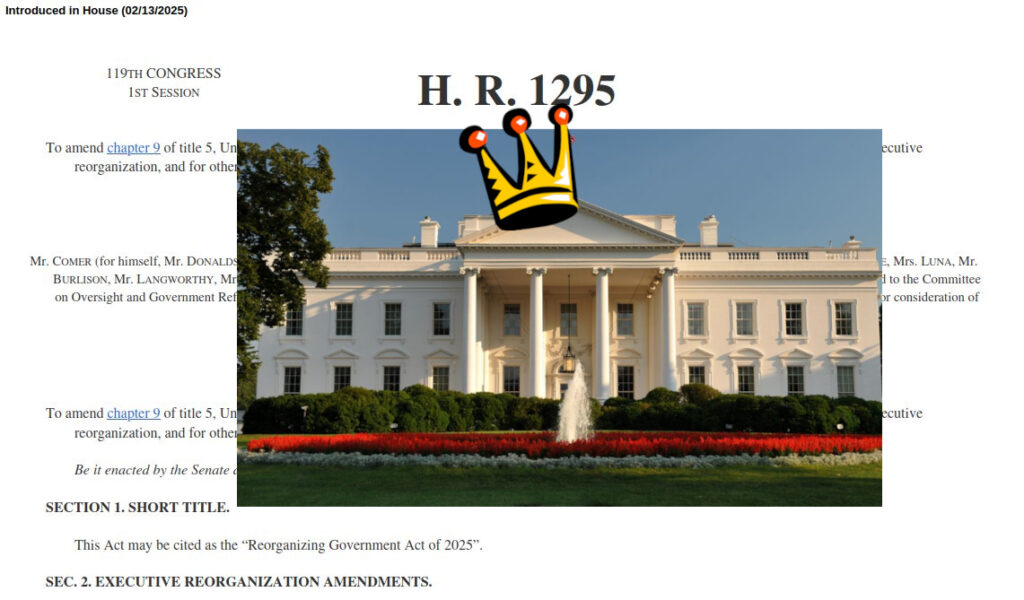




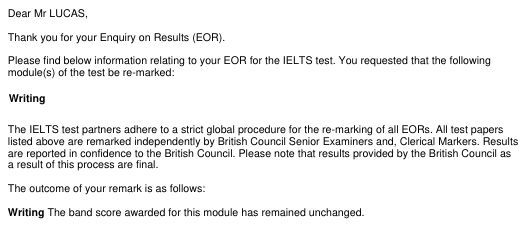
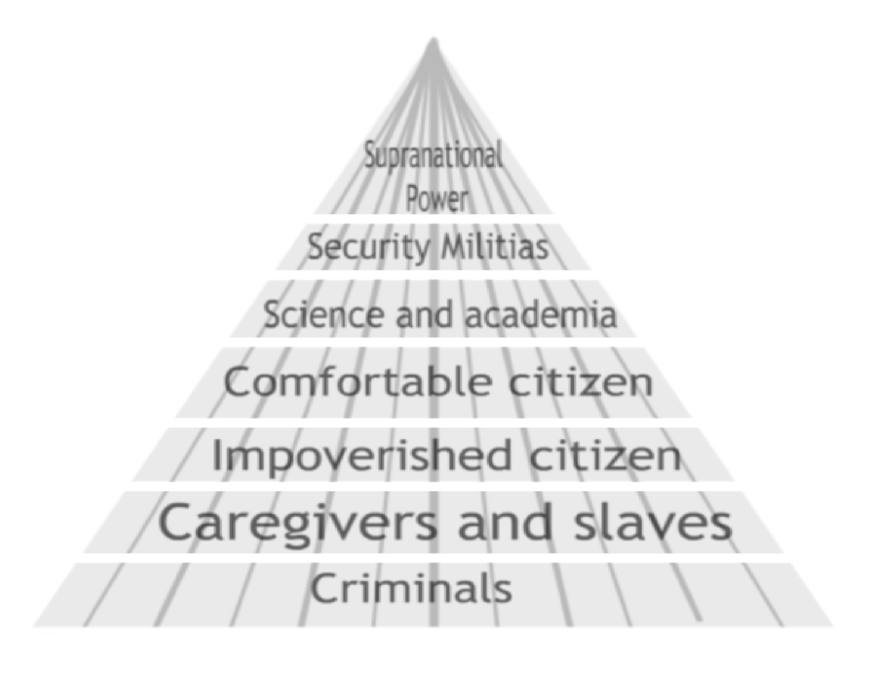
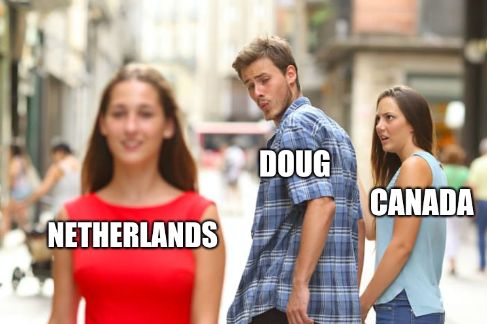

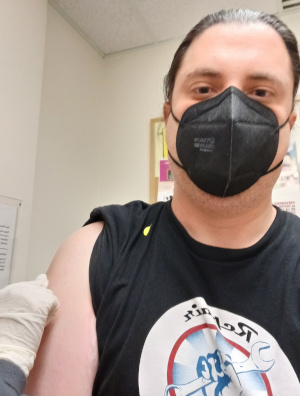


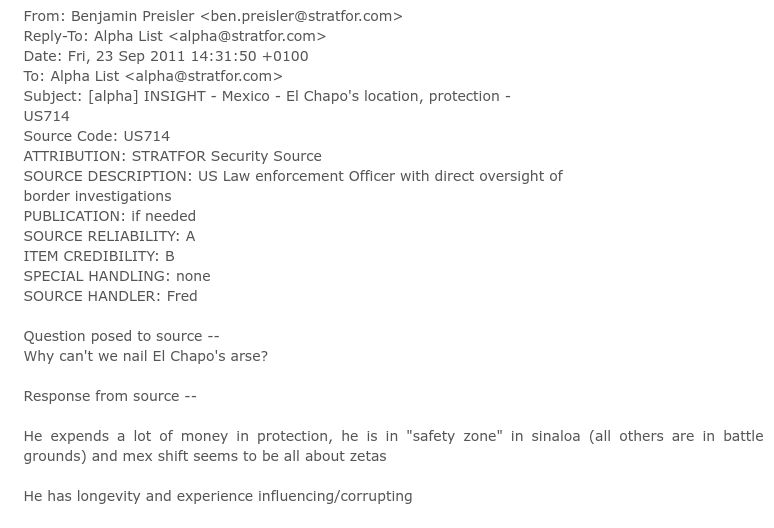
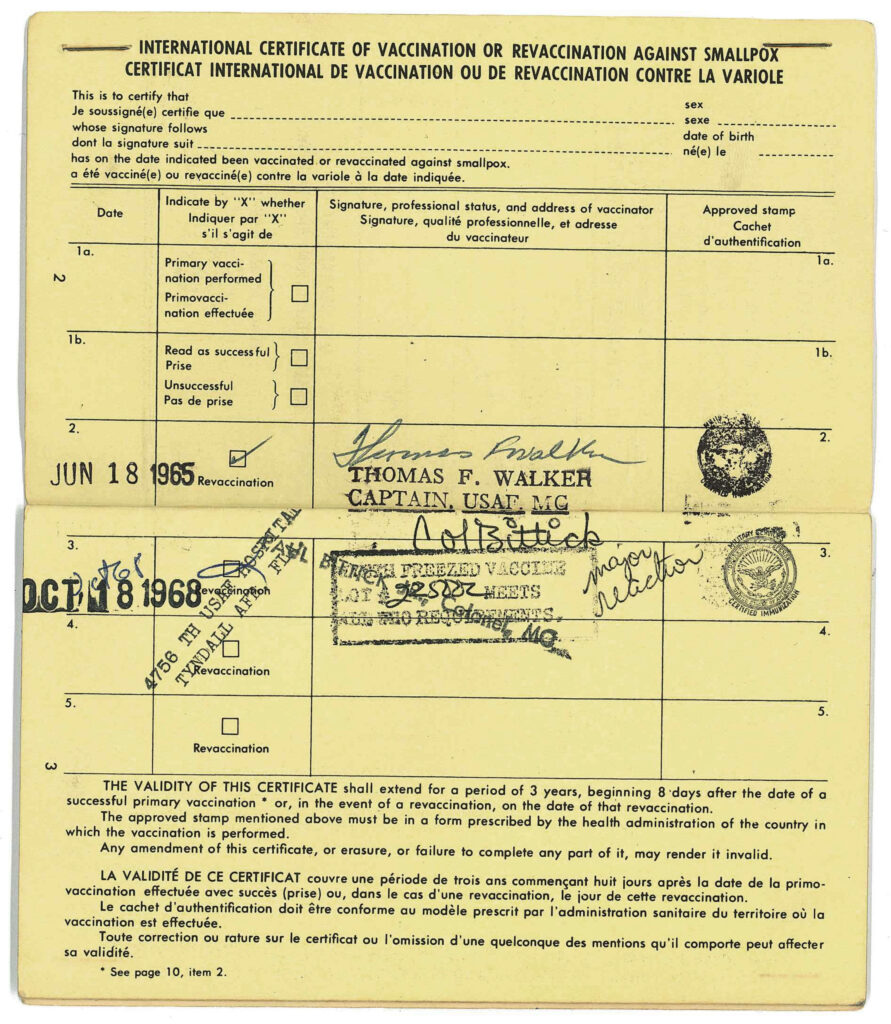




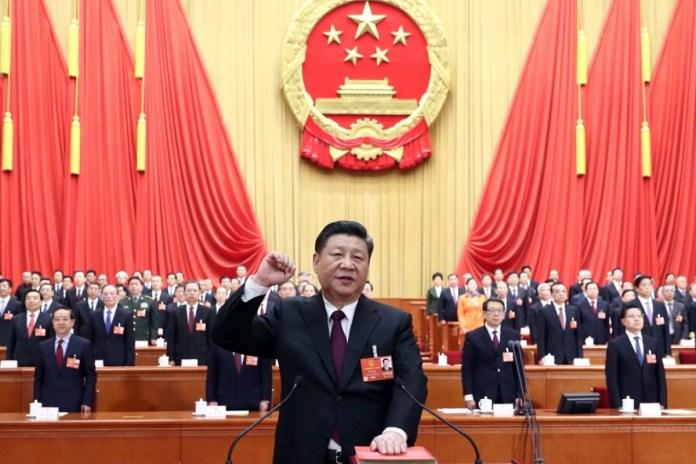


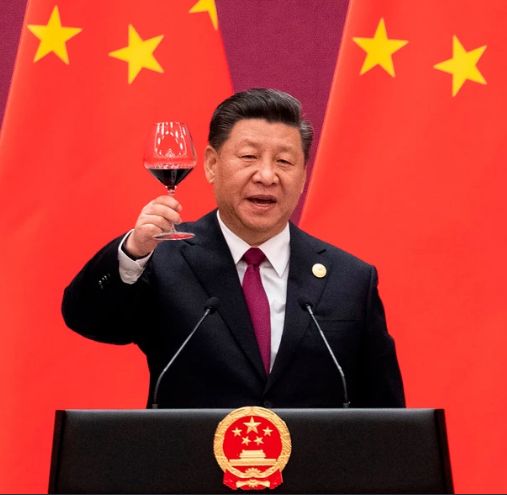




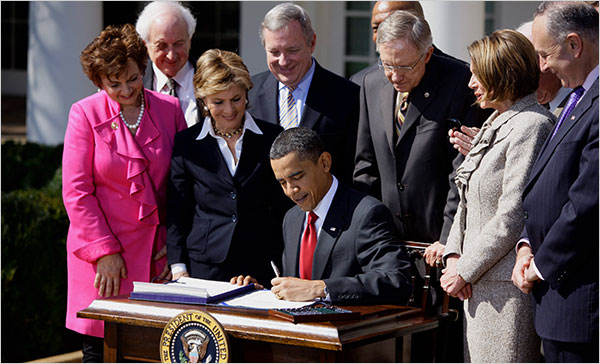



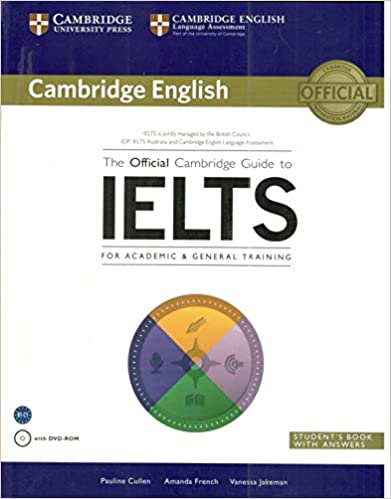
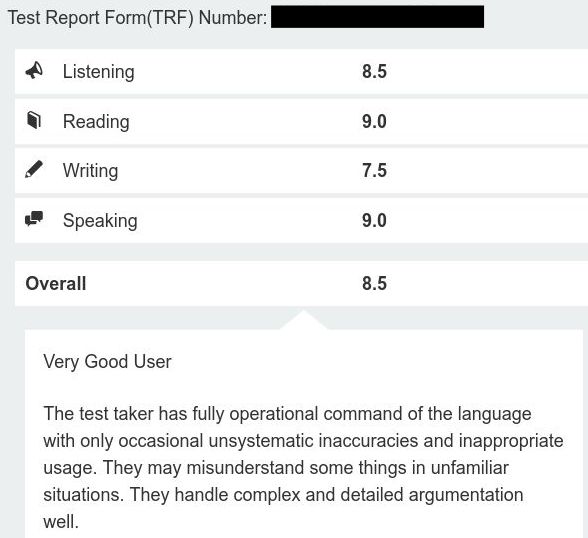
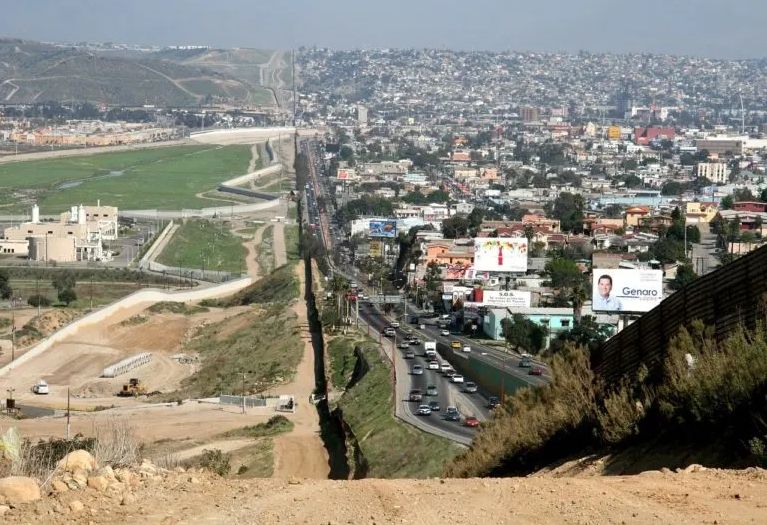






















 Twitter:


Join the conversation