You’ve seen the news: Elon Musk, the world’s richest man, is said to be slowly but surely taking over the United States Government and its social safety nets—and everything else—with something called the Department of Government Efficiency (DOGE). And this DOGE thing is, like, related to his weird fantasies of artificial intelligence (AI) taking over humanity and made-up dog money?
Point being, people are pissed, and you, like they, are increasingly itching to ̶t̶o̶r̶c̶h̶ trade in your, or at least your neighbor’s, Tesla, that crappy AI experiment on wheels made by his company of the same name. After all, a major Tesla investor toldNewsweek on Mar. 20 that the board of directors needs to oust Musk as the car-company’s CEO since “so much brand value has been eroded to the point that cars are being set on fire” following Musk’s “extremist statements.”
Critiquing car and country, unknown NYC editor adds text to parked Tesla vehicle
It’s true. Bewitched by activists who most certainly would never vandalize anything, Teslas are being magically transmogrified, one by one, into more obvious junk than they already are, from coast to coast, every single day now and counting. “Fuck Elon,” the scrawl across one such vehicle unwisely parked in New York City explained succinctly. To spark joy, this three-post series will present plenty of amazing photos of such high art critiques of car and country. Meanwhile, Tesla owners reticent to trade in their autos are rushing to place disclaimer stickers on their bumpers. They might check with their financial advisers, too: Musk is also chairman of Twitter (now X or, as I like to call it, Xitter); the CEO of SpaceX (and thus boss of its wholly owned subsidiary, Starlink); the CEO of his artificial intelligence company, xAI; and the leader of multiple other rotten companies.
It takes a lot to distance yourself from DOGE and Musk, and bumper stickers or not, nobody’s in the mood to listen to excuses: Democracy Now!reported that on Mar. 29, 200+ Tesla dealerships and facilities nationwide saw mass protests, with the top target being Musk’s illegal administrative DOGE coup. Saturday’s 1,268+ planned #TeslaTakedown protests (see this spreadsheet) around the country promise to be even bigger. Even the Wall Street Journal has explained that Musk has been communicating regularly with Kremlin autocrat Vladimir Putin secretly since at least late 2022, around the time Musk purchased Twitter. So equipped, he’s been using propaganda via his Xitter, his money, and his other forms of influence to boost far-right movements in 18 or more countries across six continents. Therefore, taking down Tesla helps the globe. It’s a great way to earn back some of the international good will that the MAGA-controlled U.S. is rapidly losing. And no, vandalizing a car is not “violence.”
Protester dressed in dinosaur costume holds sign: “You thought the Nazis were extinct? Don’t buy a swasticar!”
Video game analogy time: So far in Trump2’s 2025, Tesla shares have dropped more than 37%, to $243.16 (USD) as of this writing, but if the health bar, I mean share price, of the $TSLA boss drops even further in this fight—to $114 or less—it’s going to cause Musk some serious problems. He’s secured key loans for his Xitter acquisition—his propaganda Death Star—by using as collateral, among other things, Tesla stock. “If Tesla stock keeps crashing,” lawyer and legal commentator Tristan Snell posted on Mar. 12, “the banks/creditors could repossess Twitter[.]” $TSLA—and therefore the fate of those loans and Musk’s propaganda Death Star—is now in the hands of heroic hordes of pissed-off teenagers and even more pissed-off grandparents out on the streets living their lives to the fullest in a virtuous display of power. So when you fuck up a Tesla, you’re a one-man antitrust official singlehandedly regulating the financial markets and proton-torpedoing the thermal exhaust port of Musk’s Death Star to blow that thing so we can go home.
Granted, Musk is so rich he’s called a centibillionaire, so he can pay to make problems go ‘way, but his greedy house of cards eventually has to come tumbling down. Dropping $TSLA to $114, the floor price for the margin call, is definitely a workable goal for the estimated time when he’ll really be shitting bricks. His polls—yeah, Musk gets his approval ratings measured by pollsters, even though nobody elected him (ironically, he’s actually becoming a perfect example of a deep stater, a longstanding, legitimate political science term that MAGA co-opted)—his polls, man, they’re dropping like Tesla stock. Nerds at the Marquette University Law School determined that 60% of respondents in Wisconsin “view Musk unfavorably.” Half the country hates the motherfucker, more plainly put, and the other half are starting to realize he’s placing their own Social Security checks at risk, so they’re gonna start saying the nowhere-to-be-seen conceded Democratic presidential candidate Kamala Harris’s favorite curse word—”motherfucker”—pretty soon, too.
However, it’s confusing. You’re going to the countrywide #TeslaTakedown protests on Sat. Apr. 5, sure—except, with everything going on in the United States these past two-and-a-half months with Trump2 taking power and running with it, tracking all these news-nerd details and weaving them into a coherent comprehension would take you more time than you understandably have available. Hasn’t some freelance investigative journalist done that work already so you could read it on the bus on your way to the protest, or in the gym, resting between sets as you prepare to punch Nazis?
Yes. This blog post of about 10,000 words, the first installment of three, is designed as your friendly, but not dumbed down, crash course on the #TeslaTakedown, Elon Musk, the DOGE administrative coup, and resisting same. 10k words is roughly as long as a typical big feature story showcased on the print cover of say, the New Yorker, so you can do it. This installment—and the future two installments—revolve around the Apr. 5 protests and where we go from here. Read, and you’ll not only know what’s up with your coup-beleaguered country, you’ll also be able to fully appreciate all the witty signs you’ll see at the Tesla protest you’re about to go to this Saturday. Right? RIGHT?
Protesters hold signs outside Tesla site, one reading “Honk if you hate Elon” Actual faces replaced by smile faces for anonymization.
Part two will analyze the Trump2 day-one executive order establishing DOGE; its contested organizational structure and the implications for FOIA and the administrative coup; Musk’s weird, half-hour speech from the Oval Office about DOGE and political philosophy while his kid X Æ A-Xii (that’s his name) rubbed boogers on the Resolute Desk and told Trump he needs to go ‘way because he’s not the real president (like Daddy is); Trump and Musk staging a half-hour Tesla commercial from the White House South Lawn (overt corruption) and threatening protesters of his AI car company with domestic terrorism charges; profiling the Muskrats (his foot soldiers at DOGE); and, more about the Apr. 5 #TeslaTakedown protest.
Part three will elaborate on Elon Musk’s personal history and connections, including his relationship with Trump himself; more on Musk’s criminal and civil liabilities; additional info regarding the administrative coup and its backing fascist, masculinist philosophies; DOGE in the context of Project 2025; Dogecoin and the U.S. Government’s new cryptocurrency stockpile; various odds and ends; and, an assessment of how the protests went, plus suggestions for future mass-collaborative refinements of $TSLA’s stock price.
And now, strap on your helmet and other antifa self-defense gear, because it’s time for an…
Intro to the DOGE Dogshit
Last year, a month after Elon Musk endorsed Donald Trump for the most recent U.S. presidential election in the minutes following the Pennsylvania assassination attempt, he and the Republican frontrunner spent more than two hours discussing themselves over a glitchy Xitter livestream, on which Musk pitched a “government efficiency commission” starring himself. Some three weeks later, then-candidate Trump formally announced the concept of such a commission at the Economic Club of New York. He said it would be headed by Musk and tasked with “a complete financial and performance audit of the entire federal government” and make “recommendations for drastic reform.” But this tidy timeline omits a significant piece of the puzzle.
A day or so before the Aug. 12, 2024 Xitter livestream, a super PAC that Musk co-created assuredly had helped seal the deal when it emerged from a spending lull and started dumping into swing states, for the next several weeks, some $33 million dollars of ads promoting Trump. Further, the known total Musk gave for the November 2024 contests altogether was nearly $300 million dollars, all of it to Republican candidates, making him the largest and most prominent known donor to U.S. federal elections since 2010 or perhaps even earlier. For teen Muskbros who might have stumbled upon this post and are wondering why everything going up for sale in life is wrong, here’s one reason: this quid-pro-quo spawning of DOGE need not account for merit or lack thereof: Musk give Trump bigly money, Trump give Musk bigly perch, simple!
Kabuso photo from 2010; the image later went viral online
DOGE stands for Department of Government Efficiency. It’s not actually a department of the U.S. federal government, nor is it efficient, but we’ll get to those. An overt reason that Musk displayed a week after the livestream for calling it DOGE was to riff on the Dogecoin cryptocurrency by using the same four letters and associated memes. The paperless, electron-based asset was created in 2013 as a competitor to better-known cryptocoins (such as the first, Bitcoin) and was branded on the very popular Doge meme featuring Kabuso, a Shiba Inu well loved online and called by admirers a doge—pronounced something like “doughzhe” and nothing more than a cutesy way of saying dog.
How much Dogecoin does Musk own? Dunno; he’s denied owning wallets for the canine-themed coin, whether public or private—but, see that crypto- prefix in cryptocurrency for the obvious caveat: crypto- means hidden, secret, as in cryptographic. As of this March, two unknown parties each have a Dogecoin wallet holding more than $200 million worth of the virtual asset. Perhaps the world’s richest man or his cronies could be among them? Or are Musk’s Doge-doings, as one economics professor suggests, merely a way for him to connect with, to win over, key political and industry audiences (read: MAGA techbros)? Some of both?
Official logo of Dogecoin
Musk, as far as publicly known, started promoting the digital doggy token in 2019 with this dumbed-down tweet: “Dogecoin might be my fav cryptocurrency. It’s pretty cool.” He likes calling himself the “DOGEfather” and—as a ‘joke’ typed onto his Twitter bio that immediately jumped the price 17%—the “former CEO of DOGEcoin.” As recently as Mar. 17, 2025, Musk tweeted a lucky St. Patrick’s Day meme alluding to the cryptocurrency; merely alluding, as if some of the regulators he hasn’t yet arranged to be fired—we’ll get to that—might be looking over his shoulder for any misstep.
If we can just shake his tightrope some …
Elon Musk has been on a tightrope for a while. A RICO class action launched in mid-2022 alleged Musk was marketing/pumping Dogecoin insider-trading style, but had its appeal attempt denied in September 2024 after a district court decided Musk’s statements about the cryptocurrency were merely “aspirational and puffery,” not factual claims, so no reasonable investor would rely on them. Except the reasonable man of law has long since been dragged out to pasture and shot. Whether rational or coked up, investors clearly respond to Musk’s antics. Most infamously—well, most infamously prior to this Trump2 administration—Tesla stock fell in 2018 when Musk drank whiskey and smoke pot on Joe Rogan’s podcast, leading the United States Air Force to review the taxpayer-funded billionaire’s secretive billion-dollar Pentagon contracts. That review apparently had little to no effect, although the airmen have recently resumed scribbling about him, which we’ll get to. And as it turns out, fascism is still lethal even when dressed up in “aspirational and puffery” social media aesthetics, such as the unfortunately tarred Shiba Inu doggo—Kabuso did nothing wrong.
Elmo says, I’m Elmo, from Sesame Street!
In 2021, Elon Musk—or sometimes, to his critics, “Elmo,” a contraction of his name referencing Sesame Street‘s novicial, stuck-in-falsetto red monster—went on Saturday Night Live and tried to boost Dogecoin by plugging it during his monologue, but did so poorly with his performance overall that the price plummeted at once. If you’ve never seen his five-minute SNL monologue, it’s worth suffering through—it recalls another billionaire, Jeff Bezos, trying to seem cool in front of high school students who couldn’t have cared less (“Who Bezos?” one said into the ears of history).
Like the then-Amazon CEO’s automaton-ish appearance, Musk’s stilted, awkward behavior resembles someone pretending to be human, which he self-referentially tried to joke about during his SNL monologue, attributing it to Asperger’s syndrome. Without going down that rabbit hole, it should be emphasized that there’s more than one reason in life someone can be noticeably disconnected from their emotions and empathy; unrecovered victims—and unrecovered perpetrators—are among the VIP dissociated, for reasons having to do with that adjective: unrecovered, you know, from trauma: the cycle of abuse.
According to his brother, Musk’s childhood was marked by domestic abuse, severe violence at school, and other Adverse Childhood Events (to use the psychology lingo). He shows no traits evidenced by those who work intensely on mental health recovery: compassion, altruism, wisdom are all scant in him, and he tries to teach the world that empathy is “the fundamental weakness of Western civilization[.]” Alhough the definitions are contested, it makes sense to think of sympathy as cognitive pity, and empathy as emotional contagion—for example, while sympathy is saying a rote “oh how sad” when skimming an awful news story, empathy is giggling as your lover starts giggling during postcoital snuggling, even though you haven’t yet cognized what it is they’re laughing about. Empathy, the capacity to sense or experience others’ emotions, makes it possible, even when just reading news stories, to share some of the victims’ pain and anger, rather than merely saying a “tut-tut” (sympathy) or trying to carve up crimes for “only this group or only that group is allowed to be mad about this” (group affiliation careerism). Empathy isn’t without danger—it can encourage groupthink—but edgy portrayals of it as the fundamental Big Bad are merely upsellings of sociopathy. Musk hasn’t backpedaled significantly on trying to teach everyone to fear what he calls the “empathy exploit” or more simply, “empathy.” Rather, now, years after SNL, he typically shows more confidence when performing publicly—bad news for the rest of us. Ketamine covering up his underlying trauma? We’ll get to that.
Speaking of abuse, at least three occurrences have led people to wonder aloud if Musk is involved in high-level pedosadism rings and operating under, or armed with, the inevitably accompanying blackmail. One: the widely circulated pic of Musk at the Vanity Fair Oscars party on Mar. 2, 2014 with Ghislaine Maxwell, now imprisoned for child rape trafficking and, back then, the top accomplice of the late blackmail mogul Jeffrey Epstein; two: Musk’s attendance at the 2011 annual “billionaire’s dinner” event in Long Beach, California—run by the Edge Foundation, a so-called intellectuals’ club—the same night Epstein attended as a convicted-and-known pedo; three: Musk gettingsubpoeaned by the Virgin Islands in 2023 for their civil suit accusing J.P. Morgan of profiting off of Epstein’s pedosadism since he was their close client for years even following his pedo guilty plea, the profits in question perhaps tied to Epstein’s dubious boasts in 2018 that he was supposedly advising Musk about Tesla. Elmo denies all this or dismisses it as negligible, tweeting in 2023 about Epstein: “That cretin never advised me on anything whatsoever” and in 2020 about Maxwell: “Don’t know Ghislaine at all. She photobombed me once at a Vanity Fair party[.]”
The infamous 2014 photo of Ghislaine Maxwell and Elon Musk at the Vanity Fair Oscars party
A researcher working toward the #OpDeathEaters long-term goals told me they believe Musk’s absence from Epstein’s unredacted little black book—a ‘trophy collection’ of contact info and names Epstein knew or sought to know in order to use them socially, financially, or physically—likely indicates Musk and Epstein ultimately never did business together, though if chance had differed, it’s plausible overall that they would have. A more likely speculation is that Epstein (and Ghislaine Maxwell) pursued Musk in the hopes of establishing a business relationship, yet for whatever reasons, a deal never came to pass. The world’s richest man must know a lot of vile blackmailers, some infamous, others shadowy, some in his own mirror, so there’s no guarantee he’s deeply connected to this or that specific super-predator from the headlines; however, as the three points above suggest, all this is of course the dirty water he and his ilk swim in. It’s not just powerful child rapists who need prosecution, but their criminal support networks, too, including those who might not be pedos themselves yet still understand in complicit detail what’s happening. “She photobombed me once” isn’t the same as coming clean—unfortunately, what’s under the hood (or covers) with Elon Musk, financially or otherwise, is by no means a fully open book. Yet.
Musk’s connection to Epstein-Maxwell, then, was probably just in passing(s), never consummated, yet his generalized immersion in such pestilent waters is absolutely certain; point being, the robotic Elmo, the story of whom gets worse still, already doesn’t sound like a good guy to put in charge of a fake department with a federal government-wide austerity remit. Trump2, in his Mar. 4 State of the Union speech (okay, technically an address to a joint session of Congress), said DOGE “is headed by Elon Musk, who is in the gallery tonight.” Republicans applauded; about an hour earlier, Rep. Al Green (D-TX), who in February announced his plan to file articles of impeachment (for an impeachment to be successful, Green said, “the people have to demand it”), had become the first lawmaker in modern history to be kicked out of a State of the Union, for standing up with his cane at age 77 to shout at Trump that he lacks a mandate and shan’t cut Medicaid; many of the rest of the Dems, younger and healthier, cowered in their seats silently, holding up signs with milquetoast clapbacks written on them; days later, ten Democrats proceeded to join with Republicans to censure Green for having had the courage to interrupt The Donald. Musk, watching from the gallery—is he who truly heads DOGE, as Trump said? Its organizational structure is disputed. Which we’ll get to.
Back to Musk on a tightrope, the one we’re going to shake until $TSLA falls off, all the way down to $114 or less, rocking Elmo’s financial empire enough to encourage various regulators and plaintiffs and angry investors to get in on the smackdown too. Roughly a month before the November 2024 elections, ex-Fox News commentator Tucker Carlson interviewed Elmo on Xitter, and the pair couldn’t stop laughing as Musk said about then-candidate Trump, “If he loses, I’m fucked.” Musk’s succinct description of the tightrope he’s walking came at the start of the video Carlson published, an in medias res outtake that the producers kept in, so there’s scarcely any context for it, although about four minutes later, Musk stated that “vengeance” could be directed at him were Trump to lose. In case there were any doubt what Elmo meant by “fucked,” he continued: “How long do you think my prison sentence is going to be?” and “I have no plausible deniability[.]”
I suppose the surface idea is that a Harris administration would retaliate against Elmo for his (purported) truth-telling and aspiration to enforce efficiency on everyone, et cetera, and perhaps too the subtler risk that, if Musk winds up seen as a huge problem for MAGA—as someone who causes losses for the self-declared King Trump—then infighting among Trump-Musk factions, which has already happened off and on, could take him down as well. Yet while Democrats (or Republicans) might indeed single him out due to personal vendetta motivations, they could nonetheless find plenty of wrongdoing to base criminal charges on, such as those revolving around his numerous conflicts of interest. (We’ll get there.) It would be clearer just how Musk thinks he’s “fucked” had Tucker Carlson’s team not cropped out the preceding dialogue. ‘Transparency’ bullshit artists.
In short, ever since Elmo went, as he and Tucker Carlson put it, “all in” for Trump, the criminally liable Musk’s outcomes have been unstably yoked to outcomes for the criminally liable Trump (and outcomes for the criminally liable Department of Justice that the president is securing more control over). Imagine the tightrope: you’re the world’s richest man—with an unhealed, bullied, raging child inside—fearing prosecution from whoever heads the U.S. government, so why not just take that government over with an administrative coup to head it yourself, to protect yourself and exercise your own revenge fantasies? Not to mention fun times with the boys, kicking it with other broligarch billionaires, discussing in Silicon Valley salons the ideas of pro-monarchy/autocracy blogger Curtis Yarvin a.k.a. Mencius Moldbug (see below) as to how to best create a U.S. monarchy, which, uh, 1776?
2011 photo from Edge’s website shows Zack Bogue, co-founder of Monteara Capital Partners, at the billionaire’s dinner in fairly close quarters with Elon Musk in the background at viewer’s far left, his head turned to the right as he speaks with someone (Musk identifiable especially since his clothes match his in another photo from the same event); at viewer’s far right, seated, that’s Jeffrey Epstein attending as a known and convicted pedosadist
Conflicts of interest and the ongoing administrative coup
Musk has already been under heightened scrutiny as the boss, with a top-secret security clearance, of two of the most important Pentagon and spy agency contractors—SpaceX and its wholly owned subsidiary Starlink. Scrutiny has been especially close in terms of conflicts of interest, for which NBC News determined there’s no evidence that he’s obtained the standard waiver subsequent to becoming a Trump2 “special government employee.” That “job title” is merely a U.S.G. job category, not a job title—it’s not publicly known what Elmo’s actual job title is. If he even has one.
The White House told NBC News on Mar. 21 not to worry about oversight or whatever since Musk is receiving ethics briefings—is receiving: note the passive verb in the vague present progressive tense. Besides, as press secretary Karoline Leavitt explained regarding excusing himself from conflicts of interest, Elmo promised us he’d be good, so how can we question him or demand accountability measures? He’s “abided by all applicable laws,” Leavitt lectured, which is like saying the dude never even jaywalks and suggests if you pass a law, doesn’t matter, Musk already has been in, is in, and will be in full complia—say, where’d the Department of Education go? His DOGE team is mostly moving faster than the legal system can keep up, which is, sad to say, an inspired strategy on their evil part.
Yeah, headed de facto by Musk, DOGE is a shadowy team of fast-typing “Muskrat” twenty-somethings (we’ll get to them) on what might at first seem—and partially is—an Ayn Rand, Ronald Reagan kick, gutting federal agencies, firing or forcing out their staff, and slashing budgets to the bone. In some cases, DOGE’s efforts are tantamount to taking down longstanding federal departments and agencies entirely or as close as possible to it. Sounds a bit coup-like, no?
Oval Office, Feb. 11, 2025: unelected Elon Musk lecturing on austerity and philosophy; his boogery kid; and seated behind the Resolute Desk, Donald Trump
To explain: the power to establish or abolish federal departments or agencies rests with Congress—which is why the Department of Government Efficiency isn’t a real department (hey, we finally got to that one!)—although there have been moments in U.S. history (today not yet among them) when, sometimes because horny for an authoritarian to tell everyone what to do, Congress has temporarily extended such powers to the president on a limited basis under the rubric of reorganization acts. Beginning in 1932, limited reorganization authority has been temporarily extended to nine presidents across 16 separate occasions, most recently in 1984. Requests from presidents from both major parties following 1984 have been roundly rejected by Congress over and over.
Republicans in the House are now eager to minimize safeguards on reorganization authority when it comes to extending it to Trump for a different breed of “reorganizations” of the federal government they hope for. Their proposed bill out of committee, H.R. 1295, as I understand it, would lower—from a 2/3 majority in the Senate to simple majorities in both chambers—the threshold of Congressional votes on the joint resolutions required to bless any reorganizations plan proposed by the Trump2 administration to delete a federal department or agency. In other words, Congress would be sidelining itself for the benefit of the Oval Office (including Musk). Further, and again on my inexpert reading, H.R. 1295 would grant Trump2 the authority to propose (for the blessing of simple Congressional majorities) the deletion of independent regulatory agencies, a power he currently lacks and that the Heritage Foundation-backed Project 2025 very much wants him to have. It would allow fast-tracking of the DOGE/Trump administrative coup; critics are calling it a rubber stamp.
In the aforementioned Education Department instance, DOGE technically hasn’t terminated any federal departments/agencies just yet, but instead is sticking its cyber-hands down their throats, ripping out their innards—their core functions—and leaving their flat, emptied bodies on the ground so the centrists can say, “See, they still exist!” This is an administrative coup in the sense that the status quo government is being dismantled and being replaced, with Elmo/Trump cronies and themselves, sometimes even via separate structures they’re installing with the aim of existing past just four years.
DOGE wants to shift-delete the Department of Education, USAID—and quite possibly the necessary structures around Social Security, Medicaid, the air traffic controllers, the weather scientists, the food inspectors, and the rest. A clever coup: like Monsanto/Bayer killing everything that isn’t authorized as Roundup Ready, abolish most everything that isn’t you, including Congress ceding much of their own power.
Under DOGE—or maybe even under a mysterious company of Musk’s already in existence on paper in Texas, such as United States of America Inc.—how then will social safety net services be provisioned to those USians enduring any forthcoming unforecasted natural disasters, the rising number of passenger plane crashes, disabilities, old age, and the hundreds of cases of measles spreading across the unvaccinated as bronze-faced health secretary RFK Jr. continues to diss the measles, mumps, and rubella (MMR) vaccine, as he did during a Mar. 10 FOX News interview (part one; part two)? You know the interview that he gave from, no joke, a Steak ‘n Shake, promoting one of his misleading theories, this one about how he’s going to make fast food great again?
Why, social services will be delivered with utmost private sector efficiency by your friend from Sesame Street, Elmo! You are special, you are loved, and you have a friend named Elmo who just wanted to say ‘hi’! Let’s play profit motive extortion with Elmo! Elmo says, kill the poor! Or more precisely, it’s the voice of aforementioned pro-monarchy blogger Curtis Yarvin / Mencius Moldbug dominating, discussed below. In 2008, Yarvin wrote that “Our goal, in short, is a humane alternative to genocide” after “just kidding” that the “not productive” should be converted “into biodiesel, which can help power the Muni buses.” He even ‘joked’ that the problem with such “naive [Ayn] Randian thinking” isn’t the killing of innocents, it’s that dead bodies make unpopular fuel. With much more than a foot in the door at MAGA megadonor (and agent of multi-evil) Peter Thiel’s and thus the Oval Office, Yarvin’s now rapidly acing the ultimate test for a fascist: making genocide openly popular instead of just evoking the usual “shrug, what can ya do” banal-complicity response, since performing additional wide-scale exterminations needs a lot of labor and eager, not just banal, complicity.
DOGE has been taking those federal department/agencies innards—the offices’ key functions—and transferring them to barely related federal entities (presumably where they can be more easily leashed) as Musk’s companies move in to fill the vacuums his DOGE just created. Imagine the “big three” entitlement programs (Social Security; Medicare; Medicaid), long primarily funded by taxes—that’s payroll taxes on worker-bees, silly, not on billionaires or nonhuman corporations or, coming soon, on artificial intelligences (in govcorp hands not all that much more than overhyped calculators with soaring, secret environmental costs). Imagine the big three entitlement programs run by Musk’s companies for the motive of his profit: We’ll keep the weak alive—so long as they’re strong enough to pay Elmo! is otherwise known as human extermination or, when carried out by its very victims such as Musk’s bro fandom, autogenocide; as ever, the imbalances of trade/hierarchy/profit maximalism are inevitably, lethally unfair. (Support the leopardine face-eaters and you know whose face they eventually eat.)
Musk waving red chainsaw around the 2025 CPAC stage as its donor, Javier Milei, looks on, giving two thumbs up
If you caught the Feb. 20 news blip video of Musk waving around a red chainsaw on the stage of the Conservative Political Action Conference (CPAC), that was all about DOGE imposing austerity. To the roaring applause of CPAC, Elmo, trying to look cool in black shades and a black “Dark MAGA” hat, showcased the big stupid red toy—waving it around without actually turning it on—yelling, “This is the chainsaw for bureaucracy!” You know, bureaucracy, including wee things like human rights laws and social safety nets for basic essentials. The red chainsaw was gifted to Musk on stage by another CPAC attendee and man-child, Argentinian president Javier Milei, who has made the chainsaw a symbol of his own austerity measures dispossessing his own country, to the cartoonish extent of showily placing chainsaws atop conference tables during government meetings. An Argentinian journalist friend of mine wrote about Milei last year—and you can see how Milei’s chainsaw-ing is being imitated in the United States in the next section immediately below. It’ll help inspire you to tank $TSLA to $114.
Body count: federal departments/agencies DOGE is destroying
Time to list a few of the many federal departments/agencies lying on the floor right now, their dependents increasingly wondering where the life support is (that’s where you, the public, come in, as Rep. Green similarly pointed out). A teen Muskbro or Randroid might make the argument that the gub’ment is bad, so why not wish it into the cornfield—disappear it, drain the swamp? I agree that, as statist hierarchy maximalism, much of gub’ment is bad (corporations are worse), but if accelerationists replace it with jack shit, rather than with practiced, powerful bottom-up mutual aid and community-, caregiver-backed institutions of self-governance, that leaves us with the law of the jungle, every man for himself. In that dystopia, as much as zombie TV episodes make you think that—in the absence of clean water, mail delivery, weather forecasts, national defense against a planetful of adversarial countries and eager terrorists (whom the U.S. has multiplied for years by wantonly bombing their innocent friends and families with Trump openly gloating about same)—you’ll suddenly become a rugged individualist badass, well, flatly, you won’t.
Now, a complete DOGE body count isn’t possible (no one is successfully tracking all this, not even yours truly amped up on caffeine and Megadeth), so I’ll just describe the DOGE-destruction at four federal departments/agencies and a dishonorable mention to give you a sense of what’s happening across the U.S. government at the hands of Musk. If you want much of the rest, see this handy Mar. 27 Business Insidercompilation, which details the devastation at more than a dozen additional departments/agencies.
Department of Agriculture (USDA)
Thousands of employees gone; USDA is running a skeleton crew, with coastal ports hard hit, and hundreds of food inspectors fired—“Oh, good!” Elmo says. “Let me think, why would Elmo need food inspectors?” Even if MAGAs don’t mind eating poisonous food to own the libs, their wallets will be hurt—now it’s getting serious—when other countries stop buying grub from the United States, though to be fair, some 20+ countries have partially or fully banned GMOs already: among them, many in the European Union such as Germany and Italy and France; Mexico; India; others. (Ever tried looking up peer-reviewed scientific papers about GMOs from their databases instead of the Trumplandia ones?)
Meanwhile, China is doingthatcreepy thing again that they did during the declared COVID pandemic where their vendors are snailmailing unidentified seeds to USians in Texas, Florida, Washington state, and more. Invasive species can damage the food supply; if you receive these possibly uninspected packages, don’t open them, definitely don’t plant them, and ask state-level authorities, not feds, for help. (The 50 state governments will keep taking on more importance as all this continues.) Musk/DOGE has been firing USDA dog-trainers, too: they train, or past-tense trained, dogs to sniff out, at ports of entry, weird diseases such as swine fever and invasive species. Florida, for example, had a single dog capable of detecting the invasive, dangerous Giant African land snail, and its trainer has now been fired. Elmo says, I love you!
Federal Aviation Administration (FAA)
Longer and longerlists of recent passenger airline crashes or almost-crashes start with January’s mid-air collision between a Pentagon Black Hawk chopper and an American Airlines flight over the Potomac River some three or four miles from the White House. The disaster—which killed all 67 people aboard both aircraft—followed Trump2’s inauguration by nine days, so fairly or not, blame for it has been pinned on his second administration in the public mind. Grilled by reporters as to whether he’d visit the crash site, a traditional move for leaders to make to honor those grieving a tragedy, Trump mockingly replied: “What’s the site? The water? You want me to go swimming?”
In between blaming the collision on the pilots, Trump also blamed his predecessors’ Diversity, Equity, Inclusion (DEI) initiatives for supposedly creating unsafe skies—professionals purportedly so afraid of “reverse racism” skin color stuff that until liberated by The Donald, they’ve feared to speak out about safety problems even if it means their own planes crashing—surely a guilt deflection the former television game show host tailor-made for his legions of FOX News fans, inexperienced as they are living out their lives immured in a very small pond and therefore incapable of discerning when The Donald is bullshitting.
A week later, on Feb. 5, Elmo chirped on his social media Death Star that his DOGE “team will aim to make rapid safety upgrades to the air traffic control system.” DOGE’s involvement was confirmed by Transportation Secretary Sean Duffy and Senator Ted Cruz (R-TX), who chairs the FAA-overseeing Senate Commerce Committee.
Beginning Valentine’s Day, at least 400 workers at the already short-staffed FAA were let go, presumably the doing of DOGE, and certainly a doing of the Trump2 administration as a whole, of which DOGE is a sort of a free-floating (read: illegal, coup-executing) part. Trumpers denied it, but former FAA employees and their union said more than a fourth of the personnel cuts included “aviation safety assistants, maintenance mechanics and [aero]nautical information specialists.” Politico reported that their termination notice came from the email domain usfaa.mail.onmicrosoft.com, which is not a U.S. government address—yet more evidence that what’s happening is actually a (relatively slow-moving administrative) coup.
By mid-February, meanwhile, SpaceX employees were already being onboarded at the FAA; by Feb. 24, Elmo was tweeting that the “Verizon [FAA] system [a contract awarded in 2023] is not working and so is putting air travelers at serious risk”; two days later, the Washington Post reported that the FAA is “close to canceling [the] $2.4 billion contract [with Verizon] to overhaul a communications system that serves as the backbone of the nation’s air traffic control system and awarding the work to Elon Musk’s Starlink”; the same day as the WaPo report, Sen. Maria Cantwell (D-WA) told the Transportation Secretary it’s “a conflict of interest for someone [Musk] whose company [SpaceX/Starlink] is regulated by the federal government to be involved in anything that affects his personal financial interest, his company, or his competitors”; on Feb. 28, per Rolling Stone, FAA officials verbally (i.e., avoiding putting it in writing) directed staff to locate tens of millions of dollars for a Starlink deal; on Mar. 13, the Campaign Legal Center filed an ethics complaint with the Department of Transportation, concluding that “the FAA’s business relationship with Starlink is tainted by Musk’s influence. Musk is a government official with broad authority who acts with direct support from the President. With this authority and support, he has openly criticized the FAA’s contractors while directing the agency to test and use his company’s services. These facts establish a possible criminal conflict of interest violation, and an [Office of the Inspector General] investigation is needed to determine whether the facts constitute a legal violation.”
Note: There are tons of open contract listings across the federal government for artificial intelligence goods/services, such as this NASA one for AI air traffic management and this DARPA one for studying AI-human joint making of military decisions. Musk and his companies—such as X’s new parent, xAI Holdings, the recent sale implying that nearly two decades of twitter data is now being more easily fed into Musk’s artificial intelligence operations—are likely eyeing such contracts for the unfair taking, though this is just informed speculation on my part. Removing oversight obstacles to conflicts of interest would help him “obtain” such contracts.
National Oceanic and Atmospheric Administration (NOAA)
NOAA, which has the National Weather Service (NWS) as a component, heads up weather forecasts, climate data analysis, and tracking extreme weather crises. As a Commerce Department component, NOAA has bureaus and offices across dozens of federal agencies, carrying out its critical mission of understanding and predicting the Earth’s climate (maybe not something Trump2’s industry backers want people to understand or predict). Per a group of Democratic lawmakers’ Feb. 6 letter to the Commerce Department boss, Trump2 appointee and billionaire Howard Lutnick (and to his acting secretary Jeremy Pelter), DOGE has been visiting NOAA’s headquarters, aiming to break up the agency and send its functions packing to some dim corner of the Department of the Interior.
Per Business Insider, the “lawmakers argue that DOGE is illegally attacking NOAA without congressional approval, in an attempt to dismantle and privatize the agency which they say would rob American farmers, businesses, and citizens of crucial, life-saving services. The Trump administration has already laid off hundreds of workers at NOAA, which meteorologists say will degrade weather forecasts and public safety.” A former professional meteorologist had to explain to the U.S. public this March that just because your phone has non-NWS weather apps doesn’t mean you can do without the NWS sending up daily balloons to create the weather forecasts those apps rely on. He explained the “apps only” view is tantamount to arguing you don’t need farmers since you can just go to the grocery store. “Again,” he said, “everything that we use, almost every type of weather information that you see, no matter where it comes from, again, has its heart in the National Weather Service.”
National Institutes of Health (NIH)
A Feb. 15 National Institutes of Health internal email indicated the Trump2 administration had axed at least 1,165 workers at the agency. Reuters, who obtained the email, wrote that the 1,165 figure “accounts for around 6% of the 20,000 people employed by the NIH, an agency overseeing 27 institutes and centers and the top public funder of medical research on everything from vaccines for emerging pandemic threats to targets for new drugs.” Officials at the agency expect that, under RFK Jr., an almost 4,000 more workers will lose their jobs. (NIH is under Secretary of Health RFK Jr.’s Department of Health and Human Services.)
Meanwhile, a Feb. 7 NIH directive took effect immediately and imposed a 15% cap on so-called “indirect costs” for medical/scientific research projects—personnel, equipment, maintenance of facilities like laboratories, sounds pretty direct to me. $4 billion annual dollars of research funding went up in smoke overnight. A textbook example common in the United States for why taxes are good is that some diseases are so rare, it doesn’t profit private industry to research cures for them, so you need public interest-minded efforts, even coercive ones such as taxation, to accomplish the same. Those rare diseases can always mutate to become more infectious, so much so that even titans of industry, bronze-faced or not, can fall prey to them. None of this seems to have mattered much to DOGE.
Dishonorable mention: Firing inspectors general
The DOGE connection to Trump’s inspector general (IG) firings will become clear by the end of this dishonorable mention.
Per CBS News: “After the Watergate scandal under President Nixon, Congress set up a system to audit the executive branch and ensure the rights of federal workers.” This included, pretty much per each big agency, an office of the inspector general (OIG). Think of the IGs as akin to, but more powerful than, newspaper ombudsmen a.k.a. public editors—readers’ representatives at news organizations who check up on the honesty of the rest of the staff. (Now that I think of it, the New York Times got rid of theirs in 2017, claiming the salaried watchdog position is outdated in an era of social media when we’re supposed to do it for them for free for the rest of our lives.) I’m not going to sit here and try to tell you that inspectors general were uniformly heroes of government oversight ushering in a new era of utopia, but I can tell you their reports and proceedings were far better than nothing, sometimes had good impacts, and often served as great starting points for serious research and initiatives. IGs hunted down fraud, waste, and abuse—what DOGE is claiming to hunt.
For instance, a multi-year investigation involving IGs led to several criminal convictions in 2023 for a decade-plus-long bribery scheme that affected almost half a billion dollars in government contracts. Similarly, in 2022, the Department of the Interior OIG determined that the Bureau of Land Management was astonishingly awarding mineral extraction leases, including oil and gas, without even confirming if the winners were prohibited from doing business with the federal government, reportedly forcing the Bureau to begin reviewing the federal exclusions list prior to handing over any more such leases. That list excludes, among others, certain individuals and entities from China, a foreign adversary of the United States by statute and regulation, at a time when federal investigators have found secretive Chinese actors buyingup domestic land surrounding U.S. critical infrastructure such as nuclear weapons installations. Sounds important for somebody to be keeping tabs on.
Accordingly, four days into his new administration, Trump fired them. 18 inspectors general, to be exact, as well as, without explanation, the director of the similar Office of Government Ethics. For the firings, Trump2 gave Congress neither 30 days notice nor substantive rationales, leading some to argue he’d unambiguously broken a law that was strengthened in response to similar, less brazen moves of Trump1; others disagreed with that legal analysis.
On Mar. 26, Revealasked fired Labor Department IG Larry Turner if Trump2 is going to install new inspectors general, and Turner answered: “We really don’t know what’s going to happen with that.” The fired inspectors general were replaced by their deputies who already had full-time jobs—the deputies are now the acting IGs—but there’s no way one person can now do two jobs at each of these IG offices.
Turner also said, “they have basically dismantled the civil service. And what they have done is cruel.” He said the firings were “intentional. It was a power play. It was a power purge to get rid of the people, the watchdogs that actually provide oversight.” He added, “I don’t think our citizens understand just how bad[] this is.”
“[S]ome of the things that you see going on in the government right now, even with Musk and some of the things he’s doing, would be considered a conflict of interest,” Turner said. He and seven other IGs sued for their jobs to be reinstated, but D.C. Circuit Judge Ana Reyes told them on Mar. 27 that although Trump2 “violated decency” and possibly even federal law (who knows if that’s like her job or something to figure out), giving the IGs back their jobs would be pointless since the president would, according to her crystal ball, just fire them again. History may well judge her as pointless: one wonders if the Biden appointee chants things like “Remedies for victims are stupid, The Donald’s impunity is awesome, and I can’t wait to find yet more legalism pretexts to surrender even more of the third branch’s power to fascism!” each morning when she wakes up, or if she ever spends any time thinking about things like dignity and courage.
The DOGE connection? The nonprofit Public Citizen assessed on Mar. 4 that the Trump2 administration has halted or moved to dismiss investigations against 89 corporations, including Musk’s companies, across myriad federal agencies. Recall the Campaign Legal Center filing about Musk’s FAA conflict of interest with the Verizon contract: “These facts establish a possible criminal conflict of interest violation, and an [Office of the Inspector General] investigation is needed to determine whether the facts constitute a legal violation.” The more watchdogs such as IGs that Trump2 can fire, and threaten with further firings, the fewer the dogs are watched as they try boost Dogecoin, philosophize about the rationality of zero-sum worldviews (we’ll get there) and, as corrupt oligarchs in the cyber-kleptocratic style, gain at your expense.
That’s enough for now; if you want to read up on how DOGE is downsizing or destroying the Consumer Financial Protection Bureau, the Centers of Medicare and Medicaid Services, the Environmental Protection Agency, or others, again, that Business Insiderpiece collects the basics, and in the forthcoming two parts of this blog-post series, I’ll describe some of the remaining federal department/agencies bleeding out and more dishonorable mentions, such as those “fork in the road” Office of Personnel Management emails offering to buy out federal employees if they quit.
Protesters, actual faces replaced by smiley faces, outside Tesla site holding banner reading: “Bankrupt Elon”
And consider: with ethics tossed aside, the more indispensable Elmo makes himself and his companies, the harder it becomes for rivals to take him down. We gotta shake that tightrope he and Tesla are on. It should come as no surprise that, as his DOGE austerity team guts federal agency budgets and staff rosters nearly into nonexistence (and then maybe Trump2 and Congress performing a finishing move if H.B. 1295 passes), the companies winning contracts to take over the slack are—you guessed it, Mr Elon empathy is weakness! Musk’s.
Why?
Is there a philosophy behind Musk’s whole DOGE austerity thing, this elimination of life-sustaining services that the United States public has noready prosocial substitutes for atscale?
Three strands of intellectual justifications, by no means separate and all of them fascist and masculinist in nature, appear to unite messily in Elon Musk and DOGE. As one strand, he seems to simply rely on the default receptivity instilled in the U.S. public since Ronald Reagan (or 1963 or 1947) toward far-right precepts floating around in the cultural ether as generalized axioms detached from their origins: government is bad, greed is good, any sharing is Stalin, you know how it goes. Then for a second strand, or set of strands really, there’s his TESCREAL grab-bag of Silicon Valley-heavy, dystopian science fictional beliefs: Transhumanism, Extropianism, Singularitarianism, (contemporary) Cosmism, Rationalism, Effective Altruism, and Longtermism, particularly the anti-empathy rationalism and the human-rights-someday-on-Mars-but-not-for-you-now longtermism. The third strand: Musk’s philosophy seems to emanate from the “Dark Enlightenment” pushed by thinking-challenged thinkers such as blogger Curtis Yarvin (aka Mencius Moldbug) and his fanboy Nick Land, a former philosophy professor, who openly argue that the United States should be run by a CEO-king, which got Yarvin taken very seriously by the ombudsmen-skeptical New York Times.
Let’s go through all three strands, one at a time. First, Musk/DOGE lazily depending on the default culture to back him up in the United States, where free health insurance is oft viewed as among the worst things a person could possibly have, yet running over protesters is lionized and in some areas effectively legalized. It’s where the encouraged rape of women and femicides are still, by and large, considered of no real import, especially next to the supposed summum malum of inflation devaluing the savings of businessmen. It’s the country that tells innocents around the world that its self-proclaimed exceptionality merits their deaths as good policy, and expects to be taken seriously.
Ayn Rand, gold dollar sign brooch on, a very rational cigarette in her hand
Here’s a lengthy example of how the United States going MAGA worked over time: consider the far-right Ayn Rand Institute (ARI). For decades, they’ve sent approaching five million copies of Ayn Rand’s being selfish is fucking awesome! novels into high schools across the country free of charge, tempting kids to read them with the bait of $20,000 in prize money from ARI’s annual essay contest. Confronted with this carefully orchestrated, well-executed, decades-long campaign of evil (not unlike the CCP’s intellectual property-ganda), liberals, resting on their laurels and couches, offer up milquetoast witticisms such as “Lol my hero comedian said Ayn Rand took Social Security, haha sick burn!” Teenagers, not yet resting on their laurels and couches, understand that Rand taking Social Security is no refutation since it’s completely consistent with her (vile) underlying philosophy (which also championed “reason” and “rationality,” which will become relevant below). Accordingly, many of the teens assuredly turn off the unserious liberals on their screens to keep reading Rand instead, as more and more politicians cite her to explain why crushing loser welfare moochers and exalting The Virtue of Selfishness—Rand’s 1964 essay collection title—are good things to do, actually.
The above pattern concludes with liberals claiming on Facebook that they’re “baffled” why Trumpers’ lies and disinfo are winning. Answer: the right, such as ARI—or Musk with his Xitter Death Star—devotes millions, billions of dollars and years and years and years of consistent daily effort to orchestrating propaganda campaigns, presumably with young interns working nights and weekends underpaid or unpaid to win their ideological war; in contrast, many U.S. people “on the left” explain again and again why they’re personally exempt from putting in any effort at all since they’re “tired” and “their heads hurt” from their six-figure corporate complicity employment, so they “deserve” to sit on the couch never lifting a finger against injustices. When it comes to the question of why those who put in effort to change the culture win, and those who do not, and who even champion apathy and appeasement and banality, lose, one thing we cannot say to depict the one-sided power struggle is that it is “baffling.” It’s like a pack of dedicated chessmasters facing down an opponent on the other side of the board who suddenly knocks over all of his own pieces and then asks the world: “How did I just lose? Baffling!”
Musk can just shoot, rapid fire, rightwing-flavored phrases out of his mouth at random, because those phrases’ underlying ideas have been expensively seeded for decades by the likes of the Ayn Rand Institute and MAGA mastermind Steven Bannon and the rest (and their interns). “Chainsaw for bureaucracy!” Musk yells; “reduce spending to live within our means!”; embrace “temporary hardship!”; “the goal of DOGE […] is to restore democracy!”; etc. And when many in the U.S. “on the left” advocate immediate and indefinite surrender—”just be happy”; “focus on other things”; “nothin’ but da comedians!”—the right’s decades of expert propaganda can simply mop up and declare the country theirs. And yet, growing numbers of people in the States are resisting—including the 1,268+ countrywide protests on Apr. 5—deciding that, even in the face of insults from their civic freeloader “friends” (you think too hard you care too much helping others is Peter Pan), they prefer effort and selfhood and strength and dignity and courage and meaning. The biggest enemy of the general public is the general public, but the biggest ally of the general public is the general public.
A second strand of Musk’s philosophy is his embeddedness in the assortment of TESCREAL beliefs circulating around Silicon Valley. You can catch up on the TESCREAL bundle of ideas conveniently via this mid-2023 essay by scholar Émile P. Torres, which provides an overview. But let’s just take two of the letters: Rationalism and Longtermism. Rationalism, sometimes but not necessarily autism spectrum adjacent, insists that the scientistic, positivistic, oh-so-efficient reason of the West must hold sway over every last iota of the human experience—especially empathy—planetwide, and longtermism insists that today’s untermenschen (that’s you and me) must be sacrificed for the greater good of rocketing future Übermenschen (that’s Elmo) to Mars or throughout the local galactic supercluster to conquer its stellar resources (see below).
The TESCREAL grab-bag even comes standard with its very own afterlife (long-term) punishment fears: meet Pascal’s Wager, I mean Roko’s Basilisk, the AI in the future that’s mad at you for not handing over enough of your money to Silicon Valley now in order to fuel its apotheosis fast enough. (A basilisk is a mythological snake-creature that can, Medusa-like, kill with its gaze; Roko’s came into being thanks to a seemingly random comment in a prominent forum, this particular forum—LessWrong—a longstanding website-haven for TESCREAL-type beliefs.) Passing through the internet-obsessed realms I’ve passed through personally and professionally over the decades, I’ve actually met (in person and online) individuals who are legit scared the Basilisk is gonna get ’em, despite their self-descriptors as rationally devout militant atheists. But wait! How does the future Basilisk know that you, today, aren’t forking over to the Unification Church, I mean to Silicon Valley Great Men aspirants, enough of your hard-earned—because see, we might be living in a GOP-, I mean Basilisk-, run simulation where timeless decision theory dictates that the long-termist … you get the idea, or more precisely, maybe you don’t and now have just seen enough to drop this “rationalism” stupid shit.
Musk and Grimes at the 2018 Met Gala. Note Grimes’s collared-by-Tesla necklace
Musk tweets “Rococo basilisk” a lot, mere dumb wordplay apparently—referencing the name of the post-Baroque art movement’s similar sound to “Roko”—but stupid or not, it by twists and turns led him to dating the musician Grimes. When they made their relationship publicly official, she walked the red carpet with him at the 2018 Met Gala wearing a BDSM submissive-suggestive collar shaped into the Tesla logo. I don’t know about you, but that really makes me want to set some of his cars on fire.
So, when the “Dark MAGA” guy isn’t in the Oval Office lecturing the world on democracy and trying to gut Social Security while his and Grimes’ first child wipes his boogers on the Resolute Desk, Elmo is nerding out about Roko’s Basilisk—but to make matters worse, Musk is even moreso into longtermism, which is the designator given to a collection of philosophical abstractions and brainy arguments leveraged toward articulating at exhausting length why you get to die now for his Mars someday. It gets still worse. Know that Musk retweeted TV host Liv Boeree saying in 2022 that Oxford philosophy professor Nick Bostrom’s paper “Astronomical Waste” (2003) is “likely the most important paper ever written[.]” What’s this philosophy paper Musk agrees is the greatest of all time? Seems kind of important, right, when he’s running the country, that we might ponder it?
“Astronomical Waste”: all right, Musk’s DOGE claims to slash and burn government waste, correct? So, what’s the celestial waste? In his (more or less utilitarian school of thought) paper, Bostrom essentially posits that with each passing second that we fail to colonize the local galactic supercluster, its stellar resources—what else would these people do with stars besides conquer them, what, gaze at them or something?—go unharnessed. Therefore the uncaptured energy-reserves consequences are that, per second, we’re failing to bring “about more than 1029 human lives” into existence (cf. fascist emphasis on population growth). In other words, by not conquering the surrounding stars, a mere eight billion of us are managing to deny all these one hundred octillion future humans (like the future Roko’s Basilisk) their chances at a happy existence (or draft slots in far right militaries). A simple reductio ad absurdum: in one possible future world, Musk and Trump are beheaded by guillotines on live television, as millions enjoy the traumatizing sight; so if you aren’t ̶t̶o̶r̶c̶h̶i̶n̶g̶ trading in as many Teslas as possible on Apr. 5, it’s all your fault that these potential future execution-watchers are being denied their rightful, trauma-laden, longtermist joy. Philosophers’ modal possible universes—like Bostrom’s—can ease your task of making up almost whatever shit you want and blaming other people for your not having it already, and for all the science fiction flavor of TESCREAL beliefs, oligarchs shifting the blame for their greed onto everyone else is as old as the hills.
I hope all this helps explain the fascism underpinning these TESCREAL beliefs—and, the right brutality is not that different from the left brutality, such as the fictional “March to the Stars” decried by Ursula K. Le Guin in her prescient novel The Telling (2000) based on Chairman Mao’s Great Proletarian Cultural Revolution that decreed the little guys and gals’ suffering was for the longterm benefit of bigly Communist China, et cetera—and I hope the Grimes-Musk anecdote helps illuminate, a little, the Great Man masculinism sewn throughout the Silicon Valley TESCREAL belief hodgepodge.
Promo image from Terminator 2 shows teen hero looking tough on a motorcycle, ready to drop Skynet’s stock price
And what the hey, let’s throw in Musk’s Singularitarianism beliefs—the S of TESCREAL—since this week, on Apr. 2, he tweeted: “As I mentioned several years ago, it increasingly appears that humanity is a biological bootloader for digital superintelligence[.]” The technological (as opposed to societal) singularity, as fans of the Schwarzenegger-starring Terminator action/sci-fi movie series know, is that presumed forthcoming moment in history where, per Wikipedia (accessed today), “technological growth becomes uncontrollable and irreversible, resulting in unforeseeable consequences for human civilization.” Often “technological singularity” refers more specifically to the rise of some Terminator Skynet-like “digital superintelligence” AI bent on either sherpa-ing us to higher heights or just killing us all. This take explains more, but the gist of Musk’s tweet is that human “biological” bodies are disposable evolution-wise, just temporary husks means to “bootload” ̶o̶u̶r̶ ̶s̶u̶i̶c̶i̶d̶a̶l̶ ̶t̶r̶a̶n̶s̶m̶o̶g̶r̶i̶f̶i̶c̶a̶t̶i̶o̶n̶ ̶t̶r̶a̶v̶e̶l̶ ̶t̶o̶ ̶m̶e̶e̶t̶ ̶t̶h̶e̶ ̶a̶l̶i̶e̶n̶s̶ ̶o̶n̶ ̶t̶h̶e̶ ̶H̶a̶l̶e̶-̶B̶o̶p̶p̶ ̶c̶o̶m̶e̶t̶ the new digital systems that we—or rather, he and his friends, now or in the longtermist future—will ascend into, uploading their psyches into computers and all that Matrix-y stuff, so they can capture the local galactic supercluster’s stellar resources or become Tessier-Ashpool out of William Gibson’s 1984 novel Neuromancer or whatever. Had enough?
It’s a bit like the Terminator 2 (1991) script’s exchange, cut from the film version, that has the heroine and Arnold Schwarzenegger—playing a robot who’s been sent from the future back to the movie’s 1995 setting—discussing how Skynet will soon be built:
Sarah Connor (Linda Hamilton): Then those fat fucks in Washington figure, what the hell, let a computer run the whole show, right?
Terminator (Schwarzenegger): Basically.
Elmo suggests he’s here to make sure it all goes swimmingly. You might ask why Musk’s body doesn’t get ground into dust as soon as Skynet goes online if bodies are merely disposable bootloaders. Why, I’m guessing, before Musk ascends into his modem or onto Mars, Roko’s Basilisk (or whatever) needs him and DOGE kicking around to explain all this to the rest of us dunces … while he cuts Social Security and drains Memphis, Tennessee to build xAI’s “Colossus,” the world’s bigliest supercomputer—cough, cough, compensatory—in order to make the “the most powerful AI training system yet.” Nothing beside remains.
Finally, the third strand: the Dark Enlightenment, a label coined by aforementioned Curtis Yarvin fanboy and former philosophy professor Nick Land and mostly synonymous with the neo-reactionary movement a.k.a. NRx. I’ll likely take it on in a subsequent installment and just give you the, uh, short version for the time being. Yarvin (Mencius Moldbug), promoted by Land, has been and continues to be a huge influence on the (proto-)PayPal mafia leaders such as MAGA megadonor Thiel, and as a result, a bigly influence on Vice President J.D. Vance and Trump. So when you see Trump call himself a (masculinist) king (they never advocate for queens), and repost memes to that effect, he’s not joking—just as he told NBC on Mar. 30 that he’s “not joking” about a third presidential term, which, due to the 22nd Amendment, would be unconstitutional: illegal.
Archenemy Curtis Yarvin in the NYT, Jan. 18, 2025
The more you dig into the Dark Enlightenment, the more you see that they see only zero-sum win-lose power struggles everywhere, not sharing, not fountain-like surplus infinities, not an exuberant reality where creative, balanced or balancing interactions between one and one actually can make, not two, but 11. Time for us all to introduce Tesla to some department of inefficiencies, amirite?
Regarding the connections between Musk/DOGE, the Dark Enlightenment, and fascism, a huge goal for them all is to establish so-called “Freedom Cities“, a.k.a. “Startup Cities” or “Startup Nations” or “Network States,” essentially unregulated zones—say, in Greenland, the semi-autonomous, largest non-continental island that Trump2 has lately been bullhorning about conquering from Denmark by force—where corporate boy-kings shall preside over their own lands/cities/countries and over rightless employees with zero gub’ment interference to distract from the endlessly accelerated capitalism. DOGE’s destructive deregulation comes in handy for founding such cities, like yesterday’s company towns, like tomorrow’s out of Octavia Butler’s Parable science fiction novels.
The Dark Enlightenment’s “Freedom Cities,” fatally overdosed on the techbro jock asshole stuff, indicate that behind the showy Musk and the showy Trump of the showy federal government are the somewhat quieter corporate interests that must also be taken on.
Like, say, Tesla.
Apr. 5: #TeslaTakedown
Kabuso at age 18 in Japan with her closest human friend, Atsuko Sato, in 2023. (Source)
Saturday’s protests are less than 36 hours away as I’m wrapping up this blog entry, so we’re going to summarize to save us both time. And if you’re wondering, the lovable canine that the doge internet slang for dog arose from is now dead—as of May 2024. It was leukemia and liver disease, but Kabuso still feels like something of a canine political prisoner, her image an absolute spiritual unit of intellectual non-property to be reclaimed.
For attending protests, you can find most of the direct information you need at the aptly named TeslaTakedown.com; there’s a Bluesky account around the same here, and as you know, Bluesky doesn’t require an account or signing in just to read posts. Other major nationwide protests planned for Apr. 5 and beyond include the Hands Off! protests—Stop creepy-touching public resources, Elmo!—and the 50501 protests against executive overreach and in support of the Constitution. See also this spreadsheet of Apr. 5 protests or the Big List and PolRev protest aggregators. You might also come across references to the #3E goals—#EndImpunity, #EndAutogenocide, #EndOligarchy. Those are explained here.
Breaking news. Breaking, get it?
You can find guides on protest safety via Bluesky threads such as this one or collections of related zines/books via websites like the Anarchist Library. Check out local affinity groups and mutual aid communities—Food Not Bombs chapters are a good bet—where you can ask new friends in person your embarrassing questions about how to go to a protest and find someone to have your back while you have theirs. For news updates via Bluesky on the #TeslaTakedown topic, click the hashtag, follow me, follow YourAnonCentral, follow anyone who floats your boat and sinks Elon Musk’s. You can find theory in philosopher Heather Marsh’s Binding Chaos books, and practical praxis guides in her Resistance series of shorter books, the first two now being released and titled Stigmergy: How To Create a Mass Movement and How To Dismantle a Dictatorship. You can even find inspiration (and adrenaline) in music (example; example; example; example; example; example; example), literature (example; example), and other forms of art.
But above all, to take down Tesla, you must do something. You only live once. Make it count. It shouldn’t feel like a duty or chore—it should feel fun. If it doesn’t, give your anxiety or other disorder the middle finger and drag your ass out there anyway (you can watch from a distance at first if you’re really scared). You’ll likely be pleasantly surprised by what may happen when you escape the comfort zone of the glowing screens. Musk hasn’t apologized for X Æ A-Xii wiping his boogers on the Resolute Desk, so by all means, feel free to wipe your boogers on Elmo’s Teslas until $TSLA and that $114 price become best friends.
I’ll see you Saturday.
From a 1989 interview of late scientist Carl Sagan
Note: A letter to my late father written early this morning. I don’t have a current mailing address for him, so I’m putting the message here.
Me playing Little League baseball catcher in 1992
Dear Dad,
You promised me that when you turned 50 we would go on a ski trip to South America. But on 1 March 1994, when you were 49, you shot yourself to death.
For the past 28 years, I have remembered that promise several times a year. It enters my mind of its own accord and leaves likewise. A loop that seems impossible to close.
I didn’t even like skiing. In fact, I hated it. It terrified me when you would send me, an ungainly child, down black diamonds and double black diamonds.
But I was a boy who wanted to be with his father.
For the past 28 years, when I have thought of you and your self-destruction, it has been with excuses for you. With one exception. In 2019 a nurse told me to write a letter to you with my nondominant hand. I did and was surprised at how angry it was. I put the letter away. The excuses for you continued.
This week I went to a West Seattle park that has a small baseball diamond. A dad brought his middle school son and his son’s friend there to play. I watched what a good father this man was. He listened to what both boys said with his undivided attention. He handicapped himself to level the playing field. He gave both boys enthusiastic encouragement.
You weren’t there.
You had a responsibility as a father to teach me how to take care of myself. How to provide myself with self-generated safety. But you abdicated that responsibility, broke that parental promise.
I more or less know how to generate safety for myself, how to work as a substitute teacher for Seattle Public Schools and cook for myself and much more; however, I just can’t seem to make myself believe it’s efficacious enough. There has been no father to confirm my adulthood by showing pride in my skillful successes. That results in a constant low-level anxiety that I soothe with constant intense thought, talk, and writing.
It is correct to say that there are many angles from which to view your death, including the role of your own family and wider social forces. But Mom is getting much older now and one of my nephews killed himself earlier this year. After decades, I’m done, for now, with giving you the “to some extent” and “on the other hand” treatment.
After three or so years of just talking about doing it, I’ve finally hung up inspirational quotes and photos around my home. It is far past time to no longer be on your side, apologizing for you to onlookers.
Note: This post inspired by #OpDeathEaters, about which you can learn more here, including bona fides from the ivory tower.
Students from Pathfinder K-8 walked out today to protest gun violence against kids (source)
Lifelong learning is something we should aspire to; adults often act as if they’ve got it all figured enough, but as the latest school shooting shows, we have a lot of work to do, particularly in confronting head on the awful things that happen to kids — and addressing them.
From regular learning to social emotional learning
Imagine elementary schoolkids practicing reading on a classroom computer. They get points upon finishing a book, and then their next book is at a higher reading level: it’s more challenging to decipher, with bigger words, longer sentences, and new punctuation marks. In contrast, adults often assume they’re finally on thrones forever, at a permanent level of knowledge and fit to judge anything that passes before them. If a difficult-to-read text comes their way, these lordly adults presume the writing must be poor and put the book down. How could it possibly be that their reading level still could improve further?
The same is true of ear-training. Little schoolkids are sometimes taught to recognize the sound of a major chord versus a minor chord. They’re awed to observe their auditory perception of music improving, much like someone with bad vision putting on a pair of corrective eyeglasses for the first time. But when adulthood arrives, well, exhausted wage-slaves are frequently boxed into making the choice they’ve watched their friends make. Kill curiosity! For sadly, it’s practical to do so, sort of. Don’t think too hard. Don’t care too much. The genius of a bop improvisation or a book using open rather than closed punctuation remains perpetually out of reach.
People need support and freedom to develop, even as adults. The oligarchs (name names!) undermining and blocking our growth as individuals and societies must be arrested, and their antisocial systems replaced with prosocial ones. The obstacles to doing so are far less about technical solutions and far more about, to use an education industry buzzword, our social emotional learning.
A look at two stories of trauma can convey a sense of the social emotional development required to free up lifelong education in safety for all. Education, knowledge: they lead to everything else, including gun-free campuses.
Seeking a savior from out the skies to answer his pleas
One of the key reasons we don’t rescue kids from danger is our habit of looking for messiah/savior politicians or celebrities who will do it for us while we munch popcorn and discuss the relative merits of their televised appearances.
I’m not immune to this. My close friends know that in the past year, I’ve gained a slightly embarrassing taste for autobiographies by the heavy metal musicians I idolized in my teens. It’s like Real Housewives, but dudetastic.
Last month, when no one was looking, I finished up Confess by Rob Halford, mostly known as the longtime singer and lyricist of Judas Priest, a very influential heavy metal band that began in Birmingham in 1969.
A common theme in Halford’s lyrics is messiahs, saviors who will arrive, likely on a flying motorcycle, to fix things for us (so we can keep doomscrolling). Consider these excerpts from his lyrics to “Exciter,” the opening track from Priest’s 1978 album Stained Class:
Stand by for Exciter Salvation is his task […] Who is this man? Where is he from? Exciter comes for everyone […] He’s come to make you snap out Of the state that you are in Look around and make you See the light again […] Only when there’s order Will his job be done.
[Exciter sounds like a strongman politician imposing “order.” right?]
Once offensive, it’s now harmless dad metal. So it goes
Similarly, an excerpt from Halford’s lyrics to 1990’s falsetto freakshow “Painkiller”, the title track off Judas Priest’s 1990 album by the same name.
Planet’s devastated Mankind’s on its knees A savior comes from out the skies In answer to their pleas […] Flying high on rapture […] With mankind resurrected Forever to survive Returns from Armageddon to the skies He is the Painkiller This is the Painkiller Wings of steel Painkiller Deadly wheels Painkiller
If we look beneath the shiny songs with shiny saviors, we can ask: Why might this theme be so prevalent for Halford? I’m not certain, of course, and things in life are rarely so direct, but I think it’s interesting how his childhood trauma fits with the lyrics of multiple classic Judas Priest songs.
Confession time
On pages 24-26 of the hardback edition of his autobiography, Halford discusses how, at approximately 14 years old, a pedosadist at an after-school program raped (“fondling”) him and some of his friends.
I was scrabbling around for information [about sex in general and homosexuality in specific], and getting nowhere. It was all a mystery to me. And what happened at my latest after-school activity didn’t help.
A small local metalworks began an informal scheme where kids could go down one day a week after school and learn to use equipment like lathes, vices, and drills. I suppose the thinking was that they would get ’em young and we might be interested enough to take up apprenticeships with them a year or two later.
Even though I had no interest in working in the factories—as I’ve said, the idea horrified me—I still went along with a couple of my schoolmates. It was only for an hour after school and, well, it was something to do. It beat being bored at home.
Unfortunately, we quickly found that the bloke giving the mini-workshops had a very different take on the idea of “get ’em young.” He wasn’t interested in teaching us the finer points of engineering. He just wanted to cop a feel.
The mustachioed, middle-aged bloke would show us how to make garden trowels or pokers for the fire, then hover over us. He’d give me a piece of metal marked with a pen line, tell me to file down to the line, and, as I filed away, he’d put his hand on my bum or down the front of my trousers.
The guy would walk round the workshop, from boy to boy, feeling us all up, and nobody said a thing. He never said a single word to us while he was doing it. It happened every week … and yet me and my mates never even discussed it. It was like it never happened.
I was struggling to come to terms with being gay, and while what he was doing didn’t arouse me—it seemed dirty, and sordid, and nasty—I just thought, Well, OK, is this what gay guys do? Is this how it works? It even made me wonder: Does this stuff go on in all the factories, then?
The weird thing was that we kept going, for six weeks at least. Fuck knows why. I just didn’t know what else to do. Then one week, after a particularly intrusive fondling, I mentioned to one of my mates on the way home that I was bit bored of the sessions.
“Me too!” he said, with what sounded a lot like relief. “Shall we stop going, then?”
“Ar,” I said [in Black Country accent].
And that was it. We never mentioned it again.
On pages 31-32, Halford describes in some detail how, when he started working in theater as a teen, he was raped by an older pedo coworker, and how, during that crime, Halford similarly experienced a child’s horrifying inability to understand, let alone stop, what was happening.
Did you notice how child Halford and his child friends never mentioned the fondling aloud to each other, and they stopped going to the pedo after-school program by discussing quitting it in an only indirect manner?
Dissociation is one term used for this. I’ve heard dissociation defined loosely as tuning out in the face of overwhelming emotion. Maybe he sang for decades of saviors because he hadn’t been able to process what had happened to him.
What happened to Halford (either time) is sort of what’s happening to adults today, except grown-ups have more choice and responsibility. Scary information about coronavirus—hey, did you hear about this company Center for Covid Control that’s a scam?—swirls around, and like the schoolkids at the metalworks after-school program, too many adults have trouble processing what is happening, and won’t even admit that much, Gollumizing about how their pain is unique and special rather than quite similar to that of everyone else in their town. After lengthy struggles, people might slip away from an abusive organization here or there, but the idea of going on radical campaigns against all of them is left to fantasy novels and video games. It’s just too much to face, or so adults typically claim.
Clearly nobody showed up to help young Rob Halford in the two very sad and infuriating situations. Not to idolize him or anything, but in the end he had to help himself, of course with assistance from his allies, by coming out as gay publicly in 1998, by releasing his autobiography in 2020, and so on. Don’t we all wish this could happen faster and we could work together? So we don’t have to look back, 15 years from now, saying I wish I’d known in 2022 that…
A look at another story, this one of non-trauma, shows how all can turn out very different.
Saving a Child’s Life
In January, the documentary filmmaker and former therapist Daniel Mackler posted one of his musing videos to his youtube channel, where he’s quite profilic. I find Mackler’s videos thought-provoking, although I disagree with some of his perspective, and I really appreciate the ones where he shares anecdotes and observations from his travels.
In the video, titled “Saving a Child’s Life — A First In My Life” and about 12 minutes in length, Mackler talks about saving a drowning kid out of a hot spring in the country of Georgia. Not only that, but he talks about the aftermath, how the child handled this trauma. I’ll transcribe the relevant parts below.
I was in the capital of Georgia, in Tbilisi, which from what I learned in Georgian means something along the lines of ‘hot water’ because there are hot springs […]
And one day, while I was sitting in [a hot spring], a father brought a little boy, and they were at the edge of the pool, and the boy was maybe four years old — three, four years old was what he looked like to me, but I was sitting there without my glasses, so I couldn’t see very well […]
I was just in my own world, I wasn’t really there to interact […] At some point, I was sitting out of the water, with just my legs in the pool, and I looked and I noticed that the little boy was there dipping his legs in the pool in the other side, and the father was gone. And I thought to myself, That’s not a very good idea […] but there were other people around […] I just thought, Okay, people are watching […]
So I just went back into my world; I was sitting […] eyes closed […] a little bit in lala land, it’s really hot […]
I look up and the little boy’s not there. […] He’s in the middle of the pool of water, under the water, but I’m really blind [with my eyeglasses off …] He’s waving his arms […] like he’s kind of swimming, but not swimming very well […] Nobody’s doing anything […] I’m seeing this kid move his arms and […] suddenly I realized, this kid’s not swimming [… I’d wondered] is this kid holding his breath and playing? […] Something in me, this little voice in my head says: Get this kid out of this water. So I jump in […] I’m like, Dude get in the water and get this kid out!
I picked him up and I realized: he wasn’t breathing. And he was pretty much limp. And I noticed his belly was all distended, with [hot] water in it […]
I brought him to the edge of the pool […] I turn him around, and I did the Heimlich Maneuver on his belly, not hard enough to really hurt him, but just to expel the water and it actually expelled the water first from his lungs […] and he coughed out all this water […] oh my God, he was drowning […] I turned him around to make sure he’s okay, and suddenly he vomited all over me […] he vomited all this yellow vomit all over me and into the pool of hot water […] he vomited some more […] suddenly the place erupted: people were coming over, and this guy who was in the pool also, he came over, and he’s talking to me in Georgian and Russian, and I’m trying to talk to this kid […] the kid kind of clings on to me like a little animal […] And I’m just holding him […]
The father was in the bathroom; he went to the bathroom and left his kid alone. Not a good idea! His kid could have died. So I handed the kid to him and the father took him and went off with the kid […] And then this guy who was sitting there in the pool started talking to me. And it turned out that the guy spoke Spanish. And I speak Spanish. He was a Georgian fellow, but he spoke Spanish. Well, he told me in Spanish, he goes, You just saved this kid’s life. And I realized it was true. […]
I suddenly just started crying. It was just overwhelming […]
The father came back [… he was from Moldova …] thanking me in Russian and shaking my hand.
And then the little boy came and he wanted to shake my hand. And I was worried that he’d be traumatized. As it turned out, I stayed in the hot water and just tried to skim the vomit off the water. And I stayed there.
The little boy did come back and he wanted to get in the water. And I talked about it with the guy who spoke Spanish. And I was like, This little kid, do you think he’ll be traumatized? And [the Spanish-speaking guy] wasn’t sure!
But what happened is the little boy did come in the water. But he kept taking water in his mouth *spit* and spitting it out, like in an arc! So I started doing it with him! And the two of us were doing it sort of as a game. And I realized, he was replicating his trauma. […] This little boy had no fear of me. And he wanted to bump me, he’d fist-bump me like a million times, he wanted to splash water on me. And I realized, he really loved me! And the thing is, I felt this! I loved him! It was like, you know, I don’t have children, but I do have children: and he was one of my children. It was so dear. […] If I hadn’t jumped in the water and saved him, if it had gone on for another minute, for all I know, he would have died […]
By playing with me in the water, by spitting the water out, and me spitting it with him, and us having fun, it was like he got back on the horse, as it were. And he made it his own experience. Where he made a new friend out of it! And I really don’t think he was traumatized by it! And that was so important to me; that was something that was very meaningful to me, because it’s a horrible and sad thing when a child learns very early on to become afraid of something that’s beautiful like the water. […] I don’t think this boy felt that, because he came [back] in the water. And he also learned that adults who are not his family, complete strangers, can be beautiful people, they can save your life.
Lessons from the two stories
When Halford sings of messiahs and saviours, it makes sense: for children. A kid of three or four doesn’t understand how to assess the risk of entering a hot spring. A kid of three or four doesn’t understand how to assess their swimming skills. A young teen troubled about sex does not know what is going to occur his first day at the theater or entering an after-school program. In Halford’s case, he was raped.
Who does understand these matters? Adults. Sometimes, though, out of our comfort zones, any of us can be surprisingly uninformed about what we will find. We might not know, right off the bat, know how we will find the inner strength to do the right thing. And there will always be for each of us consequences grave. Comfort zones cannot remain lifelong excuses. That’s because adults can, at least to a little degree, and then increasingly, self-direct, self-educate, and improve, especially when collaborating.
In most places people are taught collaboration means something extroverted and flashy: to succeed means to have a bestselling, raunchy book called Confess published. But it can also be “just” saving a drowning kid in a hot spring (and, as Mackler goes on to say in the video, making a new friend from the experience: the Spanish-speaker invited him back to his family’s house in a different part of Georgia, and Mackler took him up on the invitation a few weeks later, went and lived with the Spanish-speaker’s family for a while.) Or it can be both.
Since United States public education is on the ropes, possibly even disappearing, we really will have to teach each other, which, even though it’s the hard way, is in the long run, better. Confronting and openly discussing childhood trauma of ourselves and others is a good way to start.
Note: In 2021, I’m writing a new blog post every weekend or so. This is number 40 of 52.I skipped weeks 37, 38, and 39.
Note: My two entries in August providing sleep tips (Part 1 and Part 2) recommended sleep lab founder Matt Walker’s book Why We Sleep. But it turns out the book is sketchy. In November 2019, Moscow-based independent researcher Alexey Guzey, who has a background in economics and math, posted a devastating critique of Walker’s bestseller, which Guzey put together across two months (and updated most recently in April 2021).I updated my two sleep tips posts with this information. I regret the blunder and suggest checking out Guzey’s critique.
When confronting a challenge, I often throw myself into it, paying attention to educational materials on the subject only concurrently, not in advance. It was this way with substitute-teaching or volunteering with Food Not Bombs. “Take these to the dish pit,” a Seattle FNB non-leader leader said during the last decade, handing me dirty trays as we cleaned a Thai buffet in exchange for surplus food to redirect to the dispossessed, including some of our own number. “What’s a dish pit?” I asked. Looking back, such incidents are amusing moments, but at the time, they can be embarrassing, painful. It’s what happens when you throw yourself into things. Thankfully, if a person sticks with something—and has an inquisitive, adaptable mind that stays out of ruts—improvement also happens.
Another doc from planet paperwork
For leaving the United States, I knew if I continued comparing countries via watching youtube videos, and kept on musing endlessly about possibilities, I’d never get anywhere (literally). That’s why, while messing around with Canada’s Express Entry eligibility estimator, I decided to, among other actions, just go take the computer-based IELTS General exam in San Diego to prove English proficiency as required of non-students seeking permanent residency in the northern nation. I crammed for two days and, as expected, aced the reading and speaking sections, but made a sole mistake in the listening part (you hear audio texts only once, so no wandering attention nor confusion with the test format allowed!) and—I bungled the writing component. Despite a summa cum laude bachelor’s—a double-major in philosophy and, wait for it, writing—and despite years and years of paid freelance writing, including multiple news media publications, standardized writing tests and I simply don’t get along. Long ago, I similarly bombed the GRE’s writing section, repeatedly! Yeah, shove it, standardized tests.
I took the IELTS General on September 9 (see previous post); my test report form, dated September 11, eventually arrived in my PO Box showing the following scores: 8.5 overall, 9 reading, 9 speaking, 8.5 listening, and 7.5 writing. Since higher IELTS General scores help a non-student migrant gain admission to Canada and a handful of other Anglosphere countries, I got grumpy about that last grade, and looked to see what my options were for vengeance.
Turns out, there’s a procedure called Enquiry on Results, or equivalently, for the sake of SEO keyword stuffing, Inquiry on Results or simply EoR. Within six weeks of a test report form’s date, an IELTS test-taker can get a section(s) re-marked, for, of course, a fee.
The completely contingent order of things. (Source)
Anecdotal reports suggest EoR cannot lower your score; however, I couldn’t find official documentation from IELTS authorities proving that’s the policy. Google-savvy and forum participants suggested official documentation doesn’t exist, at least not online. I thought briefly about phoning the IELTS authorities overseas, but then decided, whatever, it fits my general knowledge of academia that it’s unlikely for EoR to lower my score, only keep it the same or raise it. Make no mistake, these myriad migration paperwork hurdles have the distinctive reek of academia/intelligentsia. Well, my destination thoughts were shifting from Canada to the Netherlands anyway. Better just to wing it, to purchase an Enquiry on Results for my writing section. YOLO!
I called the testing center and was asked to email the director with EoR in the subject line. I did. After some back-and-forth, my EoR request was officially in and paid for on October 4. Pretty ironic: the first task on the IELTS General’s writing section tells candidates to type an everyday letter, say to a newspaper or in order to complain to a company—and here I was, asking for that task to be re-graded, by means of me writing email letters with the testing center staff, communicating with perfect competence.
The higher-up graders re-marked my writing section and by email I received the new, or rather, not new, score in a PDF on October 6. You can see the outcome in the screenshot starting this post. My score didn’t change a smidge. Blegh. Vengeance denied. Had I prepared better, I would have spent more time with official practice materials or free/low cost courses specifically on the IELTS General writing section available on MOOC platforms such as edX, Udemy, Coursera, etc. Because as we all know, exams don’t evaluate your writing or English proficiency. They test how well you take the test. But the point was to throw myself into the actual emigration process. Psychology score, A+. Home economics score…F.
Well Canada, you and I had a few flirty dates, but it looks like there won’t be any more nights out on the town for the two of us. I don’t have enough points to meet your high standards. That’s okay, I have gray—oops, grey…er, grijs—in my stubble now; I’m no teen who can’t handle rejection. Besides, you have mining companies with active licenses for profiteering off the genocide in Ethiopia’s Tigray region. And your money-laundering transnational criminals in Vancouver are protected by Chinese spies. *Hangs up*
This past workweek in West Seattle, antivaxx and antimask protesters waved signs during five o’clock traffic in my neighborhood. Aside from the bald dude in the, what’s that Dutch word, *scrolls up*, grijs hoodie, who, though he lacks camo pants, sorta resembles a typical contractor you’d find working for a company like Craft International (a merk firm and friend of spy biz Stratfor with a mysterious habit of hanging around events like the Boston Bombing)—I have no idea who the grijs dude is, just sayin’ he looks a bit creepy—it seemed a fairly ordinary group of Seattle rightwingers of the new school. I stopped my car in the parking lot behind these vaccine hesitant folks to get a photo for the blog entry you’re reading now.
When I saw the flag, I knew it was going to be bad
Giving their respiration a wide berth, I walked to a suitable site to hold my phone up at ’em. Seemingly in unison, the women chorused, “Are you going to write about us?!?!” The ;) ;) @}->– @}->– flattery in their voices twisted this writer’s face into an involuntary smile. Like thundering storm clouds above a parched man in a desert dropping rain: acid rain. I told them Yes and continued thumbing my phone. Then one protester lady asked: “Are you going to write ill of us?” Interesting choice of words, there. They asked where to read, so above the noisy traffic I shouted: “DouglasLucas dot com!” Maybe they’ll comment and tell us more about Mister Grijs Hoodie.
A satisfactory photo achieved, I headed back to my car by the same circuitous route in reverse. I crossed the street. Suddenly I was passed by Mister Grijs Hoodie! He had his bald head down, his face sternly focused, and he was powerfully striding alone, whither I know not. I should specify, relative to being a Craft International employee (which I’m including almost entirely for joke and to link readers to stuff), it’s far more likely he’s a complete nobody, for instance a run-of-the-mill bargain bin patriarchy boss of some local Kik group for definitely-not-advisable hookups (read: loss-leads), which, as #OpDeathEaters has been pointing out since 2014, is, like, same diff, or can be, you know, more precisely, the everyday consequences of supranational pedo propaganda from above swamping populations with dolla dolla bill masculinist ideology rebranded to sound like freedom. Not to mention human trafficking. [Hey! Are you an editor or other potential payor reading my blog? Find academics vouching for #OpDeathEaters in that same diff link. That’s the completely contingent order of things—for now!]
Nothing hurts me except bad hair days
A surprisingly high portion of the cars passing the protest were repeatedly honked in favor. Not surprisingly, those one-note vehicles tended to be jacked-up pickups with needless stickers of an out-of-character Calvin urinating. I saw only one person indicate disapproval: a driver doing their daily grind, gripping the steering wheel with one hand and with the other, like a time-warped Roman emperor, presenting an unmistakable thumbs-down.
The wild hyperlocal antivaxx advertising blitz appearing in my neighborhood did not detain me from getting my third Pfizer (booster) jab Friday, courtesy of my public education employment. Although I follow news on twitter, email lists, and elsewhere too much from my own good, even I almost missed last Monday’s study in The Lancet, among the globe’s most prestigious medical journals—a study written up by The Hill. To oversimplify, the research indicates Pfizer-BioNTech protection against novel coronavirus infection drops significantly—approximately in half!—four to six months after the second jab, with the specifics varying depending on the scenario, mutation, etc. Thus, boosters. As with, say, the tetanus shot. According to the CDC and FDA in September, certain Team Pfizer folks can get the third jab once a minimum of six months since their second jabs has elapsed. Hopefully better vaccines (here’s looking at you, University of Washington) will be approved soon and become widely accessible for all, so we can be done with these less than ideal, but still very helpful, interim measures.
I took this photo in West Seattle’s Lincoln Park this past workweek. The image shows happiness
I embed an image from the exam room not to boast, but to model good behavior, to encourage people to get vaccinated. Of course I know Pfizer and other Big Pharma companies have horrifying histories of wrongdoing (an easy peasy first stop, Wikipedia criticism section footnotes, when they exist), but the risks thereof are, in my case, far less than the risks of suffering COVID-19. The Pfizer press release about the third jab has the expected advertising but also a lot of interesting links for people who might want to dig.
I’m too exhausted by the coronavirus vaccination debate to go into more detail, but the big picture might be helpful: if you don’t experience something firsthand (while knowing what you’re looking at, too), you have to decide whether to trust information from others. Documents may be more reliable than most people, but even with documents, you have to trust they’re real and not forgeries. How do we accomplish this as humans?
Like we always have: with trust networks. As far as I know, that’s a term that kinda originated with cryptography, but the phrase intuitively makes sense, right? My unfairly overworked primary care physician, whose performance is usually stellar, recommended the bestseller Why We Sleep to me (see note above starting this entry). I assumed she had read it closely, when probably—I’ll ask next time I see her, because mapping trust networks, even for oneself, is of life-and-death importance—she heard about it on a podcast or something, while HIIT sprinting or Wim Hof breathing. I presume she then passed the recommendation from the podcast (or whatever) to me, and despite the intuitive misgivings I initially felt about Matt Walker’s marketing image, I got swept-up a bit in his glitz. I mostly listened to Why We Sleep, while driving or exercising, meaning I didn’t read individual sentences in print, a way of reading that makes it easier to be careful and critical. I just had it on in the background to learn by osmosis. So I got fooled.
From what I’ve read so far, Walker’s never directly acknowledged his critic, the Moscow-based independent researcher Alexey Guzey.
Corporate spotlight decreasingly needed for winning crushes’ attention … but will our ability to search for non-corporate knowledge-sharers be fully seized by the powers that be?
Example of actual public diplomacy. @TheBoobla versus @sleepdiplomat … Fight! … Boobla wins!
Having read most of the devastating critique by Guzey, who ended up on international news himself to tear apart Walker, I lowered the glitzy guy’s reliability score as a science source in my personal trust network, and updated my blog entries accordingly. Actually, early on, I emailed Walker’s press person once or twice with various questions—on twitter, Walker goes by @sleepdiplomat, and says he wants to spread his message everywhere—and never got a reply; he could have been occupied, of course, but sometimes, mentioning my news publications gets me at least a politer version of He’s too busy for you (e.g., I’ll ask him!! <3 <3 <3 and then they never do). Based on how my primary care physician reacts when I ask her about this, I’ll adjust her trust network reliability score (especially on the topic of book recommendations) down, up, or not at all. Same for whatever podcast (or other source) she got her Why We Sleep info from. Unlike cryptographers, I don’t have actual numbers scoring people in my head (each person would have multiple scores, one per topic). It’s just something I think humans do all the time, semi-automatically, unless they’re effectively brain dead. (Oops, that’s rude to actual brain-dead people, who, uh, won’t be reading this.)
Imagine if IELTS and academia tested people, not on avoiding typos during unrealistic, one-shot English exams, but on the everyday life-and-death practice of adjusting trust networks. You know, critical reasoning and media literacy classes. In fact, spy agencies (public or private) use trust networks too. For a few years, I read thousands of Stratfor emails, and their staff was expected, when relaying to internal email lists the insights they heard from their sources, to give each source a letter grade to indicate their reliability (as well as other information about the source, the reliability of the particular insight, timeliness, and so on). There were similar trust network instances in the zillions of State Department cables and additional public, classified, or otherwise restricted documents I’ve read. We all do this when evaluating information. It’s just that the spies’ goals are antisocial, and mine, and hopefully yours, are prosocial. BTW, spying these days doesn’t merely mean cloak-and-dagger stuff, like car-bombing journalists critical of Belarus dictator Alexander Lukashenko’s regime, as in this April 2012 conversation: a 24-minute excerpt of the bugged recording of Lukashenko’s then-spymaster was published by EUobserver in January 2021 here (see also the 12-page English transcript or the 8-page Russian transcript; this related DW article in English too). Spying also means high-level marketing crap like Stratfor employees writing the majority of this or that article released by your favorite corporate media outlets. That’s an observation still true yet a bit past its sell-by date, since now the Dems openly run CIA and military spy candidates; heck, might as well openly put them on mainstream media mastheads while they’re at it. (If your bar is lesser evil, explain it not to me, but imagine how you’d get ratio’d for explaining it to actual torture victims who use twitter.)
Example of spies using their trust network with sourcing criteria. US714 was Aaron Christopher Grigsby, then a director of the Texas state police Ranger divison. Source a decade ago.
I’ll close this section with three more observations. First, I know wonderful people who are far too busy (perhaps a single mother or a prisoner with limited or no computer access) to do the countless hours of reading required to really evaluate, say, scientific papers. So they often have to go by, for instance, their affinity for a rando shiny podcaster, because again, we all use trust networks. What else are we going to do, not look up information, not sift through reading options by some means? I understand, but get slightly annoyed, when twitter radicals call these people fascists; in a remote-controlled (autogenocide) way they are, but that’s like shooting fish in a barrel, when radicals could try instead to save them from the peril (by aiming at the top authoritarians cuz else, regrowing hydra heads). Similarly for academics who’ve lived their whole lives in the ivory tower and have never stepped foot in a prison, long-term psychiatric lockup facility, non-Western country (me!), and on and on. We’re all in this sort of boat, just for different topics.
1960s international smallpox vaccine records of US citizen
Second, a few short years ago it was fashionable in the hacktivism/transparency realm to fund vaporware websites with a Great Man on top supposedly to change things, but these vaporware projects didn’t employ trust networks (among other problems), just glitzy marketing. We were supposed to trust our emergency-based need to get wrapped up in trusting their machismo. GetGee, the global commons for public data, allows users to employ trust networks when looking at research.
Third, if disinfo feels hopeless, remember it’s startling how effective a) history and b) reframing things can be. For instance, if someone’s para about vaccine passports, you can show them international smallpox vaccination records for US citizens from more than fifty years ago, or reframe the concept by saying, hey, to go into a bar serving alcohol, or to pilot a two-ton metal box powered by explosions down the freeway, we have to show age passports. And yes, I know both the conventional and alternative medical industries can be untrustworthy (see links on my blogroll), everything around ‘securitized’ border enforcement too, and that COVID-19’s origins deserve more investigation; but, uninformed speculation is cheap and funding investigative journalism (which sometimes requires travel to do well) is expensive.
So yeah, I got my third Pfizer jab Friday, and Sunday, 48 hours later, pfno pfside pfeffects pfso pfar.
Blog update
Recently I received a donation for my blog from a reader—thank you! (Hic haec hoc, huius huius huius!) The donation encourages me to keep blogging. For anyone else who might be interested in donating, here are the donation options, to which I just added snailmail.
This past month I made tinkery updates across the website, mostly under the hood; some, though, you might notice. Do tell if you spot any problems or have any suggestions. I overhauled the blogroll (see right sidebar, up) for the first time in years and years. I replaced http:// links across my site with absolute https:// links. Digitizing my belongings to prepare for emigration, I came across a nice print ad for the 2017 bookstore talk I did, and added that to the in the media section, where it looks, um, good! I grumble about the monkey see, monkey do requirement of social proof in marketing (completely contingent social order…for now!), but, whatever, it’s good to have more, how shall I say, self-esteem or something like that, and enjoy these sorts of thingymaboppers, at least while I’m still a loudmouth resident of the loudmouth United States!
By the way, the bookstore I spoke at is called Burning Books; it’s in Buffalo, New York. After over ten years, they’re now expanding, more than tripling their floor plan and adding designated event space, all without leaving their location. Everything will be fully accessible, too. Below, their fundraising video and gofundme link.
Because these blog posts usually take more than a day to write when they’re lengthy, and because offline readers have advised me that shorter posts would be easier for them to take in (time-wise), I need to figure out how to change this blog, and how to modify my time and energy investments in my overall writing more generally. A few weeks ago, I was working on a very long post about Beto O’Rourke and realized I really need to rethink my efforts. Diverting huge chunks of my time and energy away from my longform fiction- and nonfiction-writing goals to pin down, by skimming seemingly identical NPR articles at 3 a.m., the exact date the Del Rio international bridge closed during the ongoing refugee crisis, and who actually issued the order to close it (various local/regional mini-authorities stumbled over each other trying implausibly to claim the ugly credit in the media spotlight), is fascinating, but maybe not the best sort of time-sink every single weekend. I do enjoy writing journalism (especially were I able to do more investigative work uncovering as-yet-unknown ‘revelations’). And summarizing/analyzing other journalists’ work in reframed language weekly is, to borrow from Pokémon Go, super effective, biz-wise and persuasion-wise, in terms of staying in readers’ minds on a regular basis. For example, these posts not infrequently convert into incoming messages from people I haven’t heard from in awhile, asking me what’s up and what do I think of xyz popular issue. Yet such posts should just be a sole theater of war among several, not my only battlefield.
Then there’s the damage to psychophysical health from end-gaining (sacrificing healthy means to ensure ends are achieved, which might compare with emergency-based structures). To write something called lengthy, like this blog post, it helps the writer tremendously to keep the material in short-term memory (RAM for computerheads) while working. Especially if the content’s not strictly outlined (this piece is pretty outlined). The more creative, the more the creator needs to have all the data (even imaginative data) for the piece readily accessible in their minds, even to the point of boiling, such that the energy must be discharged (mixing my engineering metaphors). Taking breaks to tend to houseplants, do the dishes, or complete other sanity- and health-maintaining tasks risks losing the data’s salience. So you find yourself with a hacker hunch, crooked over the laptop, flies circling the sink, and Dutch roommates, if you have those, perhaps eyeing you suspiciously. Good luck with the 9-5 schedule, too. While potentially liberating, such pedal-to-the-metal practices can be risky, especially if an inexperienced and/or broke person doesn’t intersperse them with rest and/or has insufficient social support.
The problem is particularly acute for me in terms of creating a freelance/entrepreneurial business plan to meet migration requirements of the Dutch American Friendship Treaty. I haven’t picked the Netherlands for certain yet, but I imagine I will have in roughly two or three weeks, at which point I’ll buy a one-way overseas plane ticket months ahead of schedule to give me salient countdown timer motivation. (Psychology score, A+; home economics…) The business plan for writing in the Netherlands is mandatory. That’s why, despite frequent exercise and cooking super-healthy veggie-rich meals at home, I’ve been suffering moodiness and lethargy lately: much of it revolves around my fear that I’ll soon have to devote most of my time and energy, i.e.my life, to content-marketing, not the reading and writing I’d rather do. Though it’d perhaps be fun to run a content-marketing business in the Netherlands for vegan restaurants, free software firms, and antipsychiatry / critical psychiatry service providers called something like, Idealistic Content Marketing (how do you say that in Dutch?). With long-term substitute-teaching assignments and CELTA training, I was able to squeze some blog posts and fiction-writing in, but it wasn’t easy, and I found that eventually the employment system—at least in the United States—beats avocational activities out of overworked employees. Optimizing routines, honing goals + plans, and the like can help tremendously, and cutting costs through, say, miraculously finding good roommates, but, also, let’s not kid ourselves.
Another photo I took, same day, same park… lovely place
To close off this section, let’s consider how I’ll blog for this year’s remaining 12 weeks. The last post will of course sum up my 2021 year of blogging. The penultimate entry will explain with bullet points how I made it through a full calendar year, for the first time since 2013, without a manic episode or psych lockup. That leaves 10 weeks. Then there are three series I started in 2021 with a single post and never finished: Meet new president Joe Biden, part 1 of 2; Views of happiness: Journey versus destination, part one of two (this should actually be three parts); and Review of education books, part one of two (this should actually be four parts). That’s six posts needed to conclude those series. Leaving four weeks. I want to post about trees in Seattle, and maybe finish the Beto O’Rourke URL-as-tome. That would leave two weeks … I also wanted to do news blasts for Colombia, and I never finished with the Haitian presidential assassination news blasts, but no one has solved that murder yet, so nobody else finished the story, either.
Division of labor makes an interesting way to look at this business plan, life plan challenge. The titles change, but in the forms of media-writing I know, including print-only fiction and journalism, there are usually four roles in my experience (call them what you want): researcher at the most granular level, then writer, then editor, then producer at the most birds eye-view level. I need better self-production skills, so I imagine there’s, if not an app for that, then quality courses I could check out on the various MOOC platforms, and book recommendations I could ask friends/mentors for. Just not any books by disgraced sleep diplomat Matt Walker.
Maybe the best plan for my blog in 2022 would be the following formula, to which there could be occasional exceptions: one observation from daily life, one philosophical/political/whatever lesson drawn from it, and then an international news blast or two. Heck, maybe even a music and fiction section after the news blasts! (See, I keep adding stuff…) If anyone has thoughts, suggestions, or requests for this blog, I’d love to hear them!
Does it? Much, though not all, wrongdoing is in the open nowadays. Other factors may be more important than darkness, such as lack of good framing, endless grains of news sand staying decontextualized, and the antisocial system of carrots and sticks that corporations condition us for. Oh, and don’t forget cowardice
United States. On September 23, the Washington Post published a lengthy op-ed by influential neocon Robert Kagan, cofounder of the notorious warmonger thinktank Project for the New American Century. Kagan’s op-ed is titled “Our constitutional crisis is already here” (full text at Cryptome) and argues that, unless his health fails entirely, Trump will be the next Republican presidential candidate. Kagan says come November 2024, the United States will reach its biggest crisis since 1861, with widespread mass violence and a federal system breaking completely. He blames the cults of personality surrounding demagogues for the impending doom, and just like the Washington Post itself, he makes the evergreen claim that democracy will die, though Kagan prefers November 2024 as the date to put on the coroner’s report.
While we’re still forced to work, in some senses, alongside liberal states against outright fascism because innovative alternatives to the liberal order need greater amplification and effort and funding (and uh, commissions from editors) and knowledge of self, health, and wealth—the sneak attack, the edutainment style returns like that, my philosophy keeps it plain and simple, the kingdom of hip-hop is within you—it might be a worthy endeavor to introduce some rigor upon these sales slogans about democracies dying and failed states. Nation-state is an incoherent package-deal concept, but to roll with it for a while, the idea of an international order of liberal nation-states is typically traced back to 1648’s Peace of Westphalia. The Peace of Whatphalia? I must have been roaming the hallways that day in AP European History. What criteria must such liberal nation-state countries meet to count as successful or failed, alive or dead? There are of course readable scholarly books on such subjects, for those with time, i.e., not salaried at the Washington Post or Idealistic Content Marketing.
Youtube offers plenty of videos from US individuals who’ve relocated to China as obedient reflectors, playing by the rules and keeping their mouths shut. Footage from these moneymaking individuals suggest they have a pretty good life in China, happy but helpless. Well, good for them. Now let’s talk about the Chinese Communist Party, the CCP, and the propaganda war around it in the United States. Trump, who tweeted in April 2013 that China owns DC, won reactionary hearts by telling his followers he would resist the Chinese government’s encroachments on the United States, but he himself has been a bigly CCP beneficiary. In October 2020, Forbes put together a helpful guide to The Donald’s debt, which astonishingly totaled at least a billion dollars. (And you thought your student loan debt was bad!) The Forbes guide looks at multiple Trump properties, but let’s just consider the 1290 Avenue of the Americas location. More than two hundred million dollars for that New York City property came from the CCP-owned Bank of China. That bank says the debt was sold to Vornado Realty Trust. Maybe so. But without transparency, maybe Bank of China is still a creditor on the building, if say, after the sale, Vornado sold it right back. Opaque transactions we can’t audit don’t help explain. Whoever the current creditors are, guess when the debt comes due: November 2022, the mid-term elections. There are more connections between Trump and China, such as his pledge- and likely constitution-violating hiring of firms with majority CCP ownership in early 2017, and the eighteen trademarks granted to Donald and Ivanka Trump in late 2018 by guess who, the Chinese government. That’s the reality, while they’re telling their fans they hate China. As the top predators block their constituents on social media, they party together and laugh about you wearing their T-shirts, didn’t you know? Meanwhile the US left is misled by garbage-news from channels loyal to the CCP and Putin (see here and especially threads here and here). Note it’s both obviously bad Trump and wrongly beloved Obama who sided with Putin to bring us to this brickbat BRICS point. A busy and hardworking activist asked me the other day to explain what the problem with fake news website The Grayzone is. “Red-brown alliance,” I started off succinctly, meaning the longstanding and continuing pattern of Commies allying with Nazis (see news blast above regarding the thankless duty of grumbling anarchists, when forced to pick between the two, to support the liberal order over the outright fascists, while still shoving reframing, truth-bombs, and nonviolent/self-defense other bom—nevermind, into faces). Grayzone founder and head honcho, your local Assad apologist Max Blumenthal, successfully pressured the Southern Poverty Law Center to take down this article. I dare him to try my website, I’ve shielded myself with lengthy paragraphs! The article explains, on the Internet Archive at least, how presently, fascist propagandists like Steve Bannon use intermediatry hops to convert left-wing resentment (paging Nietzsche, or better, The Creation of Me, Them, and Us on the struggle between reflectors and negative images in Hegelian setups) into unwitting support for Putin-, CCP-, Assad-, etc. aligned talking points. As the first track of Lupe Fiasco’s Birth of the Cool album propounds, check your ingredients before you overdose on the cool. Might be a bit Tatmadaw when those discussing the CCP’s horrifying Uyghur genocide find themselves told by USians that it’s a “Karen” move to feel cross-border, cross-sect empathy: “Yeah, tell us again Karen, how the Uyghur genocide actually affects you” and the like. Nope, empathy across distances is a good thing. Finally, whataboutism is increasingly not accepted online, so I don’t have to put a long disclaimer in here about multiple awful genocides caused by the US.
“What is this garbage you’re watching?” the US fifties father says, thrusting the remote control like a gavel. “I want to watch the news!” (Points for those who know the music video source.)
Well, if there’s anyone still reading after that giga-paragraph, such was my understanding prior to this blast, so now we crank the volume! I’m basing the below largely on the September 28 YAC.news article, “Prelude to war: China’s plot for world domination,” and the links therein. Heather Marsh’s 2014 post “World War III: Pillage and plunder” provides some helpful historical background about power shifting from the British empire / Five Eyes / etc. to the Chinese empire, and then her 2020 post “The catalyst effect of COVID-19,” offers more crucial background, regarding the present attempt at a planetary mono-empire, transcending the Cold War binary and dangerously trying to sublate us all into obedient nothing-humans. Back to the YAC.news post.
The excellent article explains “China’s goal is global ideological and economic domination. To achieve that, it is spreading propaganda, expanding information operations, amassing economic and social influence, and sabotaging democratic political systems.” The article gives backstory and context such as “The CCP has had a monopoly on power in China since Mao Zedong first obtained control in 1949 after a grueling civil war. The CCP currently has more than ninety million members, not including non-Chinese loyalists scattered worldwide. Over 70 percent of the CCP’s members are men” but in 2019, more than 42% of new members are women, contemporary gender parity in joining authoritarian destruction. Here’s a key paragraph from YAC.news:
The CCP does not seek ideological conformity but rather power, security, and global influence. President Xi promotes China’s authoritarian governance as being superior to democratic political systems and seeks to spread “Chinese wisdom” throughout the world as a “contribution to mankind.” Xi speaks of China’s prosperity as proof that the path to prosperity does not lead through democracy. Unlike the United States and the fallen Soviet Union, China is currently not spreading its ideology through the installment of authoritarian strongmen or through military conquest. Instead, it promotes itself as “a new option for other countries and nations who want to speed up their development while preserving their independence”. Chinese officials commonly speak of the “right” of nations to choose their political systems, often advocating the right of countries to be ruled by nondemocratic regimes. When paired with China’s economic and political measures China’s policy reinforces authoritarian regimes and weakens democratic systems around the world.
What does it take to descibe more than just the US as imperial?
Speaking of war, note that like the physically unfit Trump, China is campaigning against effeminate men and other non-machismo experiments with beauty. China’s TV regulator this month banned the “abnormal aesthetics” of “sissy men”; in February, Wang Hailin, the screenwriter vice president of China’s National Film Literature Association, ranted in moronic binary form: “If a man pays too much attention to his outfits and his makeup, it means that he is trying to avoid responsibility and our society is going backward. …If we have more sporty and manly men, it means that our society is moving forward and improving.” Gee, so simple even authoritarians can understand it, unlike, say, cutting their toenails.
The Chinese government harasses Chinese nationals on Canadian soil. The Toronto Starreported last month that a Chinese student located in Canada retweeted three posts critical of the CCP or against its interests, from his fake-name twitter account with only two followers. That was all it took for the Chinese authorities to contact him (in Canada) and his family (in China) with threats. They told him to delete the posts or “face trouble.”
In November 2019, the Toronto Sundetailed how dozens of Chinese in the Vancouver area are getting in person visits on Canadian soil from “Chinese officials” due to their anti-CCP online posts. “When we meet in my office, they want the blinds closed,” Brad West, mayor of Port Coquitlam (just outside Vancouver), told the paper. “They’re that fearful.” He said the Canadian “government has been doubling down on the same approach [to this problem] for decades now and the proof is in the pudding. There hasn’t been a change and things have gotten worse.” The article concludes with the mayor saying, “Maybe I’m being too simplistic in thinking, but when dealing with a bully, there does come a point where you just have to stand up for yourself.”
Wray testifying to Congress. Yeah, I don’t trust his agency or face either, but look. The FBI director isn’t talking to us. Neither is Reuters. They’re both talking to other wack members of the security services, intelligentsia, etc. We’re the (presumed apathetic) public listening in on this particular regional gang giving each other data about another regional gang, the CCP, and we’re deciding not only to care, but to act.
Where else is the CCP harassing Chinese nationals? In the United States. In July 2020, Reuters reported on FBI director Christopher Wray’s explanation of China’s “Fox Hunt” program in an hour-long presentation to the conservative militarists at the Hudson Institute. The program sees Chinese citizens, some also US green card holders or US citizens, who are anti-CCP dissidents, finding themselves blackmailed on US soil—told “return to China promptly or commit suicide” for example—by CCP “emissaries” suddenly showing up and using the Fox Hunt targets’ family members back in China and even in the United States “for leverage.” At the Hudson Institute, Wray said there are “hundreds of [Fox Hunt] victims” in the United States, and the CCP forces use “a variety of means of coercion” against them. “If you use your imagination,” Wray said, “you’re not going to be far off.”
The FBI director points out that any Chinese company is required to give the CCP any information its requests on anything. That includes data of USians using Tik Tok, owned by a Chinese firm that tries to censor mention of the Xinjiang concentration camps where Uyghur and other minorities are incarcerated by the CCP for indoctrination, torture, rape, and death. The CCP has also created an international state-sponsored organ trafficking industry.
Canada and the United States aren’t the only places China’s influence activities reach. As linked in the YAC.news article, intelligentsia guy Larry Diamond and other intelligentsia guy Orville Schell, wrote a November 2018 report at the influential conservative Hoover Institution think tank, on the Stanford campus, about China reaching beyond its borders in nefarious ways. The report’s 48-page second appendix, titled Chinese influence activities in select countries, draws on typical intelligentsia sources (journalists, academics, bureaucrats, yadda) to list example after example of CCP influence and harassment operations in Australia, Canada, France, Germany, Japan, New Zealand, Singapore, and the United Kingdom. Quoting from the second appendix:
China seeks to make itself more palatable to democratic societies by using many of the customary vehicles of soft power—such as state-funded research centers, media outlets, university ties, and people-to-people exchange programs […] In conjunction with the dramatic expansion of Chinese economic interests abroad, the Chinese government has focused its influence initiatives on obscuring its policies and suppressing, to the extent possible, voices beyond China’s borders that are critical of the CCP. Targeting the media, academia, and the policy community, Beijing seeks to penetrate institutions in democratic states that might draw attention or raise obstacles to CCP interests, creating disincentives for any such resistance. Chinese economic activity is another important tool in this effort. Beijing is particularly skilled at using economic leverage to advance political goals in the realm of ideas […]
[For Australia, for instance:] In June 2017, a joint investigation by the Australian Broadcasting Corporation and Fairfax Media revealed that the Australian Security Intelligence Organization (ASIO) had warned the major political parties that two of Australia’s most generous political donors had “strong connections to the Chinese Communisty Party” and that their “donations might come with strings attached.”
More of CCP leader Xi Jinping … I wonder what kind of red wine that is?
YAC.news published a separate article on September 21, “China’s war on global education,” which says: “The Chinese government is actively working towards undermining academic freedom globally. Currently the CCP is influencing academic discussions, monitoring Chinese students abroad, and censoring scholarly inquiry. Chinese nationals have reportedly had to alter their behavior and self-censor to avoid threats, harassment, and authoritative backlash. Individuals who show interest in democracy, pro-democracy movements, or criticize the ruling class are monitored and reported on by CCP informants and spies.” To help combat such CCP coercion on university campuses, Human Rights Watch in March 2019 issued a 12-point code of conduct (3-page PDF). It advises measures such as speaking out in defense of academic freedom, recording instances of CCP infrigements on same, disclosing Chinese funding, and more.
The September 28 YAC.news “Prelude to war” article concludes:
China is not only on the warpath to subvert democracy but also pervert our global social contract built around human rights which was designed to in theory protect us from the blood lust of tyrants after the second world war. While the weakening of the human rights charter has been underway for more than half a century by despots that go unchallenged or democratic countries such as the United States that violate it with impunity, China’s plot for power aims to outright erase it. […]
Any effort to combat the CCP’s growing influence and reach must start with cracking down on transnational organized crime, especially that originating from the Golden Triangle and being spearheaded by China-linked Triads. Aggressive anti-money laundering measures need to be put in place across North America and Europe to cut off CCP funding. Anti-money laundering measures must include an international crackdown on illicit or suspicious real-estate and luxury asset acquisition across major metropolitan cities such as Vancouver, Canada, San Francisco, U.S., and London, U.K, among many others. A serious inquiry and crackdown on the vast network of Triad linked – Chinese diaspora based businesses used as fronts for human trafficking, such as spas, beauty salons, and general stores is also necessary. Any effort to curb China’s dark money should avoid arousing xenophobic sentiments, which would only serve to distance potential allies and disenfranchised Chinese in diaspora leading them back to the grip of the CCP. Legislation must also be amended to hold politicians and officials found to be colluding with the CCP judicially accountable. Those actively receiving funds from CCP linked organizations while promoting the party’s interest also need to be subject to transparency measures and held judicially accountable if found complicit […]
In order to secure democracy journalism across democratic countries must regain independence from CCP complicit media moguls and sponsors. Civil society must also be given the tools and training to allow complete transparency on the whereabouts of its funding and any CCP linked connections of its most vocal members. In order to circumvent China’s financial grip, with the Belt and Road Initiative, on financially strained countries, wealthy democratic countries must provide, corruption free, infrastructure development. Accountability and an end to impunity for officials, royals, and wealthy individuals residing in democratic countries must also gain priority to counter China’s narrative of western hypocrisy and instability […]
Currently some democratic states have sent naval assets to the Pacific to curtail CCP expansionist actions however without serious moves at home China grows bolder and stronger. Ultimately if China’s plot is not stopped and democracy is not reinforced the countdown to military confrontation at a global scale is underway.
Record-breaking numbers of container ships in August 2021 backed up off the coast of southern California (Source)
A year and a half ago, in her post “The catalyst effect of COVID-19,” philosopher Heather Marsh wrote: “We are, or will be, going through the most radical transformation the world has ever seen; people are justly terrified, excited, depressed, heartbroken and hopeful, all at once. […] the [trade] economy is not going to be nearly as important as it was before. This may be unimaginable to people who have been accustomed to framing all of our problems in terms of economics, but think of how religions and states faded as the dominant endogroups [cults, to oversimplify] when new transcendental endogroups appeared. Things that appear essential to society can fade into irrelevance if they are based only on endoreality [cult mindsets, to oversimplify], as economics is. The crash we started the year off with will not simply produce a depression and then recovery. Instead, it will illustrate the fact that economics now is simply an abstracted [consider] power structure with no underlying support in universal reality (like all endoreality). Economics as we know it, is dead. This does not mean it will disappear completely overnight, or that it will not remain in some form in some places, but, like religions, states, families, and other formerly dominant endogroups, it will no longer be the dominant or authoritative power structure in our lives. This is explained in great detail in The Approval Economy which will be published one day.” She then goes on to supply a list of specific opportunities that activists could pursue during the pandemic to establish/defend a world that’s much more exosocial [based on balanced, euphoric interactions rather than predatory, draining transactions].
In Seattle, when I stop by grocery store news-stands for a few moments, the papers are full of the latest headlines about the ongoing implosion of the trade economy. Maybe your area news-stands are similar. Even booksellers are affected, as Quartzreported on September 16: “Publishers are warning sellers and consumers that supply chain issues have forced a major slowdown in book production and threaten a shortage of certain titles for the rest of the year. Supply chain problems have touched almost every aspect of book production, storage, and delivery, mostly as a result of Covid-related bottlenecks. […] because many books are printed in China, the route from printer to the bookstore is currently fraught with bottlenecks. Port congestion, lack of shipping containers, a shortage of dockworkers, and trucking staffing problems are impeding the movement of books from warehouses to store […] publishing delays are likely to hit independent booksellers harder.” On September 13, Tubby & Boo’s, a New Orleans independent bookstore focusing on science fiction and fantasy along with titles of interest to queer communities, put together a 15-tweet thread detailing problems with raw materials, costs of production, distribution/circulation of commodities, and so on.
System collapse — that’s the warning from global supply chain workers according to a September 29 article posted by CNN Business. The piece centers on the joint open letter from International Chamber of Shipping and other shipping industry groups to heads of state attending the United Nations General Assembly last month. The industry organizations asked the UN “that our transport workers are given priority to receive [World Health Organization] recognised vaccines and heads of government work together to create globally harmonised, digital, mutually recognised vaccination certificate and processes for demonstrating health credentials (including vaccination status and COVID-19 test results), which are paramount to ensure transport workers can cross international borders. We also call on the WHO to take our message to health ministries.” The supply chains are expected to buckle further toward the end of the year when employment contracts come up for renewal.
What does trade’s downward spiral mean for how we organize ourselves? Today, wage slavery is compulsory: the completely contingent order of things—for now—is that almost everyone must pick between Employer A or Employer B or Employer C to toil for moneytokens, or feel shame for begging in a world where free essentials aren’t cheerfully shared, or die. Sometimes the authoritarians describe this wage slavery as freedom; other times, they admit it’s compulsory, as in late September, when Gary D. Cohn, chief economic adviser to Donald Trump, also an IBM vice president, told Yahoo Finance that “we need to force people, in many respects, to reenter the workforce.” For more on IBM’s witting complicity with fascists, read investigative journalist Edwin Black’s IBM and the Holocaust: How America’s Most Powerful Corporation Helped Nazi Germany Count the Jews.
I’ll try to make the worldwide trade economy collapse/change a recurring feature of my news blasts. If you feel dismay, remember, as John Donne (sorta) said in other words centuries ago, don’t respond by building emotional walls and blaming yourself for the corporate destruction making our lives difficult. I think I’m taking a little liberty with Mr Donne. Point is, reach out, talk about shame to throw it out the airlock, strengthen yourself, build bridges, and stick up for yourself and others!
Art Blasts: Theodore Sturgeon, Wanda Landowska
Since from now on it might be fun to include blasts, timely and untimely, about all forms of art, let’s look at some fiction and music real quick. Like trying to get a cranky vehicle started, I’ve been having trouble getting my own fiction-writing going as much as I’d like (although it is going, just slowly), so someone (Hoi!) recommend a while back that I do stuff about fiction to build up enthusiasm. Art blasts may help with that. This weekend’s are apropos of nothing; most aren’t timely at all!
Fiction, other) I have a friend who just published a poetry book, and another friend who just sold two fiction tales, but I haven’t read them yet. Sorry for the delay, y’all. I’ll get to your work soon!
Fiction, Theodore Sturgeon) One of my favorite writers is the late Theodore Sturgeon, mostly known for his stories of science fiction and fantasy. His work might be described as a bridge between the so-called Golden Age of Science Fiction (circa 1938 – 1946), in which scientists like Isaac Asimov portrayed cerebral, familyless men exploring the universe and saving it nearly singlehandedly with hard rationality, and the New Wave of Science Fiction (1960s and 1970s), in which anti-authoritarian authors, such as Ursula K. Le Guin and Philip K. Dick, focused on soft sciences (anthropology, sociology, etc.) and promoted/debated counterculture ideals. Sturgeon’s ponderings on love and his lyrical style, seen for instance in his screenplay for the famous Star Trek: TOS Amok Time episode, was a huge influence on the far more famous Ray Bradbury.
This two-minute, 2013 video from Open Road Media, which has been digitizing Sturgeon’s backlist, will vibe you with the author quickly:
The above Sturgeon video and facts have been familiar to me for a long time, but this past week I was delighted to stumble, for the first time, on the last issue of the Steam Engine Time fanzine, from March 2012, which contains a lengthy, well-sourced biographic and analytical essay on Sturgeon’s work by Matthew Davis, and ruminations on Sturgeon’s 1953 story “The World Well Lost” by Dick Jenssen aka Ditmar. Jenssen explores how “The World Well Lost,” written at a time when in the United States homosexuality was still voted by psychiatrists into being a diagnosable mental illness, shows bigoted homophobes as objectifiers obsessed with superficial appearances, while love is shown as a connection between what people have on the inside, regardless of the anatomy of their naughty bits. Before reading Davis’s essay, I already knew a lot about Sturgeon, but his piece told me things even I didn’t know. For instance,Sturgeon wrote for the black-and-white TV show Tales of Tomorrow (1951-1953), which predated The Twilight Zone. I love the latter, but have never seen the former, so I was startled to learn from Davis that Sturgeon wrote the very first Tales of Tomorrow episode, “Verdict from Space.” I haven’t seen it yet, but the full 28 minutes are on youtube, giving me something to watch asap!
Music,Wanda Landowska) At the end of Sturgeon’s best known novel, 1953’s More Than Human, he describes ethereal post-humans inspiring humanity, and one result of the inspiration is “a child Landowska listening to a harpsichord.” He means Wanda Landowska, Polish pianist and harpsichordist, born 1879, died 1959. If you enjoy Bach, as I do, you might be more familiar with the widely available interpretations of his music by eccentric and deceased Canadian pianist Glenn Gould. Yet Landowska was very famous in her day, and still is among those knowledgeable on the musical era. Both keyboardists performed Bach’s 1735 Italian Concerto. We can use Gould’s popular interpretations as a sort of baseline to compare Landowska’s earlier interpretations against.
Glenn Gould, piano, squeaky chair, and mumbles, 1959
Wanda Landowska, harpischord, 1936
Same thing for Bach’s two- and three-part inventions from 1723, pieces I used to annoy my family with by playing them on the piano over and over. Both Gould and Landowska recorded the inventions, Gould in 1963-64 and Landowska in 1959. Hers are all up at the Internet Archive; his are all on youtube here. We might compare Landowska and Gould’s performances of a single piece from that set of compositions, the 13th two-part invention, in A minor:
Gould, piano, squeaky chair, and mumbling, 1963-64
Landowska, harpsichord, 1959
Sorry to disappoint, but I don’t have anything to say about Gould, Landowska, and JS Bach right now—I was just sharing. In future posts, I hope to share music by Debussy, Grimes, Queensrÿche, Savant, and others. It’s been a weekend of typing; now I’m at last spent of words. Until next time!
Note: In 2021, I’m writing a new blog post every weekend or so. This is number 35 of 52. It’s Labor Day Weekend, so a Monday entry still counts!I skipped weeks 33 and 34 due to finishing up an intensive six-week course to (successfully!) become CELTA certified in teaching English to speakers of other languages.
Note: I have a post in progress about Afghanistan and radical mental health in the United States, connecting the two by discussing cognitive dissonance. As a result of my recent and current workload and that entry’s length, I haven’t been able to complete it, and now need to put together something simpler (this post) instead. I’ll get the Afghanistan and mental health writing up eventually, but in the meantime, I urge you to read the timely story of Cindi Fisher and her struggle to free her son Siddharta from Washington state’s notorious Western State Hospital. See here, here, here, and here.
Outline of the U.S. superimposed on Mars pictured in outer space. Source, a Finnish tabloid in January 2021.
I grew up in Fort Worth, Texas and moved to Seattle in 2016. That relocation was one of the best things for my life. Over the years, others from afar have encouraged me to migrate. Without their stimuli and the Internet, I’d have stayed in the Lone Star State, never participating in the Hearing Voices Network, never overcoming myriad challenges and increasing my autonomy, such as upping my cooking skill, substitute teaching for multi-month assignments in a huge city with a stressful crack-of-dawn commute, and dealing with painful social/emotional obstacles while interacting/transacting with people of wildly different demographics in a major urban environment. I’d have simply stayed a native Texan, brought up by prep school to belong to academia, isolated and not knowing it, locked in tunnel vision and praising the tunnel.
As I near six full years in Seattle, the time has come to move again — moreover, the time has come to leave the United States, even to get citizenship elsewhere someday. It’s a strange thing to do as a USian. In this country, no matter how much catastrophic medical debt piles up, no matter how many schools get shot up, no matter how often unemployment benefits cruelly expire, making a very specific plan for emigrating — as opposed to Just move to Canada! fantasies — is something you simply don’t hear about. Who does that? USians feel they’re already the most important country: not only the pro-Trump or neocon reactionaries, but also the faux rebels, who insist that if there’s a problem on the world stage, the US must always be the country most at fault. In other words, whether USians love the country or hate it, both agree that, regardless of topic, no other country can possibly be as important. Ever. In their eyes, history has come to an end. But most of the planet’s people live elsewhere, along with their changing cultures, changing languages, and the rest. It’s time to experience that; time for my own history to start a new chapter, while it’s still legal to leave.
But why, and how? On computer-y activist-y twitter, there are occasionally declamations by USians of how persecuted they are, and how special they are, and how they’ll soon leave the country for the better pastures they so richly deserve as rugged swashbuckling heroes and so forth. You’ll find that while I see terrifying political problems here too, my perspective is quite different! I see that for USians, who as a whole including me are to some extent quite tranquilized and emotionally + intellectually stunted (see arguments below), the idea of emigrating generally feels anxiety-producing, even downright scary — just try to talk someone here into renewing their passport, for instance. So I’ve decided to document my strange journey on my blog, full of specifics so maybe someone else will be able to figure out their own path to achieving the same thing someday.
This post is structured into why and how: First two little reasons why to emigrate, next two big reasons why, and finally two hows: a discussion of destinations I’m looking at, and then a discussion of practical steps I’m currently taking. Pertinent music before getting underway:
Son of Lonesome Dove novelist Larry McMurtry. “We can’t help it / We just keep moving / It’s been that way since long ago / Since the Stone Age, chasing the gray herds / We mostly go where we have to go.”
Little reason for leaving 1 of 2: across-the-board life improvement
In summer 2019, shortly before COVID-19 showed up, I visited Victoria BC (and a little of Vancouver) alone, and later wrote blog posts about it. One thing I discussed is how moving to a place that’s better or worse in whichever ways can dramatically improve or worsen your life across the board, as opposed to the individualization of social problems, also known as the fundamental attribution error. Or more plainly, as @debihope put it in 2010: “Before you diagnose yourself with depression or low self esteem, first make sure you are not, in fact, just surrounded by assholes.” Or, I’ll add, smog, sprawl, and so on. Imagine a bunch of variables:
a: safety of air (lack of air pollution) b: savings on cost of living (lower prices and so on) c: rarity of mass shootings d: education level of the population e: prosocial or antisocial behavior of the population And whichever additional variables.
Then imagine each location as a combination of those variables. Fort Worth is the sum of its ratings for air safety, cost of living, frequency of mass shootings, education level, social or antisocial behavior patterns, etc. Seattle is the sum of its ratings for the same variables. Victoria, Vancouver, and more, identical. This is all very straightforward and logical; it might seem strange to USians only because every day the corporate propaganda is screaming that we’re the best, that evidence is what nerdy losers consider, and that problems are almost always congenital rather than almost always environmental (even one’s bodily host, full of microorganisms, can be considered part of your mind or soul’s environment, as this thought-provoking book discusses).
So that’s why moving to a better place can improve your life across the board, but even moving to a place with a lower sum rating can be an improvement in that it can strengthen a person if they’re up to the challenge — and the lower-sum place might have hidden gem aspects to it as well.
Little reason for leaving 2 of 2: recent news revealing the United States as a sinkhole
“It’s really heartbreaking to see children intubated by COVID,” a Texas pediatrician working in hospitals said last week, and the country has just surpassed 2/3 million novel coronavirus deaths with over 160,000 new cases daily largely due to the Delta mutation, but all the same, in southwest Washington state on Friday September 3, the fascist Proud Boys, all-male enforcers for Trump reminscent of Hitler’s Youth, were riled up by false social media posts by another far right group, Patriot Prayer, that wrongly claimed a student faced arrest for not masking. Skyview High School, Alki Middle School, and Chinook Elementary all locked down as Proud Boys tried to gain entry to school grounds. Teachers and faculty guarded doors to keep the Proud Boys out as school security addressed them (I don’t know the details of what exactly school security did). Among the work I do is teaching, including in secondary schools, and fighting off Proud Boys is not really how I want to spend my time as a teacher, a factor in my emigration goal. The eight-second video below (source) is from outside Skyview High School on Friday.
Saturday, September 4, 50+ armed Proud Boys were on the hunt in Olympia, the Washington state capital. Gunshots were fired (I’m not sure of the specifics), and a female independent journalist, Alissa Azar, was assaulted by the Proud Boys. Details are still emerging.
Hiding in a bar in Olympia. I turned a corner to 50+ proud boys who said there’s Alissa and ran on me completely alone. I ran as fast as I could. They caught me and pulled my hair and shoved me to the ground then bear maced me. People af the bad pull me in hiding here now.
Here’s a bit of an account on what happened yesterday…
I ended up alone and trying to leave the area. I had a group and safety… & just a block and a half away is where I needed to be. I was at an intersection about to cross but when I looked to my right I saw that large group https://t.co/uIopctCB87
Click through to see her thread31-second clip (source). Azar can be heard screaming “get off me!” as Proud Boys chant “Fuck antifa!” and yell misogynist slurs
Labor Day Weekend’s not over yet; there may well be more craziness from the Proud Boys forthcoming in the Pacific Northwest.
The fairyfly, a type of wasp, is less than 0.2 mm / 0.005 inches long, about the diameter of a fine pen’s tip — yet the fairyfly has cardiac activity, a tubular heart on its back.
Turning to Texas, a pro-snitching, anti-reproductive rights law — the most restrictive in the country — went into effect there on Wednesday September 1 after the Supreme Court upheld it in a 5-4 “shadow docket” ruling. The law bans abortions once cardiac activity can be detected in the fetus, usually six weeks into pregnancy, typically counting from the first day of the last menstrual period (which might not be tracked or trackable, adding confusion and difficulty into the time equation). The Texas law makes no exceptions for rape or incest and relies on private individuals to enforce it; as the New York Timesexplains, it “deputizes private citizens to sue anyone who performs an abortion or ‘aids and abets’ a procedure. Plaintiffs who have no connection to the patient or the clinic may sue and recover legal fees, as well as $10,000 if they win.” Snitches and bounty hunters. I wasn’t the inseminator, but as a quasi-supporter quasi-bodyguard against protestors decades ago, I accompanied a pregnant friend to a clinic for her abortion arrangements; such activity would now be “aiding and abetting.” As this five-minute Pussy Riot song “Hangerz” explains, “fundamentalist abortion-bans are about hijacking control and ownership of women’s bodies,” though some of the reactionary foot soldiers fighting for such bans may not perceive that frightening truth themselves.
What’s the “shadow docket” component of the Supreme Court ruling? The shadow docket is contrasted with the Supreme Court’s “merits docket.” But wait, what’s a docket?
The docket is the official schedule of proceedings before a court. When I covered multiple federal sentencings of hacktivist/transparency movement defendants (such as whistleblower Reality Winner’s), I’d sign into PACER, the electronic system for accessing federal court documents, and take a look at the docket to see what time the hearing began and in which courtroom. The docket listed not only that info about the sentencing hearing, but also information about and links to each pleading (a written statement a party puts before a court) and much more, which I would read and write about journalistically. “Docket” more generally refers to the workload before a court, as in “the court has fifty zillion cases pending on its docket.”
So that’s docket — how about the merits docket? The Supreme Court’s merits docket is the 60 to 70 or so cases the robed, priestly, and surely heavily surveilled justices will consider each term, hearing oral arguments from lawyers and pondering the pleadings, to make rulings supposedly on the merits. The merits docket cases are usually scrutinized by scholars, sometimes broadcast by media, and so forth, hopefully aiming for an ideal of transparency, because thankfully some refuse to lose their curiosity about what the ruling class is up to.
Halls of justice painted green, money talking… apathy their stepping stone (music; lyrics)
The shadow docket, on the other hand, is a catch-all term for Supreme Court rulings that, with some variation, are typically accompanied by no oral arguments from lawyers, no reasoning from judges, no identification of which justices voted what, and are released with unpredictable timing. That unpredictable timing makes informing the public about them difficult. For example, not of the Supreme Court shadow docket but of something similar, in Reality Winner’s case, her exceptionally restrictive plea agreement — remember, her leak was a huge component in the story of how the United States was smashed (partly) by Russia, sometimes called the battering ram of China in this global transition from the British Empire to the Chinese one, and thus, her leak helped decloak Putin’s ally Trump, so her punishment has been unusually severe — wasn’t filed until the day of her sentencing, which made reporting on her exceptionally restrictive conditions impossible for the many members of the media attending the hearing: we were given no time to read the plea agreement closely before the news cycle moved on. The Supreme Court’s shadow docket is likewise difficult for scholars and journalists to review. There’s no time for amicus briefs or activists to arrange protests (or sabotage!).
Though the term shadow docket was coined in 2015, something of a shadow docket has existed ever since the Supreme Court has. For a long time, shadow docket rulings were primarily minor, anodyne matters, like granting a side an additional two weeks to file a motion because the top lawyer came down with pneumonia. Over the past four years — during both the obviously awful Trump and wrongly beloved Biden administrations — there’s been a dramatic uptick in shadow docket rulings from the Supreme Court, another sign of the law vanishing. Shadow docket rulings are used now even for controversial cases, such as the new Texas abortion law. (Read more about the recent use of the shadow docket, a major loss for accountability and transparency, in this February 2021 testimony to Congress.)
A two-minute Anonymous video uploaded Friday September 3 points out that the Texas tactic of circumventing the federal protection of reproductive rights by shifting anti-abortion enforcement from the state government to private individuals could be expanded to circumvent any federal protection, such that private individuals are allowed to enforce any new state law regardless of what federal law might say on the matter. Do you realize what an end-times move that is? No more constitutional protections from federal law; your neighbors enforce the local law, to collect bounties. The Anonymous video also announces Operation Jane, named after the Chicago underground abortion service started in 1969, to either take down online systems for snitching/bounty-hunting on Texas women getting abortions, or to poison the data collection by flooding the online systems with garbage information. Indeed, a website seeking snitch reports of people violating the new Texas law has already been spammed thanks to a viral digital protest, including one programmer creating a shortcut for iPhone users to easily submit worthless data repeatedly.
I could offer examples of the sinkhole United States forever, but let’s look at just a few things more, quickly.
Remember the coup attempt on January 6? “A failed coup is practice for a successful coup,” Yale historian of fascism Timothy Snyder said this summer, referring to history and the very possible, perhaps even likely, scenario of Trump returning in 2022 or 2024, maybe by force. I recently came across a two-part interview with Harry Dunn, a Capitol Police officer who’s given harrowing firsthand accounts of the coup attempt. The interview from July — part one and part two — is really worth listening to, because though our feelings on cops may be closer to this, Dunn seems a very straight-up dude, easy to empathize with, and his retelling of the insurrection is very expressive and evocative. (The Dworkin Report also interviewed lawyer Alison Grinter last month regarding Reality Winner’s commutation and pardon efforts.)
Remember, in this connection, the words of multiple Holocaust survivors in 2019 (Rene Lichtman, Ruth Bloch, Bernard Marks): ICE is equivalent to the Gestapo, and their current ‘detention centers’ really are concentration camps where genocidaires crush minorities. Replace “the United States” in your head with “Nazi Germany” and ask yourself if living in such a place makes sense. Even if privileged USians think themselves exempt from such matters, recall that in May 2020, during Black Lives Matter protests sparked by George Floyd’s death, the National Guard in Minneapolis swept affluent streets, yelled Light ’em up! and shot paint canisters at non-minorities for the “crime” of standing on their porches, as in this 20-second video (source) that the mainstream media later followed up on:
Big reason for leaving 1 of 2: Unreachable USians and their counterarguments
The above establishes there’s no way for USians to opt-out of having the increasing fascism arrive on their own doorsteps. But plenty of people have legit reasons for staying in the country. Maybe they’re the sole caregiver for a dear dying relative. Maybe they’re dedicated to a project such as cleaning up the Duwamish River by Seattle. I even read a curious story about a monk in his fifties, a psychiatric survivor, who, protesting the rush of technology, took a “vow of stability” never to ride in a vehicle or leave his city (save rarely and on foot), though the story of his (nonsexual) relationship with a 23-year-old woman is a bit odd; in the U.S., twenty-three is typically not the age to take such a vow, and the story treats her as his mere sidekick. Anyway, there are all sorts of understandable reasons a person might decide not to leave the United States. And other countries aren’t automatically perfect — for good or ill, there are coup attempts and actual coups all over the place presently: see yesterday in Guinea on September 5, or the likely Steve Bannon-facilitated one in Brazil tomorrow on September 7 for fascist Trump ally Jair Bolsonaro. Whatever the case, each person’s life is their own to find their own path.
Still, there are common fallacious arguments against emigrating that I’ve heard repeatedly from USians and would like to address. These arguments arise in USian conversation when I bring up my goal of emigrating. The arguments make me feel like the majority of USians are unreachable on this topic, though judging from the programmer video above, the kids are all right; maybe I’m just getting old.
The most frequent anti-emigrating argument I hear in the United States is that it’s only a possibility for those with financial privilege. To be fair, this is not my best subject; nevertheless, there are certain awkward truths to be said. Since there are many who have willfully changed countries — including leaving the U.S. — while in poverty, the argument that emigration is only for the privileged is untrue, and speaks more to typical USian myopia. I don’t have the link handy, but I remember reading on r/IWantOut, a subreddit for emigration advice, of a USian in their late teens who sold everything and took a huge risk to just drop themselves into an Eastern European country, I think, and figure it out on the go. Lots of r/IWantOut posts share such stories. There are also many easy-to-find youtube videos of USians telling their stories of how they emigrated while similarly in poverty. Counterexamples, boom! With only $1000-$2000 USD in savings, which she calls a “pretty significant” amount, the woman in the video below moved from Chicago to cheaper Madrid to work as a teacher assistant, receiving a meager income (about $1200 USD per month). “It was one of the most amazing years of my life,” she says. “I’d recommend the experience to everyone.”
https://www.youtube.com/watch?v=38BcPsjLdJ0
I was stateless in your dumbass country and I left, what privilege did I have?
Millions have left, undocumented working class too, maybe your privileged working class simply doesn't have the backbone to do it. A lot of US ex-pats I've met live paycheck to paycheck but are much happier out of that hell hole.
They have $ in capital, the number can be increased through the selling of assets; I've lived there long enough and around enough impoverished people to know most "working class" have access to move if they manage it correctly.
Volunteering and hanging out with US activists has taught me that many of them are simply pretending to be poor (even to themselves); maybe they don’t have a lot of cash daily, but they come from highly professional families who deliver money to them regularly, or would in emergencies or if asked. “Emigrating is a privilege” often means rather “I don’t want to have a confrontational conversation with my family/friends on this topic” or “I must follow a bizarre Kantian imperative to never lie, so when my family asks, I can’t tell them I sold my guitar to get $300 for something they approve of, when I actually sold it to pay an Education Credential Assessment fee they don’t approve of; not lying to my family is more important than my life and dreams going permanently down the drain.” People, especially women, are constantly shamed for being bold and taking risks, and socially ‘rewarded’ — She is just so sweet!— for staying in servitude and remaining meek. So the “money privilege” arguments about emigrating are actually about those paralyzing emotions under the surface, I think, not about actual budget questions.
Further, as I experienced myself, those from upper class families in the U.S. are very often lacking in skills (paid caregivers did the domestic tasks when they grew up; parents or paid accountants did their taxes and paperwork; and so on). This sort of thing hits Reddit regularly, such as these stories of nightmare roommates not doing their dishes ever. It’s pretty inhibiting to grow up in a U.S. golden cage, especially since such families tend to endorse conventional psychiatry. Pedosadist Jeffrey Epstein arranged for psychiatrists to give his victims Lithium and Xanax for their tranquilizing/sedating effect; psychopharmaceuticals are a weapon of control that dull the moxie required to emigrate.
To counter these various discouragements, including the shaming, ressentiment-style crab mentality around emigration — if you can emigrate, it must be because you are bad since you have money, whereas I can’t do it, because I am good since I don’t have money — I’ve lately been thinking of inspirational friends and reading inspirational books. One friend I know simply refuses to pay her student debt (my heroine!). I also just finished reading the autobiography of guitarist, philosopher, and Paganini/Liszt-style showoff Yngwie Malmsteen (who could really use some intervallic additions to his playing such as fourths, sixths, sevenths, ninths, elevenths). In Relentless, Malmsteen writes about riding his motorcycle up and down the stairs of his Swedish high school as a teen. I was a bit like that as a teen, too. In Texas, such energy often means (at least for white kids in prep schools) getting psychiatrized, but for him in Sweden, he got away with it, then later, upon receiving an offer to play in a Los Angeles band, flew across the planet for the first time to this city he’d never heard of (pre-Internet days), bringing with him nothing but his guitar case with an extra pair of jeans crammed inside. He ended up living in a run-down warehouse for a while in a violent neighborhood, playing for cheesy Steeler and getting his bearings; it got him to where he needed to go next. And only yesterday, a world-traveller friend recommended to me Mark Ehrman’s book Getting Out: Your Guide to Leaving America, which I haven’t read yet, but it looks great.
Even disability may not be an insurmountable obstacle to leaving. People who have been intensely psychiatrized may legitimately worry about family/friends calling the police and having them hospitalized if their plan to leave the country seems grandiose or otherwise insane. Breaking things down into plausible step-by-steps may help persuade policers, or another option is simply outwitting one’s opponents. It can be done. Witness the amazing book Bipolar 1 Disorder: How to Survive and Thrive by Molly McHugh, originally from the United States. Despite a history of manic psychosis, she slowly, after much trial and error, managed to get off her psychopharmaceuticals and travel the world with her son.
I had a creative writing teacher once who told the class he kept hearing explanations from us for why ideas put forth wouldn’t work; he then said, why not give explanations why they will work?
The other counterargument I hear frequently is that, in the face of collapsingsupply chains and rising fascism, a USian should stay here and fight. I hear it so often that I wonder where the phrase originates; USians never say they want to remain here and fight or stay here and battle. It’s always stay here and fight. The collocation appears in translations of the Iliad and the stage play Death of a Salesman. Vivid, monosyllabic Anglo-Saxon words like “stay” and “fight” are usually preferred by English speakers over Latinate clunkers like “remain” and “battle.” But I still wonder if there’s something more to the phrase’s frequency.
Anyway, let’s say I agree to remain here and bat — I mean, stay here and fight. What’s step one? The very first page of Sun Tzu’s millennia-old book The Art of War, studied by US generals, the KGB, and the Vietcong alike, says warriors must “determine the conditions obtaining in the field.” He asks fighters to consider, among other questions, “Which army is stronger?” and “On which side is discipline most rigorously enforced?” I’ve never heard a USian, who insists we must stay here and fight, address such questions of Sun Tzu’s. At a glance, the Pentagon is stronger than antifa, since antifa lacks aircraft carriers, fighter jets, tanks, and so on. USians generally lack discipline, too, since every day almost all down corporate soda and other junk food along with countless hours of corporate entertainment (eating healthy is disciplining and strengthening).
If this is a consular ship, where is the ambassador?
In short, if this is a US activist battle, where are our battle plans? Were I to spit the above paragraph at a stay-here-and-fight advocate, they might say, as if dismissing the entire subject, “antifa is morally stronger,” but Sun Tzu lists moral force as just one factor among others. Verily verily, a serious fight requires serious observation, planning, and effort. My observation is, in terms of a US football metaphor, the idealists and radicals in the United States are way behind in the fourth quarter, too far behind to rack up enough points on the scoreboard to win against supply chain collapse and fascism. Enough evidence of that for me is that Seattle activists I know refuse to factually assess the battlefield in the first place and rely on subtly insulting each other into agreeing that everything will be fine and those who disagree are simply being negative or uncool.
Lots of antifa and other activists in the United States are working hard, as social media sometimes shows, and I don’t mean to denigrate that effort. Maybe I just have a bad taste in my mouth from particular experiences. But there’s definitely an unacknowledged deer-in-the-headlights thing going on with many of us here. And that naive attitude is part and parcel of how USians typically view life. In this amazing article for the New York Times, novelist Brian Morton writes:
Gandhi, Mandela — it’s easy to see why their words and ideas have been massaged into gauzy slogans. They were inspirational figures, dreamers of beautiful dreams. But what goes missing in the slogans is that they were also sober, steely men. Each of them knew that thoroughgoing change, whether personal or social, involves humility and sacrifice, and that the effort to change oneself or the world always exacts a price. But ours is an era in which it’s believed that we can reinvent ourselves whenever we choose. So we recast the wisdom of the great thinkers in the shape of our illusions. Shorn of their complexities, their politics, their grasp of the sheer arduousness of change, they stand before us now. They are shiny from their makeovers, they are fabulous and gorgeous, and they want us to know that we can have it all.
Try explaining to the Proud Boys or the National Guard that antifa will win simply because your fabulous bumper sticker slogan says so — you may find their disagreeing force overpowering.
One last thing. We know reactionaries, whether of the neocon or Trumper flavor, believe all must be made equal: equally subject to their rule that Only he with enough moneytokens deserves to eat; all others must starve or hope for shameful charity. The US left also tends to believe all must be equal. When I tried to explain to a Seattle leftist in person that whereas in the World War II era, the country incentivized very cerebral people (physicists, etc.) to immigrate here, now it’s the opposite, it’s what’s called a “brain drain” where some of the country’s brightest, seeing the sinkhole, are fleeing to other countries where their abilities will be welcomed and rewarded. That has long-term negative consequences for the United States, y’know? But the USian I was explaining this to got mad at me: they said it was offensive to suggest that some people are smarter in some areas than others: the phrase “brain drain” alone was offensive. So it’d be hard to convince such a person to divide up an antifa army to put some on intelligence work (researching opponents’ street addresses and supply chains), others on street brawls, and some on both, because on the US left, everyone has to be as equal as the rightwingers insist everyone must be under the dollar sign. With that differences-denying kind of mentality widespread in the country, nobody can honestly evaluate the conditions on the field and win.
Big reason for leaving 2 of 2: growth through adventure
All the news, arguments, counterarguments, and counter-counterarguments can stack up like a gloomy list of gloomy factoids, some of them debatable or personal, but they ultimately matter little in comparison with my biggest reason for aiming to leave the United States and get citizenship elsewhere. That’s simply the drive to embark on a challenging adventure, to get out of my comfort zone, to stop metaphorically hiding under the bed, and grow/develop as a person. I’ve written about that in many places on my blog, and will in the future, so I won’t talk about it here much.
I will say, however, three things.
First, notice how many USians will downplay the importance of this cross-border adventure thing, yet play video games where they’re flying airships to new lands to have virtual adventures (or perhaps they’re reading or watching fiction with the same journeying tropes). So, it seems adventure, etc., is necessary in life, and hiding under the bed, perhaps as a good psychiatric patient, is a downward spiral that will be met with more pills and pats on the head from the authorities.
Second, psychologists have an interesting concept called flexibility of thought, or cognitive flexibility. Regardless of his brave youthful journey across the globe to Los Angeles, Yngwie Malmsteen nowadays continues to play the same tricks on guitar (c’mon, man, that trademark descending ostinato lick of yours? why not play it ascending at least once in your plentiful recordings? or try inspiration from a different classical musical genre such as impressionism?). Similarly, people everywhere keep hiding under the bed. This is a huge topic, but the idea is to have enough adaptibility to meet unfamiliar challenges. I’ve heard cutting away the safety net, having no Plan B, can really help, so that you devote all your time to your goal, but on the other hand, poor risk-assessment and foolhardiness don’t work, either. Just something I think about regarding emigration; I’m no expert. But I’ve long seen chest-pounding USians call themselves adults because they remuneratively serve corporations or their ancillaries on salary, yet be literally too terrifed to walk off a sidewalk or climb an enticing tree and sit in it. Hello, we’re losing our childhood birthright of curiosity and courage because of how we came to be ruled by Death Eaters.
Third, as USian leftists debate who is or isn’t privileged in this country, and typically prefer to hear the perspective of a union organizer down the street rather than indigenous people on the other side of the planet, the real tragedy is that USian comforts are provided by multinational corporations benefitting from destruction that turns people into refugees who must cross countries without any choice in the matter over whether they’re privileged or ready enough to leave their homes or not. USians seeing refugees on boats somehow still remain convinced they themselves are of a special, exceptional sort when it comes to emigration. Perhaps USians are different, at least in terms of our unadmitted social and emotional crippling…
Initially USians tend to approach the topic of foreign destinations as a fantasy and actually enjoy talking about it — for pretend. The stressful details of renewing a passport or taking an IELTS test go out the window and everybody daydreams aloud about which country they’d go to and why.
I’m thinking about going to a country where I can gain citizenship, but that might not be a linear process. Some countries are very difficult to earn citizenship in, for instance many European countries. So I might have to go to Country B first, perhaps to improve at a required language or improve employment history, before going to Country C and getting citizenship there.
Let’s indulge the make-believe a little, yet spiced with facts. Here are my current preferences/thoughts. Bear in mind that different places within a country are, you know, different. In the service of brevity, the below kind of commits the Star Trek fallacy of one p̶l̶a̶n̶e̶t̶ country, one culture.
Canada: This would be ideal for me in many ways. In British Columbia at least, I could visit Seattle easily and easily research northeast Oregon in person for my fiction project, too. The electrical outlets are the same, the bioregion, at least in British Columbia, is the same — same trees, same weather. Hearing Voices Network chapters exist in Vancouver and Quebec City. Sort of an easy, beginner way to leave the United States. I’ve heard rumors of an upcoming lottery draw of permanent residency Express Entry applicants, maybe as soon as late September, requiring far fewer points than the usual threshold. You get points by, for instance, having post-secondary education credentials, higher IELTS scores, or good full-time employment history. Frequently in the United States nowadays, paid-jobs that actually take more or far more than 40 hours a week are classified on paperwork as part-time, but the USian emigrant can (try to) provide a letter from the employer that the work was tantamount to a full-time job; I’ve heard from a recently successful permanent residency applicant that such letters can often pass muster. Full-time job offers from Canadian employers especially boost points. However, Canada, or parts of Canada, can be expensive, so I’d probably have to pour a lot of time into teaching, which might be a good idea for a few years as I continue to improve my health via a compounding pharmacy. It’s also a decent place to be vegan, I’ve heard.
The Netherlands. Rising sea levels aside, the advantages of this country and its Amsterdam capital city are fairly well known, belonging to the European Union being just one of them. It’s also where the Hearing Voices Network began, so — pending further research — I assume it’s a great place to continue escaping conventional psychiatry’s grip. However, I’ve heard the Netherlands is expensive, or parts of it are, and to become a citizen, you have to learn Dutch, which to me looks like long strange strings of letters, but who knows, maybe I’d change my Dutch-ignorant mind someday. Most importantly, there’s a Dutch-American[USian] Friendship Treaty that eases the path for self-employed US entreprenuers to live in the Netherlands long term. I’ll look into that, see what the possibilities might be for various types of online writing and/or tutoring businesses. It’s another decent place to be vegan, I understand.
Spain. Another European Union member, and currently tied with Germany for the strongest passport in the world (measured in terms of mobility), at least on this index. A big draw for me would be improving my Spanish from slow and clunky to fast and fluent. I assume (haven’t checked yet) that Spanish skill is a requirement for citizenship. There’s of course a history of radical politics in Spain (and dictatorship). I’ve heard it’s an okay enough place to be vegan, at least in certain cities. And it just seems really cool to me. I like making big decisions based mostly on intuition — like James McMurtry’s we mostly go where we have to go — not laundry lists of pros and cons, and somehow Spain just feels really exciting. It’s a challenge to get EU citizenship, though…but things happen? Spain may be expensive, and there are no Hearing Voices Network chapters there on this international list, but perhaps by savvy emailing I could find a chapter that does exist and just isn’t on the radar yet.
My future-o?
México. The US news claims there are many problems in México, maybe to scare USians off (I mean really, who the hell wrote this? I didn’t write the “scary” subhead tho…that was an editor). But even if there are some bigly problems — like, say, Proud Boys trying to bust into schools? — well, like I suggested above, regardless of the across-the-board life improvement idea, there may be hidden gems where not expected, and life isn’t about greedily grabbing comfort anyway. Plus, despite a narco-state, amazing social movements (see also the Mexican Supreme Court ruling unanimously to decriminalize abortion on Tuesday September 7). I could improve my Spanish and live cheaply, perhaps teaching English language leaners for a while at an established school (there are some interesting job listings presently that I think I qualify for). My Spanish would skyrocket, and so would my employment history, as a teacher I mean (what about writing?). It’s a little hilarious that despite USian chest-thumping about the strength of its almighty trade economy, and the supposed evilness of so-called Mexican illegals heading north, it’s perhaps more practical for some college-educated USians to get certain good jobs by heading south. With such an improved employment history, I could maybe go to Europe later. Sadly, there’s no Mexican Hearing Voices Network chapter on the international list, but the same emailing savvy might turn something up. I don’t know what veganism is like in Mexico, but hey, with all the corn-based chips and tortillas, at least it would be easy to avoid gluten! I think…
Moon seen from Earth’s Southern Hemisphere
Some country in South America, esp. Argentina or maybe Uruguay. The ideas here would be to improve my Spanish, see different stars and a vertically inverted moon, and live cheaply thanks to the US dollar. I have a friend who moved from the US to Argentina and supports herself fully with online content marketing writing and some tutoring side jobs, in the US a pretty hopeless way to try to support oneself longterm except maybe in rural areas, perhaps with nontraditional housing (e.g., an RV), though maybe I’m unaware. I briefly met a Seattleite, big into queer community stuff, who moved to progressive Uruguay and seems to be doing well there. I’ve heard it’s hard to be vegan in South America, and that I might find it hard to make friends there, though of course there’s a lot of variety on a whole continent! Unfortunately, the international list of Hearing Voices Network chapters lists not a single one there. However, the aforementioned Molly McHugh, author of Bipolar 1 Disorder: How to Survive and Thrive, also wrote a book about living in South America, so I’ll have to read it asap!
Those are the places I’m chiefly considering. Two more quick resources. Nomad List provides dossiers on various worldwide destinations, detailing things like cost of living or Internet connectivity quality, and I’ve heard it’s a pretty accurate site. Then, Totalism lists unusual places to live, especially for Europe. Hackerspaces, intentional communities, punk houses, artist spaces, zones like that. I might be wrong, but I imagine doing well in such money-saving environments, as opposed to one’s own apartment, would require cut-throat social skills.
Music video for “Another World” by French metal band Gojira (lyrics)
Like I said at the start, it’s time for me to get going, to emigrate. Hell, in the hours and hours it took to write this post, I could have already become a European citizen! That’s a joke, but…
I decided to just throw myself into the process, to complete some practical, specific, actual, real-life, not-kidding steps even if I don’t have a full picture. Besides what you might expect — looking at job postings, sites like Nomad List, and playing with Canada’s Express Entry points estimator tool — there are three things I’m doing.
First, I’m digitizing, discarding, donating, or selling belongings. The fewer objects I have, the easier it is to move. It’s taking surprisingly long, maybe because the items are laden with emotional meaning. I’m having to grab records from Texas, too. I have about half of the records I want from Texas so far.
Second, I’m having my Bachelor of Arts degree evaluated for Canada. It’s called Educational Credential Assessment. Canada wants to ensure non-Canadian academic records are truly equivalent to Canadian degrees, so applicants have to pay a fee to one of five designated organizations to have them assess the transcripts. I went with World Education Services, because they’re apparently the fastest, and I’m hoping to get an Express Entry application in before the next draw for permanent residency, which as noted above, may come later this month.
Third, I’m taking the IELTS general exam on Thursday. That acronym stands for the International English Language Testing System, and it’s pronounced EYE-ults. Even if an applicant is a native English speaker who’s putting together the next installment of the Oxford English Dictionary, Canada (and some other countries) want the person tested for English proficiency. IELTS is the predominant way to go about it. The higher the IELTS score, the more immigration points when your application is considered. I just booked the exam two nights ago. Since the IELTS isn’t offered in Washington state, and not nearby any time extremely soon, I’m suddenly going to the border town of San Diego to take it. So, now I have to cram. Maybe very little study time was a bad idea; when I took the GRE test trying to get into grad school, I flunked the writing section, multiple times! (Probably a blessing in disguise, because I don’t want academia to steal from me the joy of working on my fiction, nonfiction, etc.)
Anyway, it’s time; and on Wednesday, it’s off to San Diego, the border town!
… Maybe while there, I’ll just head south, never to return. ;)
It could be that my sense of humor is not always apparent. Source.
Note: In 2021, I’m writing a new blog post every weekend or so. This is number 31 of 52.
Note: Turns out Matt Walker’s book Why We Sleep isn’t so excellent after all, contrary to what I said in this entry when I posted it on 6 August 2021. In November 2019, Moscow-based independent researcher Alexey Guzey, who has a background in economics and math, posted a devastating critiqueof Walker’s bestseller, which Guzey put together across two months (and updated most recently in April 2021). I regret the blunder, and highly recommend checking out Guzey’s critique.
Me in bed reading, 1988
From my teens until my early thirties, the whole ordeal of trying to fall asleep was a nightmare for me. I was frequently late for high school; a gruff principal, patrolling the hallways, would bark “Why are we late!” at me as I dragged myself into the prison-like building. I never had an answer for him. Subsequently, paid-jobs were a challenge back then too, as a result of the sleep problem. Psychiatrists generally said there was little to nothing I could do about it, besides swallow their pills and pay their bills. Many people, not just psychiatrists, told me I was defective and needed to get on federal disability. There seemed to be no answers anywhere.
Later I learned a lack of skills was a common issue among prep-school graduates. I think the private K-12 idea was that youth needed to be taught to decline Latin nouns in all five declensions (poeta, poetae, poetae, poetam …), but the very stuff making up much of life — cooking, cleaning, and or even readying to fall asleep — didn’t need to be taught. Instead, it was to be dispatched by paid caregivers in the shadows, so the soon-to-be adult aristocrats, for their careers, could rearrange paperwork abstractions for banks or thinktanks or their parents’ businesses. Though I use the words tips and suggestions below, I really mean skills, abilities people have to learn or figure out; humans aren’t born knowing these things, so if they aren’t taught them and are too short on time or too weakened by corporate destruction to discover them for themselves…
As regular readers of this blog (or my twitter feed) know, across the last six or so years, I’ve intensely studied various health topics and dramatically changed my health practices accordingly. Nowadays, I’m able to fall asleep fine and get up regularly at, say, 5 a.m. or 6 a.m., to go jogging and then work public school substituting assignments lasting a month or more. Just this past workweek, I had to stay up till 4 a.m. creating detailed lesson plans — a requirement for a course I’m taking to get certified in teaching English to speakers of other tongues — yet after finishing, I was able to nab three, four hours of sleep and still trust myself to wake up in time to start, at 9 a.m., teaching the language learners from around the globe with the instructor watching, grading my performance. Clearly I’ve figured out some things about sleep.
I wish I’d learned these sleep skills earlier in life — as many do, especially those with strong employment histories — so in case others haven’t yet, below I provide tips for falling asleep. I don’t directly address the challenges of staying asleep or waking up promptly, though my suggestions will also aid individuals struggling with those two issues. I should note this post is written from the perspective of a single guy in his mid-life. I’ve occasionally had noisy roommates nearby, or partners with whom I’ve co-slept, but I can’t tell you the first thing about what it’s like to simultaneously deal with sleep and an infant, or other parenting circumstances.
Below I discuss three skills for improving sleep, especially falling asleep; next week I’ll finish up with additional ones. After the three sleep-improving suggestions, I’ll provide a news blast for the assassination in Haiti.
How to catch Zs with ease: three ideas
Recognize sleep’s importance. Imagine you spend a third of your life practicing the saxophone. Every day, for approximately eight hours total, you play scales and arpeggios, rehearse great saxophone songs, improve your sight-reading, learn how to repair the instrument, and more. Then a wild jerk appears and jabs his finger at you, saying, “If you dedicate a third of your lifespan to the saxophone, you should simply ignore the details and let whatever happens happen.” Obviously, the dude’s line of thought is ridiculous. Becoming an excellent saxophonist requires developing many different skills, planning and carrying out practice regimens, identifying and pursuing specific artistic goals, and so on. Ignore all that and your saxophone dream is over. Yet people with trouble sleeping often treat their problem the exact same way as the jerk. I did; confronting the challenge was too overwhelming: I was so far behind my peers that it was easier to make up postmodern reasons for why falling asleep well supposedly wasn’t worth worrying about (and I didn’t understand it was a skill I could study and develop). Almost everyone on Earth is going to spend a gigantic chunk of their lifetime asleep, maybe even a third of it, plus the time spent arranging sleep. So, sleeping is one of the biggest components of being alive. Therefore treat it as such, respectfully: read about sleep, experiment with different sleep practices, talk with friends about sleep, etc. Educate yourself on the topic.
To get good sleep, you have to fight for it (gently) every single day. Embedded immediately below is a 23-minute youtube video titled “Good Sleep — A Key to Good Mental Health: Ideas of a Former Therapist” by Daniel Mackler. The video has lots of helpful tips for good sleep, particularly in terms of mental health and psychosis. I really recommend watching it. The best concept I personally took away from the video is his idea that daily, you have to pour effort into ensuring you’ll get good sleep that night. He puts it like this: “The conscious part of me has a job, has a responsibility to set up my life so that I can sleep well.” To put it my own terms, each day, including each evening, the world will conspire to keep you up late or to otherwise ruin your sleep. For example, friends/family/telemarketers/spammers will call or message, enticing you to stay up and talk instead of winding down for bed. Capitalism will insist that resting is weak and that strength is burning the candle at both ends, as with the leech (“middleman”) company Fiverr’s advertisement from New York City subway cars, pictured above. Frightening or distracting noise might pollute your environment, preventing you from calming down for sleep. If you don’t battle these things daily, if you just ignore it all and let whatever happens happen, the myriad enemies of good sleep will completely take over. You have to battle for your sleep; for instance, by the late afternoon, start thinking ahead about how to ensure you’ll get enough good sleep that night.
Lighting and glowing screens. Cutting out light, especially glowing screens, as the night approaches has been the single biggest improvement for my sleep — ever. Quoting from chapter thirteen of the excellent book Why We Sleep by neuroscientist Dr. Matthew Walker:
“Before Edison, and before gas and oil lamps, the setting sun would take with it […] daylight from our eyes, sensed by the twenty-four-hour [circadian] clock within the brain […] tiredness, followed by sleep, would normally occur several hours after dusk across our human collective. Electric light put an end to this natural order of things. It redefined the meaning of midnight for generations thereafter. Artificial evening light, even that of modest strength […] will fool your [brain’s] suprachiasmatic nucleus into believing the sun has not yet set […] Sleep in modern humans is delayed from taking off the evening runway, which would naturally occur somewhere between eight and ten p.m., just as we observe in hunter-gatherer tribes. Artificial light in modern society […] tricks us into believing night is still day […] Artificial evening and nighttime light can therefore mimic sleep-onset insomnia — the inability to fall asleep within twenty-five minutes. By delaying the release of melatonin, artificial evening light makes it considerably less likely that you’ll be able to fall asleep at a reasonable time […] Just when things looked as bad as they could get for the suprachiasmatic nucleus with incandescent lamps, a new invention in 1997 made the situation far worse: blue light-emitting diodes, or blue LEDs […] evening blue LED light has a more harmful impact on human nighttime melatonin suppression than the warm, yellow light from old incandescent bulbs, even when their lux intensities are matched [… humans] stare at LED-powered laptop screens, smartphones, and tablets each night, sometimes for many hours, often with these devices just feet or even inches away from our retinas […] It has a very real impact on your melatonin release, and thus ability to time the onset of sleep [… in a study,] Compared to reading a printed book, reading on an iPad [glowing screen] suppressed [sleep-inducing] melatonin release by over 50 percent at night. […] iPad reading delayed the rise of melatonin by up to three hours […] Unsurprisingly, individuals took longer to fall asleep after iPad reading relative to print-copy reading […] individuals lost significant amounts of REM sleep following iPad reading […] the research subjects felt less rested and sleepier throughout the day following iPad use at night [… also there was] a lingering aftereffect, with participants suffering a ninety-minute lag in their evening rising melatonin levels for several days after iPad use ceased — almost like a digital hangover effect.
Emphasis added
Occasionally people say “dark mode”-type settings on digital devices help, but I doubt they help very much, since the problem existed severely enough with mere incandescent bulbs prior to 1997 and the invention of blue LED light. And it’s an option provided by the foxes who are guarding the henhouse.
Ideally, as the evening ends and night arrives, I shut off all glowing screens — hopefully around 8 p.m. — though sometimes paid or unpaid work requirements interfere. I use either natural light from windows, and/or soft warm yellow light from incandescent bulbs, to conduct my night-time routine (e.g., reading a non-challenging book in the bathtub prior to bed). As soon as I can, I turn off those incandescent bulbs, too. I make my bedroom as pitch-black as possible. And, right before bed, I don’t take one last quick look at my email: even a few seconds of that artificial glow is enough to falsely tell your brain it’s suddenly daylight.
Recently, when I was visiting Texas, I stayed in a motel room with a smoke detector on the ceiling straight above the pillows. A little green light on that smoke detector glowed all night long above my eyes. So the next day, I obtained duct tape and covered the light up. Elsewhere in the motel room, I used handtowels to block various lights, such as the glowing display on the air-conditioning unit. A pitch-black bedroom helps hugely.
From time to time, I go to one of West Seattle’s beaches in the evening to watch the sunset, which seems to help regulate sleep.
The sun is wonderous, gifting us all life free of charge (yep, everything in life is free), but artificial light pollution, particularly in urban environments, is an under-discussed problem. I really recommend, from Adam Kendall’s blog Ideas for saving the world, the post “Fixing light pollution.” I’ll excerpt it:
I think every street light should have a lid on top of it, so the light doesn’t go up into the sky. I think every building taller than 10 floors should have all their lights turned off from 10pm to 6am every night. I think every building between 5-10 floors should have all their lights turned off from 11pm to 5am. I think every street light except for those at crosswalks and street intersections should be turned off from midnight to 4am every night. I think every household should get four to eight free trees to plant around their house, so that the tree cover blocks household light from escaping into the sky. I think every street should be lined and covered with trees too, to help block the light from escaping into the sky. While doing all of that wouldn’t eliminate all light pollution, it would reduce it by a lot, enough to be able to go to a city park at night and see a night sky filled with stars as if you’re in the wild. Our cities should be lit up at night by the stars in the sky, not our artificial light. Turning cities dark at night would be good for the environment too. Our light pollution is drastically harming the lives of nocturnal species. It effects the migration patterns of birds. Cities are basically dead zones for all non-human species, and as cities continue to grow and take up more land, it’s creating the next great mass extinction period. Also, seeing the night sky is spiritually and mentally beneficial to people, it helps us connect with the earth, it helps us to connect with life and the universe when we’re able to see the night sky.
Next week I’ll continue with my remaining tips for falling asleep; for now, I’ll conclude with a fun, memorable quotation from sleep researcher Dr. William C. Dement: “Sleep is delicious!”
News blast: Assassination of Haitian president
He finally saw
Today’s news blast continues the news blast from last week, which discusses the 7 July ’21 assassination of tyrannical Haitian president Jovenel Moïse. Unless you’re really familiar with this situation, you might consider reading or re-reading last week’s news blast before continuing to my next paragraph. Also, the 4-minute “Start Here: Murder in Haiti” segment from Al Jazeera, embedded below, is useful for catching up on the basics of what happened, though the video is from July 8 and thus quite old, in relative terms.
The day Moïse died (with twelve gunshot wounds and an eyeball gouged out), the United Nations Security Council condemned the assassination and then the next day privately met at their in-NYC-but-not-in-NYC (extraterritorial) headquarters to hear from the representative of Haiti. Don’t you wish we all had a transcript and footage of that opaque meeting?
I wonder how little or how much the United Nations Security Council (which includes such unlovely permanent members as the Chinese government) understands about the assassination — on August 2 (just a few days ago), the Security Council president said:
“the issue of a possible peacekeeping mission in Haiti has formally been raised and discussions are ongoing. The main concern right now is the safety and security of the United Nations mission currently operating in Haiti.”
On July 8, UN special envoy Helen La Lime told reporters that Haiti made a request for security assistance from the United Nations. That same day YAC.news commented bluntly: “A UN-styled military intervention may be considered, however, the [capital city’s] ongoing gang war that’s displaced 14,700 people make[s] the prospect challeng[ing].”
Seemingly no one among the worldwide public fully understands this assassination for sure, but without knowledge of the setting, nobody can get very far in figuring it out. Agence France-Presse news correspondent Amélie Baron, located in the Haitian capital of Port-au-Prince, describes the context of the country in her passionate 24 July article “Asking the right questions in Haiti.” I’ll excerpt parts of her lengthy, amazing article:
“These days, my phone rings off the hook. “Why was Jovenel Moise assassinated?” […] The country is effectively missing from French history books. Despite listening to hours of lectures about the Napoleonic wars during my time at university in the French city of Nantes, I never heard the names Toussaint Louverture or Jean-Jacques Dessalines — heroes of Haiti’s independence movement against France, the colonial power […] the idyllic beaches of Haiti that were swamped with high-class tourists in the 1970s were no longer featured in tourist guidebooks – while tourism is all the rage in the Dominican Republic […] Because contemporary history cannot be learned in books, I decided to head to Port-au-Prince in February 2005 — my first trip on my own, and my first time out of Europe […] The country is seen as one of the most corrupt in the world […] Today, prisons [in Haiti] are massively overcrowded, full of men who are too poor to pay for a lawyer that could or would even want to take their case. Housed in dire conditions, they wait months, sometimes years to see a judge […] Funnily enough, only in rare cases do people with money end up in prison. They never even get arrested […] Why do some media outlets choose to call Haiti the “poorest country in the northern hemisphere” (debatable) rather than “the first black republic in history,” which is a more lasting and positive truth?
Regarding Haiti and its independence movement which concluded in 1804 and yet is missing from French history books — and history books here in the United States — an intriguing fact is that Bug-Jargal, first published in 1826 and one of the early novels of the late writer Victor Hugo, better known today for his novels The Hunchback of Notre Dame and Les Misérables, is set during the Haitian revolution. There are translations into English, but I’ve never read them (nor the French original).
So who were Moïse’s assassins, and who were the masterminds? Interpol, the United States including the FBI and Homeland Security, Colombia, and the Haitian police have all been investigating. On July 9, White House press secretary Jen Psaki said Haiti requested security and investigative assistance from the United States and claimed “the investigation is being led by Haitian police forces on the ground.” With the reputation the FBI has for overpowering investigations by local and state cops in the US, I find that hard to believe. Haitian police did engage in a firefight with some of the suspected killers on July 8, so I imagine the Haitian cops have been mighty pissed off about the assassination.
Haiti elections minister Mathias Pierre, in a July 10 interview with the Associated Press, said the Haitian police force is weak and under-resourced, and “small troops” are needed from neighboring countries to prevent chaos. In that article the AP journalists write:
“The stunning request for U.S. military support recalled the tumult following Haiti’s last presidential assassination, in 1915, when an angry mob dragged President Vilbrun Guillaume Sam out of the French Embassy and beat him to death. In response, President Woodrow Wilson sent the Marines into Haiti, justifying the American military occupation — which lasted nearly two decades — as a way to avert anarchy.”
The Haitian police identified the suspected gunmen as either 26 or 24 Colombians and two South Floridians originally from Haiti but US citizens: 35-year-old James Solages and 55-year-old Joseph Vincent. Haitian police also said three of the assailants were killed in a shoot-out, but that might have been seven of the assailants; I don’t have the original source material and apparently there’s information discrepancies from the Haitian police anyway. The supplied details of the situation have been unclear and shifting.
That’s enough for today — I need to take my own advice and go to sleep — but next week, I’ll resume news-blasting about the Moïse assassination, including some discussion of Colombian paramilitary groups, the environment from which some of the suspects came. If you want to continue reading about the assassination yourself, I suggest these links: here, here, here, here, here.
James Solages, viewer’s left, Joseph Vincent, second left, paraded before the media by Haitian police on July 8. Photo by Joseph Odelyn for the Associated Press. Does anyone have the names of the four other men?
Note: In 2021, I’m blogging once a week, typically on weekends. This entry is number 27 of 52.I took the two Rosario Beach photographs on 3 July 2021.
Note: I added a note to my post two weeks ago that mentioned the media noise around “critical race theory.” In short, the note provides this link to readers:https://pastebin.com/Ex3AmsEz. It’s a collection of a hundred or so thought-provoking questions on the topic of race, for instance: “How many races do you think there are? What are they?” For my post three weeks ago regarding compounding pharmacies, I added a quick note making my argument in the last paragraph more explicit.
Rosario Beach predicted to disappear underwater within nine years
The recent Pacific Northwest heat dome broke regional records for hottest recorded temperatures ever — Seattle hit 108° F / 42.2° C; Washington state capital Olympia 110° F / 42.2° C; Portland Oregon 116° F / 46.6 °C; Chelan county in eastern Washington 119° F / 48.3° C; Lytton in southern British Columbia 121.3° F / 49.6° C before getting largely destroyed by wildfire — reminding Cascadia residents, who typically don’t have home air conditioning, that climate change has their area, too, in its crosshairs. Hundreds of people died, and along Canada’s coast, more than a billion marine animals were cooked to death due to the mass casualty event (as Multnomah county declared it). Depending on which experts you trust, the catastrophic heat wave was either worsened by, or outright couldn’t have happened without, human-caused global warming. Humans as in me, you, and the world’s most powerful predators, their names named and biographies analyzed by Spooky Connections in an effort to end impunity.
More disaster is on the way. The nonprofit news organization Climate Central, which as of summer 2019 listed rather mainstream funding — Goldman Sachs Charitable, several universities, the National Science Foundation, and so on — runs a Surging Seas project online. That undertaking includes an interactive map where you can pick a decade (2030, 2040, 2050, and so on), configure various other settings, and view sea level rise projections for any place you pick. The sea level rises will happen for chiefly two reasons: first, soaring temperatures heat water up, enlarging it, and second, ice that’s land-based (i.e., not currently part of the ocean), will melt, thus entering the ocean for the first time and swelling it. Given moderate scenarios, the neighborhood where I currently live, part of the West Seattle peninsula, is expected to be underwater within just 29 years.
Map of West Seattle (left), with red showing sea level rise, for 2050, given settings for medium luck, medium effort against pollution, etc.
85-second video showing predicted Vancouver BC sea level rise a hundred-plus years from now given different temperature endpoints
Information about global warming dangers streams in constantly from all sectors of life. The Pentagon has longconsidered climate change a threat to its abilities to threaten others. The Union of Concerned Scientists, in June 2018, produced a short report on the real estate implications of global warming-driven sea level rise in the contiguous United States; their analysis places hundreds of thousands of residential and commercial properties at risk of inundation across the next 30 years. The Seattle-based nonprofit news organization Grist offers regular reporting about climate change, including a Solutions Lab with articles amplifying positive ideas and efforts. Just the other day I watched someone draw #GreenNewDeal on the chalkboard of a pizza joint.
“Don’t hate the media, become the media.” — Jello Biafra
Like the temperature, the propaganda war (“the debate”) looks set to intensify. This past week, the New York Times published an article about Fox Weather, Rupert Murdoch’s 24/7 channel to debut later this year as a competitor to The Weather Channel. Fox Weather will be both cable television and digitally offered, “part of a digital push by the Murdoch family,” as the NYT piece puts it. Fox Weather will be “overseen by Suzanne Scott, the chief executive of Fox News Media, and Sharri Berg, a longtime Fox executive who helped launch Fox News at its inception in 1996.” As my personal experience with television types showed me, and as the excellent 1976 dark comedy film Network shows viewers, or heck, as even Alfred Bester’s schlocky 1950s novel The Rat Race shows readers, the employees in that industry are amoral careerists, interested in ratings and dollars, not prosocial behavior and truth.
Facebook post by Bryant Pitcher, in 2011 a TV producer for the North Texas affiliate of CBS News. Wow, corporate newsfolk really do drink the wage-cage kool-aid, don’t they!
Back to the New York Times article:
“All the networks are ramping up for this,” said Jay Sures, a co-president of United Talent Agency who oversees its TV division. “It doesn’t take a rocket scientist to figure out that climate change and the environment will be the story of the next decade.”
It’s well-documented that FOX News has been teaching climate change denialism, and converting conservatives from their initial pro-GreenNewDeal positions to their current anti-GreenNewDeal positions, but I think there’s something more to the picture. A pharmacologically sedated population entrained by glowing screens, their minds filled with red political messiahs versus blue political messiahs, is easy to divide and rule. If that sounds kooky, consider that a few years time was all it took to turn red Romneycare into blue Obamacare, and Joe “I’m a proud capitalist” Biden’s infrastructure plan might end up merely a GOP plan, despite Dems controlling both Congressional houses and the White House. In other words, the duopoly is one party if you have enough functioning memory to not be fooled by the passage of a few years and the costume changes from red to blue or back again. Besides that point — which is a bit remedial and applies more to Boomer television-watchers; younger generations in the United States seem more politically astute, though not always — when global warming becomes undeniable, and displacing oreliminating populations becomes an even more overtly acknowledged strategy, FOX Weather will be there to explain why it’s necessary and good, like we saw in the pandemic context when in March 2020, Texas lieutenant governor Dan Patrick on FOX News bluntly said that grandparents should be sacrificed to coronavirus in order to protect trade.
Indie media is far superior to either the FOX insanity or the blue weaksauce of polite sites such as CBS News affiliates or, despite its useful sea level rise interactive map, Climate Central. Or, going further than weaksauce, consider Carl Bernstein’s reporting for Rolling Stone in 1977, showing the US media, with its globally powerful megaphone, working hand-in-glove with the Central Intelligence Agency; that’s something that’s no longer anything an investigator like Bernstein has to labor to uncover, since CIA agents openly run for federal office as Democrats nowadays (part one, part two), and despite reading my WhoWhatWhy article about him, people I know are still really into former CIA chief John Brennan, Obama’s assassination and torture czar, like an idol.
Compared with the above folks, DIY individuals or small squads, perhaps with barely used paypal buttons (ahem), constantly put out better material — tracking corporate destruction of the environment, including climate change, @OpCanary on Twitter supplies and amplifies the best knowledge nowadays — though investigative budgets would be really nice to have: lawsuits over stalled open records requests, travel funds to interview people, etc., are all expensive. Rather than fund journos like me to take a train somewhere and ask private spies trick questions (which of course you can do if you want!), it’d be far more reasonable to overhaul the decentralized data movement so everyone can participate.
How to remove the pacifier and address problemsoptimistically
From the sun-sparkly Rosario Beach area; I think it’s a tide pool
A few months ago, someone asked me several times how I manage to read/skim so much unpleasant news daily and think about it daily. It’s a legitimate question that deserves a solid answer — it’s definitely true that in some ways, so much unhappy information can make a person feel down in the dumps and disempowered. I’ve yet to produce a concise reply to the question, so I’ve been working on an analogy to explain it, based on (an oversimplification of) the social roles analyzed in this book released in 2020. It’s an off-the-top-of-my-head cheesy fiction story. Here goes, more in summary format than scene.
Imagine a walled town, the grassy outskirts of which are filled with dangerous robotic monsters. (I think I just mixed up fantasy and science fiction tropes, like Ursula K. Le Guin’s fun 1966 novel Rocannon’s World or the beloved early Might and Magic computer games from the eighties, creating what’s sometimes called science fantasy.) In the comfy but anhedonic town are forgettable citizens. These reflectors, reflecting the ideal of the town itself, constantly tell each other slogans such as you shouldn’t care too much, and don’t think too hard, and if it’s not paying your bills, don’t worry about it. The temperature is rising, due to the robotic monsters, but the townspeople agree not to talk about it. They all remember what happened to Neftali, after all. Neftali wouldn’t shut up about the rising heat and the robots’ weird sonar-like instruments generated the heatwaves, and the townspeople made fun of Neftali so bad for it that she stopped going to their boardgame nights and even exited the town walls altogether.
Outside the walls, on the grassy fields, Neftali came across a huddled, quivering group of other outcasts: several individuals who’d also left, or who’d been ejected, from the walled town. They were pretty strange outcasts. Because they kept saying things like, Why don’t the boardgame people like me? or I was fucked up from the start, nothing will go right for me. Sometimes they even ran back into the town, trying to befriend the townspeople, but the townspeople simply made fun of them yet again, and then the outcasts had to slink back to their huddle on the grassy fields, commiserating and mumbling despair. They ate shitty food to make themselves feel better temporarily, they told each other they were too mental to exercise — one of the town’s psychiatrists, sans evidence, had diagnosed them with innate unabilityism — and they stayed up all night drinking caffeine and watching gory horror movies. Regularly, townspeople would go to the edges of the walls and angrily hurl insults down at the outcasts, who’d then, quivering, repeat the insults to themselves.
“Look,” Neftali said to these negative images, “enough with this internalized oppression; it’s no fun. I just read this strange thing called an investigative journalism report” — (I’d have to improve my cheesy analogy somehow; this is where genre fiction would usually throw in something like magic to give Neftali the ability to figure out plot-point data) — “that says several of the robotic monsters behind the heatwaves have broken down and are strewn across some rocks by that tide pool. If we could go over there …” She wanted to conclude, we could study their heatwave-generating instruments for helpful clues, but she was pretty lonely herself, and was pushing the tolerance of the huddled outcasts. Even that sugary shitty food was starting to look pretty tasty to her.
“No!” a huddled outcast screeched. “If you mention the robots and the heatwaves, you’re putting really bad energy out there; you’re hyping things that are bad. Stop forcing unpleasant things on other people. It makes everyone upset.” The outcast turned up the volume on a gory movie. “Someday a wonderful politician will arrive and save the day for us, but until then, the realistic thing to do is realize nobody can do anything about anything.”
Grr, Neftali thought, these outcasts are just as bad as the townspeople. She did notice, when the townspeople went to the walls to expectorate angry insults, and the huddled outcasts responded by quivering and flinching, the two sets of people had a creepy anger-fear symbiosis thing going on. The townspeople didn’t want to think or feel, trying to dodge the fate of the huddled outcasts, and not seeing any alternatives to this either-or; the huddled outcasts were just wrecks, often receiving guilt and shame the townspeople transfered to them, and the huddled outcasts similary didn’t see any alternatives to this whole symbiosis. Neftali didn’t want to get trapped in those roles, so she decided to go to the rocky tide pool herself. Except, with all the mysterious robots around, it was pretty dangerous to do that singlehandedly.
Let’s speed this part up.
Now we skip 200 pages in this hypothetical bestseller of rising action in which Neftali intelligently solves her problems, winning over two allies from the flinching outcast group (since no one can save the day alone), and learning about the hidden lair of the monstrous robots, plus their sonar-y, computer-y, very highly technological mainframe, with, I don’t know, an evil extraterrestrial origin, or rather, maybe they’re actaully controlled by certain secretive townspeople oligarchs. Anyway, Neftali’s sensible efforts have simultaneously irritated the monstrous robots, who’re not just gunning for her, but also cranking up the temperature to heat-dome proportions, meaning now the ordinary townspeople and the rest of the outcasts are after Neftali and her pair of comrades as well, blaming them. It’s really just the final image in the next paragraph that I want to leave people with, that ties into why I don’t find reading investigative journalism reports merely upsetting, but rather, strengthening, too.
As the unfeeling townspeople mute their buried rage or occasionally scream it, and the flinching outcasts quiver and whimper in the corner, Neftali and her allies face staggering odds, it’s true. But though Neftali did eat some of the crappy food and commiserate with the huddled outcasts from time to time, for the most part, she and her comrades feel healthy, strong, alive. They delight in their capability to smash monstrous robots; they know how to skillfully use their weapons and their bodies. They enjoy assessing the journalism reports of where the robots’ weaknesses might be. Even when one of the monstrous robots badly injured Neftali, in fact briefly imprisoning and torturing her before her comrades came to her rescue, that was much worse than, but also a little like, being physically sick: no one enjoys having, say, food poisoning: you want the vomiting and diarreah to stop asap, but once it’s over, you’re a little proud of your ability to get through it, trauma aside, and that you stuck it out successfully. You recover as best you can and it’s back to battle another day, the water in a jug tasting good and your mind clear from not eating the sugary food, from not acceptingunabilityism.
Very incomplete list of steps to take against global warming
Consider divesting your energy from conventional politics, which already has millions of people and trillions of dollars — that sector doesn’t need new recruits — and investing it instead in radical politics, which, lacking enough genuine and hardworking individuals, does need new recruits
Public libraries sometimes have really amazing free classes – I took a series of classes about how to file civil lawsuits in Washington state. People do things like this, they figure out ways to sue resources corporations over climate change.
People quit their jobs every single to day to defend the environment against resource corporations, for instance as water-protectors. Because it’s real that people are doing this, doing so is in fact realistic, just underreported and underdiscussed.
Learn about efforts in other countries, network with activists there, get to know them and share knowledge across borders.
Talk about injustices, and improve skill at such conversations so you’re not cowed when interlocuters try to enforce the norm of don’t-talk-about-it by various means (such as making fun of you or saying there are too many words or whatever). You can see how effective talking about controversial subjects actually is when you look at stories of people coming out of the closet or open dialogue methods.
News blasts: Myanmar and Brazil
Myanmar. I previously wrote news blasts about Myanmar (in chronological order from earliest to most recent) here, here, and here. The very short version of the overall situation is that in February 2021, the military in Myanmar, also known as the Tatmadaw, seized power in a coup d’état, and the public has been joining ethnic armed militias or a civil disobedience movement to resist. In the months before the coup (note: authoritarians plan, prepare, and execute their programs across months, years, or even decades or centuries, given institutional memory), as Reuters reported in mid-May, officials tied to the Tatmadaw ordered telecomm and internet companies in the country to install intercept spyware to monitor the public. This includes tracing SIM cards, intercepting calls, blocking websites, and more. (Note: circa 2010-2015, I don’t remember the time frame more specifically, when I called defense lawyers regarding political hacktivism cases, the connections would at times suffer from odd clicks and disconnects; separately, a defense lawyer working ‘national security’ cases, including for clients accused of terrorism, once told me many similar things that happened at their office that they assumed were tell-tale signs of surveillance.) Last week, Reuters further reported, that the junta has told domestic and foreign telecomm and internet company executives that they’re banned from leaving Myanmar without permission and that they must finish fully installing spyware systems to allow the authorities to spy on the public’s calls, messages, and web traffic. The same day as last week’s Reuters article, Frontier Myanmar published a report explaining how the country’s police, shortly before the coup, set up a special cybersecurity team to track the public’s web usage, particularly (but not limited to) Facebook, and to surveil phone calls, using artificial intelligence to mine calls by the public and notify cops to review those in which words like “protest” or “revolution” were used.
Below, a 3.5-minute video by YAC.news is embedded. It covers the junta banning telecomm executives from leaving the country.
Also embedded below, a video by YAC.news a little longer than four minutes, titled “Between The Fascist Junta And COVID19 Myanmar Faces A Catastrophic Healthcare Collapse.” Here’s the transcript. To excerpt key points of that information about the Myanmar healthcare collapse:
At least 1.5 million people have been vaccinated according to regime media but the actual number is difficult to verify. Medical experts on ground say the number could be far less than announced. […] Since the coup d’etat, the junta has mismanaged the country’s health care system, nearly collapsing it by saturating it with injured protestors. The former head of Myanmar’s COVID-19 immunisation programme, Htar Htar Lin, was arrested and faces charges of high treason for promoting democracy. She and 11 other doctors were arrested for supporting democracy and allegedly organizing with the ousted and legitimate government of Myanmar, they may face long term imprisonment or death. […] The number of people being tested for COVID19 has also dropped due to fears of being arrested by the junta at testing spots. Oxygen is also running low across several townships and people have been reported to be dying due to a lack of it. The elderly are especially being affected by the virus and are reportedly the majority of the dead so far. […] All and all the junta has been an unmitigated disaster to the healthcare system and the handling of the pandemic. […] According to the junta-controlled Ministry of Health and Sports (MOHS), as of last month mutated strains of the virus, including the Delta variant, have been tearing through the country. At least 165,405 COVID-19 cases have been reported in Myanmar since the virus was first detected at the end of March 2020. At least 3,419 deaths have been attributed to the virus nationwide although medical experts on the ground have show skepticism and believe the some of the deaths attributed COVID-19 deaths may have been people murdered by the junta. As of Saturday, Bago, Sagaing and Yangon regions have reported the most coronavirus cases. […] While the regime has continued to administer some vaccines, it is now desperate to restart the economy it collapsed through its illegal take over. It is currently attempting to force people to return to school and work despite the specter of COVID19 creeping faster and faster across the nation.
This app can help people in Myanmar find oxygen needed due to coronavirus.
In the past week, a history writer in the Pacific Northwest, Edith Mirante, wrote a 20-tweet thread about the history of the relationship between Myanmar and Russia, which currently consists mainly of Russian arms deals and diplomatic enabling for the Myanmar junta.
Finally, a video from today or today-ish, and a little longer than a minute, is embedded below, showing courageous protestors defying the junta to rally for democracy, chanting in Burmese “Annihilate the Fascist Army!”
Brazil. A member of the BRICS trading group — Brazil, Russia, India, China, South Africa — and one of the strongest trade economies in South America (Argentina is another), Brazil is one of the places in the world hardest hit by COVID-19. More than half a million have been killed there by the disease, but Brazil’s fascist president Jair Bolsonaro downplayed coronavirus, comparing it to the flu. Bolsonaro is hated for this. He’s a big fan of Donald Trump and his administration is accused of corruption in international vaccine negotiations. An Al Jazeera article from this week reported that the majority of Brazilians surveyed support impeaching Bolsonaro. Last month, when the Brazilian leader attempted to board a commercial plane, he was run out by the passengers, who heckled him and called him a genocidaire; a video of this, some 40 seconds in duration, is embedded below.
Brazilian Universal Basic Income activist Fabiana Cecin tweeted the following context for Brazil on July 3: “Brazil is under a thinly-veiled QAnon-grade far-right military dictatorship. The bulk of high-level federal employees have been fired and replaced with military brass. Even some of the absolute top-level political cabinets were stuffed with generals.” That tweet was in response to an article by Brasil Wire, an independent news organization hosted and published in Europe, about CIA director William J. Burns arriving in late June to meet with Bolsonaro. Brasil Wire says all polls show Bolsonaro would lose in the upcoming 2022 election against popular former president Lula da Silva, so now, a week after meeting with Burns, Bolsonaro is making threats that the 2022 presidential elections in Brazil may not happen at all. The CIA of course has a long history of sponsoring coups in South America to ensure authoritarian regimes are in power. See also Operation Condor.
Reporting on another incident, this YAC.news article from July 9 explains that in late June, the Brazilian authorities, in a pre-dawn raid, evicted hundreds of people from the “May 1st Refugee Camp” on behalf of state-owned oil giant Petrobras. About 64,500 Brazilian families are internally displaced and living in “unauthorized” settlements.
Below are embedded two videos from YAC.news, followed by the airplane video. The first from YAC is this one from July 4, just under three minutes, about the Bolsonaro administration’s corrupt vaccine deals and thousands of Brazilian protestors gathering in 40-something cities in response. Here’s the transcript. The second from YAC is this one from May 30, about 2.5 minutes, that looks at why Brazilians are demanding Bolsonaro step down. Here’s that transcript.
Note: In 2021, I’m blogging once a week, typically on weekends. This is entry 24 of 52.
Note: Readers of last week’s post might enjoy seeing some of the revisions I made to it, such as the addition of subheads.
Note (added 9 July ’21): The argument in the last paragraph of this post is that psychiatrists’ dehumanization of their patients is revealed by psychiatrists not putting in effort on things like compounding pharmacies that would benefit their clients, but instead paying attention to those they do regard as valuable humans, such as their colleagues or Big Pharma representatives/ghostwriters.
Bottle of compounded quetiapine/Seroquel for custom dosage of 290 mg per night
When I lived in Texas during my teens and twenties, a decade or more ago, I’d not yet encountered a lot of high-qualityinformationcountering psychiatry. Here and there a friend might say something, or an unusual news item might flash across my radar, causing me to briefly question the psychology industry, but although these blips of knowledge did help dent my confidence in the mental health system subtly, I still remained, overall, a believer in and user of conventional psychiatric services. But there’s one very clear exception to this.
Even early in my experiences with the prevailing mental health system, I did realize the unavailability of psychopharmaceutical dosages in any increment desired was a red flag signaling that Big Pharma shouldn’t be trusted. If the pill-makers truly cared about the well-being of patients, they’d sell the psychopharmaceuticals in pretty much every dosage possible. For instance, AstraZeneca would offer quetiapine (Seroquel) at 300 milligrams, 299 mg, 298 mg, 297 mg, 296 mg, and so on, as well as at 301 milligrams, 302 mg, 303 mg, and the rest. That way prescribers and patients could select the dosages that would provide the precise antipsychotic effects supposedly needed (the distress the diagnosed experience is real and at times strange, but the chemical lobotomies, to use the term Big Pharma initially employed to introduce the pills to psychiatrists, aren’t long-term solutions). And simultaneously, the psych drug consumers could take as little of the psychopharmaceuticals as possible, in hopes of dodging or minimizing adverse effects including but not limited to weight gain, metabolic syndrome, tardive dyskinesia, fatigue/tranquilization, brain shrinkage — the list goes on and on.
On the familiar commercial market today, Big Pharma supplies the drugs only at certain dosages — in the United States, quetiapine/Seroquel can be filled in the 200-300 milligram range at a regular pharmacy only at 200 mg, 225 mg, 250 mg, 275 mg, and 300 mg — but patients deserve custom dosages of any increment, especially for the sake of tapering down or off the drugs. Helping a patient taper down or off, increasingly referred to as deprescribing, is just lately penetrating the consciousness of conventional medicine, since the pill industry planned patients to be on the drugs for life; doctors who aren’t up to speed on the topic are seriously behind. See for instance the amazing 16 March 2021 article in the peer-reviewed journal Therapeutic Advances in Psychopharmacology by Adele Framer (aka Altostrata), founder of SurvivingAntidepressants.org, with the in-your-face title “What I have learnt from helping thousands of people taper off antidepressants and other psychotropic medications.”
Sometimes patients without compounding pharmacies attempt to break or cut their pill tablets at home, but this often doesn’t work well. For starters, a jeweler’s scale used to measure the cut tablet might not register small weights accurately or precisely. Making matters worse, if the individual at home tries to cut a tablet and screws up (little tablets can be slippery, among other reasons), they don’t get a second chance, since the monthly bottle contains only 30 pills. The psych drug consumer now has to try to pick tiny tablet shavings up off the floor where they fell and figure out how many of the crumbly shavings to swallow, along with whatever grody grime from the floor is sticking to the shavings. It isn’t convenient to weigh and cut pills yourself if you’re travelling, either. And how does anyone know if the chemical is evenly distributed across the total volume of the tablet? Breaking, say, a 25 mg tablet in half to obtain a 12.5 mg dosage won’t work if the chemical is mostly on one side of the tablet due to vagaries of the corporate manufacturing process. If the tablet is scored, that can help, but not enough for precision necessarily, and it doesn’t feel very encouraging when the regular pharmacist promises you the tablet will be scored and when you get home, it turns out it isn’t. Patients whose pills come in capsules, such that they can unscrew the capsules and count out each bead of the psychopharmaceutical to reach a custom dosage, may have better luck — I have no personal experience trying to customize capsule dosages at home, only tablets — but not all psychopharmaceuticals are available in capsule form.
Enter compounding pharmacies
Two compounded pills of quetiapine/Seroquel in my hand
Compounding pharmacies are your way to hack the problem of prefab dosages so you can obtain custom ones. Tons of USians taking pharmaceuticals have never heard of compounding pharmacies (which is why I’m writing this). To compound simply means to make a medicine by combining ingredients such that the result is tailored to the needs of a specific patient. For example, someone might need a particular medication, yet have an allergy to a dye ingredient used in the versions made at large by Big Pharma, so the patient goes to a compounding pharmacy to have pills created that are without the dye but otherwise the same. Shouldn’t all pills be tailored to the needs of each patient? Anyway, in the United States, compounded drugs are not FDA approved, but they or the compounding pharmacies are typically subject to other oversight, including state-level regulatory agencies. Compounding pharmacies work by basically doing similar weighing and cutting procedures as patients might try to do themselves at home, but the compounding pharmacists have at their disposal much better equipment and expertise to bring to bear on the task. I don’t know the history of compounding pharmacies versus the “regular” ones typically found in corporate drug stores like Walgreens, but I bet it’s fascinating.
To get started, the two things a patient mostly needs are an unconventional psychiatrist who will agree to prescribe at a compounding pharmacy (maybe they’ve already done so for other patients), and health insurance that will cooperate if the custom pills are expensive (compounded quetiapine/Seroquel is merely $40 USD per month out of pocket in Seattle). Finding such a doctor is easier said than done, but it’s definitely possible, especially nowadays with the widespread use of telemedicine. Health insurers sometimes cover compounded drugs; check their policies and fight with them if necessary.
Custom dosages are especially needed for reducing or eliminating dependence on psychopharmaceuticals. If a person diagnosed with severe manic-depression and psychosis has been on a dopamine antagonist (an “antipsychotic”) for decades, stopping cold turkey, or decreasing the dosage by 50% for two weeks and then quitting, can itself trigger psychosis — and sadly, psychiatrists will then claim it’s the “underlying disease” acting up, rather than admitting that the huge jumps in dosage via regular pharmacies, or via conventional psychiatrists, could have been at fault. In my case, in my quest to get off this crap, I recently went down from 300 mg quetiapine/Seroquel per night to a compounded 290 mg, a decrease of merely 3.3%, whereas going down to the next dosage AstraZeneca offers, 275mg, would have been a decrease of 8.33% or approaching 10%. That’s quite a difference that can have dramatic implications for whether an individual going down on such drugs remains safely functional or not. I’ll quote Framer’s article on the subject of protracted small, gradual tapers (I removed the footnotes; see the link above for the full info):
For decades, in both psychiatry and addiction medicine, there have been calls for research into tapering protocols for psychotropics so as to avoid withdrawal symptoms, with little result. We have found that very gradual dosage reduction at an individualized pace minimizes the emergence of withdrawal symptoms. Years ago, inundated by people with severe withdrawal symptoms from the “half, and half, and then off” reductions recommended by their prescribers, patient peer support groups propounded reductions of 10% per step, as suggested by many sources. Since 2011, SurvivingAntidepressants.org has advocated a conservative 10% reduction per month of the most recent dose – an exponential taper, the size of each reduction becoming progressively smaller, approximating the hyperbolic method endorsed by recent research. These gradual tapers to minimize withdrawal symptoms typically require the creation of customized dosages and take many months to several years, depending on individual tolerance for dosage reduction.
Some, like me, are in situations where even a 10% decrease might be too much too fast.
It’s astonishing how many conventional psychiatrists I’ve had to see, and maybe you’ve had to see, who never mentioned compounding pharmacies, for I certainly brought up my desire for custom dosages to them during face to face appointments. These were docs in corner offices packed with awards. Based on exposés I’ve read about the medical industry over the years, I’m guessing in medical school, doctors maybe hear about compounding pharmacies once or twice tops, and then go on to forget all about them. Too busy, I suppose: after all, the psychiatry industry invented the disease of drapetomania, which diagnosed as insane slaves in the United States South who thought they should be free; psychiatry decided homosexuality was a mental illness and then finally un-decided that by vote as recently as 1973 (that’s when 5854 psychiatrists voted to remove homosexuality from the system of diagnoses, while 3810 were in favor of keeping it in); and lately, the psychology industry has been criticized for assisting the United States military and spy agencies in committing torture. Hmm, too busy to learn about the compounding pharmacy down the street. I had to quit going to a mental health center here in Seattle (for refills of the pills I’m still physiologically dependent on) because the psychiatrists there would work only with that center’s regular pharmacy. I suppose the effort to set up prescriptions with a compounding pharmacy was just too much for these precious lightweights.
Ultimately, this isn’t about science. (Refuting what studies supposedly show about psych drugs is too much to include in this single post; check the links in the first sentence for more on the topic.) What psychiatry is really about is name-calling, pointing fingers, damning or cursing some as official less-thans. Just like many cults, as this book analyzes in great detail. Reflectors/fans of psychiatry might feel this post has disrespected doctors and their diplomas, which they probably idealize, and they probably believe those diagnosed have all this stuff (nightly tranquilizer pills, lobotomies, electroshock, etc.) coming to them anyway, just because the docs said so, and well, maybe someday a third party messiah will come along and improve the mental health system or something, but eh. I actually had a conventional psychiatrist in Seattle tell me that in the past few years: Okay, she conceded politely, the mental health system might have some troubles, but “we just have to do the best we can” until some outside factor slowly reforms things realistically and all that. Thankfully, out of the 1-in-5 or 1-in-4 USians on psych drugs, with COVID’s psych drug shortages having provided a scary reminder of what’s happening behind the scenes of the industry’s shiny happy commercials, many, many, many people are no longer asking the hierarchical white coats for permission, and are busy horizontally helping each other improve their situations.
Easier to feel sane out in Nature, such as here, the Columbia River, seen from Grant county in central Washington state. (Photo by me, 18 June 2021)
News blasts
Belarus. There’s still a dictator in Europe: Alexander Lukashenko (alternate spelling Alyaksandr Lukashenka), protected by the Vladmir Putin regime in Russia. Lukashenko took office in 1994 amid the chaos caused by the collapse of the Soviet Union in 1991. In what would be hilarious were it not for the human rights violations under his rule, Lukashenko is really into the aesthetics of Soviet communism, wearing a decades-out-of-style uniform with a silly hat pictured in the video below (it’s a bit like George W. Bush’s fascination with official dress of station). Belarus is a presidential republic with a bicameral parliament and all powers centered on the president. Belarus keeps the Soviet-style KGB for spying on dissidents and arresting Lukashenko’s enemies. Lukashenko dictates all industry, major media, and education in Belarus. He claims to provide stability in Belarus, but he’s a chief cause of instability, and a puppet of Russia (which might sound familiar to US readers). Lukashenko jailed one of his major political rivals, banker Viktor Babaryko, and also jailed Sergei Tikhanovsky, a vlogger in his forties whose youtube channel “A Country for Life” was growing in popularity as Tikhanovsky interviewed members of the Belarusian public about the situation in their country. Tikhanovsky’s channel, started in 2019 and still active thanks to his allies, aims to show ways to a better Belarus by featuring everyday Belarusians’ stories and examples of entrepreneurs. But when in May 2020 Tikhanovsky was announcing his candidacy for president — Lukashenko has controlled that office since 1994, amid accusations of fraudulent elections — Tikhanovsky was detained supposedly for his participation in a protest against the integration of Belarus and Russia, leading to Amnesty International declaring him a prisoner of conscience. That’s when Sviatlana Tsikhanouskaya, previously an English teacher and human rights activist, stepped in to replace Tikhanovsky in the presidential candidacy; they’re spouses. Her platform similarly emphasized human rights, democracy, freeing political prisoners, reinstating term limits (as opposed to Lukashenko’s dictatorship), and getting away from the union treaty / integration with Russia, viewed as an infringement on Belarusian sovereignty. She received many votes in the August 2020 election; some reports says she won, but according to leaked audio recordings involving poll workers, the dictator continued electoral fraud. He remains in power today. Soon after the election, the dictator’s regime threatened Sviatlana Tsikhanouskaya’s young children, and she was thus forced to flee the country to Lithuania. Her twitter is here (in English) and here’s her English website. Allies of the couple have also faced intense political repression. Meanwhile more general mass arrests of dissidents took place in Belarus; plus, widespread organized crime and trade economy troubles are ongoing. Yet the largest pro-democracy march in the country’s history took place on 16 August 2020, with more than 200,000 people rallying. Pro-democracy protests continue even as these activists are assaulted, raped, and tortured by police. Lukashenko plotted assassinations of political opponents living in Germany (including via explosives and poison): a 24-minute excerpt of a bugged recording of Lukashenko’s then-spymaster was published by EUobserver in January 2021 here (see also the 12-page English transcript or the 8-page Russian transcript; this DW article in English too). The bugged conversation occurred in April 2012. At one point in the conversation the Belarusian KGB discussed killing a Belarusian-born journalist, Pavel Sheremet, who was living in Russia at the time and under constant surveillance. The spymaster wanted the assassination to send a public message, explaining to officers of the KGB’s Alpha Group: “We’ll plant [a bomb] and so on and this fucking rat will be taken down in fucking pieces — legs in one direction, arms in the other direction. If everything [looks like] natural causes, it won’t get into people’s minds the same way.” Pavel Sheremet was eventually murdered in a car explosion in Kiev in July 2016. Lukashenko’s forces currently use beatings, rape, and torture to maintain power, as well as fake rallies and Putin’s protection, but Belarusians keep demanding free elections, release of all political prisoners, and the fall of the dictatorship. Embedded below is a video, just under six minutes, from YAC on 25 May 2021, titled “How Belarus Is Being Held Hostage.” It is the source for most, though not all, of the information in this Belarus news blast.
Ethiopia. In 2019, after ending two decades of war between Ethiopia and Eritrea, Ethiopian prime minister Abiy Ahmed was awarded the Nobel Peace Prize. Within a year, Ahmed nevertheless launched a brutal military attack on Tigray, the northernmost region of Ethiopia. This is a bit like former U.S. president Barack Obama receiving the Nobel Peace Prize in 2009 and within two months sending a 30,000 troop surge into Afghanistan, except domestically. Ahmed attacked Tigray after he received criticism for postponing elections (he claimed COVID-19 concerns). Many, including the corrupt and long-standing Tigray People’s Liberation Front (TPLF), said Ahmed was postponing elections to seize more power. Then Tigray held regional elections in September 2020 anyway out of defiance. Things escalated from there, including (in chronological order) the Ethiopian parliament blocking funds to the regional Tigrayan government, the TPLF attacking a federal military facility, and Ahmed sending into Tigray a heavy military force accompanied by airstrikes. The Ethiopian federal government is falsely calling it a “law enforcement operation,” but it’s a full-scale invasion. There are more historical factors and multiparty tensions underlying the Tigray War, but the preceding gives some of the absolute basics. Most importantly, the two sides described are both accused credibly of atrocities, though most of the evidence points to the Ethiopian federal forces along with their Eritrean and Amhara allies. The civilians are being trampled underneath all these fighters, with war crimes, crimes against humanity, and other atrocities taking place. These include mass killings, abductions, daily rape and gang rape of civilians as collective punishment, and other horrors. In some cases, men are being forced to rape their own family members, and in one instance a mother was forced to watch the execution of her twelve-year-old son prior to being taken to a camp where she and other women were raped. The threat of famine is currently rising due to interrupted food shipments. It has also been reported that Amhara forces are committing ethnic cleansing. Multiple countries globally have condemned Ahmed’s invasion of Tigray, the United States has declared sanctions on Ethiopia and its leadership, and human rights defenders and investigators are demanding access to the region. World governments are urged to stop doing business in the area, particularly the telecomms industry, but I’m not sure what the current status of that is, anyone know? It would be amazing to see activists in the United States transform from ignoring the brutal conflict to pressuring the unfortunately mighty telecomms toward ceasing collaboration with Ahmed. Many interesting things come from Ethiopia, such as injera bread (made of gluten-free tef, the world’s smallest grain, and very healthy too) and the music of the krar instrument, both found here in Seattle. Below is embedded the following recommended videos (the ones from YAC are largely the sources for this Ethiopia news blast): The first video, from YAC on 3 June 2021, is “Ethiopia’s Descent Into Darkness In Tigray,” at just under six minutes long, with the transcript available here. The second video, from YAC on 24 April 2021, is “The Ongoing Nightmare Of Ethiopia’s Tigray Genocide” at two minutes long. The third video, from YAC on 13 March 2021, is “World Governments Urged to Stop Doing Business With Ethiopia” at about a minute long. The fourth video, uploaded to youtube on 2 November 2017, is some Eritrean folk music, singing accompanied by the krar.
Does anyone have more information on this performer and song?
Note: In 2021, I’m blogging once a week, typically on Saturdays. This is entry 23 of 52. I’m a day late, so we’ll pretend this entry came out on the 12th and is thus part of Week 23 (which by my count technically ended Saturday).
Note: I edited a bit of last week’s post, correcting something in the news blast about twitter censorship in Nigeria. Readers of last week’s post might consider looking at that fix.
In an interview, the late science fiction author Philip K. Dick says he obtained his FBI file via a Freedom of Information Act request. But I’ve never been able to get anything about PKD by sending FOIA requests to the FBI. I did ask the bureau to search far more than just their main files. To no avail.
This past week I’ve been catching up on my open records requests. At MuckRock, a service for filing such inquiries online, I have 169 requests in various phases: some completed, others ongoing, and still more with different statuses. Adding the requests I’ve lodged over the years without using MuckRock, for instance by emailing agencies directly, I estimate I’ve filed something like 200 open records requests in my life. That’s a lot to keep track of!
Open records requests encompass many moving parts and nitpicky details. For instance, on the federal level in the United States, there’s the Freedom Of Information Act legislation (initially enacted into law in 1966), which has resulted in any and all open records requests being called “FOIAs” as shorthand, even though if you’re lodging such an inquiry with, say, the Fort Worth Police Department, on the local level within the state of Texas, it’s not a FOIA but rather, in the lingo of those particular local cops, a public records request, or a public information request, or an open records request. But what to call these formal inquiries the public can make is just the first confusion individuals typically run into. Other complexities involve how to actually word the requests, which specific documents to seek, the multiple ways agencies will deny fulfillment of requests or outright lie and hide things, how to go to court over denials, and so on. Some people turn assisting others with open records requests into entire professional careers, which I suppose makes sense, since sorting through the deets involves deciphering time-consuming prolix tangles, not to mention authoritarian deceptions.
From the dark comedy movie Brazil, a 1.5-minute scene where bureaucrats physically battle paperwork
A specific trouble I’ve run into with my requests is undertaking the appeals process. If an agency denies a request, or claims they don’t have any responsive records for it (i.e., you requested x, but the agency says they don’t have any documents regarding x, and you don’t believe them), then if you want to pursue the matter, your next step, especially on the federal level in the United States, is to file a appeal — not a lawsuit, yet. Not all laws, not all jurisdictions allow for an appeals process. But if they do, it’s recommended you appeal the request for which the agency’s response has left you dissatisfied. An agency’s response you don’t like is called an “adverse determination.” For instance, if the Bureau of Prisons’ replies to your request constitute an adverse determination (and delaying fulfillment of a request for years, a frequent tactic of federal agencies, can constitute an adverse determination), then you’re supposed to appeal first to the Office of Information Policy, prior to suing anybody. Both the Office of Information Policy and the Bureau of Prisons are components of the federal Department of Justice, so your appeal to other foxes guarding the same general henhouse may be unlikely to succeed, but appealing makes your later lawsuit look better. It shows you “went up the chain of command,” to make an analogy to what the system usually asks whistleblowers to do. Once the appeals process fails, you then file a lawsuit, asking the judicial branch (basic separation-of-powers theory) to step in and overrule the executive branch or legislative branch agency you’re contending with. Because this process can take years and be expensive if lawyers are required, it prevents a lot of important information from being released and entering the news cycle. Plus, from the perspective of an individual member of the public (journalist or not) pursuing this process, it’s akin to fighting a battle. Even if it’s conducted on paper, it can be emotionally trying.
Executive function to the rescue
In the first half of the last decade, when I was more known for third parties publishing my journalism (as opposed to my self-publishing it), especially my writing for WhoWhatWhy, I filed most of the open records inquiries that exist on my 169-Muckrock-requests spreadsheet — but in my whole life, I’ve yet to appeal a single one. That was the obvious next step I should have taken with filings that resulted in adverse determinations (most of them). Now I’m confronting the confusing question of whether I can appeal them at all, since some laws/policies require appeals to be filed within, say, 90 days of the adverse determination. I’ve missed many of those deadlines, and I’m currently trying to figure out if I have to start completely over with brand new filings on the same subject matters. But then, can’t the agency just say the new filing is denied because it’s identical to the past filing that was denied? Yet would that still open up a new 90-day window for an appeal? In any case, I don’t want to end up waiting years and years again between my new request and the new adverse determination. I’ll ask the MuckRock experts for help on appealing.
Music video for the awesome 1988 song “Trip at the Brain” by crossover metal band Suicidal Tendencies shows the musicians playing atop a stage that’s a huge brain
I didn’t file a single appeal back then because I was going through mental health struggles that undercut my moxie to pursue such stressful battles and to organize my work as needed. I didn’t see the connections sufficiently in those days, because the grandiosity of mania made it difficult for me to perceive that I lacked skills and that I needed to formulate humble, mundane step-by-step plans to reach goals. “Executive function” is a concept in psychology and the mental health industry that refers to a suite of abilities such as managing time, formulating step-by-step plans, multitasking, streamlining procedures, and so on. If you’re cooking, and you realize that while one hand holds the saucepan under the flowing filtered water faucet, you can use the other hand to sprinkle herbs as the water slowly fills the saucepan, thus saving time by performing two tasks at once, you’re using executive function to optimize a routine task in your life (cooking). If you just unthinkingly follow a list of instructions someone else gives you, acting mechanically, without inventing little ways to improve the procedure, or questioning if it’s worth doing in the first place, you’re using little to no executive function. When people’s mental health deteriorates, they get stuck, the thought of venturing out beyond their comfort zones provokes overwhelming anxiety (sometimes they can’t even identify that they’re anxious), and they just doomscroll twitter all day (or engage in similar addictive behavior), losing the executive function to formulate battle plans to improve their situation. One of the nice things about my recent schoolteaching experiences has been that in teaching there’s such an onslaught of workload — lesson planning, grading papers, assessing where students are and adapting lesson plans accordingly, taking attendance, sitting through largely useless staff meetings, etc. — that if teachers don’t learn how to streamline things, they’re quickly in deep shit, so the schoolteaching experiences forced me to get more comfortable with applying executive function to, like, everything. I imagine new parents must have similar experiences, when the arrival of an infant decreases their sleep and free time, yet they still must get many things done (chores, employment tasks if no parental leave, etc.) just as they did before the child showed up. It can be tough when an adult is unemployed/underemployed, or trying to create structure for themselves in self-employment, to self-impose the same sort of ruthlessly efficient executive function that an outside job like schoolteaching can impose. It’s the difference between externally imposed instructions/structures, and internally imposing them, which requires a strong and healthy mind.
In my years in Seattle so far, with some exceptions, I’ve detoured from journalism to focus primarily on mental health (including by volunteering), a topic too broad to cover in this post (but see here, here, here, here, and here for starters); what’s relevant to open records requests is the idea of creating efficient processes for staying up to date with them. If you have 200 requests, then every single day, you, or MuckRock on your behalf, and/or the agencies are sending detail-crammed messages back and forth with status updates or notifications of adverse determinations or whatever. These notifications pile up in the requester’s email inbox (and the agencies’ inboxes, sometimes resulting in grumpy public information officers sending back sternly worded replies). The requester has to keep track of all this bureaucratic, checkbox-y data, or opportunities will be missed, deadlines will pass, and so on. It can feel overwhelming.
1.5-minute scene from Brazil shows the character Tuttle, a bureaucrat turned suspected terrorist, being physically killed by so much paperwork sticking to him that he’s completely enveloped by the papers to the point they disappear him
Now my mental health is much stronger, so it’s been time to return to the nagging stacks of open records requests, and this past week I spent a lot of time figuring out how to streamline my process with spreadsheets such that each weekend, or every other weekend, I can spend just 30 to 90 minutes updating my spreadsheets tracking how my requests are going and making/executing decisions about particular requests. For instance, this week I learned how to create logical styles in Libre Calc (a free software equivalent to Microsoft’s Excel) and how to use other non-beginner features. Also, MuckRock has a helpful option, I think one they introduced pretty recently, that allows users to export all their requests in .csv format to create a spreadsheet automagically. In sum, the efficiency prevents me from falling behind, prevents unattended requests from piling up to the point it takes a whole week to catch up. If someone is going in and out of psychiatric hospitals every few months, they don’t really have the time or energy to optimize procedures in their lives and then maintain those optimized procedures regularly. Or to change the example, imagine a person with low to zero income, who’s bouncing from one problematic partner’s apartment to another problematic partner’s apartment every few months, arguments and break-ups right and left, no stability they can rely on to support them while they organize/optimize/streamline their lives. And yet, having the opportunity to use executive function well is just damn required to advance toward huge goals successfully.
Executive function, meet Alan Turing and computer programming
Title page of an early copy of Turing’s “Computable Numbers” paper, the sale of which is discussed here where I found the image
This idea of executive function is not just, “Oh, somebody has a project, and they simply sketched out some ideas on a piece of paper to make their project more efficient, what’s the big deal?” — it’s actually a very powerful concept that’s core to many things, including computer science. For instance, the idea of leaving notes for yourself about where to start next time you resume a project is an important component of late mathematician Alan Turing’s 1936 paperOn Computable Numbers, With An Application To The Entscheidungsproblem, in which Turing invents the very concept of computer software, and what’s now the job of programming (such as coding HTML), before computers even existed. Leaving notes for myself was something I was doing with the FOIA spreadsheets: when I was calling it quits for a day, I’d leave myself a note, such that the next morning, I could read the note saying something like “Start on row 121 of the main spreadsheet next time I work on this.” How leaving notes applies to Turing’s invention of computer software is too complicated to go into here in depth, but I can present a quotation from his paper for flavor and say that in short, Turing uses a note left as an analogy for a software code instruction, and iterations of such notes left as an analogy for a series of software code instructions linked together. Recall when reading the excerpt that in 1936, the word “computer” meant a human being who performed mathematical calculations at a desk with paper and pencil as their job, for example for the accounting department of a large business. Turing:
It is always possible for the computer to break off from his work, to go away and forget all about it, and later to come back and go on with it. If he does this he must leave a note of instructions (written in some standard form) explaining how the work is to be continued. […] We will suppose that the computer works in such a desultory manner that he never does more than one step at a sitting. The note of instructions must enable him to carry out one step and write the next note. Thus the state of progress of the computation at any stage is completely determined by the note of instructions […] the state of the system may be described […] we can construct a machine to write down the successive state formulae, and hence to compute
Alan Turing, circa late 1930s
The software program is the set of instructions, what Turing called an “instruction table,” and he’d even argue that to some extent, you are the sets of instructions you generate for yourself. Or rather your mind is, not so much your social selves and physical body. Well, if you have good executive function, anyway, if you’re actually generating and streamlining procedures. If you have poor executive function, you’re reduced to obeying the instructions of others, mindlessly. Look at it this way. Another example of a helpful executive function action is, if you’re about to read a book, flip ahead to see where the next section break or chapter break is, and determine if you have enough time to read to that point, before plunging in. Sounds blindingly obvious, but might not be if you’ve grown up in a narcissistic country where to admit not having a skill, to admit not knowing something, to admit weakness, is too often putting your survival (employability, relationships, etc) in jeopardy. Further, psychiatry and identitarianism incorrectly teach people that inability is usually innate, part of some invisible, unprovable identity that must never be questioned, only honored, and that such gaps of knowledge usually aren’t fixable through learning. Then people get diagnosed as being intrinsically unable to perform executive function skills, and celebrate their diagnosis anniversaries and so on, explaining to each other without providing solid evidence — the symptom of distress, even strange distress as in psychosis, isn’t proof the problem’s cause is genetic — why they’re supposedly banned from improving their executive function. Like maybe because some mental health provider said so. When instead, individuals can support one another in improving their executive function abilities and ideas.
Executive function/programming versus the spies
A world sans executive function leaves individuals adrift, easy targets for what’s called soft power/active measures/seductive coercion/etc: TLAs (Three Letter Agencies) flooding our lives with sockpuppet propaganda to such a degree that the spy agencies are writing the highest level instruction tables influencing what humanity does. See for instance the testimony of defectors from spy agencies, like KGB defector Yuri Bezmenov in the early eighties saying 85% of that agency’s emphasis was on the “slow process” of “psychological warfare”; or, see the obsession with which the US State Department surveils literary figures, revealed in the 2010-2011 massive leak of diplomatic cables; or, read about the CIA funding creative writing programs. A person shopping for a bookcase might evaluate their options at a store with a fair amount of impartiality, perhaps using a tape measure to ascertain the geometric facts. But people do not typically evaluate their options regarding systems of governance similarly, because beyond the bare minimum, the various choices aren’t much discussed in formal education or popular culture. That’s a result of the spy agencies programming what individuals are interested in, for instance, by ensuring celebrities dominate the front pages of newspapers, tabloids, televisions, social media apps, and so on. The executive function ability to change and refine how you spend your time can protect you from getting swept up in default assumptions (e.g., such as the default assumption that focusing on what entertainers have to say on podcasts is the method to be selected for evaluating current events and ideas).
But improving executive function skills enables people to steer their lives better even in a propagandized environment. It’s so helpful to create and optimize little software-like programs to direct yourself, or recipes for your own life (to put a folksy domestic spin on it), about how to manage whatever tasks, such as requesting FOIAs, so that staying on top of everything becomes realistic, practical. Time and chance happenth to us all, regardless of how good our to-do lists are, but impressive executive function betters our odds of achieving at least some of our aims, even across generations. This is attested in many quotations; I’ll present three below, the last bringing this post back to Philip K. Dick.
Your mind is programmable — if you’re not programming your mind, someone else will program it for you.
today we live in a society in which spurious realities are manufactured by the media, by governments, by big corporations, by religious groups, political groups — and the electronic hardware exists by which to deliver these pseudo-worlds right into the heads of the reader, the viewer, the listener […] The basic tool for the manipulation of reality is the manipulation of words. If you can control the meaning of words, you can control the people who must use the words. George Orwell made this clear in his novel 1984. But another way to control the minds of people is to control their perceptions. If you can get them to see the world as you do, they will think as you do. […] The power of spurious realities battering at us today — these deliberately manufactured fakes never penetrate to the heart of true human beings.
Science fiction writer Philip K. Dick
I’ll say more about FOIAs in future posts. But it’s worth quickly noting a limitation to them: unlike government agencies, private firms and corporations can simply ignore records requests, though documents from within them sometimes come out thanks to hacktivists, or whistleblowers, or other leaks, or lawsuits. Open records legislation does not apply to the “private property” of files within business firms. Since corporations are typically more fundamentally responsible for the state of the world than governments (to put it in a bit of an oversimplified manner), the media’s focus on FOIAs can simply distract us from corporate crimes. The astute reader might notice an apparent contradiction: above, I say spy TLAs write the highest level instruction tables manipulating humanity, but in this paragraph I say corporations are more responsible for what humanity does and doesn’t do. The resolution to the seeming contradiction is that most of the spy TLAs’ budget nowadays goes to private contractors, i.e., private spies. So to whatever extent the CIA is currently funding creative writing programs, the picture is more accurately painted like this: private spies contracting with the CIA put together everything required for the funding/creation of creative writing programs. The spies shifted from working directly as government agency staff (which they still do to a degree) to working in private businesses contracting with the TLAs, to escape accountability (including open records requests). Still, many times, government documents obtained through open records requests can be important puzzle pieces for understanding the world around us.
Artist unknown to me. A book of the world…
News blasts
I wanted to include Belarus and Ethiopia, but ran out of time. I’ll include them in my next post.
Nigeria. In October 2020, mass protests occurred throughout Nigeria’s major cities following revelations of abuses by the Nigerian police’s notorious SARS unit, the Special Anti-Robbery Squad. These decentralized protests, which spread across Nigerian communities worldwide, were called the #EndSARS movement, at first opposing the brutality of the SARS police, and then expanding to include demands for good, accountable governance in general. It’s important to note that authorities worldwide, including special police units, cooperate across borders, so to match that strength, it’s necessary for activists to cooperate across borders as well, which activists increasingly do, not staying mentally siloed within the invisible borders of the country they were born in. See this interesting Al Jazeera article from June 2020 on that topic. Back to Nigeria. The energy and organizations spawned by the #EndSARS movement did not appreciate when, earlier this month — as discussed in my previous post’s news blasts — the Nigerian president Muhammadu Buhari (a general who ruled the country in the ’80s via a military coup) started trying to shut down Twitter in Nigeria once the social media company deleted one of his tweets for terms of service violation, since his tweet threatened violence against pro-Biafra separatists. Sparked by Buhari’s twitter censorship, Nigerians planned a massive protest for June 12. In Nigeria, June 12 is Democracy Day, a public holiday marking the event in 1999 when Nigeria transitioned from military rule to an elected civilian government. The protesters’ fire has been heated by many injustices, not just the twitter censorship. Among the injustices are extreme poverty and lack of public education, and horrifyingly widespread femicide and rape of women, all hardships worsened by COVID-19. Also, the Nigerian government has failed thousands of institutionalized individuals diagnosed with mental illness and confined in the country’s state hospitals, rehabilitation centers, traditional healing centers, and both Christian and Islamic faith-based facilities. These individuals can find themselves locked up in chains or otherwise abused. There’s a nonprofit called MANI (Mentally Aware Nigeria Initiative) that is led by Nigerian users of mental health services (as opposed to led by mental health providers like therapists and psychiatrists); MANI has an interesting website, and they seem at my cursory glance mostly focused on the various support services they offer, but they did tweet a few times regarding the protests (some of their tweets about Buhari’s twitter ban embedded below). I’d like to learn more about the mental health situation in Nigeria, if there’s a psychiatric survivor movement there, and so on. Back to the June 12 protests. Activists in Nigeria criticized the large numbers of kidnappings in the country by terrorists seeking ransom, the many deaths in cult clashes and communal crises, the civil rights violations, the displacement of more than 10 million Nigerians, the high unemployment rate and the rising prices of essentials, the Internet shutdowns, and more. The Nigerian protestors have been issuing three demands to the Nigerian government: 1. End the killings and insecurity; 2. End the social media shutdown immediately; 3. Convene an emergency inter-regional dialogue committee for all regions in Nigeria within a month. During the June 12 protests, cops in the Nigerian cities of Lagos and Abuja fired teargas, detained protestors, and smashed cellphones, which of course activists use to spread information online. On short notice, I was unable to find much of anything about any Nigeria-related protests in Seattle or Texas. The situation in Nigeria will likely continue to develop. For more, read this YAC.news article, the source for much of this news blast item, or watch the YAC.news 7.5-minute video on the subject embedded below (the article is the script for the video’s voice-over), and/or watch the 3-minute Al Jazeera video about the protests embedded below.
The recent events in Nigeria have been mentally and emotionally disturbing for many Nigerians, home and abroad.
While we continue to provide support through different channels, our digital platforms have been our largest medium to provide support. #KeepItOn
— MentallyAwareNigeria (@MentallyAwareNG) June 5, 2021
It's clear that this ban by the Federal Government of Nigeria largely impedes the work we do and the people that access these ultimately vital services. #KeepItOn
— MentallyAwareNigeria (@MentallyAwareNG) June 5, 2021
The impact of this ban on the work we do and the lives of Nigerians, especially at a time like this, is far-reaching and in the interest of the mental health and well-being of Nigerians, we appeal to the Federal Government to reconsider this ban. #KeepItOn
— MentallyAwareNigeria (@MentallyAwareNG) June 5, 2021
Source: 12 Jun ’21 tweet by Emeka Akpa, a Ph.D. economics student in Nigeria who says in his tweet: “Let me tell you what the government of Nigeria is afraid of: An educated, restless, enlightened and upwardly mobile southern young person.” (My understanding is that much of the instability and secessionism in Nigeria is in the southern states.)
Uplifting items in Dallas and Bangladesh/Australia. First, the Dallas chapter of Food Not Bombs has been sharing food in the southern part of that city at #CampRhonda, a community of individuals denied housing by their wider (un)society. Camp Rhonda is named in memory of Rhonda Fenwick, who lived there for a month before dying of organ failure, according to an interesting February 2021 article by The Dallas Morning News. In mutual aid, Food Not Bombs Dallas shared meals at Camp Rhonda today despite the 100° Fahrenheit temperature, and the activists have been working on a community garden at the camp, too. The garden and today’s sharing are pictured below. For my readers in North Texas (where I’m originally from), contact information to volunteer with or donate to the chapter might be: 972-955-0849 or dallasfnb@riseup.net or frankenstein@riseup.net. That’s according to the Google Map linked by the foodnotbombs.net website. I can’t link to that portion of the Google Map directly, so I typed the contact information directly into this paragraph. I don’t know if the contact info is up to date; if it isn’t, try contacting the chapter via Twitter: @FNBDallas. And c’mon Fort Worth, get your own chapter going! Now for Bangladesh/Australia. In the past month, there have been a handful of articles about 25-year-old Rohingya Noor Kabir, who was born inside a refugee camp due to the genocide against the Rohingya. Noor Kabir grew up on strict food rations, but migrated to Australia alone at age 16, where he recently won a Brisbane bodybuilding competition called the ICN Classic. He’s currently studying to be a nutritionist, and he aims to inspire refugees, even those in bad situations as he was, to exercise and eat as healthy as possible. This article about him is really good, this one too, and he’s pictured below. Upon arrival in Australia, he spent two years in community detention (I think something Australia has been imposing on immigrants/refugees generally, not just Noor Kabir), but then was given a bridging visa and worked as a forklift driver prior to meeting a mentor who encouraged him to become a personal trainer. The bodybuilding developed from there. In the article, Noor Kabir says, “When I lived in the camps, I struggled with food — not enough food, not enough carbs, not enough drink” and continues “We lived […] seven people in a room that’d be […] 5 square metres [roughly 53 square feet]” and concludes “I lived like this for 15 years – it wasn’t a good life, so I wanted a new beginning.” Noor Kabir is believed to be the first Rohingya man to win a bodybuilding competition.
Source: @FNBDallas tweet from 13 June 2021. Sharing food at #CampRhonda
Source: @FNBDallas, same tweet and sharing as the above pic.
Source: @FNBDallas tweet from 12 May 2021. Community garden at #CampRhonda
Source: 6 June 2021 article in the Rohingya Post. Noor Kabir, first Rohingya man to win a bodybuilding competition
In the past few months as part of journaling and mental health recovery, I’ve been slowly creating a timeline of my life and the lives of those relevant to me. It starts with birth dates for some of my great-grandparents and continues to the present. It looks like the below excerpt (but here I’m adding redactions and obfuscating some specifics, for privacy):
Aug 24, 1998 (age 1█.█): Private therapist Dr Barry Norman refers me to private psychiatrist Dr Tom Murphy ██ ██, 1999 (age 1█.█): A sibling of mine [name] and [name] marry in █████, Texas ██ ██, 2000 (age 1█.█) A nephew of mine [name] is born in ████, Texas
I hope to add many, many more entries into the timeline as the years go on; it’s still pretty sparse.
All the same, I’ve learned quite a lot from building the timeline .txt document brick by brick to the degree I have. For instance, I never realized the Apollo 11 landing — when humans first walked on the moon — was less than a decade and a half away past-ward from my birth. Previously, I’d pictured families watching astronaut Neil Armstrong utter his famous line from the lunar surface on televisions in homes that must have looked like Revolutionary Road 1950s stage sets. But instead, Neil & Buzz & Michael Collins did their celestial thing quite close to when I showed up on this particular planet (in my current bodily form, anyhow).
I also hadn’t ever deeply thought about some pretty key forces beyond my control that explain my life to a powerful extent, such as the event/date when my biological parents married (those youthful Southern marriages, those multigenerational Southern novels!). I also hadn’t ever seen the important temporal proximity some dates have to one another. For example, imagine a big medical event (e.g., a surgery) happening soon after another event (e.g., a breakup with a romantic partner). That temporal connection can hold clues explaining what exactly was going on for a person in a certain time frame. Unfortunately, life dates are typically siloed by category, with medical events stored in one file, and breakups as entries punctuating a separate social media profile, the two categories never to meet. Yet we live through our various events at once, holistically, so to understand ourselves, our world, each other, we gotta bring together into one timeline the disparate dates … Or, it helps provide a sense of multigenerational continuity to discuss with parents, while they’re still alive, what their wedding was like, and how their marriage played out (sadly, it seems people typically discuss weddings far more than marriages). Instead, a crucial event like a wedding too often remains something that never even enters the offspring’s consciousness. You get the point.
Or maybe people don’t get the point: often, when I ask others if they remember whether a certain event happened on this date or that date, they frequently don’t remember, not just the topic I’m inquiring about, but their entire lives: “it’s all a blur,” they say. That doesn’t help a person steer! Here’s an analogy. If you’re trying to cook a meal, taking food from unprepared to prepared, and you don’t even know what kind of food it is that you’re planning to cook — steak? broccoli? quinoa? bread? — then you don’t know if you need a grill, a steamer, an oven, or what. So if you are, to yourself, “all a blur,” and you’re having mental health problems that you’re trying to improve, be it alcoholism or manic psychosis or procrastination or anything else, then how are you going to select what to do to take a blur from troubled to firing on all cylinders?
I understand, though. The notion of putting together something like a personal/family timeline — which a mentor once suggested to me over a decade ago, couching it in terms of writing a memoir — used to feel too threatening/overwhelming. So I rejected such advice fairly quickly, not even knowing that I was feeling threatened and overwhelmed (no such thing as “social emotional learning” in Fort Worth private schools, unlike Seattle Public Schools, not to say that public education SEL is fantastic necessarily). Although, when I resisted helpful suggestions, or resist them even nowadays, I still had/have awareness of what’s good for me. When encountering a great idea that at first was too threatening/overwhelming (such as going vegan, which I initially learned about in philosophy undergrad), I usually did have the sense (and even would tell the other person aloud), as I was pushing the concept away, that I did aspire to eventually implement it (I did go vegan years later: here have a beet root smoothie). The lesson is, if someone recommends a beneficial possibility, but it feels overwhelming, yet you know there’s merit to it, say so, and return to it later once stronger.
What people are really talking about when they say their lives are “all a blur” is dissociation. That was an impossible-to-understand vocab word for me, for a long time. I think dissociation can be defined in two ways: how it appears from a first-person, psychological perspective, and how it operates, analyzed from a systemic, sociological point of view. In the daily first-person navigating through life, dissociation means tuning out, especially in the face of overwhelming emotion or distress (unless emotion/experience has been dulled by any combo of causes ranging from garbage quasi-food, to psychopharmaceuticals praised upon their introduction by the medical industry as chemical lobotomies, to exhausting paid-jobs, to widespreadpoisonouspollution). In the social-structures sociological perspective, dissociation means being severed from companionship, allies, society, or being torn apart from our internal selves that are composed of interactions with the world/others (that might seem contradictory, how can a self be made of interactions?, but what exists that’s not interactive? I’ll wait). Torn apart from those internal interactive selves, forced to serve corporations and their ancillaries. For hundreds of thousands of years, humans in small tribes chilled and gathered berries and did horrible things too, but this whole deal of staring almost every waking hour into glowing screens answering nonstop Microsoft Teams notifications about stupid comments that don’t even relate to the reader in order to obtain imaginary numbers in an abstract bank account to hand over the fictitious digits to a typed-up rental corporation that exists merely on a piece of paper, or else… yeah, I mean, next to the enjoyable experience of climbing across rocks on a beachside in the summer sun (leave out this Seattle pollen tho plz), how dissociated, torn apart from our relationships with Nature and our interests, is remote paid-work, resulting in such distress that we mentally tune out from our own lives, reducing them to “all a blur”?
Creating the timeline has made me feel much more connected with both my own life and the generations of lives around me, past and future — and the helpful connection is in large part because the timeline is factual. Before the timeline, I knew my father was a general practitioner doctor. What I should make of his occupation, though, became the commodified/co-opted province of a stream of (conventional) psychiatrists, therapists, caseworkers, well-meaning (and not-so-well-meaning) friends trying to help as I flailed about, asking for advice (what Dr Terry Lynch calls ‘other-referral’), not knowing what to do next since the material from which I was working, namely myself, was “all a blur.” I had to listen to these myriad other people’s ever-changing, vague, inconsistent opinions on what I should think of my father and his profession. Now, however, I have the factual bullet-point on the timeline: on such-and-such date, my father at age such-and-such graduated with honors from such-and-such medical school in such-and-such city, etc. It might not seem like much, but it actually is quite a lot. In our supposedly post-fact world, it’s a solid fact of the universe that nobody owns and nobody can run their mouth telling me what it means and by the way, cough up hundreds of dollars per session and swallow corporate tranquilizers that shrink brains, or else. Given a beneficial timeline listing facts, I can see why it is sometimes said that hard news should clearly be separated from opinion, or why inquiries, tribunals, and other investigations often strive to focus strictly on the facts alone. Facts can speak for themselves.
I hope that I, and others, will add corporate wrongdoing to the timelines we make, since corporate crimes are extremely impactful on our lives and preventing us from changing in the ways we want to change, developing in the ways we want to develop. I’m curious what corporations poisoned environments familiar to me and those close to me, and when, and how. It’s interesting to me that many years ago, when I was researching the Stratfor emails and that Austin-based spy firm’s clients who were operating in Mexico, I created a lengthy timeline about Mexican history to help me understand that country — timelines are a typical tool journalists and researchers use to understand the world — but I didn’t have the wherewithal to make a timeline to understand myself, or how corporations in my own city were impacting me and those I cared about. Thankfully, it’s becoming much more acceptable to talk loudly about corporate crimes, and even to talk about avenging them. I remember a decade ago, in the Occupy Wall Street era, acquaintances (whether online or in person) would jump on me for just talking about (let alone talking positively about) sit-ins or take-the-highway protests or writing prisoners, etc. Nowadays, while quite a significant degree of ostracism still results from praising resistance fiercely, the Trump experience has made even the comformists/cowards/careerists hesitant to publicly diss activists. It’s not just Texas vs. Seattle, either, judging from what I see Texan friends/acquaintances saying online. There’s still much more improvement to be had, whether a lot at once or baby steps. Don’t care too much, don’t think too hard, get a job any job, you know there really is a lot of good television lately that transforms lives into unperceivable blurs just won’t cut it. Because military dictatorship may well be coming to this country next, or USians might learn to engage consciously with other countries, not just in the ways they unknowingly already do. And finally, sensible action feels better than anxiety.
News blasts
United States. On May 30 in Dallas, a Marine asked military general & Trump advisor Michael Flynn “why what happened in Myanmar can’t happen here” i.e. the Tatmadaw military overthrew and arrested the democratically elected civilian government in that country last February. The crowd cheered. Flynn answered, “It should happen here.” The crowd cheered again. 30-second video of this embedded below. Be prepared to stop these oligarchs (naming names).
Short video shows Michael Flynn saying the military should establish a dictatorship in the United States
Also regarding Texas-based Elon Musk, a four-minute Anonymous youtube video, uploaded yesterday by original source anonews.co and amplified today by YAC, drags the shit out of the techbros’ favorite billionaire and his inflated reputation. Optional subtitles included.
Myanmar. The News Blasts in my last two posts included Myanmar. If you’re unfamiliar with what’s happening in that country, you might want to review those posts before continuing with this bullet point. Back on May 26, US resource corporation Chevron and French resource corporation Total suspended cash dividend payments that would have gone to the junta, but that’s only 10% of the revenues from the country’s Yadana natural gas pipeline project that Total, Chevron, Thailand’s publicly owned PTT, and Myanmar’s publicly owned MOGE (Myanma Oil and Gas Enterprise) are partners in, so the suspension is merely a step in the right direction. On June 1, Myanmar’s military re-opened schools by force, even though much of the public is far more interested in toppling the junta to restore democracy and/or the National Unity Government (declared terrorist and treasonous by the junta). But the presence of tanks and other regime forces during the re-opening did not stop students from protesting the “military slave education system.” Youth, many Generation Z, engaged in flash protests instead of going to school, criticizing the Tatmadaw (Myanmar military) and expressing sympathy with the country’s oppressed Rohingya people, against whom a genocide has been waged. Youthful protestors also showed their disapproval of the junta holding students captive, one sign reading “Are you reopening schools for dogs to attend after you have been jailing students?” Propaganda photos emerged of soldiers replacing teachers as kids supposedly learned happily, but in many cities, schools were actually largely empty. Since June 1, strikes, protests, and boycotts have continued. Meanwhile, due to transportation costs, cash shortages, and general instability, food prices in Myanmar are skyrocketing, plaguing people with worry. And the junta keeps restricting Internet access. However, passionate people in Myanmar still find ways around the censorship, spreading information online. Hopefully those with corporate media platforms in the U.S., such as the commentariat and literati, will admit they should assist in amplifying those brave voices. The Association of Southeast Asian Nations (ASEAN) — member states are Brunel, Cambodia, Indonesia, Laos, Malaysia, Myanmar, Philippines, Singapore, Thailand, and Vietnam — has been looked to for months by the United Nations, western countries, and China as a potential mediator between the Tatmadaw and the National Unity Government, but on June 4, because ASEAN was meeting with the junta rather than the ousted government, the National Unity Government’s foreign minister Moe Zaw Oo, said “We have little confidence in ASEAN’s efforts. All of our hopes are gone.” Moe Zaw Oo’s streamed press conference was disrupted by the junta’s censorship of the Internet. That same day, deposed Myanmar civilian leader Aung San Suu Kyi, who had been under house arrest in the capital city of Naypyitaw, was moved by the junta to an unknown location, according to her legal team. The National Unity Government’s defence minister, Khin Ma Ma Myo, did say, referring to ethnic armed militias, “The NUG government will call for a war at some point. When that time comes, we must work together to defeat the junta.” Many urban protestors are moving to rebel-held jungle to train for that possible war. A two-minute AFP News Agency video is embedded immediately below.
AFP video of urban protestors now training in rebel-held jungle
Junta propaganda picture of soldiers replacing teachers. Source
Junta propaganda picture of soldier showing schoolkid a gun. Source
Students in Myanmar’s second largest city, Mandalay, protesting the “military slave education system” on June 1 Source
June 1 protest in Yangon, Myanmar’s largest city, with three-finger democracy salute. Source
More June 1 protestors in Yangon. Note “Gen Z” on sign. Source
Youth in Yangon’s Insein Township on May 31 protesting the re-opening of school when students remain jailed for opposing the junta. Source
Nigeria. On June 1, the Nigerian president Muhammadu Buhari, a general who ruled the country in the early ’80s through a military coup, tweeted multiple times in reference to pro-Biafra separatists. Buhari’s Trump-like, bombastic tweets accused the separatists of “evil objectives” and seeking the “destruction of the system” and attacking electoral offices along with critical infrastructure. Buhari tweeted “Whoever wants the destruction of the system will soon have the shock of their lives.” One tweet in particular, pictured below, read “Many of those misbehaving today are too young to be aware of the destruction and loss of lives that occurred during the Nigerian Civil War. Those of us in the fields for 30 months, who went through the war, will treat them in the language they understand.” On June 3, Twitter, citing its terms of service against abusive behavior, removed that particular Buhari tweet. On June 4, Buhari, again like Trump, retaliated by throwing a fit and trying to shut down Twitter, attempting to prevent Nigeria’s 200 million inhabitants from accessing the microblogging service that’s t̶h̶e̶ ̶c̶l̶o̶s̶e̶s̶t̶ ̶t̶h̶i̶n̶g̶ an important forum humanity has t̶o̶ ̶a̶ ̶g̶l̶o̶b̶a̶l̶ ̶c̶o̶m̶m̶o̶n̶s̶ for public discussion (̶r̶e̶d̶d̶i̶t̶,̶ ̶y̶o̶u̶t̶u̶b̶e̶,̶ ̶a̶n̶d̶ ̶t̶h̶e̶ ̶b̶l̶o̶g̶o̶s̶p̶h̶e̶r̶e̶ ̶c̶l̶o̶s̶e̶l̶y̶ ̶b̶e̶h̶i̶n̶d̶)̶. Ironically, the Nigerian Ministry of Information and Culture announced the Twitter black-out … on Twitter. The ministry’s head, Alhaji Lai Mohammed, complained that Twitter was inciting violence and spreading “fake news.” Some Nigerians using VPNs have been able to circumvent the Twitter shutdown, and continue to do so, defying Abubakar Malami, the country’s Attorney-General of the Federation and Minister of Justice, who ordered the “immediate prosecution” of any Nigerian members of the public accessing Twitter. Buhari’s efforts at shutting down Twitter have drawn widespread international condemnation. Mazi Nnamdi Kanu, a leader of pro-Biafra separatists, also had his June 2 tweet firing back at Buhari, pictured below, removed by Twitter today, for terms of service violation. Articles for more info and context include two at Reuters and one at the New York Times. However, you can also search Nigeria’s plentiful newspapers (written in English) by going to https://news.google.com and typing in a search term, e.g. “twitter”, followed by site:.ng to restrict the search to news sites with the top level domain for Nigeria.
The tweet by the Nigerian president that Twitter deleted
“His” people? Anyway, this is the tweet by the pro-Biafra separatist leader that Twitter deleted today
— Fed Min of Info & Nat’l Orien (@FMINONigeria) June 4, 2021
China. 32 years ago today, the unidentified protestor since nicknamed “Tank Man” blocked Chinese tanks leaving Tiananmen Square where pro-democracy activists were massacred, a subject the Chinese Communist Party still censors with the ongoing help of Microsoft and other big tech companies. CCP atrocities continue, including the current genocide of the Uyghurs. An estimated million Uyghur people are being held by the Chinese government in concentration camps. Embedded below, just under three minutes of footage of Tank Man, the iconic photo of him, and a more zoomed-out image showing just how many tanks he stood in front of.
I'm a Texas-born, Seattle-based freelance writer/journalist currently living in Chiapas, México. Published at Rolling Stone, Foreign Policy, Salon, WhoWhatWhy, the Texas Observer, the Daily Dot, others. I write about anything and everything, but usually current events meets investigative journalism and philosophy; liberatory mental health; education; science fiction and fantasy; technology; justice; more. Also a former public ed substitute teacher.
Email: DAL@RISEUP.NET (ask for pgp key or check keyservers if you want encryption)
Snailmail (United States Postal Service only): Douglas Lucas / PO Box 75656 / Seattle WA 98175 / United States
Snailmail (Private carriers such as UPS, Fedex, DHL, Amazon): Douglas Lucas / 11036 8th Ave NE #75656 / Seattle WA 98125 / United States
Note the single-character change in ZIP codes, between the address for USPS (98175) and the address for private carriers (98125), is not a typo.



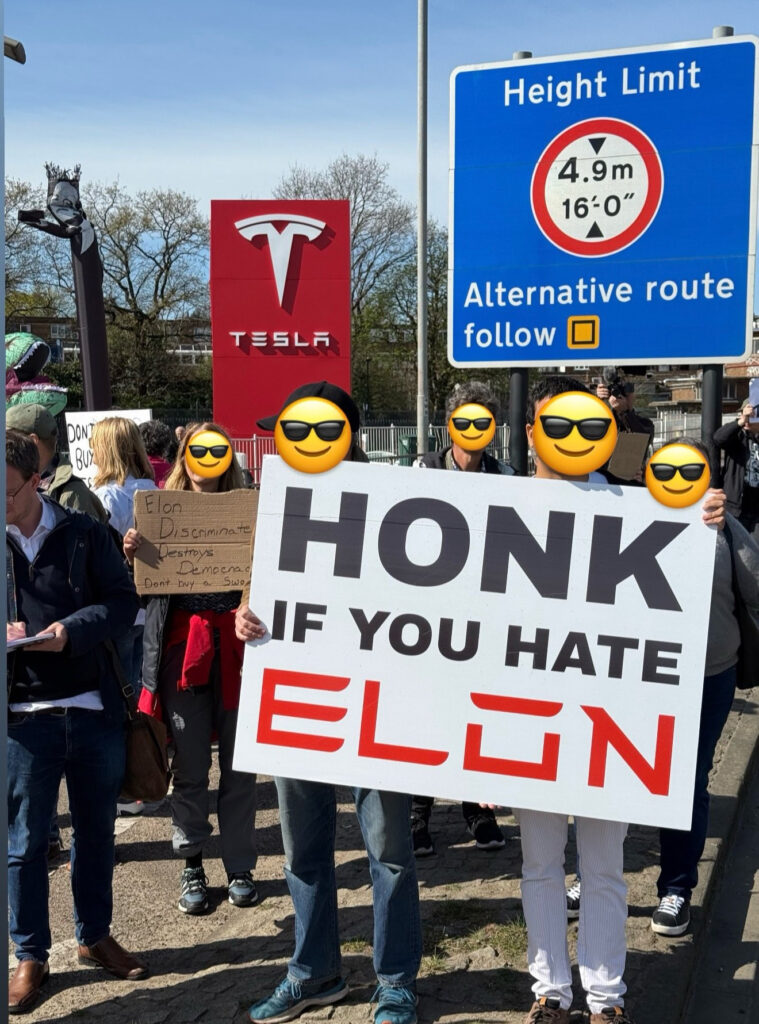




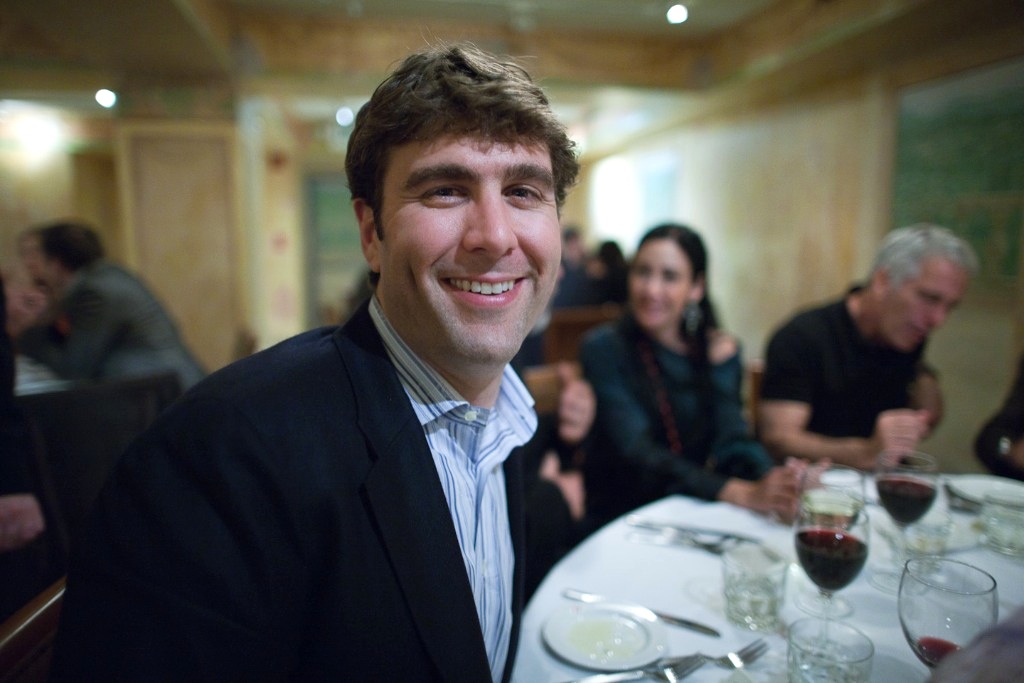


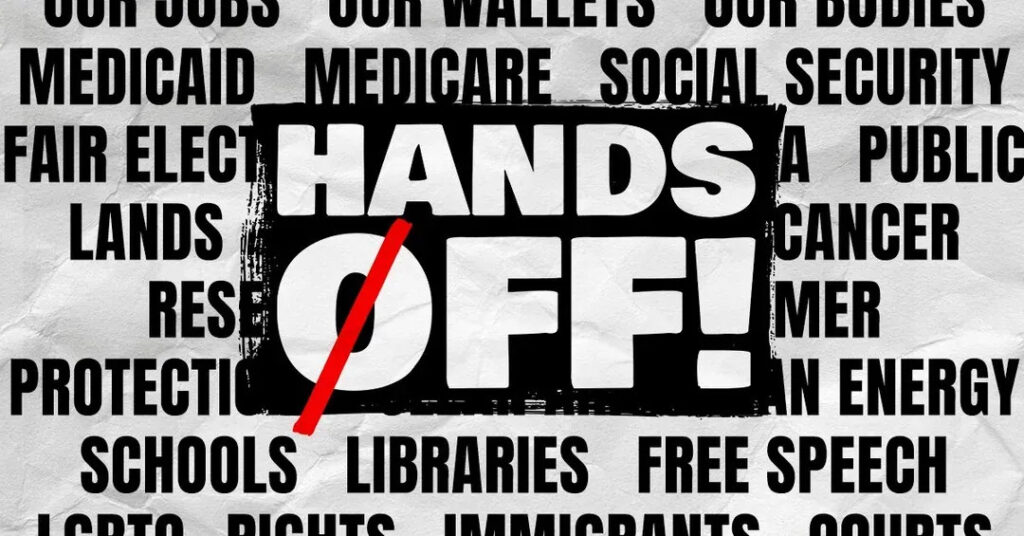
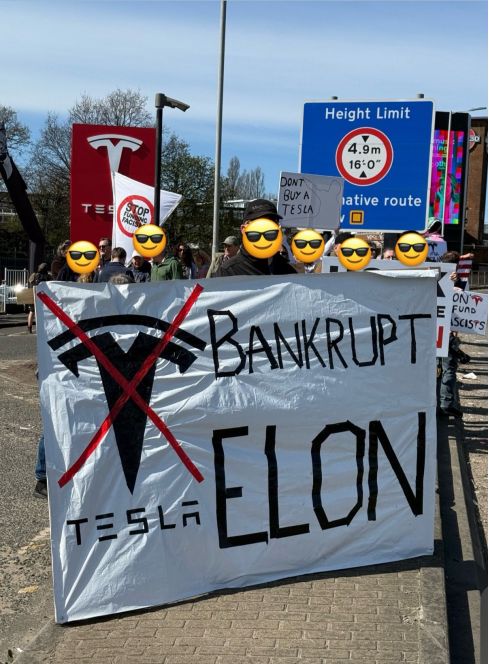






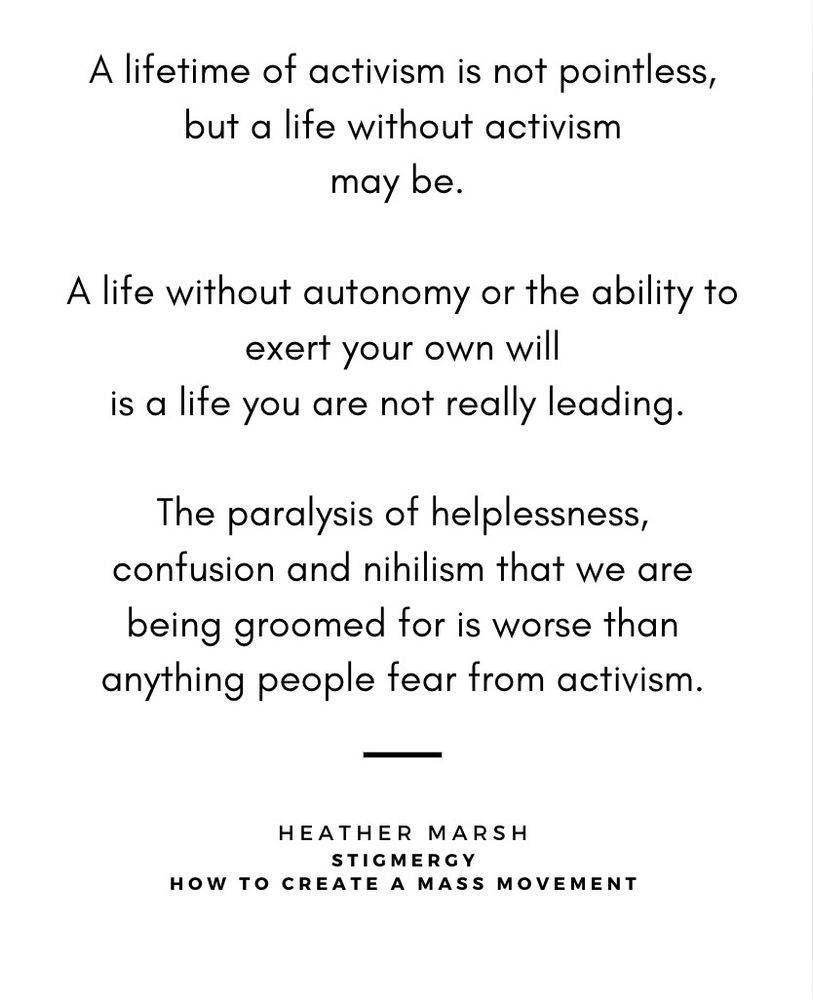






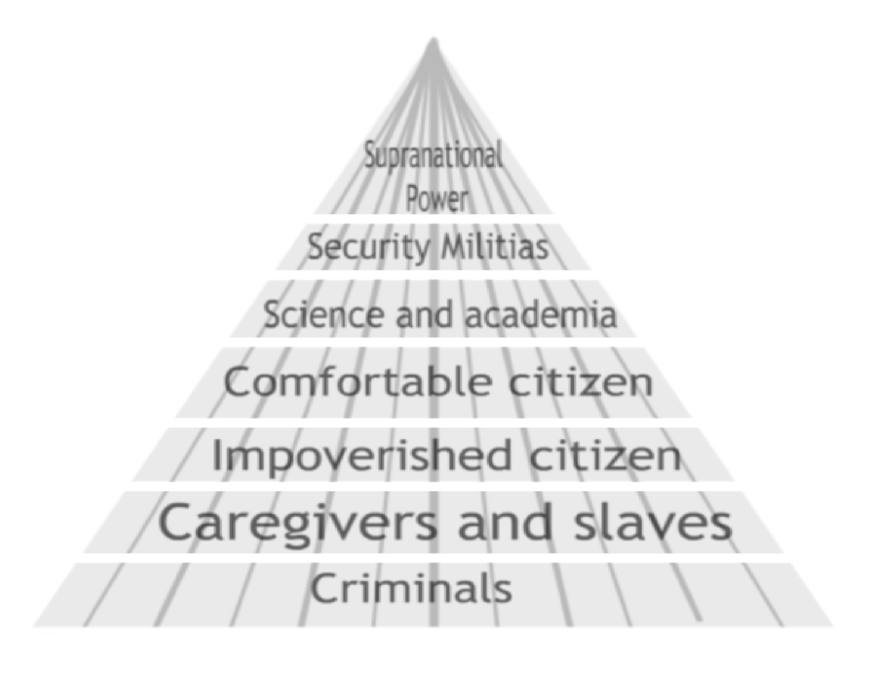






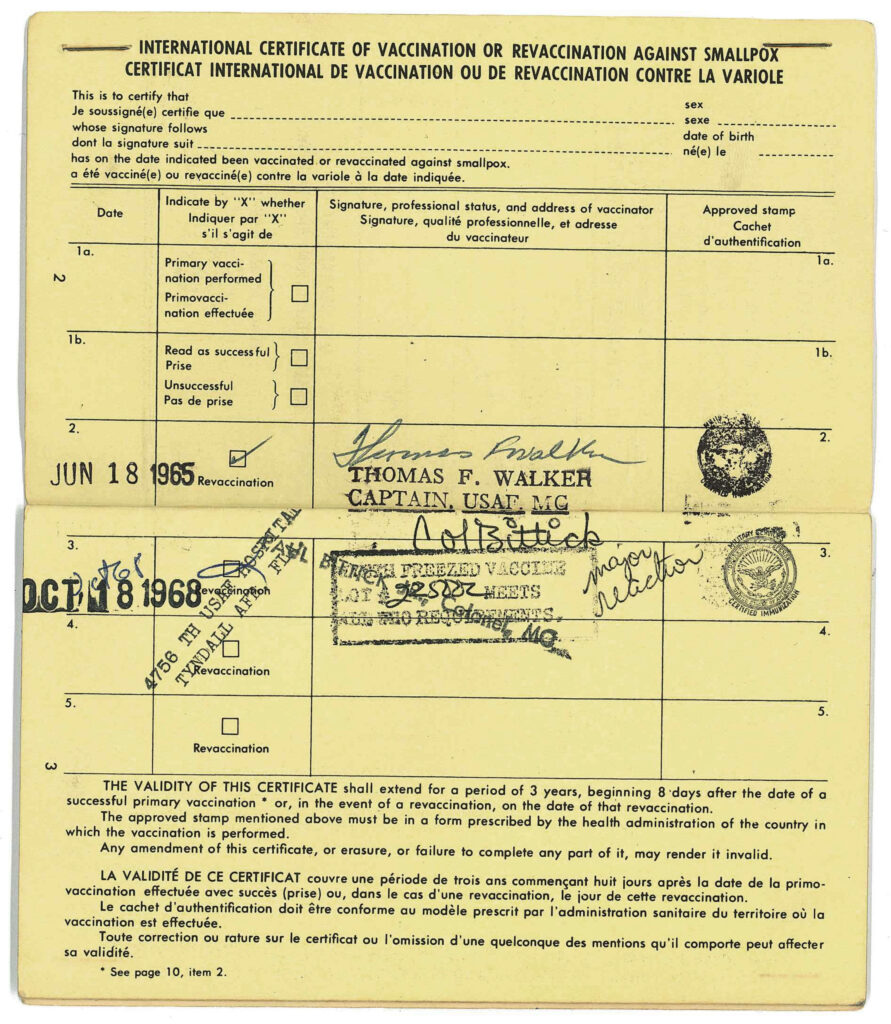






















































 Twitter:
.jpg)


Join the conversation