Note: In 2021, I’m writing a new blog post every weekend or so. This is entry 44 of 52.I skipped entry 43 due to travel in the last week of October. I took the photos herein from that trip. The coastal beach pics are off Highway 101 just south of Oregon’s city of Gold Beach. The forest ones are from northwest California’s Jedediah Smith Redwoods State Park. You can find more photographs on my instagram account. Enjoy; I sure did!
On March 11, 2020, the World Health Organization for the first time characterized COVID-19 as a pandemic. Problems with the United Nations and its agencies aside, WHO is the authoritative international body providing global health education and coordination, a situation likely to remain until supranational power or the (hopefully informed) public replaces it with their or our next organization. Thus, its director-general’s written opening remarks from that fateful Wednesday’s press conference are quite historically notable. If you’ve never read them, you should; the document’s expertly composed and concise, put together in the heat of a very stressful geopolitical moment.
On April 25, 2020, philosopher Heather Marsh wrote a piece titled “The catalyst effect of COVID-19.” Her post too has had significant impact around the planet already, but if you’re from, or answer to, an intellectual background deriving from the last few centuries in Europe, you might find that assessment a little strange: How could something I’m not already aware of and that’s not on Netflix be important? I actually know an erudite, older activist in Texas who explicitly believes the corporate amplification awarded to Eurocentric thinkers, including Nietzsche, is based not on their demographics and proximity to power, but on merit. For such readers, consider it might be challenging to measure impact for an author who gets censored and who in 2014/2015 sparked worldwide and ongoing discussion of pedo human trafficking. Or just look at the academic credibility she already has. Or recall that the Communist Manifesto, which Karl Marx and Friedrich Engels sent from London to the European continent behind schedule, wasn’t considered historically important until decades after the 1848 revolutions it was meant to influence. Not everything important is already in the important! section of the university bookstore, and who’s arranging the shelving, right?
Walking through the California state park marveling at the redwoods, I was having reminded of Marsh’s “The catalyst effect of COVID-19” due to a wonderful conversation that led me to put a two-and-two together in, I believe, a new way. I’d like to share that small insight. Plus, let’s take a fresh look at Marsh’s post (her glossary may help in reading it; the reading grade is pretty high). A year and a half later, have her predictions about how COVID-19 would catalyze the world come to pass?
Why the most radical transformation the world has ever seen?
The main of Marsh’s post starts with an astonishing sentence: “We are, or will be, going through the most radical transformation the world has ever seen; people are justly terrified, excited, depressed, heartbroken and hopeful, all at once.” Humans in today’s form have been around for hundreds of thousands of years—and now, the most radical transformation ever? Why?
My little insight answer—besides other factors such as election cycles—that I came up with while the interlocutor and I were hiking back from the redwoods to the de facto trailhead, is that we have two pan- things arriving together, one of them unique, for the first time in our history. As the globe has learned in the past two years, pan- means every, as in everyone and/or everywhere.
The first pan- thing, the unique one, is global communication. As opposed to feudal villages, where you might go your whole life knowing your entire town but never a stranger, we’ve now been approaching a point where everyone can communicate with everyone else, or at least try to do so. Many have made or hinted at this “Information Age” observation—whether that’s Marsh, journalist Barrett Brown, or simply Seattle-based heavy metal band Queensrÿche. Even Marx and Engels noted nearly two centuries ago the importance of “the improved means of communication that are created by modern industry, and that place the workers of different localities in contact with one another.” In 2010, merely six years after the introduction of Facebook in 2004, then-CEO of Google Eric Schmidt said: “There were five exabytes of information created by the entire world between the dawn of civilization and 2003. Now that same amount is created every two days.” Some are still left out of this info-flood—perhaps people with developmental disabilities, or those doomed to spend their lives down in mineshafts, or others somehow blocked from or not desiring tech access. However, though estimates vary, social media platforms nowadays have billions of users, and that doesn’t count the tremendous amount of additional people if you consider shared accounts and shared devices.
The second pan- thing is the pandemic; humans have suffered pandemics before, but now everybody can talk about one of them—in real time. In the past, crises that have affected all have been too complicated or too removed to impact the daily experience of plenty of individuals such that they understand what’s going on. For instance, issues are around ozone layer depletion/recovery and the Montreal Protocol banning CFCs are simply over the heads (pun intended) of individuals unfamiliar with the subject: Something new will go wrong with the sky?Yeah whatever! Even the frustrating topic of money, seemingly universal, is pretty much irrelevant for decorative members of contemporary royalty, kept in lifelong gilded cages. Yet everyone is threatened by contagion; the novel coronavirus can infect anyone, no matter who or where you are. I imagine there must be exceptions, very few, to universal awareness of the idea of COVID-19 contagion risk (even if some disagree it’s a genuine risk), but—perhaps to the surprise of reactionaries—refugees near the Del Rio International Bridge between Texas and Mexico (a human rights crisis heightened in Sept/Oct of this year but existing previously and surely again) understood the concept of anti-coronavirus mitigation measures, and so do infants, in their own faint way, when they feel their parents’ stress or enjoy/endure longer, soapy bath-times. To sum up, basically everyone on the planet has some understanding, however minimal, that a serious pandemic, or the idea of it for those who (incorrectly) disagree it’s serious, is going on.
In short, for the first time in human history, rare exceptions aside, not only is everyone talking with everyone, but everyone is talking with everyone about a somewhat easy to understand problem that affects all: contagion, from a widespread respiratory virus. I think that’s one huge reason why COVID-19 is catalyzing unprecedented change. Humans are fundamentally driven by knowledge and communication, and are now equipped to share their actions, experiences, and ideas in hopes of overcoming the more or less understandable (if in some aspects shrouded in mystery) planetary crisis and any other crises that surface.
The key point: two rival economic ideologies converting into a single global mono-empire
After saying the thought-provoking lines “It is very tempting to stop everything and live in the moment, but some things need us to be alert, careful and creative. One thing I have been saying for years is the US, China and Russia (and others) are all headed for a major crisis in 2020 (which is here now!) and so is the world generally. While some states are undergoing terror and totalitarianism, others are seeing unprecedented opportunities for healing,” Marsh continues: “The key point is that we are scaling up into a mono-empire from a system of two rival economic ideologies (cold war communism and capitalism).”
In the United States, a younger person may be familiar with trying to convince a reactionary Boomer that capitalism is dumb. The reactionary Boomer might, well, react by saying: “A little stupid sometimes maybe, but communism is far worse, therefore capitalism is the only answer.” Reminiscent of former UK prime minister and arch-conservative Margaret Thatcher insisting that “there is no alternative” to market economy worth anyone spending any time on. If you try to ask Boomers not about capitalism versus communism, but rather about capitalism versus feudalism, or capitalism versus whatever’s coming next, you might get blank stares, or the conversation might improve and open up. Such dialogue demonstrates that Cold War-era USians generally see political options forever boiled down, as in Manicheanism, to two opposing choices: communism or capitalism. That vanishing, yet still influential, stage of history is getting converted, and converted fast, into a single planetary empire.
What is this global mono-empire of supranational power? International tech corporations manipulating, disappearing, and propagandizing knowledge or “knowledge” while permanently storing our personal data that joins other permanently recorded information for their management of a reputation economy that will continue and worsen the extermination of the poor (read more and evidence here). To know what to do about it, we need, among other things, to see what’s before our eyes, as Marsh’s post explains.
Three things to watch for: diminishing trade economy, law of the last circle, and escaping the mono-empire
Before getting started on this section proper, a quick vocabulary note. To read the below passages, as a kind of shorthand, you can think of an endogroup as, due to emergency conditions and fear/guilt symbiosis, affiliated people claiming they have an exclusive identity, idealizing an image (perhaps a leader or symbol), and believing an exceptional myth of their endogroup, while empathic and euphoric conduits to life outside their endogroup are blocked. Endosocial strategies are not necessarily bad, but endosocial extremism is. Endosocialism is contrasted with exosocial expansion, the “[u]ninhibited expansion of self through continual establishment of euphoric conduits through relationships, discovery, creation, spirituality, etc.” Exosocial expansion is something humanity needs more of. (Read Marsh’s book on self since it’s more complicated than this quick Cliffs Notes-style summary.)
Here’s the first thing to watch for from Marsh’s April 2020 post: dramatically decreasing importance of trade.
One, the [trade] economy is not going to be nearly as important as it was before. This may be unimaginable to people who have been accustomed to framing all of our problems in terms of economics, but think of how religions and states faded as the dominant endogroups when new transcendental endogroups appeared. Things that appear essential to society can fade into irrelevance if they are based only on endoreality, as [trade] economics is. The crash we started the year [2020] off with will not simply produce a depression and then recovery. Instead, it will illustrate the fact that economics now is simply an abstracted power structure [consider] with no underlying support in universal reality (like all endoreality). Economics as we know it, is dead. This does not mean it will disappear completely overnight, or that it will not remain in some form in some places, but, like religions, states, families, and other formerly dominant endogroups, it will no longer be the dominant or authoritative power structure in our lives. This is explained in great detail in The Approval Economy which will be published one day.
I’m not sufficiently knowledgeable about how the trade collapse/change is playing out in most countries, but I’m aware of what’s happening here in the United States and in a few other places. Of course USians have heard about supply chain problems, such as the article last month in The Atlantic titled “[The United States] is running out of everything.” Those in the know for the past few decades have acknowledged the taboo subject of how in the US, far from its intelligentsia able to remain forever smug about not signing portions of international law from a catbird seat position, will find itself increasingly dependent on, and unable to force compliance from, those it previously mocked (or invaded). USians might notice non-USians are more and more vocal on global social media every day, and that the centuries-old hell is other people Eurocentric philosopher tomes are not stopping, say, Myanmar rebels from sharing their news online. But like trusting Nate Silver in 2016 that Hillary Clinton would win the White House, many in the United States today promise themselves that we’re in just another merely temporary economic downturn. Instead, what’s happening will be far more transformative. I’ve started tracking this topic on my blog using the tag economics and the header “worldwide trade economy collapse/change.” You might consider that, as international experience demonstrates, USians are typically exceptionally helpless and all too often admire an idiocracy, especially when it comes to insisting social support is for only weaklings and imposing shame for it. But the US is going to need social support badly; and, the US won’t be able to provide enough of it from within. For more on this, and other topics such as the international implications of US federal FATCA law (Foreign Account Tax Compliance Act), see my blog’s Leaving the US tag.
Verdict? Yeah, we’re seeing the worldwide trade economy collapse/change come to pass, even if arriving in a strange, slow-mo, lumbering Frankenstein’s monster sort of way.
Here’s the second thing to watch for from Marsh’s “The catalyst effect of COVID-19”:
Two, in accordance with the law of the last circle, also explained in The Creation of Me, Them and Us, places like the US, and China are going to try to fall back to old real or imagined endogroups such as those around states, religions, etc. as the economic endogroups weaken. We have already seen this in the global reversion to various forms of endogroups producing widespread nationalism, sexism, racism, religious cults and every other form of endosocial extremism. This will continue in some regions, and we are still at risk of civil wars and other endogroup atrocities from this.
The retreat to far-right demagoguery playing out in many countries currently is an example of Marsh’s law of the last circle; think fascist Jair Bolsarano in Brazil, for instance, or the likely return of Trump in November 2024. Revivals of authoritarian, patriarchal religion would be another example, as in the “Christian America” antagonists in science fiction writer Octavia Butler’s 1990s Parable novels, who decades before Trump, chanted “Make America Great Again.” Another example would be Steve Bannon allying with Moonie cults that literally worship assault rifles and are setting up compounds in Tennessee and Texas. A lighthearted and non-harmful example would be my reading the recent autobiographies of the heavy metal rock star men I grew up idolizing, when I’m tired, depleted, and want to turn my brain off before bed. We all employ various endosocial strategies from time to time, but endosocial extremism threatens atrocities, already existent or forthcoming, and threatens to block exosocial expansion.
Verdict? Yes, the law of the last circle is increasingly observable, with people retreating from the possibility of evolution by fleeing, in greater numbers than just prior, toward their former (real or imagined) endogroups.
The third and final thing to watch for from Marsh’s post is the global mono-empire, and how to resist it. The global mono-empire can be seen, for example, in Mark Zuckerberg’s October 28 announcement—in response to revelations, of the manipulation and misery of Facebook and Instagram users, that whistleblower Frances Haugen provided to the Wall Street Journal and the Facebook Consortium—that Facebook will rebrand to Meta. The prefix meta- means “transcending”; it’s seen in terms such as metaverse, metacognition, and metafiction. Facebook’s new brand identity, Meta, suggests transcendental improvement, but will mean only transcendence above that Cold War binary of capitalism or communism, into the global mono-empire of knowledge hoarding and manipulation (propaganda), permanent personal data storage (no privacy), reputation economy, and so on. Note that Facebook, and any future Meta, will (continue to) have users who think of themselves as small biz capitalist, state communist, corporate capitalist, anarcho-communist, or as humans equal to some other ideology, but it doesn’t matter, with surveilled fixed identities, they will all answer to these tech corporations … unless,
Thankfully, the public can also scale up with its pan- connections to each other, with regional communities interconnecting for mutual benefit while retaining insofar as possible, their own autonomy, self-governance, and cultures. The public can resist the global mono-empire, while supporting, or revoking support for, international, transparent, peer-promoting epistemic communities providing expertise with the help of knowledge bridges (decode that mouthful here). In her post, Marsh provides a 14-point list of opportunities activists can pursue to take advantage of the pandemic to achieve worthy goals. The COVID crisis is not only an opportunity for the global mono-empire, but also for us. For instance, one of her suggestions is, since public transit was becoming free of charge in many places, not to let it become unfree ever again. Seattle failed to accomplish that goal. During the early phases of the pandemic, the City of Seattle made bus rides free; then in later phases, the transit authorities said, time to return to paying bus fare. As far as I’ve been able to make out from my high castle, Seattleites hearing news of the upcoming change explained to each other they just knew that doing anything to stop it would be unrealistic, so the transit authorities said Wow that was easy and resumed charging money for bus rides, unhindered. And Seattle conservatives don’t care if bus rides cost money because they hate the idea of anybody (beyond families, churches, and other masculinist endogroups) providing or using goods and services for sheer fun, like basking in the sunlight that funds Earth life for free. (All of life is literally free; ultimately, the sun is paying for all this.) I don’t know what the status of the free public transit goal is outside the United States. Imagine if there had been just 14 journ-activists available, each one tracking a single of the 14 goals worldwide; then we’d know, and maybe more people would have been persuaded to understand and pursue the 14 aims! It can still happen, there’s some word that starts with d and rhymes with phonate that may be relevant. Regarding resisting the mono-empire, Marsh writes about the importance of her proposed global commons for public data (GetGee) and suggests using the news of supply chain problems to encourage, not development of evermore hierarchical forced trade dependency, but development of collaboration through networked fostering of strength and support. Check out her ‘The catalyst effect of COVID-19’ post for the other fascinating points on her list of 14 goals, which might call to mind, somewhat, how Marx and Engels created a 10-point plan in the Communist Manifesto (recommending for instance the abolition of all rights of inheritance) or the Black Panther Party put forth their 10-point plan in 1966 (demanding among other things an immediate end to police brutality and murder of black people).
All of the above in one encounter
Driving back to Seattle, I parked along the way—somewhere off Highway 38 in southwest Oregon—to buy a cap for the air inflation valve of one of my tires. As the commercial jingle has it, I got in the zone: AutoZone! Therein I had a single encounter that encompasses all three points Marsh’s post recommends watching for.
A heavily tatted clerk rung up my tiny plastic bag of four tire air valve caps at the register and grumbled aloud about how AutoZone store staff (trade) is supposed to be a family (families are fine but converting workplaces to one hints of the law of the last circle) and how the other employees were letting him down by not coming in and working overtime (economic trade collapse/change, as r/antiwork posts from this month also suggest). Forgetting I was apparently the only dude in the store, and perhaps the whole rural red area, with long hair and an anti-COVID19 face mask on, I tried to make a joke about how the forthcoming zombie apocalypse might be filmed by Tarantino, you know, Quarantine Tarantino. The tatted clerk ignored me entirely, instead initiating a new conversation with an employee in the back (sticking with his workplace trade endogroup dominance battles rather than experiencing an emotional conduit with an outsider offering something punny). The tatted guy beseeched the second employee to come in as soon as possible for overtime. That other employee refused. The heavily tatted clerk began loudly bemoaning the general state of things. “I want to rejoin the Army,” he said bluntly. “I want to go back to Afghanistan!” Since his trade economy endogroup is collapsing, then it’s law of the last circle, at least in his imagination, reverting or regressing back to his former cherished endogroup, the hierarchical militia of Pentagon mercenaries he’d belonged to before. I punched in my payment card’s PIN and did the remaining button-presses, thereby entering my transaction and other personal data into permanent ledgers for manipulation use by the global mono-empire, regardless of whether the bureaus of that mono-empire advertise themselves to their populations as capitalist, communist, or perhaps someday soon, neither. When I left O̶m̶e̶l̶a̶s̶ AutoZone, I enjoyed the cool night weather (primary euphoria / exosocial joy), reminded myself to be grateful for the valve cap as I installed it and for my knowing how to install it in the first place, i.e. not being afraid of car maintenance as many are (gratitude, another emotion associated with exosocial interactions, in this case with older siblings who taught me car stuff), and finally, plain ol’ smiling and feeling good from this great trip I’d just enjoyed (rather than, as I know some do, including Western thinkers amplified by academia, arguing that happy nature hikes should be permanently off the table since the trails eventually come to a end, causing nihilistic sadness). Were the public having a blast sharing free essentials (among the recommended goals in Marsh’s post), providing for one another, as Food Not Bombs does (it’s real! it’s realistic!), I and others would be freed from unwanted paid-employment, and could more often enjoy examples, small or big, of expansive exosocial life.
These dark sands may secretly proffer platinum and other lil’ resources
Timelessness and chaos
Visiting the redwoods, you inevitably think of how these giant trees, sometimes hundreds, sometimes thousands of years old, were here long before you were, and will be here long after you’re gone. A thought that might feel scary in an extreme endosocial headspace/environment, becomes natural and good in the exosocial great outdoors. Your time is part of, not some stupid endogroup cult, but the greater timelessness of Mother Nature.
In the United States, it can be common for activists to brag that any proposed change is unrealistic, especially if the origin of the proposal is not the usual vaunted Angry Intellectual Men. People telling each other (due to propaganda) that they just know of good change, that’ll never happen, is actually the only real obstacle. If people went out by the truckloads to catch invisible Pokemon a few years back, they can be convinced in truckloads to read books. Well, maybe. Among many other reasons, as a result of such US-specific barriers to activism (at least among my generation), I’m leaving the country, eventually, an aim of mine fans of this blog will be familiar with. It might take a while, and I worry over leaving people I care about in a metaphorical sinkhole they or those around them might not be able to see, but …
Elsewhere in the world, the COVID-19 catalyst effect might mean many people going outside and rediscovering efforts like Food Not Bombs, sharing food with each other in new and joyous ways. In the United States, movements afoot to ban dual citizenship, lock down borders permanently, and deprive residents even further of quality knowledge and trust might eventually mean something horrifying countrywide. Myanmar, and the open air prison of Palestine, a stage-setting for security forces training and live weapons industry advertising expo, come to mind.
Philip K. Dick also comes to mind, one of my favorite science fiction authors, whose stories have been popularized by Hollywood movies that strip out almost all his philosophical content and replace it with action heroes and fight scenes. PKD’s stories deal with questions around defining reality and acting authentically. Ultimately, he banked on the courage of the public and his “secret love of chaos.” Instead of picking identities demanded by the mono-empire’s drop-down menus, we can choose to change daily, or even moment to moment, in our chaotic world. You see a lot of that in the forest or on the beach. Crashing waves, bickering birds, falling trees. Slowly erranding slugs. Happily climbing humans.
I’ll give PKD the last word:
I have a secret love of chaos. There should be more of it. Do not believe — and I am dead serious when I say this — do not assume that order and stability are always good, in a society or in a universe. The old, the ossified, must always give way to new life and the birth of new things. Before the new things can be born the old must perish. This is a dangerous realization, because it tells us that we must eventually part with much of what is familiar to us. And that hurts. But that is part of the script of life. Unless we can psychologically accommodate change, we ourselves begin to die, inwardly. What I am saying is that objects, customs, habits, and ways of life must perish so that the authentic human being can live. And it is the authentic human being who matters most, the viable, elastic organism which can bounce back, absorb, and deal with the new.
Note: In 2021, I’m writing a new blog post every weekend or so. This is entry 41 of 52.I took all the photographs during the past workweek.The shots show (variants of) Southern Magnolia trees in West Seattle near the Chelan Cafe.
Magnolia fruit
Circa 2009, when I lived in North Texas, I enjoyed learning about trees with a field guide. I taught myself to distinguish between sycamores, oaks, and so on. That might not seem a big deal to those who grew up taught such things. But for those who grew up in front of glowing screens, stuck in their heads, identifying components of Nature can be a pleasant bridge toward actual reality.
One kind of tree that has stood out to me ever since has been the magnolia. You might have heard of the moonlight and magnolia myth, based on a line from the 1939 Gone with the Wind film. The myth refers to unjust romanticization of the antebellum South, likely alluding to the sweet smell of the tree’s blooming white flower, since the magnolia grows especially in the Southern portions of the US.
Perhaps the best known type of magnolia is the evergreen Southern Magnolia (Magnolia Grandiflora), native to the US South. In 2009, I wrote a blog post about the biggest Southern Magnolia in Dallas / Fort Worth, which lives at what was then called the Fort Worth Botanic Garden. This summer, I revisited the towering tree and wrote about how sadly, via a sweetheart deal, the City of Fort Worth took the 109-acre park out of the commons (well, city government-controlled commons) and handed it to the BRIT nonprofit, its private management, and its board of directors, who as of a 2019 tax filing included local billionaire Ed Bass. In addition to charging admissions fees, BRIT told the public to stay away from the region’s biggest magnolia by putting up chains and Do not enter, Do not climb signs. But are humans and magnolia trees free to touch elsewhere, possibly in the Pacific Northwest?
Urban setting, with tree
To my surprise, I recently noticed that along one of my jogging routes in West Seattle, multiple accessible magnolias grow. My 2008 copy of the National Wildlife Federation’s Field Guide to Trees of North America says that various types of magnolia are native to the United States and Canada. The entire book unfairly leaves Mexico out of North America; I don’t know if Southern Magnolias are native there. The book’s maps (showing US and Canada only) suggest that for the most part, magnolias are local to the US South. That includes the Southern Magnolia species, as you might expect from its name. So what are magnolias doing in Seattle?
The field guide explains that the Southern Magnolia is grown worldwide as an ornamental species. The only West Seattle magnolias I’ve come across so far are on the property of the Chelan Cafe, obscured from some angles by columnar maples. The long-standing restaurant, open since 1938, offers highly tempting but very non-vegan chicken fried steaks and other Southern cuisine, which maybe explains why decorative Southern Magnolias are around the property: to fit the theme.
In the last workweek, I asked a Chelan Cafe employee for more information, and while he didn’t know when and why these particular trees were planted, he said he believes they’re actually dwarf magnolias. Dwarf magnolias are variants of the Southern Magnolia that grow shorter, and are thus easier to plant ornamentally in rigid urban settings. The City of Seattle’s remarkable tree inventory map agrees that the Chelan Cafe magnolias are Southern Magnolias, but doesn’t say if they are or aren’t dwarf magnolias, or any other variant. Meanwhile, Lou Stubecki, who manages Trees for Seattle, the umbrella for the City of Seattle’s urban forestry efforts, told me by email today—I showed Stubecki the same photos you’re seeing on this post—that the plants look like the Southern Magnolia cultivar called “Little Gem.” They’re shorter in stature and have smaller leaves than the regular Southern Magnolia species. Plot twist: Little Gem and Dwarf Magnolia mean the same thing. Two names for the same variant of the Southern Magnolia.
So in a sentence: Southern Magnolias (at least the dwarf/little gem subtype of them) live in Seattle because in addition to growing natively in the US South (and perhaps elsewhere), they’re also planted decoratively worldwide.
I think two lessons can be drawn from this everyday life Q&A.
Southern Magnolia near electronic gizmos
First, the public shouldn’t risk taking the commons for granted, whether city- or genuinely public-managed, as the City of Fort Worth’s giveaway of the Botanic Garden shows. Many in the United States who wake up to horrifying “political” realities eventually choose to push them out of mind, limiting themselves to “toxic positivity,” lighthearted conversations, funny memes that are (apparently) apolitical, corporate entertainment, and the like. Rest and recreation are crucial, lighthearted conversations can be lifesavers, and resistance doesn’t have to mean sorting through terrifying data all day every day. However, I don’t think just putting scary topics on permanent ignore is a solution either, despite what the latest ’60s-esque quotes might claim about personal comfort. Injustice crops up in our neighborhoods already and will continue to do so, possibly taking our favorite trees down with it.
Second, states internationally employ a startlingly high degree of complexity and violence (or threats thereof) to control how such entities as plants are moved around worldwide. In my own efforts to emigrate, I’ve read through a lot of bureaucratic Canadian documents to try to determine if bringing my houseplants across the border by car would be permissible. The closest I got to an answer was that it would depend on the whims of the particular CBSA border guard, who would most likely wave my little green friends through as typical houseplants; but, that wasn’t certain, since the plants I take care of, while quotidian, nevertheless aren’t on Canada’s list of “automatically approved” species. (I’m now thinking I’ll go to the Netherlands anyway.) I can’t find anything intrinsically wrong with the concept of societies knowledgeably monitoring their geographic borders and responsibly regulating the movement of plants, which after all could qualify as invasive species or carry contagious pests. But like the Fort Worth Botanic Garden, understandings of why and how plants should be spread or constrained was stolen from the public over centuries and placed into the hands of states regulating ultimately on behalf of corporate supranational power. Consider this astonishing excerpt from human rights activist Heather Marsh’s 2016 blog post The supranational empire:
For almost one hundred percent of human history, people lived in autonomous, networked tribes. Their feats of exploration and the knowledge handed down over generations were equal to or greater than more complex societies, even in highly specialized areas. The medicinal knowledge of the Kallawaya in pre and post Inca society included brain surgery in 700 CE and using quinine to cure malaria before anyone else. The navigation and seafaring skill of the Polynesians brought them to over 25 million square kilometres of territory between Easter Island, New Zealand and Hawaii and also took them to America and possibly close to Antarctica. Polynesians and probably many others were not following or seeking food. They explored even when their survival needs were all met. Kallawaya still travel great distances to share their knowledge and skill, not because they need to but because it is their accepted social responsibility to do so. Kallawaya traditional knowledge includes uses for almost a thousand plant species and Polynesian traditional knowledge allows them to navigate using 220 stars. All of this knowledge was preserved in oral tradition for hundreds or thousands of years and was shared by the tribe, held by those with the interest and aptitude to learn it.
Leaves of another West Seattle magnolia
Try explaining public sovereignty/knowledge (when it exists) to a CBSA border guard giving you grief about the safe snake plant rising from your floorboard. Some ministries and bureaucrats do excellent work, of course, but ultimately, states and especially corporations have snatched knowledge away from members of the public, who often no longer know that they don’t know the details of, say, trade or FATCA agreements controlling cross-country shipments of currency or plants. That leaves us stuck with semi-opaque bureaucratic rules, the caprices of individual enforcers, and worse. Self-governance is violated or impaired. Thankfully, in many cases, our understandings and power have changed for the better across the last decade due to journactivists (journalist + activist) spreading quality information, human rights defenders putting their lives on the line, and other forces.
Finally, I’ve visited the Washington Park Arboretum only once, but readers interested in Seattle trees might find it a great place to go. I hope to check out the arboretum again soon. Below, let’s branch out to other items:
News blasts:Just some hyperlinks…
“Fighting fascism is a full-time job!” (From Star Trek: LD)
In the interest of time and brevity, I’m omitting important items from the past workweek regarding the United States, techupdates, and the worldwide trade economy collapse/change.
For next weekend, I aim to post about Belarus. But if you want a head start, check out these twowritings from Charter97.org, editor in chief Natalya Radina. Amnesty International named Radina a prisoner of conscience after her 2010 arrest for “organizing mass disorder” (reporting favorably on pro-democracy protests by the opposition to Belarusian dictator Alexander Lukashenko). She’s now an exile in Poland and said in 2011, when the Committee to Protect Journalists gave her an award, that “all of Belarus today is a big prison” because of, among other reasons, “foreign indifference.”
Note: In 2021, I’m posting a new entry to my blog every weekend or so. This is number 29 of 52.All photos were taken by me on 23 July 2021, except the small one identified in the caption as from my 2009 post. I took that photo then.
Note: See the previous week’s post for a reply by me to a reader’s question in the comments.
Note: On July 20, 2023, I removed Reuters Pictures photography from the Cuba news blast section of this post due to a demand letter from PicRights, a copyright troll acting on behalf of, and with the knowledge of, Reuters. The removed imagery may still be found in the five-image slideshow included in the original July 2021 Reuters article. I’d be curious to learn (and publish) what the photographer Alexandre Meneghinimakes of the PicRightsoperation and, most of all, what the unpaid Cuban protesters think of the clamp-down on circulation of their photographed protests — which were met with violence and imprisonment— calling for President Miguel Diaz-Canel to step downfollowing his failures with the trade economy and COVID there. Two years later in Cuba, smaller, sporadic protests continue, and while dissidents say awareness has increased, the problems remain, with one Cuban activist adding that change requires, among other things, “international visibility.” Yeah, that’s something PicRights should consider, international visibility, as it was the whole intent of my news blasts to bring little-known news from beyond the U.S. borders to a U.S. audience.(You also have to wonder how much co-option has taken place of the Cuban protests, since the two-years-later article is so doth-protest-too-much deadset on saying there hasn’t been any. But to my knowledge, no one has actually proven any to date.)See also this May 2023 letter from Human Rights Watch, Amnesty International, and others asking Europe to help with Cuba’s current human rights crisis.
Texas Native Forest Boardwalk at Fort Worth Botanic Garden
More than a decade ago, in June 2009, I wrote a blog entry titled “Biggest Southern Magnolia in DFW” (Dallas/Fort Worth). From my recent IP addresses in North Texas and Seattle at least, if you google “What’s the biggest Southern Magnolia tree in DFW?” my writing comes up as a “featured snippet” search result. As strange as it is to be honored by Skynet, I’m glad the Google algorithms prioritize the post.
Anyway, Friday afternoon I visited — just before flying back to Seattle on Saturday — the hometown tree, which I hadn’t seen in years and years. I discovered some things have changed, not only the TexasTreeTrails.org webpage I cite in my long-ago entry for facts on the champion plant. (That webpage has moved here.)
You’re probably familiar with the structural device of dividing a topic into the good, the bad, and the ugly; let’s do that in reverse order, to end on an upbeat note before plunging into news blasts for Cuba and the Lone Star State.
The Ugly
The world has moved on
On Friday I stopped by Fort Worth’s Cityview Car Wash too, because in the past few years, from a distance, I’ve often thought about this odd antebellum-esque store — in some ways, an opposite of the grand Southern Magnolia — where I took family automobiles as a prep school teen, not knowing any better. While the globe continues to warm (see my recent post on the Pacific Northwest heat-dome), it’s possible such expensive car washes in the South will keep going till the last possible moment, so rich white men can take their antique Mercedes and Jaguars there, and sit inside, having their shoes shined by elderly black men, or sit outside, watching their vehicles be towel-dried, by not-so-rich, not-so-white young men.
Your monthly car wash bill awaits
Along with the global weirding of weather we in the U.S. are already witnessing, my understanding is that water crises will be among the earliest and most salient enduser-facing problems of the coming climate change disasters. Of course, the outlandish car wash shops rely heavily on large amounts of water. I called Cityview Car Wash on Sunday to ask if they use recycled or reclaimed water. The low-level employee who answered the phone frankly said No, they use fresh water.
Picture it like a movie. Even as, by 2040, pollen counts double, and even as, by whenever, Fahrenheit temperatures in the 120s and higher become the norm, sweaty, sneezy Texans will still be sitting at Cityview Car Wash. The TVs will be blasting Fox Weather; security for the business will be provided by militarized police-tanks. The old white men will keep on watching teens haul huge long hoses to the parked Porsches. Close-up on a hose-sprayer held in a dark-skinned hand: the water is only dribbling out… only barely dribbling out… Close-up on a spigot valve being turned hard by a brown hand again and again. Another close-up on the hose-sprayer: it’s waterless now. It’s futile. With itchy eyes, the old Texan men look at each other. The South will not rise again.
But can the City of Fort Worth control such non-essential water usage during droughts? After all, they sell water to businesses in their jurisdiction, sourcing much it from the Trinity, the river discussed in my post last week.
Such local government regulation has had an effect on DFW car washes before. Due to dry spells in recent years, car washes in Witchita Falls, a corner of North Texas, have been required to change procedures when water conservation regulators threatened to shut them down. A City of Fort Worth drought contingency and emergency water management plan, effective May 2019, says (to oversimplify) that when a dry spell gets bad enough (“Stage 3” in the document),
“Vehicle washing … [at a] commercial car wash […] can only be done as necessary for health, sanitation, or safety reasons […] All other vehicle washing is prohibited.”
Note: According to City of Fort Worth water conservation manager Micah Reed in an email reply to me on Monday July 26, the emergency plan is updated every five years. The 2019 one I link and excerpt is the one that would come into effect in a qualifying emergency. I bet Micah Reed would make an interesting interviewee on this topic.
In short, the forthcoming water crises might bring power struggles between the Texan-beloved auto industry, and governments, not so beloved by Texans except when their business gets a gub’ment handout. Everyone underfoot getting stomped on by the two hierarchs going at each other, if they do, hopefully will intensify their growing interest in self-governance, taking care of themselves, each other, and the land as the giants continue their slow implosion.
Let’s turn to the Fort Worth Botanic Garden to see an example showing how power struggles between local government and industry typically go down. This weekend was the first time I’ve visited the Garden in something like seven years.
The Bad
The Biggest Southern Magnolia in DFW, now chained off. Signs read: “Do not enter” and “Please do not climb in the trees. Thank you!”
Not far from adrenal-fatigued Texans and their thunderous, wastefully washed SUVs on one of the city’s busiest streets, University Drive, the Fort Worth Botanic Garden, 109-something acres nowadays and the oldest major public garden in the state, grows peacefully. Depending on how you slice it, construction began on the Garden, then smaller and known as Rock Springs Park, in 1921, followed by, in various phases, early construction continuing on the area, renamed the Fort Worth Botanic Garden in 1934; some of that labor was part of FDR’s New Deal. The park debuted in 1935. However, none of the 750-or-so poor laborers from the earliest construction days were allowed to attend the opening ceremony, because the authorities wanted present only those who could afford fancy clothes. With limited exceptions, the Garden was also segregated, banning humans with dark skin, until roughly 1961 (more sources would help; anyone?). In 2009, the National Park Service (well, a bureau of the NPS) listed the core portion of the Garden on the National Register of Historic Places. The 111-page registration form can be found here; that certifying document and the 2010 Fort Worth Botanic Garden Master Plan (put together by various stakeholders including the city and a high-priced consulting agency) supply a great number of details on the Garden that this paragraph skips over for the sake of quick summary.
Same mighty plant, from my 2009 post. Note absence of chains. Neither a “do not enter” sign, nor a “do not climb” sign, back then.
The City of Fort Worth has owned at least some of the underlying land since 1912 and still owns all the Botanic Garden land today, but while I was happily living in Seattle, a bigly change transpired. In October 2020, the City of Fort Worth transferred its management of the Garden to the Botanic Research Institute of Texas, the BRIT nonprofit among whose board of directors — according to a 2019 tax filing — sits Ed Bass, of the billionaire oil-rich and locally powerful Bass family.
BRIT’s nonprofit structure notwithstanding, the management of the Botanic Garden has been privatized; the immediate ire the public has felt regarding the new biz centers on the Garden replacing the free admissions policy, more or less upheld continuously since 1935, with an in-real-life paywall. BRIT, on Saturday, charged me the $12 per adult fee to get in. (I was able to pay at the entrance; maybe tickets sell out sometimes, I don’t know.) Judging by a search of the #fwbg twitter hashtag, I’m by no means the only person frustrated about very rich, very faraway people putting a fence around local native trees, hoarding an imaginary right to visit them, then charging everyone to do so.
The local alt-weekly, the aptly named Fort Worth Weekly, tracked the City’s giveaway to BRIT with multiplestories, rightlytroubled about the public getting dispossessed of the nearly century-old treasure. Lon Burnam, a longtime Democrat in the lower half of the Texas state legislature (not currently), a former executive director of the Dallas Peace Center, a Quaker, and a member of the Tarrant Coalition for Environmental Awareness, co-authored a May 2020 piece in the Fort Worth Star-Telegram that warned the City of Fort Worth was giving BRIT a “sweetheart deal” (a yearly $3.35 million management fee the City pays to BRIT, separate from a one-time $17 million from the City to BRIT for repairs), unless specific steps are taken to protect the commons. A month later, Burnam told the North Texas NPR/PBS member station: “Basically, the city has abdicated a lot of control and a lot of their responsibility for managing the gardens.” Vaguely citing to the station some unspecificed “plans in progress,” BRIT didn’t even deign to be interviewed.
Friday photo of DFW’s biggest Southern Magnolia, leaving out the signs/chains
What I dislike about BRIT’s very-Texan management of the Garden isn’t just the admission costs, but also the practice of blocking patrons from the trees, further dissociating humans from Nature. I do remember, especially as the years went on (say, circa 2000-2015), that disrespectful people would trash the park and hurt plants (for instance by walking over them), but improving norms around respect for Nature would be the best solution, and could be implemented immediately by hiring knowledgeable employees who, in a manner similar to the best Park Rangers, would politely patrol the Garden and teach guests not to dishonor or disrupt the plants.
Ignore expired metaphors about balancing govs and biz; above, the true power structure (Source)
Instead of gentle monitoring and education done by live humans, BRIT opts for the economic efficiency of brute force: chain the trees away, stop humans from touching them. For decades no chains locked up the biggest Southern Magnolia in DFW. If you look at my 2009 post’s comments, you’ll see youth climbing Southern Magnolias, including the grandest one itself, is quite ordinary. Tree-climbing (and tree-hugging!) should be encouraged along with respect for Nature. BRIT’s attitude reminds me of the Fort Worth Zoo, also a place dirtied by the oily hands of the Bass family. In December 2007, the Fort Worth Weeklydiscussed how Lee Bass and Ramona Bass led the creation of the Fort Worth Zoo’s Texas Wild! exhibit, falsely “showing how wildlife — mostly dead, stuffed wildlife — could exist in harmony with oil and gas drillers.” Reading any decently curated list of news articles from any day of the week should disprove that. I wonder if the new BRIT boardwalk at the Garden, pictured at the top of this post, so resembles the boardwalk I remember at the Fort Worth Zoo because of some Bass family contractor connection.
The Fort Worth Botanic Garden giveaway suggests the regional government hierarchs, supposedly protectors of the public, will work hand in glove with the auto industry hierarchs when the forthcoming water crises fully arrive. Maybe any battling on our behalf will be, already is, and always has been, very minimal. Instead of abdicating oneself and begging intoxicated rulers to do something, we could try something else. What’s to be done?
Another Friday photo: the biggest Southern Magnolia tree in DFW
I did enjoy some aspects of the new BRIT-era Botanic Garden. The Texas Native Forest boardwalk is nicely done; I’m referring to the actual physical boardwalk, which is well-built and fun to walk on. It’s clearly good to protect against some of the trash and decay that had built up over the Garden’s long years (the myriad disrepair was cited as a main reason to give the management to BRIT); of course, rather than the helpfully educating employees I proposed above, it seems the same strategy has been used as with public schools: governments underfund schools/parks, then victim-blame schools/parks for the resulting problems (e.g., trash build-up), and finally give them away in sweetheart deals to industry as the supposed saviors. Anyhow, this is supposed to be the good section!
Regarding governance, whether of car washes and parks or anything larger or smaller, it’s sad that large-scale democracy — clearly better than outright fascism — similarly turns, eventually, into oligarchy (rule by the few): remember that 2014 study by Princeton University and Northwestern University professors who found the United States to be an oligarchy? The Italian sociologist Robert Michels’s infamous iron law of oligarchy from 1911 states: “He who says organization, says oligarchy.” In other words, Michels argues that oligarchy can’t be avoided. Refuting such dark fatalism is the goal of philosopher Heather Marsh’s Binding Chaos books, so I recommend those thought-provoking texts to readers.
As for reconnecting with Nature, consider this menu of options:
Go vegan or close to it, which I’ve found helps build interest in, and empathy with, animals and their ecosystems
Learn orienteering (using a map and compass well). It helps individuals perceive and identify landforms and direct travel safely. In contrast, I’ve found relying on GPS blinds me to my environment. I have the third edition of champion orienteer Björn Kjellström’s book Be Expert With Map & Compass: The Complete Orienteering Handbook, but have sadly yet to read it. Looks really good though. Surprises me that most locals in Washington state and Oregon cannot name the various mountain peaks visible in the distance. Compare that with the worldbuilding/setting in better fantasy novels, as in Le Guin’s and Tolkein’s, in which you have a sense as you read that certain differing, named mountain peaks are northward while such-and-such plateaus are in this other compass direction, etc.
Use field-guiding books to identify plants and animals. Field-guiding improves visual ability overall and helps you learn names of plants and animals, in whole but also their various parts, as well as their ecosystems and the dependencies within those ecosystems. There are also ways to learn about the medicinal benefits of various plants, such as books or communities around such topics. Wandering around peering at birds or plants, a field guide in hand, also makes a good cover story for sneaking around to spy on what resource corporations are up to.
Read Ursula K. Le Guin’s middle and later fiction, which stresses the importance of leaving hyped-up “heroic” (adrenalized?) states, or just using them temporarily, and appreciating, and usually residing in, a calmer, seemingly slower approach to life. For instance, her 2000 Hainish science fiction novel The Telling describes the protagonist’s preference for conversation topics: “She heard about them, their cousins, their families, their jobs, their opinions, their houses, their hernias […] These dull and fragmentary relations of ordinary lives could not bore her. Everything she had missed in Dovza City, everything the official literature, the heroic propaganda left out, they told. If she had to choose between heroes and hernias, it was no contest.” The protagonist prefers to hear not about puffed-up heroes, but about everyday struggles with hernias. (Perhaps an exaggeration to make the high-contrast point, as the protagonist is heroic herself, as are her comrades, in a good way, unlike the official heroes of the state propaganda.)
For me, outdoor camping is intimidating for a variety of reasons, several of them irrational. But baby steps such as visiting parks, or going on day hikes (or running mountain trails!), can lead down the road to more challenging adventures. There are tons of websites and online communities around camping, but also around the simpler excursion styles. Even walking or jogging city trails can be adventurous. For instance, Seattle has a Seattle Trails Alliance; maybe an urban location near you has similar. I usually prefer going alone, but some enjoy having a travel buddy.
Somebody could make it a goal to liberate the Fort Worth Botanic Garden plants and figure out the steps to achieve it.
Any or all of the above have more “political” implications than might seem evident at first glance. Because a healthy society is made up of heathly individuals.
Compare liberation — such as reconnecting with Nature — with the practice of taking cold showers. I have two friends in Seattle who take cold showers every morning. At first, they told me, it was miserable. But soon after, they acclimated, got stronger, and the cold showers became enjoyable. Feeling their vitality in the morning became enjoyable. Strengthening yourself should feel good. If it doesn’t, or if it seems an abstract duty to be fulfilled like an awful chore, maybe you’re still heavily weakened by the wider world, and need to piece together the baby steps for escaping the damage and the comfort zones. Given the way things are going, the sooner each person improves how harmoniously they interact with Nature, the better. Nature isn’t going anywhere, and as time goes on, She’ll have more and more blunt things to say to us all.
Perhaps a resident of the nearby lagoon, a duck, or maybe a mud hen, takes a stately, solitary walk across Cityview Car Wash
News blasts: Cuba and Texas
Cubans protesting, 11 July 2021, Havana. Photo by Alexandre Meneghini for Reuters
Cuba) More than six decades ago on the Carribean island of Cuba, the U.S.-backed right-wing Fulgencio Batista military dictatorship, which accommodated U.S. organized crime and human trafficking, was overthrown, resulting in the rise of leader Fidel Castro, who died in 2016. Prior to that leftist revolution in the fifties, the United States murdered thousands of Cubans. Since Fidel Castro took power and continuing today, the United States has harassed Cuba, including via an ongoing economic embargo/blockade (called by Cubans “el bloqueo“) enforced not by navy, but by law and sanctions. The embargo is an effort to collapse the Cuban trade economy. It causes much poverty there. Every year since 1992, the United Nations General Assembly has voted in favor of resolutions calling for an end to el bloqueo, the most prolonged embargo in modern history. Even recently, the United States made it difficult for expatriate Cubans to send money (“remittances”) home to the island, where some 11 million people live today. However, Reuters reported this month that the Biden administration might ease those remittance restrictions soon, and might also lift the “state sponsor of terrorism” designation that Trump hurled at Cuba like a curse days before he left the White House. These hints by the Biden administration are likely trial balloons, a way for the Biden admistration to test the waters by observing others’ reactions, and were publicly made probably due to the protests in Cuba earlier this month — I’ll get to those in a second. Another way the U.S. has harassed the country has been via a travel ban that has at times prevented ordinary US citizens from going to Cuba as tourists. There are many nuances of this ban, which has thickened or loosened with time and different White House administrations, which I won’t get into the weeds of here. The ban has served to keep USians ignorant of Cuba, as they are of most countries and most of humanity currently alive. The ban has also served to sabotage Cuba’s tourism industry. Cuba initially closed its borders for the pandemic, which also hurt its tourism industry severely. An additional item that should be mentioned as background before getting to the protests: the very high-quality Cuban healthcare system. At a former web directory for criminology professor Dr. James Unnever, there’s a short paper on that system, I believe written by Dr. Unnever, though I’m not exactly sure who wrote the paper, nor when. The paper more or less fits with what I know from others who have told me about their experiences in Cuba. Further, a YAC.news article from 12 July 2021, “Why are Cubans protesting and how can you help?” (the source for much of this Cuba news blast) states:
The small island nation of Cuba has one of the world’s best healthcare systems even after an ongoing embargo and sabotage campaign by the United States […]
In Cuba, there is a health center per 25,000 [people], neighbourhood clinic per 5,000 people, and a personal family doctor per 500 people. In [the capital city of] Havana alone, there is a clinic in virtually every street corner, each with a family doctor and nurse. Health workers nationwide have been out in full capacity visiting patients at every home. They have been educating residents about the new Cuban-made coronavirus vaccine [called “Abdala”] and informing them it has arrived while setting up appointments for vaccination.
Throughout 2020 Cuba largely kept the [novel corona]virus beyond its shores, [but] the number of infected patients is […] now rising fast, with a record-breaking 2,698 new daily cases on Saturday [July 10], and a seven-day average now above 2,000 [as of July 12]. Cuba is facing the biggest known surge in the Caribbean. Critics of the Cuban government’s failure to contain the virus point out the government’s approval of foreign tourists, according to sources on the ground, specifically Russian tourists. They claim that the virus was allowed in despite warnings from the healthcare community. [Meanwhile] the island is undergoing an economic crisis and healthcare emergency as inflation and COVID continue to rise.
In Cuba, all citizens receive health care free of charge. According to the YAC.news article, “In the past several years, [Cuban] health workers have eradicated polio, tuberculosis, typhoid fever, and diphtheria. The amount of malnutrition among 1-15 year olds is 0.7%, compared with 5% in the United States. Initially based in hospitals, the Cuban health system evolved into a primary care system that is based in communities”. The Cuban medical system prioritizes preventive care, public participation, community interventions, and a very high ratio of primary-care doctors to citizens. With those priorities inexpensively driving their health care system, the Cuban population scores very high on health measures. Yet I’m curious to know 1) Aside from human health, what was the strategy around the Castro government making medicine a sort of “unique sales point” in the international trade economy, and 2) how does the Cuban healthcare system approach severe mental health problems?
Havana, 11 July 2021. Photo by Alexandre Meneghini for Reuters
That finishes up the background on Cuba. Now, to the protests, which made news in mid-July.
Earlier this month in Cuba, thousands of protesters hit the streets countrywide, calling for President Miguel Diaz-Canel to step down; Sunday 11 July was one of the biggest protests the country has seen in more than two and a half decades. Diaz-Canel angered the protesters because of Cuba’s growing inflation and other trade economy woes, plus his government’s failure to contain COVID-19 since it let infected travellers in. These are legitimate local grievances. Reuters reported some violence by security forces against protesters, and notes that mobile internet (and thus widespread social media) was introduced to the country only two-and-a-half years ago, a huge factor in prompting civil unrest of whatever sorts.
While the protestors correctly have a point, the U.S. media megaphone, along with U.S. thinktanks and others, have used the local anger as a way to boost unhelpful voices calling for serious destabilization of the Cuban government in such a way as to benefit foreign interests, including United States interests. This has made following the protests online, via the #SOScuba hashtag for example, a bit confusing.
The YAC.news article also says:
Due to the lack of resources on the island an international campaign has been launched to supply the island with the materials needed for syringes. The campaign is being led by Cuba’s diaspora and international solidarity movements. Global Health Partners (GHP), a New York-based non-profit, has launched a campaign to address a shortage of 20 million syringes. Bob Schwartz, GHP’s vice president, told international media, “To date, we’ve purchased four million syringes. We hope to purchase an additional two million”
Those who might wish to help with the GHP syringe collection campaign for Cuba’s vaccine rollout are directed here. I’ll note that a shortage of syringes in the United States federal stockpile was a problem noted early on in the U.S. response to novel coronavirus by Health and Human Services Dept. whistleblower Dr. Rick A. Bright. It’s mentioned in his whistleblower complaint from May 2020, in which Dr Bright explains how he was retaliated against by the Trump administration for insisting “on scientifically-vetted proposals” to overcome the COVID-19 pandemic and for pushing “for a more aggressive agency response to COVID-19″ (among other related reasons).
Havana, 11 July 2021. Plain clothes police blocking a road during protests. Photo by Alexandre Meneghini for Reuters
Back to Cuba, the twitterati also verbally sparred over blaming the U.S. Central Intelligence Agency, which is only one member of the U.S. “intelligence community” (a pro-spy rebranding of the more exact descriptor “spy agencies”). No smoking gun has surfaced proving meddling by specifically the CIA in these July Cuban protests. Surely the CIA is interested in Cuba, and history gives many examples of CIA-sponsored assassinations and coups in the Central and South Americas, see for instance Operation Condor and Operation Northwoods. But the twitterati spoke as if CIA meddling had already been definitively proven. It costs nothing and takes little effort to tweet opinions; investigation to find proof takes serious time, money, and effort.
Last time I checked, the U.S. has 16 or 17 (depending on how you count) spy agencies on the federal level. For instance, the FBI, the Navy, the Drug Enforcement Administration, the Coast Guard, and many other federal agencies all have spy bureaus that are part of the so-called intelligence community. There’s also the National Security Agency and the National Geospatial-Intelligence Agency, and still others. Maybe the newly minted Space Force, the fifth Pentagon branch, has a spy agency component; if so, that would bring the total up to 17 or 18. And that’s just one country, the United States. There are nearly 200 other countries. I’d wager almost all of them have at least one spy agency; most probably have many more.
The tunnel-vision focus of twitterati on the CIA would be like — let’s assume the demons of Abrahmic religions are real for a moment — Christians, hooked on televangelists, seeing Satan behind every misfortune, and refusing to consider what roles in the misfortune might have been played by the Ifrit of Islam, or Samyaza from the Book of Enoch, or hundreds of other demons. With hundreds of spy agency opponents to choose from, it’d be best to find evidence, set goals, and execute, rather than compete to see who can yell “CIA” the loudest, which ultimately just ends up advertising the spy agency that the activists say they hope to obliterate. (Something JFK also hoped to do!)
The Cuban authorities admitted in tweets that a government website had been taken down by denial-of-service attacks. Anons participating in #OpCuba claimed responsibility. More on that in a 14 July 2021 YAC.news article.
Translation: “We denounce that the website of our foreign relations chancellery has received a denial-of-service cyberattack since 11 July 2021. This attack generated false accesses in large quantities, compromising our servers.”
Texas) Some concluding thoughts about my approximately two weeks in North Texas. My trip improved as time went on, though the humongous Nissan Armada the rental car company stuck me with (see last week’s post) did start to sink: the check engine light came on some 48 hours prior to my flight home departing. But I turned the gargantuan vehicle back in at the airport no problem. No harm, no foul, I suppose. As my trip continued, I discovered more research data (for family and personal history) than I expected, including some fascinating and healing revelations that are too private to share on a main channel like this. Catching up with friends and family members I hadn’t seen in a long time was beneficial as well, and sometimes revealing about both sides in the interactions, in expected ways, yet also in unexpected ways. Bottom line: people are always changing, even if slowly; there’s no stasis outside abstraction; the only question is, will the changes be for the worse, or for the better? The changes are more evident when you haven’t seen someone offline in eight or so years. Three additional observations about North Texas in July 2021 might be of general interest. First, as at some Seattle places, multiple restaurants in Fort Worth are doing away with paper or laminated menus altogether, forcing customers to scan QR codes. Are laminated menus environmentally friendly, or are they plastic? Either way, you can’t even obtain a regular menu by asking, since they’re all gone. What about customers who don’t have phones, or who use their devices atypically? Avoiding needless paper is great, but everyone carrying around EMF-generating phones to scan QR graphics isn’t my preference: here are thousands of categorized studies showing EMF harms. I solved the problem by looking at the menus the stores had pasted on the windows. Or just using the blasted QR codes, if I had a phone handy. (In Colombia, where protests against president Iván Duque’s narco-state are ongoing, the cops are considering replacing their badge ID numbers with QR codes, which are small and difficult to scan for those with phones and impossible for those without; making matters worse, the public still has to know the cop’s badge ID number to get from the QR code to the actual identity, meaning, I think, the cop’s legal name.) Second point: I heard more Spanish spoken in North Texas than I used to hear, this trip. Maybe it’s a change in me and what I notice, but it could be (or could also be) Spanish speakers feeling safer or more comfortable asserting their primary language. That’s a change for the better. Finally, I got a chance to try out Belently’s Love Vegan Mexican Restaurant on Blue Bonnet Circle. Their all-vegan menu offers many gluten-free items, and their walls, painted wonderful colors, include delightful murals. That’s opposed to the default no-color beige walls that white people in the United States typically have in their homes and stores. Vegans, including those who also avoid gluten as I do, now have three strong vegan-specific options in Fort Worth that I can highly recommend: the long-standing Spiral Diner (largely comfort food and thus not the healthiest), the new Boulevard of Greens with organic juices (including beet juice!) and bowls (including broccoli and quinoa!), and Belently’s Love. See, even Texas changes.
Biggest Southern Magnolia in DFW, still bearing fruit in 2021
Note: In 2021, I’m posting a new entry to my blog every weekend or so. This is number 28 of 52; omg, the year’s more than halfway done.
Fort Worth, TX, summed up? I took the Whataburger pic this weekend, but didn’t actually eat the “triple meat” burger or drink the large vanilla shake
I was travelling through central Washington state and northeast Oregon for a few weeks earlier this summer — now, in mid-July, I’m visiting my hometown of Fort Worth, Texas for not quite half a month. Besides seeing family and friends, I’m here to do research of a personal sort. Yet after six years as a Seattle resident, I can’t help noticing several things about the Dallas / Fort Worth metroplex, some bad, some good. I’ll share those observations. I was going to then provide news blasts about the current situations in Cuba, Haiti, and Germany, but this entry simply grew too long, and I gotta do some other stuff. Hopefully next week I’ll take on news blasts for those three countries. I’m an untimely fellow.
Bad stuffabout North Texas
Graphic of SimCity game. Would you want to live here? Source.
Gridlock) Aside from traffic jams and the Lone Star State’s uniquely deregulated, isolated power grid — meaning during disastrous outages (including this year), Texas, its leaders boasting with pull-yourself-up-by-your-bootstraps lies, cannot, unlike all other 47 contiguous states, receive energy sent as assistance from beyond its borders; the privatized electric system has yet to be fixed or replaced, even though lawmakers knew of its vulnerabilities: they chose to serve the power companies instead — I want to talk about another type of Texan gridlock. In Seattle, multitudinous fairy-tale roads wind up hills, passing idiosyncratic houses with quirky paint jobs, and in the distance are bridges, sailboats, mountains. Many of my Seattleite friends have never lived anywhere else, nor have they ever been to the South. Comparing my place of birth with the Emerald City’s highly commercial Northgate neighborhood (an exception to the usual Seattle beauty), I tell them North Texas is primarily composed of tract houses, billboards, strip malls, fast food joints, and car dealerships. That truth was really evident from the sky as my flight descended toward DFW Airport. During landing, I was reading the first chapter in a thought-provoking collection of essays from 2006, edited by Alvin M. Josephy, Jr.: Lewis and Clark Through Indian Eyes. It’s research for my fiction project set at least partially in northeast Oregon and 2036, because all time connects, and the colonial histories of NE Oregon often begin by trumpeting the settlers Lewis and Clark, whose expedition, commissioned by slaveowner Thomas Jefferson, journeyed, between 1803 and 1806, from Pittsburgh to the Pacific Northwest coast and back to St. Louis, thanks to aid from the enslaved, pregnant, and raped Sacagawea, of the Shoshoni and aged merely fourteen to sixteen years or so at the time of Lewis and Clark’s wrongly idolized quest. That’s not the version you heard in school, right? In the United States we aren’t taught the truth that Jefferson’s top goal for the expedition was establishing evermore commerce, nor that the explorers called the indigenous peoples Jefferson’s “children,” an insult that should call to mind Robert Filmer’s Patriarcha. Rivers also have hidden truths… In his essay Frenchmen, Bears, and Sandbars, in the Lewis and Clark Through Indian Eyes collection, Vine Deloria Jr. discusses how “Rivers do not, as a rule, create long straight embankments.” Indeed, rivers move over time, something a character mentions early in Cynthia Shearer’s excellent 2004 novel The Celestial Jukebox: “What you looking at there used to be the Mississippi River. Long time ago the river moved itself over […] River just change its mind and move sometime.” As the virtual flight attendants on the seatback televisions were politely ordering me to stow my tray table in the upright position, Deloria Jr. was telling me how Lewis and Clark misinterpreted Missouri River sandbar deposits, insisting with Enlightenment rationality that measurable straight lines must exist to explain the deposits as human-made, when actually they were natural phenomena. Lewis and Clark didn’t understand how chaotic rivers and Nature are. I glanced out the airplane window, and below, behold, North Texas, designed and coerced into “rationality” by long straight lines everywhere. Tract houses separated by long straight congested roads. Like some Cartesian grid Texans are all locked into. The pain caused by living apart from Nature should not be underestimated, even if Texan natives aren’t aware of it, as I wasn’t for a long time, though toward the end of my residency in Texas (I left at the end of 2015), I was frequently going to parks for just that reason. It makes me think of the ideology implicit in the 1991 Super Nintendo game SimCity, which I spent countless hours playing as a kid.
Screenshot of video showing tract housing in Fort Worth. Source.
Graphic of SimCity residential donuts. More industrial zones needed, but why? Image source.
A well-known strategy among SimCity gamers is to create “donut” neighborhoods: squares imposed on the land, usually in nine-by-nine arrangements, with train tracks or roads boxing them in, and a park in the middle to appease the unhappy residents. In SimCity, players are rewarded for engineering such supposedly rational cities. In real urban life, rivers are forced to flow “logically” in straight lines, like trees in some parks, lined up in discrete pots. As a video game-playing kid, I didn’t quite understand that these efficiency setups clash with harmonious ways of living with land, though I did play in undeveloped lots regularly, needing that. To be honest, not until very recently did I put two and two together, comparing rivers in rural areas with rivers in urban places, although a 2019 Seattle Public Library exhibit did briefly puncture my conventional consciousness on the subject. In Fort Worth, I grew up walking and jogging on the sidewalks by the Trinity River, and just assumed the embankments were naturally steep and unchanging, shaped conveniently for urban planners to impose at a moment’s notice, above either edge, unchanging sidewalks…
Despite Seattle’s beauty, the same story plays out there, too. Unfortunately I haven’t read it yet, but BJ Cummings’ 2020 bookThe River That Made Seattle: A Human and Natural History of the Duwamish looks amazing from this interview and this review. The book talks about how without displacing Salish indigenous peoples and trashing and forcibly diverting the Duwamish River, the city of Seattle as we know it wouldn’t exist. There would be no city forums for identitarians to debate which sect should get paid more wages for helping corporations drive us extinct. And in contrast to the dolla dolla bill, let’s-go-extinct-ASAP civilization of biz, which argues each individual is an autonomous sole proprietor capable of not caring what anyone else thinks, and worthy of paralyzing shame for any mistake actually caused by corporate destruction, I hope my discussion of rivers and gridlock — not to mention what volcano Mount Rainier and the Cascadia Subduction Zone might have to say — helps to show how people are in fact creatures of their environments, which of course doesn’t remove each individual’s responsibility to fight for something better. It’s interesting, too, how fiction-writing instructors typically badger writers into obsessing over their supposedly autonomous characters’ ex nihilo motivations, rather than learning about the settings they’re in: for instance, how does the local power grid, or train track, or river characterize a protagonist, or for that matter, a protagonist’s grandparents or neighbors? The so-called “Golden Age” of science fiction in the 1950s presented familyless protagonists singlehandedly subduing the universe; but in the ’90s, science fiction writer Octavia Butler presented characters with extended families walking fiery highways as refugees, an entirely different take on life.
Photo by me this weekend beside wonderful Trinity River in Ft. Worth
Coronavirus confusions) From observation, I guesstimate that ten percent, or fewer, of North Texans are masking. As of 16 July ’21, for Texans ages 18 and up, only 53.9% are fully vaccinated and only about 62.6% are partly vaccinated (one jab of a two-jab series). By way of comparison, in King County, home of Seattle, as of the same date and for ages 16 and up, 75% of residents are fully vaccinated, and 80.7% of residents are partly vaccinated. That’s all according to public health data managed by regional government entities. As for masking, given my observations a few weeks ago, in the Seattle areas that might be described as very progressive or Green Party-ish politically, for instance, inside co-ops selling organic foods, I’d guesstimate that indoors, 90+% of people are masking. How this came to be so politicized, I’ll address in a moment.
This does not look good. Source: John Hopkins Univ COVID-19 map.
A disproportionately high number of those masking in North Texas are individuals categorized on bureaucratic paperwork as minorities (and then identitarian activists tell us we must all heed our opponents’ paperwork). Sometimes those groups tend to have less resources to pay for healthcare yet simultaneously tend to sometimes have more empathy and altruism, gifts of being slotted into negative image roles (differing from the idealized images, you know, white businessmen in suits and the like, who tend to live in grandiose, puffed-up headspaces). Because some of the people I’m visiting indoors are elderly, I wore a high-quality mask the whole time, and received mockery for it. In crowded North Texas restaurants, diners aren’t masking whatsoever. The US-based Centers for Disease Control and Prevention (CDC) says that’s fine if you’re vaccinated; the UN-based World Health Organization (WHO) disagrees, telling even vaccinated people to mask, since they might be asymptomatic carriers — however, growing evidence suggests those vaccinated with Pfizer-BioNTech or Moderna are far less likely to be asymptomatic carriers; studies are underway in this regard for the Johnson & Johnson vaccine — and in rare instances, vaccinated people can still become diseased with COVID-19 (a “breakthrough” case), including as a sufferer of Long COVID. Adding to everyone’s confusion, the CDC stopped actively tracking all breakthrough cases, and now tracks only breakthrough cases resulting in hospitalization or death. Meanwhile, the Delta variant of the virus, a more contagious mutation that grows faster inside people’s respiratory tracts than the original, currently accounts for at least a fifth of all United States cases, and COVID-19 is now on the rise in every US state; Los Angeles County, the most populous county in the country, just resumed mandating masks. Getting two doses of the Pfizer-BioNTech vaccine, as I did in March, is effective in protecting against the Delta mutation (though less effective than against the original novel coronavirus), so that’s the basis on which I’m travelling (while masking, handwashing, physically distancing, and meeting only outside insofar as possible), plus the greatly decreased likelihood of a person with an mRNA vaccination being an asymptomatic carrier, something a Harvard-trained doctor I know puts his trust in. Apparently the Moderna and Johnson & Johnson vaccines similarly protect decently, though not perfectly, against Delta. Perhaps surprisingly, nobody on my flight to Texas (I’ve yet to fly back to Seattle) caused any trouble; each passenger masked as required without incident. Based on this 2018 study suggesting window seat airline passengers are least likely to catch respiratory illnesses, I got window seats. But SNAFUs (Situation Normal: All Fucked Up) prevented me from getting tested knowledgeably, namely not receiving a timely response back from my primary care physician regarding how vaccination affects COVID-19 tests, likely because her underling completely didn’t answer my question. I asked something like: “How does being vaccinated, versus unvaccinated, affect COVID-19 serology and PCR test results?” And they replied something like, “Are you wondering what type of test you should get?” And it’s like, answer my question or link me to an answer! I’ve taken to replying to such responses, or front-loading my questions with, “If you don’t know the answer, it’s okay to just say that,” and I find interlocuters usually react better. Instead of them trying to extract my motivations. Really, I should have figured out about the testing myself. But testing-while-vaccinated is another example of coronavirus confusions people are enduring. I’ve shown zero symptoms, not even mild ones, since the pandemic began; in fact, I haven’t had any sort of respiratory illness in years and years, probably owing in part to a vegan/glutenfree and low-sugar diet as well as frequent cardiovascular exercise and better sleep than in my past. That’s not to brag; it’s to link you to experience and info that might help. Best I can figure from the CDC in July ’21, for vaccinated people, serology tests to detect past infections no longer work (due to confounding with the vaccine-produced antibodies), but swab tests to detect current presence of the virus do still work. I’d like to get that done prior to spending extensive time with (vaccinated) elderly people indoors, just to be on the safe side; will see how that goes in North Texas. Finally, as for all this being politicized, let’s not forget in February 2020, the Jeffrey Epstein associate and likely Putin asset, former and probably forthcoming US president Donald Trump called coronavirus a “hoax” (as he calls global warming a “hoax”), and his administration punished US Health and Human Services Department whistleblower Dr Rick A. Bright for Bright’s insisting “on scientifically-vetted proposals” to overcome the pandemic and for pushing “for a more aggressive agency response to COVID-19.” At least two-thirds of a million people dead of coronavirus in the United States since the pandemic started, a decrease in population handy for the oligarchs who, thanks to advanced technology, no longer need as many toiling masses. Locking down hard everywhere for just 100 days would end coronavirus; that’s feasible (see New Zealand’s zero-COVID approach), yet the authorities in the US and elsewhere apparently do what they can to ensure COVID-19 continues, a new permanent paradigm of endless variants, a bit like 9/11 introduced a new permanent paradigm, terrorists as military targets instead of law enforcement suspects and everyone a potential terrorist. Well, maybe the forthcoming University of Washington vaccine will help. Or maybe people will read about coronaviruses prior to 2020 so that they understand masking against respiratory illnesses is a sensible precaution commonly done elsewhere for decades — not tyranny. Next thing you know, libertarians will whine about having their freedumb right to litter taken. I do think those badgering vaccine-hesitant people generally need to have better appreciation for why so many are correctly suspicious of conventional science and conventional medicine, though quacks exist in the alternative science/medicine realm as well, see “the disinformation dozen” spreading fear, uncertainty, doubt, and denial around the coronavirus vaccines. As the last few years have especially shown, propping up subject matter celebs like Neil deGrasse Tyson or whomever, conventional or alternative, and then trying to cheerlead them into winning an advertising blitz on behalf of vaccines or whatever else, is insufficient; having a propagandized public is harmful, whereas having a public capable of self-education is helpful. That requires overhauling our information system.
Pic I took this weekend of a Fort Worth lawn near Camp Bowie
The Decline of North Texas Civilization) I’ve been in Fort Worth a full week, and I get a general sense of exhaustion and torpor from Texans. I’m also witnessing little things falling apart. It’s just an anecdotal observation, but the motel I’m staying in — the same as when I last visited two years ago — is even more run-down this time around. When I arrived, the bed lacked pillows, the bathroom lacked towels, and various objects were broken. I’m not the kind of picky person who makes a fuss over such minutiae; the point is merely that North Texas appears to be slowly breaking down. The world has moved on, as those Stephen King Gunslinger books say. I feel tired and lazy, too, which I think is probably a partial result of the overall lower quality of life here, decreases in things like water quality, relative to Seattle. Although that could be my imagination, or more about the odd feelings I’m experiencing around being back here. Except for family member funerals possibly, I don’t think I’ll return to Texas any after this, which is a big change to accept internally. I’m finding the research information I was looking for, and long-ago acquaintances don’t want to meet face to face, probably because deep down, we both know we’re no longer actually friends with a fun energetic connection, or even shared values and interests, beyond fairly superficial things like Star Trek … so that makes sense. I was just curious how their lives have played out, and if they have anything new and exciting to say. Despite half the region now differing — a change I’ll get to below — at least half this region will still likely celebrate the probable return of a Donald Trump presidency, howling once again their bloodthirsty approval for his ideas like bombing accused terrorists’ innocent civilian family members. I hope someday even more people emphatically and consistently insist loudly that adopting If they aren’t paying your bills, then fuck ’em as a civilization-wide strategy has negative consequences for all.
Good stuffabout North Texas
Pic I took this weekend of the Boulevard of Greens storefront near where Camp Bowie and I-30 cross
Refuge) Prior to my leaving for the Pacific Northwest at the end of 2015, Fort Worth had only one dedicated vegan restaurant, the noteworthy Spiral Diner on Magnolia Avenue in the Near Southside neighborhood. That neighborhood has continued to develop admirably since I lived here, although I don’t know what the unhappy underbelly might be. Of course, besides Spiral Diner, restaurants for pho and thai and other non-USian (“ethnic”) vegan-friendly food have existed in North Texas for a long time, I think particularly in Arlington (where, an elderly Republican in Fort Worth, panicking from a diet of FOX News, once told me, non-white terrorists are assuredly lurking and soon coming to get us). But now, in 2021, there are more, specifically vegan restaurants even here in Cowtown. There’s Belently’s Love on Bluebonnet Circle, which I haven’t tried yet, serving TexMex. There’s also the amazing Boulevard of Greens, where everything is vegan and gluten-free. They offer a number of smoothies, juices, bowls (including with quinoa and broccoli!), and other invigorating items. Boulevard of Greens really has shifted my visit from miserable to manageable.
It also deserves mentioning that North Texas, especially Fort Worth, has a lot of art museums and other cultural institutions. There’s the Modern Art Museum, the Amon Carter Museum of American Art, and the Kimball Art Museum. I’ll probably go see this exhibition at the Amon Carter of work by a photographer born in Saigon during the Vietnam War. The perfectionism of the classical music world can be misery- and stress-inducing, but the performances associated with the Fort Worth-based Van Cliburn Foundation can still be beautiful. And besides art, North Texas has plenty of parks. There’s a once frequent, but now rare due to that “rationally imposed” urban development, ecosystem in Arlington, a bog with unusual plants and animals, that I went to years ago. And of course, the excellent Fort Worth Botanic Garden, where I’ve gone many times. More than a decade ago, I wrote a blog post about a specific tree there, the biggest Southern Magnolia in DFW!
Before the pandemic at least, there were also multiple enjoyable bars/nightclubs with live rock music, that I used to frequent. I can’t find it in me to look up if there are any outdoor shows by musicians I once knew. Guess I just don’t relate to Texas anymore. Reminds me of the song “I’m Not From Here” by the great James McMurtry, himself born in Fort Worth: “Hit my home town a couple years back / Hard to say just how it felt / But it looked like so many towns I might’ve been through on my way to somewhere else […] We can’t help it / We just keep moving / It’s been that way since long ago / Since the Stone Age, chasing the great herds / We mostly go where we have to go.”
Wait, what?) Tarrant County, home of Fort Worth, has long been one of the reddest counties in one of the reddest states, Texas. But in the 2020 presidential election, Tarrant County went blue for Biden. Unfortunately, discussions of elections are dependent — a point still not often acknowledged — on secret, corporate, closed-source computerized vote-tallying. Who counted your vote, name the person! Where was your vote counted, go to the place! Can’t answer those, can you? Yet in the past in the United States, and in the present in Australia and elsewhere, people use(d) handmarked paper ballots, and the ballots were/are counted publicly, observably. Here’s a book and another book on the topic, worth reading. Not to mention the problems with democracy altogether (including direct, representative, and liquid): propagandizing hundreds of millions of people to come to an oversimplified consensus on things that don’t affect them and that they don’t know about, among other troubles. Anyway, I digressed. It’s just interesting to see my hometown turning blue for the first time in my life, if turning blue it indeed has. How can a person begin to appreciate perspectives considered very far-out, like anarchism, if they’re terrified of, or get screamed at or worse for, something as mild as voting for a Democrat? It takes a lot of strength to be a dissident. Maybe the reportedly Biden-blue Tarrant County heralds a change for the better for North Texas.
The Big Wheels, and Dignity) Since there’s little to no public transit in North Texas, I had to book a rental car for my trip. I reserved a polite, Seattle-sized compact vehicle (i.e., very small) and a GPS unit, one of those add-on devices that suction-cups to the front of the automobile. (Yes, I know most people just use their smartphones.) When I arrived, of course the rental car company had overbooked to protect itself against cancellations, so with few cancellations, there were no GPS units available. (And the capitalist Texans explain to each under how “rational” and “Enlightened” this system is, versus the depositories in Ursula K. Le Guin’s 1974 novel The Dispossessed, where nobody owns non-personal items, so if you want an object, just go grab one from the nearby depository, maintained by people who like to do that sort of thing and receive social approval for it.) With no add-on GPS units, the Alamo rental car company (Forget the Alamo, lol) asked me if I was okay with a car that had built-in GPS. I said yes. Except the only vehicle they had with built-in GPS was a Nissan Armada! It’s a full-size, Texas-sized SUV so huge it makes Suburbans and Hummers look tiny. I actually had trouble in a parking garage because the Armada almost hit the ceiling, and almost couldn’t squeeze through the entry lanes, you know with the lowered gate where you take your ticket. In US schools, you hear the word “armada” in connection with the Spanish Armada, a fleet which in battle with the British was completely destroyed! Maybe the Nissan marketers figured no one would remember such a trivial detail as the armada sinking. Once I figured out how to adapt my driving for the Armada — it brakes more slowly than a smaller car, for instance — I started having a hilarious time driving this ridiculous battleship, as a lone guy without a family to pack the air-conditioned seats. All other passenger cars, tiny next to my vehicle, fearfully defer to the surprisingly fast Armada, so I can easily change lanes at whim, king of the road in my big wheels. Guilty pleasure. More seriously, the Armada has Sirius XM satellite radio, enabling me to listen to — wait for it — Ozzy’s Boneyard. A few days ago, the channel/station/whatever was playing an interview with Ross Halfin. The rock photographer told a story about how, in short, a Led Zeppelin member (I forget which) disrespected him in person. Halfin said that after that, he decided never to let anyone else diss him similarly again; the radio hosts murmured their approval. What strikes me about this otherwise mundane conversation is that Halfin didn’t specify the means-whereby, how, he’d ensure others wouldn’t disrespect him — and the hosts didn’t ask. What actions does Halfin take when someone tries to disrespect him in person? What words does he say, and how does he say them? I mean, he (or most anyone) could say something like, Hey fuck you, I don’t take this kind of shit, a string of words that doesn’t exactly require a Ph.D. in Rhetoric to formulate (in fact, most intelligentsia I meet are completely clueless how to handle confrontational situations, stuck abstracting in their ivory towers). While bullies usually back down, what do you do if the bully doesn’t back down? What if it comes to fisticuffs, and what if you’re concerned about getting indicted for assault afterward? I’ve never seen a flowchart for this sort of thing, how to protect one’s dignity, the details. I think it’s extremely important and very overlooked. Insults have a way of piling up over the years, breaking down a person who’s never learned how to respond to them skillfully and quickly, making the person fall prey to internalized oppression and making the person suffer all sorts of health and psychological/sociological problems. Didn’t the civil rights movement in the ’60s address this? What if you don’t want to do a strictly nonviolence-only approach, perhaps because you’re itching to say, Hey shithead, cut it out, or I’m gonna run you over with my Nissan Armada! (Unless it sinks.) If you want to waste eight minutes of your life, here’s Out of Spec Reviews’ youtube take from DFW Airport on the 2021 Nissan Armada, so you can actually see this big-ass Behemoth. Or read about problems of car culture instead.
Note: In 2021, I’m blogging once a week, typically on weekends. This entry is number 27 of 52.I took the two Rosario Beach photographs on 3 July 2021.
Note: I added a note to my post two weeks ago that mentioned the media noise around “critical race theory.” In short, the note provides this link to readers:https://pastebin.com/Ex3AmsEz. It’s a collection of a hundred or so thought-provoking questions on the topic of race, for instance: “How many races do you think there are? What are they?” For my post three weeks ago regarding compounding pharmacies, I added a quick note making my argument in the last paragraph more explicit.
Rosario Beach predicted to disappear underwater within nine years
The recent Pacific Northwest heat dome broke regional records for hottest recorded temperatures ever — Seattle hit 108° F / 42.2° C; Washington state capital Olympia 110° F / 42.2° C; Portland Oregon 116° F / 46.6 °C; Chelan county in eastern Washington 119° F / 48.3° C; Lytton in southern British Columbia 121.3° F / 49.6° C before getting largely destroyed by wildfire — reminding Cascadia residents, who typically don’t have home air conditioning, that climate change has their area, too, in its crosshairs. Hundreds of people died, and along Canada’s coast, more than a billion marine animals were cooked to death due to the mass casualty event (as Multnomah county declared it). Depending on which experts you trust, the catastrophic heat wave was either worsened by, or outright couldn’t have happened without, human-caused global warming. Humans as in me, you, and the world’s most powerful predators, their names named and biographies analyzed by Spooky Connections in an effort to end impunity.
More disaster is on the way. The nonprofit news organization Climate Central, which as of summer 2019 listed rather mainstream funding — Goldman Sachs Charitable, several universities, the National Science Foundation, and so on — runs a Surging Seas project online. That undertaking includes an interactive map where you can pick a decade (2030, 2040, 2050, and so on), configure various other settings, and view sea level rise projections for any place you pick. The sea level rises will happen for chiefly two reasons: first, soaring temperatures heat water up, enlarging it, and second, ice that’s land-based (i.e., not currently part of the ocean), will melt, thus entering the ocean for the first time and swelling it. Given moderate scenarios, the neighborhood where I currently live, part of the West Seattle peninsula, is expected to be underwater within just 29 years.
Map of West Seattle (left), with red showing sea level rise, for 2050, given settings for medium luck, medium effort against pollution, etc.
85-second video showing predicted Vancouver BC sea level rise a hundred-plus years from now given different temperature endpoints
Information about global warming dangers streams in constantly from all sectors of life. The Pentagon has longconsidered climate change a threat to its abilities to threaten others. The Union of Concerned Scientists, in June 2018, produced a short report on the real estate implications of global warming-driven sea level rise in the contiguous United States; their analysis places hundreds of thousands of residential and commercial properties at risk of inundation across the next 30 years. The Seattle-based nonprofit news organization Grist offers regular reporting about climate change, including a Solutions Lab with articles amplifying positive ideas and efforts. Just the other day I watched someone draw #GreenNewDeal on the chalkboard of a pizza joint.
“Don’t hate the media, become the media.” — Jello Biafra
Like the temperature, the propaganda war (“the debate”) looks set to intensify. This past week, the New York Times published an article about Fox Weather, Rupert Murdoch’s 24/7 channel to debut later this year as a competitor to The Weather Channel. Fox Weather will be both cable television and digitally offered, “part of a digital push by the Murdoch family,” as the NYT piece puts it. Fox Weather will be “overseen by Suzanne Scott, the chief executive of Fox News Media, and Sharri Berg, a longtime Fox executive who helped launch Fox News at its inception in 1996.” As my personal experience with television types showed me, and as the excellent 1976 dark comedy film Network shows viewers, or heck, as even Alfred Bester’s schlocky 1950s novel The Rat Race shows readers, the employees in that industry are amoral careerists, interested in ratings and dollars, not prosocial behavior and truth.
Facebook post by Bryant Pitcher, in 2011 a TV producer for the North Texas affiliate of CBS News. Wow, corporate newsfolk really do drink the wage-cage kool-aid, don’t they!
Back to the New York Times article:
“All the networks are ramping up for this,” said Jay Sures, a co-president of United Talent Agency who oversees its TV division. “It doesn’t take a rocket scientist to figure out that climate change and the environment will be the story of the next decade.”
It’s well-documented that FOX News has been teaching climate change denialism, and converting conservatives from their initial pro-GreenNewDeal positions to their current anti-GreenNewDeal positions, but I think there’s something more to the picture. A pharmacologically sedated population entrained by glowing screens, their minds filled with red political messiahs versus blue political messiahs, is easy to divide and rule. If that sounds kooky, consider that a few years time was all it took to turn red Romneycare into blue Obamacare, and Joe “I’m a proud capitalist” Biden’s infrastructure plan might end up merely a GOP plan, despite Dems controlling both Congressional houses and the White House. In other words, the duopoly is one party if you have enough functioning memory to not be fooled by the passage of a few years and the costume changes from red to blue or back again. Besides that point — which is a bit remedial and applies more to Boomer television-watchers; younger generations in the United States seem more politically astute, though not always — when global warming becomes undeniable, and displacing oreliminating populations becomes an even more overtly acknowledged strategy, FOX Weather will be there to explain why it’s necessary and good, like we saw in the pandemic context when in March 2020, Texas lieutenant governor Dan Patrick on FOX News bluntly said that grandparents should be sacrificed to coronavirus in order to protect trade.
Indie media is far superior to either the FOX insanity or the blue weaksauce of polite sites such as CBS News affiliates or, despite its useful sea level rise interactive map, Climate Central. Or, going further than weaksauce, consider Carl Bernstein’s reporting for Rolling Stone in 1977, showing the US media, with its globally powerful megaphone, working hand-in-glove with the Central Intelligence Agency; that’s something that’s no longer anything an investigator like Bernstein has to labor to uncover, since CIA agents openly run for federal office as Democrats nowadays (part one, part two), and despite reading my WhoWhatWhy article about him, people I know are still really into former CIA chief John Brennan, Obama’s assassination and torture czar, like an idol.
Compared with the above folks, DIY individuals or small squads, perhaps with barely used paypal buttons (ahem), constantly put out better material — tracking corporate destruction of the environment, including climate change, @OpCanary on Twitter supplies and amplifies the best knowledge nowadays — though investigative budgets would be really nice to have: lawsuits over stalled open records requests, travel funds to interview people, etc., are all expensive. Rather than fund journos like me to take a train somewhere and ask private spies trick questions (which of course you can do if you want!), it’d be far more reasonable to overhaul the decentralized data movement so everyone can participate.
How to remove the pacifier and address problemsoptimistically
From the sun-sparkly Rosario Beach area; I think it’s a tide pool
A few months ago, someone asked me several times how I manage to read/skim so much unpleasant news daily and think about it daily. It’s a legitimate question that deserves a solid answer — it’s definitely true that in some ways, so much unhappy information can make a person feel down in the dumps and disempowered. I’ve yet to produce a concise reply to the question, so I’ve been working on an analogy to explain it, based on (an oversimplification of) the social roles analyzed in this book released in 2020. It’s an off-the-top-of-my-head cheesy fiction story. Here goes, more in summary format than scene.
Imagine a walled town, the grassy outskirts of which are filled with dangerous robotic monsters. (I think I just mixed up fantasy and science fiction tropes, like Ursula K. Le Guin’s fun 1966 novel Rocannon’s World or the beloved early Might and Magic computer games from the eighties, creating what’s sometimes called science fantasy.) In the comfy but anhedonic town are forgettable citizens. These reflectors, reflecting the ideal of the town itself, constantly tell each other slogans such as you shouldn’t care too much, and don’t think too hard, and if it’s not paying your bills, don’t worry about it. The temperature is rising, due to the robotic monsters, but the townspeople agree not to talk about it. They all remember what happened to Neftali, after all. Neftali wouldn’t shut up about the rising heat and the robots’ weird sonar-like instruments generated the heatwaves, and the townspeople made fun of Neftali so bad for it that she stopped going to their boardgame nights and even exited the town walls altogether.
Outside the walls, on the grassy fields, Neftali came across a huddled, quivering group of other outcasts: several individuals who’d also left, or who’d been ejected, from the walled town. They were pretty strange outcasts. Because they kept saying things like, Why don’t the boardgame people like me? or I was fucked up from the start, nothing will go right for me. Sometimes they even ran back into the town, trying to befriend the townspeople, but the townspeople simply made fun of them yet again, and then the outcasts had to slink back to their huddle on the grassy fields, commiserating and mumbling despair. They ate shitty food to make themselves feel better temporarily, they told each other they were too mental to exercise — one of the town’s psychiatrists, sans evidence, had diagnosed them with innate unabilityism — and they stayed up all night drinking caffeine and watching gory horror movies. Regularly, townspeople would go to the edges of the walls and angrily hurl insults down at the outcasts, who’d then, quivering, repeat the insults to themselves.
“Look,” Neftali said to these negative images, “enough with this internalized oppression; it’s no fun. I just read this strange thing called an investigative journalism report” — (I’d have to improve my cheesy analogy somehow; this is where genre fiction would usually throw in something like magic to give Neftali the ability to figure out plot-point data) — “that says several of the robotic monsters behind the heatwaves have broken down and are strewn across some rocks by that tide pool. If we could go over there …” She wanted to conclude, we could study their heatwave-generating instruments for helpful clues, but she was pretty lonely herself, and was pushing the tolerance of the huddled outcasts. Even that sugary shitty food was starting to look pretty tasty to her.
“No!” a huddled outcast screeched. “If you mention the robots and the heatwaves, you’re putting really bad energy out there; you’re hyping things that are bad. Stop forcing unpleasant things on other people. It makes everyone upset.” The outcast turned up the volume on a gory movie. “Someday a wonderful politician will arrive and save the day for us, but until then, the realistic thing to do is realize nobody can do anything about anything.”
Grr, Neftali thought, these outcasts are just as bad as the townspeople. She did notice, when the townspeople went to the walls to expectorate angry insults, and the huddled outcasts responded by quivering and flinching, the two sets of people had a creepy anger-fear symbiosis thing going on. The townspeople didn’t want to think or feel, trying to dodge the fate of the huddled outcasts, and not seeing any alternatives to this either-or; the huddled outcasts were just wrecks, often receiving guilt and shame the townspeople transfered to them, and the huddled outcasts similary didn’t see any alternatives to this whole symbiosis. Neftali didn’t want to get trapped in those roles, so she decided to go to the rocky tide pool herself. Except, with all the mysterious robots around, it was pretty dangerous to do that singlehandedly.
Let’s speed this part up.
Now we skip 200 pages in this hypothetical bestseller of rising action in which Neftali intelligently solves her problems, winning over two allies from the flinching outcast group (since no one can save the day alone), and learning about the hidden lair of the monstrous robots, plus their sonar-y, computer-y, very highly technological mainframe, with, I don’t know, an evil extraterrestrial origin, or rather, maybe they’re actaully controlled by certain secretive townspeople oligarchs. Anyway, Neftali’s sensible efforts have simultaneously irritated the monstrous robots, who’re not just gunning for her, but also cranking up the temperature to heat-dome proportions, meaning now the ordinary townspeople and the rest of the outcasts are after Neftali and her pair of comrades as well, blaming them. It’s really just the final image in the next paragraph that I want to leave people with, that ties into why I don’t find reading investigative journalism reports merely upsetting, but rather, strengthening, too.
As the unfeeling townspeople mute their buried rage or occasionally scream it, and the flinching outcasts quiver and whimper in the corner, Neftali and her allies face staggering odds, it’s true. But though Neftali did eat some of the crappy food and commiserate with the huddled outcasts from time to time, for the most part, she and her comrades feel healthy, strong, alive. They delight in their capability to smash monstrous robots; they know how to skillfully use their weapons and their bodies. They enjoy assessing the journalism reports of where the robots’ weaknesses might be. Even when one of the monstrous robots badly injured Neftali, in fact briefly imprisoning and torturing her before her comrades came to her rescue, that was much worse than, but also a little like, being physically sick: no one enjoys having, say, food poisoning: you want the vomiting and diarreah to stop asap, but once it’s over, you’re a little proud of your ability to get through it, trauma aside, and that you stuck it out successfully. You recover as best you can and it’s back to battle another day, the water in a jug tasting good and your mind clear from not eating the sugary food, from not acceptingunabilityism.
Very incomplete list of steps to take against global warming
Consider divesting your energy from conventional politics, which already has millions of people and trillions of dollars — that sector doesn’t need new recruits — and investing it instead in radical politics, which, lacking enough genuine and hardworking individuals, does need new recruits
Public libraries sometimes have really amazing free classes – I took a series of classes about how to file civil lawsuits in Washington state. People do things like this, they figure out ways to sue resources corporations over climate change.
People quit their jobs every single to day to defend the environment against resource corporations, for instance as water-protectors. Because it’s real that people are doing this, doing so is in fact realistic, just underreported and underdiscussed.
Learn about efforts in other countries, network with activists there, get to know them and share knowledge across borders.
Talk about injustices, and improve skill at such conversations so you’re not cowed when interlocuters try to enforce the norm of don’t-talk-about-it by various means (such as making fun of you or saying there are too many words or whatever). You can see how effective talking about controversial subjects actually is when you look at stories of people coming out of the closet or open dialogue methods.
News blasts: Myanmar and Brazil
Myanmar. I previously wrote news blasts about Myanmar (in chronological order from earliest to most recent) here, here, and here. The very short version of the overall situation is that in February 2021, the military in Myanmar, also known as the Tatmadaw, seized power in a coup d’état, and the public has been joining ethnic armed militias or a civil disobedience movement to resist. In the months before the coup (note: authoritarians plan, prepare, and execute their programs across months, years, or even decades or centuries, given institutional memory), as Reuters reported in mid-May, officials tied to the Tatmadaw ordered telecomm and internet companies in the country to install intercept spyware to monitor the public. This includes tracing SIM cards, intercepting calls, blocking websites, and more. (Note: circa 2010-2015, I don’t remember the time frame more specifically, when I called defense lawyers regarding political hacktivism cases, the connections would at times suffer from odd clicks and disconnects; separately, a defense lawyer working ‘national security’ cases, including for clients accused of terrorism, once told me many similar things that happened at their office that they assumed were tell-tale signs of surveillance.) Last week, Reuters further reported, that the junta has told domestic and foreign telecomm and internet company executives that they’re banned from leaving Myanmar without permission and that they must finish fully installing spyware systems to allow the authorities to spy on the public’s calls, messages, and web traffic. The same day as last week’s Reuters article, Frontier Myanmar published a report explaining how the country’s police, shortly before the coup, set up a special cybersecurity team to track the public’s web usage, particularly (but not limited to) Facebook, and to surveil phone calls, using artificial intelligence to mine calls by the public and notify cops to review those in which words like “protest” or “revolution” were used.
Below, a 3.5-minute video by YAC.news is embedded. It covers the junta banning telecomm executives from leaving the country.
Also embedded below, a video by YAC.news a little longer than four minutes, titled “Between The Fascist Junta And COVID19 Myanmar Faces A Catastrophic Healthcare Collapse.” Here’s the transcript. To excerpt key points of that information about the Myanmar healthcare collapse:
At least 1.5 million people have been vaccinated according to regime media but the actual number is difficult to verify. Medical experts on ground say the number could be far less than announced. […] Since the coup d’etat, the junta has mismanaged the country’s health care system, nearly collapsing it by saturating it with injured protestors. The former head of Myanmar’s COVID-19 immunisation programme, Htar Htar Lin, was arrested and faces charges of high treason for promoting democracy. She and 11 other doctors were arrested for supporting democracy and allegedly organizing with the ousted and legitimate government of Myanmar, they may face long term imprisonment or death. […] The number of people being tested for COVID19 has also dropped due to fears of being arrested by the junta at testing spots. Oxygen is also running low across several townships and people have been reported to be dying due to a lack of it. The elderly are especially being affected by the virus and are reportedly the majority of the dead so far. […] All and all the junta has been an unmitigated disaster to the healthcare system and the handling of the pandemic. […] According to the junta-controlled Ministry of Health and Sports (MOHS), as of last month mutated strains of the virus, including the Delta variant, have been tearing through the country. At least 165,405 COVID-19 cases have been reported in Myanmar since the virus was first detected at the end of March 2020. At least 3,419 deaths have been attributed to the virus nationwide although medical experts on the ground have show skepticism and believe the some of the deaths attributed COVID-19 deaths may have been people murdered by the junta. As of Saturday, Bago, Sagaing and Yangon regions have reported the most coronavirus cases. […] While the regime has continued to administer some vaccines, it is now desperate to restart the economy it collapsed through its illegal take over. It is currently attempting to force people to return to school and work despite the specter of COVID19 creeping faster and faster across the nation.
This app can help people in Myanmar find oxygen needed due to coronavirus.
In the past week, a history writer in the Pacific Northwest, Edith Mirante, wrote a 20-tweet thread about the history of the relationship between Myanmar and Russia, which currently consists mainly of Russian arms deals and diplomatic enabling for the Myanmar junta.
Finally, a video from today or today-ish, and a little longer than a minute, is embedded below, showing courageous protestors defying the junta to rally for democracy, chanting in Burmese “Annihilate the Fascist Army!”
Brazil. A member of the BRICS trading group — Brazil, Russia, India, China, South Africa — and one of the strongest trade economies in South America (Argentina is another), Brazil is one of the places in the world hardest hit by COVID-19. More than half a million have been killed there by the disease, but Brazil’s fascist president Jair Bolsonaro downplayed coronavirus, comparing it to the flu. Bolsonaro is hated for this. He’s a big fan of Donald Trump and his administration is accused of corruption in international vaccine negotiations. An Al Jazeera article from this week reported that the majority of Brazilians surveyed support impeaching Bolsonaro. Last month, when the Brazilian leader attempted to board a commercial plane, he was run out by the passengers, who heckled him and called him a genocidaire; a video of this, some 40 seconds in duration, is embedded below.
Brazilian Universal Basic Income activist Fabiana Cecin tweeted the following context for Brazil on July 3: “Brazil is under a thinly-veiled QAnon-grade far-right military dictatorship. The bulk of high-level federal employees have been fired and replaced with military brass. Even some of the absolute top-level political cabinets were stuffed with generals.” That tweet was in response to an article by Brasil Wire, an independent news organization hosted and published in Europe, about CIA director William J. Burns arriving in late June to meet with Bolsonaro. Brasil Wire says all polls show Bolsonaro would lose in the upcoming 2022 election against popular former president Lula da Silva, so now, a week after meeting with Burns, Bolsonaro is making threats that the 2022 presidential elections in Brazil may not happen at all. The CIA of course has a long history of sponsoring coups in South America to ensure authoritarian regimes are in power. See also Operation Condor.
Reporting on another incident, this YAC.news article from July 9 explains that in late June, the Brazilian authorities, in a pre-dawn raid, evicted hundreds of people from the “May 1st Refugee Camp” on behalf of state-owned oil giant Petrobras. About 64,500 Brazilian families are internally displaced and living in “unauthorized” settlements.
Below are embedded two videos from YAC.news, followed by the airplane video. The first from YAC is this one from July 4, just under three minutes, about the Bolsonaro administration’s corrupt vaccine deals and thousands of Brazilian protestors gathering in 40-something cities in response. Here’s the transcript. The second from YAC is this one from May 30, about 2.5 minutes, that looks at why Brazilians are demanding Bolsonaro step down. Here’s that transcript.
Note: In 2021, I’m blogging once a week, typically on weekends. This is entry 25 of 52. All the nature photos in this post were taken by me on 23 June 2021 at the Mt. Emily Recreation Area (MERA) in northeast Oregon’s Union county, on/near the Red Apple and Rock Garden trails.
Note (added early July ’21): Regarding the media noise around “critical race theory,” readers might find this hyperlink worth looking at: https://pastebin.com/Ex3AmsEz. It’s a collection of a hundred or so thought-provoking questions on the topic of race, for instance: “How many races do you think there are? What are they?“
This week’s post will be a little shorter than usual due to travel. I’m even going to arrange into quick separate paragraphs my observations of northeast Oregon, where I’ve been staying for nearly a week now, mostly in the towns of La Grande and Pendleton. That’s after a few days in central Washington state, namely East Wenatchee and the Tri-Cities.
Not so good stuff about NE Oregon
Rightwing Signs of the Times) La Grande, Pendleton, and surrounding areas are predominately right-wing, with very few exceptions. Most of the exceptions are in the places you’d expect: the public libraries, the shops dedicated to bicycling, the hiking stores, and so on. In such rare blue/green oases, individuals mask up against coronavirus. Elsewhere, almost no one wears masks whatsoever. Some of the signs and bumper stickers I’ve seen have included: “Hey NFL, we don’t kneel here”; “Welfare: It’s not a career”; and “Trump 2024!” Despite such macho braggadocio, almost all the adult males in the area are visibly out of shape, dramatically so. There’s a health food store or two in Union county, and a farmers market, but generally throughout the region, most of the food offerings aren’t healthy. I guess the fast food and psychopharmaceuticals, in wide use across the country, don’t care what political words come out of someone’s mouth when they’re inflicting metabolic syndrome and other adverse effects on human bodies. Can’t do a wingnut march for Trump if you’re melting in a global warming heat wave while poisoned by corporate drugs and pseudo-food.
Radio Free Crazy) Meanwhile, stations on both the AM and FM airwaves in northeast Oregon are currently railing every single day against “critical race theory,” the right-wing boogeyman of the month. At one point, a radio show host drove himself into a rabid fury ranting against the Federal Aviation Administration recommending in a 217-page June 2021 report that the agency use genderless language (for instance, “aviator” instead of “airman”; “flight deck” instead of “cockpit”). The report argues an inclusive environment would draw more employment candidates, including women, into the industry. Although the news item is real, the examples (aviator, flight deck) that the host harped on felt really reheated from the distant past, given this 1992 George Carlin skit on a similar subject. The radio host claimed that the proposed language-changes would only attract coddled weaklings to the airline industry, thus jeopardizing passengers’ safety since during turbulence or other hazards, the coddled weaklings would not be able to fly with sufficient machoness, yadda yadda. The host also said the F.A.A./news articles were citing nonexistent or secretive research, but the 217-page report footnotesplenty of research on aviation employment trends and related topics. It’s wild that following the changes to defamation and fairness media laws in the United States over the past century, someone like the conservative radio “news” host can just say completely false things (e.g., that the research was nonexistent or secretive) and get away with it, no consequences at all, except when the public delivers them, such as via shunning.
Bumfuzzled Jesus Swords) There’s also a lot of that old-time religion in northeast Oregon. On the streetsides stand churches for every mainstream Christian denomination. Religious pastors preaching on the radio. Pastor Jeff Wickwire, who runs a church in my birth town, Fort Worth Texas, managed to follow me to northeast Oregon yesterday via the airwaves, his voice jabbing at me like a pointed finger out of my vehicle’s speakers. Wickwire was warning of protests and riots that “no one stops” and that make churchgoers “feel hunted.” The answer to the civil unrest, Wickwire explained, is to “Run to Jesus! Run to Jesus!” for “when we are confused, He is not confused,” and indeed, “when we are bumfuzzled, He is not bumfuzzled.” In an October 2018 sermon, Wickwire states that homosexuality is “against natural law, flying in the face of God’s intent for the two genders.” That makes me wonder if maybe Wickwire himself is secretly bumfuzzled… Also, I think it was Wickwire who a few days ago on his radio show (I’ve been listening to the radio here out of curiosity) discoursed at length about how the physical Bible book is a metaphorical armory, and the sayings of God within it are metaphorical swords. So when the Christian soldier is confronted by a heathen like myself, the Christian is supposed to strike with a sword by quoting a Bible passage. So that’s why when I get long messages from Christians, they’re studded with quotations followed with scriptural citations in parentheses. I just thought it was an odd tic, like maybe the Christian letter-writer just personally enjoyed or found comfort in writing out the quotations and citations, but now I know there’s a belief system behind it, the whole idea that a saying of God from the Bible is powerful enough and persuasive enough to be a sword to use in battle with unbelievers. “But I still don’t care!” (The sayings of Douglas, blog post 26 June 2021).
Prison) I have some photos and thoughts to share about Pendleton’s federal prison, the Eastern Oregon Correctional Institution, but that content will have to wait for another day.
Good stuff about NE Oregon
What You See Is What You Get) Locals in northeast Oregon are really lacking in guile, which is very refreshing after spending most of my time in the past five-six years living in a major urban city (Seattle), where undertones of rent, roommates, and careers seem to haunt conversations, too often adding a “war of all against all” vibe to interactions. I’ve been asking northeastern Oregonians highly unusual, highly specific questions for my fiction research, and — with the exception of some wary military veterans in the airport bar (I assume they were following longstanding military training to regard strangers’ questions with caution) — the NE Oregon residents have been free with their answers. They sometimes say rightwinger one-liners that would drop the jaws of someone not accustomed to red states, but at least you hear their garbage upfront and direct. Unlike liberals denying their hypocrisies, the red Oregonian locals aren’t particularly duplicitous. They seem not to have any reason to expect threats. When I said I work for Seattle Public Schools, one said, “Any place would be better than there!” and then continued on with rural friendliness. That being said, after Trump’s four years, people should know better than to treat these extreme reactionaries as laughable curios. They’re people, too. And they have significant political power. See for instance this May 2021 NYT article about the Greater Idaho Movement. And I imagine they’d treat me very differently if I weren’t a white guy. Hispanics are the largest minority here, but I’ve seen extremely few of other minorities in this region known for white supremacy.
News From Mother Nature) Nature in northeast Oregon is amazingly beautiful. I’ve enjoyed great views of the Grande Ronde Valley, and on Wednesday I went running on the Red Apple and Rock Garden trails in the Mount Emily Recreation Area. The whole time on those trails, I encountered no one else. You can see my photos of the area in this post, and you can see even more of my photos of the area on my tiny instagram: https://instagram.com/omgdouglaslucas. I never had an instagram account until a little over a year ago. I was applying to some ProPublica paid-job or other; the application asked me to provide the URL of my instagram account, so I created one from scratch. Probably “omg[name]” is not what ProPublica The Proper had in mind, but whatever, not getting the gig is probably for the best: I can’t imagine having to use language I strongly disagree with, like “American” instead of “USian.”
I’m Getting Sleepy) I’ve more thoughts about good stuff in this region, but they’ll have to wait for another day. Also, thankfully I’m obtaining some great research info for my fiction-writing project, so that’s nice.
News blasts: Belarus and United States
Belarus. My blog post last week includes a news blast that quickly explains the situation in Belarus. I’d just like to add this week two youtube embeds that provide more information from the Belarusian opposition leader Sviatlana Tsikhanouskaya. The first is just under six minutes in length. It’s Tsikhanouskaya’s TED talk from November 2020 entitled “How to be fearless in the face of authoritarianism.” She talks about how, to lose fear of authoritarians, members of the public have to show up for each other, by supporting one another, by attending rallies, and so on. It reminds me a little of Gandhi’s autobiography, The Story of My Experiments with Truth, the section where Gandhi describes how there’s a threshold point where the public loses fear of being jailed. Once they no longer fear jail, great things can be accomplished. I do think the jails in India during his day were not mammoth in size and scope like U.S. prisons are today, which makes a huge tactical difference. Still, the point Tsikhanouskaya made last November is somewhat similar to Gandhi’s back then. In order to lose their fear of authoritarians, people have to be very strongly connected with each other and must stand up for themselves and others. Being strongly connected with others doesn’t necessarily mean being an extrovert or cooperating directly with others. You can be connected with others via memories, re-reading old letters, having photos of loved ones, connecting with nonhuman things such as houseplants, Nature, etc. You can collaborate indirectly as in stigmergy. Now, the opposite of what Tsikhanouskaya (and Gandhi) say would be the attitude a friend JG—– expressed to me several times, when he kept asking me why I find whistleblowers worth reporting on. It was along the lines of, be smart, don’t stick your neck out, that’s the only way to go through life, else prison or other bad consequences. That attitude is also expressed by a character in Ursula K. Le Guin’s story “The Finder.” Her novella tells of a young man with special powers who, unusually, also has a strong sense of ethics. Like his father, he works as a shipbuilder, but when he learns a ship he’s tasked to build will be used by slavers, he no longer wants to be complicit and tries to figure out a way to interfere with the ship’s construction. Yet his father warns him: “You think I can turn the King’s [work] order down? You want to see me sent to row with the slaves in the galley we’re building? Use your head, boy!” I find JG—– and the fictional father’s emphasis on “reason” and “logic” strange. Anyway, the father is pointing out a tactical concern, that if either of them disobey, they’ll be caught, and in fact, the protagonist, despite scheming a clever way through the dilemma, does get caught for disobeying. So the tactical concerns do matter. But it’s interesting how little, offline, I hear people discuss ethical dilemmas beyond what to do in quarrels with friends (which are important too). I think this is because people have become comfortable with being essentially treated like zoo animals in cages, go to paid-job, sit in desk, come home, watch television, go to bed, repeat. Inside, though, they still have a spark wanting liberation; everybody does, and it just gets suppressed to varying degrees in varying ways. So while showing people, comfortable with their cages, something like this Tsikhanouskaya TED talk, they find various ways of ignoring or changing the subject. Yet they consume fiction where, for instance, the Star Trek: The Next Generation crew goes around saving the day (in some episodes, anyhow). Imagine if a message of despair, pleading for rescue, came from a planet, and listening to it, Captain Picard just shrugged and said “Who cares? I’ll be in the Holodeck pretending to be a detective, fuck them” and the Enterprise starship just flies right past the pleading planet. Audiences would revolt. And yet they accept the same of themselves and each other in real life. Fiction seems to keep the spark alive, but then too often the spark doesn’t catch fire. We don’t discuss this whole topic enough, I think, in the United States. The second video is from 9 June 2021. It’s about 110 minutes long. It’s the U.S. Senate Foreign Relations Committee’s hearing on US Policy on Belarus. The first 60 minutes or so consist of the US ambassador to Belarus Julie Fisher talking with the foreign relations committee. From about 72 minutes in, to the end, it’s primarily Tsikhanouskaya talking with them, though some portions of the hearing focus on Radio Free Europe president and CEO Jamie Fly. It’s annoying to hear the US senators wax on, throughout the hearing, about protecting press freedom and civil liberties, when the US abridges those domestically and elsewhere so frequently, but simultaneously, the tankie position influenced by Russian state media that anything the US supports — in this case, free elections replacing the dictatorship in Belarus, Tsikhanouskaya’s chief goal — must be bad, is parochial brain damage resulting from not seeing a globe with 190+ countries and shifting alliances beyond a 1960s Cold War bipolar order, where any particular country can do horrible things and sometimes take good positions also, if only out of self-interest. It’s like: rightwingers on the northeastern Oregon airwaves insist the US is the uniquely best country; tankies insist it’s the uniquely worst country, and neither really engage with topics on their own merits. On June 21, joint sanctions were imposed by the European Union, Canada, the United Kingdom, and the United States against the Putin-protected Belarusian dictator Lukashenka. Of course, while things look increasingly optimistic for Belarus and Tsikhanouskaya now, things might go bad in the future, but hopefully not. In the Senate hearing, Tsikhanouskaya concisely says “I would like to ask to add to the record an expanded list of suggested steps on the situation in Belarus by the US and other nations. These actions would help build up the momentum to launch a transition to elections, exactly what Belarusians demand. Otherwise, Lukashenka and other dictators around the world will feel impunity to freely break international norms to crush their opponents.” Ending impunity is the important point. My quick search didn’t turn up her expanded list of suggested steps; anybody have a link for it, if it’s available? If not, it’d make a good FOIA request. Also in the hearing, Senator Chris Coons (R-DE) asks her “I’d be interested if I might, Ms. Tsikhanouskaya, in hearing from you about how you assess the extent of Russian influence in Belarus; how exactly it’s exerted; and how Russian support of the Lukashenka regime is changing Belarusian civil society at this time.” She answers: “At the moment, the Kremlin supports Lukashenka diplomatically, politically, and, you know, financially somehow. But I have to say, we want friendly relations with all the countries, including Russia, and propaganda is trying to show us that we are against Russia but this is not true. We are against dictatorship. And it depends on the Belarusians which pathway they will choose in free and fair elections.” Her reference to a pathway might refer to the Belarus-Russia union state, but I’m not sure. I wish she had said more, especially about that “you know, financially somehow” part!
United States – Current legislation to repeal the 2002 AUMF. In this news blast, I’m mostly summarizing the analysis article “Are US ‘Forever Wars’ about to end? US House pushes to repeal the 2002 war authorization” by YAC.news, as well as this Defense News article and this WaPo article. The US constitution gives the power to declare war to Congress. However, that power began eroding in 1991 with the Gulf War-era Authorization for Use of Military Force (AUMF). In 2001, following 9/11, a second AUMF was passed — with only one federal legislator voting against, Barbara Lee (D-CA) — that moved the power to launch wars from Congress to the presidency, more or less completely. This legal magic was partly accomplished by reams of paperwork that changed going after terrorists from happening under a law enforcement paradigm to happening under a war paradigm; in other words, instead of arresting terrorists, they became military opponents. (Terrorists were occasionally military targets prior to 9/11, but usually they were considered law enforcement suspects, not military enemies.) In 2002, a third AUMF was passed revolving around the US plans to lead an invasion of Iraq because Saddam Hussein supposedly possessed weapons of mass destruction, which turned out to be a US government lie. So, three AUMFs, legally cited in the US as justification for Bush II-era electronic mass surveillance, Obama-era drone strikes, kidnappings, and torture, and Trump-era occupation of Kurdish-controlled Syrian oilfields and assassination of Iran’s top commander Qasem Soleiman. The AUMFs are the legalese-magic justification for the whole permanent war thing, where US presidents are constantly sending JSOC special forces and who knows who else (maybe these?) into whichever country, without having to explain it to Congress (who are in theory the public’s representatives; in other words, the AUMFs provide for the White House launching secret wars without having to justify them to the US public). Some of my relatives were born shortly after 9/11, so the United States has technically been at war, often secretly, in multiple countries, against the vague noun “terror,” for their entire lives. Massive Pentagon and spy agency budgets, Congressional legislators suddenly discovering their own country has a thousand-something troops in, say, Niger, and so on. All while the public is blasted with propaganda about the need to unquestioningly worship soldiers, who agree to kill strangers based on the orders of other strangers, sometimes trusting that this will all somehow defend their loved ones, proof not much provided. So it’s pretty remarkable that earlier this month, on June 17, the US House voted on a bipartisan basis to repeal the 2002 AUMF. The 2002 AUMF is no longer relevant since the Iraq war officially ended in 2011 and the Saddam Hussein regime has not existed since 2003. The Senate is supposed to take up the matter in mid-July; here are some more details about the upcoming Senate vote, with the thorny matter being getting enough votes from Republican senators, who typically do love them some war. I’m seeing divided commentary regarding how much repealing just the 2002 AUMF, with the other two staying in force, would actually change things, but for sure it’d at minimum be a good start, if only symbolically, to reigning in the expansive and secretive White House war powers and returning to Congress the authority to declare war, meaning launching a war has to once again be debated publicly. Imagine that.
Note: In 2021, I’m writing one blog post per week. It’s a little confusing, but this entry is both a placeholder of sorts for Week 18 (approx May 3 to May 8) —just the second time this year so far that I’ve missed my self-imposed weekly deadline — and a new post for Week 19 (approx May 9 to May 15).
Note (added 22 May 2021): Here are some extra links readers might find useful on this topic. A list of online resources for learning math free of charge, the helpful r/math subreddit FAQ,and mathematician Paul Lockhart’s well-known 25-page essay, sometimes called Lockhart’s Lament,decrying how math is typically taught in schools and providing suggestions for how to teach the subject as discovery and art. He later developed his essay into a book (which I haven’t read), titled A Mathematician’s Lament.
Teaching stress led me to skip another week. But! I’m back now. My 67-workday assignment — substitute-teaching high school geometry — ends on May 20, so that should free me up to dedicate more time to my blog: the globe’s most well-regarded and high-profile publishing outlet, far surpassingthe London Review of Books, Asimov’s, and the nonexistent Fancypants Publishing, all combined. Starting next week, I’ll try to begin each post with a few bullet-point news blasts (before the post proper gets underway), since many of my readers aren’t on twitter where world events, unamplified or underamplified in the United States, enter international public awareness for the first and sometimes only time.
To make quick work of this blog entry, I’ll share with you four math videos off youtube that I, and hopefully the students, found helpful. The first three are about trigonometry; the last is a “map of mathematics” which shows how the subject covers much more than usually addressed in boredom torture chambers school. The initial video is three minutes and by the BBC. It credits the ancient Greeks with discovering trigonometry before anyone else; I don’t know if that’s really true… I have my doubts. What I like is how the BBC video superimposes a triangle on a building structure, and then later shows how a triangle can similarly be superimposed to find out (in relative terms) how much farther the Sun is from us than the Moon is from us. Teachers can project such a video onto the markerboard at the front of the classroom, pause it before the video gives the answer, and have students work out the problem themselves at their desks. Compared with teachers hand-drawing stick figures with a dying dry-erase marker, a high-resolution graphic on the board is way more fascinating as a word problem (judging by student reactions). The other two trigonometry videos, by Numberphile and Tibees, helpfully show the connection between trigonometry and circles. We too often think of trigonometry as about triangles (trigon comes from Greek’s τρίγωνον for triangle). Trigonometry is about triangles, but it’s also about circles. I hope you enjoy the videos… Next to memorizing math mechanics for endless drills of practice problems, patiently understanding why and how math really works is much more fun and opens up great appreciation for the mind and for Nature.
Three-minute BBC video set in India at an observatory
12-minute video by Numberphile connecting trigonometry with circles
13-minute Tibees video imitating Bob Ross’s The Joy of Painting
11-minute video showing the many types of math
Oh! There’s also a neat in-person trigonometry exercise teachers can do with students, or autodidacts can do teaching themselves. Basically, you make a DIY clinometer out of common materials — fishing line worked well for me as the string — to sight the degrees of an angle, and then with a tape measure and trigonometry (the tangent function), you calculate the height of an object such as a lamppost. This can be helpful in engineering as it might be impractical to physically measure a tall object. In two of my periods, we found the height of the basketball goal on campus grounds, from pavement to hoop. The first class hit the answer perfectly: about 3 meters (about 10 feet, regulation height). The second class arrived at about 3.2 meters (about 10.5 feet), probably because the tape-measuring of the adjacent triangle side (the distance of pavement between right-below-the-hoop and where the student sighted the angle) was a bit inexact. All in all, the trigonometry exercise was a vivid way to explore math in the empirical world.
Exercises like trigonometry with a DIY clinometer startle me into remembering how in our reliance on addictive technology or on what other people pretend to know (especially celebrities or those with power over us), we tend to forget, or never learn in the first place, why and how things like GPS on smartphones actually work: i.e., how does a phone actually know where on the planet it’s located? (GPS involves trigonometry.) Besides math, what critical minerals is a smartphone made out of anyway, minerals the mining of which destroyed lives and communities? Even something as DIY-simple as putting together a clinometer and doing some straightforward math outdoors feels like — and actually is — a method of resisting corporate/military dominance (along with the constant anxiety and danger under it) by strengthening yourself, taking back power. Because, instead of depending on (often unknowledgeable) others or merely taking things for granted, with math (and other education) you gain a better understanding, scary as it sometimes can be, of how the world and life truly work.
Note: In 2021 I’ll publish at least one blog post per week, ideally on Wednesdays. Here’s entry 5 of 52, just something simple and fun.
Last weekend, I departed from Seattle with some friends and went up to Snoqualmie Pass, just an hour’s drive outside the city. There I snowshoed on the easy Gold Creek Pond trail. It was my first time to ever snowshoe. The path started at a trailhead by a street, continued through a valley, and reached the snowed-over Gold Creek Pond. Other paths progressed past the pond, but I didn’t get a chance to check them out. Except for the final pic, I took the following DLSR photos of the snowy surroundings. I had a great time and plan to go again.
Right by the trailhead for Gold Creek Pond path. Some wore masks; others didn’t
A valley the trail passes through
Looking back at Summit East from the frozen-over Gold Creek Pond
Amazing how far you can see, out in Nature
Makes me think of Ursula K. Le Guin’s novel The Left Hand of Darkness
Part of Gold Creek Pond wasn’t frozen over
On the shore, a shirtless guy after diving in the icy lake
Note: In 2021 I’m going to publish at least one blog post per week, on Wednesdays. Last year I didn’t quite make it, but this year I will.This is entry 1 of 52.
Note: The off topic photos of salad bowls are here to update readers familiar with the post where I introduced that regular meal of mine. Here’s how the dish is getting made these days.I introduced this salad for my first post of 2020, so I think it’s fitting to bring the bowl back for the beginning of 2021. The images show the salad bowl that was made adjacent to mine a few days ago by someone who really knows what she’s doing; hers was much more visually appealing; my meal, with ingredients strewn together haphazardly, simply disappeared into my happy stomach unphotographed.
Great message for an indoor gym; but, time to step outside
I used to go to the gym regularly and run on the treadmill with a portable MP3 player keeping me company. COVID-19 nixed the gym habit, and rain nixed my little music device. Now I’ve learned to pound pavement hearing the various songs of the outdoors, something I’d wanted to try for a long time—but did not have the strength of self to dare do.
Jogging without headphones places me much more in touch with the environment. Every little sound that comes my way reminds me I’m an animal taking part in a very physical world. It’s like camping, but each and every day. Usually, at least in the WEIRD world (Western Educated Individualistic Rich Democratic), the car and the cubicle lock adults into a zombie state; they forget, for instance, that their vehicle is thousands of pounds of metal hurling down the highway thanks to explosions, and treat the ride as a no-thought-required luxury cruise where they can eat and scroll their phone. Humans: from hunters persistently chasing prey to hunching over glowing screens with backaches and, above all else, predictable, safe, risk-free routines that keep them infantilized. It’s easy to understand how the treadmill fits in here: the runner watches another titillating screen, wears isolating headphones, and times the run on the machine’s complicated computer. Its flashing lights replace the jog in nature with something as scientifically managed, rigorous, and efficient as an assembly line. You don’t even go from a Point A to a Point B.
Since I’ve been running outdoors with no headphones for a month or so, what other differences have I noticed? It’s amazing how much you learn about your surroundings when daily you run around them, any which way, not necessarily sticking to a planned course. Think of all the things that might be going on in your town that you don’t know about. Just today I saw that Seattle, whichever government department it was, placed a sign threatening a shockingly steep $1,500 penalty for anyone dumping waste in a cul-de-sac near me. For years I’ve seen sofas, scrap metal, chairs, and other junk dumped there, and now the story continues with escalating stakes and conflict between the cost-saving polluters and the neatnik authorities. What will happen next? It’s a miniature story right outside my doorstep.
Incomplete salad bowl, so far with spinach, kale, red cabbage, and cucumber
At that cul-de-sac, there’s a somewhat rickety and certainly steep staircase climbing a hill; by the top, a wood fort stands, like one that might stand in a backyard for kids to play in. Whenever I run past it, I wonder what its function is, who built it, what its story is. Once you’re on the other side of the hill, it’s possible to walk a little bit and then take a trail circling around to, from another direction, the base of the staircase. Bigger infrastructure nearby inspires wonder too. I live by the “Low Bridge,” also known as the Spokane bridge, where the Duwamish River empties into Elliott Bay. (So come at me, bro!) When I was in zombie mode in my car, heavy metal blasting, I’d just assume the Spokane bridge was a drawbridge, even though I’d never seen it raise up to let ships through. It has a sidewalk for pedestrians, so nowadays I run across, a friend of the bridge, so to speak, getting to know it a little bit more each time. One day, before I could progress far across the bridge, a guard rail along its sidewalk came down and stopped me in my tracks. Next to me, vehicles were also stopped by a separate guard rail. Then the bridge very slowly swung in horizontal arcs to let the boat through. Finally it arced back together into one piece. Who controls all this? Does the bridge have a mind of its own? There’s a creepy tower by it that I can see from my apartment—perhaps the bridge boss is therein?
Scary tower + 2 bridges
My friends and I joke about this tower, because it looks straight out of some paranoiac novel. A different day, I was running across the bridge and happened to see a man come out of the top of the tower, the little room up there, onto the tower’s balcony area to gaze around the cityscape. I don’t know if he was satisfied or dissatisfied with what he saw, but he quickly vanished back into his lair. What’s his story? He some kind of wizard? What’s the tale of this tower? None of that does the driver typically see or think about, too busy zooming past while stressing over traffic. The treadmill gerbil in the gym definitely doesn’t take in all these unusual experiences either. Think of the multitudes of buildings you drive past routinely, the architectures and plants unobserved, the mysteries of who owns them and what they are doing with that ownership unbeknownst to you. Yet running outside, you feel part of the same highly active, physical world as the buildings (as opposed to a cerebral or deadened world), and might be inspired to research a particular structure you encountered next time you come to a computer.
There are plenty of other fascinating surroundings I’ve checked out since switching to jogging outdoors. To get certain places, it behooves me to run alongside train tracks. The gravel beneath my shoes there is so uneven that in spots, I have to really pay attention, which makes the exercise almost like a hike. These days I know that the trains near my neighborhood are usually the BNSF company’s; when did I ever notice and think about things like that before? I didn’t, just a drone on the unchanging treadmill. I’m grateful for my current newfound ability to run, listening, through grassy parks, down dirt paths following the Duwamish River, as close to the Seattle shipping terminals as their defenses will allow (Hi Homeland Security!), on sidewalk trails to their ends and then continuing alongside long streets leading into downtown, scrutinizing as I pass by the shops and other buildings I never knew were there. It’s like being an adventurous kid, exploring on a bicycle.
Added avocado, sesame seeds, and edamame.
Why didn’t I do this before? Seattle is a gorgeous city with plenty of walkable (and runnable) paths, whereas North Texas, where I’m from, consists of unappealing corporate parks, car dealerships, tract houses, and strip malls. But it’s much more than that. A person has to have a sufficient measure of strength to hurl themselves, panting hard, through the cold pouring rain and dark, down paths that aren’t yet paths. Where no one has planned for someone to run, where the person is creating the trail beneath their sneakers as they go, creating the idea. It requires engagement and participation with the world with all its details—watch your step on the uneven gravel! look that building up when you get home!—instead of withdrawing, giving up, and hiding in bed with unhealthy but comfortable habits, often grandiosely reassuring oneself falsely that one is achieving greatly.
I’d better get to bed. Getting up before dawn to run somewhere that’s just miles from my door, and I’ve never even been there before!
Complete with dressing and quinoa cooked in turmeric, ginger, and coconut milk
p.s. If you like the thoughts in this post, you might enjoy the videos of the vlogger shiey, aka illegal freedom. The artistic videos, a type of travel journal, show off his athletic, even daredevil, exploits exploring urban jungles, particularly restricted areas.
Last summer I took a trip alone from Seattle, where I reside, to British Columbia. That was my first trip by myself to another country. Gauging by the stress that multiple acquaintances say they experience when considering just looking at the passport application form, I am not the only USian for whom exiting the bubble of THE ONLY COUNTRY ON THE PLANET ACCORDING TO THE ONLY COUNTRY ON THE PLANET feels overwhelming. Thus, instead of immediately plunging into an overnight quest to visit all 190-odd countries in the world and get to know all seven billion non-USian human souls, I decided to start small: merely ride a Clipper boat northward and sleep in a Victoria hostel for a week, then voyage homeward via same ferry southbound.
Yeah, um, how do we pronounce USian, y’all?
Propaganda against leaving the States is everywhere, and conversation about doing so is nearly never heard, so the overwhelm among us peons is understandable. Stuffing my single backpack for the trip with shirts and books and cotton swabs, I feared the metric system itself might attack me: tape measures extending murderous meters, test tubes spilling lethal liters, and the foreign atmosphere itself pressing down on my skull with the weight of killer kilograms. After all, just watch this stunning FOX News revelation of “the global tyranny of the metric system.” I demand the United States give up the huge portion of its military using the metric system, its fully metric Big Pharma dosages, and its fully metric dollar amounts!
James Panero trying to keep from laughing at 0:27 ?
If scientific units of measurement weren’t going to undo me, maybe I’d get frozen to death by the National Igloo that Mike Huckabee as Arkansas governor sincerely congratulated Canada on preserving:
https://www.youtube.com/watch?v=0bCyy7q_ylc
However, I was ready to resist such fictional terrors. If dastardly, freezing decameters came at me hard, malevolently enlarging into subzero deca-space, I could defend myself, sweating wildly, swinging swords of middle school math, the unit converter app on my phone, or the Metric Act of 1866, which legalized the use of the metric system for weights and measures in the U.S. when President Johnson signed it, probably drunk and well on his way to becoming the first impeached very stable genius presiding over the world’s most sacred, most beautiful coun… Okay, I’ll stop shooting fish in a barrel saving fish in a peril and move on to the next crushing calamity faced by all USians who dare dream of, say, searching for paid-jobs north of Seattle by oh about 241 kilometers — I’m sorry! I’m sorry! 150 miles! 150 miles! I’ll be good! Stop threatening bodily harm to metric system advocates, fellow residents of the only intelligent country that has ever existed, the only intelligent country that will ever, Thomas Jefferson, Benjamin Franklin…William Whipple? Uh yeah, also William Whipple, whoever he was…the founders, the Founders!
A slightly more highbrow fear came from the Hollywood-esque stories of beefy border agents versus millionaire heartthrob journadoodles — here’s the Committee to Protect Journalists’ 2018 documentation of dozens of cases of U.S. border dudes’ suspicionless searching and interrogating of journalists who color outside the (map) lines, most not wielding Oscars — but I took whatever precautions I could implement in the time frame I had, because an even worse fate would be hiding under the bed for the rest of my life. Further, beyond the glare of edutainment re: suffering journadoodles — JOURNALISTS, THE ONLY VICTIMS ON THE PLANET ACCORDING TO JOURNALISTS, THE ONLY VICTIMS ON THE PLANET — there are the almost 20,000 people since 2014 trying to cross borders who died in the Mediterranean Sea, to take one sole region recently, so cowardice would have been unjust to all of them. Think about it. Out of those twenty thousand people, imagine one who had really amazing sketch art to share, a fantastic decade-long relationship with an awesome cat to tell you about, hopes of walking around France, and that’s just .00005% of the individuals who died without a Committee To Protect People With Awesome Cat Stories Amazing Sketch Art and Hopes of Walking around France. Obviously the churnalism fan club will primly retort “First they came for the journalists, and after that, we don’t know what happened” which is as laughable as Huckabee’s Canadian National Igloo because once you turn off the roar of corporate media and the USian ‘anarchists’ who amplify corporations all day every day, you can hear your friends who are already trying to tell you what happened, to have a conversation about what’s happening you don’t need professional trade association membership or a New York Times subscription (to defeat their paywall, use your public library’s website, or simply turn off javascript). God, next, people are probably going to tell each other it’s unrealistic to go back to the days before individuals had to buy a credential for permission to tell someone Hi. Solutions should solve problems not for a guild but for everyone, and we can all already stop waiting around for a ZuckerBernie messiah, and just go right ahead, write teach speak learn sing cry laugh help heal hug. POINT BEING, in light of the much more serious injustices done to many more border-crossers around the globe, I made up my mind to just deal with any awful border shit that might happen and stop obsessing over encrypting my socks. [Note added 4 February 2020: This paragraph is a bit muddled, so just to clarify what I’m saying. Considering both the US-Mexico and the US-Canada borders, and both inbound and outbound crossings,there are definitely more than a millionborder-crossings per day.Yet from informal conversations, USians are scared to cross the borders because of news reports of border agent searches, seizures, and interrogations. Both the fear of crossing borders and the agent behaviors are getting worse. That strongly implies the news reports are not solving the problem, though they might be slowing down its worsening, which is about as exciting as the ‘healthcare cost climb slow down.’With a million border crossings per day, why not just go, fade into the huge numbers? Life is short. The authorities wrongfully seizing good journalists’ encrypted laptops, and the celebully journalists blaring about how awful it was they got asked some questions at an airport, plus the pathetic fan clubs reflecting both sides in perpetuo, drowning out others’ far worse border-crossing problems — including death — are just causing audiences to hide under their beds. Regarding solutions solving things for everyone, obviously regional variations are required; I just want to point out that journalists must not be gods with special border blockbuster movies or special snuggly beds to hide under. Free speech for everyone. Might lose my FOIA fee waivers for saying that someday, but the docs should be leaked and hacked out and otherwise publicized anyway.]
Hidden by mental walls, but clear as day, near downtown Seattle, the Clipper awaits
My alarm blasted me off early one Thursday morning in July, and after a giant breakfast, I walked to a bus stop, then rode the bus to the terminal. There the Clipper staff made sure I and everyone else had our passports. At the destination waited the real border security. The vessel was pretty empty, just a few folks on it, including me. Seated, I stored my backpack in front of my legs. It’s startling how central your backpack becomes to you (or at least me) on a trip like this: suddenly, it’s your mobile house, and everything about it quickly takes on outsized significance for creature comfort and safety. After a while, we were off into the Salish Sea, headed toward Canada.
Finally getting underway, for real, felt thrilling. I’d just walked a ways, got on a bus, walked a bit more, and all of a sudden I’m in the middle of the fucking ocean sailing to another country. Stuck-minds of a species that once migrated thousands of miles on foot insist invisible borders are absolutely real and natural and necessary, not just partitions for economic markets, then go escape into video games where they fly across mountain ranges in airships, then at night asleep, they dream of rocketing into outer space. Perhaps for many people, the biggest mental reference point for the concept of going on an adventure is video games. My trip certainly felt like one at times.
Departing the U.S. via the Clipper, July ’19
Scene from Final Fantasy 6 (Japan) aka Final Fantasy 3 (US)
One of the first super intriguing sights I saw: beyond, in what I think were international waters, container ships sat anchored out, waiting their turns to dock at ports. Usually you imagine some commodity, maybe a jar of pickles or a pile of steel, just magically existing wherever sold, no backstory to it at all, but now with my own eyes I was seeing these gigantic cargo ships floating in the middle of the ocean circulating commodities in containers around the world. A former U.S. Navy sailor told me later that years ago, newspapers printed shipping timetables for people on shore to find out when boats would arrive or leave (whatever newspapers were).
Approaching Victoria BC, via the Clipper, July ’19
Crew tied Clipper off so it stays put
Docking fascinated me. It took a sturdy crewmember two or three tries to throw the pictured cable to the sturdy guy on land so they could tie off the boat. That way it’d stop moving and we could disembark. The voyage of this high tech vessel weighing hundreds of tons that just sailed nearly three hours crossing m̶i̶l̶e̶s̶ ̶a̶n̶d̶ ̶m̶i̶l̶e̶s̶ ̶a̶n̶d̶ ̶m̶i̶l̶e̶s̶ kilometers and kilometers and kilometers, still came down to a burly guy tossing a cable to his burly counterpart standing nearby. Once they finished, we headed into the Canadian Border Services Agency (CBSA) checkpoint.
Crossing a border checkpoint alone for the first time in my life, I stood wearing my backpack in a very white room with humans sorted into lines, cameras staring at us, and a handful of y̶a̶r̶d̶s̶ meters forward, several CBSA border agents sitting up high on a dais-like structure, separated into little booths so they could interview us aspiring incomers individually. Behind me, a father tried to quiet his talkative children: “Shh! This is very serious!” I waited in line, doing my best to appear casual and calm. With all the earnest seriousness everywhere, a rogue thought suddenly impinged on my mind. What if — what if I yelled, “There’s a b̶o̶m̶b̶ balloon!” Everyone would break out into a panic as the b̶o̶m̶b̶ balloon e̶x̶p̶l̶o̶d̶e̶d̶ expanded through the very white walls, turning all into f̶i̶r̶e̶ fun! I started to giggle. I started to giggle some more. I kept giggling, and then I saw my hero, my savior. Along the very white wall to my right hung a clear plastic box from which brochures advertised to tourists. Immediately I grabbed one and began reading it with scholarly focus. Did you know the Butchart Gardens began in 1904? My giggles subsided. Did you know its Rose Garden has 280 different varieties of roses? I was breathing again. Did you know that for the safety and enjoyment of all visitors to the Butchart Gardens, selfie sticks are NOT permitted? Now it was time for the CBSA guard to interview me.
I walk forward.
I peer upward at the uniformed g̶o̶d̶ guard staring down at me. In a gruff voice, he asks me routine questions. Occupation, destination, duration of trip, how do I plan to leave Canada? Everything goes straightforwardly until I mention I plan to stay a week in Victoria and then return home the same way I got here, via the Clipper. Why, he wants to know, am I just visiting Victoria? Why not go elsewhere also? YEAH, DOUG, WHY NOT? Bewildered, I stand there. What even is the appropriate answer? My mind flashes to Aristotle’s four causes, four different ways to answer a Why question according to the long-ago Greek philosopher who traveled across countries himself, thousands of years ago:
Material cause: Indeed, my legs could transport me elsewhere, to another place outside Victoria, maybe even to the National Igloo
Efficient cause: His question was stimulating me to consider journeying to Vancouver also
Formal cause: I was trying to take things one step at a time, and wasn’t in any particular hurry to see each and every place
Final cause: The objective was a successful trip; would leaving Victoria and encountering scary road signs with kilometers on them impede or facilitate that?
I said something, quite truthfully, about how I was also considering checking out Vancouver BC. He stamped my passport and granted me entry.
Another gub’ment! With Anglophilic buildings
I exited the border station into another country. But what was this? Something was decidedly different in Canada, or at least Victoria. Evident instantly. Not just me; something radiating from the people around me as well. Everyone, so calm. Everything, so chill. The people were even walking more slowly. This immediate drop in ambient anxiety, relative to the United States. Was I in some strange dream world? Were Canadians or Victorians all on Valium or Ativan and not telling outsiders? Or is tranquility just what universal health insurance, next to no mass shootings, and the metric system result in? What on Earth was going on here?
I’ll continue the story with Part 2 next Monday. But in the meantime, you might enjoy the excellent talk below, just under an hour and a half, by punk singer Henry Rollins encouraging people to experience life in other countries. The video would be a fantastic one to show students or really anyone interested in this subject. Until next week!
I'm a Texas-born, Seattle-based freelance writer/journalist currently living in Chiapas, México. Published at Rolling Stone, Foreign Policy, Salon, WhoWhatWhy, the Texas Observer, the Daily Dot, others. I write about anything and everything, but usually current events meets investigative journalism and philosophy; liberatory mental health; education; science fiction and fantasy; technology; justice; more. Also a former public ed substitute teacher.
Email: DAL@RISEUP.NET (ask for pgp key or check keyservers if you want encryption)
Snailmail (United States Postal Service only): Douglas Lucas / PO Box 75656 / Seattle WA 98175 / United States
Snailmail (Private carriers such as UPS, Fedex, DHL, Amazon): Douglas Lucas / 11036 8th Ave NE #75656 / Seattle WA 98125 / United States
Note the single-character change in ZIP codes, between the address for USPS (98175) and the address for private carriers (98125), is not a typo.
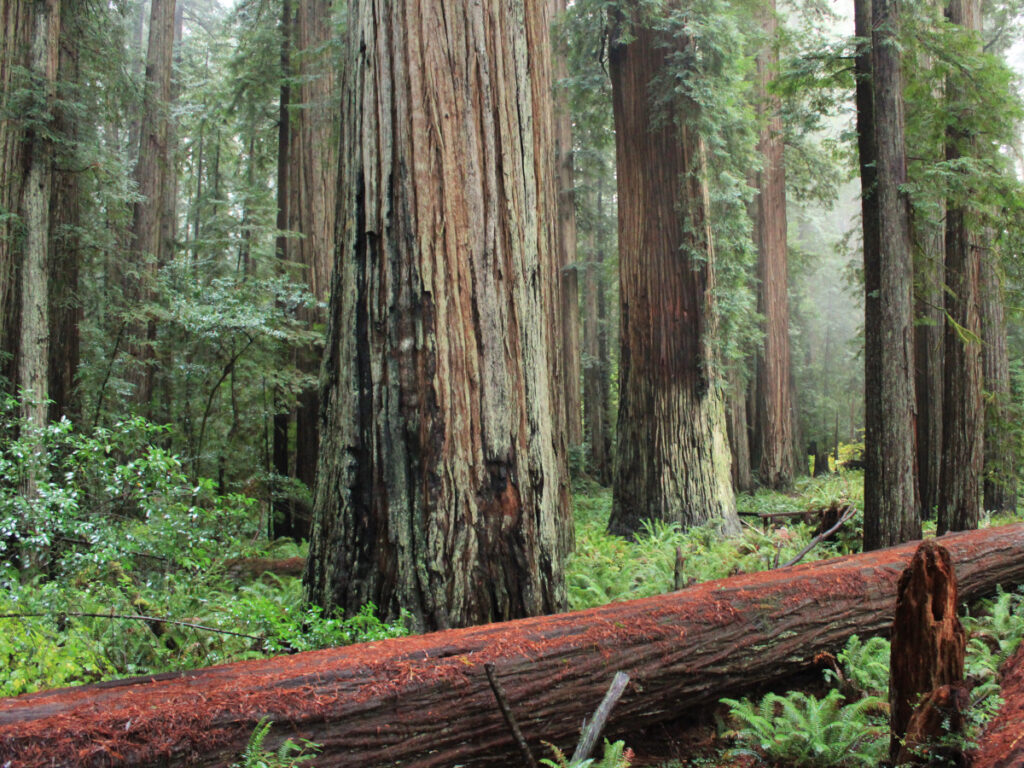
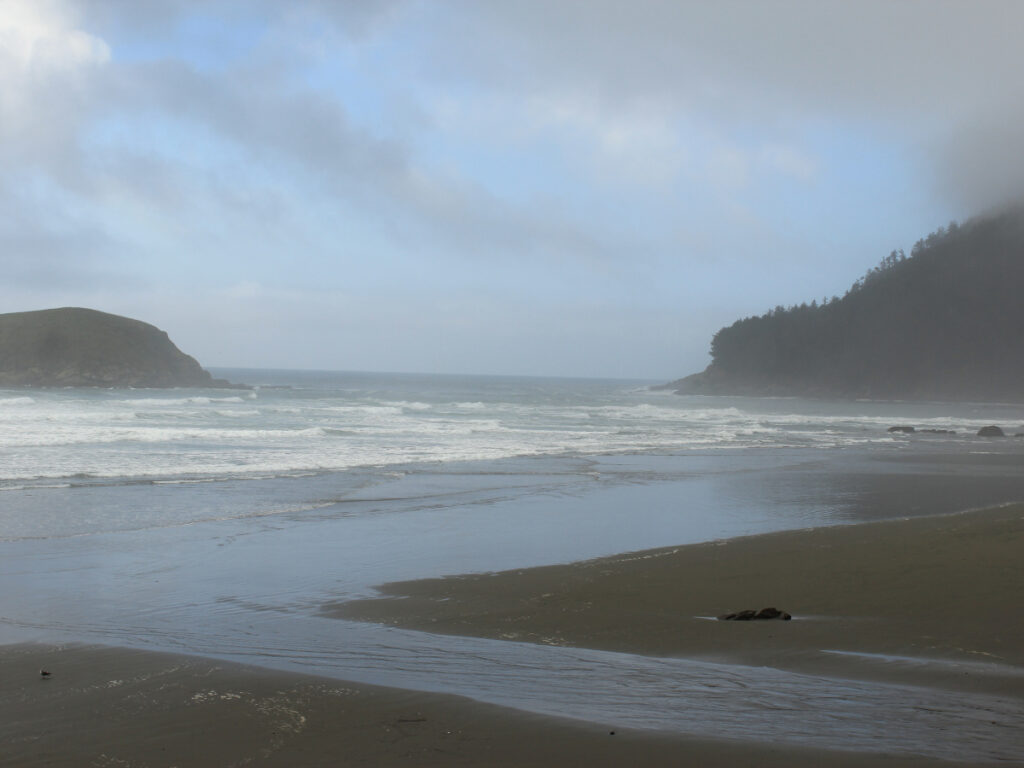
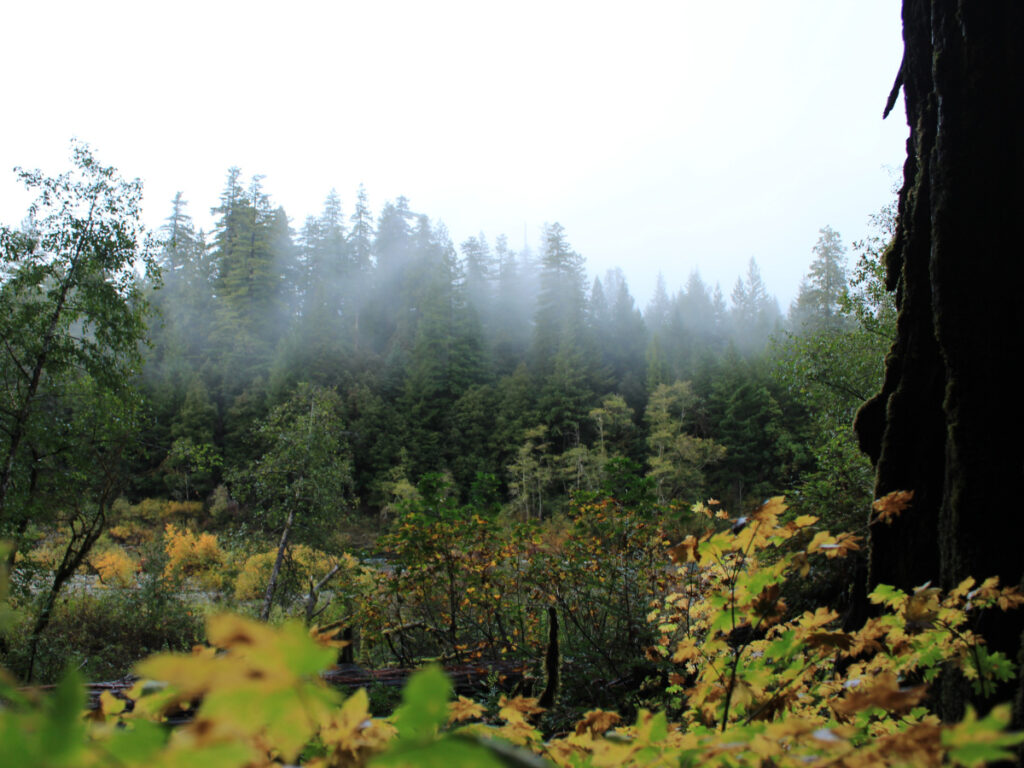
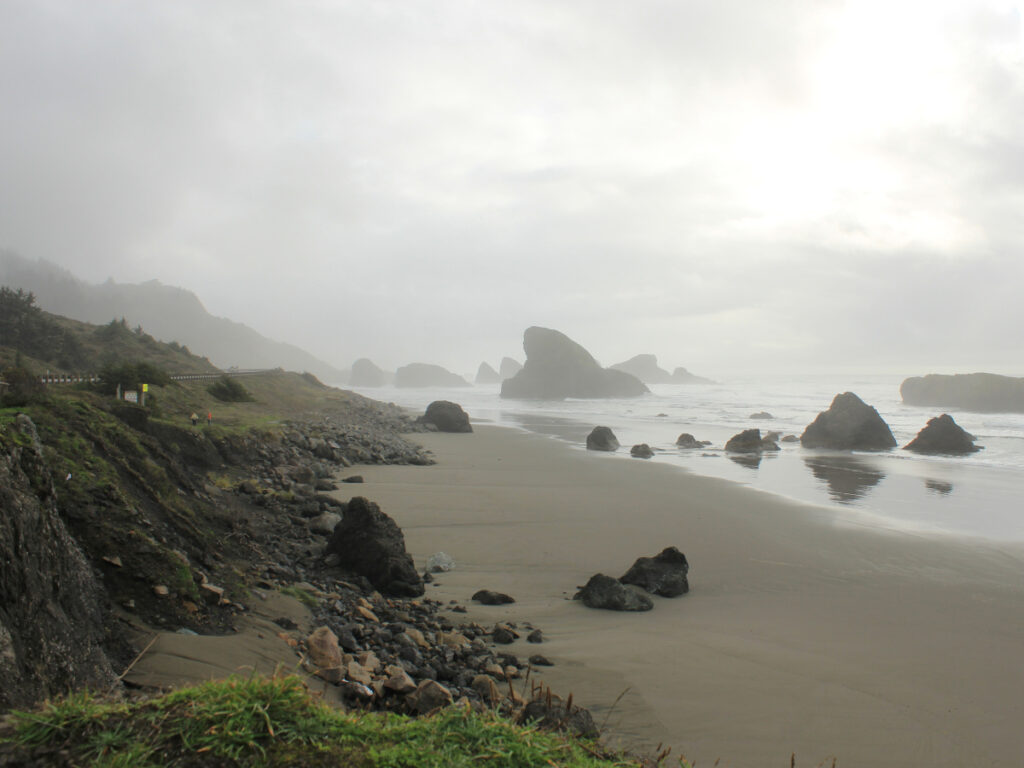
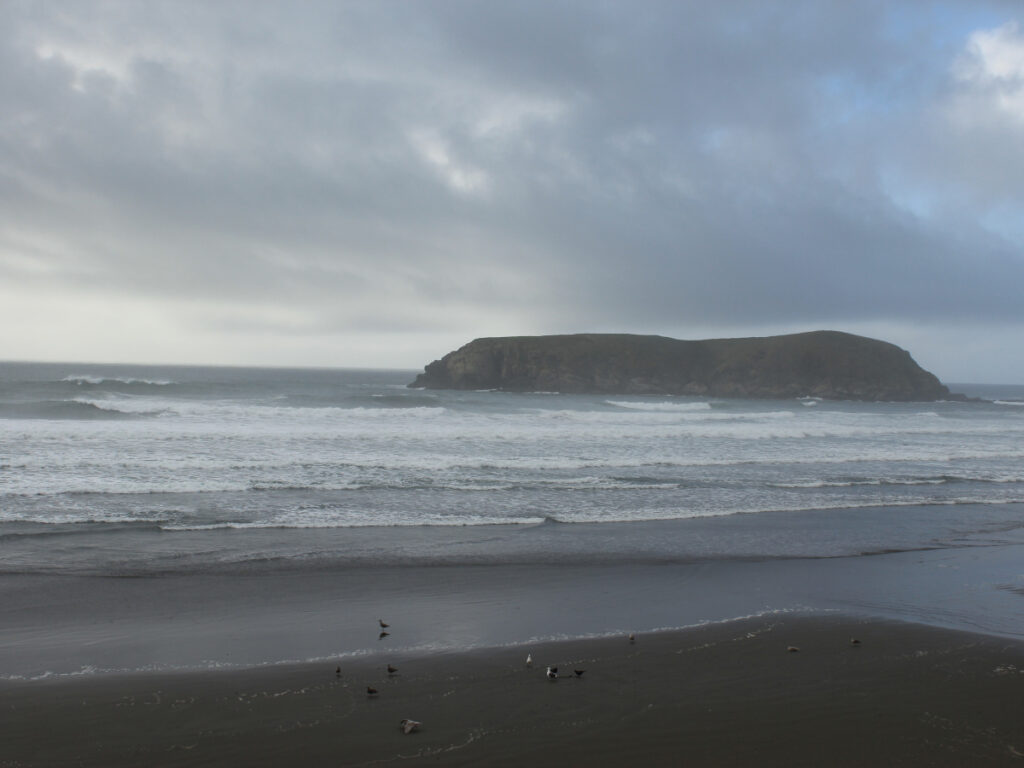
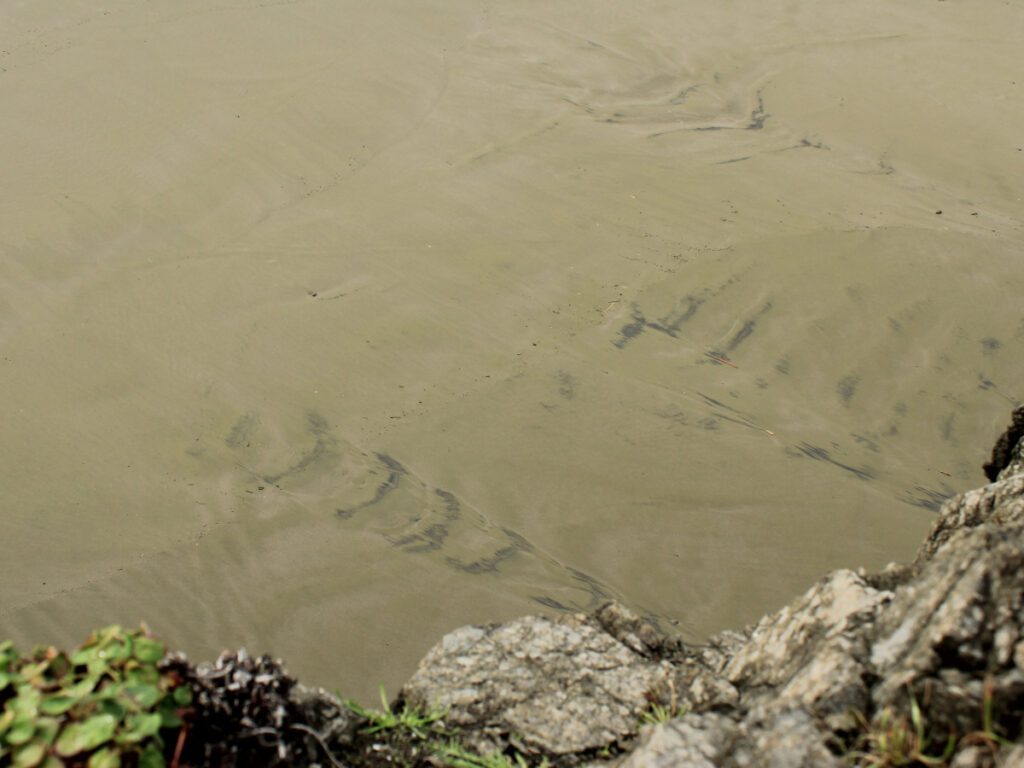
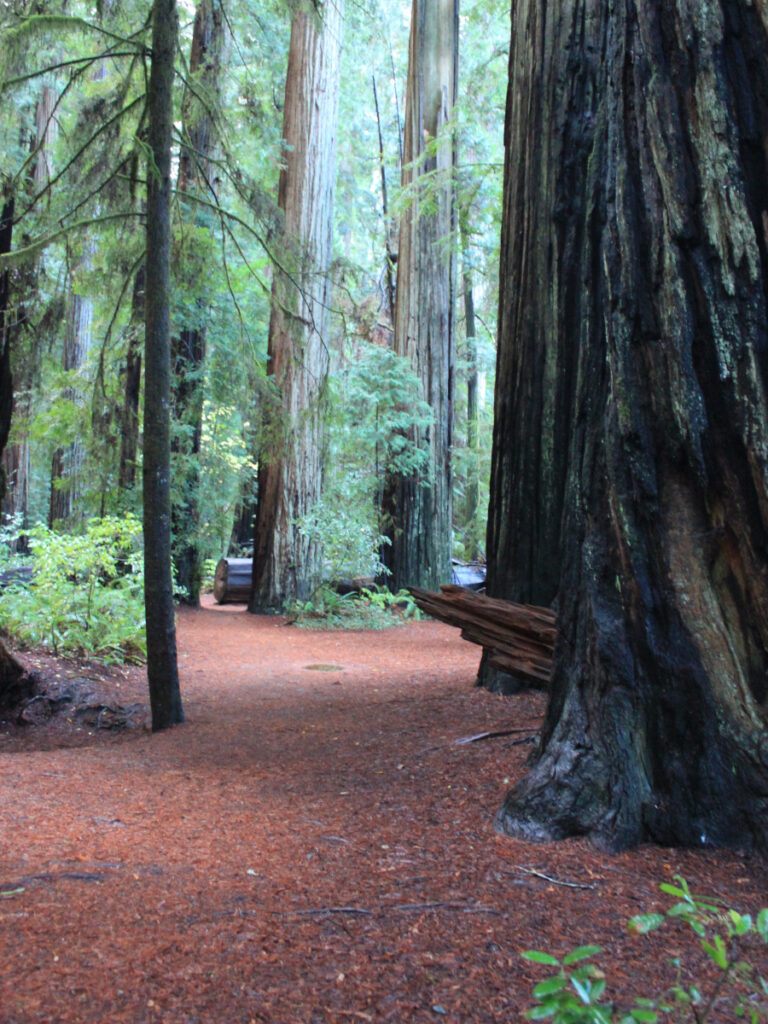


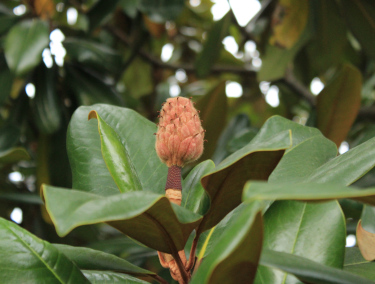
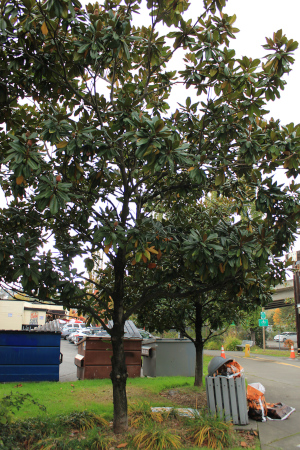
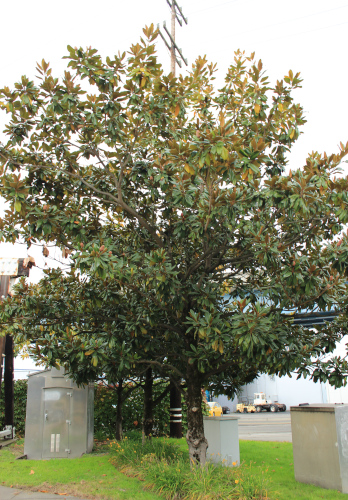
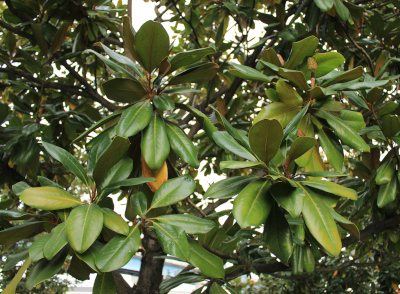
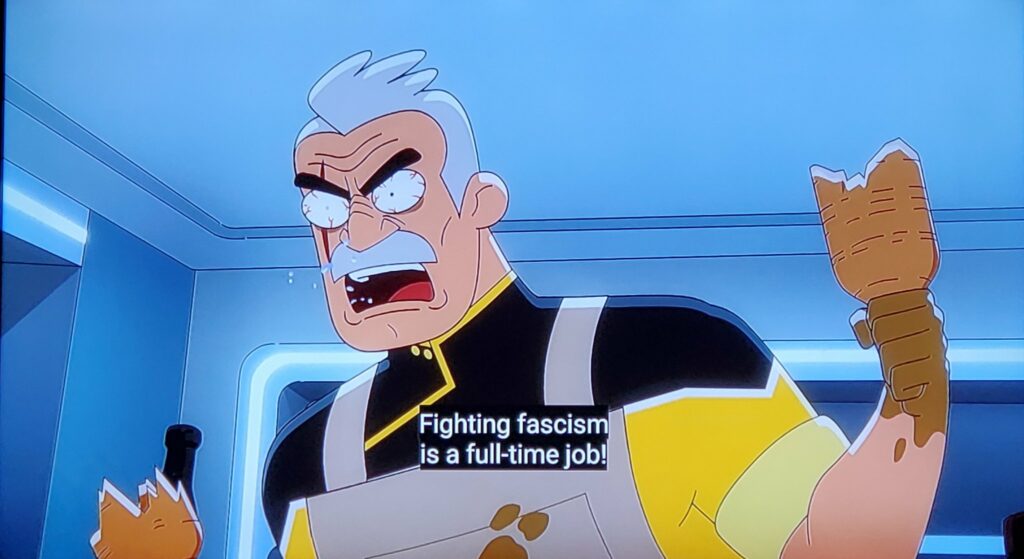
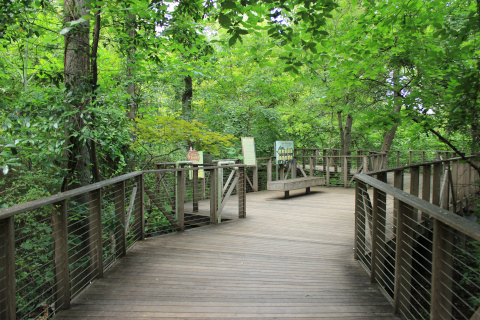
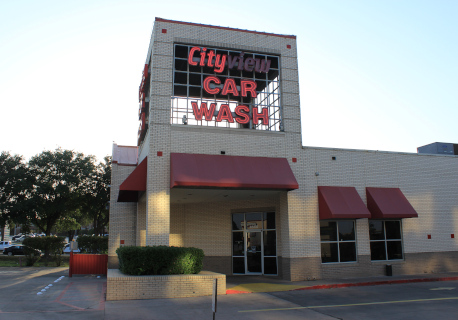
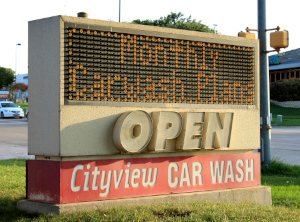
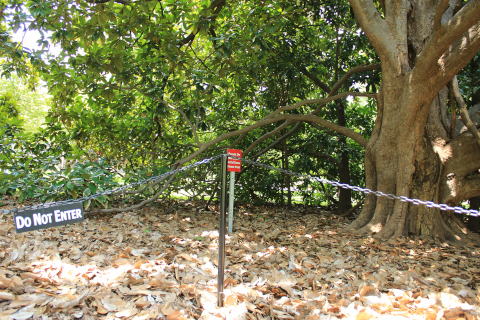


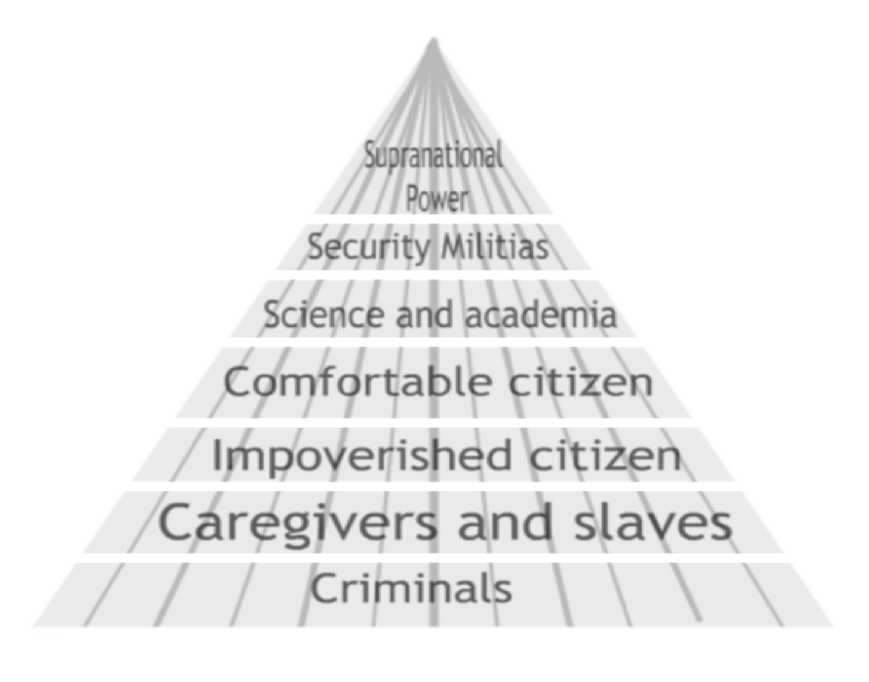
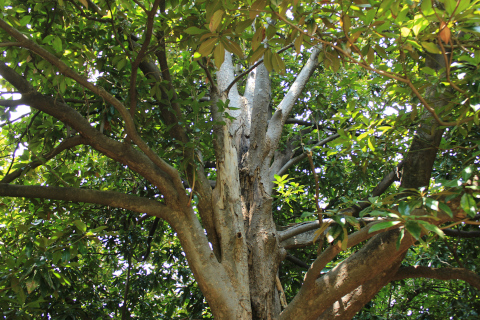
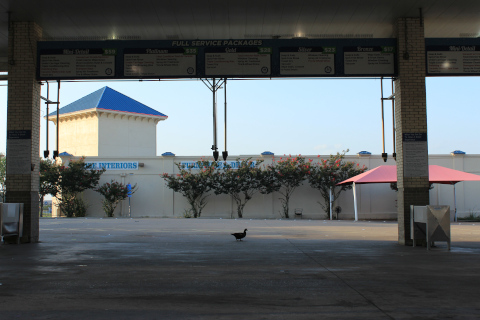


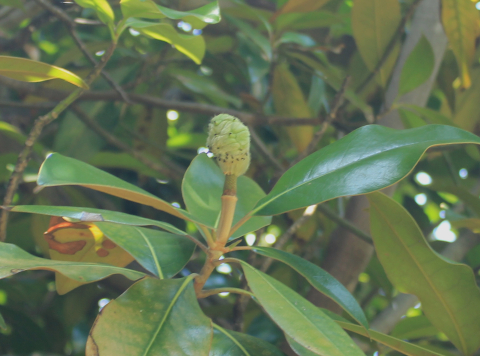

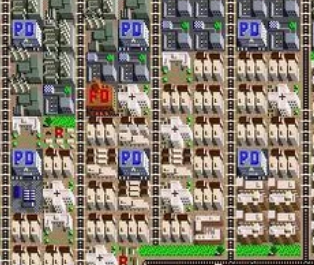
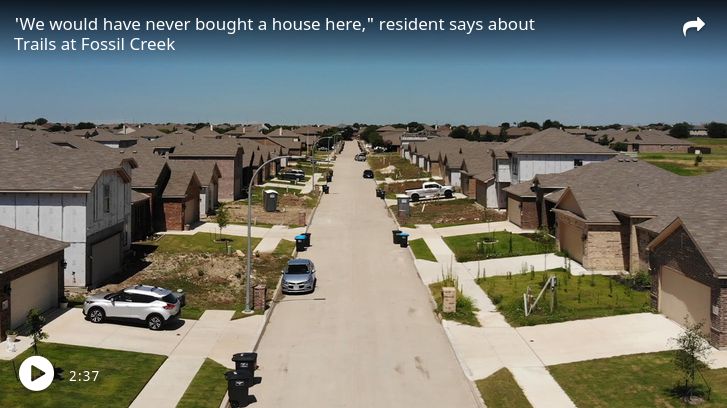

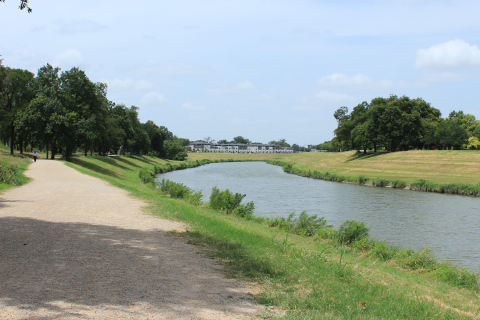
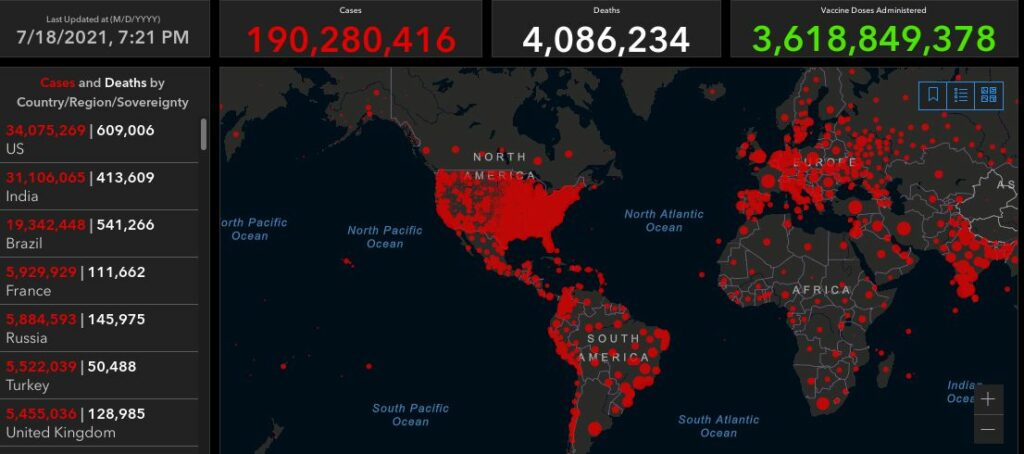

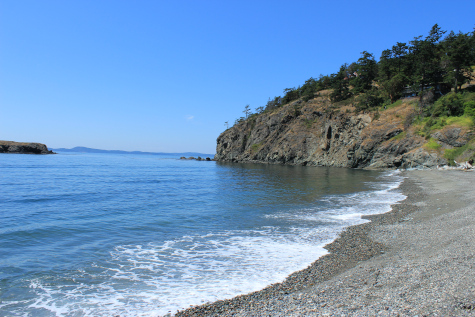
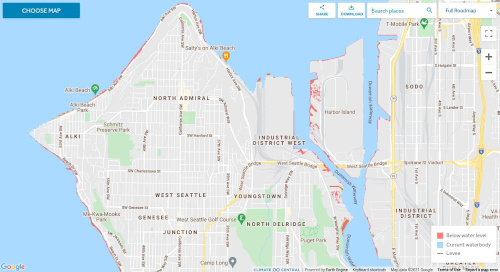
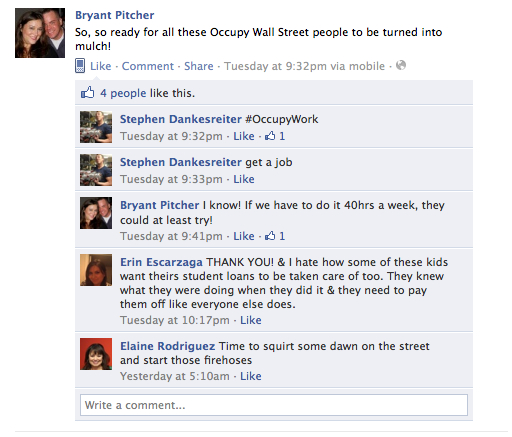
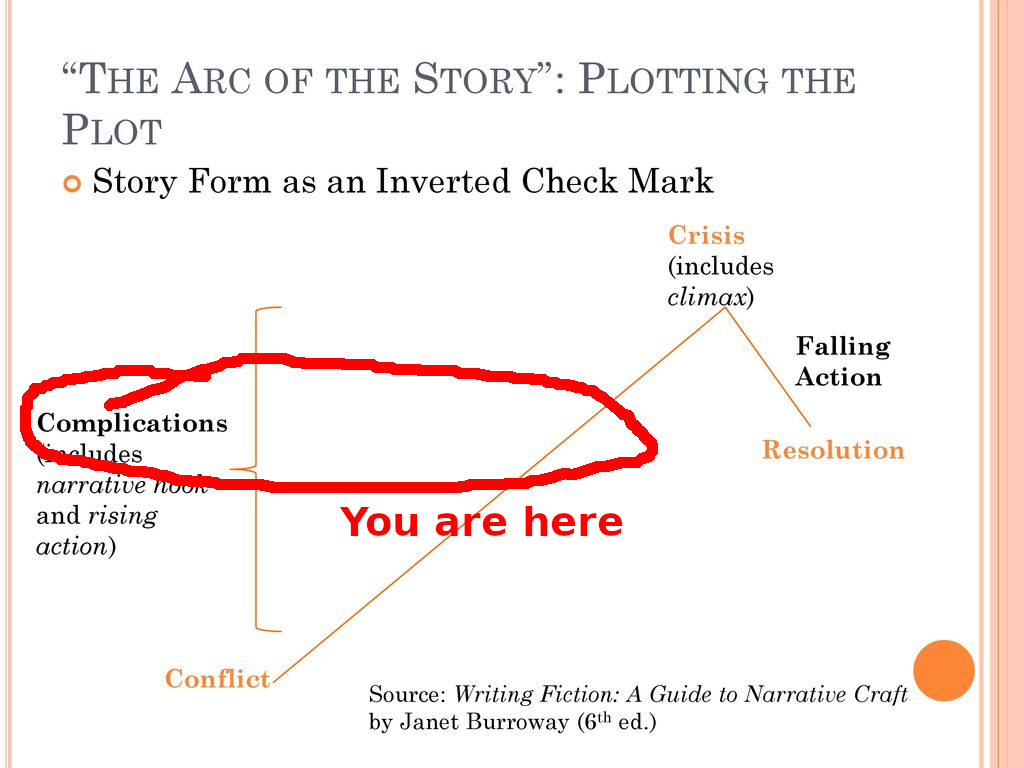
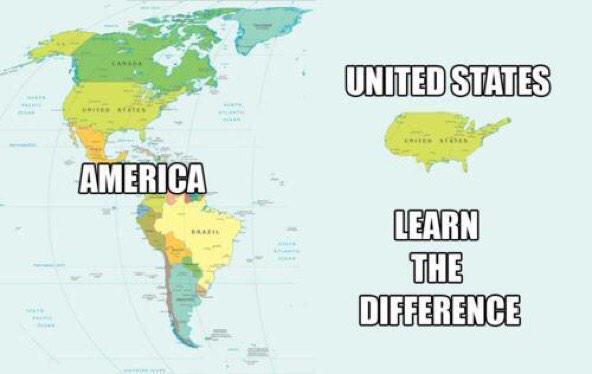
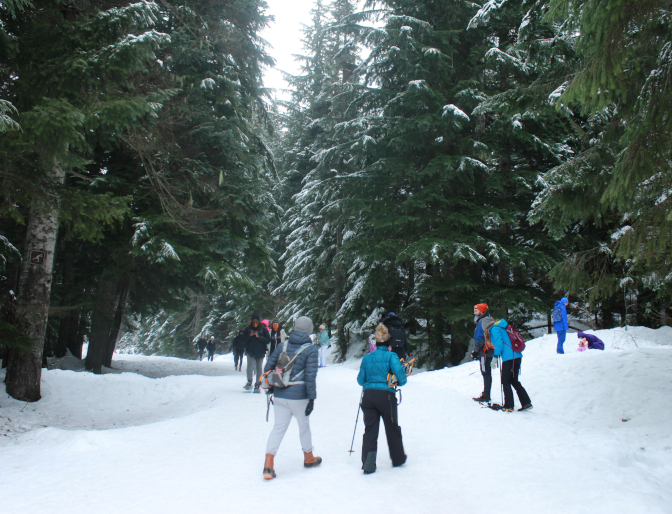





 Twitter:
Join the conversation