Note (added Apr. 8, 2024): On initial publication this blog post incorrectly stated that Friday night lacked a flesh-and-blood DJ. There was one, in fact, by the pseudonym mcbaud300. When I was briefly in the ballroom, I didn’t see mcbaud300, but I did see a sign that led me to wrongly conclude the DJ was artificial intelligence. Below, in the apropos section of this post, I’ve added a photo, by Michael Citrak, of that sign, which read VIRTUAL DJ. That’s actually the name of a product that replaces physical DJ gear—such as turntables—with software,not something the replaces actual human DJs with software. Thanks Norwescon Discord for the corrections.
On Fri. Mar. 29, I attended Norwescon 46, the annual four-day science fiction convention nowadays based in Seattle (okay, SeaTac) that’s been running continuously since 1978. This was my first Norwescon — which I assume means NorthWestConvention, though I’ve never seen that explicitly stated. Previously I’ve gone to a few other conventions: ConDFW (2009), Wiscon (2009), and Conflation (2014 or so).
Since I live in the Emerald City, I could bypass hotel room fees. And by limiting my participation to Friday only, I wasn’t diverting too much time away from work or toward crowds, which by nature repel introverts such as me. Before departing for the convention, I told myself to have a good attitude, to make the most of it, and — well, I had a good time, but it felt faintly elegiac. Like something that, if you look down to check your wristwatch too long, might not be there when you look back up.
Norwescon is the Pacific Northwest’s premier science fiction and fantasy convention and one of the largest regional science fiction and fantasy conventions in the United States. While maintaining a primarily literary focus, Norwescon is large enough to provide a venue for many of the other aspects of science fiction and fantasy and the interests of its fans such as anime, costuming, art, gaming, and much, much more.
Norwescon features hundreds of hours of panel programming, over 200 panelists specializing in fantasy, science fiction, horror, science, and more, the Philip K. Dick Awards, a 6,000+ square-foot Dealers’ Room, Writers’ Workshops, a full masquerade, an art show, dances, and more!
In the early afternoon, I parked by one of the far walls of the overpriced, crammed DoubleTree guest lot and started hiking on foot to the hotel. Long before I reached the lobby, it seemed the science fiction convention had already begun, outright, straight up in my face. Yes, right there in the parking lot. Where I was confronted with —
The Knightscope autonomous security robot
My surprise halted me. Recovering, I snapped two photos:
At first I was quite confused, thinking this was some Doctor WhoDalek-esque creation of the convention’s. But I soon confirmed it’s the hotel’s, and in fact, the hotel has been using the Knightscope for several years. The convention staffer I spoke with seemed unperturbed by the strange device, or perhaps resigned to it, trailing off his discussion of the subject matter …
In my photos, it looks stupid and harmless, comical even — like a big inflated balloon — but in real life, it’s actually kind of intimidating, as my video below hopefully shows. If I understand Knightscope correctly, the self-driving gizmo records surveillance film for optional review by humans later. Gives you those warm fuzzies that we’re all in this together, trusting one another to do our best and forge the optimal outcomes for our communities, right?
In a slogan asserting that crimefighting is impossible without such high-tech interventions, Knightscope’s website boasts that You need superhuman abilities to fight crime. Let’s be frank, law enforcement and security forces have long been keeping crime at the Goldilocks levels required to maintain whichever heinous balance of power the highest-ups prefer, a la cyberpunk novelist William Gibson’s character Ainsley Lowbeer. Fighting crime is something else entirely, and while outsourcing it to these robots might prevent automobile smash-and-grabs, that likely comes at the expense of us further forgetting how to use social support and shunning/approval to do so, because everyone can just be hyper-surveilled constantly and the unseen, promised Good Guys with superhuman abilities, far away somewhere, can help dispense justice on command for a fee. Turn your brain off; escape into adoration of the superhuman, the supertastic Knightscope!
Would there be actual superheros inside the hotel, with sincere hearts? Say, Phoenix Jones — real life crimefighters dressed up as superheroes? Didn’t the genre’s classic writers want readers to respond with this-worldly heroism, rather than robots replacing what’s left of people?
As I walked side by side with the Knightscope filming the thing, I really felt it was deliberately staring at me through its camera apertures. Maybe because I was blocking its vision. I don’t think the Knightscope carries any weapons, yet I couldn’t help but think of the Star Wars robot R2D2 and its Taser-style electric shock prod. About halfway into the video below, I start laughing, as does a couple nearby in a car, observing l’affaire robot. Then the couple starts their vehicle, ready to leave, kind of pinning me in from behind; the robot seized this moment to start coming at me from the front, shown in the video’s final seconds. I died then, and this is my replacement writing to you now.
High on panel: Managing unsolicited submissions in the era of AI
Waldo
Once I entered the hotel proper, collected my badge, and saw a man hilariously dressed as Waldo from Where’s Waldo as well as a large Doctor Who Dalek prop carried by attendees, I headed for the panel titled Managing Unsolicited Submissions in the Era of AI. Four panelists: Podcastle editor Craig Jackson (moderator); Clarkesworld founder, editor, publisher Neil Clarke; Uncanny Magazine managing editor Monte Lin; The Magazine of Fantasy & Science Fiction publisher Gordon Van Gelder. The panel discussed exactly what its title says, a Turing Test problem that became major news in multiple outlets once Clarke opened up about it last year.
In other words, all these robots from without are assailing our science fiction — what can we do about it from within?
Below, I embed the seven-post thread I made on Bluesky loosely transcribing portions of the thought-provoking panel. Bluesky, you may know, is a Twitter-esque rival to the platform commandeered by Elon Musk; it has a smartphone app and no longer requires an invite code to join, though it still lacks DMs and support for video uploads. To read the seven posts directly on Bluesky, you can click through the below embeds, or follow this link, even if you lack a Bluesky account and don’t sign in, as with Twitter of yore.
As the panel concluded, I felt elated. Following the past few years of reading and writing science fiction, and doing investigative journalism and copywriting and philosophy research assistance — all of it writerly work, freelance jobs making up the majority of my mostly solitary life — suddenly, fresh topics I’ve been curious about were being discussed back and forth live among knowledgeable panelists and inquisitive audience members, all of them friendly, not competing to see who can be the most cruel at ripping off strangers’ heads or minimizing their every word, unlike much of social media and the offline realm. I’m not enough of a joiner to say I felt like I belonged or anything definitive like that — but I was really glad I came and looked forward to additional panels and events.
T-shirt for sale at Norwescon from Arkham Bazaar and Sigh Co. Graphics. Depicts a Lovecraftian Elder God.
I resolved to check out Clarkesworld more often, then headed downstairs to the general area by the lobby, where my newfound excitement encompassed the various booths. There were H.P. Lovecraft-themed T-shirts for sale, a table with riddles written on wood with vendors offering clues, a huge supply of free books for the taking, and more. All at once these science fictional images, usually confined to my bookshelf, had bloomed all around me, left, right, up, everywhere I looked. I even asked some vendors research questions about miniature painting, related to my fiction-writing, and got some good leads. Again, a topic that had almost entirely existed in my lonely head for years was now in the flesh, and everyone cheerfully acted as if that were normal rather than the other way around.
Place of refuge losing luster
I ducked out for lunch, again seeing the Knightscope patrolling the parking lot. To the restaurant through hectic, smelly traffic. Something I ordered didn’t quite agree with me; my mood soured a smidge. Already I’d seen every vendor booth (though I forgot to check the art show, unfortunately). Hurrying back for another panel felt like a chore.
Wasn’t there something backward about all this? The last time H.P. Lovecraft wrote anything new was almost a hundred years ago. Isn’t there something more we can do about AI-spam besides write our Congressfools and beg the FTC chair, tactics that I myself do but that still feel dated next to real cutting-edgeresistance? And that cumbersome Dalek prop, that robot-y Doctor Who creature attendees had carried through the hotel, was derived from a TV show that began more than a half century back. I assumed the Dalek lacked onboard electronics to theoretically counter the sleek, unapologetic Knightscope, which would probably vaporize it. Okay, not really. But all the same, though the unsolicited AI manuscripts panelists were certainly informed from their front-line battles with that particular problem, and led a truly interesting discussion, the convention as a whole was now feeling, to my postprandial self, like an enclave for out-of-touch museumgoers. There were very few in their Gen-Z twenties present, and when they were, it was typically because they were assisting their vendor parents.
From the start, I knew Norwescon wouldn’t be some best-in-class, outward-connecting headquarters of artistic resistance (is there such a place anywhere?). I wasn’t expecting earth-shattering revelations from any panelists. Why not just go home? Why couldn’t all — rather than merely some — of the panels be put online, with the audience able to type in questions, as mainstreamed during the years the United States called COVID-19 a federal public health emergency?
Because of the vitality, of course. Physical presence in such an environment, enjoying such conversations, festival like, brings its own energy surplus, or did initially. Now I just felt drained and was urging myself to keep going, a familiar self-flagellation from decades ago at university where I’d scolded myself to hurry, to make it to ̶p̶a̶n̶e̶l̶s̶ classes on time. I’m not sure why my mood had inverted. Maybe it was that, born in urban Texas, I’m unaccustomed to the obligations of participating in an interesting, mostly benign group-self — the convention, that perhaps I’d joined simply by being there — and unfairly demanded nonstop perfection from it. Maybe it was the sense of an unthinking eternal return, passing by the same booths over and over, the same unpurchased H.P. Lovecraft T-shirt over and over, has-been consumerist ants stuffed into an airless maze, the largely unacknowledged winds of change outside — not just Knightscope, but a collapsing trade economy, a birth strike and children insufficiently raised — steadily working on blowing down the insular walls of any type of convention anywhere.
Well, I’d only attended a single panel. Another might clarify things? I drove back to the hotel, seeing upon my return, industriously cruising past, the Knightscope.
Orbiting another panel: The rest of the world in space
The next panel I’d selected from the programming (also available here) was titled The rest of the world in space. A pair of space historians gave basic information about, and showed photos of, recent non-U.S. space missions. Below, I’ll embed my four Bluesky posts from the panel. Click through the embeds, or follow this link, to see the posts directly on Bluesky.
To me it felt a little like two gruff older guys showing you their favorite Wikipedia timeline. A chill way to ooh and aah over non-U.S. spaceships. It was good that one of them mentioned, albeit very briefly, the Belarusian dictator — without mentioning his name, Aleksandr Lukashenko — and his longstanding alliance with Putin as the real reason behind a Belarusian astronaut’s joint publicity photo with the Russians. I wish he’d said more, but he did not step out farther on the limb of the supposedly unspeakable, not during this panel anyhow.
When their presentation ended, I asked the panelists about the legal penalties (or not) for failing to de-orbit artificial satellites, and how the graveyard orbit fits into that framework (or not). Once again it was wonderful to talk with actual human beings highly knowledgeable about subjects I’m interested in, many of them underreported, yet powerfully impacting people, usually without their understanding. I regained some enthusiasm — tempered somewhat this time.
Briefly I met up with one of my fellows from Clarion West Writers Workshop class of 2008, Caren Gussoff, and we commiserated about the introvert struggle of attending a populous convention. We finished talking and she left; now I had a few final Friday hours to wander around, hoping to locate value.
Odds and ends
Exploring the hotel indoors, where windows were firmly shut and people were packed like proverbial sardines — an unofficial early estimate from Norwescon staff says 1,800+ people attended across the four days — I reckoned that one out of every eight or so individuals was masking, as in, against COVID and/or RSV and/or whatever this very recent bird flu in Texas is, something that jumped from birds to cattle to humans like a UFO from the microbial dimension. I was masking, as I do for packed-like-sardines settings such as schools and hospitals. It often appeared that more were using canes to help with walking than were using masks to help with preventing the spread of respiratory diseases.
I find it difficult to draw conclusions from the absence of widespread masking. In May 2023, the federal government declared the public health emergency over, and the CDC hasn’t collected as much COVID-19 data since, though their wastewater monitoring is interesting and as of this writing says COVID-19 viral activity is low countrywide. We might imagine scientists and science fictioneers hacking together their own experiments to audit or replicate data, bridging knowledge and questions from expert to novice levels and back again, testing out various hypotheses motivated by public interest and with complete transparency for public data, so that anyone interested could observe, doublecheck, and understand. Building something for sampling or imaging viral titer from the air, as scientist Justin Lee says, accurately assessing airborne transmission dynamics, ideally in real time. We might also imagine scientists and science fictioneers at the hotel bar, drinking to assuage the guilt and shame of a dissociated society that too often refuses and mocks effort, DIY innovation, and self-governance, even when those endeavor to keep us alive and buying H.P Lovecraft-themed swag as the Knighscope watches from outside a window.
Galaga, fun but dated…
Easier challenges to conquer were the extraterrestrial enemies in Galaga, one of the many arcade games available that didn’t need quarters — I’m not sure if the games were part of the hotel or the convention, but I think the latter. Lighter fare.
As the night wore on, I checked out the ballroom. Looked like a carbon copy of the one I saw at Conflation in St. Louis circa 2014. It had a bar. It had a dance floor. It did not, however, have a human DJ [see correction at top of post—there was a human DJ, one by the pseudonym of mcbaud300—note added Apr. 8, 2024]. The DJ was some unseen robot — a sign touted this fact. The beautiful people danced and danced; for a few minutes, I watched from afar, before turning around to leave.
Photo of mcbaud300 that night by Michael Citrak (added Apr. 8, 2024)
Likely I would have had more fun had I attended more panels, literary-focused ones, or participated in events specifically designed to facilitate socializing. There was a Speed Friending event I should have tried, where attendees converse one-on-one with a line of others for a few moments each, discussing interests, seeing if they might want to hang out more after the event. There were many rounds of charades I failed to attend as well, among them one on a Star Trek theme, which sounded really fun. Maybe some other time, some other life.
Concludingin the lounge
One area I enjoyed, and returned to often, was Norwescon’s lounge: essentially two hotel rooms, connected by a door, emptied out in favor of tables and chairs, free chips and soda, and other comforts. People — most, probably fifty years of age and up — gathered around in conversation, many already knowing each other. One told the heartbreaking story of how she’d lost her son due to a drunk driver. All the bureaucratic transportation department studies, good or bad, would turn to ash in the face of such a recounting. A while later, an older guy in a brown Jedi robe demonstrated the lightsaber he’d built, modeled after Luke Skywalker’s in the 1978 Star Wars Holiday Special. I of course gravely intoned: I see you have constructed a new lightsaber.
The lounge spawned a few random encounters with people my own age-ish, and as I got to know them a tad, I observed a certain pattern I’ve seen before. Namely, when they asked my background in science fiction and fantasy, and I began talking of my writing it during Clarion West Writers Workshop and in the subsequent few years, their attentive eyes focused on me — they seemed not a little impressed: Here we have an author on our hands! Then I explained that, though magazine acquisition editors were quite complimentary of my work, I never managed to sell any stories and partially as a result, transitioned to focusing on investigative journalism for roughly a decade, despite my druthers. That made their gaze drop, their hands fiddle with a phone or piece of candy. Then, once I said how recently, I’ve resumed fiction-writing, still without selling anything but with a better understanding of the world — now their eyes would look at me, again interested, albeit less so than at first. You can really feel an audience — even just one person in a casual conversation — drifting in and out of interest, reducing or increasing the amount of approval they’re expressing in reaction to your words.
Of course, at an Investigative Reporters and Editors conference, the reverse would happen: I’d talk of journalism publications to the lounge listener’s interest, then switch to discussing fiction-writing and at once get the silent you lost me, what’s that squirrel outside doing? While people naturally and rightfully have different interests, at Norwescon I couldn’t escape the sense of a terrible siloing taking place. Science fiction at this convention. Journalism at that convention. CDC COVID-19 policies over yonder. Belarusian dictator, trail off. Knightscope surveillance, trail off. Tactics beyond begging Congressfools, trail off. If no one faces up to that which determines our lives — governance, spy agencies, propaganda, the sharing or censorship of knowledge — then a shrug, for if all that remains for the triumph of evil is for good people to say they work so they deserve to just be happy, doormatting for injustices is (mostly) your right in the marketplace, even when the consequences harm everyone. The phallic toy weapons notwithstanding, inaction (or the milquetoast minimum) doesn’t really match the morals presented in the beloved science fiction and fantasy novels, but magically holds court nonetheless, all that dissociated guilt and shame and fear.
The fun conversations, the vitality between lonely souls sharing obscure interests, guarded by walls the outside of which includes a recent auto-coup attempt… With such threats largely unchallenged — yes, I know the news says it’s all under control, just as they did before the 2016 general election — conventions like Norwescon may have fewer and fewer attendees, no new blood. Every time I turn around in Seattle, another business closes, so will science fiction conventions suffer the same fading, fading away?
I asked above what science fiction could do from within to combat the robots assailing the genre from without. It’s as if there’s a monstrous, metalmade elephant in the room with no one’s face, and yet everyone’s face, attenuating anyone’s attempts to initiate efforts or escalate them into radical approaches. But the only superheroes within the hotel walls are us. As if the New Wave of Science Fiction never ended, I could have belted out Tell us more! when the space historian alluded to Lukashenko; someone could put together panels about tactics, mutualaid, strikes, boycotts, the provisioning of alternativegovernance; attendees in lounges could discuss ideas, and goals, and steps to get there for whatever problems — drunk drivers, out-of-control AI, space debris, or even the Justice Department’s endangerment of Sci-Hub and its founder Alexandra Elbakyan. Just going along as done in the past is robotic. Forging a human future requires not obeying the siloes — nor activism-scolding roommates, spouses, co-workers — but building bridges between concerns and perhaps even organizing new kinds of conventions, full of surprises.
Science fiction, involved in the future, a metaphorical realm where Star Trek’s Jean-Luc Picard does something about injustices other than sit on his hands gloating about don’t think too harddon’t care too much — all the threats the genre and the world face today, the roving surveillance bots, the AIs, the pandemics, the international spy agency subterfuge, even censorship of the genre’s Hugo Awards affecting big names such as Neil Gaiman and confirmed to have global political motives — they all have a science fictional flavor. Recall William Gibson’s remark to the effect that, for understanding the 21st century, reading 20th-century science fiction is a wonderful toolkit. But it doesn’t help much to merely understand, say, the chemical formula of some corporate poison if it completely kills you. To combat injustice, to protect ourselves, we have to cease existing primarily as escapist voyeurs, and actually take risks, actually open up the toolkit, actually use the tools.
I’m glad I went. Maybe someday I’ll go again, see what’s new, in the future.
My Norwescon badge hanging at home in my apartment
Note: In 2021, I’m writing a new blog post every weekend or so. This is number 40 of 52.I skipped weeks 37, 38, and 39.
Note: My two entries in August providing sleep tips (Part 1 and Part 2) recommended sleep lab founder Matt Walker’s book Why We Sleep. But it turns out the book is sketchy. In November 2019, Moscow-based independent researcher Alexey Guzey, who has a background in economics and math, posted a devastating critique of Walker’s bestseller, which Guzey put together across two months (and updated most recently in April 2021).I updated my two sleep tips posts with this information. I regret the blunder and suggest checking out Guzey’s critique.
When confronting a challenge, I often throw myself into it, paying attention to educational materials on the subject only concurrently, not in advance. It was this way with substitute-teaching or volunteering with Food Not Bombs. “Take these to the dish pit,” a Seattle FNB non-leader leader said during the last decade, handing me dirty trays as we cleaned a Thai buffet in exchange for surplus food to redirect to the dispossessed, including some of our own number. “What’s a dish pit?” I asked. Looking back, such incidents are amusing moments, but at the time, they can be embarrassing, painful. It’s what happens when you throw yourself into things. Thankfully, if a person sticks with something—and has an inquisitive, adaptable mind that stays out of ruts—improvement also happens.
Another doc from planet paperwork
For leaving the United States, I knew if I continued comparing countries via watching youtube videos, and kept on musing endlessly about possibilities, I’d never get anywhere (literally). That’s why, while messing around with Canada’s Express Entry eligibility estimator, I decided to, among other actions, just go take the computer-based IELTS General exam in San Diego to prove English proficiency as required of non-students seeking permanent residency in the northern nation. I crammed for two days and, as expected, aced the reading and speaking sections, but made a sole mistake in the listening part (you hear audio texts only once, so no wandering attention nor confusion with the test format allowed!) and—I bungled the writing component. Despite a summa cum laude bachelor’s—a double-major in philosophy and, wait for it, writing—and despite years and years of paid freelance writing, including multiple news media publications, standardized writing tests and I simply don’t get along. Long ago, I similarly bombed the GRE’s writing section, repeatedly! Yeah, shove it, standardized tests.
I took the IELTS General on September 9 (see previous post); my test report form, dated September 11, eventually arrived in my PO Box showing the following scores: 8.5 overall, 9 reading, 9 speaking, 8.5 listening, and 7.5 writing. Since higher IELTS General scores help a non-student migrant gain admission to Canada and a handful of other Anglosphere countries, I got grumpy about that last grade, and looked to see what my options were for vengeance.
Turns out, there’s a procedure called Enquiry on Results, or equivalently, for the sake of SEO keyword stuffing, Inquiry on Results or simply EoR. Within six weeks of a test report form’s date, an IELTS test-taker can get a section(s) re-marked, for, of course, a fee.
The completely contingent order of things. (Source)
Anecdotal reports suggest EoR cannot lower your score; however, I couldn’t find official documentation from IELTS authorities proving that’s the policy. Google-savvy and forum participants suggested official documentation doesn’t exist, at least not online. I thought briefly about phoning the IELTS authorities overseas, but then decided, whatever, it fits my general knowledge of academia that it’s unlikely for EoR to lower my score, only keep it the same or raise it. Make no mistake, these myriad migration paperwork hurdles have the distinctive reek of academia/intelligentsia. Well, my destination thoughts were shifting from Canada to the Netherlands anyway. Better just to wing it, to purchase an Enquiry on Results for my writing section. YOLO!
I called the testing center and was asked to email the director with EoR in the subject line. I did. After some back-and-forth, my EoR request was officially in and paid for on October 4. Pretty ironic: the first task on the IELTS General’s writing section tells candidates to type an everyday letter, say to a newspaper or in order to complain to a company—and here I was, asking for that task to be re-graded, by means of me writing email letters with the testing center staff, communicating with perfect competence.
The higher-up graders re-marked my writing section and by email I received the new, or rather, not new, score in a PDF on October 6. You can see the outcome in the screenshot starting this post. My score didn’t change a smidge. Blegh. Vengeance denied. Had I prepared better, I would have spent more time with official practice materials or free/low cost courses specifically on the IELTS General writing section available on MOOC platforms such as edX, Udemy, Coursera, etc. Because as we all know, exams don’t evaluate your writing or English proficiency. They test how well you take the test. But the point was to throw myself into the actual emigration process. Psychology score, A+. Home economics score…F.
Well Canada, you and I had a few flirty dates, but it looks like there won’t be any more nights out on the town for the two of us. I don’t have enough points to meet your high standards. That’s okay, I have gray—oops, grey…er, grijs—in my stubble now; I’m no teen who can’t handle rejection. Besides, you have mining companies with active licenses for profiteering off the genocide in Ethiopia’s Tigray region. And your money-laundering transnational criminals in Vancouver are protected by Chinese spies. *Hangs up*
This past workweek in West Seattle, antivaxx and antimask protesters waved signs during five o’clock traffic in my neighborhood. Aside from the bald dude in the, what’s that Dutch word, *scrolls up*, grijs hoodie, who, though he lacks camo pants, sorta resembles a typical contractor you’d find working for a company like Craft International (a merk firm and friend of spy biz Stratfor with a mysterious habit of hanging around events like the Boston Bombing)—I have no idea who the grijs dude is, just sayin’ he looks a bit creepy—it seemed a fairly ordinary group of Seattle rightwingers of the new school. I stopped my car in the parking lot behind these vaccine hesitant folks to get a photo for the blog entry you’re reading now.
When I saw the flag, I knew it was going to be bad
Giving their respiration a wide berth, I walked to a suitable site to hold my phone up at ’em. Seemingly in unison, the women chorused, “Are you going to write about us?!?!” The ;) ;) @}->– @}->– flattery in their voices twisted this writer’s face into an involuntary smile. Like thundering storm clouds above a parched man in a desert dropping rain: acid rain. I told them Yes and continued thumbing my phone. Then one protester lady asked: “Are you going to write ill of us?” Interesting choice of words, there. They asked where to read, so above the noisy traffic I shouted: “DouglasLucas dot com!” Maybe they’ll comment and tell us more about Mister Grijs Hoodie.
A satisfactory photo achieved, I headed back to my car by the same circuitous route in reverse. I crossed the street. Suddenly I was passed by Mister Grijs Hoodie! He had his bald head down, his face sternly focused, and he was powerfully striding alone, whither I know not. I should specify, relative to being a Craft International employee (which I’m including almost entirely for joke and to link readers to stuff), it’s far more likely he’s a complete nobody, for instance a run-of-the-mill bargain bin patriarchy boss of some local Kik group for definitely-not-advisable hookups (read: loss-leads), which, as #OpDeathEaters has been pointing out since 2014, is, like, same diff, or can be, you know, more precisely, the everyday consequences of supranational pedo propaganda from above swamping populations with dolla dolla bill masculinist ideology rebranded to sound like freedom. Not to mention human trafficking. [Hey! Are you an editor or other potential payor reading my blog? Find academics vouching for #OpDeathEaters in that same diff link. That’s the completely contingent order of things—for now!]
Nothing hurts me except bad hair days
A surprisingly high portion of the cars passing the protest were repeatedly honked in favor. Not surprisingly, those one-note vehicles tended to be jacked-up pickups with needless stickers of an out-of-character Calvin urinating. I saw only one person indicate disapproval: a driver doing their daily grind, gripping the steering wheel with one hand and with the other, like a time-warped Roman emperor, presenting an unmistakable thumbs-down.
The wild hyperlocal antivaxx advertising blitz appearing in my neighborhood did not detain me from getting my third Pfizer (booster) jab Friday, courtesy of my public education employment. Although I follow news on twitter, email lists, and elsewhere too much from my own good, even I almost missed last Monday’s study in The Lancet, among the globe’s most prestigious medical journals—a study written up by The Hill. To oversimplify, the research indicates Pfizer-BioNTech protection against novel coronavirus infection drops significantly—approximately in half!—four to six months after the second jab, with the specifics varying depending on the scenario, mutation, etc. Thus, boosters. As with, say, the tetanus shot. According to the CDC and FDA in September, certain Team Pfizer folks can get the third jab once a minimum of six months since their second jabs has elapsed. Hopefully better vaccines (here’s looking at you, University of Washington) will be approved soon and become widely accessible for all, so we can be done with these less than ideal, but still very helpful, interim measures.
I took this photo in West Seattle’s Lincoln Park this past workweek. The image shows happiness
I embed an image from the exam room not to boast, but to model good behavior, to encourage people to get vaccinated. Of course I know Pfizer and other Big Pharma companies have horrifying histories of wrongdoing (an easy peasy first stop, Wikipedia criticism section footnotes, when they exist), but the risks thereof are, in my case, far less than the risks of suffering COVID-19. The Pfizer press release about the third jab has the expected advertising but also a lot of interesting links for people who might want to dig.
I’m too exhausted by the coronavirus vaccination debate to go into more detail, but the big picture might be helpful: if you don’t experience something firsthand (while knowing what you’re looking at, too), you have to decide whether to trust information from others. Documents may be more reliable than most people, but even with documents, you have to trust they’re real and not forgeries. How do we accomplish this as humans?
Like we always have: with trust networks. As far as I know, that’s a term that kinda originated with cryptography, but the phrase intuitively makes sense, right? My unfairly overworked primary care physician, whose performance is usually stellar, recommended the bestseller Why We Sleep to me (see note above starting this entry). I assumed she had read it closely, when probably—I’ll ask next time I see her, because mapping trust networks, even for oneself, is of life-and-death importance—she heard about it on a podcast or something, while HIIT sprinting or Wim Hof breathing. I presume she then passed the recommendation from the podcast (or whatever) to me, and despite the intuitive misgivings I initially felt about Matt Walker’s marketing image, I got swept-up a bit in his glitz. I mostly listened to Why We Sleep, while driving or exercising, meaning I didn’t read individual sentences in print, a way of reading that makes it easier to be careful and critical. I just had it on in the background to learn by osmosis. So I got fooled.
From what I’ve read so far, Walker’s never directly acknowledged his critic, the Moscow-based independent researcher Alexey Guzey.
Corporate spotlight decreasingly needed for winning crushes’ attention … but will our ability to search for non-corporate knowledge-sharers be fully seized by the powers that be?
Example of actual public diplomacy. @TheBoobla versus @sleepdiplomat … Fight! … Boobla wins!
Having read most of the devastating critique by Guzey, who ended up on international news himself to tear apart Walker, I lowered the glitzy guy’s reliability score as a science source in my personal trust network, and updated my blog entries accordingly. Actually, early on, I emailed Walker’s press person once or twice with various questions—on twitter, Walker goes by @sleepdiplomat, and says he wants to spread his message everywhere—and never got a reply; he could have been occupied, of course, but sometimes, mentioning my news publications gets me at least a politer version of He’s too busy for you (e.g., I’ll ask him!! <3 <3 <3 and then they never do). Based on how my primary care physician reacts when I ask her about this, I’ll adjust her trust network reliability score (especially on the topic of book recommendations) down, up, or not at all. Same for whatever podcast (or other source) she got her Why We Sleep info from. Unlike cryptographers, I don’t have actual numbers scoring people in my head (each person would have multiple scores, one per topic). It’s just something I think humans do all the time, semi-automatically, unless they’re effectively brain dead. (Oops, that’s rude to actual brain-dead people, who, uh, won’t be reading this.)
Imagine if IELTS and academia tested people, not on avoiding typos during unrealistic, one-shot English exams, but on the everyday life-and-death practice of adjusting trust networks. You know, critical reasoning and media literacy classes. In fact, spy agencies (public or private) use trust networks too. For a few years, I read thousands of Stratfor emails, and their staff was expected, when relaying to internal email lists the insights they heard from their sources, to give each source a letter grade to indicate their reliability (as well as other information about the source, the reliability of the particular insight, timeliness, and so on). There were similar trust network instances in the zillions of State Department cables and additional public, classified, or otherwise restricted documents I’ve read. We all do this when evaluating information. It’s just that the spies’ goals are antisocial, and mine, and hopefully yours, are prosocial. BTW, spying these days doesn’t merely mean cloak-and-dagger stuff, like car-bombing journalists critical of Belarus dictator Alexander Lukashenko’s regime, as in this April 2012 conversation: a 24-minute excerpt of the bugged recording of Lukashenko’s then-spymaster was published by EUobserver in January 2021 here (see also the 12-page English transcript or the 8-page Russian transcript; this related DW article in English too). Spying also means high-level marketing crap like Stratfor employees writing the majority of this or that article released by your favorite corporate media outlets. That’s an observation still true yet a bit past its sell-by date, since now the Dems openly run CIA and military spy candidates; heck, might as well openly put them on mainstream media mastheads while they’re at it. (If your bar is lesser evil, explain it not to me, but imagine how you’d get ratio’d for explaining it to actual torture victims who use twitter.)
Example of spies using their trust network with sourcing criteria. US714 was Aaron Christopher Grigsby, then a director of the Texas state police Ranger divison. Source a decade ago.
I’ll close this section with three more observations. First, I know wonderful people who are far too busy (perhaps a single mother or a prisoner with limited or no computer access) to do the countless hours of reading required to really evaluate, say, scientific papers. So they often have to go by, for instance, their affinity for a rando shiny podcaster, because again, we all use trust networks. What else are we going to do, not look up information, not sift through reading options by some means? I understand, but get slightly annoyed, when twitter radicals call these people fascists; in a remote-controlled (autogenocide) way they are, but that’s like shooting fish in a barrel, when radicals could try instead to save them from the peril (by aiming at the top authoritarians cuz else, regrowing hydra heads). Similarly for academics who’ve lived their whole lives in the ivory tower and have never stepped foot in a prison, long-term psychiatric lockup facility, non-Western country (me!), and on and on. We’re all in this sort of boat, just for different topics.
1960s international smallpox vaccine records of US citizen
Second, a few short years ago it was fashionable in the hacktivism/transparency realm to fund vaporware websites with a Great Man on top supposedly to change things, but these vaporware projects didn’t employ trust networks (among other problems), just glitzy marketing. We were supposed to trust our emergency-based need to get wrapped up in trusting their machismo. GetGee, the global commons for public data, allows users to employ trust networks when looking at research.
Third, if disinfo feels hopeless, remember it’s startling how effective a) history and b) reframing things can be. For instance, if someone’s para about vaccine passports, you can show them international smallpox vaccination records for US citizens from more than fifty years ago, or reframe the concept by saying, hey, to go into a bar serving alcohol, or to pilot a two-ton metal box powered by explosions down the freeway, we have to show age passports. And yes, I know both the conventional and alternative medical industries can be untrustworthy (see links on my blogroll), everything around ‘securitized’ border enforcement too, and that COVID-19’s origins deserve more investigation; but, uninformed speculation is cheap and funding investigative journalism (which sometimes requires travel to do well) is expensive.
So yeah, I got my third Pfizer jab Friday, and Sunday, 48 hours later, pfno pfside pfeffects pfso pfar.
Blog update
Recently I received a donation for my blog from a reader—thank you! (Hic haec hoc, huius huius huius!) The donation encourages me to keep blogging. For anyone else who might be interested in donating, here are the donation options, to which I just added snailmail.
This past month I made tinkery updates across the website, mostly under the hood; some, though, you might notice. Do tell if you spot any problems or have any suggestions. I overhauled the blogroll (see right sidebar, up) for the first time in years and years. I replaced http:// links across my site with absolute https:// links. Digitizing my belongings to prepare for emigration, I came across a nice print ad for the 2017 bookstore talk I did, and added that to the in the media section, where it looks, um, good! I grumble about the monkey see, monkey do requirement of social proof in marketing (completely contingent social order…for now!), but, whatever, it’s good to have more, how shall I say, self-esteem or something like that, and enjoy these sorts of thingymaboppers, at least while I’m still a loudmouth resident of the loudmouth United States!
By the way, the bookstore I spoke at is called Burning Books; it’s in Buffalo, New York. After over ten years, they’re now expanding, more than tripling their floor plan and adding designated event space, all without leaving their location. Everything will be fully accessible, too. Below, their fundraising video and gofundme link.
Because these blog posts usually take more than a day to write when they’re lengthy, and because offline readers have advised me that shorter posts would be easier for them to take in (time-wise), I need to figure out how to change this blog, and how to modify my time and energy investments in my overall writing more generally. A few weeks ago, I was working on a very long post about Beto O’Rourke and realized I really need to rethink my efforts. Diverting huge chunks of my time and energy away from my longform fiction- and nonfiction-writing goals to pin down, by skimming seemingly identical NPR articles at 3 a.m., the exact date the Del Rio international bridge closed during the ongoing refugee crisis, and who actually issued the order to close it (various local/regional mini-authorities stumbled over each other trying implausibly to claim the ugly credit in the media spotlight), is fascinating, but maybe not the best sort of time-sink every single weekend. I do enjoy writing journalism (especially were I able to do more investigative work uncovering as-yet-unknown ‘revelations’). And summarizing/analyzing other journalists’ work in reframed language weekly is, to borrow from Pokémon Go, super effective, biz-wise and persuasion-wise, in terms of staying in readers’ minds on a regular basis. For example, these posts not infrequently convert into incoming messages from people I haven’t heard from in awhile, asking me what’s up and what do I think of xyz popular issue. Yet such posts should just be a sole theater of war among several, not my only battlefield.
Then there’s the damage to psychophysical health from end-gaining (sacrificing healthy means to ensure ends are achieved, which might compare with emergency-based structures). To write something called lengthy, like this blog post, it helps the writer tremendously to keep the material in short-term memory (RAM for computerheads) while working. Especially if the content’s not strictly outlined (this piece is pretty outlined). The more creative, the more the creator needs to have all the data (even imaginative data) for the piece readily accessible in their minds, even to the point of boiling, such that the energy must be discharged (mixing my engineering metaphors). Taking breaks to tend to houseplants, do the dishes, or complete other sanity- and health-maintaining tasks risks losing the data’s salience. So you find yourself with a hacker hunch, crooked over the laptop, flies circling the sink, and Dutch roommates, if you have those, perhaps eyeing you suspiciously. Good luck with the 9-5 schedule, too. While potentially liberating, such pedal-to-the-metal practices can be risky, especially if an inexperienced and/or broke person doesn’t intersperse them with rest and/or has insufficient social support.
The problem is particularly acute for me in terms of creating a freelance/entrepreneurial business plan to meet migration requirements of the Dutch American Friendship Treaty. I haven’t picked the Netherlands for certain yet, but I imagine I will have in roughly two or three weeks, at which point I’ll buy a one-way overseas plane ticket months ahead of schedule to give me salient countdown timer motivation. (Psychology score, A+; home economics…) The business plan for writing in the Netherlands is mandatory. That’s why, despite frequent exercise and cooking super-healthy veggie-rich meals at home, I’ve been suffering moodiness and lethargy lately: much of it revolves around my fear that I’ll soon have to devote most of my time and energy, i.e.my life, to content-marketing, not the reading and writing I’d rather do. Though it’d perhaps be fun to run a content-marketing business in the Netherlands for vegan restaurants, free software firms, and antipsychiatry / critical psychiatry service providers called something like, Idealistic Content Marketing (how do you say that in Dutch?). With long-term substitute-teaching assignments and CELTA training, I was able to squeze some blog posts and fiction-writing in, but it wasn’t easy, and I found that eventually the employment system—at least in the United States—beats avocational activities out of overworked employees. Optimizing routines, honing goals + plans, and the like can help tremendously, and cutting costs through, say, miraculously finding good roommates, but, also, let’s not kid ourselves.
Another photo I took, same day, same park… lovely place
To close off this section, let’s consider how I’ll blog for this year’s remaining 12 weeks. The last post will of course sum up my 2021 year of blogging. The penultimate entry will explain with bullet points how I made it through a full calendar year, for the first time since 2013, without a manic episode or psych lockup. That leaves 10 weeks. Then there are three series I started in 2021 with a single post and never finished: Meet new president Joe Biden, part 1 of 2; Views of happiness: Journey versus destination, part one of two (this should actually be three parts); and Review of education books, part one of two (this should actually be four parts). That’s six posts needed to conclude those series. Leaving four weeks. I want to post about trees in Seattle, and maybe finish the Beto O’Rourke URL-as-tome. That would leave two weeks … I also wanted to do news blasts for Colombia, and I never finished with the Haitian presidential assassination news blasts, but no one has solved that murder yet, so nobody else finished the story, either.
Division of labor makes an interesting way to look at this business plan, life plan challenge. The titles change, but in the forms of media-writing I know, including print-only fiction and journalism, there are usually four roles in my experience (call them what you want): researcher at the most granular level, then writer, then editor, then producer at the most birds eye-view level. I need better self-production skills, so I imagine there’s, if not an app for that, then quality courses I could check out on the various MOOC platforms, and book recommendations I could ask friends/mentors for. Just not any books by disgraced sleep diplomat Matt Walker.
Maybe the best plan for my blog in 2022 would be the following formula, to which there could be occasional exceptions: one observation from daily life, one philosophical/political/whatever lesson drawn from it, and then an international news blast or two. Heck, maybe even a music and fiction section after the news blasts! (See, I keep adding stuff…) If anyone has thoughts, suggestions, or requests for this blog, I’d love to hear them!
Does it? Much, though not all, wrongdoing is in the open nowadays. Other factors may be more important than darkness, such as lack of good framing, endless grains of news sand staying decontextualized, and the antisocial system of carrots and sticks that corporations condition us for. Oh, and don’t forget cowardice
United States. On September 23, the Washington Post published a lengthy op-ed by influential neocon Robert Kagan, cofounder of the notorious warmonger thinktank Project for the New American Century. Kagan’s op-ed is titled “Our constitutional crisis is already here” (full text at Cryptome) and argues that, unless his health fails entirely, Trump will be the next Republican presidential candidate. Kagan says come November 2024, the United States will reach its biggest crisis since 1861, with widespread mass violence and a federal system breaking completely. He blames the cults of personality surrounding demagogues for the impending doom, and just like the Washington Post itself, he makes the evergreen claim that democracy will die, though Kagan prefers November 2024 as the date to put on the coroner’s report.
While we’re still forced to work, in some senses, alongside liberal states against outright fascism because innovative alternatives to the liberal order need greater amplification and effort and funding (and uh, commissions from editors) and knowledge of self, health, and wealth—the sneak attack, the edutainment style returns like that, my philosophy keeps it plain and simple, the kingdom of hip-hop is within you—it might be a worthy endeavor to introduce some rigor upon these sales slogans about democracies dying and failed states. Nation-state is an incoherent package-deal concept, but to roll with it for a while, the idea of an international order of liberal nation-states is typically traced back to 1648’s Peace of Westphalia. The Peace of Whatphalia? I must have been roaming the hallways that day in AP European History. What criteria must such liberal nation-state countries meet to count as successful or failed, alive or dead? There are of course readable scholarly books on such subjects, for those with time, i.e., not salaried at the Washington Post or Idealistic Content Marketing.
Youtube offers plenty of videos from US individuals who’ve relocated to China as obedient reflectors, playing by the rules and keeping their mouths shut. Footage from these moneymaking individuals suggest they have a pretty good life in China, happy but helpless. Well, good for them. Now let’s talk about the Chinese Communist Party, the CCP, and the propaganda war around it in the United States. Trump, who tweeted in April 2013 that China owns DC, won reactionary hearts by telling his followers he would resist the Chinese government’s encroachments on the United States, but he himself has been a bigly CCP beneficiary. In October 2020, Forbes put together a helpful guide to The Donald’s debt, which astonishingly totaled at least a billion dollars. (And you thought your student loan debt was bad!) The Forbes guide looks at multiple Trump properties, but let’s just consider the 1290 Avenue of the Americas location. More than two hundred million dollars for that New York City property came from the CCP-owned Bank of China. That bank says the debt was sold to Vornado Realty Trust. Maybe so. But without transparency, maybe Bank of China is still a creditor on the building, if say, after the sale, Vornado sold it right back. Opaque transactions we can’t audit don’t help explain. Whoever the current creditors are, guess when the debt comes due: November 2022, the mid-term elections. There are more connections between Trump and China, such as his pledge- and likely constitution-violating hiring of firms with majority CCP ownership in early 2017, and the eighteen trademarks granted to Donald and Ivanka Trump in late 2018 by guess who, the Chinese government. That’s the reality, while they’re telling their fans they hate China. As the top predators block their constituents on social media, they party together and laugh about you wearing their T-shirts, didn’t you know? Meanwhile the US left is misled by garbage-news from channels loyal to the CCP and Putin (see here and especially threads here and here). Note it’s both obviously bad Trump and wrongly beloved Obama who sided with Putin to bring us to this brickbat BRICS point. A busy and hardworking activist asked me the other day to explain what the problem with fake news website The Grayzone is. “Red-brown alliance,” I started off succinctly, meaning the longstanding and continuing pattern of Commies allying with Nazis (see news blast above regarding the thankless duty of grumbling anarchists, when forced to pick between the two, to support the liberal order over the outright fascists, while still shoving reframing, truth-bombs, and nonviolent/self-defense other bom—nevermind, into faces). Grayzone founder and head honcho, your local Assad apologist Max Blumenthal, successfully pressured the Southern Poverty Law Center to take down this article. I dare him to try my website, I’ve shielded myself with lengthy paragraphs! The article explains, on the Internet Archive at least, how presently, fascist propagandists like Steve Bannon use intermediatry hops to convert left-wing resentment (paging Nietzsche, or better, The Creation of Me, Them, and Us on the struggle between reflectors and negative images in Hegelian setups) into unwitting support for Putin-, CCP-, Assad-, etc. aligned talking points. As the first track of Lupe Fiasco’s Birth of the Cool album propounds, check your ingredients before you overdose on the cool. Might be a bit Tatmadaw when those discussing the CCP’s horrifying Uyghur genocide find themselves told by USians that it’s a “Karen” move to feel cross-border, cross-sect empathy: “Yeah, tell us again Karen, how the Uyghur genocide actually affects you” and the like. Nope, empathy across distances is a good thing. Finally, whataboutism is increasingly not accepted online, so I don’t have to put a long disclaimer in here about multiple awful genocides caused by the US.
“What is this garbage you’re watching?” the US fifties father says, thrusting the remote control like a gavel. “I want to watch the news!” (Points for those who know the music video source.)
Well, if there’s anyone still reading after that giga-paragraph, such was my understanding prior to this blast, so now we crank the volume! I’m basing the below largely on the September 28 YAC.news article, “Prelude to war: China’s plot for world domination,” and the links therein. Heather Marsh’s 2014 post “World War III: Pillage and plunder” provides some helpful historical background about power shifting from the British empire / Five Eyes / etc. to the Chinese empire, and then her 2020 post “The catalyst effect of COVID-19,” offers more crucial background, regarding the present attempt at a planetary mono-empire, transcending the Cold War binary and dangerously trying to sublate us all into obedient nothing-humans. Back to the YAC.news post.
The excellent article explains “China’s goal is global ideological and economic domination. To achieve that, it is spreading propaganda, expanding information operations, amassing economic and social influence, and sabotaging democratic political systems.” The article gives backstory and context such as “The CCP has had a monopoly on power in China since Mao Zedong first obtained control in 1949 after a grueling civil war. The CCP currently has more than ninety million members, not including non-Chinese loyalists scattered worldwide. Over 70 percent of the CCP’s members are men” but in 2019, more than 42% of new members are women, contemporary gender parity in joining authoritarian destruction. Here’s a key paragraph from YAC.news:
The CCP does not seek ideological conformity but rather power, security, and global influence. President Xi promotes China’s authoritarian governance as being superior to democratic political systems and seeks to spread “Chinese wisdom” throughout the world as a “contribution to mankind.” Xi speaks of China’s prosperity as proof that the path to prosperity does not lead through democracy. Unlike the United States and the fallen Soviet Union, China is currently not spreading its ideology through the installment of authoritarian strongmen or through military conquest. Instead, it promotes itself as “a new option for other countries and nations who want to speed up their development while preserving their independence”. Chinese officials commonly speak of the “right” of nations to choose their political systems, often advocating the right of countries to be ruled by nondemocratic regimes. When paired with China’s economic and political measures China’s policy reinforces authoritarian regimes and weakens democratic systems around the world.
What does it take to descibe more than just the US as imperial?
Speaking of war, note that like the physically unfit Trump, China is campaigning against effeminate men and other non-machismo experiments with beauty. China’s TV regulator this month banned the “abnormal aesthetics” of “sissy men”; in February, Wang Hailin, the screenwriter vice president of China’s National Film Literature Association, ranted in moronic binary form: “If a man pays too much attention to his outfits and his makeup, it means that he is trying to avoid responsibility and our society is going backward. …If we have more sporty and manly men, it means that our society is moving forward and improving.” Gee, so simple even authoritarians can understand it, unlike, say, cutting their toenails.
The Chinese government harasses Chinese nationals on Canadian soil. The Toronto Starreported last month that a Chinese student located in Canada retweeted three posts critical of the CCP or against its interests, from his fake-name twitter account with only two followers. That was all it took for the Chinese authorities to contact him (in Canada) and his family (in China) with threats. They told him to delete the posts or “face trouble.”
In November 2019, the Toronto Sundetailed how dozens of Chinese in the Vancouver area are getting in person visits on Canadian soil from “Chinese officials” due to their anti-CCP online posts. “When we meet in my office, they want the blinds closed,” Brad West, mayor of Port Coquitlam (just outside Vancouver), told the paper. “They’re that fearful.” He said the Canadian “government has been doubling down on the same approach [to this problem] for decades now and the proof is in the pudding. There hasn’t been a change and things have gotten worse.” The article concludes with the mayor saying, “Maybe I’m being too simplistic in thinking, but when dealing with a bully, there does come a point where you just have to stand up for yourself.”
Wray testifying to Congress. Yeah, I don’t trust his agency or face either, but look. The FBI director isn’t talking to us. Neither is Reuters. They’re both talking to other wack members of the security services, intelligentsia, etc. We’re the (presumed apathetic) public listening in on this particular regional gang giving each other data about another regional gang, the CCP, and we’re deciding not only to care, but to act.
Where else is the CCP harassing Chinese nationals? In the United States. In July 2020, Reuters reported on FBI director Christopher Wray’s explanation of China’s “Fox Hunt” program in an hour-long presentation to the conservative militarists at the Hudson Institute. The program sees Chinese citizens, some also US green card holders or US citizens, who are anti-CCP dissidents, finding themselves blackmailed on US soil—told “return to China promptly or commit suicide” for example—by CCP “emissaries” suddenly showing up and using the Fox Hunt targets’ family members back in China and even in the United States “for leverage.” At the Hudson Institute, Wray said there are “hundreds of [Fox Hunt] victims” in the United States, and the CCP forces use “a variety of means of coercion” against them. “If you use your imagination,” Wray said, “you’re not going to be far off.”
The FBI director points out that any Chinese company is required to give the CCP any information its requests on anything. That includes data of USians using Tik Tok, owned by a Chinese firm that tries to censor mention of the Xinjiang concentration camps where Uyghur and other minorities are incarcerated by the CCP for indoctrination, torture, rape, and death. The CCP has also created an international state-sponsored organ trafficking industry.
Canada and the United States aren’t the only places China’s influence activities reach. As linked in the YAC.news article, intelligentsia guy Larry Diamond and other intelligentsia guy Orville Schell, wrote a November 2018 report at the influential conservative Hoover Institution think tank, on the Stanford campus, about China reaching beyond its borders in nefarious ways. The report’s 48-page second appendix, titled Chinese influence activities in select countries, draws on typical intelligentsia sources (journalists, academics, bureaucrats, yadda) to list example after example of CCP influence and harassment operations in Australia, Canada, France, Germany, Japan, New Zealand, Singapore, and the United Kingdom. Quoting from the second appendix:
China seeks to make itself more palatable to democratic societies by using many of the customary vehicles of soft power—such as state-funded research centers, media outlets, university ties, and people-to-people exchange programs […] In conjunction with the dramatic expansion of Chinese economic interests abroad, the Chinese government has focused its influence initiatives on obscuring its policies and suppressing, to the extent possible, voices beyond China’s borders that are critical of the CCP. Targeting the media, academia, and the policy community, Beijing seeks to penetrate institutions in democratic states that might draw attention or raise obstacles to CCP interests, creating disincentives for any such resistance. Chinese economic activity is another important tool in this effort. Beijing is particularly skilled at using economic leverage to advance political goals in the realm of ideas […]
[For Australia, for instance:] In June 2017, a joint investigation by the Australian Broadcasting Corporation and Fairfax Media revealed that the Australian Security Intelligence Organization (ASIO) had warned the major political parties that two of Australia’s most generous political donors had “strong connections to the Chinese Communisty Party” and that their “donations might come with strings attached.”
More of CCP leader Xi Jinping … I wonder what kind of red wine that is?
YAC.news published a separate article on September 21, “China’s war on global education,” which says: “The Chinese government is actively working towards undermining academic freedom globally. Currently the CCP is influencing academic discussions, monitoring Chinese students abroad, and censoring scholarly inquiry. Chinese nationals have reportedly had to alter their behavior and self-censor to avoid threats, harassment, and authoritative backlash. Individuals who show interest in democracy, pro-democracy movements, or criticize the ruling class are monitored and reported on by CCP informants and spies.” To help combat such CCP coercion on university campuses, Human Rights Watch in March 2019 issued a 12-point code of conduct (3-page PDF). It advises measures such as speaking out in defense of academic freedom, recording instances of CCP infrigements on same, disclosing Chinese funding, and more.
The September 28 YAC.news “Prelude to war” article concludes:
China is not only on the warpath to subvert democracy but also pervert our global social contract built around human rights which was designed to in theory protect us from the blood lust of tyrants after the second world war. While the weakening of the human rights charter has been underway for more than half a century by despots that go unchallenged or democratic countries such as the United States that violate it with impunity, China’s plot for power aims to outright erase it. […]
Any effort to combat the CCP’s growing influence and reach must start with cracking down on transnational organized crime, especially that originating from the Golden Triangle and being spearheaded by China-linked Triads. Aggressive anti-money laundering measures need to be put in place across North America and Europe to cut off CCP funding. Anti-money laundering measures must include an international crackdown on illicit or suspicious real-estate and luxury asset acquisition across major metropolitan cities such as Vancouver, Canada, San Francisco, U.S., and London, U.K, among many others. A serious inquiry and crackdown on the vast network of Triad linked – Chinese diaspora based businesses used as fronts for human trafficking, such as spas, beauty salons, and general stores is also necessary. Any effort to curb China’s dark money should avoid arousing xenophobic sentiments, which would only serve to distance potential allies and disenfranchised Chinese in diaspora leading them back to the grip of the CCP. Legislation must also be amended to hold politicians and officials found to be colluding with the CCP judicially accountable. Those actively receiving funds from CCP linked organizations while promoting the party’s interest also need to be subject to transparency measures and held judicially accountable if found complicit […]
In order to secure democracy journalism across democratic countries must regain independence from CCP complicit media moguls and sponsors. Civil society must also be given the tools and training to allow complete transparency on the whereabouts of its funding and any CCP linked connections of its most vocal members. In order to circumvent China’s financial grip, with the Belt and Road Initiative, on financially strained countries, wealthy democratic countries must provide, corruption free, infrastructure development. Accountability and an end to impunity for officials, royals, and wealthy individuals residing in democratic countries must also gain priority to counter China’s narrative of western hypocrisy and instability […]
Currently some democratic states have sent naval assets to the Pacific to curtail CCP expansionist actions however without serious moves at home China grows bolder and stronger. Ultimately if China’s plot is not stopped and democracy is not reinforced the countdown to military confrontation at a global scale is underway.
Record-breaking numbers of container ships in August 2021 backed up off the coast of southern California (Source)
A year and a half ago, in her post “The catalyst effect of COVID-19,” philosopher Heather Marsh wrote: “We are, or will be, going through the most radical transformation the world has ever seen; people are justly terrified, excited, depressed, heartbroken and hopeful, all at once. […] the [trade] economy is not going to be nearly as important as it was before. This may be unimaginable to people who have been accustomed to framing all of our problems in terms of economics, but think of how religions and states faded as the dominant endogroups [cults, to oversimplify] when new transcendental endogroups appeared. Things that appear essential to society can fade into irrelevance if they are based only on endoreality [cult mindsets, to oversimplify], as economics is. The crash we started the year off with will not simply produce a depression and then recovery. Instead, it will illustrate the fact that economics now is simply an abstracted [consider] power structure with no underlying support in universal reality (like all endoreality). Economics as we know it, is dead. This does not mean it will disappear completely overnight, or that it will not remain in some form in some places, but, like religions, states, families, and other formerly dominant endogroups, it will no longer be the dominant or authoritative power structure in our lives. This is explained in great detail in The Approval Economy which will be published one day.” She then goes on to supply a list of specific opportunities that activists could pursue during the pandemic to establish/defend a world that’s much more exosocial [based on balanced, euphoric interactions rather than predatory, draining transactions].
In Seattle, when I stop by grocery store news-stands for a few moments, the papers are full of the latest headlines about the ongoing implosion of the trade economy. Maybe your area news-stands are similar. Even booksellers are affected, as Quartzreported on September 16: “Publishers are warning sellers and consumers that supply chain issues have forced a major slowdown in book production and threaten a shortage of certain titles for the rest of the year. Supply chain problems have touched almost every aspect of book production, storage, and delivery, mostly as a result of Covid-related bottlenecks. […] because many books are printed in China, the route from printer to the bookstore is currently fraught with bottlenecks. Port congestion, lack of shipping containers, a shortage of dockworkers, and trucking staffing problems are impeding the movement of books from warehouses to store […] publishing delays are likely to hit independent booksellers harder.” On September 13, Tubby & Boo’s, a New Orleans independent bookstore focusing on science fiction and fantasy along with titles of interest to queer communities, put together a 15-tweet thread detailing problems with raw materials, costs of production, distribution/circulation of commodities, and so on.
System collapse — that’s the warning from global supply chain workers according to a September 29 article posted by CNN Business. The piece centers on the joint open letter from International Chamber of Shipping and other shipping industry groups to heads of state attending the United Nations General Assembly last month. The industry organizations asked the UN “that our transport workers are given priority to receive [World Health Organization] recognised vaccines and heads of government work together to create globally harmonised, digital, mutually recognised vaccination certificate and processes for demonstrating health credentials (including vaccination status and COVID-19 test results), which are paramount to ensure transport workers can cross international borders. We also call on the WHO to take our message to health ministries.” The supply chains are expected to buckle further toward the end of the year when employment contracts come up for renewal.
What does trade’s downward spiral mean for how we organize ourselves? Today, wage slavery is compulsory: the completely contingent order of things—for now—is that almost everyone must pick between Employer A or Employer B or Employer C to toil for moneytokens, or feel shame for begging in a world where free essentials aren’t cheerfully shared, or die. Sometimes the authoritarians describe this wage slavery as freedom; other times, they admit it’s compulsory, as in late September, when Gary D. Cohn, chief economic adviser to Donald Trump, also an IBM vice president, told Yahoo Finance that “we need to force people, in many respects, to reenter the workforce.” For more on IBM’s witting complicity with fascists, read investigative journalist Edwin Black’s IBM and the Holocaust: How America’s Most Powerful Corporation Helped Nazi Germany Count the Jews.
I’ll try to make the worldwide trade economy collapse/change a recurring feature of my news blasts. If you feel dismay, remember, as John Donne (sorta) said in other words centuries ago, don’t respond by building emotional walls and blaming yourself for the corporate destruction making our lives difficult. I think I’m taking a little liberty with Mr Donne. Point is, reach out, talk about shame to throw it out the airlock, strengthen yourself, build bridges, and stick up for yourself and others!
Art Blasts: Theodore Sturgeon, Wanda Landowska
Since from now on it might be fun to include blasts, timely and untimely, about all forms of art, let’s look at some fiction and music real quick. Like trying to get a cranky vehicle started, I’ve been having trouble getting my own fiction-writing going as much as I’d like (although it is going, just slowly), so someone (Hoi!) recommend a while back that I do stuff about fiction to build up enthusiasm. Art blasts may help with that. This weekend’s are apropos of nothing; most aren’t timely at all!
Fiction, other) I have a friend who just published a poetry book, and another friend who just sold two fiction tales, but I haven’t read them yet. Sorry for the delay, y’all. I’ll get to your work soon!
Fiction, Theodore Sturgeon) One of my favorite writers is the late Theodore Sturgeon, mostly known for his stories of science fiction and fantasy. His work might be described as a bridge between the so-called Golden Age of Science Fiction (circa 1938 – 1946), in which scientists like Isaac Asimov portrayed cerebral, familyless men exploring the universe and saving it nearly singlehandedly with hard rationality, and the New Wave of Science Fiction (1960s and 1970s), in which anti-authoritarian authors, such as Ursula K. Le Guin and Philip K. Dick, focused on soft sciences (anthropology, sociology, etc.) and promoted/debated counterculture ideals. Sturgeon’s ponderings on love and his lyrical style, seen for instance in his screenplay for the famous Star Trek: TOS Amok Time episode, was a huge influence on the far more famous Ray Bradbury.
This two-minute, 2013 video from Open Road Media, which has been digitizing Sturgeon’s backlist, will vibe you with the author quickly:
The above Sturgeon video and facts have been familiar to me for a long time, but this past week I was delighted to stumble, for the first time, on the last issue of the Steam Engine Time fanzine, from March 2012, which contains a lengthy, well-sourced biographic and analytical essay on Sturgeon’s work by Matthew Davis, and ruminations on Sturgeon’s 1953 story “The World Well Lost” by Dick Jenssen aka Ditmar. Jenssen explores how “The World Well Lost,” written at a time when in the United States homosexuality was still voted by psychiatrists into being a diagnosable mental illness, shows bigoted homophobes as objectifiers obsessed with superficial appearances, while love is shown as a connection between what people have on the inside, regardless of the anatomy of their naughty bits. Before reading Davis’s essay, I already knew a lot about Sturgeon, but his piece told me things even I didn’t know. For instance,Sturgeon wrote for the black-and-white TV show Tales of Tomorrow (1951-1953), which predated The Twilight Zone. I love the latter, but have never seen the former, so I was startled to learn from Davis that Sturgeon wrote the very first Tales of Tomorrow episode, “Verdict from Space.” I haven’t seen it yet, but the full 28 minutes are on youtube, giving me something to watch asap!
Music,Wanda Landowska) At the end of Sturgeon’s best known novel, 1953’s More Than Human, he describes ethereal post-humans inspiring humanity, and one result of the inspiration is “a child Landowska listening to a harpsichord.” He means Wanda Landowska, Polish pianist and harpsichordist, born 1879, died 1959. If you enjoy Bach, as I do, you might be more familiar with the widely available interpretations of his music by eccentric and deceased Canadian pianist Glenn Gould. Yet Landowska was very famous in her day, and still is among those knowledgeable on the musical era. Both keyboardists performed Bach’s 1735 Italian Concerto. We can use Gould’s popular interpretations as a sort of baseline to compare Landowska’s earlier interpretations against.
Glenn Gould, piano, squeaky chair, and mumbles, 1959
Wanda Landowska, harpischord, 1936
Same thing for Bach’s two- and three-part inventions from 1723, pieces I used to annoy my family with by playing them on the piano over and over. Both Gould and Landowska recorded the inventions, Gould in 1963-64 and Landowska in 1959. Hers are all up at the Internet Archive; his are all on youtube here. We might compare Landowska and Gould’s performances of a single piece from that set of compositions, the 13th two-part invention, in A minor:
Gould, piano, squeaky chair, and mumbling, 1963-64
Landowska, harpsichord, 1959
Sorry to disappoint, but I don’t have anything to say about Gould, Landowska, and JS Bach right now—I was just sharing. In future posts, I hope to share music by Debussy, Grimes, Queensrÿche, Savant, and others. It’s been a weekend of typing; now I’m at last spent of words. Until next time!
Note: In 2021 I’ll publish one blog post per week. Here’s entry 17 of 52.
From Los Angeles, July 2019, the Homeland Security Kills Rally. Photo by Ronen Tivony via Getty Images
This post is a reflection on my failed, and unfortunately short-lived, attempt to help #AbolishICE in the summer of 2018. When considering the horrifying cruelties of the camps of U.S. Immigration and Customs Enforcement (ICE), an agency under the federal Department of Homeland Security, I think it’s important to look at the experiences of everyday activists and what we’re trying — or shrugging off trying — to do. Maybe then we can reboot our efforts and try again, better this time.
ICE camp in McAllen, Texas, I believe in 2019. Nietzsche wrote approvingly of “men without pity” in 1881: “it does not seem to them so unfair that others should suffer” In the video, the big cheese without pity is former vice president Mike Pence
For those who think calling the ICE centers concentration camps is extreme, consider the words of multiple Holocaust survivors in 2019 (Rene Lichtman, Ruth Bloch, Bernard Marks): ICE is equivalent to the Gestapo, and their current ‘detention centers’ really are concentration camps where genocidaires crush minorities. The sadistic abuse by la migra at these camps is well-documented here by Gabriela C. Romeri. Borrowing from her article, the DHS’s own oversight reports found that children imprisoned at the camps reported wide-ranging abuses: officials pointing their guns at the children, shooting them with tasers for amusement or punishment, hitting or kicking them, and threatening them with rape or death. Additional reported abuse included: agents stomping children; punching children in the head, sometimes repeatedly; kicking one child in the ribs; tasering several children; denying them food and forcing minors into stress positions. Further, children held in freezing rooms with no blankets, food, or clean water; forced to sleep on concrete floors or share overcrowded cells with adult strangers; denied necessary medical care; bullied into signing self-deportation paperwork; and subjected to physical assault and rape. Mothers of infants were denied diapers; trashcans were removed from crowded holding cells and feces and other fluids were seen along the floor. The Associated Press reported in September 2018 that federal Health and Human Services (somehow or supposedly) “lost track” of 1,488 migrant children — a number that must be no coincidence: 14 represents the Fourteen Words white supremacist slogan, and the number 88 is HH (H is the eighth letter of the alphabet), a common code for Heil Hitler. Furthermore, Nazis frequently combine 14 and 88 into 1488. Presumably many of the “lost” children were enslaved (trafficked). The pedosadist likes of Jeffrey Epstein do not obtain their slaves singlehandedly; the powerful trafficking networks are planetwide organized crime. They have to grab kids from somewhere, and ICE camps along with everything surrounding them make for perfect crime scenes.
What the IBM-Nazi collaboration says about the importance of knowledge control
It’s a little, but increasingly, known fact that the International Business Machines Corporation (IBM), popularly recognized for products such as the Deep Blue chess-playing supercomputer and the first-rate line of Thinkpad consumer laptops (prior to Lenovo acquiring them in 2005), aided Nazi Germany in carrying out the Holocaust. The collaboration, overseen by IBM in New York City, was carried out in Germany by IBM subsidiary the Dehomag Corporation. Dehomag’s punch-card tabulating machines, called Hollerith machines, were installed at the major Nazi concentration camps, where SS personnel, following training by IBM who knew what was going on, used the tabulators to track information on prisoners. Arrivals, transfers, deaths, occupations, and slave labor details were all catalogued on IBM Hollerith machines. The SS also supplied Reich central authorities in Berlin with that data on an ongoing basis.
In addition to the outright horror, killing millions relatively quickly is a complicated logistical challenge. As explained in investigative journalist Edwin Black’s book IBM and the Holocaust: The strategic alliance between Nazi Germany and America’s Most Powerful Corporation, the Hollerith machines helped Nazi leadership “prioritize, schedule, and manage the seemingly impossible logistics of genocide across dozens of cities in more than twenty countries and territories. It was not just people who were counted and marshaled for deportation. Boxcars, locomotives, and intricate train timetables were scheduled across battle-scarred borders—all while a war was being fought on two fronts. The technology had enabled Nazi Germany to orchestrate the death of millions without skipping a note.”
Example of IBM custom punch-card for the SS Race Office. (Source.)
The Reich using Hollerith machines at their concentration camps representated a huge, profitable commercial victory for Big Blue. Further, IBM didn’t sell the machines to the Nazis, but instead, merely leased them (as in today’s corporate software ecosystem where endusers rarely own much but typically just lease ‘their’ apps, ebooks, etc). The leasing arrangment forced the Nazis into dependency on Dehomag/IBM, just as individuals and schools/universities and evengovernments presently are dependent on, rather than governing over, Silicon Valley. In 1934, Dehomag’s director, Willy Heidinger, bragged (in a statement that emphasizes with astonishing bluntness the role of medical control):
We are recording the individual characteristics of every single member of the nation onto a little card […] We are proud to be able to contribute to such a task, a task that makes available to the physician [i.e. Adolf Hitler] of our German body-social the material for his examination, so that our physician can determine whether, from the standpoint of the health of the nation, the results calculated in this manner stand in a harmonious, healthy relation to one another, or whether unhealthy conditions must be cured by corrective interventions […] We have firm trust in our physician and will follow his orders blindly, because we know that he will lead our nation toward a great future. Hail to our German people and their leader!
Dehomag was directed from New York City by IBM head Thomas J. Watson. Between 1933 and 1940, Watson courted Nazi business and made Hitler’s regime dependent not just on the leases of Hollerith machines, but also on the unique punch-card paper IBM sold. When the Nazis ran out of that fluid capital, they had to replenish their stock of paper by going as customers to IBM, who, at the same time as its employees even had sales quotas for working with the Reich, somehow continually managed to evade the Treasury Department in D.C., a top-echelon bureau formally tasked with stopping domestic firms from trading with official enemies. Hmm, curious, that. The business between IBM and the Nazis kept going: Dehomag serviced/repaired the Hollerith machines on site at the concentration camps regularly. Even food allocation (i.e., who would starve and who would be fed) was managed by the Nazis using an IBM proprietary database system. Unless humanity elects to establish a universal database, a global commons, owned by everyone, for organizing and sharing public data, we’ll continue to have such opaque databases of proprietary control as the Nazi’s, where injustices occur aided by secrecy. (Of course, injustices also occur in plain sight, especially since nowadays people lack shame or a sense of duty to the vulnerable, and have trouble putting the disparate puzzle pieces together to recognize that their emotional responses have been conditioned from above; it’s ‘secrecy’ through flooding everyone with distracting trivia and corporate entertainment.)
Hitler and IBM president Thomas J. Watson (among others) meeting in Berlin, 1937. (Source.)
Did IBM face consequences? As World War II progressed, Big Blue sold Hollerith machines to the Allies also, playing both sides. After Armistice Day, no IBM executives were charged with war crimes, and their profits from working with the Axis were shielded from reparations. Not only that, but Hollerith machines were used to handle records at the Nuremberg Trials — Big Blue playing both sides and the referees too — and IBM formally requested compensation for its Hollerith machines getting damaged during the war. Legal cases since have had mild success but nothing full, due to reasons such as statute of limitations. IBM’s business steamrolled on: not as IBM contracting with the powers that be, which is the usual phrasing, but IBM (and big tech today) as the power that is, needing to trade its products somewhere anywhere, and looking down to the lowly governments below as dependent customers. Two examples follow. Victor Marchetti and John D. Marks’ The CIA and the Cult of Intelligence (1974) — an interesting instance of a U.S-published book that has been censored; my paperback copy has black ( DELETED ) marks throughout — says “The first step in the [CIA’s] evaluation process [for obtaining a spy] is to run a ‘namecheck,’ or trace, on the person, using the CIA’s extensive computerized files located at headquarters in Langley [Virginia]. This data bank was developed by International Business Machines exclusively for the CIA and contains information on hundreds of thousands of persons.” Investigative journalist Tim Shorrock’s book Spies for Hire: The Secret World of Intelligence Outsourcing (2008) mentions IBM’s work “as a major provider of computer systems to the Pentagon and the NSA.” Have the highest levels of warfighters ever really been defeated?
What does all this mean — is it just a random contingency that tech companies happen to be so powerful, and is interest in the Internet and technology a mere “subgenre” of anarchism or activism, less important than, say, the heart-pounding physicality of black bloc streetfighters skirmishing with cops? After all, Edwin Black, author of IBM and the Holocaust, wrote “Make no mistake — The Holocaust would still have occurred without IBM. To think otherwise is more than wrong. The Holocaust would have proceeded — and often did proceed — with simple bullets, death marches, and massacres based on pen and paper persecution.” Is the difference merely something quantitative, that the technology enabled the Nazis to automate genocide and to massively multiply the killing, murdering millions relatively quickly with cold efficiency, beginning a new era of military intelligence, two words combined that can’t make sense?
Creepy Dehomag poster from circa 1934 reads in German: “See everything through Hollerith punch cards.” (Source.)
It’s more than quantity: the IBM-Nazi use of Hollerith tabulating machines were the contemporary beginnings of yoking genocidal domination based on knowledge together with mass data. Although you might debate the particulars, big picture wise, human behavior has always stemmed from knowledge: everything else is downstream. It might appear that the celebrity who’s the sexiest calls the most shots, but emanating like magic from the high, remote towers of the intelligentsia, the definitions of sexy and celebrity (and whatever else) are too often imposed, not from a community’s storytellers and mythmakers who must answer to their neighbors, but from above. Similarly with initial definitions and emotional responses around things like black blocs and cops. Community storytellers lack the amplification and computing power of the powerful intelligentsia-magicians. To outsmart, or route around, the force-multiplying technology wielded by the supranational powers (especially spy agencies), is like seizing a staff away from a wizard, or besting a wizard in spellcasting. If the public wins at this magical duel over abstractions (and the logic systems for organizing our abstractions and connecting them to the physical realm, i.e., software, networks, etc.), then control of mythmaking and other knowledge creation finally return to the public’s control, and hence the public regains control of all that which is downstream as well. That controlling the fount yields the most power must have been why, for instance, Winston Churchill was obsessed with, and kept close tabs on, the Bletchley Park professor types, including Alan Turing, whose organization after World War II grew into GCHQ, the British equivalent of the NSA; unlike many other British leaders in his orbit, prime minister Churchill intuitively understood how powerful this wizard-staff of software structuring of abstraction information was and would become. Computer software isn’t just goofy game apps on a smartphone: it’s ‘instruction tables’ (to use Turing’s phrase that later was changed into ‘software programs’) for logically processing information itself, and that can translate into knowledge itself, which not spy agencies from above, but the public from below, must control, if control over everything else is sought. Such a picture, introduced to the public from 2010 to 2012 by WikiLeaks Central (an adjacent but separate organization from WikiLeaks, including in terms of ideas and agenda), was challenging to see a decade ago, but based on offline conversations in Seattle anyway, with those roughly ages 25-30, I imagine many bright young people really into the Internet can see it more easily these days. It’s become all the more obvious, at least in broad strokes. Then again, it’s a picture that, though comprehensive and incisive, can quickly be overwritten for some when the louder, seemingly more accessible advertisements from various ideologies (e.g., Marxist groups) pop up, as they do nonstop here in Seattle, diverting people from taking on corporations and spy agencies (through mechanisms such as lawsuits, the Magnitsky Act, inventions, mutual aid infrastructure, etc.), toward smaller goals regrettably fleeting.
Now imagine refusing a defector from the IBM-Nazi collaboration
Wolfenstein 3d computer game from ’92. No information technology, no propaganda, just shoot, you grunt.
Pretend it’s the early 1940s and a higher-up at IBM’s German offices, perhaps one of the lowest executives in the C suite, goes to meet with the Nazis about more Hollerith machines they want for a planned concentration camp. The Nazis give him completed paperwork describing plans for the camp and what they expect from the Dehomag tabulators. Walking back to his office, our fictional employee, sickened by his collaboration with the Reich (sickening which began a few months back), decides to defect to the public. He worries passersby can see the growing sweat stains on his suit. Hell, he worries he’s going to bang right into another pedestrian, because he can’t focus on walking correctly for all the thoughts wheeling in his head: about the opposition newspaper he sometimes bought when no one was looking (telling himself it was out of mere curiosity), about an antifa group he heard gathered sometimes in the back of a nearby art gallery, and about his family, especially his son, who though ten and unusually talented at the violin — which won him enrollment at a special music conservatory — still has trouble reading simple German, and always seems disconnected from everything around him.
Antifa rally at Bunchenwald concentration camp, 1945. (Source)
That night, the defector pretends to his wife over the dinner she cooked that he has back pain forcing him to stand and not sit nor sleep. Then he stays awake into the small hours, drafting an anonymous letter stating his severe disagreement with IBM’s Dehomag. It’s something of a rant; it doesn’t mention the plans, nor does it make any threats to his employer. But it’s powerfully worded, and it does demand Dehomag drop its relationship with the Nazis. Between the lines, the letter conveys: Or else. He isn’t quite sure or else what, but then again, he’s now not quite sure how far he wants to go with this, or if he’ll chicken out and change his mind. Maybe it’s all just crazy thoughts arising from the back pain he really does sometimes have? And his son does love the conservatory — music is the only time he’s not spaced out. But the sun comes up and, after downing some coffee and putting on a suit without sweat stains, our defector leaves home for the office of the opposition press newspaper. His conversation with the editors, filled with specific details, lead them to conclude he’s telling the truth about who he is and the planned concentration camp, and the editors print his anonymous letter as soon as possible.
Switch from our defector focal character, to the back of the art hall, where indeed an antifa collective comes together the next afternoon. There are just three of them, one woman and two men, relatively inexperienced and young, not at all the hardened crew the defecting executive imagined. Perhaps against their better judgment, they’re proudly discussing the successful sabotage another antifa group apparently carried out last week, covertly cutting signalling cables. They lament reports of human cargo packed into freight cars, of people beat with batons. Then one of the men asks if the others saw the anonymous letter in the opposition newspaper. They haven’t, so the guy fills the rest in. He’s the most ungainly in the group, bookish and a little overweight. He says, “Through our contacts, we should find the person who wrote the anonymous letter, and help him break from Dehomag. He probably knows a lot. He probably has a lot of coworkers sympathizing with him. Fucking up Dehomag could really save lives, protect the vulnerable from the Reich.”
“What, are you joking?” says another of the men. “Those bourgeois businesspeople. They wear fancy suits, they have fancy salaries, and their kids go to fancy schools. I don’t want to do anything that benefits them.”
The ungainly guy blinks, staring startled at the other two as if they must know something he never has. Maybe the other man is simply dissing him in an effort to impress the woman (who’s turned aside to straighten a portrait hanging on the wall), but so petty a motivation is typically beyond his own rationale. He dismisses the possibility from his mind, which suddenly feels destabilized, dizzy somehow. There simply must be a logical misunderstanding somewhere. “No,” he says, “the beneficiaries of this effort would be the concentration camp prisoners, not the letter-writer.” The other man repeats himself: “I’m just not going to help those bougie business types.” Later the ungainly guy thinks, he could have added, The letter-writer is a means to an end: not palling around with him, but saving the victims. Besides, who knows what this letter-writer is really like; we have to find him first. Had he more social skill, he might also have said: You won’t try anything far riskier than trying to seduce women. The letter-writer opposing the Gestapo seems braver than you. But such conversational ability is beyond him, and his own background — his own suits and schools — hangs heavy in the silence. He stumbles away, not sure where he’s going, and realizes he could take a breather in the bathroom. As he opens the bathroom door, the other man heads for the portrait-straightening woman with a new grin stretching wider and wider across his face.
Who are your sympathies with in this admittedly thrown-together, cliche-ish story? I’d suppose people would support the defector, the irritatingly inept ungainly guy, the violin-playing child, and maybe the two women (although their stories are sadly only hinted at, if that).
From the 1988 NES video game Bionic Commando and my childhood.
But when something loosely analogous happened in summer 2018, when Microsoft employees anonymously told their employer to drop contracts with ICE, those I imagined would be sympathetic reacted in a way I didn’t expect. After reading the news of the Microsoft employees (presumably living in and around Seattle), I suggested to Seattle activists offline that we figure out who the anonymous Microsoft employees nearby were and support/encourage them in shutting down Microsoft’s contract with ICE. Perhaps we could bring them food, or introduce them to other activists, or something? I was shocked how many Seattle activists immediately balked at the idea of helping ICE camp prisoners by locating and offering strike support to rebelling Microsoft employees. The Microsoft employees don’t need their employer’s permission to cease coding and maintaining software platforms for ICE; they could just stop. But in that case, they’d definitely need support from wider society, which our conversation unfortunately quickly depicted as a bean-counting debate over whether the programmers, unknown to us personally, likely could or couldn’t afford to purchase their meals, rather than as an issue of support overall (including legal and emotional support and connecting with others). The balking activists cited software developers’ salaries and lifestyles as justification for choosing not to help ICE camp prisoners in this way. Decent disgreement might have been, say, if Microsoft drops their contract with ICE, wouldn’t la migra simply redirect to get the vanished help from another company instead, for instance Dell or IBM? Or, couldn’t Microsoft just hire more programmers to replace any striking ones refusing to code for ICE? Those weren’t the disagreements that happened. Despite posters in Seattle bedrooms calling upon viewers to #AbolishICE, deciding how to (not) accomplish that goal was based on affinity for apparently well-off programmers or lack of affinity thereof, as if abolishing ICE should be based on personality contests or who you would or wouldn’t go to a bar with. That being said, fortitude and social/verbal skill is required from anyone (including 2018-era me, who didn’t have enough of either) who suggests face to face that people collaborate in actually planning out and following through on doing something as huge as providing strike support to employees walking out on their jobs to challenge a Gestapo-like federal agency.
As the history of the Reich using IBM’s Hollerith machines shows, information technology is crucial in multiplying and structuring mass genocide, and in gaining control over the information associated with it, information people get used to and start taking for granted. Somebody should unplug that stuff, and not everyone in the world — of seven billion people, 190-odd countries, multiple major religions — is going to see eye to eye on lifestyle topics like suits and violins, and not everyone is going to come from the same background of economic class. Perhaps instead of using those differences as excuses for pettiness, we could use them as strengths. Am I missing something?
Unplugging the computer systems upon which ICE crucially depends would have, and still could, have a tremendous effect in fucking up la migra. I haven’t followed how the internal Microsoft rebellion has played out since the New York Times published the above-linked Microsoft anonymous employee letter in 2018, and I’m unsure what the present status of the ICE camps is. However, Reuters reported last month that the Biden administration wants to increase their funding by 22% supposedly to root out white supremacy, and I know from my day job that released children are making their way into the public school system, a system already overwhelmed for the usual reasons, plus trying to return in-person during coronavirus. I’d assume ICE camps are continuing as usual, and by default, I’d distrust messages from the blue religion saying all is well or will be shortly if we just trust the authorities, or messages from the red religion saying the White House is trying to overrun the country with terrorists by uncaging children.
As sources such as ItsGoingDown.org, Crimethinc.com, and search.twitter.com show, there are still people out there in the United States working to #AbolishICE in various ways. Focused on other concerns instead, I haven’t followed the topic as much as I should have. If anyone has any good leads on projects for abolishing ICE, or thoughts, please drop them in the comments.
Note: In 2021 I’ll publish one blog post per week. Here’s entry 12 of 52.
Screenshot of a tutorial for QBasic, a Microsoft programming language from the early nineties
In 2004, I began asking others to call me by my first name, Douglas. Before that, I’d been called a variant of my middle name (which I won’t share here for mundane privacy purposes). I wanted a fresh start, because I was just entering my first semester at a university, and also, I was annoyed by the various paperwork hassles seemingly everywhere when your legal name and the name you go by differ. For example, class rosters not specifying how you’re actually called encourage teachers to address you by what appears on the roster. Since many teachers labor under the unfair requirement that they educate very large class sizes, and thus face far too many students to always memorize the preferences of each successfully, try as they might, you as a student can go through months and months of unpleasantly trying to correct a teacher about your name, something that’s supposed to intimately characterize you. The indignity of being called wrongly is even more profound for those whose name changes signal giant shifts in their personhood, such as those who switch names as part of gender or religious transitions. Me, I just thought a fresh start and an end to the paperwork hassles would be nice.
Image from The Truman Show
It’s strange how names characterize us, isn’t it? Consider the eponymous name of the protagonist in the 1998 movie The Truman Show: unlike those around him pretending to be his neighbors, Truman is a true man. But names, at least when initially given, actually characterize the parents/caregivers, their aspirations for the infant who’s receiving some particular name in the first place. A sense of this reality is frequently missing from fiction, when authors pick a name to symbolize or allude to something about a character, rather than about that character’s parents or environment (including economic class). In other fiction, such disparities between a character’s true self and their name are portrayed, especially if the story involves a name change. While authors spend lots of time thinking over the given names characters go by among their peers, I think surnames in fiction don’t receive much scrutiny, particularly in terms of migration. If an author is writing a story set in 2030 in Nebraska, and currently in 2021 nearly all people alive with surname X live only in France, should the author provide backstory for why someone with surname X is living in Nebraska just nine years into the future? Or are surnames freebies for authors and readers alike? As long as it sounds good and plausible enough, maybe no bulletproof backstory is required. You could reduce such realism problems to absurdity by requiring an author depicting a coffeepot in a story to know how it got there, tracing it all the way back to the specific particles emerging from the Big Bang. On the other hand, books too often expect readers to assume narrators are white and show WASP-y names as the norm, presenting anything else as exceptions in need of explanations.
Since 2004, there’s been a certain discomfort with my first name, for many of those using it and me alike. I’m regularly asked the same question when meeting people: “Do you prefer Doug or Douglas?” The question stumped me for a very long time. Whenever I looked within, I discovered I legitimately don’t have a preference. Either is cool with me! So I couldn’t advise the question-askers, who as far as I could make out, wanted to be caring and accommodating. Just about every time I replied that I have no preference, the question-asker became frustrated. They said I should have a preference. But I didn’t. Maybe I hurt their feelings, as though they were going out of their way in offering to remember my preference, and my not having one stung like a rebuke, in some transactional world they exist in. Only this past month have I finally figured out something more about the question. I’ve been doing core strengthening in physical therapy to help with one of my legs (two surgeries on it in my life so far), and the physical therapist is extremely knowledgeable and competent. I like him, and I’m really grateful to have his excellent help. He told me he has a thing for trying to remember the best names to call people by. We were both a bit flummoxed by my lack of a preference between Doug or Douglas. I thought it over. I think the fact I get along well with this superb physical therapist enabled me to see something more about the question and my lack of a preference.
Here’s the answer, what’s been the answer all along: Doug and Douglas are the same name — just at different diction levels. Doug is informal; Douglas is formal. Compare “What’s up, Doug?” with “Listen, Douglas, we need to have a talk.” They’re the same name in two different forms. I don’t want to micromanage which level of formality my interlocutor picks for any particular conversation. I trust the appropriate diction level can just emerge naturally, simply from both parties’ interactions and the environment at large. Because I realized all this just a few weeks ago, I haven’t had the opportunity to test it out in real life yet. But the next time someone asks me, Do you prefer Doug or Douglas?, I’m going to tell them one’s for informal, the other’s for formal, and that they can select between the two as they think proper. I wonder what will happen. As long as they don’t call me Doogie.
Original hardback cover of Sturgeon’s best-known novel
A common thread in the above — asking others to use my first name (revealingly, sometimes frenemies from the past still don’t, pointedly refusing to honor my request); trying to justify to readers a surname’s presence in a geographic location and time period; attempting to explain to strangers that the two forms of a single name are for different diction levels — is a sense of individuals having to legitimize their names, and perhaps themselves, to others. Names are usually social, bestowed upon us and by us as we pass life down through generations. In Ursula K. Le Guin’s 1974 novel The Dispossessed, each character on an anarchist moon has but one name, handed out by a central computer registry to keep things organized. In contrast to this socially-focused system, in Theodore Sturgeon’s 1953 novel More Than Human, there’s a gripping moment when the first character we encounter, a lonely outsider, finally names himself. Initially, “Men turned away from him, women would not look”; however, after roughly five years living and working with the Prodd farming family, he learns to speak, though “always he preferred not to.” Eventually the farmer Mr Prodd asks him for his name (get it? Prodd as in prodding him). Because he has come to trust Mr Prodd, he’s able to fulfill this request. He thinks that a name “is the single thing which is me and what I have done and been and learned.” Despite his growing connection with the Prodds, he picks the name Alone, which he can manage to pronounce merely as a single syllable, Lone. That seems very individualist, but he chooses a name only when someone else asks him for it, so it’s an event both personal and social. (The book later follows Lone gathering what Sturgeon calls a gestalt, kind of a chosen family, from other outlier outsiders.) Does a person living on a desert island like a castaway need a name at all? Might they forget their own name? Finally, look at the concept of true names in Le Guin’s Earthsea fiction. Characters and objects in that univese have two names, a common one that’s safely shareable, and a second, secret, true name that empowers them and gives others power over them if it’s discovered. In neither case, however, are the names chosen.
Internet Relay Chat, what I was doing in the nineties
Online, as in certain types of radio communication, users choose handles, also known as pseudonyms or simply nyms. These lessen tendencies in conversation/debate toward the logical fallacies of personal attacks and arguments from authority, where interlocuters waste time saying “You only believe that because you are [insert identity attribute here]”, as in, because you’re tall/short/rich/poor/white/of color, etc. With nyms, individuals can choose personally meaningful ways to describe themselves, and the handles can become so meaningful that among those heavily involved in computers (or perhaps simply involved in online chatting), it’s common to go by the handles even in face-to-face conversation, rather than by legal names. Some users, in contrast, choose random characters (for example: ang) to identify themselves, not wanting to give their personal story away to strangers. And some change nyms frequently, rebooting their name over and over, trying to prevent others from assuming things based on what might have been past interactions with the person. When I play around with it, this aspect of computing (akin to writing under a psuedonym) can feel very liberating.
Must everything be so stressful?
It seems names should be a touching aspect of life, and fun to ponder, but they’re commonly just another battleground. Picking a name can feel empowering (because how could an unchosen name really represent/express who you are?), while keeping a name bestowed by others can offer connection linking the past, present, and future together. Maybe, like successful accounts of trauma that provide healing, names need to be simultaneously personally meaningful, and effective and connecting in social contexts. Really thinking names through, as opposed to dissociation from life (“it’s all a blur”), as well as good relationships for experimenting with names, seem very helpful for individuals trying to determine what might be their own best path.
Note: In 2021 I’ll publish at least one blog post per week, ideally on Wednesdays, but more practically, whichever day I get to it. Here’s entry 7 of 52.
Note: I haven’t forgotten about Biden! I’ll post about him next week.
Note: You should probably skip this review if you want zero spoilers.
The edition I have
On Monday I finally finished reading the 2003 novel Shantaram by Gregory David Roberts. The semi-autobiographical bestseller came to my attention because Putingate whistleblower Reality Winner, whose August 2018 sentencing I reported on in person, included it in her art from the FMC Carswell prison in Fort Worth Texas, specifically in the piece reproduced below. The book is 933 large pages in the paperback edition I have (pictured left), so it took me quite a while to finish. Here’s what I gained from it, what I didn’t like, and my thoughts on whether you should consider reading Shantaram, if you haven’t already.
First, a quick summary. The story revolves around the main character Lin, who, after escaping imprisonment in his home country of Australia, where he’d robbed banks to maintain a drug habit, arrives in India with a false passport to live as a fugitive. There he participates in many areas of life unfamiliar to many Westerners or non-travelers, among them a restaurant-and-bar where fairly well-off migrants from Western countries reflect, as Lin sits at their table, on the ups and downs of their shifting fortunes and gossip about Mumbai. Lin meets the goofy and basically nonstop-happy Prabaker, an Indian taxi driver whose characterization is an offensive Sambo caricature, not a careful depiction of a fully realized individual. Prabaker becomes a sidekick for Lin and invites him, when the fugitive’s chips are down, to live in the city’s friendly Colaba slum. The Australian accepts, and then provides improvised medical services to the slum dwellers, an endearing (but also borderline stereotyped) section of the novel that shows the inhabitants of Colaba owning little, yet helping each other tremendously with little to none of the war of all against all common in the so-called civilized world. In other news, Lin somewhat randomly meets an elder statesman of a large gang/mafia, the oddly philosophical Abdel Khader Khan. Lin’s in love, too, with one of the restaurant-and-bar crowd, a Swiss woman named Karla who’s in the habit of offering purplish one-liners about life. The fugitive assists her in liberating her friend Lisa from the vile Madame Zhou’s prostitution/slavery den. Zhou retaliates by getting Lin thrown into a wretched prison once more, this time in India. After the Australian suffers much behind these new bars, Khader bribes the authorities to free him. In gratitude, and to learn skills for revenge, Lin goes to work for Khader in Mumbai’s criminal underworld, swapping out currency and trading passports on the black market, plus physical training and fistfighting members of a rival gang. This dark side of Lin increasingly comes to dominate over the slum doctor side, culminating in the fugitive travelling to Afghanistan as a gun-runner for Khader. Due to battling in that country, he barely makes it back to India, where he soon heads to Zhou’s for revenge. At the novel’s climax, he finds Zhou already a wreck, and, changing his mind, chooses to let her live. Lin muses that the cheerful slum dwellers, not the macho criminals, are the truly heroic ones — which doesn’t stop him a single inch, for another 100-or-so gratuitous pages after the climax, from continuing to fistfight members of rival gangs and promising those men in his particular gang that he’ll go on future missions beyond Mumbai with them, presumably a setup for the sequel I haven’t read, The Mountain Shadow.
As many reviews have noted, the best aspect of the novel is its vivid, lively depictions of various places. These off-the-beaten-path settings include Prabaker’s native village of Sunder, the Colaba slum, Zhou’s slave den, the Australian prison (in flashback), the prison in India, Bollywood sets, Afghanistan mountains and caves, a temporary settlement built atop a skyscraper, and more. The author’s personal experience of the environments enrich his portrayal of them, as when you stumble upon a Reddit post by a stranger who’s not dedicated to writing, but who’s suddenly putting together gorgeous, moving prose because they’re talking about something they’re profoundly invested in personally and know all the fascinating details of. For audiences starved of adventures, Shantaram seems as good a way as any, short of actual travel, to experience unfamiliar locations. But, then again, I unfortunately haven’t read many realist stories set outside Britain, Europe, and the United States. To read about India in English, there are probably many worthy alternatives to Shantaram out there; it’s simply a matter of finding them.
The novel is also enjoyable when it focuses on a bank-robbing druggie gone wrong changing for the better, into a compassionate doctor living and practicing among the friendly dwellers of the largely ignored, but massive, slum village in Mumbai. At these points, the book seems, or did to me, spiritually uplifting, and it really piqued my curiosity about this slum and similar parts of the planet, not that I know how accurately Gregory David Roberts depicts Colaba. In these portions, the novel reads like a modern-day Les Misérables, the 1862 French novel (and mainstay Broadway musical) about the ex-convict Jean Valjean who similarly improves his lot and turns to helping others. (I don’t know, but given reporting about Reality Winner’s numerous altruistic endeavors throughout her life, I imagine this component of the novel might appeal to her especially.)
Sadly, the Les Mis-esque portions of Shantaram don’t win out. As the pages mount up, Lin becomes heavily invested in the drug lord Abdel Khader Khan, treating him as a father figure godsend. Now that he’s in thrall to Khader, Lin’s altruistic side fades away, leaving readers to wade through seemingly endless tough-guy scenes of macho dialogue and beat ’em up. The book gives the impression that each twist and turn of these rival gangs scheming and warring against each other are of utmost importance to Roberts, but readers more interested in thoughtful humanity will probably lose sympathy with the suddenly swaggering Lin, as I did, and hang on only for the descriptions of the unusual Afghanistan setting, where the Australian’s warlike side emerges full blown, without any real apology. Toward the end of Shantaram, I was reminded of author Peter Straub’s Blue Rose crime novels from 1988-1993, in which again, labyrinthine complexities of plot are supposed to be gripping, yet really, reading, trying to keep track of the reversals and revelations, having my patience and memorization capacity taxed, I was just hoping for Straub to go rogue from corporate expectations and write something that simply interests or amuses him, as he did in his 1999 novel Mr. X, namely the fun scene, wholly unnecessary to the plot no one remembers anyway, of a college kid on amphetamine, sleeplessly blazing through tests and causing assorted humorous troubles (as best I can recall from having read that book a decade or so ago, anyway. Also, still waiting for a Peter Straub comedy of manners novel.) It isn’t really required for fiction to be a Rube Goldberg machine of cloaks, daggers, and derring-do to maintain audience interest, but living in a world of easily digestible intellectual abstractions and unnoticed emotional hypervigilance, that’s what audiences today are trained to look for from corporate entertainment: whether it’s the banging jolts and high-pitched shrieking of the ubiquitous cartoons everyone from toddler to adult seems to watch nowadays, or the action-heavy, fatal exploits of weapon-toting superheroes in blockbuster movies, characters in film will switch sides, chase MacGuffins, navigate ridiculous plot twists, and try to kill each other for hours and hours, and since all this is usually folks’ starting point with art, other options aren’t always readily salient. Anyway, to sum up Shantaram along with its reliance on needless hyperstimulating plot machinations, Lin first gains reader sympathy, going from gun-waving druggie to altruistic slum doctor, then loses it, dwindling into a cardboard gangster character working his studly way through the forgettable mazes of noir plot. The fugitive’s climactic forgiveness bestowed upon Madame Zhou, as predictable as a million other Christian-esque forgiveness stories (see for instance the Star Wars movies, where blowing up inhabited planets, committing mass genocide, is no significant obstacle to redemption: no trials, no reparations, no transformations, no nothing), makes little lasting impact on Lin after quick passages of him standing before her musing yet more aphorisms before returning to beat ’em up (where sure, he sometimes muses additionally, but he keeps on in the gang, doesn’t he). Among other things, Lin blames his second imprisonment for his downfall, but as I’ll conclude below, I think there’s more to his dark side coming out on top than the novel openly expresses.
The poor characterizations are another problem with Shantaram. Lin’s sidekick, Prabaker with the never-ending flashbulb smiles, was already mentioned briefly; he’s largely a troubling Sambo caricature, the offensive stereotype that paints people who aren’t white and are classed far below the colonial rulers and their offspring as happy and loyal and stupid untermensch. The women, Karla and Lisa among them, are routinely described in terms of their attractive physical appearances, and their roles are mostly delimited to how they impact the Australian and his sex drive. I suppose both these flaws were regrettably par for the course in 2003, prior to the widespread adoption of social media, but I’m glad white male authors can’t so easily escape with this sort of unaware, compulsive thing anymore.
Photo of Gregory David Roberts in 2020, by EmpathyArts
Finally, I want to talk about how Lin seems, to me, unreal, depersonalized. I’d imagine someone who robs banks, busts out of prison, and travels the world to be a person of great strength, for good or ill. Maybe I’m wrong, and there are more things in heaven and earth than dreamed of in my philosophy, but I’d expect such a fugitive to have bold opinions, disciplined willpower, and definite preferences. Yet Lin floats, without much volition, as if pushed by undescribed waves, from healing doctor to warlike gun-runner, to someone listening to music on a beach or drinking in a bar, to many other roles, with little explanation of his zigzagging path beyond obvious observations in his first-person narration to the effect that, say, strutting gangsters want attention and aren’t happy in themselves. Duh. Papering over this depersonalized way Lin comes across are corny aphorisms from Karla and the-author-speaking-through-Lin. Many reviews have mocked these purple groaners, but just to give one example, I’ll open to a random page in the middle of my copy. Page 451: “there’s an innocence, essential and unblinking, in the heart of every determination to serve.” Huh? Essential and unblinking? Well, maybe? After reading hundreds of these easy-on-the-ears, yet ultimately cryptic, assertions, one or three every few pages, I lost my hopeful tolerance that I might learn from them something profound, and began to grow exhausted with them and the book overall. The one-liners seem to cover for the lack of a real Lin — Why did he gain that doctoring ability in the first place? Why India, or Karla for that matter? — so Roberts shoehorns the aphorisms into just about every available spot, apparently trying to create the illusion that meaningful things are happening. Lin turns to Khaled as a father figure, hoping the drug lord (who himself spouts paragraphs of undergraduate-sounding metaphysical theories into the eager ears of the fugitive) will provide something of substance, perhaps an understanding of life that Lin lacks. But Khaled is himself just some puffed-up mob boss, impressive only because the author repeatedly insists through Lin that it is so. The understandings never really come — except as more charlatan’s aphorisms. It isn’t just that Lin was pissed off to get imprisoned again, and so became a gangster when he should have remained with the friendly folks at the slum. It’s more crucially that, despite what we’re told of the prison-break and doctoring abilities and other superhuman attributes, there isn’t actually much of a Lin to begin or end with; referring himself to the ignoble Khaled for answers is just one dead end he tries of several. So in the absence of a more real, perhaps more determined individual to follow, the author instead fills too much of the novel with the supposedly cool scenes of rival gang fights. With all his anxious musings and flailing, flip-flopping soul-searches, Lin certainly doesn’t know himself truly, not even by the end of the novel, which to be fair is the first released in a planned quartet — if readers have the patience for whatever the grand total page count and grand total aphorism count end up at.
For all its problems, the novel does cohere quite well, and Roberts’ evocative, vibrant descriptions of the unfamiliar-to-me settings are worth the price of admission. They make me want to visit India even, and might be very enjoyable for you as well. The book includes a sampling of fun curios, from dancing bears to commentary on the challenging and sometimes dangerous peculiarities of Mumbai transportation. However, given all the complaints against the book described above, including the automatic turn-offs of weak/caricature characterization, there are probably better works about India and Afghanistan in English out there, more deserving of 900 pages’ worth of reading time. I definitely decided against reading the sequel (The Mountain Shadow), which racks up nearly another 900 pages. Reviews of the sequel say that with the autobiographical material burnt through and thus unavailable to him after Shantaram, Roberts piles on the aphorisms even worse in The Mountain Shadow, as the crime plots continue their needless complexities that don’t even titillate successfully. Beyond the setting descriptions, expressed sufficiently in Shantaram, I don’t think there’s more to learn from Roberts. So as 2021 gets underway, I’m now turning to read all of Ursula K. Le Guin’s Earthsea fiction. There’s only so much time.
Second in a series of posts where I’m picking through WikiLeaksCablegate for literary topics. See my first post in the series for an important introduction, and view the entire series here. At the time of my first Literary Cablegate post (then called Literary WikiLeaks), not all of Cablegate had been published; CablegateSearch.net showed 665 hits for the search term “literature” and 334 for the term “literary”. Now that all of Cablegate has been released (a.k.a. “Cablegate2”; see my remarks on the controversy surrounding the comprehensive Cablegate publication), CablegateSearch.net shows 1,214 hits for “literature” and 403 for “literary.”
I’m going through all of them.
I’m focusing only on cables where “literature” or “literary” is used in the sense of short stories, essays, the humanities, etc. So I’m mostly ignoring cables mentioning literature as in, say, campaign literature, or the medical literature for a malady (unless the cable mentions one of Oliver Sacks‘s highly literary case studies, you see?). Given the importance of intellectual property (or lack thereof) to free speech and the Internet, copyright and copyleft issues will be included as well. Literary Cablegate blog posts will feature about 8 cables each, starting from the most recently written cable. I’ll take on the 403 cable hits for “literary” first.
Please consider tipping me through Flattr either by clicking the button at the end of a post, or clicking the Flattr tip jar button for this entire blog on the right sidebar widget. Also consider supporting WikiLeaks and Julian Assange as well as Bradley Manning.
Here we go!
The United States maintains an annual “Special 301 Report” that, in the words of the United States Trade Representative, reviews “the global state of intellectual property rights (IPR) protection and enforcement” and “reflects the Administration’s resolve to encourage and maintain effective IPR protection and enforcement worldwide.” The Report lists nations perceived as threats to copyright interests. Some nations wind up on the Watch List, and others on the more severe Priority Watch List. In a cable dated February 2010, the US Embassy in La Paz said Bolivia’s laws granted powerful intellectual property rights:
the existing copyright law does protect literary, artistic, and scientific works for the lifetime of the author plus 50 years. Bolivian copyright protection includes the exclusive right to copy or reproduce works; to revise, adapt, or prepare derivative works; to distribute copies of works; and to publicly communicate works. Although the exclusive right to translate works is not explicitly granted, the law does prevent unauthorized adaptation, transformation, modification, and editing. The law also provides protection for software and databases.
Compare the Bolivian law’s extreme length of copyright (50 years) to the US Pirate Party’s intent to reduce the length of copyright to 14 years and legalize all noncommercial sharing, and to the efforts of Creative Commons.
Regardless of Bolivian law, the US Embassy noted, copyright was so laxly enforced in Bolivia that their
Video, music, and software piracy rates are among the highest in Latin America, with the International Intellectual Property Alliance estimating that piracy levels have reached 100% for motion pictures and over 90% for recorded music. There are no legal sources of audio-visual materials in most of the country, since it would be impossible to compete with pirated products prices: in the capital of La Paz there is only one store that sells legal CDs. Bootleg CDs, DVDs, computer software, pharmaceutical products, and other goods are sold on street corners and in stores across the country.
The Embassy blames the rampant piracy on Bolivia’s lack of human and financial resources to enforce copyright, and says pharmaceutical companies are reluctant to file patents in Bolivia due to fears of trade secret theft and counterfeiting. Despite all the piracy, the US Embassy suggests keeping Bolivia only on the Special 301 Report’s Watch List and not its Priority Watch List just so as not to frustrate Bolivia and thereby damage the copyright interests’ outreach efforts. In 2010 and 2011 Bolivia did remain on the ordinary Special 301 Watch List.
A February 2010 cable from Baghdad discusses the membership of Iraqi Prime Minister Nouri Maliki’s State of Law Alliance (SLA), formed in October 2009 as, according to the cable, “a nationalist, non-sectarian political” group. The cable identifies Hassan Sunayd as one “key figure” of SLA, describing him as
SLA candidate 4 in Dhi Qar. A well-known poet and literary figure in Iraq, Sunayd has been in Da’wa’s political bureau since the late 1980’s. A member of the previous COR’s Security and Defense Committee, he is Maliki’s closest friend, one of his security advisors and liaison to the KRG leadership. Having survived physical torture during the Saddam regime, he has used his position as spokesman for the SLA to rail against the threat of resurgent Ba’athism and was critical of purported U.S. efforts to interfere in the de-Ba’athification process.
A somewhat substantial search of Google’s various resources as well as academic journals and US newspaper archives turned up no discussion of Hassan Sunayd’s literary background, with one minor exception. (Sometimes his first name is transliterated as Hasan, sometimes his last name as al-Sunayd.) According to an April 14, 2008 BBC transcript, Sunayd recited a poem at a ceremony held in Baghdad to commemorate the 28th anniversary of the martyrdom of Islamic scholar Ayatollah Muhammad Baqir al-Sadr. Sunayd is mentioned with some frequency as a spokesperson for the Iraqi government.
Professor Hanan Hammad at the TCU History Department told me Sunayd used the pen name “Jawad Jamil (could be Jawwad Gamil). he lived in Iran in early eights along with members of al-Da’wa Islamist Party. his sister Balqis is also a poet, but with the Communist party. nothing indicate that he’s a great poet/ intellectual.” My searches for his pen name turn up nothing.
The US State Department maintains an annual Trafficking in Persons Report to “engage foreign governments on human trafficking” and as a resource for “governmental anti-human trafficking efforts.” In a February 2010 cable, the first of three parts (part 2, part 3), the US Embassy in Paris gave its input for the tenth annual report. The cable notes “France prosecutes French nationals who travel abroad to engage in child sexual tourism” and goes on to say
Culture Minister Frederic Mitterrand faced criticism during the reporting period related to his 2005 literary work, which included depictions of sexual tourism in Asia. In “The Bad Life,” Mitterrand details the experiences of an unnamed protagonist with so-called “boys” in the brothels of Thailand. Facing pressure to resign for engaging in sexual tourism before he joined the government, Minister of Culture Frederic Mitterrand stated during an October 8, 2009 television interview that he had never had sex with a minor. “Each time I was with people who were my age, or were five years younger,” the 62 year-old Mitterrand said, adding: “I condemn sexual tourism, which is a disgrace. I condemn pedophilia in which I have never participated in any way.”
The Guardian extends Miterrand’s quote a sentence: “The book is in no way an apology for sex tourism, even if one chapter is a journey through that hell, with all the fascination that hell can inspire.” The BBC termed Mitterrand’s book an “autobiographical novel” and said the scandal would have brought him down in other countries, “not because he is gay, but because there is an inconsistency between a government committed to fighting sex tourism and a minister who has been a sex tourist. But in France, where a belief in the right to privacy and a liberal view on sex are both near sacrosanct, many believe it would be hypocritical to hound Frederic Mitterrand from office.”
The cable says France prosecutes child sex tourism, and Mitterand claims he was involved with people basically his age. More importantly, the book is, autobiographically based or not, a work of fiction. How much of it is true to Mitterrand’s life is therefore hard to evaluate beyond educated guessing. Mother Jones, reviewing the book, says the French right wing targetted Mitterand by quoting the book out of context. The Mother Jones reviewer makes the book sound pretty good:
The Bad Life is a stunningly candid and beautiful book. Described by its author as an “autobiography which is half real and half dreamed,” it recounts his life as a child of privilege born into Paris’s haut bourgeois sixteenth arrondissement, his experience of homosexuality, and a number of deeply felt personal relationships. Much of this is set in a social milieu of movie stars, politicians, renowned artists, and other public figures. […]
The Bad Life is an intimate, courageous memoir in which Mitterrand is brutally honest not only about himself, but with himself. If it includes a few sordid accounts of a homosexual underworld that some would rather not be asked to consider, it does so within a larger portrait of one man’s life and desires, a nuanced collection of affecting incidents examined with an unsparing eye.
The entire scandal was complicated by Mitterrand’s defending Roman Polanski shortly beforehand, demanding the director be released after arrest in Switzerland over his US conviction for sex with a 13-year-old girl in 1977. Yet again, the publisher calls The Bad Life a “novel inspired by autobiography.” You don’t take Philip K. Dick’s autobiographical novel VALIS as definitive proof of anything, do you? Or Dostoevsky’s The House of the Dead. Writers build off their own experience, but don’t exactly replicate it in fiction. No crime was shown here. Mitterrand is still in office.
A February 2010 cable from the Consulate Shenyang US Embassy in China noted traffic across the border between China and North Korea. “For all the talk about frozen trade between the DPRK [North Korea] and China,” the cable says, the Consulate General Office noted people crossing the border talking business and culture. For example,
At the train station many different groups of North Koreans were seen waiting to take the train up to Shenyang [China]. On board, a middle-aged North Korean female trader was reading a Sino-Korean literary journal and a Dandong business weekly.
The apparent significance for the Office is the interest North Koreans show in the Chinese, as evidenced in part by the Sino-Korean literary journal. One wonders which journal the woman was reading. In the United States, “literary journal” tends to mean a venue for highbrow literary work, as opposed to a “magazine,” which can run the gamut of literary taste classifications.
A February 2010 cable from Berlin discusses German copyright law in the context of foreign investment in Germany.
Germany is a member of the World Intellectual Property Organization (WIPO). Germany is also a party to the major international intellectual property protection agreements: the Bern Convention for the Protection of Literary and Artistic Works, the Paris Convention for the Protection of Industrial Property, the Universal Copyright Convention, the Geneva Phonograms Convention, the Patent Cooperation Treaty, the Brussels Satellite Convention, and the Treaty of Rome on Neighboring Rights. […]
Germany has signed the WIPO Internet treaties and ratified them in 2003. Foreign and German rights holders, however, remain critical of provisions in the German Copyright Act that allow exceptions for private copies of copyrighted works. Most rights holder organizations regard German authorities’ enforcement of intellectual property protections as sufficient, although problems persist due to lenient court rulings in some cases and the difficulty of combating piracy of copyrighted works on the Internet.
The Berne Convention — spelled Bern or Berne — was instigated by the writer Victor Hugo in the late 19th century. It says copyright is established when the creator puts the work into fixed form, bypassing the need for registration. The Berne Convention also establishes a minimum term of 50 years after the author’s death for written works. Cory Doctorow talks a bit about the Berne Convention in this Guardian article.
A February 2010 cable from Geneva and the US Trade Representative discusses January 2010’s 7th Working Party meeting on Yemen’s Accession to the World Trade Organization, the in-progress effort to enter Yemen into the WTO. In a section about trading rights, the cable noted
The US and EU had additional concerns about certain requirements that only Yemeni nationals could be granted the technical clearance needed to import medicines, medical equipment, fertilizers, pesticides, books, newspapers, audiovisual and other artistic literary works, and requested that the Trading Rights Action Plan be updated to include information on these technical clearance requirements.
I suspect the technical clearance for Yemeni nationals who regulate the import of “artistic literary works” involves Yemen’s prohibition against the import of “Any item offensive to Muslim culture.” (Yemen’s population is 98% Muslim.) Reporters Without Borders ranks Yemen within the bottom 10 of all nations for press freedom. This might or might not be relevant: a May 25, 2009 piece in the Yemen Times by Dr. A. K. Sharma said if “a nation has to import and export not only goods and commodities but also knowledge and skills, it has got to have an army of well-equipped and professionally competent translators.” Currently Yemen isn’t a member of the WTO.
A February 2010 cable from Beijing discussing the climate for foreign investment into China notes the country is a member of the Berne Convention (discussed above).
Another February cable discussing the climate for foreign investment, this time from the Colombo embassy, notes Sri Lanka is a party to the Berne Convention for the Protection of Literary and Artistic Works (discussed above). Original literary works are protected under a 2003 Sri Lanka copyright law that was “intended to meet both U.S.-Sri Lanka bilateral IPR agreement and TRIPS obligations to a great extent.” In a January 2003 article for Daily Variety, an entertainment-industry trade magazine, Bryan Pearson said the new law aimed to crack down on piracy; pirating software was “not illegal in Sri Lanka,” Pearson wrote, and the island was a “paradise for fraudulent imports.”
Through my interest in and use of the social micropayment service Flattr I came across Aelius Blythe (Website: cheapassfiction.com; Twitter: @CheapassFiction) who also writes free fiction you can Flattr some cash toward. She curates a list of fiction writers who use Flattr, too. After a guilty two months or three of just reading her blog & Twitter feed, I finally downloaded her short story collection Stories About Things. I’ve been reluctant to read fiction on a screen, but given her (and my) supportfor piracy, it seemed the proper way to read hers. I was also reluctant to read her fiction because even if writers are cool people, their fiction usually sucks — and then I’m all disappointed.
But I’m really glad to have read Stories About Things. That’s my standard: “Was reading this a worthwhile expenditure of my time?” And it was. (Who needs fancier criteria?) Aelius seems really at ease writing fiction, happy doing it and if you don’t like it you can go read something else.
I don’t like AmyHempel. Hempel writes these “miniaturist” stories where nothing happens and you’re supposed to feel awakened by the beautiful comma placement (and other sentence-level things). One of her fans, a friend of mine, wrote in the course of praising Hempel that “style becomes the writer’s morality.” Really? Your ethical theory is predicated on the placement of commas? The fan meant something more like voice or authenticity. All the same I like Aelius’s perspective better:
If [WebFiction] gets in the way of enjoyment, put the book down and go enjoy something else.
But before you judge to harshly, remember one thing: You are reading the literary version of graffiti art You may not want to stand in line for $20 tickets to a gallery opening for it. But somewhere in the scrawled mess of spray paint there may be a picture that sticks with you. And it gives you something better than a brick wall to stare at while you’re waiting for the gallery to open.
Stories About Things put Hempel in mind because Aelius’s stories are similarly short. Except I enjoy Stories About Things. And in the same way I enjoy The Police. Really talented and thankfully more interested in being enjoyable and rewarding than in being aesthetically elite. Here’s a good excerpt from Aelius’s collection:
Sal’s grandmother always warned him like this when she caught him looking. His mother said this was silly, and he was old enough not to be scared by fairy stories. If he looked into the sun, she told him, he would go blind, and that was that.
He never understood how someone could say that — “Don’t look at it.” People looked. If they could, they did. Sometimes, Sal thought, if he wasn’t paying attention he could turn off his hearing so when the lawnmower was going while he was reading he wouldn’t even notice. He could turn off his nose too by breathing through his mouth. Touch was a sense that everyone ignored unless it was too bad or too good. Taste was the same. But he could only turn off his sight by closing his eyes, and he couldn’t go around like that. He had to look. He didn’t know how not to. If he could see something, he would.
Another:
The flower has brown eyes, a bright brown, almost-red. They smile. They don’t shine in the sun. They shine at the sun.
In describing webfiction, (something distinct from fanfiction), Aelius lists a bunch of fiction “errors” — starting a story with weather descriptions, or the white rooms the characters are in, or making tpyos, etc. — and considers them all good, because who’s counting?
Part of the reason why I turned to web fiction was because of a sort of disillusionment with regular fiction in which I find many distractions (repetitive plot patterns, dull characters, predictable everything) that just happen to be dressed up better. I wondered for several years why I couldn’t find books that I liked, even though I read so many. But then when I started writing seriously myself and studying writing, I realized that there are certain styles that are institutionalized in writing — it’s how people are taught and styles change slowly so you get so much of the same thing. I think that’s why I can ignore the flaws in web fiction. Because I needed something DIFFERENT, and web fiction is different.
Charles Darwin’s quote (also paraphrased by Bradley Manning) describes webfiction well: “It is not the strongest of the species that survives, nor the most intelligent that survives. It is the one that is the most adaptable to change.”
As for setting some stories on the Internet, Aelius writes that her collection Brave New World (which I haven’t read yet) is
a collection of stories about the natural world. Not the natural world that Whitman or Thoreau wrote about, but the world that comes just as naturally to my generation as sky and woods did to theirs. Our world is made of more than that. It’s made of computer screens and wifi and endless libraries of information all at the tip of our fingers. This is our Nature, or part of it anyway.
I think she has more courage to do what comes naturally to her than I do. Following her on Twitter, where she often remarks about her fiction-writing, inspires me to write more.
(Perhaps I should cut myself more slack. My life right now primarily consists of divorcing, moving in to a new place, a knee injury, and figuring out my budget + wacky streams of income. But I haven’t ever particularly believed in cutting myself slack.)
One of the really interesting things Aelius is doing is writing authors letters to ask if they know about, if they approve of, their publishers suing their fans over piracy. (I like this exchange she got into.)
So webfiction is the opposite of National Endowment for the Arts writers who want to write comma-perfect books at taxpayer expense, and then charge taxpayers to read them, too! Sharing culture freely is better and artists need to deal with changing technological mediums instead of whining about it and suing people over it.
I feel as if I should say something critical in a token effort at Neutral Point of View. Aelius, don’t start so many sentences with conjunctions, especially “But” and “Yet” — conjunctions kick in readers’ logic modules and thereby reduce emotion. It’s fiction, not Boolean! (Unless you want it to be more logic-y.) Really in a way I don’t want to post any of this, because talking about good things sometimes interferes with them, and she certainly should just continue what she’s doing and not listen to anyone.
This week WikiLeaks published thousands more US diplomatic cables as part of its Cablegate operation. Among many other items, Cablegate has confirmed or revealed the following:
Referring to the United States’ secret air strikes in Yemen, Yemen’s president promised US general David Petraeus that “We’ll continue saying the bombs are ours, not yours.” (Original Cable, Salon, BBC.)
Though Canada publicly claimed opposition to the Iraq war “for domestic political reasons and out of a deep-seated Canadian commitment to multilateralism,” it secretly told the United States it was “prepared to be as helpful as possible in the military margins,” using Canadian naval and air forces “discreetly” on behalf of the US. (Original Cable, CBC News.)
The United States ordered American diplomats to secretly and illegally collect top United Nations officials and others’ credit card numbers, biometric data (fingerprints, iris scans, DNA), passwords, and more. (Original Cable, NYT, Guardian.)
In 2009 U.S. Senator John McCain promised Libyan dictator Muammar Qadhafi some American military hardware. (Original Cable, Politico.)
Texas security contractor DynCorp pimped little boys to be raped by Afghan policemen at a DynCorp-organized party. (Original Cable, Houston Press, Guardian.)
Whoops
WikiLeaks initiated a crowdsourcing effort, #wlfind on Twitter, ensuring its latest cable releases would be looked through. Inspired by Furry Girl (Twitter), who put together a post about the latest cables in her area of expertise (sex work), I decided to do something similar for literary topics. If you’re eager to dig through some cables yourself, try this cablegate search engine, and then share your findings online.
I restricted my work to this most recent batch of cables. Here are the search results, and the total number of hits when I first searched, for: literature (665); literary (334); … wow! This is going to take more than one post.
Reading the below, one should bear in mind EvgenyMorozov‘s astute critique of Internet-centrism, a lazy perspective that ignores the importance of local cultures when interpreting material and instead focuses faith on technology. I’m not at all an expert on foreign countries, etc. I can only fish out cables with some literary significance in the hope others might benefit from them.
In April 2006, a few months after gun-firing Chinese police in Dongzhou subdued villagers protesting land confiscations (WaPo), the American consulate in Guangzhou invoked a metaphor of Lu Xun‘s (“China’s most prominent modern author”): the Chinese sense, in the area, of rapid economic growth is that it “eats people.” From the cable (my link):
in his “Diary of a Madman” short story […] the supposedly mentally deranged narrator has looked at the whole of Chinese history and found its grandeur and power to be founded on the eating of people
The cable claims
there is a conscious attempt led in part by Guangzhou’s most progressive and highly influential magazine, the “Nanfengchuang” (the “South Wind Window”), to revive the spirit of the New Culture Movement of the 1920s of which Lu was a key figure
The cable goes on to advocate for increased injections of humanities programs to teach core American democratic values. These, the cable argues, will make rapid economic growth in the area more humane. After all, the cable says,
there is a very large audience for American literature and thought. American literature specialist Ernesto Suarez, our Fulbright Scholar at Guangzhou’s Zhongshan University, is in demand not only at Zhongshan but also at other institutions every weekend throughout China. Recently, the Shantou University English Language Department approached the Consulate about strengthening the American literature component of its program in line with the desire of students to learn not merely the language but also the values of the American people speaking that language.
The Cold War-style argument that humanities talks and courses (apparently) alone can sufficiently soften the steamroll of global economics makes one worry (especially in light of other cables).
A 2007 cable from the Beijing Embassy summarizes a Chinese Ministry of Foreign Affairs press conference that included China’s suggestion that the US State Department study up on its Confucius.
Spokesperson Qin Gang said at the March 8 regular press briefing that the Human Rights Record of the United States in 2006 issued today by China’s State Council Information Office serves as “a mirror for United States to view its own human rights condition” and “understand why it has no right to use double standards in criticizing other countries.” Qin continued, saying the MFA would give the State Department copies of the “Four Books and Five Classics” of Chinese literature as a guide to good governance. Asked if the report constituted a double standard on China’s part by interfering in the domestic affairs of the United States, Qin referred the reporter to his previous statement.
A 2008 cable from Taiwan noted growth in the market for simplified-character Chinese books as government restrictions on the products loosened and more translations of foreign books into Chinese were imported from mainland China.
A survey done by local book dealers in 2006 showed that 50 percent of simplified-character Chinese books sold in Taiwan are on literature, history, and philosophy; 10 percent on social science, law, politics, and the military; 10 percent on Chinese medicine and art; 10 percent on education, finance and engineering; with the remainder on tourism and other topics. As for the consumers, Chu Fu-ming, head of the Eslite flagship bookstore’s simplified-character Chinese book section, told AIT, “those who buy simplified-character Chinese books are mostly intellectuals and academics. Only 20 percent of the buyers are in their twenties, while 40 percent are in their thirties and forties, and the remaining 40 percent are over 50 years old. Older people are especially noticeable because they come in the mornings and spend a long time poring carefully over selections,” Wu observed, with “history books being the most popular.”
The cable worries about simplified-character textbooks supplanting US textbooks more and more, since Chinese college professors were finding the former less expensive and easier to assign.
In the Chinese city of Zhenjiang, readers of Nobel Prize-winning American novelist Pearl Buck (Mike Wallace interview; Nobel write-up), who spent much of her time in China, worried, according to a 2008 cable, that Buck wasn’t getting enough attention in the United States.
Comment: Zhenjiang’s fervor for its long-ago American “daughter” points to possibilities for the upcoming celebrations of the 30th anniversary of U.S.-China relations.
A 2003 cable cited “the latest Human Development Report on the Arab states” as noting
The economic, political, artistic, and literary creativity of the Arab states are being stifled by the exclusion of women, among other factors. As an example, the report notes that Turkey alone published more works of creative literature over the past year than the entire Arab world combined.
A 2003 cable said although “European public opinion may be skeptical about the politics of GOT joining the European Union, […] civil society has shown that sharing space with Turkey in the
cultural realm is as natural as can be.” The cable cited the European popularity of Istanbul-born novelist Orhan Pamuk as evidence of Turkey’s “de facto integration into European cultural life.”
His recent novel “My Name is Red” won the International IMPAC Dublin Literary Award in 2003; this award was the latest in a series of European honors dating back to his 1991 Prix de la Decouverte Europeenne for the French translation of his second novel, “Sessiz_Ev” (“The Quiet House”).
With a 2005 cable, the American embassy in Tel Aviv took note of an editorial referencing Egyptian playwright Ali Salem:
“We have already seen that both Israel and Egypt generally obey when there is an American scolding…. Why not initiate, for example, the award of an honorary doctorate by an American university to Ali Salem for his contribution to peace between the peoples?”
According to a 2006 cable, staff from the United Nations Educational, Scientific and Cultural Organization Director-General’s office “held misperceptions” about the World Digital Library, “a project to put rare and remote items on the web.” The staff worried over Google’s involvement, saying it troubled European nations, and that the countries might be more receptive to a UNESCO label.
Thus far I’ve come away with the impression that the United States strongly believes spreading American culture is an effective way to spread its core democratic values, but other countries often see this as hypocritical given the States’ frequent disregard of those values. If you’re interested in reading more about that, I recommend Evgeny Morozov’s book The Net Delusion. Another observation: writers and their work do make more of an impact in international politics than you might suspect.
My first day as a clinical teacher went very well. Except: I’m exhausted!
Right now the coordinating teacher and I are together in the same classroom throughout the day. She’s running the reins, and I’m just observing, sitting at the side. Eventually I’ll be able to lead some activities. I’ve done that before when I’ve substituted for the same groups of students across a continuous week or so, but this would be more serious, especially as it’s long-term.
The day began quite early; my alarms blasted off at about 4:30am. I showered & got ready, and Wifely Kate cooked breakfast:
iPhone pic by me, public domain for you. Food by Kate!
How awesome is that? The coffee was ready and everything. I was able to write fiction for about an hour and fifteen minutes — quickly revising (line-editing) an older, completed story so I can re-submit it; didn’t quite finish, since I’m having to fact-check some details — and then I headed to campus, the lunch Kate packed me in tow. At noon-ish I discovered she’d left a note in my lunchbox. The note talked about how proud she is of me. I got teary-eyed!
The coordinating teacher uses a Promothean ActivBoard (I’m not sure if the link points to the exact same model) in some very effective ways. For one portion of the classes, she shows multiple-choice math questions on the ‘Board, then the students record their answers using controllers — all students have one on their desks. The coordinating teacher shows the results on the ‘Board — as a bar graph; looks like something off Who Wants to Be a Millionaire? — and uses them not just to motivate the class (the students love the video game-y vibe), but also to hone in on the students’ misunderstandings of the material in order to explain it again. Good real-time assessment.
Weirdly, one of the few TV shows I really like
The ‘Board can even export the collected data, so at a later time, we can analyze the answer statistics more precisely to spot recurring troubles. Totally something out of a Tim O’Reilly project.
Since I was mostly only observing — catching up to speed on this campus’s schedule, rules, etc. — I focused on watching one student at a time. (I’ve blogged before about developing observationskills. As for characterization, can a writer quickly notice in real-life what makes another person absolutely unique?) I noticed a boy whom I think might need glasses. Squinting, tilting his head to see better, putting his face inches from his paper. There’s a school program to address vision issues, but I’m not sure how prompt it is. Watching how in need and at risk students are can be upsetting. I’ve seen it before, substituting.
This particular student is enthusiastic, often raising and waving his hand even before the teacher asks another question. His enthusiasm hasn’t been disruptive. He seems to be a bit in his own world — smiling to himself, thinking his own thoughts. Good kid.
After leaving the campus, I went to StayWired!Coffeehouse and Computer Service for two hours, where I’m helping out as a computer tech. After my two hours were up, I informally sat in on a meeting for Democrat CathyHirt‘s campaign for the Fort Worth mayor position. There, upon being asked, I talked a little about my experiences and observations working for the local public school system.
I have to confess I’m bewildered about the relationships between my roles as a writer, teacher, newbie activist, blogger, and tweep (Twitter person). For example, working as an activist differs from volunteering for a political campaign (as I did for Bill White), from working for one in an official capacity, from blogging reportage or opinion about it, from incorporating observations of a campaign into a fiction project, etc. It’s a bit unnerving when you’re sitting there with a few people talking local politics and you’re trying to figure out which hat you’re wearing, so to speak. I have no real idea how to resolve these mini-conflicts, and there’s no one right answer.
The convention for blogs to be frequently updated conflicts with my personal preference for long-form or at least mucho-revised writing; and, when I’ve tried to blog long-form writing in the past, it’s often come off as too complex (Latinate, twisted syntax…) and hasn’t been revised well enough — a bad compromise between careful long-form writing and a quick blog post. Really, if you’re blogging long-form pieces, you’re essentially writing e-books. Since I consider myself a non-commercial writer (i.e. my goal isn’t profit; that possibility is a fringe benefit; I don’t mean that I consider myself highbrow — I try not to think in those terms), I’m not against the idea of eventually releasing more of my creativewriting (fiction and otherwise) under CreativeCommons licenses, but I sense that right now, I still need the bigger bullhorns and reputation-build of established venues (i.e. magazines, publishing houses).
Vika covers Metallica’s Orion
The increasing online success of vkgoeswild (Vika Yermolyeva) has been a bit of an eye-opener for me. I thought she was cool before she joinedforces with Dresden Dolls drummer Brian Viglione (Hipstercultural capital snobby-stupid FTW! =p). Vika supports herself by receiving online tips and selling customized transcriptions online. Other artists and bloggers have figured out similar business models (search through Boing Boing for many examples and discussions). But for creative writing, I just don’t excel at the very short, very quickly written form, which seems to be necessary to any feasible online business model I can actually think up for right now.
My good friend CynthiaShearer said something in a long-ago (long-ago in net years) blog post, a review of Richard Yates’ novel Revolutionary Road, that has puzzled me for a while. Before I get all critical of a single phrase in her post, lemme say some positive stuff to block any negative feelings.
Her blog post’s awesome.
Cynthia’s awesome and her blog’s awesome.
Revolutionary Road and Richard Yates are awesome.
Thanks to Cynthia’s review, Wifely and I both read the novel, and we found it so worthwhile, the book has since become something of a touchstone in some of our conversations.
Now with the kindnesses out of the way, here’s my quarrel, or really, quibble jumping-off point. In the course of otherwise spot-on praise for Yates’ novel, Cynthia gives the following as a thought on the book:
The novel is flawlessly structured, three acts, and eminently filmable.
Confirming what I thought, my OS X dictionary gives the following definition for “eminently”:
used to emphasize the presence of a positive quality
Maybe Cynthia wasn’t using the word so specifically, but regardless of authorial intent…and setting aside commerce, writers upping their audience — i.e., considering aesthetics alone — why is it a positive (or a negative) quality for a book to be filmable? We don’t say: “That’s a great sculpture; after all, it’d make a fantastic piece of photography” or “That’s a great painting; after all, it’d make an excellent symphonic work.”
Connections between artistic content remixed into another art form can be worth pursuing and elaborating and evaluating, but I don’t see any basis for using as a criterion of aesthetic appraisal the ease with which an artistic piece can be remixed to another art form.
By the way, one of my favorite remixes of artistic subjects is Rachmaninoff’s symphonic poem Isle of the Dead Op. 29, composed in the early 20th century and then recorded with Rachmaninoff himself conducting. And yes, it’s “beginner’s classical,” shut up. Arnold Böcklin’s painting Isle of the Dead inspired Rachmaninoff’s piece — apparently the black-and-white version:
Here’s the color version:
And the music, low-fi and split into two parts due to copyright and YouTube limitations:
Anyway, the (wrongheaded!) idea of using as a criterion of qualitative judgment an artwork’s capability to be transformed from one art form to another got me to thinking: what can a novel do that no other art form can do? The closest (non-textual) art forms are probably plays (in performance) and movies (“movies,” not “films”; I don’t screen films, I watch movies). What can novels do that those art forms can’t do? I’ll not consider plays, as I haven’t thought much about them. So: movies.
In my tentative answers I’m going to put aside style, too, since sentence-level quality, I think, is a) not obligatory for a novel to be good, and b) not inherently novelistic. So, my first tentative answer: maybe novels can represent time, the workings of memory, changing perspectives, and the inner experience of emotions and thoughts better than any other form. As an example of what I mean (UPDATE: screenhead.com’s list of the hardest novels to film), Theodore Sturgeon’s excellent short story The Man Who Lost the Sea (legal full text at link) — warning, spoiler in the third quoted paragraph:
Say you’re a kid, and one dark night you’re running along the cold sand with this helicopter in your hand, saying very fast witchy-witchy-witchy. You pass the sick man and he wants you to shove off with that thing. Maybe he thinks you’re too old to play with toys. So you squat next to him in the sand and tell him it isn’t a toy, it’s a model. You tell him look here, here’s something most people don’t know about helicopters. You take a blade of the rotor in your fingers and show him how it can move in the hub, up and down a little, back and forth a little, and twist a little, to change pitch. You start to tell him how this flexibility does away with the gyroscopic effect, but he won’t listen. He doesn’t want to think about flying, about helicopters, or about you, and he most especially does not want explanations about anything by anybody. Not now. Now, he wants to think about the sea. So you go away. […]
His head isn’t working right. But he knows clearly that it isn’t working right, which is a strange thing that happens to people in shock sometimes. Say you were that kid, you could say how it was, because once you woke up lying in the gym office in high school and asked what had happened. They explained how you tried something on the parallel bars and fell on your head. You understood exactly, though you couldn’t remember falling. Then a minute later you asked again what had happened and they told you. You understood it. And a minute later . . . forty-one times they told you, and you understood. It was just that no matter how many times they pushed it into your head, it wouldn’t stick there; but all the while you knew that your head would start working again in time. And in time it did. . . . Of course, if you were that kid, always explaining things to people and to yourself, you wouldn’t want to bother the sick man with it now. […]
Say you were that kid: say, instead, at last, that you are the sick man, for they are the same; surely then you can understand why of all things, even while shattered, shocked, sick with radiation calculated (leaving) radiation computed (arriving) and radiation past all bearing (lying in the wreckage of Delta) you would want to think of the sea. For no farmer who fingers the soil with love and knowledge, no poet who sings of it, artist, contractor, engineer, even child bursting into tears at the inexpressible beauty of a field of daffodils—none of these is as intimate with Earth as those who live on, live with, breathe and drift in its seas. So of these things you must think; with these you must dwell until you are less sick and more ready to face the truth.
(Oddly for a science fiction story originally published in a straight-up “genre” magazine — The Magazine of Fantasy & Science Fiction — “The Man Who Lost the Sea” was selected for the 1960 edition of The Best American Short Stories.)
I’m not sure a play or a movie could represent the Sturgeon story, its workings of time, memory, changing perspectives, and inner experience as well and as concisely — or even at all. But that’s a huge disjunction: are plays and movies able to represent the Sturgeon story — just not concisely or well — or is there something inherent to the story that cannot be translated to another art form? I think that depends on how inherent an aspect of an artwork has to be for it to be considered inherent. ;-) And, how good does the movie have to be? The movie could voice-over or crawl tons of text to get closer to the original fiction format, but that (probably) would become annoying. You never know, however; artists are always figuring out new techniques. All the same, because representing time, memory, changing perspectives, and inner experience is at least a huge strength of fiction (and especially the novel), more and more I try to emphasize those qualities in my own writing.
I said first tentative answer, so how about this second one, which I can describe best in a metaphorical way? Novels are like multicharacter, revised, organized daydreams — or, imagine being a kid and playing with dolls or figurines, making up stories. That’s basically what novels are, I think, but not so much created daydreams worlds as the daydream-y experience of personal identity as a network of multiple narratives, comprised of images, emotions, etc., and stuck into the context of particular settings and social histories/influences and so forth. Sorta sounds like Bakhtin’s account of polyphony in Dostoevsky. But I haven’t read enough Bakhtin yet to say much; besides, his name sounds like Bactine.
Please don’t DMCA-takedown me, Bayer
This way of looking at what’s unique to novelistic form doesn’t seem to strongly entail the memory rumination or time aspects or changing perspectives I mentioned earlier, but yeah, I think fiction — especially when it avoids too much exposition and abstraction — stages a vehicle for experiencing a daydream related to identity and traveling in a specific historical or social context. Yet in “When Narrative Fails,” an article in May 2004’s Philosophy, Psychiatry, & Psychology, J. Melvin Woody makes an interesting case that other forms of art can do this, too:
“Why […] should we limit our understanding of the constitution of the self to the narrative? Indeed, why limit ourselves to language? Do not music and dance often articulate our passions more eloquently than any literary form?”
Nevertheless I think my second answer is pretty strong, and pertinent to why reading fiction is not just another hobby or preference, but something people who have the ability and resources and time to read it really should do so.
I'm a Texas-born, Seattle-based freelance writer/journalist currently living in Chiapas, México. Published at Rolling Stone, Foreign Policy, Salon, WhoWhatWhy, the Texas Observer, the Daily Dot, others. I write about anything and everything, but usually current events meets investigative journalism and philosophy; liberatory mental health; education; science fiction and fantasy; technology; justice; more. Also a former public ed substitute teacher.
Email: DAL@RISEUP.NET (ask for pgp key or check keyservers if you want encryption)
Snailmail (United States Postal Service only): Douglas Lucas / PO Box 75656 / Seattle WA 98175 / United States
Snailmail (Private carriers such as UPS, Fedex, DHL, Amazon): Douglas Lucas / 11036 8th Ave NE #75656 / Seattle WA 98125 / United States
Note the single-character change in ZIP codes, between the address for USPS (98175) and the address for private carriers (98125), is not a typo.






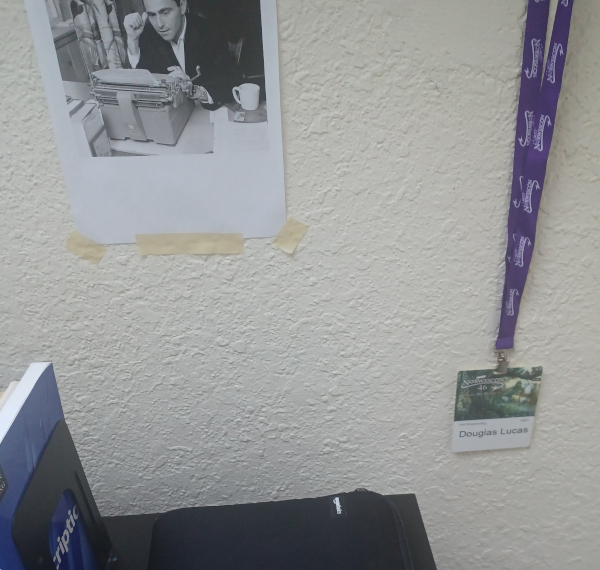


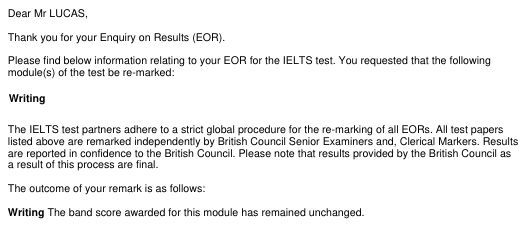
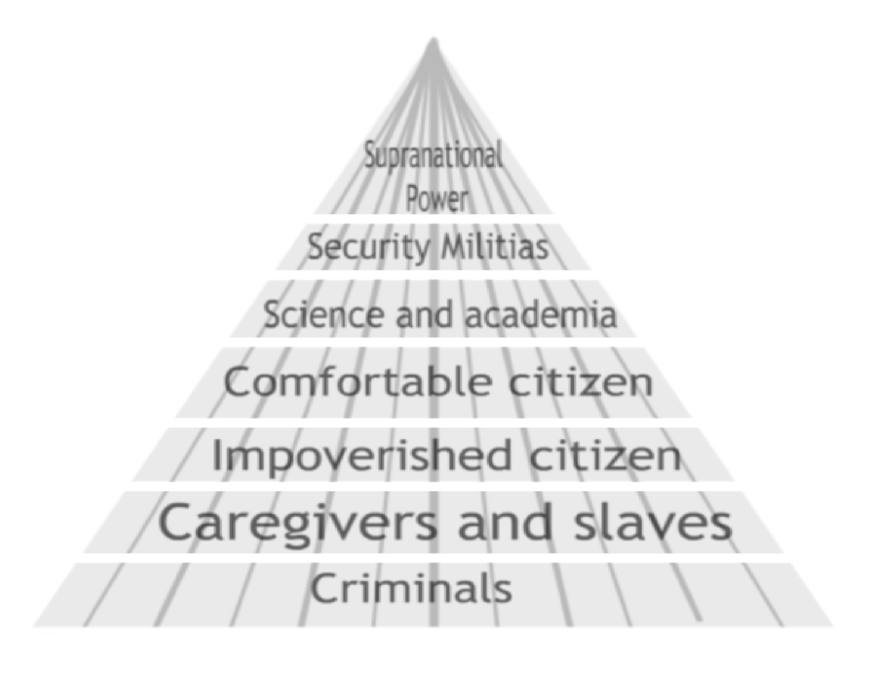





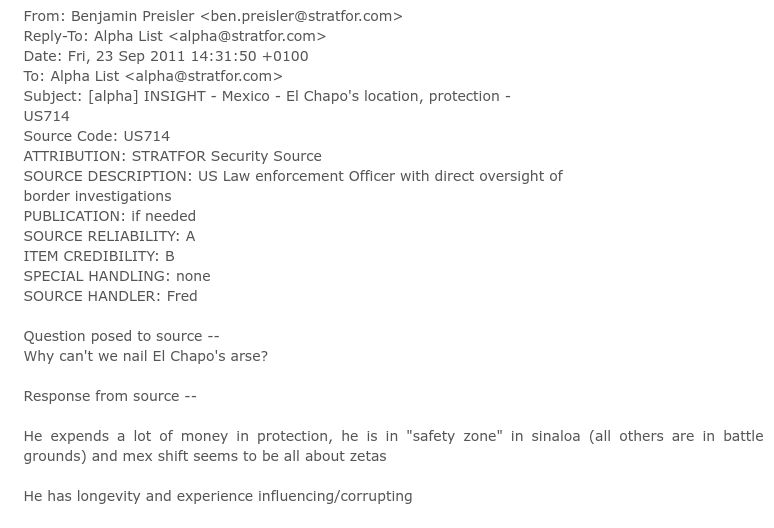
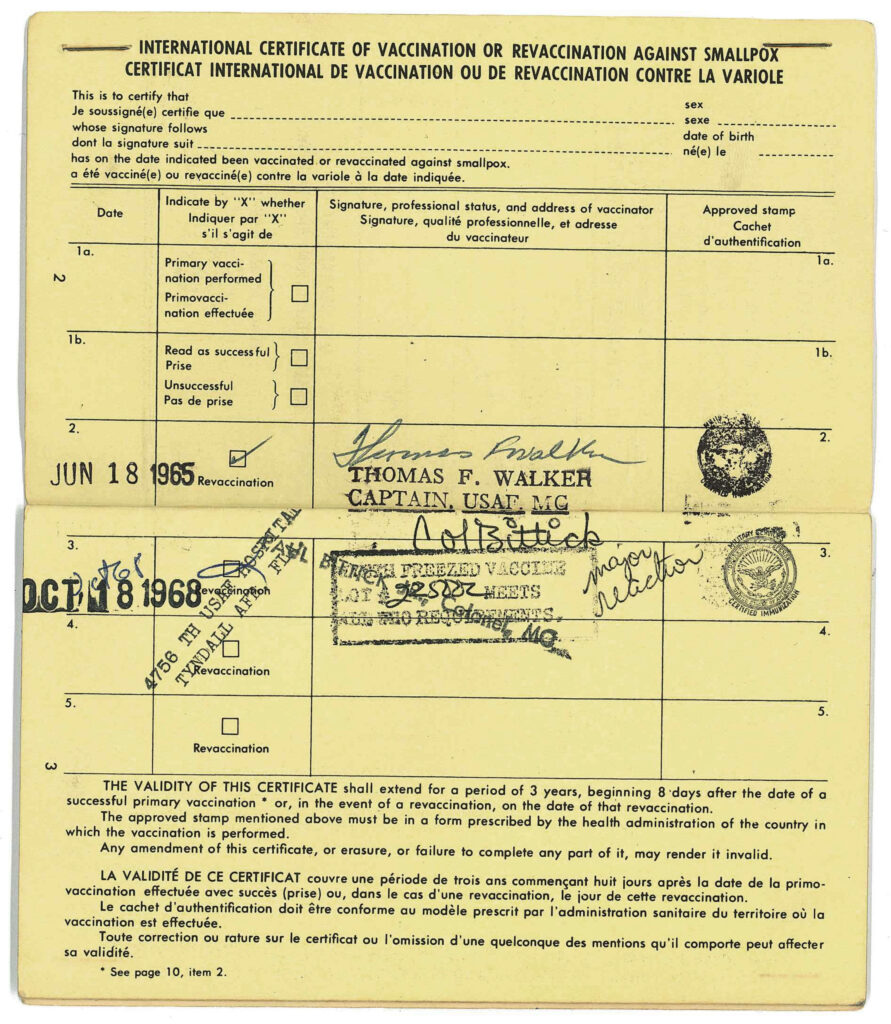






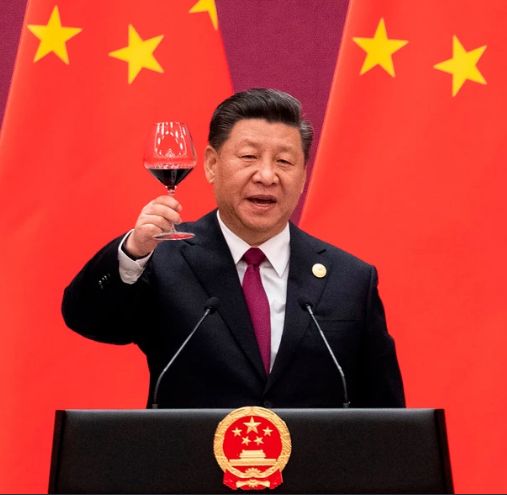




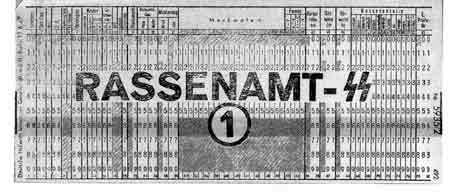
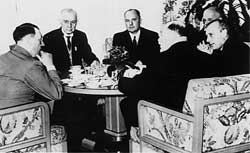


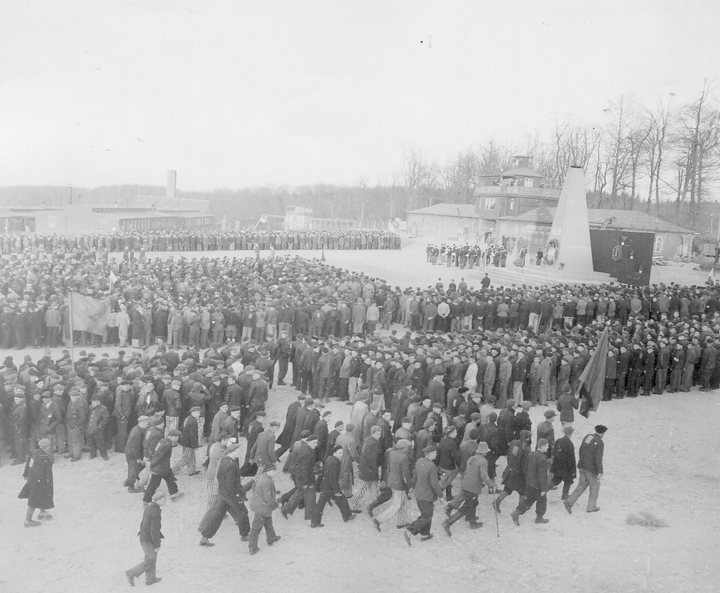
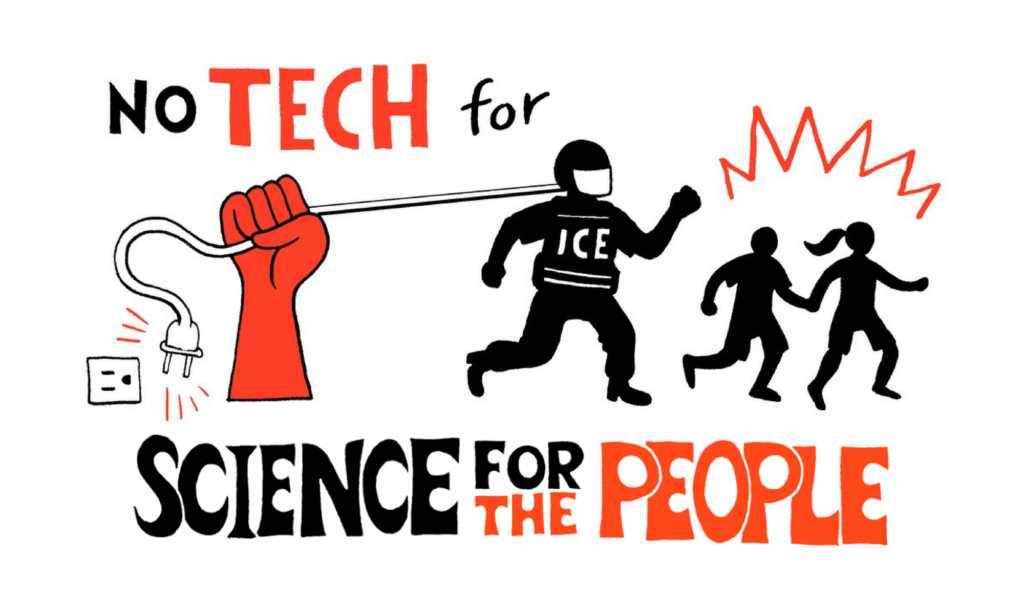

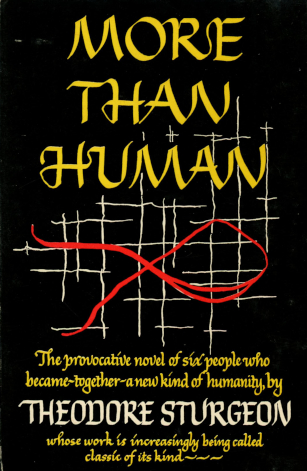










 Twitter:
Join the conversation