Note: In 2021, I’m posting a new entry to my blog every weekend or so. This is number 29 of 52.All photos were taken by me on 23 July 2021, except the small one identified in the caption as from my 2009 post. I took that photo then.
Note: See the previous week’s post for a reply by me to a reader’s question in the comments.
Note: On July 20, 2023, I removed Reuters Pictures photography from the Cuba news blast section of this post due to a demand letter from PicRights, a copyright troll acting on behalf of, and with the knowledge of, Reuters. The removed imagery may still be found in the five-image slideshow included in the original July 2021 Reuters article. I’d be curious to learn (and publish) what the photographer Alexandre Meneghinimakes of the PicRightsoperation and, most of all, what the unpaid Cuban protesters think of the clamp-down on circulation of their photographed protests — which were met with violence and imprisonment— calling for President Miguel Diaz-Canel to step downfollowing his failures with the trade economy and COVID there. Two years later in Cuba, smaller, sporadic protests continue, and while dissidents say awareness has increased, the problems remain, with one Cuban activist adding that change requires, among other things, “international visibility.” Yeah, that’s something PicRights should consider, international visibility, as it was the whole intent of my news blasts to bring little-known news from beyond the U.S. borders to a U.S. audience.(You also have to wonder how much co-option has taken place of the Cuban protests, since the two-years-later article is so doth-protest-too-much deadset on saying there hasn’t been any. But to my knowledge, no one has actually proven any to date.)See also this May 2023 letter from Human Rights Watch, Amnesty International, and others asking Europe to help with Cuba’s current human rights crisis.
Texas Native Forest Boardwalk at Fort Worth Botanic Garden
More than a decade ago, in June 2009, I wrote a blog entry titled “Biggest Southern Magnolia in DFW” (Dallas/Fort Worth). From my recent IP addresses in North Texas and Seattle at least, if you google “What’s the biggest Southern Magnolia tree in DFW?” my writing comes up as a “featured snippet” search result. As strange as it is to be honored by Skynet, I’m glad the Google algorithms prioritize the post.
Anyway, Friday afternoon I visited — just before flying back to Seattle on Saturday — the hometown tree, which I hadn’t seen in years and years. I discovered some things have changed, not only the TexasTreeTrails.org webpage I cite in my long-ago entry for facts on the champion plant. (That webpage has moved here.)
You’re probably familiar with the structural device of dividing a topic into the good, the bad, and the ugly; let’s do that in reverse order, to end on an upbeat note before plunging into news blasts for Cuba and the Lone Star State.
The Ugly
The world has moved on
On Friday I stopped by Fort Worth’s Cityview Car Wash too, because in the past few years, from a distance, I’ve often thought about this odd antebellum-esque store — in some ways, an opposite of the grand Southern Magnolia — where I took family automobiles as a prep school teen, not knowing any better. While the globe continues to warm (see my recent post on the Pacific Northwest heat-dome), it’s possible such expensive car washes in the South will keep going till the last possible moment, so rich white men can take their antique Mercedes and Jaguars there, and sit inside, having their shoes shined by elderly black men, or sit outside, watching their vehicles be towel-dried, by not-so-rich, not-so-white young men.
Your monthly car wash bill awaits
Along with the global weirding of weather we in the U.S. are already witnessing, my understanding is that water crises will be among the earliest and most salient enduser-facing problems of the coming climate change disasters. Of course, the outlandish car wash shops rely heavily on large amounts of water. I called Cityview Car Wash on Sunday to ask if they use recycled or reclaimed water. The low-level employee who answered the phone frankly said No, they use fresh water.
Picture it like a movie. Even as, by 2040, pollen counts double, and even as, by whenever, Fahrenheit temperatures in the 120s and higher become the norm, sweaty, sneezy Texans will still be sitting at Cityview Car Wash. The TVs will be blasting Fox Weather; security for the business will be provided by militarized police-tanks. The old white men will keep on watching teens haul huge long hoses to the parked Porsches. Close-up on a hose-sprayer held in a dark-skinned hand: the water is only dribbling out… only barely dribbling out… Close-up on a spigot valve being turned hard by a brown hand again and again. Another close-up on the hose-sprayer: it’s waterless now. It’s futile. With itchy eyes, the old Texan men look at each other. The South will not rise again.
But can the City of Fort Worth control such non-essential water usage during droughts? After all, they sell water to businesses in their jurisdiction, sourcing much it from the Trinity, the river discussed in my post last week.
Such local government regulation has had an effect on DFW car washes before. Due to dry spells in recent years, car washes in Witchita Falls, a corner of North Texas, have been required to change procedures when water conservation regulators threatened to shut them down. A City of Fort Worth drought contingency and emergency water management plan, effective May 2019, says (to oversimplify) that when a dry spell gets bad enough (“Stage 3” in the document),
“Vehicle washing … [at a] commercial car wash […] can only be done as necessary for health, sanitation, or safety reasons […] All other vehicle washing is prohibited.”
Note: According to City of Fort Worth water conservation manager Micah Reed in an email reply to me on Monday July 26, the emergency plan is updated every five years. The 2019 one I link and excerpt is the one that would come into effect in a qualifying emergency. I bet Micah Reed would make an interesting interviewee on this topic.
In short, the forthcoming water crises might bring power struggles between the Texan-beloved auto industry, and governments, not so beloved by Texans except when their business gets a gub’ment handout. Everyone underfoot getting stomped on by the two hierarchs going at each other, if they do, hopefully will intensify their growing interest in self-governance, taking care of themselves, each other, and the land as the giants continue their slow implosion.
Let’s turn to the Fort Worth Botanic Garden to see an example showing how power struggles between local government and industry typically go down. This weekend was the first time I’ve visited the Garden in something like seven years.
The Bad
The Biggest Southern Magnolia in DFW, now chained off. Signs read: “Do not enter” and “Please do not climb in the trees. Thank you!”
Not far from adrenal-fatigued Texans and their thunderous, wastefully washed SUVs on one of the city’s busiest streets, University Drive, the Fort Worth Botanic Garden, 109-something acres nowadays and the oldest major public garden in the state, grows peacefully. Depending on how you slice it, construction began on the Garden, then smaller and known as Rock Springs Park, in 1921, followed by, in various phases, early construction continuing on the area, renamed the Fort Worth Botanic Garden in 1934; some of that labor was part of FDR’s New Deal. The park debuted in 1935. However, none of the 750-or-so poor laborers from the earliest construction days were allowed to attend the opening ceremony, because the authorities wanted present only those who could afford fancy clothes. With limited exceptions, the Garden was also segregated, banning humans with dark skin, until roughly 1961 (more sources would help; anyone?). In 2009, the National Park Service (well, a bureau of the NPS) listed the core portion of the Garden on the National Register of Historic Places. The 111-page registration form can be found here; that certifying document and the 2010 Fort Worth Botanic Garden Master Plan (put together by various stakeholders including the city and a high-priced consulting agency) supply a great number of details on the Garden that this paragraph skips over for the sake of quick summary.
Same mighty plant, from my 2009 post. Note absence of chains. Neither a “do not enter” sign, nor a “do not climb” sign, back then.
The City of Fort Worth has owned at least some of the underlying land since 1912 and still owns all the Botanic Garden land today, but while I was happily living in Seattle, a bigly change transpired. In October 2020, the City of Fort Worth transferred its management of the Garden to the Botanic Research Institute of Texas, the BRIT nonprofit among whose board of directors — according to a 2019 tax filing — sits Ed Bass, of the billionaire oil-rich and locally powerful Bass family.
BRIT’s nonprofit structure notwithstanding, the management of the Botanic Garden has been privatized; the immediate ire the public has felt regarding the new biz centers on the Garden replacing the free admissions policy, more or less upheld continuously since 1935, with an in-real-life paywall. BRIT, on Saturday, charged me the $12 per adult fee to get in. (I was able to pay at the entrance; maybe tickets sell out sometimes, I don’t know.) Judging by a search of the #fwbg twitter hashtag, I’m by no means the only person frustrated about very rich, very faraway people putting a fence around local native trees, hoarding an imaginary right to visit them, then charging everyone to do so.
The local alt-weekly, the aptly named Fort Worth Weekly, tracked the City’s giveaway to BRIT with multiplestories, rightlytroubled about the public getting dispossessed of the nearly century-old treasure. Lon Burnam, a longtime Democrat in the lower half of the Texas state legislature (not currently), a former executive director of the Dallas Peace Center, a Quaker, and a member of the Tarrant Coalition for Environmental Awareness, co-authored a May 2020 piece in the Fort Worth Star-Telegram that warned the City of Fort Worth was giving BRIT a “sweetheart deal” (a yearly $3.35 million management fee the City pays to BRIT, separate from a one-time $17 million from the City to BRIT for repairs), unless specific steps are taken to protect the commons. A month later, Burnam told the North Texas NPR/PBS member station: “Basically, the city has abdicated a lot of control and a lot of their responsibility for managing the gardens.” Vaguely citing to the station some unspecificed “plans in progress,” BRIT didn’t even deign to be interviewed.
Friday photo of DFW’s biggest Southern Magnolia, leaving out the signs/chains
What I dislike about BRIT’s very-Texan management of the Garden isn’t just the admission costs, but also the practice of blocking patrons from the trees, further dissociating humans from Nature. I do remember, especially as the years went on (say, circa 2000-2015), that disrespectful people would trash the park and hurt plants (for instance by walking over them), but improving norms around respect for Nature would be the best solution, and could be implemented immediately by hiring knowledgeable employees who, in a manner similar to the best Park Rangers, would politely patrol the Garden and teach guests not to dishonor or disrupt the plants.
Ignore expired metaphors about balancing govs and biz; above, the true power structure (Source)
Instead of gentle monitoring and education done by live humans, BRIT opts for the economic efficiency of brute force: chain the trees away, stop humans from touching them. For decades no chains locked up the biggest Southern Magnolia in DFW. If you look at my 2009 post’s comments, you’ll see youth climbing Southern Magnolias, including the grandest one itself, is quite ordinary. Tree-climbing (and tree-hugging!) should be encouraged along with respect for Nature. BRIT’s attitude reminds me of the Fort Worth Zoo, also a place dirtied by the oily hands of the Bass family. In December 2007, the Fort Worth Weeklydiscussed how Lee Bass and Ramona Bass led the creation of the Fort Worth Zoo’s Texas Wild! exhibit, falsely “showing how wildlife — mostly dead, stuffed wildlife — could exist in harmony with oil and gas drillers.” Reading any decently curated list of news articles from any day of the week should disprove that. I wonder if the new BRIT boardwalk at the Garden, pictured at the top of this post, so resembles the boardwalk I remember at the Fort Worth Zoo because of some Bass family contractor connection.
The Fort Worth Botanic Garden giveaway suggests the regional government hierarchs, supposedly protectors of the public, will work hand in glove with the auto industry hierarchs when the forthcoming water crises fully arrive. Maybe any battling on our behalf will be, already is, and always has been, very minimal. Instead of abdicating oneself and begging intoxicated rulers to do something, we could try something else. What’s to be done?
Another Friday photo: the biggest Southern Magnolia tree in DFW
I did enjoy some aspects of the new BRIT-era Botanic Garden. The Texas Native Forest boardwalk is nicely done; I’m referring to the actual physical boardwalk, which is well-built and fun to walk on. It’s clearly good to protect against some of the trash and decay that had built up over the Garden’s long years (the myriad disrepair was cited as a main reason to give the management to BRIT); of course, rather than the helpfully educating employees I proposed above, it seems the same strategy has been used as with public schools: governments underfund schools/parks, then victim-blame schools/parks for the resulting problems (e.g., trash build-up), and finally give them away in sweetheart deals to industry as the supposed saviors. Anyhow, this is supposed to be the good section!
Regarding governance, whether of car washes and parks or anything larger or smaller, it’s sad that large-scale democracy — clearly better than outright fascism — similarly turns, eventually, into oligarchy (rule by the few): remember that 2014 study by Princeton University and Northwestern University professors who found the United States to be an oligarchy? The Italian sociologist Robert Michels’s infamous iron law of oligarchy from 1911 states: “He who says organization, says oligarchy.” In other words, Michels argues that oligarchy can’t be avoided. Refuting such dark fatalism is the goal of philosopher Heather Marsh’s Binding Chaos books, so I recommend those thought-provoking texts to readers.
As for reconnecting with Nature, consider this menu of options:
Go vegan or close to it, which I’ve found helps build interest in, and empathy with, animals and their ecosystems
Learn orienteering (using a map and compass well). It helps individuals perceive and identify landforms and direct travel safely. In contrast, I’ve found relying on GPS blinds me to my environment. I have the third edition of champion orienteer Björn Kjellström’s book Be Expert With Map & Compass: The Complete Orienteering Handbook, but have sadly yet to read it. Looks really good though. Surprises me that most locals in Washington state and Oregon cannot name the various mountain peaks visible in the distance. Compare that with the worldbuilding/setting in better fantasy novels, as in Le Guin’s and Tolkein’s, in which you have a sense as you read that certain differing, named mountain peaks are northward while such-and-such plateaus are in this other compass direction, etc.
Use field-guiding books to identify plants and animals. Field-guiding improves visual ability overall and helps you learn names of plants and animals, in whole but also their various parts, as well as their ecosystems and the dependencies within those ecosystems. There are also ways to learn about the medicinal benefits of various plants, such as books or communities around such topics. Wandering around peering at birds or plants, a field guide in hand, also makes a good cover story for sneaking around to spy on what resource corporations are up to.
Read Ursula K. Le Guin’s middle and later fiction, which stresses the importance of leaving hyped-up “heroic” (adrenalized?) states, or just using them temporarily, and appreciating, and usually residing in, a calmer, seemingly slower approach to life. For instance, her 2000 Hainish science fiction novel The Telling describes the protagonist’s preference for conversation topics: “She heard about them, their cousins, their families, their jobs, their opinions, their houses, their hernias […] These dull and fragmentary relations of ordinary lives could not bore her. Everything she had missed in Dovza City, everything the official literature, the heroic propaganda left out, they told. If she had to choose between heroes and hernias, it was no contest.” The protagonist prefers to hear not about puffed-up heroes, but about everyday struggles with hernias. (Perhaps an exaggeration to make the high-contrast point, as the protagonist is heroic herself, as are her comrades, in a good way, unlike the official heroes of the state propaganda.)
For me, outdoor camping is intimidating for a variety of reasons, several of them irrational. But baby steps such as visiting parks, or going on day hikes (or running mountain trails!), can lead down the road to more challenging adventures. There are tons of websites and online communities around camping, but also around the simpler excursion styles. Even walking or jogging city trails can be adventurous. For instance, Seattle has a Seattle Trails Alliance; maybe an urban location near you has similar. I usually prefer going alone, but some enjoy having a travel buddy.
Somebody could make it a goal to liberate the Fort Worth Botanic Garden plants and figure out the steps to achieve it.
Any or all of the above have more “political” implications than might seem evident at first glance. Because a healthy society is made up of heathly individuals.
Compare liberation — such as reconnecting with Nature — with the practice of taking cold showers. I have two friends in Seattle who take cold showers every morning. At first, they told me, it was miserable. But soon after, they acclimated, got stronger, and the cold showers became enjoyable. Feeling their vitality in the morning became enjoyable. Strengthening yourself should feel good. If it doesn’t, or if it seems an abstract duty to be fulfilled like an awful chore, maybe you’re still heavily weakened by the wider world, and need to piece together the baby steps for escaping the damage and the comfort zones. Given the way things are going, the sooner each person improves how harmoniously they interact with Nature, the better. Nature isn’t going anywhere, and as time goes on, She’ll have more and more blunt things to say to us all.
Perhaps a resident of the nearby lagoon, a duck, or maybe a mud hen, takes a stately, solitary walk across Cityview Car Wash
News blasts: Cuba and Texas
Cubans protesting, 11 July 2021, Havana. Photo by Alexandre Meneghini for Reuters
Cuba) More than six decades ago on the Carribean island of Cuba, the U.S.-backed right-wing Fulgencio Batista military dictatorship, which accommodated U.S. organized crime and human trafficking, was overthrown, resulting in the rise of leader Fidel Castro, who died in 2016. Prior to that leftist revolution in the fifties, the United States murdered thousands of Cubans. Since Fidel Castro took power and continuing today, the United States has harassed Cuba, including via an ongoing economic embargo/blockade (called by Cubans “el bloqueo“) enforced not by navy, but by law and sanctions. The embargo is an effort to collapse the Cuban trade economy. It causes much poverty there. Every year since 1992, the United Nations General Assembly has voted in favor of resolutions calling for an end to el bloqueo, the most prolonged embargo in modern history. Even recently, the United States made it difficult for expatriate Cubans to send money (“remittances”) home to the island, where some 11 million people live today. However, Reuters reported this month that the Biden administration might ease those remittance restrictions soon, and might also lift the “state sponsor of terrorism” designation that Trump hurled at Cuba like a curse days before he left the White House. These hints by the Biden administration are likely trial balloons, a way for the Biden admistration to test the waters by observing others’ reactions, and were publicly made probably due to the protests in Cuba earlier this month — I’ll get to those in a second. Another way the U.S. has harassed the country has been via a travel ban that has at times prevented ordinary US citizens from going to Cuba as tourists. There are many nuances of this ban, which has thickened or loosened with time and different White House administrations, which I won’t get into the weeds of here. The ban has served to keep USians ignorant of Cuba, as they are of most countries and most of humanity currently alive. The ban has also served to sabotage Cuba’s tourism industry. Cuba initially closed its borders for the pandemic, which also hurt its tourism industry severely. An additional item that should be mentioned as background before getting to the protests: the very high-quality Cuban healthcare system. At a former web directory for criminology professor Dr. James Unnever, there’s a short paper on that system, I believe written by Dr. Unnever, though I’m not exactly sure who wrote the paper, nor when. The paper more or less fits with what I know from others who have told me about their experiences in Cuba. Further, a YAC.news article from 12 July 2021, “Why are Cubans protesting and how can you help?” (the source for much of this Cuba news blast) states:
The small island nation of Cuba has one of the world’s best healthcare systems even after an ongoing embargo and sabotage campaign by the United States […]
In Cuba, there is a health center per 25,000 [people], neighbourhood clinic per 5,000 people, and a personal family doctor per 500 people. In [the capital city of] Havana alone, there is a clinic in virtually every street corner, each with a family doctor and nurse. Health workers nationwide have been out in full capacity visiting patients at every home. They have been educating residents about the new Cuban-made coronavirus vaccine [called “Abdala”] and informing them it has arrived while setting up appointments for vaccination.
Throughout 2020 Cuba largely kept the [novel corona]virus beyond its shores, [but] the number of infected patients is […] now rising fast, with a record-breaking 2,698 new daily cases on Saturday [July 10], and a seven-day average now above 2,000 [as of July 12]. Cuba is facing the biggest known surge in the Caribbean. Critics of the Cuban government’s failure to contain the virus point out the government’s approval of foreign tourists, according to sources on the ground, specifically Russian tourists. They claim that the virus was allowed in despite warnings from the healthcare community. [Meanwhile] the island is undergoing an economic crisis and healthcare emergency as inflation and COVID continue to rise.
In Cuba, all citizens receive health care free of charge. According to the YAC.news article, “In the past several years, [Cuban] health workers have eradicated polio, tuberculosis, typhoid fever, and diphtheria. The amount of malnutrition among 1-15 year olds is 0.7%, compared with 5% in the United States. Initially based in hospitals, the Cuban health system evolved into a primary care system that is based in communities”. The Cuban medical system prioritizes preventive care, public participation, community interventions, and a very high ratio of primary-care doctors to citizens. With those priorities inexpensively driving their health care system, the Cuban population scores very high on health measures. Yet I’m curious to know 1) Aside from human health, what was the strategy around the Castro government making medicine a sort of “unique sales point” in the international trade economy, and 2) how does the Cuban healthcare system approach severe mental health problems?
Havana, 11 July 2021. Photo by Alexandre Meneghini for Reuters
That finishes up the background on Cuba. Now, to the protests, which made news in mid-July.
Earlier this month in Cuba, thousands of protesters hit the streets countrywide, calling for President Miguel Diaz-Canel to step down; Sunday 11 July was one of the biggest protests the country has seen in more than two and a half decades. Diaz-Canel angered the protesters because of Cuba’s growing inflation and other trade economy woes, plus his government’s failure to contain COVID-19 since it let infected travellers in. These are legitimate local grievances. Reuters reported some violence by security forces against protesters, and notes that mobile internet (and thus widespread social media) was introduced to the country only two-and-a-half years ago, a huge factor in prompting civil unrest of whatever sorts.
While the protestors correctly have a point, the U.S. media megaphone, along with U.S. thinktanks and others, have used the local anger as a way to boost unhelpful voices calling for serious destabilization of the Cuban government in such a way as to benefit foreign interests, including United States interests. This has made following the protests online, via the #SOScuba hashtag for example, a bit confusing.
The YAC.news article also says:
Due to the lack of resources on the island an international campaign has been launched to supply the island with the materials needed for syringes. The campaign is being led by Cuba’s diaspora and international solidarity movements. Global Health Partners (GHP), a New York-based non-profit, has launched a campaign to address a shortage of 20 million syringes. Bob Schwartz, GHP’s vice president, told international media, “To date, we’ve purchased four million syringes. We hope to purchase an additional two million”
Those who might wish to help with the GHP syringe collection campaign for Cuba’s vaccine rollout are directed here. I’ll note that a shortage of syringes in the United States federal stockpile was a problem noted early on in the U.S. response to novel coronavirus by Health and Human Services Dept. whistleblower Dr. Rick A. Bright. It’s mentioned in his whistleblower complaint from May 2020, in which Dr Bright explains how he was retaliated against by the Trump administration for insisting “on scientifically-vetted proposals” to overcome the COVID-19 pandemic and for pushing “for a more aggressive agency response to COVID-19″ (among other related reasons).
Havana, 11 July 2021. Plain clothes police blocking a road during protests. Photo by Alexandre Meneghini for Reuters
Back to Cuba, the twitterati also verbally sparred over blaming the U.S. Central Intelligence Agency, which is only one member of the U.S. “intelligence community” (a pro-spy rebranding of the more exact descriptor “spy agencies”). No smoking gun has surfaced proving meddling by specifically the CIA in these July Cuban protests. Surely the CIA is interested in Cuba, and history gives many examples of CIA-sponsored assassinations and coups in the Central and South Americas, see for instance Operation Condor and Operation Northwoods. But the twitterati spoke as if CIA meddling had already been definitively proven. It costs nothing and takes little effort to tweet opinions; investigation to find proof takes serious time, money, and effort.
Last time I checked, the U.S. has 16 or 17 (depending on how you count) spy agencies on the federal level. For instance, the FBI, the Navy, the Drug Enforcement Administration, the Coast Guard, and many other federal agencies all have spy bureaus that are part of the so-called intelligence community. There’s also the National Security Agency and the National Geospatial-Intelligence Agency, and still others. Maybe the newly minted Space Force, the fifth Pentagon branch, has a spy agency component; if so, that would bring the total up to 17 or 18. And that’s just one country, the United States. There are nearly 200 other countries. I’d wager almost all of them have at least one spy agency; most probably have many more.
The tunnel-vision focus of twitterati on the CIA would be like — let’s assume the demons of Abrahmic religions are real for a moment — Christians, hooked on televangelists, seeing Satan behind every misfortune, and refusing to consider what roles in the misfortune might have been played by the Ifrit of Islam, or Samyaza from the Book of Enoch, or hundreds of other demons. With hundreds of spy agency opponents to choose from, it’d be best to find evidence, set goals, and execute, rather than compete to see who can yell “CIA” the loudest, which ultimately just ends up advertising the spy agency that the activists say they hope to obliterate. (Something JFK also hoped to do!)
The Cuban authorities admitted in tweets that a government website had been taken down by denial-of-service attacks. Anons participating in #OpCuba claimed responsibility. More on that in a 14 July 2021 YAC.news article.
Translation: “We denounce that the website of our foreign relations chancellery has received a denial-of-service cyberattack since 11 July 2021. This attack generated false accesses in large quantities, compromising our servers.”
Texas) Some concluding thoughts about my approximately two weeks in North Texas. My trip improved as time went on, though the humongous Nissan Armada the rental car company stuck me with (see last week’s post) did start to sink: the check engine light came on some 48 hours prior to my flight home departing. But I turned the gargantuan vehicle back in at the airport no problem. No harm, no foul, I suppose. As my trip continued, I discovered more research data (for family and personal history) than I expected, including some fascinating and healing revelations that are too private to share on a main channel like this. Catching up with friends and family members I hadn’t seen in a long time was beneficial as well, and sometimes revealing about both sides in the interactions, in expected ways, yet also in unexpected ways. Bottom line: people are always changing, even if slowly; there’s no stasis outside abstraction; the only question is, will the changes be for the worse, or for the better? The changes are more evident when you haven’t seen someone offline in eight or so years. Three additional observations about North Texas in July 2021 might be of general interest. First, as at some Seattle places, multiple restaurants in Fort Worth are doing away with paper or laminated menus altogether, forcing customers to scan QR codes. Are laminated menus environmentally friendly, or are they plastic? Either way, you can’t even obtain a regular menu by asking, since they’re all gone. What about customers who don’t have phones, or who use their devices atypically? Avoiding needless paper is great, but everyone carrying around EMF-generating phones to scan QR graphics isn’t my preference: here are thousands of categorized studies showing EMF harms. I solved the problem by looking at the menus the stores had pasted on the windows. Or just using the blasted QR codes, if I had a phone handy. (In Colombia, where protests against president Iván Duque’s narco-state are ongoing, the cops are considering replacing their badge ID numbers with QR codes, which are small and difficult to scan for those with phones and impossible for those without; making matters worse, the public still has to know the cop’s badge ID number to get from the QR code to the actual identity, meaning, I think, the cop’s legal name.) Second point: I heard more Spanish spoken in North Texas than I used to hear, this trip. Maybe it’s a change in me and what I notice, but it could be (or could also be) Spanish speakers feeling safer or more comfortable asserting their primary language. That’s a change for the better. Finally, I got a chance to try out Belently’s Love Vegan Mexican Restaurant on Blue Bonnet Circle. Their all-vegan menu offers many gluten-free items, and their walls, painted wonderful colors, include delightful murals. That’s opposed to the default no-color beige walls that white people in the United States typically have in their homes and stores. Vegans, including those who also avoid gluten as I do, now have three strong vegan-specific options in Fort Worth that I can highly recommend: the long-standing Spiral Diner (largely comfort food and thus not the healthiest), the new Boulevard of Greens with organic juices (including beet juice!) and bowls (including broccoli and quinoa!), and Belently’s Love. See, even Texas changes.
Biggest Southern Magnolia in DFW, still bearing fruit in 2021
Note: In 2021, I’m posting a new entry to my blog every weekend or so. This is number 28 of 52; omg, the year’s more than halfway done.
Fort Worth, TX, summed up? I took the Whataburger pic this weekend, but didn’t actually eat the “triple meat” burger or drink the large vanilla shake
I was travelling through central Washington state and northeast Oregon for a few weeks earlier this summer — now, in mid-July, I’m visiting my hometown of Fort Worth, Texas for not quite half a month. Besides seeing family and friends, I’m here to do research of a personal sort. Yet after six years as a Seattle resident, I can’t help noticing several things about the Dallas / Fort Worth metroplex, some bad, some good. I’ll share those observations. I was going to then provide news blasts about the current situations in Cuba, Haiti, and Germany, but this entry simply grew too long, and I gotta do some other stuff. Hopefully next week I’ll take on news blasts for those three countries. I’m an untimely fellow.
Bad stuffabout North Texas
Graphic of SimCity game. Would you want to live here? Source.
Gridlock) Aside from traffic jams and the Lone Star State’s uniquely deregulated, isolated power grid — meaning during disastrous outages (including this year), Texas, its leaders boasting with pull-yourself-up-by-your-bootstraps lies, cannot, unlike all other 47 contiguous states, receive energy sent as assistance from beyond its borders; the privatized electric system has yet to be fixed or replaced, even though lawmakers knew of its vulnerabilities: they chose to serve the power companies instead — I want to talk about another type of Texan gridlock. In Seattle, multitudinous fairy-tale roads wind up hills, passing idiosyncratic houses with quirky paint jobs, and in the distance are bridges, sailboats, mountains. Many of my Seattleite friends have never lived anywhere else, nor have they ever been to the South. Comparing my place of birth with the Emerald City’s highly commercial Northgate neighborhood (an exception to the usual Seattle beauty), I tell them North Texas is primarily composed of tract houses, billboards, strip malls, fast food joints, and car dealerships. That truth was really evident from the sky as my flight descended toward DFW Airport. During landing, I was reading the first chapter in a thought-provoking collection of essays from 2006, edited by Alvin M. Josephy, Jr.: Lewis and Clark Through Indian Eyes. It’s research for my fiction project set at least partially in northeast Oregon and 2036, because all time connects, and the colonial histories of NE Oregon often begin by trumpeting the settlers Lewis and Clark, whose expedition, commissioned by slaveowner Thomas Jefferson, journeyed, between 1803 and 1806, from Pittsburgh to the Pacific Northwest coast and back to St. Louis, thanks to aid from the enslaved, pregnant, and raped Sacagawea, of the Shoshoni and aged merely fourteen to sixteen years or so at the time of Lewis and Clark’s wrongly idolized quest. That’s not the version you heard in school, right? In the United States we aren’t taught the truth that Jefferson’s top goal for the expedition was establishing evermore commerce, nor that the explorers called the indigenous peoples Jefferson’s “children,” an insult that should call to mind Robert Filmer’s Patriarcha. Rivers also have hidden truths… In his essay Frenchmen, Bears, and Sandbars, in the Lewis and Clark Through Indian Eyes collection, Vine Deloria Jr. discusses how “Rivers do not, as a rule, create long straight embankments.” Indeed, rivers move over time, something a character mentions early in Cynthia Shearer’s excellent 2004 novel The Celestial Jukebox: “What you looking at there used to be the Mississippi River. Long time ago the river moved itself over […] River just change its mind and move sometime.” As the virtual flight attendants on the seatback televisions were politely ordering me to stow my tray table in the upright position, Deloria Jr. was telling me how Lewis and Clark misinterpreted Missouri River sandbar deposits, insisting with Enlightenment rationality that measurable straight lines must exist to explain the deposits as human-made, when actually they were natural phenomena. Lewis and Clark didn’t understand how chaotic rivers and Nature are. I glanced out the airplane window, and below, behold, North Texas, designed and coerced into “rationality” by long straight lines everywhere. Tract houses separated by long straight congested roads. Like some Cartesian grid Texans are all locked into. The pain caused by living apart from Nature should not be underestimated, even if Texan natives aren’t aware of it, as I wasn’t for a long time, though toward the end of my residency in Texas (I left at the end of 2015), I was frequently going to parks for just that reason. It makes me think of the ideology implicit in the 1991 Super Nintendo game SimCity, which I spent countless hours playing as a kid.
Screenshot of video showing tract housing in Fort Worth. Source.
Graphic of SimCity residential donuts. More industrial zones needed, but why? Image source.
A well-known strategy among SimCity gamers is to create “donut” neighborhoods: squares imposed on the land, usually in nine-by-nine arrangements, with train tracks or roads boxing them in, and a park in the middle to appease the unhappy residents. In SimCity, players are rewarded for engineering such supposedly rational cities. In real urban life, rivers are forced to flow “logically” in straight lines, like trees in some parks, lined up in discrete pots. As a video game-playing kid, I didn’t quite understand that these efficiency setups clash with harmonious ways of living with land, though I did play in undeveloped lots regularly, needing that. To be honest, not until very recently did I put two and two together, comparing rivers in rural areas with rivers in urban places, although a 2019 Seattle Public Library exhibit did briefly puncture my conventional consciousness on the subject. In Fort Worth, I grew up walking and jogging on the sidewalks by the Trinity River, and just assumed the embankments were naturally steep and unchanging, shaped conveniently for urban planners to impose at a moment’s notice, above either edge, unchanging sidewalks…
Despite Seattle’s beauty, the same story plays out there, too. Unfortunately I haven’t read it yet, but BJ Cummings’ 2020 bookThe River That Made Seattle: A Human and Natural History of the Duwamish looks amazing from this interview and this review. The book talks about how without displacing Salish indigenous peoples and trashing and forcibly diverting the Duwamish River, the city of Seattle as we know it wouldn’t exist. There would be no city forums for identitarians to debate which sect should get paid more wages for helping corporations drive us extinct. And in contrast to the dolla dolla bill, let’s-go-extinct-ASAP civilization of biz, which argues each individual is an autonomous sole proprietor capable of not caring what anyone else thinks, and worthy of paralyzing shame for any mistake actually caused by corporate destruction, I hope my discussion of rivers and gridlock — not to mention what volcano Mount Rainier and the Cascadia Subduction Zone might have to say — helps to show how people are in fact creatures of their environments, which of course doesn’t remove each individual’s responsibility to fight for something better. It’s interesting, too, how fiction-writing instructors typically badger writers into obsessing over their supposedly autonomous characters’ ex nihilo motivations, rather than learning about the settings they’re in: for instance, how does the local power grid, or train track, or river characterize a protagonist, or for that matter, a protagonist’s grandparents or neighbors? The so-called “Golden Age” of science fiction in the 1950s presented familyless protagonists singlehandedly subduing the universe; but in the ’90s, science fiction writer Octavia Butler presented characters with extended families walking fiery highways as refugees, an entirely different take on life.
Photo by me this weekend beside wonderful Trinity River in Ft. Worth
Coronavirus confusions) From observation, I guesstimate that ten percent, or fewer, of North Texans are masking. As of 16 July ’21, for Texans ages 18 and up, only 53.9% are fully vaccinated and only about 62.6% are partly vaccinated (one jab of a two-jab series). By way of comparison, in King County, home of Seattle, as of the same date and for ages 16 and up, 75% of residents are fully vaccinated, and 80.7% of residents are partly vaccinated. That’s all according to public health data managed by regional government entities. As for masking, given my observations a few weeks ago, in the Seattle areas that might be described as very progressive or Green Party-ish politically, for instance, inside co-ops selling organic foods, I’d guesstimate that indoors, 90+% of people are masking. How this came to be so politicized, I’ll address in a moment.
This does not look good. Source: John Hopkins Univ COVID-19 map.
A disproportionately high number of those masking in North Texas are individuals categorized on bureaucratic paperwork as minorities (and then identitarian activists tell us we must all heed our opponents’ paperwork). Sometimes those groups tend to have less resources to pay for healthcare yet simultaneously tend to sometimes have more empathy and altruism, gifts of being slotted into negative image roles (differing from the idealized images, you know, white businessmen in suits and the like, who tend to live in grandiose, puffed-up headspaces). Because some of the people I’m visiting indoors are elderly, I wore a high-quality mask the whole time, and received mockery for it. In crowded North Texas restaurants, diners aren’t masking whatsoever. The US-based Centers for Disease Control and Prevention (CDC) says that’s fine if you’re vaccinated; the UN-based World Health Organization (WHO) disagrees, telling even vaccinated people to mask, since they might be asymptomatic carriers — however, growing evidence suggests those vaccinated with Pfizer-BioNTech or Moderna are far less likely to be asymptomatic carriers; studies are underway in this regard for the Johnson & Johnson vaccine — and in rare instances, vaccinated people can still become diseased with COVID-19 (a “breakthrough” case), including as a sufferer of Long COVID. Adding to everyone’s confusion, the CDC stopped actively tracking all breakthrough cases, and now tracks only breakthrough cases resulting in hospitalization or death. Meanwhile, the Delta variant of the virus, a more contagious mutation that grows faster inside people’s respiratory tracts than the original, currently accounts for at least a fifth of all United States cases, and COVID-19 is now on the rise in every US state; Los Angeles County, the most populous county in the country, just resumed mandating masks. Getting two doses of the Pfizer-BioNTech vaccine, as I did in March, is effective in protecting against the Delta mutation (though less effective than against the original novel coronavirus), so that’s the basis on which I’m travelling (while masking, handwashing, physically distancing, and meeting only outside insofar as possible), plus the greatly decreased likelihood of a person with an mRNA vaccination being an asymptomatic carrier, something a Harvard-trained doctor I know puts his trust in. Apparently the Moderna and Johnson & Johnson vaccines similarly protect decently, though not perfectly, against Delta. Perhaps surprisingly, nobody on my flight to Texas (I’ve yet to fly back to Seattle) caused any trouble; each passenger masked as required without incident. Based on this 2018 study suggesting window seat airline passengers are least likely to catch respiratory illnesses, I got window seats. But SNAFUs (Situation Normal: All Fucked Up) prevented me from getting tested knowledgeably, namely not receiving a timely response back from my primary care physician regarding how vaccination affects COVID-19 tests, likely because her underling completely didn’t answer my question. I asked something like: “How does being vaccinated, versus unvaccinated, affect COVID-19 serology and PCR test results?” And they replied something like, “Are you wondering what type of test you should get?” And it’s like, answer my question or link me to an answer! I’ve taken to replying to such responses, or front-loading my questions with, “If you don’t know the answer, it’s okay to just say that,” and I find interlocuters usually react better. Instead of them trying to extract my motivations. Really, I should have figured out about the testing myself. But testing-while-vaccinated is another example of coronavirus confusions people are enduring. I’ve shown zero symptoms, not even mild ones, since the pandemic began; in fact, I haven’t had any sort of respiratory illness in years and years, probably owing in part to a vegan/glutenfree and low-sugar diet as well as frequent cardiovascular exercise and better sleep than in my past. That’s not to brag; it’s to link you to experience and info that might help. Best I can figure from the CDC in July ’21, for vaccinated people, serology tests to detect past infections no longer work (due to confounding with the vaccine-produced antibodies), but swab tests to detect current presence of the virus do still work. I’d like to get that done prior to spending extensive time with (vaccinated) elderly people indoors, just to be on the safe side; will see how that goes in North Texas. Finally, as for all this being politicized, let’s not forget in February 2020, the Jeffrey Epstein associate and likely Putin asset, former and probably forthcoming US president Donald Trump called coronavirus a “hoax” (as he calls global warming a “hoax”), and his administration punished US Health and Human Services Department whistleblower Dr Rick A. Bright for Bright’s insisting “on scientifically-vetted proposals” to overcome the pandemic and for pushing “for a more aggressive agency response to COVID-19.” At least two-thirds of a million people dead of coronavirus in the United States since the pandemic started, a decrease in population handy for the oligarchs who, thanks to advanced technology, no longer need as many toiling masses. Locking down hard everywhere for just 100 days would end coronavirus; that’s feasible (see New Zealand’s zero-COVID approach), yet the authorities in the US and elsewhere apparently do what they can to ensure COVID-19 continues, a new permanent paradigm of endless variants, a bit like 9/11 introduced a new permanent paradigm, terrorists as military targets instead of law enforcement suspects and everyone a potential terrorist. Well, maybe the forthcoming University of Washington vaccine will help. Or maybe people will read about coronaviruses prior to 2020 so that they understand masking against respiratory illnesses is a sensible precaution commonly done elsewhere for decades — not tyranny. Next thing you know, libertarians will whine about having their freedumb right to litter taken. I do think those badgering vaccine-hesitant people generally need to have better appreciation for why so many are correctly suspicious of conventional science and conventional medicine, though quacks exist in the alternative science/medicine realm as well, see “the disinformation dozen” spreading fear, uncertainty, doubt, and denial around the coronavirus vaccines. As the last few years have especially shown, propping up subject matter celebs like Neil deGrasse Tyson or whomever, conventional or alternative, and then trying to cheerlead them into winning an advertising blitz on behalf of vaccines or whatever else, is insufficient; having a propagandized public is harmful, whereas having a public capable of self-education is helpful. That requires overhauling our information system.
Pic I took this weekend of a Fort Worth lawn near Camp Bowie
The Decline of North Texas Civilization) I’ve been in Fort Worth a full week, and I get a general sense of exhaustion and torpor from Texans. I’m also witnessing little things falling apart. It’s just an anecdotal observation, but the motel I’m staying in — the same as when I last visited two years ago — is even more run-down this time around. When I arrived, the bed lacked pillows, the bathroom lacked towels, and various objects were broken. I’m not the kind of picky person who makes a fuss over such minutiae; the point is merely that North Texas appears to be slowly breaking down. The world has moved on, as those Stephen King Gunslinger books say. I feel tired and lazy, too, which I think is probably a partial result of the overall lower quality of life here, decreases in things like water quality, relative to Seattle. Although that could be my imagination, or more about the odd feelings I’m experiencing around being back here. Except for family member funerals possibly, I don’t think I’ll return to Texas any after this, which is a big change to accept internally. I’m finding the research information I was looking for, and long-ago acquaintances don’t want to meet face to face, probably because deep down, we both know we’re no longer actually friends with a fun energetic connection, or even shared values and interests, beyond fairly superficial things like Star Trek … so that makes sense. I was just curious how their lives have played out, and if they have anything new and exciting to say. Despite half the region now differing — a change I’ll get to below — at least half this region will still likely celebrate the probable return of a Donald Trump presidency, howling once again their bloodthirsty approval for his ideas like bombing accused terrorists’ innocent civilian family members. I hope someday even more people emphatically and consistently insist loudly that adopting If they aren’t paying your bills, then fuck ’em as a civilization-wide strategy has negative consequences for all.
Good stuffabout North Texas
Pic I took this weekend of the Boulevard of Greens storefront near where Camp Bowie and I-30 cross
Refuge) Prior to my leaving for the Pacific Northwest at the end of 2015, Fort Worth had only one dedicated vegan restaurant, the noteworthy Spiral Diner on Magnolia Avenue in the Near Southside neighborhood. That neighborhood has continued to develop admirably since I lived here, although I don’t know what the unhappy underbelly might be. Of course, besides Spiral Diner, restaurants for pho and thai and other non-USian (“ethnic”) vegan-friendly food have existed in North Texas for a long time, I think particularly in Arlington (where, an elderly Republican in Fort Worth, panicking from a diet of FOX News, once told me, non-white terrorists are assuredly lurking and soon coming to get us). But now, in 2021, there are more, specifically vegan restaurants even here in Cowtown. There’s Belently’s Love on Bluebonnet Circle, which I haven’t tried yet, serving TexMex. There’s also the amazing Boulevard of Greens, where everything is vegan and gluten-free. They offer a number of smoothies, juices, bowls (including with quinoa and broccoli!), and other invigorating items. Boulevard of Greens really has shifted my visit from miserable to manageable.
It also deserves mentioning that North Texas, especially Fort Worth, has a lot of art museums and other cultural institutions. There’s the Modern Art Museum, the Amon Carter Museum of American Art, and the Kimball Art Museum. I’ll probably go see this exhibition at the Amon Carter of work by a photographer born in Saigon during the Vietnam War. The perfectionism of the classical music world can be misery- and stress-inducing, but the performances associated with the Fort Worth-based Van Cliburn Foundation can still be beautiful. And besides art, North Texas has plenty of parks. There’s a once frequent, but now rare due to that “rationally imposed” urban development, ecosystem in Arlington, a bog with unusual plants and animals, that I went to years ago. And of course, the excellent Fort Worth Botanic Garden, where I’ve gone many times. More than a decade ago, I wrote a blog post about a specific tree there, the biggest Southern Magnolia in DFW!
Before the pandemic at least, there were also multiple enjoyable bars/nightclubs with live rock music, that I used to frequent. I can’t find it in me to look up if there are any outdoor shows by musicians I once knew. Guess I just don’t relate to Texas anymore. Reminds me of the song “I’m Not From Here” by the great James McMurtry, himself born in Fort Worth: “Hit my home town a couple years back / Hard to say just how it felt / But it looked like so many towns I might’ve been through on my way to somewhere else […] We can’t help it / We just keep moving / It’s been that way since long ago / Since the Stone Age, chasing the great herds / We mostly go where we have to go.”
Wait, what?) Tarrant County, home of Fort Worth, has long been one of the reddest counties in one of the reddest states, Texas. But in the 2020 presidential election, Tarrant County went blue for Biden. Unfortunately, discussions of elections are dependent — a point still not often acknowledged — on secret, corporate, closed-source computerized vote-tallying. Who counted your vote, name the person! Where was your vote counted, go to the place! Can’t answer those, can you? Yet in the past in the United States, and in the present in Australia and elsewhere, people use(d) handmarked paper ballots, and the ballots were/are counted publicly, observably. Here’s a book and another book on the topic, worth reading. Not to mention the problems with democracy altogether (including direct, representative, and liquid): propagandizing hundreds of millions of people to come to an oversimplified consensus on things that don’t affect them and that they don’t know about, among other troubles. Anyway, I digressed. It’s just interesting to see my hometown turning blue for the first time in my life, if turning blue it indeed has. How can a person begin to appreciate perspectives considered very far-out, like anarchism, if they’re terrified of, or get screamed at or worse for, something as mild as voting for a Democrat? It takes a lot of strength to be a dissident. Maybe the reportedly Biden-blue Tarrant County heralds a change for the better for North Texas.
The Big Wheels, and Dignity) Since there’s little to no public transit in North Texas, I had to book a rental car for my trip. I reserved a polite, Seattle-sized compact vehicle (i.e., very small) and a GPS unit, one of those add-on devices that suction-cups to the front of the automobile. (Yes, I know most people just use their smartphones.) When I arrived, of course the rental car company had overbooked to protect itself against cancellations, so with few cancellations, there were no GPS units available. (And the capitalist Texans explain to each under how “rational” and “Enlightened” this system is, versus the depositories in Ursula K. Le Guin’s 1974 novel The Dispossessed, where nobody owns non-personal items, so if you want an object, just go grab one from the nearby depository, maintained by people who like to do that sort of thing and receive social approval for it.) With no add-on GPS units, the Alamo rental car company (Forget the Alamo, lol) asked me if I was okay with a car that had built-in GPS. I said yes. Except the only vehicle they had with built-in GPS was a Nissan Armada! It’s a full-size, Texas-sized SUV so huge it makes Suburbans and Hummers look tiny. I actually had trouble in a parking garage because the Armada almost hit the ceiling, and almost couldn’t squeeze through the entry lanes, you know with the lowered gate where you take your ticket. In US schools, you hear the word “armada” in connection with the Spanish Armada, a fleet which in battle with the British was completely destroyed! Maybe the Nissan marketers figured no one would remember such a trivial detail as the armada sinking. Once I figured out how to adapt my driving for the Armada — it brakes more slowly than a smaller car, for instance — I started having a hilarious time driving this ridiculous battleship, as a lone guy without a family to pack the air-conditioned seats. All other passenger cars, tiny next to my vehicle, fearfully defer to the surprisingly fast Armada, so I can easily change lanes at whim, king of the road in my big wheels. Guilty pleasure. More seriously, the Armada has Sirius XM satellite radio, enabling me to listen to — wait for it — Ozzy’s Boneyard. A few days ago, the channel/station/whatever was playing an interview with Ross Halfin. The rock photographer told a story about how, in short, a Led Zeppelin member (I forget which) disrespected him in person. Halfin said that after that, he decided never to let anyone else diss him similarly again; the radio hosts murmured their approval. What strikes me about this otherwise mundane conversation is that Halfin didn’t specify the means-whereby, how, he’d ensure others wouldn’t disrespect him — and the hosts didn’t ask. What actions does Halfin take when someone tries to disrespect him in person? What words does he say, and how does he say them? I mean, he (or most anyone) could say something like, Hey fuck you, I don’t take this kind of shit, a string of words that doesn’t exactly require a Ph.D. in Rhetoric to formulate (in fact, most intelligentsia I meet are completely clueless how to handle confrontational situations, stuck abstracting in their ivory towers). While bullies usually back down, what do you do if the bully doesn’t back down? What if it comes to fisticuffs, and what if you’re concerned about getting indicted for assault afterward? I’ve never seen a flowchart for this sort of thing, how to protect one’s dignity, the details. I think it’s extremely important and very overlooked. Insults have a way of piling up over the years, breaking down a person who’s never learned how to respond to them skillfully and quickly, making the person fall prey to internalized oppression and making the person suffer all sorts of health and psychological/sociological problems. Didn’t the civil rights movement in the ’60s address this? What if you don’t want to do a strictly nonviolence-only approach, perhaps because you’re itching to say, Hey shithead, cut it out, or I’m gonna run you over with my Nissan Armada! (Unless it sinks.) If you want to waste eight minutes of your life, here’s Out of Spec Reviews’ youtube take from DFW Airport on the 2021 Nissan Armada, so you can actually see this big-ass Behemoth. Or read about problems of car culture instead.
Note: In 2021, I’m blogging once a week, typically on Saturdays. This is entry 23 of 52. I’m a day late, so we’ll pretend this entry came out on the 12th and is thus part of Week 23 (which by my count technically ended Saturday).
Note: I edited a bit of last week’s post, correcting something in the news blast about twitter censorship in Nigeria. Readers of last week’s post might consider looking at that fix.
In an interview, the late science fiction author Philip K. Dick says he obtained his FBI file via a Freedom of Information Act request. But I’ve never been able to get anything about PKD by sending FOIA requests to the FBI. I did ask the bureau to search far more than just their main files. To no avail.
This past week I’ve been catching up on my open records requests. At MuckRock, a service for filing such inquiries online, I have 169 requests in various phases: some completed, others ongoing, and still more with different statuses. Adding the requests I’ve lodged over the years without using MuckRock, for instance by emailing agencies directly, I estimate I’ve filed something like 200 open records requests in my life. That’s a lot to keep track of!
Open records requests encompass many moving parts and nitpicky details. For instance, on the federal level in the United States, there’s the Freedom Of Information Act legislation (initially enacted into law in 1966), which has resulted in any and all open records requests being called “FOIAs” as shorthand, even though if you’re lodging such an inquiry with, say, the Fort Worth Police Department, on the local level within the state of Texas, it’s not a FOIA but rather, in the lingo of those particular local cops, a public records request, or a public information request, or an open records request. But what to call these formal inquiries the public can make is just the first confusion individuals typically run into. Other complexities involve how to actually word the requests, which specific documents to seek, the multiple ways agencies will deny fulfillment of requests or outright lie and hide things, how to go to court over denials, and so on. Some people turn assisting others with open records requests into entire professional careers, which I suppose makes sense, since sorting through the deets involves deciphering time-consuming prolix tangles, not to mention authoritarian deceptions.
From the dark comedy movie Brazil, a 1.5-minute scene where bureaucrats physically battle paperwork
A specific trouble I’ve run into with my requests is undertaking the appeals process. If an agency denies a request, or claims they don’t have any responsive records for it (i.e., you requested x, but the agency says they don’t have any documents regarding x, and you don’t believe them), then if you want to pursue the matter, your next step, especially on the federal level in the United States, is to file a appeal — not a lawsuit, yet. Not all laws, not all jurisdictions allow for an appeals process. But if they do, it’s recommended you appeal the request for which the agency’s response has left you dissatisfied. An agency’s response you don’t like is called an “adverse determination.” For instance, if the Bureau of Prisons’ replies to your request constitute an adverse determination (and delaying fulfillment of a request for years, a frequent tactic of federal agencies, can constitute an adverse determination), then you’re supposed to appeal first to the Office of Information Policy, prior to suing anybody. Both the Office of Information Policy and the Bureau of Prisons are components of the federal Department of Justice, so your appeal to other foxes guarding the same general henhouse may be unlikely to succeed, but appealing makes your later lawsuit look better. It shows you “went up the chain of command,” to make an analogy to what the system usually asks whistleblowers to do. Once the appeals process fails, you then file a lawsuit, asking the judicial branch (basic separation-of-powers theory) to step in and overrule the executive branch or legislative branch agency you’re contending with. Because this process can take years and be expensive if lawyers are required, it prevents a lot of important information from being released and entering the news cycle. Plus, from the perspective of an individual member of the public (journalist or not) pursuing this process, it’s akin to fighting a battle. Even if it’s conducted on paper, it can be emotionally trying.
Executive function to the rescue
In the first half of the last decade, when I was more known for third parties publishing my journalism (as opposed to my self-publishing it), especially my writing for WhoWhatWhy, I filed most of the open records inquiries that exist on my 169-Muckrock-requests spreadsheet — but in my whole life, I’ve yet to appeal a single one. That was the obvious next step I should have taken with filings that resulted in adverse determinations (most of them). Now I’m confronting the confusing question of whether I can appeal them at all, since some laws/policies require appeals to be filed within, say, 90 days of the adverse determination. I’ve missed many of those deadlines, and I’m currently trying to figure out if I have to start completely over with brand new filings on the same subject matters. But then, can’t the agency just say the new filing is denied because it’s identical to the past filing that was denied? Yet would that still open up a new 90-day window for an appeal? In any case, I don’t want to end up waiting years and years again between my new request and the new adverse determination. I’ll ask the MuckRock experts for help on appealing.
Music video for the awesome 1988 song “Trip at the Brain” by crossover metal band Suicidal Tendencies shows the musicians playing atop a stage that’s a huge brain
I didn’t file a single appeal back then because I was going through mental health struggles that undercut my moxie to pursue such stressful battles and to organize my work as needed. I didn’t see the connections sufficiently in those days, because the grandiosity of mania made it difficult for me to perceive that I lacked skills and that I needed to formulate humble, mundane step-by-step plans to reach goals. “Executive function” is a concept in psychology and the mental health industry that refers to a suite of abilities such as managing time, formulating step-by-step plans, multitasking, streamlining procedures, and so on. If you’re cooking, and you realize that while one hand holds the saucepan under the flowing filtered water faucet, you can use the other hand to sprinkle herbs as the water slowly fills the saucepan, thus saving time by performing two tasks at once, you’re using executive function to optimize a routine task in your life (cooking). If you just unthinkingly follow a list of instructions someone else gives you, acting mechanically, without inventing little ways to improve the procedure, or questioning if it’s worth doing in the first place, you’re using little to no executive function. When people’s mental health deteriorates, they get stuck, the thought of venturing out beyond their comfort zones provokes overwhelming anxiety (sometimes they can’t even identify that they’re anxious), and they just doomscroll twitter all day (or engage in similar addictive behavior), losing the executive function to formulate battle plans to improve their situation. One of the nice things about my recent schoolteaching experiences has been that in teaching there’s such an onslaught of workload — lesson planning, grading papers, assessing where students are and adapting lesson plans accordingly, taking attendance, sitting through largely useless staff meetings, etc. — that if teachers don’t learn how to streamline things, they’re quickly in deep shit, so the schoolteaching experiences forced me to get more comfortable with applying executive function to, like, everything. I imagine new parents must have similar experiences, when the arrival of an infant decreases their sleep and free time, yet they still must get many things done (chores, employment tasks if no parental leave, etc.) just as they did before the child showed up. It can be tough when an adult is unemployed/underemployed, or trying to create structure for themselves in self-employment, to self-impose the same sort of ruthlessly efficient executive function that an outside job like schoolteaching can impose. It’s the difference between externally imposed instructions/structures, and internally imposing them, which requires a strong and healthy mind.
In my years in Seattle so far, with some exceptions, I’ve detoured from journalism to focus primarily on mental health (including by volunteering), a topic too broad to cover in this post (but see here, here, here, here, and here for starters); what’s relevant to open records requests is the idea of creating efficient processes for staying up to date with them. If you have 200 requests, then every single day, you, or MuckRock on your behalf, and/or the agencies are sending detail-crammed messages back and forth with status updates or notifications of adverse determinations or whatever. These notifications pile up in the requester’s email inbox (and the agencies’ inboxes, sometimes resulting in grumpy public information officers sending back sternly worded replies). The requester has to keep track of all this bureaucratic, checkbox-y data, or opportunities will be missed, deadlines will pass, and so on. It can feel overwhelming.
1.5-minute scene from Brazil shows the character Tuttle, a bureaucrat turned suspected terrorist, being physically killed by so much paperwork sticking to him that he’s completely enveloped by the papers to the point they disappear him
Now my mental health is much stronger, so it’s been time to return to the nagging stacks of open records requests, and this past week I spent a lot of time figuring out how to streamline my process with spreadsheets such that each weekend, or every other weekend, I can spend just 30 to 90 minutes updating my spreadsheets tracking how my requests are going and making/executing decisions about particular requests. For instance, this week I learned how to create logical styles in Libre Calc (a free software equivalent to Microsoft’s Excel) and how to use other non-beginner features. Also, MuckRock has a helpful option, I think one they introduced pretty recently, that allows users to export all their requests in .csv format to create a spreadsheet automagically. In sum, the efficiency prevents me from falling behind, prevents unattended requests from piling up to the point it takes a whole week to catch up. If someone is going in and out of psychiatric hospitals every few months, they don’t really have the time or energy to optimize procedures in their lives and then maintain those optimized procedures regularly. Or to change the example, imagine a person with low to zero income, who’s bouncing from one problematic partner’s apartment to another problematic partner’s apartment every few months, arguments and break-ups right and left, no stability they can rely on to support them while they organize/optimize/streamline their lives. And yet, having the opportunity to use executive function well is just damn required to advance toward huge goals successfully.
Executive function, meet Alan Turing and computer programming
Title page of an early copy of Turing’s “Computable Numbers” paper, the sale of which is discussed here where I found the image
This idea of executive function is not just, “Oh, somebody has a project, and they simply sketched out some ideas on a piece of paper to make their project more efficient, what’s the big deal?” — it’s actually a very powerful concept that’s core to many things, including computer science. For instance, the idea of leaving notes for yourself about where to start next time you resume a project is an important component of late mathematician Alan Turing’s 1936 paperOn Computable Numbers, With An Application To The Entscheidungsproblem, in which Turing invents the very concept of computer software, and what’s now the job of programming (such as coding HTML), before computers even existed. Leaving notes for myself was something I was doing with the FOIA spreadsheets: when I was calling it quits for a day, I’d leave myself a note, such that the next morning, I could read the note saying something like “Start on row 121 of the main spreadsheet next time I work on this.” How leaving notes applies to Turing’s invention of computer software is too complicated to go into here in depth, but I can present a quotation from his paper for flavor and say that in short, Turing uses a note left as an analogy for a software code instruction, and iterations of such notes left as an analogy for a series of software code instructions linked together. Recall when reading the excerpt that in 1936, the word “computer” meant a human being who performed mathematical calculations at a desk with paper and pencil as their job, for example for the accounting department of a large business. Turing:
It is always possible for the computer to break off from his work, to go away and forget all about it, and later to come back and go on with it. If he does this he must leave a note of instructions (written in some standard form) explaining how the work is to be continued. […] We will suppose that the computer works in such a desultory manner that he never does more than one step at a sitting. The note of instructions must enable him to carry out one step and write the next note. Thus the state of progress of the computation at any stage is completely determined by the note of instructions […] the state of the system may be described […] we can construct a machine to write down the successive state formulae, and hence to compute
Alan Turing, circa late 1930s
The software program is the set of instructions, what Turing called an “instruction table,” and he’d even argue that to some extent, you are the sets of instructions you generate for yourself. Or rather your mind is, not so much your social selves and physical body. Well, if you have good executive function, anyway, if you’re actually generating and streamlining procedures. If you have poor executive function, you’re reduced to obeying the instructions of others, mindlessly. Look at it this way. Another example of a helpful executive function action is, if you’re about to read a book, flip ahead to see where the next section break or chapter break is, and determine if you have enough time to read to that point, before plunging in. Sounds blindingly obvious, but might not be if you’ve grown up in a narcissistic country where to admit not having a skill, to admit not knowing something, to admit weakness, is too often putting your survival (employability, relationships, etc) in jeopardy. Further, psychiatry and identitarianism incorrectly teach people that inability is usually innate, part of some invisible, unprovable identity that must never be questioned, only honored, and that such gaps of knowledge usually aren’t fixable through learning. Then people get diagnosed as being intrinsically unable to perform executive function skills, and celebrate their diagnosis anniversaries and so on, explaining to each other without providing solid evidence — the symptom of distress, even strange distress as in psychosis, isn’t proof the problem’s cause is genetic — why they’re supposedly banned from improving their executive function. Like maybe because some mental health provider said so. When instead, individuals can support one another in improving their executive function abilities and ideas.
Executive function/programming versus the spies
A world sans executive function leaves individuals adrift, easy targets for what’s called soft power/active measures/seductive coercion/etc: TLAs (Three Letter Agencies) flooding our lives with sockpuppet propaganda to such a degree that the spy agencies are writing the highest level instruction tables influencing what humanity does. See for instance the testimony of defectors from spy agencies, like KGB defector Yuri Bezmenov in the early eighties saying 85% of that agency’s emphasis was on the “slow process” of “psychological warfare”; or, see the obsession with which the US State Department surveils literary figures, revealed in the 2010-2011 massive leak of diplomatic cables; or, read about the CIA funding creative writing programs. A person shopping for a bookcase might evaluate their options at a store with a fair amount of impartiality, perhaps using a tape measure to ascertain the geometric facts. But people do not typically evaluate their options regarding systems of governance similarly, because beyond the bare minimum, the various choices aren’t much discussed in formal education or popular culture. That’s a result of the spy agencies programming what individuals are interested in, for instance, by ensuring celebrities dominate the front pages of newspapers, tabloids, televisions, social media apps, and so on. The executive function ability to change and refine how you spend your time can protect you from getting swept up in default assumptions (e.g., such as the default assumption that focusing on what entertainers have to say on podcasts is the method to be selected for evaluating current events and ideas).
But improving executive function skills enables people to steer their lives better even in a propagandized environment. It’s so helpful to create and optimize little software-like programs to direct yourself, or recipes for your own life (to put a folksy domestic spin on it), about how to manage whatever tasks, such as requesting FOIAs, so that staying on top of everything becomes realistic, practical. Time and chance happenth to us all, regardless of how good our to-do lists are, but impressive executive function betters our odds of achieving at least some of our aims, even across generations. This is attested in many quotations; I’ll present three below, the last bringing this post back to Philip K. Dick.
Your mind is programmable — if you’re not programming your mind, someone else will program it for you.
today we live in a society in which spurious realities are manufactured by the media, by governments, by big corporations, by religious groups, political groups — and the electronic hardware exists by which to deliver these pseudo-worlds right into the heads of the reader, the viewer, the listener […] The basic tool for the manipulation of reality is the manipulation of words. If you can control the meaning of words, you can control the people who must use the words. George Orwell made this clear in his novel 1984. But another way to control the minds of people is to control their perceptions. If you can get them to see the world as you do, they will think as you do. […] The power of spurious realities battering at us today — these deliberately manufactured fakes never penetrate to the heart of true human beings.
Science fiction writer Philip K. Dick
I’ll say more about FOIAs in future posts. But it’s worth quickly noting a limitation to them: unlike government agencies, private firms and corporations can simply ignore records requests, though documents from within them sometimes come out thanks to hacktivists, or whistleblowers, or other leaks, or lawsuits. Open records legislation does not apply to the “private property” of files within business firms. Since corporations are typically more fundamentally responsible for the state of the world than governments (to put it in a bit of an oversimplified manner), the media’s focus on FOIAs can simply distract us from corporate crimes. The astute reader might notice an apparent contradiction: above, I say spy TLAs write the highest level instruction tables manipulating humanity, but in this paragraph I say corporations are more responsible for what humanity does and doesn’t do. The resolution to the seeming contradiction is that most of the spy TLAs’ budget nowadays goes to private contractors, i.e., private spies. So to whatever extent the CIA is currently funding creative writing programs, the picture is more accurately painted like this: private spies contracting with the CIA put together everything required for the funding/creation of creative writing programs. The spies shifted from working directly as government agency staff (which they still do to a degree) to working in private businesses contracting with the TLAs, to escape accountability (including open records requests). Still, many times, government documents obtained through open records requests can be important puzzle pieces for understanding the world around us.
Artist unknown to me. A book of the world…
News blasts
I wanted to include Belarus and Ethiopia, but ran out of time. I’ll include them in my next post.
Nigeria. In October 2020, mass protests occurred throughout Nigeria’s major cities following revelations of abuses by the Nigerian police’s notorious SARS unit, the Special Anti-Robbery Squad. These decentralized protests, which spread across Nigerian communities worldwide, were called the #EndSARS movement, at first opposing the brutality of the SARS police, and then expanding to include demands for good, accountable governance in general. It’s important to note that authorities worldwide, including special police units, cooperate across borders, so to match that strength, it’s necessary for activists to cooperate across borders as well, which activists increasingly do, not staying mentally siloed within the invisible borders of the country they were born in. See this interesting Al Jazeera article from June 2020 on that topic. Back to Nigeria. The energy and organizations spawned by the #EndSARS movement did not appreciate when, earlier this month — as discussed in my previous post’s news blasts — the Nigerian president Muhammadu Buhari (a general who ruled the country in the ’80s via a military coup) started trying to shut down Twitter in Nigeria once the social media company deleted one of his tweets for terms of service violation, since his tweet threatened violence against pro-Biafra separatists. Sparked by Buhari’s twitter censorship, Nigerians planned a massive protest for June 12. In Nigeria, June 12 is Democracy Day, a public holiday marking the event in 1999 when Nigeria transitioned from military rule to an elected civilian government. The protesters’ fire has been heated by many injustices, not just the twitter censorship. Among the injustices are extreme poverty and lack of public education, and horrifyingly widespread femicide and rape of women, all hardships worsened by COVID-19. Also, the Nigerian government has failed thousands of institutionalized individuals diagnosed with mental illness and confined in the country’s state hospitals, rehabilitation centers, traditional healing centers, and both Christian and Islamic faith-based facilities. These individuals can find themselves locked up in chains or otherwise abused. There’s a nonprofit called MANI (Mentally Aware Nigeria Initiative) that is led by Nigerian users of mental health services (as opposed to led by mental health providers like therapists and psychiatrists); MANI has an interesting website, and they seem at my cursory glance mostly focused on the various support services they offer, but they did tweet a few times regarding the protests (some of their tweets about Buhari’s twitter ban embedded below). I’d like to learn more about the mental health situation in Nigeria, if there’s a psychiatric survivor movement there, and so on. Back to the June 12 protests. Activists in Nigeria criticized the large numbers of kidnappings in the country by terrorists seeking ransom, the many deaths in cult clashes and communal crises, the civil rights violations, the displacement of more than 10 million Nigerians, the high unemployment rate and the rising prices of essentials, the Internet shutdowns, and more. The Nigerian protestors have been issuing three demands to the Nigerian government: 1. End the killings and insecurity; 2. End the social media shutdown immediately; 3. Convene an emergency inter-regional dialogue committee for all regions in Nigeria within a month. During the June 12 protests, cops in the Nigerian cities of Lagos and Abuja fired teargas, detained protestors, and smashed cellphones, which of course activists use to spread information online. On short notice, I was unable to find much of anything about any Nigeria-related protests in Seattle or Texas. The situation in Nigeria will likely continue to develop. For more, read this YAC.news article, the source for much of this news blast item, or watch the YAC.news 7.5-minute video on the subject embedded below (the article is the script for the video’s voice-over), and/or watch the 3-minute Al Jazeera video about the protests embedded below.
The recent events in Nigeria have been mentally and emotionally disturbing for many Nigerians, home and abroad.
While we continue to provide support through different channels, our digital platforms have been our largest medium to provide support. #KeepItOn
— MentallyAwareNigeria (@MentallyAwareNG) June 5, 2021
It's clear that this ban by the Federal Government of Nigeria largely impedes the work we do and the people that access these ultimately vital services. #KeepItOn
— MentallyAwareNigeria (@MentallyAwareNG) June 5, 2021
The impact of this ban on the work we do and the lives of Nigerians, especially at a time like this, is far-reaching and in the interest of the mental health and well-being of Nigerians, we appeal to the Federal Government to reconsider this ban. #KeepItOn
— MentallyAwareNigeria (@MentallyAwareNG) June 5, 2021
Source: 12 Jun ’21 tweet by Emeka Akpa, a Ph.D. economics student in Nigeria who says in his tweet: “Let me tell you what the government of Nigeria is afraid of: An educated, restless, enlightened and upwardly mobile southern young person.” (My understanding is that much of the instability and secessionism in Nigeria is in the southern states.)
Uplifting items in Dallas and Bangladesh/Australia. First, the Dallas chapter of Food Not Bombs has been sharing food in the southern part of that city at #CampRhonda, a community of individuals denied housing by their wider (un)society. Camp Rhonda is named in memory of Rhonda Fenwick, who lived there for a month before dying of organ failure, according to an interesting February 2021 article by The Dallas Morning News. In mutual aid, Food Not Bombs Dallas shared meals at Camp Rhonda today despite the 100° Fahrenheit temperature, and the activists have been working on a community garden at the camp, too. The garden and today’s sharing are pictured below. For my readers in North Texas (where I’m originally from), contact information to volunteer with or donate to the chapter might be: 972-955-0849 or dallasfnb@riseup.net or frankenstein@riseup.net. That’s according to the Google Map linked by the foodnotbombs.net website. I can’t link to that portion of the Google Map directly, so I typed the contact information directly into this paragraph. I don’t know if the contact info is up to date; if it isn’t, try contacting the chapter via Twitter: @FNBDallas. And c’mon Fort Worth, get your own chapter going! Now for Bangladesh/Australia. In the past month, there have been a handful of articles about 25-year-old Rohingya Noor Kabir, who was born inside a refugee camp due to the genocide against the Rohingya. Noor Kabir grew up on strict food rations, but migrated to Australia alone at age 16, where he recently won a Brisbane bodybuilding competition called the ICN Classic. He’s currently studying to be a nutritionist, and he aims to inspire refugees, even those in bad situations as he was, to exercise and eat as healthy as possible. This article about him is really good, this one too, and he’s pictured below. Upon arrival in Australia, he spent two years in community detention (I think something Australia has been imposing on immigrants/refugees generally, not just Noor Kabir), but then was given a bridging visa and worked as a forklift driver prior to meeting a mentor who encouraged him to become a personal trainer. The bodybuilding developed from there. In the article, Noor Kabir says, “When I lived in the camps, I struggled with food — not enough food, not enough carbs, not enough drink” and continues “We lived […] seven people in a room that’d be […] 5 square metres [roughly 53 square feet]” and concludes “I lived like this for 15 years – it wasn’t a good life, so I wanted a new beginning.” Noor Kabir is believed to be the first Rohingya man to win a bodybuilding competition.
Source: @FNBDallas tweet from 13 June 2021. Sharing food at #CampRhonda
Source: @FNBDallas, same tweet and sharing as the above pic.
Source: @FNBDallas tweet from 12 May 2021. Community garden at #CampRhonda
Source: 6 June 2021 article in the Rohingya Post. Noor Kabir, first Rohingya man to win a bodybuilding competition
(5 years and 3 months, to be precise.) Okay: Material the media outlet cut from my piece, plus bits of context:
Brown spoke with WhoWhatWhy earlier this week from jail to emphasize the dishonesty with which the authorities have prosecuted him. He referred to his sealed detention hearing, saying the FBI’s agent Allyn Lynd testified under oath that laptop evidence proved the writer admitted to SWATing (placing false 911 calls to get locked-and-loaded police commandos out to a mark’s home). Brown said that not only did Lynd get away with that false allegation—which was at least explicable in that it served as a chief reason the judge denied bail—but the agent also got away with the weird claim that the defendant had lived in the Middle East.
“These people, these prosecutors, these FBI agents have blatantly lied so much,” Brown told us. “They aren’t rookies; these are people who have been around for a long time. So what that tells me—what that should tell everyone—is that they don’t lie for fun; they do it because it works. And the question is, Why does it work? And how bizarre is it that these things work? There doesn’t seem to be any negative feedback to prevent an FBI agent from lying on the stand.”
[…]
The prosecution throughout has twisted words to manufacture a case against his work and, in so doing, a case against what 21st-century journalism stands to become.
Brown, some of whose first writing sales were to America Online during its days as an Internet service provider, has long championed the decentralized, archival Internet as a better means of knowledge-production than the hierarchical media ecosystem where authors and pundits can lie persistently without consequences not unlike his prosecutors. After all, the use of hyperlinks—the primary controversy in his case—allows scrupulous authors and readers to cross-check data and call out errors in great detail.
Once Brown heard of Anonymous and WikiLeaks in 2010, he quickly realized how his crusade could be amped up with access to top-notch secrets and newways to collaborate digitally. Soon he was giving more and more interviews to the traditional media—some of which the Department of Justice trotted out in court last December—explaining his political ideas and findings about the authorities’ information warfare projects and techniques. Meanwhile, in chat rooms and on social media, he was showing others how to mine state-held business registrations, trademark filings, and press releases so they, too, could turn Anonymous’s hack-leaks into actionable news and analysis. His audience grew and grew.
The government didn’tlikethat at all. Prosecutors let their motive slip during a 2013 hearing, as first reported by WhoWhatWhy. That was when the Department of Justice made a failed attempt to prevent Brown, while his case was ongoing, from criticizing anyone in the government whatsoever. (They did succeed in gagging him and his lawyers, for several months, from speaking out about his legal battles.)
[…]
Despite the Department of Justice’s hammering of him, Brown has remained steadfastly defiant. Reading his allocution, he told his judge, predictably, “I hope to convince Your Honor that I sincerely regret some of the things that I have done” but added with trademark dry humor: “Like nearly all federal defendants.”
Extra material for WhoWhatWhy “Barrett Brown Sentenced to 5 Years, After Facing More Than a Century” article by Douglas Lucas is licensed under a Creative Commons Attribution-NonCommercial-ShareAlike 3.0 Unported License. It does not affect your fair use rights or my moral rights. You can view the full license (the legalese) here; you can view a human-readable summary of it here. To learn more about Creative Commons, read this article. License based on a work at www.douglaslucas.com. Seeking permissions beyond the scope of this license? Email me: dal@riseup.net.
Today Salon published my and Amy O’Neal’s new article, “Portrait of a failed president: Inside the art of George W. Bush.” As is usual in this industry, they made some changes. So, some extra text and images here for you.
Below are the images buried in the article’s slideshow. (Except for Felipe Calderón, whose portrait I took a picture of, the images come from TheBushCenter’s Flickr.)
Portrait of Tony Blair
Portrait of the Dalai Lama
Portrait of Felipe Calderón
Exhibit wall
While Vladimir Putin’s false-flag bombings of his own Moscow remained in, George H.W. Bush’s connection to the JFK assassination came out. Here’s that text:
He once said he didn’t remember where he was when John F. Kennedy was assasinated, which is like saying you don’t remember where you were when Apollo 11 landed on the moon or the twin towers came down. As journalist Russ Baker’s thorough book Family of Secrets reveals, Poppy was actually in Dallas the day before and probably the morning of November 22, 1963, when military intelligence figures led Kennedy’s motorcade to its fate. Poppy was also a friend of George de Mohrenschildt, Lee Harvey Oswald’s handler, and closely tied to Allen Dulles, whom JFK removed from the CIA directorship. Not to mention Poppy’s ties to Texas oil barons whose tax breaks JFK wanted to end. Draw your own conclusions about this “gentle soul.”
Also I want to note that Bush raised more than half a billion dollars for the complex. Presidents raise money for their libraries while in office (as well as after), which means the fundraising is an opportunity for influence to be exerted. Even foreign leaders can give sitting presidents secret donations for their libraries.
When I first met Jake Paleschic, the leader, singer, and songwriter of Patriot, he was reading Flannery O’Connor, ’50s and ’60s author of tough, serious short stories and two intense novels. Patriot is just as real as her work. Gritty, not unlike James McMurtry, Jake’s music makes you care — he and his band play, everyone stops to listen. The rest of the band is up to the task of accompanying him. Austin’s experience on classical guitar has trained his right hand to give every single note on bass its own sound, rather than the stream of identical notes you normally hear. Tyler’s fills on lead guitar are as thoughtful as he is, adding to the music like a voice. And Peter’s drumming feels personal, a genuine feel, where so many drummers just bang away mindlessly. I always want to listen to these guys.
Mailman is really fun. Austin has free range for his talent, and Jon sings from his heart. I’m eager to hear “Suburban Angst” recorded, perhaps their catchiest song. Read more about Mailman on the excellent site FortLive.
Ralph White also played solo that night, as did someone else — if you know this other person’s name, leave it in the comments. And if you know the name of the original artist for the song “Hard Way,” leave that in the comments.
(Thanks to Fernando Ochoa for help with some of the photos.)
Googling “how to reduce the need for affection” doesn’t turn up all that much, and if you ask your friends, they’re just gonna laugh at you. Until weeks later, after they’ve been ditched by whomever it was for them that month, and they come to you, tail between legs, asking “Hey…did you ever find out how to reduce the need for affection?” This has happened to me multiple times!
In researching reducing the need for affection, I’ve come across plenty of articles that try to dodge the issue by avoiding the word “affection.” They claim people are seeking “attention” or “prestige” or “approval” or some other medical-sounding reward. But I think the situation is a lot hotter than that, and by hot I mean a warm fuzzy HUG — get your mind out of the gutter.
A lot of the search results you DO get (YGMV*) are content-farm articles on how to spay or neuter your pet (…so that’s what they’re calling it now?) or y so srs/pitiful pieces in the Huffington Post about how to make your man show you more affection (…she really hasn’t figured that out yet?). I lost the very few useful links I came across. But here’s what I’ve discovered:
Get busy working on an idealistic project(s).
Get a pet (this is more of a hack: route around humans).
Get lost. Aloneness becomes a more comfortable habit given time.
And keep in mind this Theodore Sturgeon quote from his novel Godbody, which the character Britt Svenglund ascribes to the character Dan Currier: “any person who cannot be by himself, it’s because when he is by himself he thinks he is not in good company.”
In the last year, I’ve been in a totally unprecedented situation: I’ve had lots of friends! And I’ve conducted a lot of socializing. (Mostly at this excellent coffeehouse & computer repair shop in Fort Worth.) The whole experience startled me. “Wow, so this is what all the people I hated in high school were doing!” It gets so thoroughly, disgustingly addictive. You wake up one day, and your emotions are beseeching the universe to deliver you affection from others. Your long-lasting contributions to humanity? Yeah, screw those. WAIT NO!
You have to consciously pull yourself away if you get addicted. (Twitter, I’m looking at you.)
Now, you might not want to become a recluse. Currently you gotta interact with people to get where you want to go in life, and it turns out social skills are useful for that. Plus, a good social space generates good random. You encounter people who give you knowledge and paying gigs and culture. This happens in cyberspace, too, but it happens differently in meatspace; I’m not sure how to describe the difference, or why both are valuable.
Brain in a Vat Doesn’t Need Your Meatspace (Pic stolen from here).
A pickup artist is going to look at people with alleged affection-deficits and offer to teach them how to acquire more affection. Which, when you think about it, is not unlike a nicer (or at least nicer-sounding) Thrasymachus, who (according to Plato) taught that justice is nothing but “the advantage of the stronger.” (In the fifth century BCE, in ancient Greece, you could buy teachings from sophists such as Thrasymachus. Early-day Tony Robbins.) Pickup artists have a term: One-itis. Urban Dictionary as usual has the best definition:
Often confused with love, this is the feeling that a particular woman is actually special. This is just an illusion; she is the same as the other three or so billion. “Go fuck ten other women” is the most commonly prescribed treatment for this “disease” (hence the “itis”), as it tends to show quite quickly how very alike people are.
But everyone is a special snowflake, dammit (srsly, you are. And aren’t at the same time, too. Paradox WOAH!). Anyway, it is just remarkable, the difference in perspective, when faced with the question: “What do I do about my affection-deficit?” 1) Become more skilled at manipulating people into giving you affection; or 2) Reduce the need for affection. I’ll take option 2.
Not so fast, the psychiatrists are here. They describe “the self-effacing solution” of wanting too much affection, and the resignation solution of (among others) schizotypals wherein you want too little. Oh, good, the psychiatrists left. Continuing on.
Once I was chatting online with someone, importuning the person for attention affection, and found myself rebuffed; instantly my mind generated epic narratives about how they were full of shit and one day, despite my anger and bitterness, I would triumph before all! AT THE EXACT SAME TIME in another chat window someone was importuning me for attention affection, all plaintive, and I was like, geez, this person’s annoying, won’t they go away, like srsly. Humans are up to here in this affection-acquiring attention-economy business. It’s the pits.
So you want the golden mean of affection and social interaction that suits your purposes and not the purposes your addictions or inexperience define for you. (A golden mean is not necessarily in the middle of the continuum, and not necessarily any sort of average.) On the other hand, maybe you’re such an awesome mystic that you flat-out don’t need to interact with others at all. In which case … can we meet?
INTERLUDE. Let’s take a break for a second.
* YGMV: Your Google May Vary, depending of factors such as your IP address. Which is one reason why proxy networks such as Tor are fun: “Today I’m gonna Google from the point of view of someone in the Czech Republic. Podívejte!“
Writing this I found out there’s a now-defunct Swedish goth metal band called Beseech.
They appear not to want my affection…but is it a reverse psychology trick?
Beseech covered ABBA’s “Gimme! Gimme! Gimme! (A Man After Midnight)” which is both awesome and horrible, and most fitting for this post.
Half past twelve / And I’m watching the late show in my flat all alone / How I hate to spend the evening on my own! … [Yeah I can’t take any more of this either.]
END INTERLUDE. Back to srs bizns.
I should point out that killing a social addiction is most conducive to creative thought. Which is much more useful to the world and (less important) much more happiness-producing than nightlife. What other people think really gets into you and mucks with your invention wellspring. Of course, not so good to invent something without people in it, so at least say hi to somebody today, okay? Or maybe just this week. (Even if just online ;-)
On Tuesday 24 April 2012, about 13 people (including me) rallied in Dallas, Texas, in support of Private First Class Bradley Manning as similar rallies took place worldwide on the dates of his Article 39 pre-trial hearing. Manning, a 24-year-old U.S. Army intelligence analyst and Nobel Peace Prize nominee, is, after nine months of pre-trial humiliations and solitary confinement, currently undergoing court martial for allegedly leaking the following material to WikiLeaks:
The Collateral Murder video, which shows a U.S. helicopter firing on several Iraqis, killing, among others, two Reuters journalists and a van driver who tried to rescue one of the pair.
The classified reports of the Afghan War Diary and the Iraq War Logs, which detail several years of military action.
Cablegate, over a quarter-million secret State Department cables, which among other revelations show that U.S. Sens. John McCain, Joe Lieberman, and others promised Libyan dictator Moammar Gadhafi military hardware; that Hillary Clinton instructed diplomats to swipe biometric data, passwords, and credit card numbers from foreign dignitaries at the United Nations; and that Canada covertly promised aid for the U.S.-led invasion of Iraq.
The Gitmo Files, memoranda describing prisoners held by the U.S. Joint Task Force at Guantanamo.
Manning is charged with multiple violations of the Uniform Code of Military Justice, including aiding the enemy, a capital offense, though prosecutors have said they will not seek his execution. For two years and counting, no one has been demonstrably harmed by the leaks. Manning’s nine months of extreme pre-trial punishment, the Bradley Manning support website points out,
sparked a probe by the United Nations special rapporteur on torture, Juan Mendez. Mr. Mendez stated that he has been “frustrated by the prevarication of the US government with regard to my attempts to visit Mr. Manning.” After having his requests to visit Bradley repeatedly blocked, and after completing a fourteen month investigation, Mr. Mendez issued a statement saying that PFC Bradley Manning’s treatment has been “cruel and inhuman.”
The Dallas rally started at 4:30pm. I took the photos on this page (click ’em for larger versions), and the videos of the rally embedded here are from bucky3phase’s YouTube channel, which has more, similar clips from the rally.
On Mockingbird Lane
(In the above video, the guy in the black WikiLeaks T-shirt messing with his phone is me. I was spreading information about the rally on Twitter.)
As I wrote for Salon, Geoffrey Robertson, one of Assange’s lawyers, says the nine months of humiliation and solitary confinement imposed on Manning were an attempt to make him “falsely confess to being groomed by Assange.” Right now, in northern Virginia, the U.S. is pursuing a grand jury investigation against WikiLeaks and its founder and editor-in-chief Julian Assange. A plea bargain from Manning might mean information or “information” prosecutors can use against WikiLeaks. Though WikiLeaks works with many big media outlets worldwide, the U.S. has prioritized WikiLeaks as an enemy (in addition to pursuing whistleblowers and journalists not connected with WikiLeaks), probably in large part because the Internet and the organization’s design means many more leaks against powerful wrongdoers than otherwise. Prosecution of WikiLeaks is a gigantic threat to the freedom of the press, and it isn’t helping anything that the New York Times, which has worked closely with WikiLeaks, is siding more with the U.S. government than with Assange.
Problem, Officer?
We had a mild incident with two police officers and a plainclothes guy with a gun (see video above) — he is, I’m told, a Dallas Police Department detective. I didn’t hear exactly what happened, but apparently we were in violation of Dallas City Code 28-158.1, which is titled PROHIBITING THE CARRYING OF SIGNS ON, OVER, OR NEAR FREEWAYS and says among other things:
In this section, SIGN means any device, flag, light, figure, picture, letter, word, message, symbol, plaque, poster, or other thing that is designed, used, or intended to advertise or inform.
(b) A person commits an offense if he carries or otherwise displays a sign on, over, or within 75 feet of the roadway of any of the following streets or highways in a manner intended to attract the attention of vehicle occupants on those streets or highways
The ordinance lists the highway we were over, Central Expressway. Essentially they wanted us to scoot our free speech activity 75 feet away from the Central Expressway access roads. What the detective reads out — about access roads — when he’s apparently quoting the ordinance is different than the ordinance as written online (linked above), but maybe the detective is accessing an updated version; the Dallas City Hall website says the online version may not be up to date. (As a Fort Worth resident, it might be hard for me to get a copy of the up-to-date, printed Dallas City Code; does anyone have it?) Anyway, as written online, the ordinance doesn’t specify access roads, and I think the overpass is more than 75 feet above the Central Expressway roadway proper. It is not clear to me that this (online version of the) ordinance is constitutional since generally the First Amendment guarantees the right to assembly and free speech activity on public sidewalks without permits, but I guess the overpass bridge might not be a “sidewalk” or something. Presumably there is relevant case law somewhere on this. (Please comment if you know more.)
Our conversation with the detective strikes me as particularly Southern somehow. I can’t articulate how I feel about all this very well. A city government has a legitimate interest in keeping people from dangerously distracting drivers, but that’s not what we were doing.
Excuse Me, Coming Through
Attending this rally made me think quite a bit about the challenges and payoffs of getting people involved with political, humanitarian, or other activist causes. (Nonprofits talk about encouraging people to climb a “ladder of engagement.”) Jon Stewart’s humorous Daily Show makes people feel good while they learn more about politics and possibly contribute to causes that, while sometimes centered primarily around dialogue and tolerance, more or less sync with establishment progressive Democrat goals and methods. Plenty of evidence shows nothing kills a cause like negativity (and this applies in other areas as well, such as trying to win someone over while flirting). For example:
Dr Gloor has found that, in Western countries at least, non-violent protest movements begin to burn out when the upbeat tweets turn negative, with “not”, “never”, “lame”, “I hate”, “idiot” and so on becoming more frequent. Abundant complaints about idiots in the government or in an ideologically opposed group are a good signal of a movement’s decline. Complaints about idiots in one’s own movement or such infelicities as the theft of beer by a fellow demonstrator suggest the whole thing is almost over.
The video above captures one of the ralliers calling out “Wake up, people!” while banging on a cowbell, which he did quite a bit during the event. I’m supportive of this, as well as — clearly, from my Twitter feed — more in-your-face measures; hacktivists and Occupy activists, for example, having chosen intense tactics ranging from the legal to the civilly disobedient. (And many with effective, feel-good humor as well.) I’m glad when people raise a ruckus that makes people think, even when I don’t support their cause; democracy is supposed to be noisy, and like the Manning rallier was saying, people need to wake up. But is the crying out (or, to put it less positively, the yelling) effective? Does the audience hear it and wake up some as a result, or do they just get turned off? And how much does that matter, since part of the point of a rally is to reinforce the base and therapeutically vent?
That the crying out makes me cringe a bit reflects my intrinsic personality, my discomfort with intruding on others (see this on the INFP personality interaction style; this issue goes a long way toward explaining why creative writing suits me as opposed to a performance art form such as live music) — my internal cringing has no necessary connection with how in-your-face rally tactics empirically affect audiences. It’s also interesting that I don’t really cringe dealing with in-your-face tactics when they are expressed in sheer text or static imagery, but I do when they are live or on video. Attending one of these events in person is very different from watching it on Twitter. And the cringing isn’t just needless embarrassment at the intrusion on others; it’s also a reflection of my emotional upset about the injustice that the intrusion is protesting.
Much of Occupy Wall Street’s critique of contemporary America accurately concerns the middle class or suburban or establishment tendency to act politely — or, submissively — when working for political change. When Manning is being abused, or when banksters crash the economy and don’t go to jail since they run so much of the political process, and that destroys people’s lives, or when immoral wars kill innocents and governments cover up the causalty numbers, why be meek at a rally? (See this blog post about the progressive middle class wanting change without conflict, the Phil Ochs song “Love Me, I’m a Liberal,” or the Jello Biafra cover of the same song with updated lyrics.) Well, because it might not be effective (or maybe it is?). Plus, I think there are real and legitimate reasons for some people not to stick their necks out. If you have dependent kids, for example, you’re morally obliged to take care of them, and so you have an interest in security and safety; some people take their kids to protests (which is great and teaches them values), but that’s not feasible for everyone’s financial situations or personalities. But they might be able to support causes in other ways (emotionally supporting more active individuals, for example). I guess this all goes to show that it’s good for causes to have a variety of techniques and ways to participate.
Daniel Ellsberg, whose famous leak of the Pentagon Papers exposed U.S. government lies about the Vietnam War — and got him charged with espionage — has been very supportive of Manning, Assange, and WikiLeaks.
After many months of legal maneuvers–and illegal government maneuvers, the trial of Ellsberg and Russo finally opened in January 1973. This was the same month that the United States officially ended its war in Vietnam (a fact that escapes Wells’ notice). By this time, the Plumbers had burglarized the office of Ellsberg’s psychiatrist, tried to physically attack Ellsberg at a demonstration, developed plans to firebomb the Brookings Institute (because Nixon thought Ellsberg had hidden documents in its vault), and burglarized the Democratic national party office in the Watergate Hotel during the 1972 election campaign. During the trial, Nixon’s aide John Ehrlichman twice tried to bribe the presiding judge with the possibility of being chosen to head the FBI. These facts were brought into the trial, which was now taking place during the Watergate hearings. Finally, when evidence of previously undisclosed White House wiretaps of Ellsberg was introduced, the judge was forced to dismiss all charges.
Unlikely things happen.
Group Photo/Social Graph!
The point is to do what you think is right, even if it’s uncomfortable or dangerous at times. I think that’s more important than measuring whether your action is the most effective one; but, as an artsy/emotional/creative person, that’s how I tend to relate to the world, and I’m glad there are more logical, practical-oriented people who focus on increasing efforts’ impact, since you don’t want wasted effort.
The leaks certainly weren’t wasted effort. To take just one example, when the U.S. wanted to keep its troops in Iraq past the 2011 deadline, the Iraqi government’s decision to say no was at least in part influenced by a WikiLeaks cable that showed Iraqi civilians, including children, were killed in a 2006 raid by American troops rather than in an airstrike as the U.S. military initially reported. (More.)
If you had free reign over classified networks… and you saw incredible things, awful things… things that belonged in the public domain, and not on some server stored in a dark room in Washington DC… what would you do?
God knows what happens now. Hopefully worldwide discussion, debates, and reforms… I want people to see the truth… because without information, you cannot make informed decisions as a public.
While working on a freelance infotainment assignment during the small hours of Thursday night, er, Friday morning, a friend alerted me to the presence of free tacos nearby. After engulfing a few, I happily tweeted:
This started innocently enough.
I asked who my taco benefactor was. Friend points him out: that guy over there talking philosophy. One of my BA majors was in philosophy, so I go over and talk up my taco benefactor on the subject, which we quickly hone in on Hobbes.
In 1651 Hobbes wrote in Leviathan:
I put for a general inclination of all mankind, a perpetual and restless desire of power after power, that ceaseth only in death.
The conversation gets mildly heated and a bit more interesting when he says he voluntarily chose to fight for the US military in Iraq. I asked him how he reconciled his philosophy studies with, you know, invading another country that didn’t do anything to the United States. My taco benefactor tells me that, metaphysically speaking, he thinks of reality as permeated and constituted by violence.
Kill them before they kill us, he says, because otherwise they will kill us — that sort of thing. I bring up nonviolence, Martin Luther King Jr., Zen Buddhism, etc. and win temporary favor with him by acknowledging the US MIL culture is at its best educated, sophisticated, etc., not easily rendered by broad brushstrokes (speaking of rendering things, the CIA renditions innocent civilians extra-legally, knowingly; then there’s the torture). My taco benefactor is assuaged enough by my token respect for military culture to carry on the conversation outside over a cigarette, but I carefully bum one (rare & for social purposes only) from my friend, not from him.
He (Chad Wood) tells me he worked as a communications analyst for the Joint Special Operations Command. JSOC, you know, black ops. Said he was integral to missions that led to the capture of AAM (Abu Ayyub al-Masri), for example. Said, a few times, “I don’t know if I should trust you” — I’d made my activism supporting WikiLeaks clear from the outset and that I was adversarial to his beliefs. In fact, I let him know that a few hours prior I’d been calculating bus fare to attend a protest at Fort Meade to support Bradley Manning, who was, like Chad, a military intelligence analyst. (It turns out the bus fare cost is prohibitive; the USA really needs some high-speed public transit.)
Chad philosophically justifies US aggression and treating people as expendable by reference to the grand historical project of democracy. Look, I like Madison-Jeffersonian democracy, too, but the approx 120,000 dead civilians in Iraq (due to the War since 2003) aren’t the price for that. It seemed to me Chad argued for the goodness of US foreign policy by an attempt at inference to the best explanation: Look around, he argued, things are fine, aren’t they? Don’t you think there are some really smart people making sure you and I can have this conversation, and that we should let them have their secrets? I’ll let Howard Beale reply to that one:
Well, if there’s anybody out there that can look around this demented slaughterhouse of a world we live in and tell me that man is a noble creature, believe me: That man is full of bullshit.
He pointed to a truck at a stoplight. He said if he saw such a truck overseas, a computer could give him the last 8 months on that truck in seconds. Exact maps of its past movements, actually. I asked him if they do that on domestic soil. He shook his head No.
He told me the NSA (No Such Agency National Security Agency) has a guy called “Crypto ******” — Crypto something; I didn’t catch the second part of the NSA man’s name, and when I asked Chad to repeat it, he wouldn’t. I do recall that the other, second part of the name was a dactyl (metrical foot: three syllables, stressed on the first syllable) and alliterative (starts with the same sound) — I think it was “Crypto Codekeeper” or “Crypto Keykeeper” or “Crypto Keymaster” or “Crypto Codemaster” or something like that. This guy, Chad said, arrives at top-secret meetings with a briefcase containing physical tape — like cassette tape — that’s used to communicate one-time cryptographic keys and is burned as soon as possible. This guy, Chad said, will be watched for the remainder of his life.
Chad also said he worked with CIA black sites. I’m not sure if he meant worked at them geographically or worked with them remotely (or both).
He posited a “hypothetical”: Why not a submarine vampire-tapping the communication cables that cross the oceans?
Another “hypothetical”: Why not a building here in Fort Worth — or any other major US city — with 6 elevator shafts and only 4 elevators, the other 2 used as antimissile silos or for other interesting purposes? I asked which building. He said I should have asked which buildings, plural. He didn’t specify any.
He said Obama personally authorizes dronekills (or at least the significantly controversial ones) and in general, the extrajudicial assassinations (my phrase). Said it’s public record that the Commander-in-Chief authorizes them, but that he has the experiential knowledge that it’s so.
Said AES-256 OTR properly done cannot be brute-forced yet and contains no backdoors.
Really, he asked me, if I’m so interested in this stuff, why don’t I join up? “The ultimate Assange is already working for the NSA,” he said. Get involved, he said, and get better health insurance than hippies currently have. I’d have access to all sorts of cool technology, he said, and since I’m an ace humanities guy, they’d even have stuff about metaphors and narratives for me and all that kind of stuff!
On Saturday, Stay Wired! Coffeehouse & Computer Service (Twitter, facebook, 2918 W. Berry Street, Fort Worth, TX 76109) hosted an awesome party, organized by Ted Wick and Travis Hildenbrand as the production team Canadian Caveman. Cover was $6 and beer upstairs was free (tips suggested).
Kari talks about burlesque history
The night’s main attraction proved to be Christopher Walker‘s CYBERPUNKS Burlesque. Here are the members’ names in the order pictured above, left to right.
KARI KALVIG, Associate Artistic Director
LUCY GUNN
MYSTICAL TEMPTRESS
MISSY LEMURE
NEVAEH ROGUE
AMBER ROMANCE
MAGENTA D’LITE
MAX VALENTINE
The burlesque troupe performed twice, once before the bands, and a second time after either one band or two had played (I can’t remember for sure).
Nevaeh Rogue was extremely confident. Definitely the star.
NEVAEH ROGUE
Mystical Temptress was a very fun performer, clearly having a good time.
MYSTICAL TEMPTRESS
Max Valentine was entertaining as well. I think he has a pretty good job.
MYSTICAL TEMPTRESS & MAX VALENTINE
Missy Lemure’s expression and hair are amazing here:
Singing, Rebecca never met tied whole notes she didn’t like; her voice glided well over the dreamy, reverb-heavy atmosphere Brian brought with his guitar. Darby’s drumming created the right stoner-rock framework, and Sybil’s bass, strong as a piano’s bottom strings, undergirded it all.
(Maybe it’s captious to criticize, but the addition of eccentric fills from Brian and Darby would add some nice detail to their soundscape.)
Thanks for the Burnett’s Whipped Cream Vodka, Sybil!
You can hear DJ NOiCE in this video compilation. This was the first time I’d ever used my (DSLR) camera to record video, and the first time I’ve ever edited video by computer. What strikes me about this video is how much fun everyone’s having.
Travis is a talented drummer. But all and all what this instrumental band did was stare at the floor and play progressive rock to one another. They were talking to themselves, but at least they seemed to enjoy it.
Downstairs by the coffee bar Hyung-Joo Kim tore it up on cello for passersby. He’s a graduate music student at UT-Austin.
Stereo Type Writers faced a diminished crowd since by then the burlesque troupe had left. It was also their first real gig; each member earned a dollar. They deserved that $3, though, since they persevered bravely despite minor equipment problems and overall venue exhaustion. Their straightforward music was at its best when their enthusiasm took off. Kevin Brown’s confidence on his fuzzily distorted bass drew my attention. It’d work well for this group to find an exciting singer who could move into the crowd.
The weekend was also the 28th birthday of Stay Wired!’s leader, John Campbell. His birthday and his role as host earned him plenty of applause, which he totally deserves.
Birthday Boy John Campbell
Stay Wired! holds an open-mic night every Thursday; arrive at 8:30 p.m. to sign up for a slot; it ends at midnight or so. Events such as the Oct 15th party happen on many weekends. Awesome, right?
I'm a Texas-born, Seattle-based freelance writer/journalist currently living in Chiapas, México. Published at Rolling Stone, Foreign Policy, Salon, WhoWhatWhy, the Texas Observer, the Daily Dot, others. I write about anything and everything, but usually current events meets investigative journalism and philosophy; liberatory mental health; education; science fiction and fantasy; technology; justice; more. Also a former public ed substitute teacher.
Email: DAL@RISEUP.NET (ask for pgp key or check keyservers if you want encryption)
Snailmail (United States Postal Service only): Douglas Lucas / PO Box 75656 / Seattle WA 98175 / United States
Snailmail (Private carriers such as UPS, Fedex, DHL, Amazon): Douglas Lucas / 11036 8th Ave NE #75656 / Seattle WA 98125 / United States
Note the single-character change in ZIP codes, between the address for USPS (98175) and the address for private carriers (98125), is not a typo.
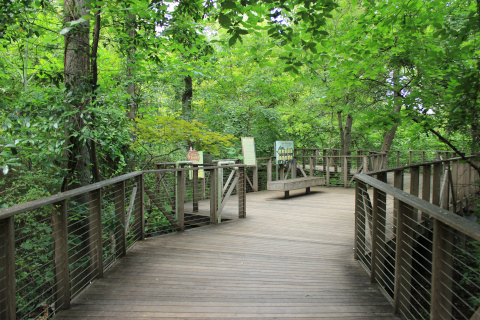
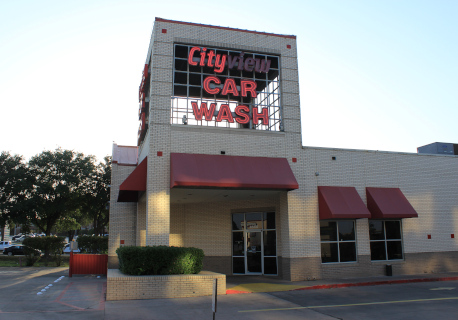
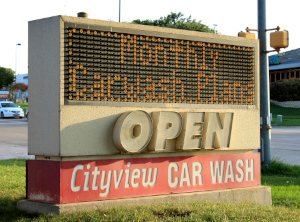
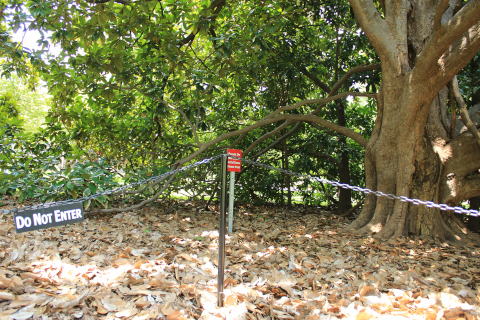


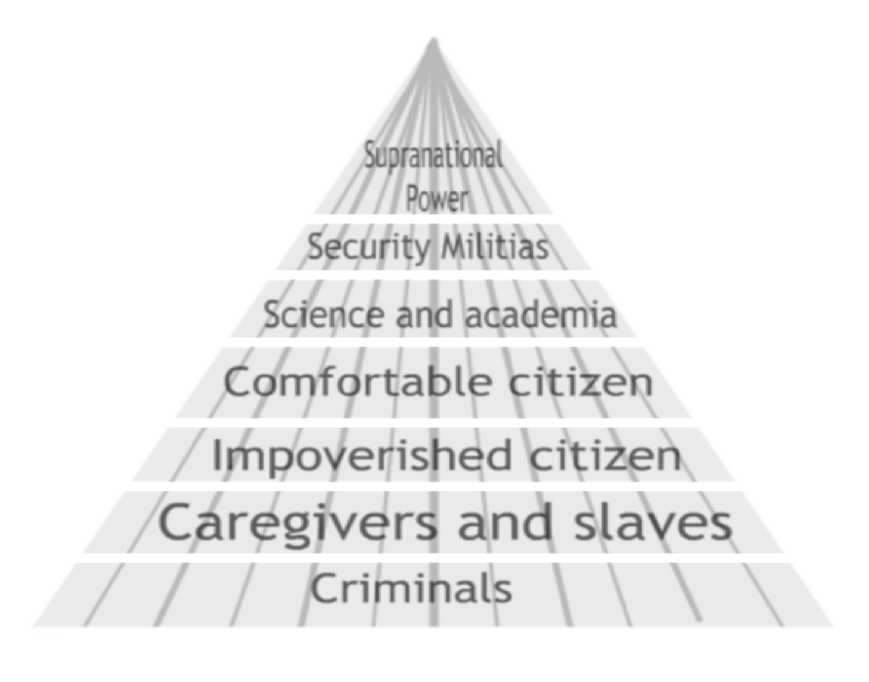
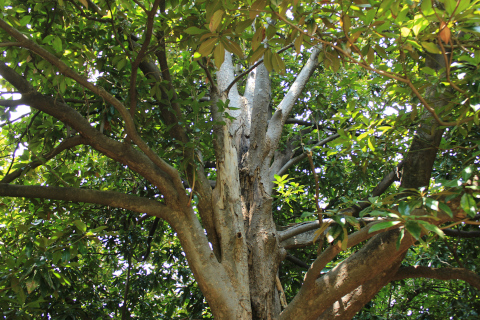
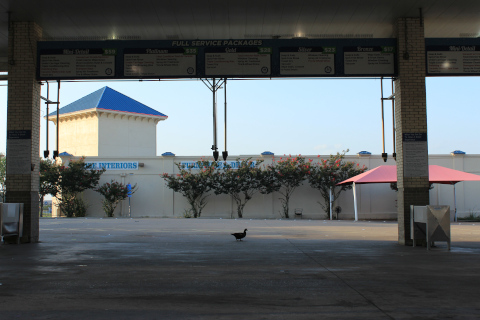


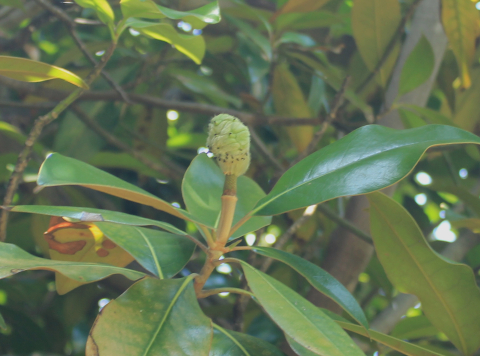



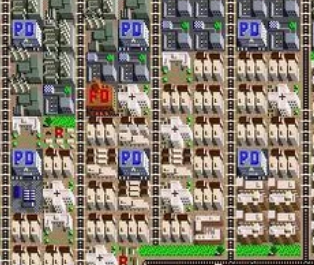
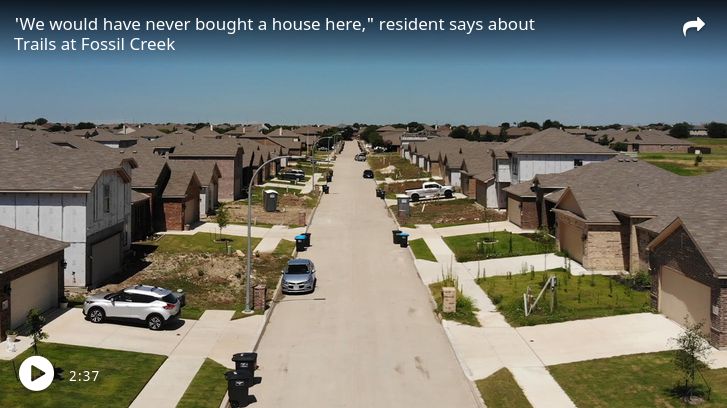


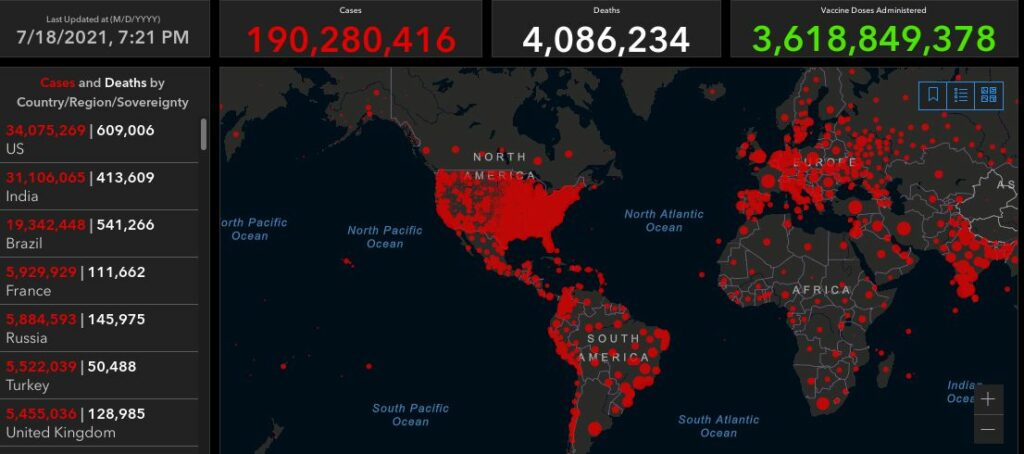



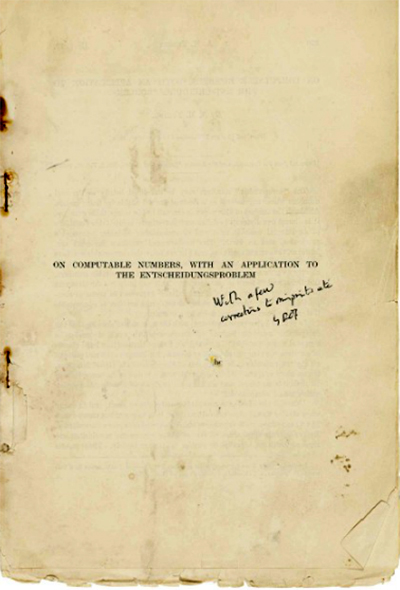
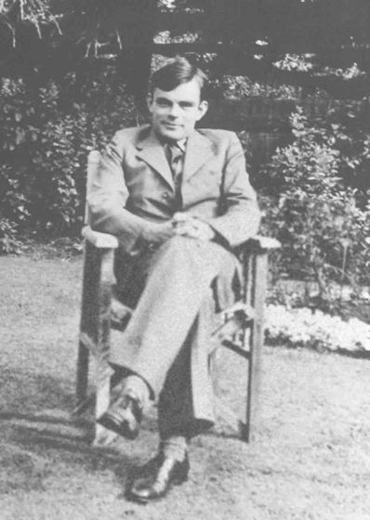

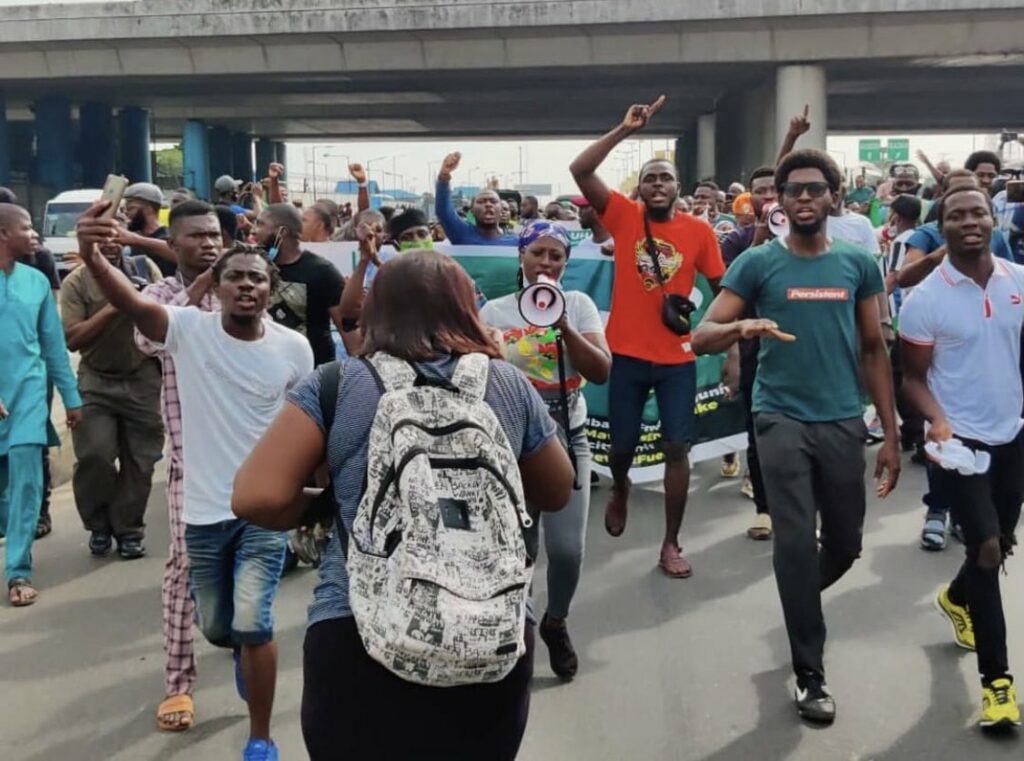
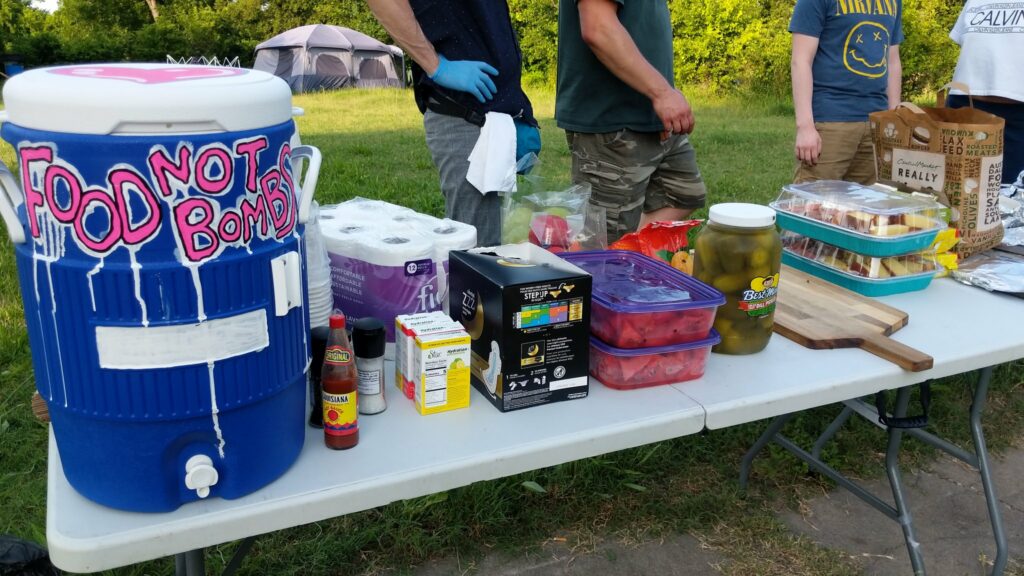
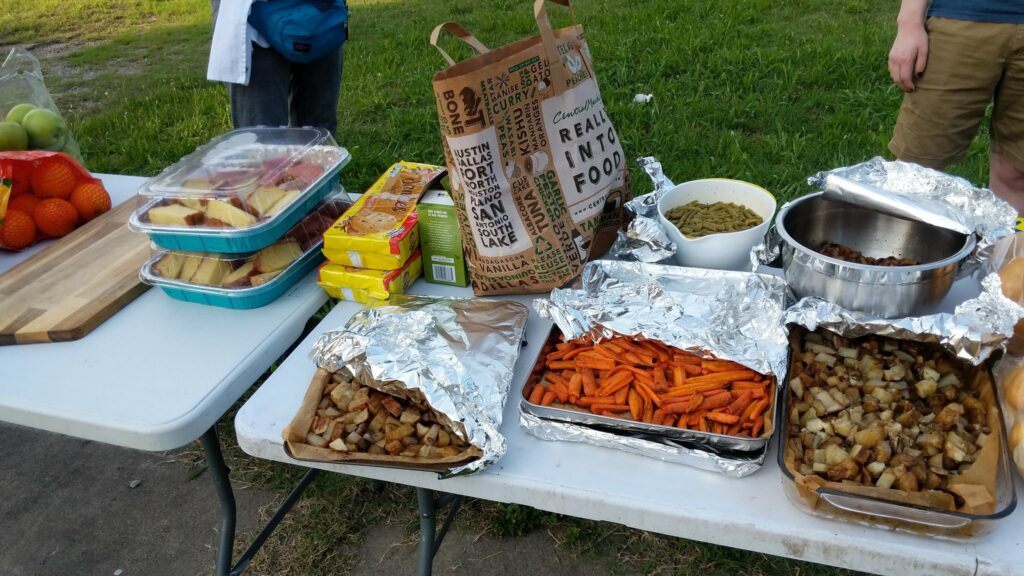





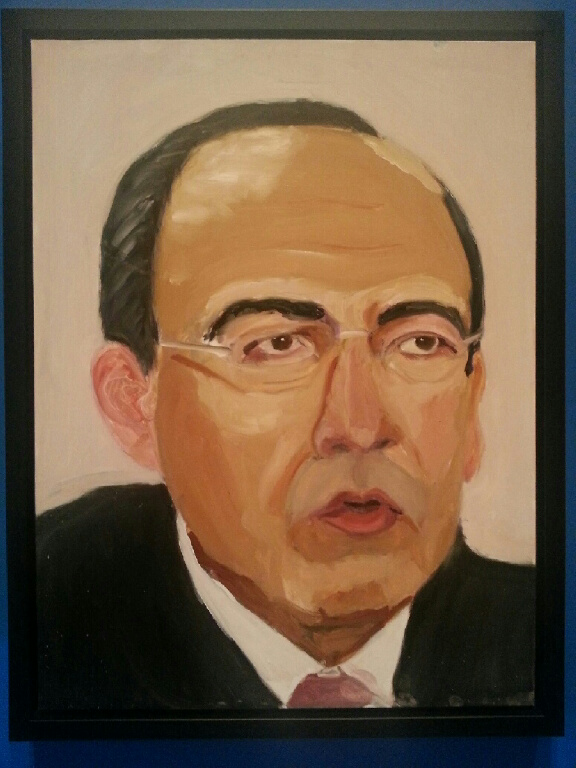

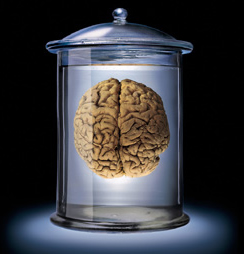
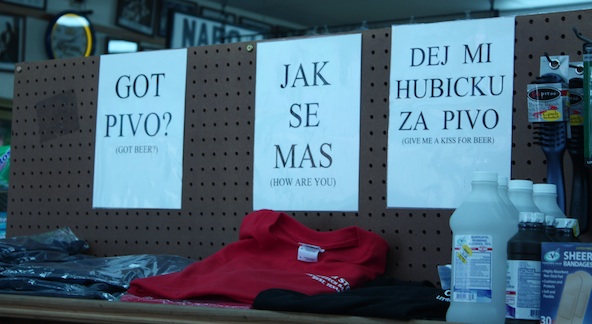



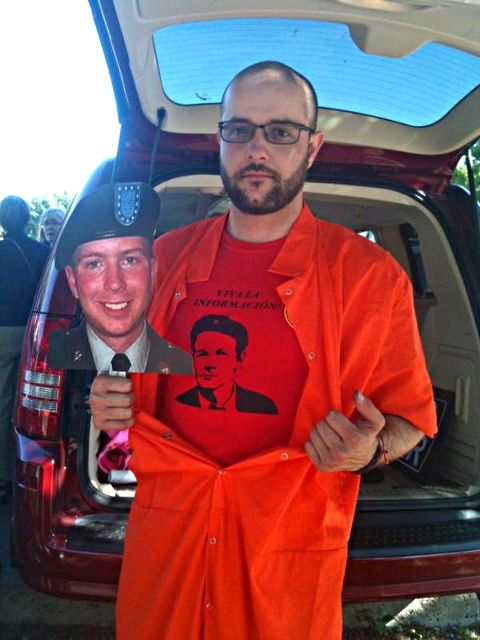
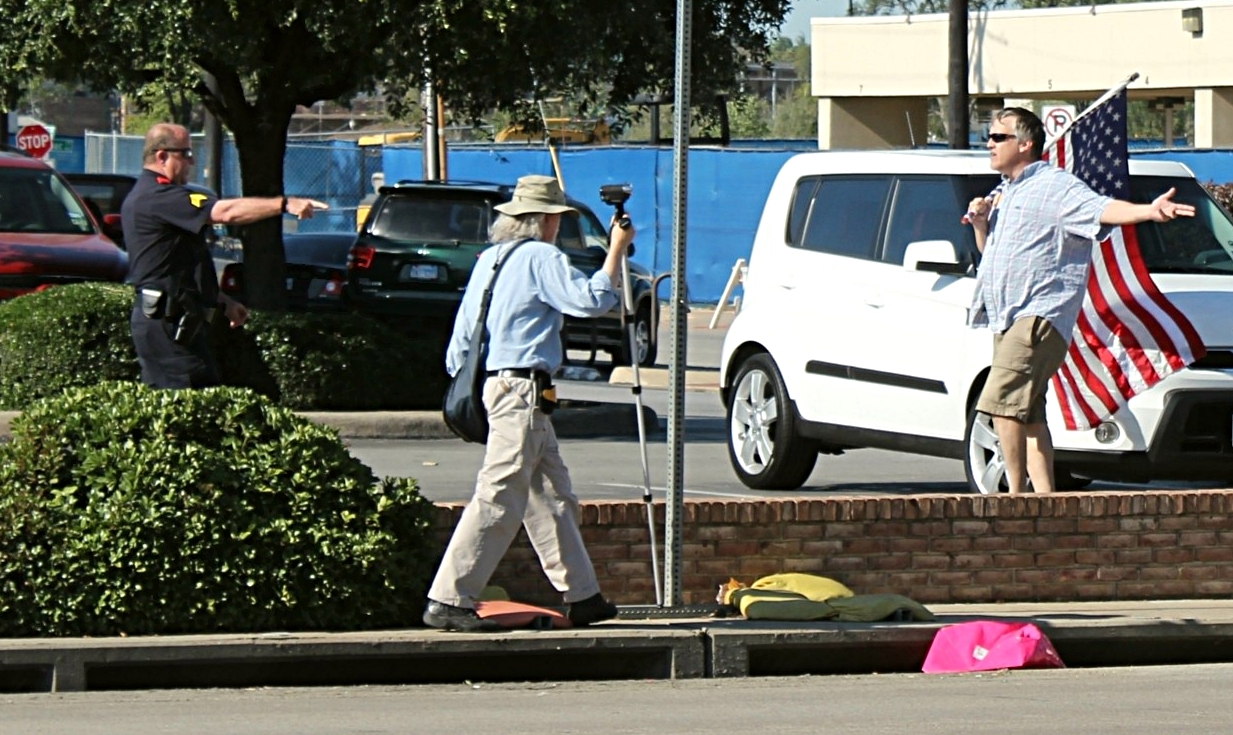










 Twitter:
Join the conversation