Guidelines touted by Kamala Harris at Bletchley Park in 2023
Note: On Sept. 22, the Daily Dot published my latest article, Election 2024: The future of TikTok and tech policy under Trump versus Harris. It’s an overview of where the two leading U.S. presidential candidates stand on various tech topics: TikTok, net neutrality, the FCC, Section 230, the digital divide, and more, with a few surprises along the way—such as power-to-the-people NYC Mesh. My article also discusses their stances on artificial intelligence. I had some paragraphs on that subject left over unused, so I decided to put together this quick blog post.If you’re an actual human reader, rather than an AI scraping my webpage, enjoy.
On Sunday, Vice President Kamala Harris, campaigning for the U.S. presidency, spoke at a fundraiser in Manhattan, raising more money—$27 million—than you or I will ever see, reportedly her highest-grossing fundraiser. It should help her warchest stay better funded by far than that of her main opponent, the twice-impeached first presidential felon Donald Trump and the Republican National Committee. But her speech? It echoed another she gave, nearly a year ago, at the U.K.’s Bletchley Park.
In both talks, she spoke of government collaboration with the AI industry, portraying it as voluntary rather than as demanded. Maybe aside from the helpfulness of machine translation services such as Google Translate, as well as other AI tools, and maybe beneath the opulence and publicity, things aren’t so safe. Or at least, the topic of artificial intelligence is too poorly understood for rando-journos to really give helpful hot takes without first boning up on the underlying material—material that started, more or less, some 80 years ago in/near Bletchley Park, though Harris didn’t mention the particular ghost in question when she was there last November.
To merit $27 million in a single day, Harris must have said something really interesting at Sunday’s swanky event venue, Cipriani Wall Street (pictured left), yeah? She did, if you’re a venture capitalist (or journalist) seeking more details on her tech positions, some of which she’s been circumspect about. Indeed, until Sunday, she hadn’t—as a presidential contender—stated openly her position on cryptocurrency, leaving Trump to chest-pound about being the “crypto candidate” while she focused on traditional voter concerns such as reproductive rights. According to Bloomberg, at Sunday’s fundraiser, Harris said, “We will encourage innovative technologies like AI and digital assets,” (read cryptocurrency for the latter) “while protecting our consumers and investors.”
Sounds a bit like former POTUS Barack Obama. We will do the good things that are important and that bring us hope and prosperity, and we will not do the bad things that cause problems for folks in this country. God bless you and God bless the United States of America. It’s a strategy: as long as Harris continues painting by numbers without enormous gaffes or grave October surprises, and sans whatever serious, hard-to-predict dangers might arise from election interference, I say she’ll probably sit behind the Resolute Desk come Jan. 20.
But what about AI? In terms of direct quotes from Harris, not much more has trickled out of her fundraiser speech thus far—not that I’ve seen. She did say, apparently in the same passage addressing cryptocurrency and AI, that she “will bring together labor, small business founders and innovators and major companies[.]” Some say that’s Harris pitching young men leaning Republican.
Likely so, but it’s also in line with something I mention in my Sept. 22 Daily Dotarticle: the voluntary industry agreement she facilitated as current Prez Joe Biden’s “AIczar.” She touted this AI safety agreement at the Bletchley Park inaugural global summit on AI in 2023, two days after Biden’s executive order on artificial intelligence calling for the United States to lead AI development while ensuring safety.
The bog standard campaign schmaltz and vagueness, combined with rejuvenated hopes after the happy Harris replaced the about-to-pass-out Biden, maybe make this stuff regarding AI, the industry, the voluntary non-binding safety promises—this We can all work together, biz, labor, even the guy passed out on the tarmac, wait is that Jo– stuff—feel enticing. Maybe it is: though the agreement is on paper non-binding, a presidential administration has antitrust and other levers at hand to knock companies in the head with reminders. But I doubt it.
Why am I not more certain, or why are AI agreements not critiqued in depth across news media? I’ve been given a few recommendations, but generally, I don’t know of any deep-digging investigative reports on where the AI industry is headed that, crucially, combine a valuable, highly literate philosophical perspective on what computers and artificial intelligence are accomplishing, and threatening, beyond the journo-exposés about Silicon Valley powers-that-be signing up for cryonics, aiming to infuse themselves with young blood, throwing zillions down shady corners, the youzhe. Know of some? Let me know. Astute philosophy, remember. I know that the TESCREALs/rationalists (today’s, not Spinoza) are orgiastic over their quasi-famous neckbeards pronouncing this or that, but I don’t agree with their scientism, so skip ’em. People who touch grass please.
We need better, more insightful assessments of artificial intelligence, because, among other reasons, algorithmicbias, as a chief aspect of it, is putting on steroids plain ol’ human bigotry’s human rights violations and bodycounts.
The Bletchley Park mansion, photographed by DeFacto in 2017
Harris gave her voluntary agreement! high-profile speech at the first global AI Safety Summit, which took place at none other than Bletchley Park. That country estate in England was once home to the British government’s Code and Cypher School, now called Government Communications Headquarters, the United Kingdom’s equivalent of the U.S. National Security Agency. At the first ever global summit on artificial intelligence, in other words, Harris was discussing its emergence precisely where the 1940s originated Five Eyes, the post-World War II secret-sharing alliance between five countries’ worth of intelligence agencies staffed by actual humans, including those of the United States.
At the summit, Harris discussed the Biden administration’s efforts to safeguard against AI dangers such as “algorithmic discrimination[,]” undertakings for which she was the seniormost Biden administration official involved. One such effort Harris spotlighted: the “Blueprint for an AI Bill of Rights.” The non-binding Blueprint lays out expectations for technologists developing artificial intelligence systems—such as Google’s sentiment analyzer that a 2017 Vicearticle footnoted by the Blueprint found to be biased. Among other goals, the expectations aim at reinforcing and expanding existing anti-discrimination legal protections “to ensure equity for underserved communities[,]” defined to include “Indigenous and Native American persons,” as well as “lesbian, gay, bisexual, transgender, queer, and intersex” people, and various others.
Like a ghost unseen at the Bletchley Park summit, unmentioned in Harris’s Bletchley Park speech, late British mathematician Alan Turing, who dreamed up the idea of computer software in a 1936 math paper, worked at that same country estate for the Code and Cypher School in the 1940s cracking Nazi codes. Shortly after the end of World War II, Turing gave the first public lecture on AI. He said, “What we want is a machine that can learn from experience” and “alter its own instructions[.]” Interpreting those as Turing himself often did—by setting aside religious or philosophy of mind questions in favor of mathematical and engineering ones—today’s artificial intelligence is understood by experts as doingboth to some sizable degree.
In the longstanding philosophy journal Mind, Alan Turing in 1950 proposed what’s now called the Turing Test: essentially a guessing game or experiment where, by writing down questions and passing around slips of paper, a person tries to determine which responses are generated by an unseen human and which by an unseen AI—with the argument that, if the person can’t tell the responses apart, the AI should be considered to be thinking as legitimately as the unseen human is considered to be thinking. That’s how the Turing Test is typically presented—bereft of the gender codings in the 1950 original, which subtly and impishly (by 1950s standards) depict gender as something as fluid as intelligence.
Photographed in the 2000s, Bletchley Park stableyard cottages, one location where Turing worked
The original Turing Test is also not so behavioristic as it sounds from textbook glosses, with Turing’s actual writing praising the “quite a strong” counterargument “from Extrasensory Perception” (this is why read primary source and not just watch youtube vids). While in this portion of the paper he mostly sticks to familiar psionics language such as telepathy and precognition, one might discern someone living in a dissociated world where empathy (as emotional contagion, not as cognitive exercise) is regularly off the table, especially for someone sensitive, “good as a telepathic receiver” (see Turing’s best-known premonition), and required to keep silent. About classified secrets. About what he must have witnessed and heard of, the 1940s birthing the current world order dominated by spy agencies and an attempt at a global mono-empire underpinned by information technology. About even his own criminalized sexuality.
Sentenced for “gross indecency” under anti-homosexuality laws in 1952, one of the foremost founders of artificial intelligence was instructed by a British court to pick either estrogen-based chemical castration or imprisonment. Turing chose the former and, almost certainly as a consequence, was driven to alter his own instructions fatally in 1954 at home, alone.
It seems wrong to me that Harris, at Bletchley Park, did not mention him in her speech, though the U.K.’s government-backed Alan Turing Institute was among the contributors to the voluntary agreement. I assume she didn’t mention him at Cipriani Wall Street, either, despite his story as one of the foremost founders of AI—occasionally argued to be the founder—waiting as a perfect example of how good deeds especially get punished when you’re deemed to fall into the wrong group affiliation categories, and how that’s the kind of bias, now often enshrined into algorithms, that she says we need safeguards against. Marketing happyspeak, however, is what brings in the $27 million/night.
Artificial intelligence didn’t kill one of its founders, but bigotry, one of AI’s biggest problems, sure did. It’s presently up for grabs to what extent the 47th U.S. president, others in power, and the worldwide public can learn from such experiences as AI becomes increasingly more common, assuredly with dignity-depleting privacy violations in its train. Like some coked-up computerized version of the long and sorry history of human bias, algorithmic bias has zillions in funding, endless apologists, and a growing body count. Politicians limit themselves to the art of the possible, for better or worse, but definitely crop out anything their “possible” and “realistic” tunnel visions don’t have time for, like, say, omitting mention of Bletchley Park ghost Alan Turing and anybody else who might lie in a grassy field and dream up system-changing ideas such as computer software or artificial intelligence. More time spent understanding AI’s origination and its development over three quarters of a century would be a good start to transforming it from a pol- and journo-buzzword into something we can usefully self-govern.
Note (added Apr. 8, 2024): On initial publication this blog post incorrectly stated that Friday night lacked a flesh-and-blood DJ. There was one, in fact, by the pseudonym mcbaud300. When I was briefly in the ballroom, I didn’t see mcbaud300, but I did see a sign that led me to wrongly conclude the DJ was artificial intelligence. Below, in the apropos section of this post, I’ve added a photo, by Michael Citrak, of that sign, which read VIRTUAL DJ. That’s actually the name of a product that replaces physical DJ gear—such as turntables—with software,not something the replaces actual human DJs with software. Thanks Norwescon Discord for the corrections.
On Fri. Mar. 29, I attended Norwescon 46, the annual four-day science fiction convention nowadays based in Seattle (okay, SeaTac) that’s been running continuously since 1978. This was my first Norwescon — which I assume means NorthWestConvention, though I’ve never seen that explicitly stated. Previously I’ve gone to a few other conventions: ConDFW (2009), Wiscon (2009), and Conflation (2014 or so).
Since I live in the Emerald City, I could bypass hotel room fees. And by limiting my participation to Friday only, I wasn’t diverting too much time away from work or toward crowds, which by nature repel introverts such as me. Before departing for the convention, I told myself to have a good attitude, to make the most of it, and — well, I had a good time, but it felt faintly elegiac. Like something that, if you look down to check your wristwatch too long, might not be there when you look back up.
Norwescon is the Pacific Northwest’s premier science fiction and fantasy convention and one of the largest regional science fiction and fantasy conventions in the United States. While maintaining a primarily literary focus, Norwescon is large enough to provide a venue for many of the other aspects of science fiction and fantasy and the interests of its fans such as anime, costuming, art, gaming, and much, much more.
Norwescon features hundreds of hours of panel programming, over 200 panelists specializing in fantasy, science fiction, horror, science, and more, the Philip K. Dick Awards, a 6,000+ square-foot Dealers’ Room, Writers’ Workshops, a full masquerade, an art show, dances, and more!
In the early afternoon, I parked by one of the far walls of the overpriced, crammed DoubleTree guest lot and started hiking on foot to the hotel. Long before I reached the lobby, it seemed the science fiction convention had already begun, outright, straight up in my face. Yes, right there in the parking lot. Where I was confronted with —
The Knightscope autonomous security robot
My surprise halted me. Recovering, I snapped two photos:
At first I was quite confused, thinking this was some Doctor WhoDalek-esque creation of the convention’s. But I soon confirmed it’s the hotel’s, and in fact, the hotel has been using the Knightscope for several years. The convention staffer I spoke with seemed unperturbed by the strange device, or perhaps resigned to it, trailing off his discussion of the subject matter …
In my photos, it looks stupid and harmless, comical even — like a big inflated balloon — but in real life, it’s actually kind of intimidating, as my video below hopefully shows. If I understand Knightscope correctly, the self-driving gizmo records surveillance film for optional review by humans later. Gives you those warm fuzzies that we’re all in this together, trusting one another to do our best and forge the optimal outcomes for our communities, right?
In a slogan asserting that crimefighting is impossible without such high-tech interventions, Knightscope’s website boasts that You need superhuman abilities to fight crime. Let’s be frank, law enforcement and security forces have long been keeping crime at the Goldilocks levels required to maintain whichever heinous balance of power the highest-ups prefer, a la cyberpunk novelist William Gibson’s character Ainsley Lowbeer. Fighting crime is something else entirely, and while outsourcing it to these robots might prevent automobile smash-and-grabs, that likely comes at the expense of us further forgetting how to use social support and shunning/approval to do so, because everyone can just be hyper-surveilled constantly and the unseen, promised Good Guys with superhuman abilities, far away somewhere, can help dispense justice on command for a fee. Turn your brain off; escape into adoration of the superhuman, the supertastic Knightscope!
Would there be actual superheros inside the hotel, with sincere hearts? Say, Phoenix Jones — real life crimefighters dressed up as superheroes? Didn’t the genre’s classic writers want readers to respond with this-worldly heroism, rather than robots replacing what’s left of people?
As I walked side by side with the Knightscope filming the thing, I really felt it was deliberately staring at me through its camera apertures. Maybe because I was blocking its vision. I don’t think the Knightscope carries any weapons, yet I couldn’t help but think of the Star Wars robot R2D2 and its Taser-style electric shock prod. About halfway into the video below, I start laughing, as does a couple nearby in a car, observing l’affaire robot. Then the couple starts their vehicle, ready to leave, kind of pinning me in from behind; the robot seized this moment to start coming at me from the front, shown in the video’s final seconds. I died then, and this is my replacement writing to you now.
High on panel: Managing unsolicited submissions in the era of AI
Waldo
Once I entered the hotel proper, collected my badge, and saw a man hilariously dressed as Waldo from Where’s Waldo as well as a large Doctor Who Dalek prop carried by attendees, I headed for the panel titled Managing Unsolicited Submissions in the Era of AI. Four panelists: Podcastle editor Craig Jackson (moderator); Clarkesworld founder, editor, publisher Neil Clarke; Uncanny Magazine managing editor Monte Lin; The Magazine of Fantasy & Science Fiction publisher Gordon Van Gelder. The panel discussed exactly what its title says, a Turing Test problem that became major news in multiple outlets once Clarke opened up about it last year.
In other words, all these robots from without are assailing our science fiction — what can we do about it from within?
Below, I embed the seven-post thread I made on Bluesky loosely transcribing portions of the thought-provoking panel. Bluesky, you may know, is a Twitter-esque rival to the platform commandeered by Elon Musk; it has a smartphone app and no longer requires an invite code to join, though it still lacks DMs and support for video uploads. To read the seven posts directly on Bluesky, you can click through the below embeds, or follow this link, even if you lack a Bluesky account and don’t sign in, as with Twitter of yore.
As the panel concluded, I felt elated. Following the past few years of reading and writing science fiction, and doing investigative journalism and copywriting and philosophy research assistance — all of it writerly work, freelance jobs making up the majority of my mostly solitary life — suddenly, fresh topics I’ve been curious about were being discussed back and forth live among knowledgeable panelists and inquisitive audience members, all of them friendly, not competing to see who can be the most cruel at ripping off strangers’ heads or minimizing their every word, unlike much of social media and the offline realm. I’m not enough of a joiner to say I felt like I belonged or anything definitive like that — but I was really glad I came and looked forward to additional panels and events.
T-shirt for sale at Norwescon from Arkham Bazaar and Sigh Co. Graphics. Depicts a Lovecraftian Elder God.
I resolved to check out Clarkesworld more often, then headed downstairs to the general area by the lobby, where my newfound excitement encompassed the various booths. There were H.P. Lovecraft-themed T-shirts for sale, a table with riddles written on wood with vendors offering clues, a huge supply of free books for the taking, and more. All at once these science fictional images, usually confined to my bookshelf, had bloomed all around me, left, right, up, everywhere I looked. I even asked some vendors research questions about miniature painting, related to my fiction-writing, and got some good leads. Again, a topic that had almost entirely existed in my lonely head for years was now in the flesh, and everyone cheerfully acted as if that were normal rather than the other way around.
Place of refuge losing luster
I ducked out for lunch, again seeing the Knightscope patrolling the parking lot. To the restaurant through hectic, smelly traffic. Something I ordered didn’t quite agree with me; my mood soured a smidge. Already I’d seen every vendor booth (though I forgot to check the art show, unfortunately). Hurrying back for another panel felt like a chore.
Wasn’t there something backward about all this? The last time H.P. Lovecraft wrote anything new was almost a hundred years ago. Isn’t there something more we can do about AI-spam besides write our Congressfools and beg the FTC chair, tactics that I myself do but that still feel dated next to real cutting-edgeresistance? And that cumbersome Dalek prop, that robot-y Doctor Who creature attendees had carried through the hotel, was derived from a TV show that began more than a half century back. I assumed the Dalek lacked onboard electronics to theoretically counter the sleek, unapologetic Knightscope, which would probably vaporize it. Okay, not really. But all the same, though the unsolicited AI manuscripts panelists were certainly informed from their front-line battles with that particular problem, and led a truly interesting discussion, the convention as a whole was now feeling, to my postprandial self, like an enclave for out-of-touch museumgoers. There were very few in their Gen-Z twenties present, and when they were, it was typically because they were assisting their vendor parents.
From the start, I knew Norwescon wouldn’t be some best-in-class, outward-connecting headquarters of artistic resistance (is there such a place anywhere?). I wasn’t expecting earth-shattering revelations from any panelists. Why not just go home? Why couldn’t all — rather than merely some — of the panels be put online, with the audience able to type in questions, as mainstreamed during the years the United States called COVID-19 a federal public health emergency?
Because of the vitality, of course. Physical presence in such an environment, enjoying such conversations, festival like, brings its own energy surplus, or did initially. Now I just felt drained and was urging myself to keep going, a familiar self-flagellation from decades ago at university where I’d scolded myself to hurry, to make it to ̶p̶a̶n̶e̶l̶s̶ classes on time. I’m not sure why my mood had inverted. Maybe it was that, born in urban Texas, I’m unaccustomed to the obligations of participating in an interesting, mostly benign group-self — the convention, that perhaps I’d joined simply by being there — and unfairly demanded nonstop perfection from it. Maybe it was the sense of an unthinking eternal return, passing by the same booths over and over, the same unpurchased H.P. Lovecraft T-shirt over and over, has-been consumerist ants stuffed into an airless maze, the largely unacknowledged winds of change outside — not just Knightscope, but a collapsing trade economy, a birth strike and children insufficiently raised — steadily working on blowing down the insular walls of any type of convention anywhere.
Well, I’d only attended a single panel. Another might clarify things? I drove back to the hotel, seeing upon my return, industriously cruising past, the Knightscope.
Orbiting another panel: The rest of the world in space
The next panel I’d selected from the programming (also available here) was titled The rest of the world in space. A pair of space historians gave basic information about, and showed photos of, recent non-U.S. space missions. Below, I’ll embed my four Bluesky posts from the panel. Click through the embeds, or follow this link, to see the posts directly on Bluesky.
To me it felt a little like two gruff older guys showing you their favorite Wikipedia timeline. A chill way to ooh and aah over non-U.S. spaceships. It was good that one of them mentioned, albeit very briefly, the Belarusian dictator — without mentioning his name, Aleksandr Lukashenko — and his longstanding alliance with Putin as the real reason behind a Belarusian astronaut’s joint publicity photo with the Russians. I wish he’d said more, but he did not step out farther on the limb of the supposedly unspeakable, not during this panel anyhow.
When their presentation ended, I asked the panelists about the legal penalties (or not) for failing to de-orbit artificial satellites, and how the graveyard orbit fits into that framework (or not). Once again it was wonderful to talk with actual human beings highly knowledgeable about subjects I’m interested in, many of them underreported, yet powerfully impacting people, usually without their understanding. I regained some enthusiasm — tempered somewhat this time.
Briefly I met up with one of my fellows from Clarion West Writers Workshop class of 2008, Caren Gussoff, and we commiserated about the introvert struggle of attending a populous convention. We finished talking and she left; now I had a few final Friday hours to wander around, hoping to locate value.
Odds and ends
Exploring the hotel indoors, where windows were firmly shut and people were packed like proverbial sardines — an unofficial early estimate from Norwescon staff says 1,800+ people attended across the four days — I reckoned that one out of every eight or so individuals was masking, as in, against COVID and/or RSV and/or whatever this very recent bird flu in Texas is, something that jumped from birds to cattle to humans like a UFO from the microbial dimension. I was masking, as I do for packed-like-sardines settings such as schools and hospitals. It often appeared that more were using canes to help with walking than were using masks to help with preventing the spread of respiratory diseases.
I find it difficult to draw conclusions from the absence of widespread masking. In May 2023, the federal government declared the public health emergency over, and the CDC hasn’t collected as much COVID-19 data since, though their wastewater monitoring is interesting and as of this writing says COVID-19 viral activity is low countrywide. We might imagine scientists and science fictioneers hacking together their own experiments to audit or replicate data, bridging knowledge and questions from expert to novice levels and back again, testing out various hypotheses motivated by public interest and with complete transparency for public data, so that anyone interested could observe, doublecheck, and understand. Building something for sampling or imaging viral titer from the air, as scientist Justin Lee says, accurately assessing airborne transmission dynamics, ideally in real time. We might also imagine scientists and science fictioneers at the hotel bar, drinking to assuage the guilt and shame of a dissociated society that too often refuses and mocks effort, DIY innovation, and self-governance, even when those endeavor to keep us alive and buying H.P Lovecraft-themed swag as the Knighscope watches from outside a window.
Galaga, fun but dated…
Easier challenges to conquer were the extraterrestrial enemies in Galaga, one of the many arcade games available that didn’t need quarters — I’m not sure if the games were part of the hotel or the convention, but I think the latter. Lighter fare.
As the night wore on, I checked out the ballroom. Looked like a carbon copy of the one I saw at Conflation in St. Louis circa 2014. It had a bar. It had a dance floor. It did not, however, have a human DJ [see correction at top of post—there was a human DJ, one by the pseudonym of mcbaud300—note added Apr. 8, 2024]. The DJ was some unseen robot — a sign touted this fact. The beautiful people danced and danced; for a few minutes, I watched from afar, before turning around to leave.
Photo of mcbaud300 that night by Michael Citrak (added Apr. 8, 2024)
Likely I would have had more fun had I attended more panels, literary-focused ones, or participated in events specifically designed to facilitate socializing. There was a Speed Friending event I should have tried, where attendees converse one-on-one with a line of others for a few moments each, discussing interests, seeing if they might want to hang out more after the event. There were many rounds of charades I failed to attend as well, among them one on a Star Trek theme, which sounded really fun. Maybe some other time, some other life.
Concludingin the lounge
One area I enjoyed, and returned to often, was Norwescon’s lounge: essentially two hotel rooms, connected by a door, emptied out in favor of tables and chairs, free chips and soda, and other comforts. People — most, probably fifty years of age and up — gathered around in conversation, many already knowing each other. One told the heartbreaking story of how she’d lost her son due to a drunk driver. All the bureaucratic transportation department studies, good or bad, would turn to ash in the face of such a recounting. A while later, an older guy in a brown Jedi robe demonstrated the lightsaber he’d built, modeled after Luke Skywalker’s in the 1978 Star Wars Holiday Special. I of course gravely intoned: I see you have constructed a new lightsaber.
The lounge spawned a few random encounters with people my own age-ish, and as I got to know them a tad, I observed a certain pattern I’ve seen before. Namely, when they asked my background in science fiction and fantasy, and I began talking of my writing it during Clarion West Writers Workshop and in the subsequent few years, their attentive eyes focused on me — they seemed not a little impressed: Here we have an author on our hands! Then I explained that, though magazine acquisition editors were quite complimentary of my work, I never managed to sell any stories and partially as a result, transitioned to focusing on investigative journalism for roughly a decade, despite my druthers. That made their gaze drop, their hands fiddle with a phone or piece of candy. Then, once I said how recently, I’ve resumed fiction-writing, still without selling anything but with a better understanding of the world — now their eyes would look at me, again interested, albeit less so than at first. You can really feel an audience — even just one person in a casual conversation — drifting in and out of interest, reducing or increasing the amount of approval they’re expressing in reaction to your words.
Of course, at an Investigative Reporters and Editors conference, the reverse would happen: I’d talk of journalism publications to the lounge listener’s interest, then switch to discussing fiction-writing and at once get the silent you lost me, what’s that squirrel outside doing? While people naturally and rightfully have different interests, at Norwescon I couldn’t escape the sense of a terrible siloing taking place. Science fiction at this convention. Journalism at that convention. CDC COVID-19 policies over yonder. Belarusian dictator, trail off. Knightscope surveillance, trail off. Tactics beyond begging Congressfools, trail off. If no one faces up to that which determines our lives — governance, spy agencies, propaganda, the sharing or censorship of knowledge — then a shrug, for if all that remains for the triumph of evil is for good people to say they work so they deserve to just be happy, doormatting for injustices is (mostly) your right in the marketplace, even when the consequences harm everyone. The phallic toy weapons notwithstanding, inaction (or the milquetoast minimum) doesn’t really match the morals presented in the beloved science fiction and fantasy novels, but magically holds court nonetheless, all that dissociated guilt and shame and fear.
The fun conversations, the vitality between lonely souls sharing obscure interests, guarded by walls the outside of which includes a recent auto-coup attempt… With such threats largely unchallenged — yes, I know the news says it’s all under control, just as they did before the 2016 general election — conventions like Norwescon may have fewer and fewer attendees, no new blood. Every time I turn around in Seattle, another business closes, so will science fiction conventions suffer the same fading, fading away?
I asked above what science fiction could do from within to combat the robots assailing the genre from without. It’s as if there’s a monstrous, metalmade elephant in the room with no one’s face, and yet everyone’s face, attenuating anyone’s attempts to initiate efforts or escalate them into radical approaches. But the only superheroes within the hotel walls are us. As if the New Wave of Science Fiction never ended, I could have belted out Tell us more! when the space historian alluded to Lukashenko; someone could put together panels about tactics, mutualaid, strikes, boycotts, the provisioning of alternativegovernance; attendees in lounges could discuss ideas, and goals, and steps to get there for whatever problems — drunk drivers, out-of-control AI, space debris, or even the Justice Department’s endangerment of Sci-Hub and its founder Alexandra Elbakyan. Just going along as done in the past is robotic. Forging a human future requires not obeying the siloes — nor activism-scolding roommates, spouses, co-workers — but building bridges between concerns and perhaps even organizing new kinds of conventions, full of surprises.
Science fiction, involved in the future, a metaphorical realm where Star Trek’s Jean-Luc Picard does something about injustices other than sit on his hands gloating about don’t think too harddon’t care too much — all the threats the genre and the world face today, the roving surveillance bots, the AIs, the pandemics, the international spy agency subterfuge, even censorship of the genre’s Hugo Awards affecting big names such as Neil Gaiman and confirmed to have global political motives — they all have a science fictional flavor. Recall William Gibson’s remark to the effect that, for understanding the 21st century, reading 20th-century science fiction is a wonderful toolkit. But it doesn’t help much to merely understand, say, the chemical formula of some corporate poison if it completely kills you. To combat injustice, to protect ourselves, we have to cease existing primarily as escapist voyeurs, and actually take risks, actually open up the toolkit, actually use the tools.
I’m glad I went. Maybe someday I’ll go again, see what’s new, in the future.
My Norwescon badge hanging at home in my apartment
Note: In 2022, I’m once again writing 52 blog entries, posted every Sunday. Today: Post 2 of 52. Flash fiction by me will soon arrive weekly too, by February, with these regular nonfiction blog postscontinuing.
Note: The photos in this entry are from this seven-tweet threadby NPR journalist Libby Denkmann who attended a student-led protest outside Seattle Public Schools headquarters on Thursday.
For one or more days this past workweek, according to data firm Burbio (accessed today), 6,003 public schools in the United States have been actively disrupted, defined as campuses not offering in-person learning. The country has around 130,000 public K-12s, but the Burbio statistic is still shocking. On Thursday, Seattle Public Schools said: “Due to very high absentee and quarantine rates, several Seattle Public Schools have either transitioned to remote learning or have been closed.”
On Friday, the Washington Postreported on the sickout movement: schoolkids countrywide, sparked by the increasing number of illnesses and deaths from the current Omicron mutation wave, are refusing to attend compulsory face-to-face classes unless adequate COVID safeguards are put into place. Many educators are sicking out as well; other industries are seeing their own sickouts, the term there referring to employees not showing up due to the ‘rona (current infection or risk thereof) and perhaps with r/antiwork-style resisistance thrown in too.
The Omicron wave has surrounded my own life. Here in the Emerald City, I’ve watched a friend suffer his own breakthrough illness from the latest variant in the last month; I’ve seen multiple businesses temporarily closing due to staffing shortages. (And during Spring 2021, a brave student in a math class I taught informed us she’d contracted a pre-Omicron version of novel coronavirus, a scary ordeal for her and the rest of us.)
U.S. authorities have provided the public with mere bargain bin quasi-solutions
“Do you guys care more about our well being? Or our test scores?”
Many of the public health measures in the United States are only half functional, akin to leftovers from the discount pile. School district spokespeople talk up ventilation and (years back) handwashing, but anyone who has entered campuses in poor neighborhoods knows about unopenable windows and empty soap dispensers. Meanwhile, The Center for Covid Control—accused profiteers running pop-up testing sites from coast to coast—has been reported, by health departments and city governments and consumers and journalists and others, to the Washington state attorney general, the attorney general in Florida, and attorney generals elsewhere for fraud, notably sending people invented test results while they were still waiting in line to produce samples. And the three vaccines offered in the U.S. offer only some protection (I received three doses of Pfizer), decreasingly so as mutations erupt continually, as anyone who has endured, or received a text message about, a breakthrough case realizes.
For USians, better public health measures found around the world feel shrouded in a fog of war. The multiple other vaccines planetwide, let alone the laws/pacts controlling who can ship them internationally, aren’t on the radar of the average stressed person trying to get by. Even the University of Washington nanoparticle vaccine (study in Cell), which should be making headlines regularly and prompting inquisitive auditing from investigative journalists, is largely unknown. That one, presently in stage three trials, aims to inoculate against SARS, MERS, SARS-CoV-2, and every other present or future coronavirus (and variant thereof) in the beta segment. (Orthocoronavirinae, to which the popular term ‘coronavirus’ typically refers, has 45 virii divided into four genera, one of which, and nowadays the most dangerous to humans of which, is the beta segment containing 14 of the 45 species.)
Staff for Seattle Public Schools superintendent Dr. Brent Jones stopped media from questioning him
Who has the time and freedom to educate themselves on the COVID trainwreck such that herd mentality may be minimized? Very few have hours and hours available to conduct independent (and thus usually unpaid or underpaid) autodidactic research on an unfamiliar issue to an understanding approaching intermediate level or above. That leaves many to affiliate with a meme-simplified, speculation-heavy side such as right or left, vaxx or antivaxx, probably partly in hopes of cliquing up with others for sheer survival rather than mastering a topic in accordance with impersonal logic. There are professionals who in theory are paid to address crises expertly, but they succumb to untruth too.
Such politicization is evidenced, for example, in the additional information, released Tuesday, about emails involving chief White House medical advisor Dr Anthony Fauci. You might recall that Fauci emails from the initial months of the pandemic were published in June 2021 in redacted form by Buzzfeed News (3234 pages of emails) and the Washington Post (866 pages of emails). Republicans on the federal House Committee on Oversight and Reform saw unredacted versions made available in camera by the Department of Health and Human Services and, while they couldn’t make copies, they were allowed to take notes on them, a task I assume done by skilled transcriber underlings.
The additional information newly revealed includes records related to a February 1, 2020 phone conference between Dr Fauci, his then-boss Francis Collins, and several of the world’s leading virologists.
It shows some of the world-renowned scientists believed, at the time, that it was likely the novel coronavirus was human-altered and that it may somehow have escaped a Wuhan lab. Virologist Robert Garry, for instance, wrote that he was unconvinced the pathogen evolved naturally. Evolutionary biologist Andrew Rambau wrote: “The biggest hinderance at the moment (for this and more generally) is the lack of data and information […] I think the only people with sufficient information or access to samples to address it would be the teams working in Wuhan.” There are no certain answers yet; just sufficient smoke to point to a serious fire of some sort.
Definitely the National Institutes of Health officials wanted an ass-pull cover-up for political reasons. Garry told The Intercept that after the call, he was advised not to “mention a lab origin as that will just add fuel to the conspiracists.” Dutch virologist Ron Fouchier wrote in one email: “further debate would do unnecessary harm to science in general and science in China in particular” (see also; see especially). Fauci’s boss Francis Collins advised the virologists to shut down talk of unnatural evolution or a lab leak—to protect “international harmony.”
By March 2020, Garry had changed his mind based on scientific evidence, coming to believe instead that SARS-CoV-2 likely developed without human intervention, but the recently exposed NIH officials’ insistences a month prior don’t exactly inspire trust in the intelligentsia, now do they.
Tuesday’s news connects with ongoing reporting from Vanity Fair about NYC-based EcoHealth Alliance and its pre-pandemic interest in working with Wuhan virologists (all institutions in China are mixed up with the Chinese Communist Party). In October 2021, the magazine reported the National Institutes of Health belatedly acknowledged EcoHealth Alliance enhanced the capacity of coronavirus to infect humans to such an extreme that the nonprofit had violated its own grant conditions by not reporting the danger they’d created. The same Vanity Fair piece discusses the grant proposal EcoHealth Alliance sent to the Pentagon’s research arm DARPA in 2018, recommending a partnership with the Wuhan Institute of Virology to construct SARS-related coronaviruses into which they would insert “human-specific cleavage sites” as a way to “evaluate growth potential” of the pathogens.
The connection between those reports and last week’s? Virologists on the February 2020 conference call expressed startlement at an unusual segment of the novel coronavirus’s genetic code: a furin cleavage site that makes the virus more infectious by allowing it to efficiently enter human cells. A month later, in Nature Medicine, a peer-reviewed journal that’s part of the prestigious Nature Publishing Group portfolio, scientists on the conference call, including Garry, published “The Proximal Origin of SARS-CoV-2,” in which they downgrade February 2020 suspicions that novel coronavirus was likely to have been lab-altered to possible but unlikely. I’m told that, in oversimplified terms, such virology research essentially entails comparing protein shapes of various virii strains to one another statistically to assess likelihoods of how precisely the pathogens may have changed or evolved over time.
Pointing to the Proximal Origin study, Garry corresponded with The Intercept about its report on this past workweek’s newest puzzle piece to say the March 2020 study reflects his revised view. In any case, the latest information involving the February 2020 conference call is a story of top virologists told to downplay their then-suspicions not for scientific reasons, but for political ones. That’s obviously bad for scientific integrity. And the March 2020 paper doesn’t rule out that SARS-CoV-2 could have been created through artifical techniques.
Shall we speculate about the origins of COVID-19? One possibility is that scientists pursued making coronavirii far more dangerous for whatever good or bad reasons, a practice controversial among scientists, and then SARS-CoV-2, perhaps enhanced in its danger to humans, slipped out of a Wuhan lab accidentally. Then maybe people associated with the research panicked, because money was being misused, and anything they might try to say to explain themselves would just sound nefarious. There’s no smoking gun; at minimum, it’s yet another example of opaque or mostly opaque systems impairing science and public health.
And we can all imagine less charitable possibilities.
Now what?
Weakening scientific integrity (requested cover-up) and radical science (transparency, intellectual independence) predictably worsens large-scale public health problems. That’s very evident in the somewhat separate but still COVID19-related case of Department of Health and Human Services whistleblower Dr Rick Bright, if you study the formal complaint he filed in May 2020 (exhibits; some exhibits missing).
Politicizing science, as NIH brass sought in February 2020, certainly doesn’t help reveal the origins of the pandemic, one of the more recent iterations of the powerful’s longstanding and ongoing genocide of global humanity, particularly those disabled or dispossessed. Authoritarians don’t need to put soldiers on the streets (though they do that as well) to terrify or decrease populations when they can just ignore their public health needs from yachts.
Thankfully, the pandemic’s origins don’t need to be completely understood for clear-eyed students to fight for their right not to inhale this thing, something of extra importance for people blocked from nutritious food, aerobic exercise, or other boons strengthening respiratory and immune systems, as well as blocked from free quality masks, infection testing that actually works, and the legal entitlement (for those with disabilities, which is ultimately everyone if you think about it) to free appropriate public education that should include transparency for all of us to learn exactly what the powerful—both government and corporate actors—are doing to us.
Some but not enough educators have been supportive of the schoolkids, but will more adults support them as is their grown-up responsibility, and if so, how? I’ll write about that next weekend.
After all, why should children have to be the ones to do this?
Note: In 2021, I’m writing a new blog post every weekend or so. This is number 40 of 52.I skipped weeks 37, 38, and 39.
Note: My two entries in August providing sleep tips (Part 1 and Part 2) recommended sleep lab founder Matt Walker’s book Why We Sleep. But it turns out the book is sketchy. In November 2019, Moscow-based independent researcher Alexey Guzey, who has a background in economics and math, posted a devastating critique of Walker’s bestseller, which Guzey put together across two months (and updated most recently in April 2021).I updated my two sleep tips posts with this information. I regret the blunder and suggest checking out Guzey’s critique.
When confronting a challenge, I often throw myself into it, paying attention to educational materials on the subject only concurrently, not in advance. It was this way with substitute-teaching or volunteering with Food Not Bombs. “Take these to the dish pit,” a Seattle FNB non-leader leader said during the last decade, handing me dirty trays as we cleaned a Thai buffet in exchange for surplus food to redirect to the dispossessed, including some of our own number. “What’s a dish pit?” I asked. Looking back, such incidents are amusing moments, but at the time, they can be embarrassing, painful. It’s what happens when you throw yourself into things. Thankfully, if a person sticks with something—and has an inquisitive, adaptable mind that stays out of ruts—improvement also happens.
Another doc from planet paperwork
For leaving the United States, I knew if I continued comparing countries via watching youtube videos, and kept on musing endlessly about possibilities, I’d never get anywhere (literally). That’s why, while messing around with Canada’s Express Entry eligibility estimator, I decided to, among other actions, just go take the computer-based IELTS General exam in San Diego to prove English proficiency as required of non-students seeking permanent residency in the northern nation. I crammed for two days and, as expected, aced the reading and speaking sections, but made a sole mistake in the listening part (you hear audio texts only once, so no wandering attention nor confusion with the test format allowed!) and—I bungled the writing component. Despite a summa cum laude bachelor’s—a double-major in philosophy and, wait for it, writing—and despite years and years of paid freelance writing, including multiple news media publications, standardized writing tests and I simply don’t get along. Long ago, I similarly bombed the GRE’s writing section, repeatedly! Yeah, shove it, standardized tests.
I took the IELTS General on September 9 (see previous post); my test report form, dated September 11, eventually arrived in my PO Box showing the following scores: 8.5 overall, 9 reading, 9 speaking, 8.5 listening, and 7.5 writing. Since higher IELTS General scores help a non-student migrant gain admission to Canada and a handful of other Anglosphere countries, I got grumpy about that last grade, and looked to see what my options were for vengeance.
Turns out, there’s a procedure called Enquiry on Results, or equivalently, for the sake of SEO keyword stuffing, Inquiry on Results or simply EoR. Within six weeks of a test report form’s date, an IELTS test-taker can get a section(s) re-marked, for, of course, a fee.
The completely contingent order of things. (Source)
Anecdotal reports suggest EoR cannot lower your score; however, I couldn’t find official documentation from IELTS authorities proving that’s the policy. Google-savvy and forum participants suggested official documentation doesn’t exist, at least not online. I thought briefly about phoning the IELTS authorities overseas, but then decided, whatever, it fits my general knowledge of academia that it’s unlikely for EoR to lower my score, only keep it the same or raise it. Make no mistake, these myriad migration paperwork hurdles have the distinctive reek of academia/intelligentsia. Well, my destination thoughts were shifting from Canada to the Netherlands anyway. Better just to wing it, to purchase an Enquiry on Results for my writing section. YOLO!
I called the testing center and was asked to email the director with EoR in the subject line. I did. After some back-and-forth, my EoR request was officially in and paid for on October 4. Pretty ironic: the first task on the IELTS General’s writing section tells candidates to type an everyday letter, say to a newspaper or in order to complain to a company—and here I was, asking for that task to be re-graded, by means of me writing email letters with the testing center staff, communicating with perfect competence.
The higher-up graders re-marked my writing section and by email I received the new, or rather, not new, score in a PDF on October 6. You can see the outcome in the screenshot starting this post. My score didn’t change a smidge. Blegh. Vengeance denied. Had I prepared better, I would have spent more time with official practice materials or free/low cost courses specifically on the IELTS General writing section available on MOOC platforms such as edX, Udemy, Coursera, etc. Because as we all know, exams don’t evaluate your writing or English proficiency. They test how well you take the test. But the point was to throw myself into the actual emigration process. Psychology score, A+. Home economics score…F.
Well Canada, you and I had a few flirty dates, but it looks like there won’t be any more nights out on the town for the two of us. I don’t have enough points to meet your high standards. That’s okay, I have gray—oops, grey…er, grijs—in my stubble now; I’m no teen who can’t handle rejection. Besides, you have mining companies with active licenses for profiteering off the genocide in Ethiopia’s Tigray region. And your money-laundering transnational criminals in Vancouver are protected by Chinese spies. *Hangs up*
This past workweek in West Seattle, antivaxx and antimask protesters waved signs during five o’clock traffic in my neighborhood. Aside from the bald dude in the, what’s that Dutch word, *scrolls up*, grijs hoodie, who, though he lacks camo pants, sorta resembles a typical contractor you’d find working for a company like Craft International (a merk firm and friend of spy biz Stratfor with a mysterious habit of hanging around events like the Boston Bombing)—I have no idea who the grijs dude is, just sayin’ he looks a bit creepy—it seemed a fairly ordinary group of Seattle rightwingers of the new school. I stopped my car in the parking lot behind these vaccine hesitant folks to get a photo for the blog entry you’re reading now.
When I saw the flag, I knew it was going to be bad
Giving their respiration a wide berth, I walked to a suitable site to hold my phone up at ’em. Seemingly in unison, the women chorused, “Are you going to write about us?!?!” The ;) ;) @}->– @}->– flattery in their voices twisted this writer’s face into an involuntary smile. Like thundering storm clouds above a parched man in a desert dropping rain: acid rain. I told them Yes and continued thumbing my phone. Then one protester lady asked: “Are you going to write ill of us?” Interesting choice of words, there. They asked where to read, so above the noisy traffic I shouted: “DouglasLucas dot com!” Maybe they’ll comment and tell us more about Mister Grijs Hoodie.
A satisfactory photo achieved, I headed back to my car by the same circuitous route in reverse. I crossed the street. Suddenly I was passed by Mister Grijs Hoodie! He had his bald head down, his face sternly focused, and he was powerfully striding alone, whither I know not. I should specify, relative to being a Craft International employee (which I’m including almost entirely for joke and to link readers to stuff), it’s far more likely he’s a complete nobody, for instance a run-of-the-mill bargain bin patriarchy boss of some local Kik group for definitely-not-advisable hookups (read: loss-leads), which, as #OpDeathEaters has been pointing out since 2014, is, like, same diff, or can be, you know, more precisely, the everyday consequences of supranational pedo propaganda from above swamping populations with dolla dolla bill masculinist ideology rebranded to sound like freedom. Not to mention human trafficking. [Hey! Are you an editor or other potential payor reading my blog? Find academics vouching for #OpDeathEaters in that same diff link. That’s the completely contingent order of things—for now!]
Nothing hurts me except bad hair days
A surprisingly high portion of the cars passing the protest were repeatedly honked in favor. Not surprisingly, those one-note vehicles tended to be jacked-up pickups with needless stickers of an out-of-character Calvin urinating. I saw only one person indicate disapproval: a driver doing their daily grind, gripping the steering wheel with one hand and with the other, like a time-warped Roman emperor, presenting an unmistakable thumbs-down.
The wild hyperlocal antivaxx advertising blitz appearing in my neighborhood did not detain me from getting my third Pfizer (booster) jab Friday, courtesy of my public education employment. Although I follow news on twitter, email lists, and elsewhere too much from my own good, even I almost missed last Monday’s study in The Lancet, among the globe’s most prestigious medical journals—a study written up by The Hill. To oversimplify, the research indicates Pfizer-BioNTech protection against novel coronavirus infection drops significantly—approximately in half!—four to six months after the second jab, with the specifics varying depending on the scenario, mutation, etc. Thus, boosters. As with, say, the tetanus shot. According to the CDC and FDA in September, certain Team Pfizer folks can get the third jab once a minimum of six months since their second jabs has elapsed. Hopefully better vaccines (here’s looking at you, University of Washington) will be approved soon and become widely accessible for all, so we can be done with these less than ideal, but still very helpful, interim measures.
I took this photo in West Seattle’s Lincoln Park this past workweek. The image shows happiness
I embed an image from the exam room not to boast, but to model good behavior, to encourage people to get vaccinated. Of course I know Pfizer and other Big Pharma companies have horrifying histories of wrongdoing (an easy peasy first stop, Wikipedia criticism section footnotes, when they exist), but the risks thereof are, in my case, far less than the risks of suffering COVID-19. The Pfizer press release about the third jab has the expected advertising but also a lot of interesting links for people who might want to dig.
I’m too exhausted by the coronavirus vaccination debate to go into more detail, but the big picture might be helpful: if you don’t experience something firsthand (while knowing what you’re looking at, too), you have to decide whether to trust information from others. Documents may be more reliable than most people, but even with documents, you have to trust they’re real and not forgeries. How do we accomplish this as humans?
Like we always have: with trust networks. As far as I know, that’s a term that kinda originated with cryptography, but the phrase intuitively makes sense, right? My unfairly overworked primary care physician, whose performance is usually stellar, recommended the bestseller Why We Sleep to me (see note above starting this entry). I assumed she had read it closely, when probably—I’ll ask next time I see her, because mapping trust networks, even for oneself, is of life-and-death importance—she heard about it on a podcast or something, while HIIT sprinting or Wim Hof breathing. I presume she then passed the recommendation from the podcast (or whatever) to me, and despite the intuitive misgivings I initially felt about Matt Walker’s marketing image, I got swept-up a bit in his glitz. I mostly listened to Why We Sleep, while driving or exercising, meaning I didn’t read individual sentences in print, a way of reading that makes it easier to be careful and critical. I just had it on in the background to learn by osmosis. So I got fooled.
From what I’ve read so far, Walker’s never directly acknowledged his critic, the Moscow-based independent researcher Alexey Guzey.
Corporate spotlight decreasingly needed for winning crushes’ attention … but will our ability to search for non-corporate knowledge-sharers be fully seized by the powers that be?
Example of actual public diplomacy. @TheBoobla versus @sleepdiplomat … Fight! … Boobla wins!
Having read most of the devastating critique by Guzey, who ended up on international news himself to tear apart Walker, I lowered the glitzy guy’s reliability score as a science source in my personal trust network, and updated my blog entries accordingly. Actually, early on, I emailed Walker’s press person once or twice with various questions—on twitter, Walker goes by @sleepdiplomat, and says he wants to spread his message everywhere—and never got a reply; he could have been occupied, of course, but sometimes, mentioning my news publications gets me at least a politer version of He’s too busy for you (e.g., I’ll ask him!! <3 <3 <3 and then they never do). Based on how my primary care physician reacts when I ask her about this, I’ll adjust her trust network reliability score (especially on the topic of book recommendations) down, up, or not at all. Same for whatever podcast (or other source) she got her Why We Sleep info from. Unlike cryptographers, I don’t have actual numbers scoring people in my head (each person would have multiple scores, one per topic). It’s just something I think humans do all the time, semi-automatically, unless they’re effectively brain dead. (Oops, that’s rude to actual brain-dead people, who, uh, won’t be reading this.)
Imagine if IELTS and academia tested people, not on avoiding typos during unrealistic, one-shot English exams, but on the everyday life-and-death practice of adjusting trust networks. You know, critical reasoning and media literacy classes. In fact, spy agencies (public or private) use trust networks too. For a few years, I read thousands of Stratfor emails, and their staff was expected, when relaying to internal email lists the insights they heard from their sources, to give each source a letter grade to indicate their reliability (as well as other information about the source, the reliability of the particular insight, timeliness, and so on). There were similar trust network instances in the zillions of State Department cables and additional public, classified, or otherwise restricted documents I’ve read. We all do this when evaluating information. It’s just that the spies’ goals are antisocial, and mine, and hopefully yours, are prosocial. BTW, spying these days doesn’t merely mean cloak-and-dagger stuff, like car-bombing journalists critical of Belarus dictator Alexander Lukashenko’s regime, as in this April 2012 conversation: a 24-minute excerpt of the bugged recording of Lukashenko’s then-spymaster was published by EUobserver in January 2021 here (see also the 12-page English transcript or the 8-page Russian transcript; this related DW article in English too). Spying also means high-level marketing crap like Stratfor employees writing the majority of this or that article released by your favorite corporate media outlets. That’s an observation still true yet a bit past its sell-by date, since now the Dems openly run CIA and military spy candidates; heck, might as well openly put them on mainstream media mastheads while they’re at it. (If your bar is lesser evil, explain it not to me, but imagine how you’d get ratio’d for explaining it to actual torture victims who use twitter.)
Example of spies using their trust network with sourcing criteria. US714 was Aaron Christopher Grigsby, then a director of the Texas state police Ranger divison. Source a decade ago.
I’ll close this section with three more observations. First, I know wonderful people who are far too busy (perhaps a single mother or a prisoner with limited or no computer access) to do the countless hours of reading required to really evaluate, say, scientific papers. So they often have to go by, for instance, their affinity for a rando shiny podcaster, because again, we all use trust networks. What else are we going to do, not look up information, not sift through reading options by some means? I understand, but get slightly annoyed, when twitter radicals call these people fascists; in a remote-controlled (autogenocide) way they are, but that’s like shooting fish in a barrel, when radicals could try instead to save them from the peril (by aiming at the top authoritarians cuz else, regrowing hydra heads). Similarly for academics who’ve lived their whole lives in the ivory tower and have never stepped foot in a prison, long-term psychiatric lockup facility, non-Western country (me!), and on and on. We’re all in this sort of boat, just for different topics.
1960s international smallpox vaccine records of US citizen
Second, a few short years ago it was fashionable in the hacktivism/transparency realm to fund vaporware websites with a Great Man on top supposedly to change things, but these vaporware projects didn’t employ trust networks (among other problems), just glitzy marketing. We were supposed to trust our emergency-based need to get wrapped up in trusting their machismo. GetGee, the global commons for public data, allows users to employ trust networks when looking at research.
Third, if disinfo feels hopeless, remember it’s startling how effective a) history and b) reframing things can be. For instance, if someone’s para about vaccine passports, you can show them international smallpox vaccination records for US citizens from more than fifty years ago, or reframe the concept by saying, hey, to go into a bar serving alcohol, or to pilot a two-ton metal box powered by explosions down the freeway, we have to show age passports. And yes, I know both the conventional and alternative medical industries can be untrustworthy (see links on my blogroll), everything around ‘securitized’ border enforcement too, and that COVID-19’s origins deserve more investigation; but, uninformed speculation is cheap and funding investigative journalism (which sometimes requires travel to do well) is expensive.
So yeah, I got my third Pfizer jab Friday, and Sunday, 48 hours later, pfno pfside pfeffects pfso pfar.
Blog update
Recently I received a donation for my blog from a reader—thank you! (Hic haec hoc, huius huius huius!) The donation encourages me to keep blogging. For anyone else who might be interested in donating, here are the donation options, to which I just added snailmail.
This past month I made tinkery updates across the website, mostly under the hood; some, though, you might notice. Do tell if you spot any problems or have any suggestions. I overhauled the blogroll (see right sidebar, up) for the first time in years and years. I replaced http:// links across my site with absolute https:// links. Digitizing my belongings to prepare for emigration, I came across a nice print ad for the 2017 bookstore talk I did, and added that to the in the media section, where it looks, um, good! I grumble about the monkey see, monkey do requirement of social proof in marketing (completely contingent social order…for now!), but, whatever, it’s good to have more, how shall I say, self-esteem or something like that, and enjoy these sorts of thingymaboppers, at least while I’m still a loudmouth resident of the loudmouth United States!
By the way, the bookstore I spoke at is called Burning Books; it’s in Buffalo, New York. After over ten years, they’re now expanding, more than tripling their floor plan and adding designated event space, all without leaving their location. Everything will be fully accessible, too. Below, their fundraising video and gofundme link.
Because these blog posts usually take more than a day to write when they’re lengthy, and because offline readers have advised me that shorter posts would be easier for them to take in (time-wise), I need to figure out how to change this blog, and how to modify my time and energy investments in my overall writing more generally. A few weeks ago, I was working on a very long post about Beto O’Rourke and realized I really need to rethink my efforts. Diverting huge chunks of my time and energy away from my longform fiction- and nonfiction-writing goals to pin down, by skimming seemingly identical NPR articles at 3 a.m., the exact date the Del Rio international bridge closed during the ongoing refugee crisis, and who actually issued the order to close it (various local/regional mini-authorities stumbled over each other trying implausibly to claim the ugly credit in the media spotlight), is fascinating, but maybe not the best sort of time-sink every single weekend. I do enjoy writing journalism (especially were I able to do more investigative work uncovering as-yet-unknown ‘revelations’). And summarizing/analyzing other journalists’ work in reframed language weekly is, to borrow from Pokémon Go, super effective, biz-wise and persuasion-wise, in terms of staying in readers’ minds on a regular basis. For example, these posts not infrequently convert into incoming messages from people I haven’t heard from in awhile, asking me what’s up and what do I think of xyz popular issue. Yet such posts should just be a sole theater of war among several, not my only battlefield.
Then there’s the damage to psychophysical health from end-gaining (sacrificing healthy means to ensure ends are achieved, which might compare with emergency-based structures). To write something called lengthy, like this blog post, it helps the writer tremendously to keep the material in short-term memory (RAM for computerheads) while working. Especially if the content’s not strictly outlined (this piece is pretty outlined). The more creative, the more the creator needs to have all the data (even imaginative data) for the piece readily accessible in their minds, even to the point of boiling, such that the energy must be discharged (mixing my engineering metaphors). Taking breaks to tend to houseplants, do the dishes, or complete other sanity- and health-maintaining tasks risks losing the data’s salience. So you find yourself with a hacker hunch, crooked over the laptop, flies circling the sink, and Dutch roommates, if you have those, perhaps eyeing you suspiciously. Good luck with the 9-5 schedule, too. While potentially liberating, such pedal-to-the-metal practices can be risky, especially if an inexperienced and/or broke person doesn’t intersperse them with rest and/or has insufficient social support.
The problem is particularly acute for me in terms of creating a freelance/entrepreneurial business plan to meet migration requirements of the Dutch American Friendship Treaty. I haven’t picked the Netherlands for certain yet, but I imagine I will have in roughly two or three weeks, at which point I’ll buy a one-way overseas plane ticket months ahead of schedule to give me salient countdown timer motivation. (Psychology score, A+; home economics…) The business plan for writing in the Netherlands is mandatory. That’s why, despite frequent exercise and cooking super-healthy veggie-rich meals at home, I’ve been suffering moodiness and lethargy lately: much of it revolves around my fear that I’ll soon have to devote most of my time and energy, i.e.my life, to content-marketing, not the reading and writing I’d rather do. Though it’d perhaps be fun to run a content-marketing business in the Netherlands for vegan restaurants, free software firms, and antipsychiatry / critical psychiatry service providers called something like, Idealistic Content Marketing (how do you say that in Dutch?). With long-term substitute-teaching assignments and CELTA training, I was able to squeze some blog posts and fiction-writing in, but it wasn’t easy, and I found that eventually the employment system—at least in the United States—beats avocational activities out of overworked employees. Optimizing routines, honing goals + plans, and the like can help tremendously, and cutting costs through, say, miraculously finding good roommates, but, also, let’s not kid ourselves.
Another photo I took, same day, same park… lovely place
To close off this section, let’s consider how I’ll blog for this year’s remaining 12 weeks. The last post will of course sum up my 2021 year of blogging. The penultimate entry will explain with bullet points how I made it through a full calendar year, for the first time since 2013, without a manic episode or psych lockup. That leaves 10 weeks. Then there are three series I started in 2021 with a single post and never finished: Meet new president Joe Biden, part 1 of 2; Views of happiness: Journey versus destination, part one of two (this should actually be three parts); and Review of education books, part one of two (this should actually be four parts). That’s six posts needed to conclude those series. Leaving four weeks. I want to post about trees in Seattle, and maybe finish the Beto O’Rourke URL-as-tome. That would leave two weeks … I also wanted to do news blasts for Colombia, and I never finished with the Haitian presidential assassination news blasts, but no one has solved that murder yet, so nobody else finished the story, either.
Division of labor makes an interesting way to look at this business plan, life plan challenge. The titles change, but in the forms of media-writing I know, including print-only fiction and journalism, there are usually four roles in my experience (call them what you want): researcher at the most granular level, then writer, then editor, then producer at the most birds eye-view level. I need better self-production skills, so I imagine there’s, if not an app for that, then quality courses I could check out on the various MOOC platforms, and book recommendations I could ask friends/mentors for. Just not any books by disgraced sleep diplomat Matt Walker.
Maybe the best plan for my blog in 2022 would be the following formula, to which there could be occasional exceptions: one observation from daily life, one philosophical/political/whatever lesson drawn from it, and then an international news blast or two. Heck, maybe even a music and fiction section after the news blasts! (See, I keep adding stuff…) If anyone has thoughts, suggestions, or requests for this blog, I’d love to hear them!
Does it? Much, though not all, wrongdoing is in the open nowadays. Other factors may be more important than darkness, such as lack of good framing, endless grains of news sand staying decontextualized, and the antisocial system of carrots and sticks that corporations condition us for. Oh, and don’t forget cowardice
United States. On September 23, the Washington Post published a lengthy op-ed by influential neocon Robert Kagan, cofounder of the notorious warmonger thinktank Project for the New American Century. Kagan’s op-ed is titled “Our constitutional crisis is already here” (full text at Cryptome) and argues that, unless his health fails entirely, Trump will be the next Republican presidential candidate. Kagan says come November 2024, the United States will reach its biggest crisis since 1861, with widespread mass violence and a federal system breaking completely. He blames the cults of personality surrounding demagogues for the impending doom, and just like the Washington Post itself, he makes the evergreen claim that democracy will die, though Kagan prefers November 2024 as the date to put on the coroner’s report.
While we’re still forced to work, in some senses, alongside liberal states against outright fascism because innovative alternatives to the liberal order need greater amplification and effort and funding (and uh, commissions from editors) and knowledge of self, health, and wealth—the sneak attack, the edutainment style returns like that, my philosophy keeps it plain and simple, the kingdom of hip-hop is within you—it might be a worthy endeavor to introduce some rigor upon these sales slogans about democracies dying and failed states. Nation-state is an incoherent package-deal concept, but to roll with it for a while, the idea of an international order of liberal nation-states is typically traced back to 1648’s Peace of Westphalia. The Peace of Whatphalia? I must have been roaming the hallways that day in AP European History. What criteria must such liberal nation-state countries meet to count as successful or failed, alive or dead? There are of course readable scholarly books on such subjects, for those with time, i.e., not salaried at the Washington Post or Idealistic Content Marketing.
Youtube offers plenty of videos from US individuals who’ve relocated to China as obedient reflectors, playing by the rules and keeping their mouths shut. Footage from these moneymaking individuals suggest they have a pretty good life in China, happy but helpless. Well, good for them. Now let’s talk about the Chinese Communist Party, the CCP, and the propaganda war around it in the United States. Trump, who tweeted in April 2013 that China owns DC, won reactionary hearts by telling his followers he would resist the Chinese government’s encroachments on the United States, but he himself has been a bigly CCP beneficiary. In October 2020, Forbes put together a helpful guide to The Donald’s debt, which astonishingly totaled at least a billion dollars. (And you thought your student loan debt was bad!) The Forbes guide looks at multiple Trump properties, but let’s just consider the 1290 Avenue of the Americas location. More than two hundred million dollars for that New York City property came from the CCP-owned Bank of China. That bank says the debt was sold to Vornado Realty Trust. Maybe so. But without transparency, maybe Bank of China is still a creditor on the building, if say, after the sale, Vornado sold it right back. Opaque transactions we can’t audit don’t help explain. Whoever the current creditors are, guess when the debt comes due: November 2022, the mid-term elections. There are more connections between Trump and China, such as his pledge- and likely constitution-violating hiring of firms with majority CCP ownership in early 2017, and the eighteen trademarks granted to Donald and Ivanka Trump in late 2018 by guess who, the Chinese government. That’s the reality, while they’re telling their fans they hate China. As the top predators block their constituents on social media, they party together and laugh about you wearing their T-shirts, didn’t you know? Meanwhile the US left is misled by garbage-news from channels loyal to the CCP and Putin (see here and especially threads here and here). Note it’s both obviously bad Trump and wrongly beloved Obama who sided with Putin to bring us to this brickbat BRICS point. A busy and hardworking activist asked me the other day to explain what the problem with fake news website The Grayzone is. “Red-brown alliance,” I started off succinctly, meaning the longstanding and continuing pattern of Commies allying with Nazis (see news blast above regarding the thankless duty of grumbling anarchists, when forced to pick between the two, to support the liberal order over the outright fascists, while still shoving reframing, truth-bombs, and nonviolent/self-defense other bom—nevermind, into faces). Grayzone founder and head honcho, your local Assad apologist Max Blumenthal, successfully pressured the Southern Poverty Law Center to take down this article. I dare him to try my website, I’ve shielded myself with lengthy paragraphs! The article explains, on the Internet Archive at least, how presently, fascist propagandists like Steve Bannon use intermediatry hops to convert left-wing resentment (paging Nietzsche, or better, The Creation of Me, Them, and Us on the struggle between reflectors and negative images in Hegelian setups) into unwitting support for Putin-, CCP-, Assad-, etc. aligned talking points. As the first track of Lupe Fiasco’s Birth of the Cool album propounds, check your ingredients before you overdose on the cool. Might be a bit Tatmadaw when those discussing the CCP’s horrifying Uyghur genocide find themselves told by USians that it’s a “Karen” move to feel cross-border, cross-sect empathy: “Yeah, tell us again Karen, how the Uyghur genocide actually affects you” and the like. Nope, empathy across distances is a good thing. Finally, whataboutism is increasingly not accepted online, so I don’t have to put a long disclaimer in here about multiple awful genocides caused by the US.
“What is this garbage you’re watching?” the US fifties father says, thrusting the remote control like a gavel. “I want to watch the news!” (Points for those who know the music video source.)
Well, if there’s anyone still reading after that giga-paragraph, such was my understanding prior to this blast, so now we crank the volume! I’m basing the below largely on the September 28 YAC.news article, “Prelude to war: China’s plot for world domination,” and the links therein. Heather Marsh’s 2014 post “World War III: Pillage and plunder” provides some helpful historical background about power shifting from the British empire / Five Eyes / etc. to the Chinese empire, and then her 2020 post “The catalyst effect of COVID-19,” offers more crucial background, regarding the present attempt at a planetary mono-empire, transcending the Cold War binary and dangerously trying to sublate us all into obedient nothing-humans. Back to the YAC.news post.
The excellent article explains “China’s goal is global ideological and economic domination. To achieve that, it is spreading propaganda, expanding information operations, amassing economic and social influence, and sabotaging democratic political systems.” The article gives backstory and context such as “The CCP has had a monopoly on power in China since Mao Zedong first obtained control in 1949 after a grueling civil war. The CCP currently has more than ninety million members, not including non-Chinese loyalists scattered worldwide. Over 70 percent of the CCP’s members are men” but in 2019, more than 42% of new members are women, contemporary gender parity in joining authoritarian destruction. Here’s a key paragraph from YAC.news:
The CCP does not seek ideological conformity but rather power, security, and global influence. President Xi promotes China’s authoritarian governance as being superior to democratic political systems and seeks to spread “Chinese wisdom” throughout the world as a “contribution to mankind.” Xi speaks of China’s prosperity as proof that the path to prosperity does not lead through democracy. Unlike the United States and the fallen Soviet Union, China is currently not spreading its ideology through the installment of authoritarian strongmen or through military conquest. Instead, it promotes itself as “a new option for other countries and nations who want to speed up their development while preserving their independence”. Chinese officials commonly speak of the “right” of nations to choose their political systems, often advocating the right of countries to be ruled by nondemocratic regimes. When paired with China’s economic and political measures China’s policy reinforces authoritarian regimes and weakens democratic systems around the world.
What does it take to descibe more than just the US as imperial?
Speaking of war, note that like the physically unfit Trump, China is campaigning against effeminate men and other non-machismo experiments with beauty. China’s TV regulator this month banned the “abnormal aesthetics” of “sissy men”; in February, Wang Hailin, the screenwriter vice president of China’s National Film Literature Association, ranted in moronic binary form: “If a man pays too much attention to his outfits and his makeup, it means that he is trying to avoid responsibility and our society is going backward. …If we have more sporty and manly men, it means that our society is moving forward and improving.” Gee, so simple even authoritarians can understand it, unlike, say, cutting their toenails.
The Chinese government harasses Chinese nationals on Canadian soil. The Toronto Starreported last month that a Chinese student located in Canada retweeted three posts critical of the CCP or against its interests, from his fake-name twitter account with only two followers. That was all it took for the Chinese authorities to contact him (in Canada) and his family (in China) with threats. They told him to delete the posts or “face trouble.”
In November 2019, the Toronto Sundetailed how dozens of Chinese in the Vancouver area are getting in person visits on Canadian soil from “Chinese officials” due to their anti-CCP online posts. “When we meet in my office, they want the blinds closed,” Brad West, mayor of Port Coquitlam (just outside Vancouver), told the paper. “They’re that fearful.” He said the Canadian “government has been doubling down on the same approach [to this problem] for decades now and the proof is in the pudding. There hasn’t been a change and things have gotten worse.” The article concludes with the mayor saying, “Maybe I’m being too simplistic in thinking, but when dealing with a bully, there does come a point where you just have to stand up for yourself.”
Wray testifying to Congress. Yeah, I don’t trust his agency or face either, but look. The FBI director isn’t talking to us. Neither is Reuters. They’re both talking to other wack members of the security services, intelligentsia, etc. We’re the (presumed apathetic) public listening in on this particular regional gang giving each other data about another regional gang, the CCP, and we’re deciding not only to care, but to act.
Where else is the CCP harassing Chinese nationals? In the United States. In July 2020, Reuters reported on FBI director Christopher Wray’s explanation of China’s “Fox Hunt” program in an hour-long presentation to the conservative militarists at the Hudson Institute. The program sees Chinese citizens, some also US green card holders or US citizens, who are anti-CCP dissidents, finding themselves blackmailed on US soil—told “return to China promptly or commit suicide” for example—by CCP “emissaries” suddenly showing up and using the Fox Hunt targets’ family members back in China and even in the United States “for leverage.” At the Hudson Institute, Wray said there are “hundreds of [Fox Hunt] victims” in the United States, and the CCP forces use “a variety of means of coercion” against them. “If you use your imagination,” Wray said, “you’re not going to be far off.”
The FBI director points out that any Chinese company is required to give the CCP any information its requests on anything. That includes data of USians using Tik Tok, owned by a Chinese firm that tries to censor mention of the Xinjiang concentration camps where Uyghur and other minorities are incarcerated by the CCP for indoctrination, torture, rape, and death. The CCP has also created an international state-sponsored organ trafficking industry.
Canada and the United States aren’t the only places China’s influence activities reach. As linked in the YAC.news article, intelligentsia guy Larry Diamond and other intelligentsia guy Orville Schell, wrote a November 2018 report at the influential conservative Hoover Institution think tank, on the Stanford campus, about China reaching beyond its borders in nefarious ways. The report’s 48-page second appendix, titled Chinese influence activities in select countries, draws on typical intelligentsia sources (journalists, academics, bureaucrats, yadda) to list example after example of CCP influence and harassment operations in Australia, Canada, France, Germany, Japan, New Zealand, Singapore, and the United Kingdom. Quoting from the second appendix:
China seeks to make itself more palatable to democratic societies by using many of the customary vehicles of soft power—such as state-funded research centers, media outlets, university ties, and people-to-people exchange programs […] In conjunction with the dramatic expansion of Chinese economic interests abroad, the Chinese government has focused its influence initiatives on obscuring its policies and suppressing, to the extent possible, voices beyond China’s borders that are critical of the CCP. Targeting the media, academia, and the policy community, Beijing seeks to penetrate institutions in democratic states that might draw attention or raise obstacles to CCP interests, creating disincentives for any such resistance. Chinese economic activity is another important tool in this effort. Beijing is particularly skilled at using economic leverage to advance political goals in the realm of ideas […]
[For Australia, for instance:] In June 2017, a joint investigation by the Australian Broadcasting Corporation and Fairfax Media revealed that the Australian Security Intelligence Organization (ASIO) had warned the major political parties that two of Australia’s most generous political donors had “strong connections to the Chinese Communisty Party” and that their “donations might come with strings attached.”
More of CCP leader Xi Jinping … I wonder what kind of red wine that is?
YAC.news published a separate article on September 21, “China’s war on global education,” which says: “The Chinese government is actively working towards undermining academic freedom globally. Currently the CCP is influencing academic discussions, monitoring Chinese students abroad, and censoring scholarly inquiry. Chinese nationals have reportedly had to alter their behavior and self-censor to avoid threats, harassment, and authoritative backlash. Individuals who show interest in democracy, pro-democracy movements, or criticize the ruling class are monitored and reported on by CCP informants and spies.” To help combat such CCP coercion on university campuses, Human Rights Watch in March 2019 issued a 12-point code of conduct (3-page PDF). It advises measures such as speaking out in defense of academic freedom, recording instances of CCP infrigements on same, disclosing Chinese funding, and more.
The September 28 YAC.news “Prelude to war” article concludes:
China is not only on the warpath to subvert democracy but also pervert our global social contract built around human rights which was designed to in theory protect us from the blood lust of tyrants after the second world war. While the weakening of the human rights charter has been underway for more than half a century by despots that go unchallenged or democratic countries such as the United States that violate it with impunity, China’s plot for power aims to outright erase it. […]
Any effort to combat the CCP’s growing influence and reach must start with cracking down on transnational organized crime, especially that originating from the Golden Triangle and being spearheaded by China-linked Triads. Aggressive anti-money laundering measures need to be put in place across North America and Europe to cut off CCP funding. Anti-money laundering measures must include an international crackdown on illicit or suspicious real-estate and luxury asset acquisition across major metropolitan cities such as Vancouver, Canada, San Francisco, U.S., and London, U.K, among many others. A serious inquiry and crackdown on the vast network of Triad linked – Chinese diaspora based businesses used as fronts for human trafficking, such as spas, beauty salons, and general stores is also necessary. Any effort to curb China’s dark money should avoid arousing xenophobic sentiments, which would only serve to distance potential allies and disenfranchised Chinese in diaspora leading them back to the grip of the CCP. Legislation must also be amended to hold politicians and officials found to be colluding with the CCP judicially accountable. Those actively receiving funds from CCP linked organizations while promoting the party’s interest also need to be subject to transparency measures and held judicially accountable if found complicit […]
In order to secure democracy journalism across democratic countries must regain independence from CCP complicit media moguls and sponsors. Civil society must also be given the tools and training to allow complete transparency on the whereabouts of its funding and any CCP linked connections of its most vocal members. In order to circumvent China’s financial grip, with the Belt and Road Initiative, on financially strained countries, wealthy democratic countries must provide, corruption free, infrastructure development. Accountability and an end to impunity for officials, royals, and wealthy individuals residing in democratic countries must also gain priority to counter China’s narrative of western hypocrisy and instability […]
Currently some democratic states have sent naval assets to the Pacific to curtail CCP expansionist actions however without serious moves at home China grows bolder and stronger. Ultimately if China’s plot is not stopped and democracy is not reinforced the countdown to military confrontation at a global scale is underway.
Record-breaking numbers of container ships in August 2021 backed up off the coast of southern California (Source)
A year and a half ago, in her post “The catalyst effect of COVID-19,” philosopher Heather Marsh wrote: “We are, or will be, going through the most radical transformation the world has ever seen; people are justly terrified, excited, depressed, heartbroken and hopeful, all at once. […] the [trade] economy is not going to be nearly as important as it was before. This may be unimaginable to people who have been accustomed to framing all of our problems in terms of economics, but think of how religions and states faded as the dominant endogroups [cults, to oversimplify] when new transcendental endogroups appeared. Things that appear essential to society can fade into irrelevance if they are based only on endoreality [cult mindsets, to oversimplify], as economics is. The crash we started the year off with will not simply produce a depression and then recovery. Instead, it will illustrate the fact that economics now is simply an abstracted [consider] power structure with no underlying support in universal reality (like all endoreality). Economics as we know it, is dead. This does not mean it will disappear completely overnight, or that it will not remain in some form in some places, but, like religions, states, families, and other formerly dominant endogroups, it will no longer be the dominant or authoritative power structure in our lives. This is explained in great detail in The Approval Economy which will be published one day.” She then goes on to supply a list of specific opportunities that activists could pursue during the pandemic to establish/defend a world that’s much more exosocial [based on balanced, euphoric interactions rather than predatory, draining transactions].
In Seattle, when I stop by grocery store news-stands for a few moments, the papers are full of the latest headlines about the ongoing implosion of the trade economy. Maybe your area news-stands are similar. Even booksellers are affected, as Quartzreported on September 16: “Publishers are warning sellers and consumers that supply chain issues have forced a major slowdown in book production and threaten a shortage of certain titles for the rest of the year. Supply chain problems have touched almost every aspect of book production, storage, and delivery, mostly as a result of Covid-related bottlenecks. […] because many books are printed in China, the route from printer to the bookstore is currently fraught with bottlenecks. Port congestion, lack of shipping containers, a shortage of dockworkers, and trucking staffing problems are impeding the movement of books from warehouses to store […] publishing delays are likely to hit independent booksellers harder.” On September 13, Tubby & Boo’s, a New Orleans independent bookstore focusing on science fiction and fantasy along with titles of interest to queer communities, put together a 15-tweet thread detailing problems with raw materials, costs of production, distribution/circulation of commodities, and so on.
System collapse — that’s the warning from global supply chain workers according to a September 29 article posted by CNN Business. The piece centers on the joint open letter from International Chamber of Shipping and other shipping industry groups to heads of state attending the United Nations General Assembly last month. The industry organizations asked the UN “that our transport workers are given priority to receive [World Health Organization] recognised vaccines and heads of government work together to create globally harmonised, digital, mutually recognised vaccination certificate and processes for demonstrating health credentials (including vaccination status and COVID-19 test results), which are paramount to ensure transport workers can cross international borders. We also call on the WHO to take our message to health ministries.” The supply chains are expected to buckle further toward the end of the year when employment contracts come up for renewal.
What does trade’s downward spiral mean for how we organize ourselves? Today, wage slavery is compulsory: the completely contingent order of things—for now—is that almost everyone must pick between Employer A or Employer B or Employer C to toil for moneytokens, or feel shame for begging in a world where free essentials aren’t cheerfully shared, or die. Sometimes the authoritarians describe this wage slavery as freedom; other times, they admit it’s compulsory, as in late September, when Gary D. Cohn, chief economic adviser to Donald Trump, also an IBM vice president, told Yahoo Finance that “we need to force people, in many respects, to reenter the workforce.” For more on IBM’s witting complicity with fascists, read investigative journalist Edwin Black’s IBM and the Holocaust: How America’s Most Powerful Corporation Helped Nazi Germany Count the Jews.
I’ll try to make the worldwide trade economy collapse/change a recurring feature of my news blasts. If you feel dismay, remember, as John Donne (sorta) said in other words centuries ago, don’t respond by building emotional walls and blaming yourself for the corporate destruction making our lives difficult. I think I’m taking a little liberty with Mr Donne. Point is, reach out, talk about shame to throw it out the airlock, strengthen yourself, build bridges, and stick up for yourself and others!
Art Blasts: Theodore Sturgeon, Wanda Landowska
Since from now on it might be fun to include blasts, timely and untimely, about all forms of art, let’s look at some fiction and music real quick. Like trying to get a cranky vehicle started, I’ve been having trouble getting my own fiction-writing going as much as I’d like (although it is going, just slowly), so someone (Hoi!) recommend a while back that I do stuff about fiction to build up enthusiasm. Art blasts may help with that. This weekend’s are apropos of nothing; most aren’t timely at all!
Fiction, other) I have a friend who just published a poetry book, and another friend who just sold two fiction tales, but I haven’t read them yet. Sorry for the delay, y’all. I’ll get to your work soon!
Fiction, Theodore Sturgeon) One of my favorite writers is the late Theodore Sturgeon, mostly known for his stories of science fiction and fantasy. His work might be described as a bridge between the so-called Golden Age of Science Fiction (circa 1938 – 1946), in which scientists like Isaac Asimov portrayed cerebral, familyless men exploring the universe and saving it nearly singlehandedly with hard rationality, and the New Wave of Science Fiction (1960s and 1970s), in which anti-authoritarian authors, such as Ursula K. Le Guin and Philip K. Dick, focused on soft sciences (anthropology, sociology, etc.) and promoted/debated counterculture ideals. Sturgeon’s ponderings on love and his lyrical style, seen for instance in his screenplay for the famous Star Trek: TOS Amok Time episode, was a huge influence on the far more famous Ray Bradbury.
This two-minute, 2013 video from Open Road Media, which has been digitizing Sturgeon’s backlist, will vibe you with the author quickly:
The above Sturgeon video and facts have been familiar to me for a long time, but this past week I was delighted to stumble, for the first time, on the last issue of the Steam Engine Time fanzine, from March 2012, which contains a lengthy, well-sourced biographic and analytical essay on Sturgeon’s work by Matthew Davis, and ruminations on Sturgeon’s 1953 story “The World Well Lost” by Dick Jenssen aka Ditmar. Jenssen explores how “The World Well Lost,” written at a time when in the United States homosexuality was still voted by psychiatrists into being a diagnosable mental illness, shows bigoted homophobes as objectifiers obsessed with superficial appearances, while love is shown as a connection between what people have on the inside, regardless of the anatomy of their naughty bits. Before reading Davis’s essay, I already knew a lot about Sturgeon, but his piece told me things even I didn’t know. For instance,Sturgeon wrote for the black-and-white TV show Tales of Tomorrow (1951-1953), which predated The Twilight Zone. I love the latter, but have never seen the former, so I was startled to learn from Davis that Sturgeon wrote the very first Tales of Tomorrow episode, “Verdict from Space.” I haven’t seen it yet, but the full 28 minutes are on youtube, giving me something to watch asap!
Music,Wanda Landowska) At the end of Sturgeon’s best known novel, 1953’s More Than Human, he describes ethereal post-humans inspiring humanity, and one result of the inspiration is “a child Landowska listening to a harpsichord.” He means Wanda Landowska, Polish pianist and harpsichordist, born 1879, died 1959. If you enjoy Bach, as I do, you might be more familiar with the widely available interpretations of his music by eccentric and deceased Canadian pianist Glenn Gould. Yet Landowska was very famous in her day, and still is among those knowledgeable on the musical era. Both keyboardists performed Bach’s 1735 Italian Concerto. We can use Gould’s popular interpretations as a sort of baseline to compare Landowska’s earlier interpretations against.
Glenn Gould, piano, squeaky chair, and mumbles, 1959
Wanda Landowska, harpischord, 1936
Same thing for Bach’s two- and three-part inventions from 1723, pieces I used to annoy my family with by playing them on the piano over and over. Both Gould and Landowska recorded the inventions, Gould in 1963-64 and Landowska in 1959. Hers are all up at the Internet Archive; his are all on youtube here. We might compare Landowska and Gould’s performances of a single piece from that set of compositions, the 13th two-part invention, in A minor:
Gould, piano, squeaky chair, and mumbling, 1963-64
Landowska, harpsichord, 1959
Sorry to disappoint, but I don’t have anything to say about Gould, Landowska, and JS Bach right now—I was just sharing. In future posts, I hope to share music by Debussy, Grimes, Queensrÿche, Savant, and others. It’s been a weekend of typing; now I’m at last spent of words. Until next time!
Note: In 2021, I’m writing a new blog post every weekend or so. This is number 32 of 52.
Note: Turns out Matt Walker’s book Why We Sleep isn’t so excellent after all, contrary to what I said in this entry when I posted it on 14 August 2021. In November 2019, Moscow-based independent researcher Alexey Guzey, who has a background in economics and math, posted a devastating critique of Walker’s bestseller, which Guzey put together across two months (and updated most recently in April 2021). I regret the blunder, and highly recommend checking out Guzey’s critique.
Exhausted and sedated. Me in bed, 1999, trying to wake up
This post continues last week’s. That entry covers how when I was younger, suggestions for good sleep seemed few and far between, and psychiatry provided no help — in fact, the conventional mental health industry just made things worse, as in this very sad story, published Friday and written by a third-generation Chinese-Malaysian woman living in Kuala Lumpur: after Grace Tan developed insomnia brought on by understandable worries over her right eye’s inflammation, the prescription of twelve different sleep and other psychotropic drugs in a single year, including recommended force-feeding of pills, disabled her, a multilingual translator, world-traveler, and marathon-runner, to the point she’s now diabetic, jobless, and bedridden. There are better ways; perhaps we could pursue them.
Here in the United States, people — even many nominally “progressive,” thinking of themselves as imbued with correct politics — thump their chests and insist they’re fiercely independent rugged individualists who don’t care what others think or feel, but clear-eyed observation is enough to show that they’re, or we’re, stuck in comfort zones and at the mercy of predatory employers, landlords, politicians, and the rest; what’s more, the apotheosis of creating wealth for the wealthy (“work”) maintains a fearful climate in which USians, scared of what bosses think, don’t address their problems aloud, and instead, Gollum-like, quietly recast them as unique and innate specialnesses. The reality is, some 20% of USians take psychiatric drugs (estimates vary), so whatever the particular demons — opioids, alcohol, gambling, the list goes on — it’s likely neighbors and friends are in the same or a similar storm. Rather than die by keeping romanticized pain secret in order to uphold fake pride, let’s learn to enjoy strengthening ourselves, together.
Last week, I advised developing three skills for falling asleep: two related to mindset, and one, the information that’s helped me most with falling asleep, related to lighting. Now I’ll continue with a grab-bag of additional sleep suggestions, mostly revolving around falling asleep, but still touching on staying asleep and waking up promptly. After that, two very quick news blasts on Haiti and Serbia.
Lighting, extra. I discussed lighting and sleep in my 6 August ’21 post, but since then, I chanced across something neat on the topic. SF writer and amateur astronomer Jerry Oltion’s science column in the May/June 2021 issue of The Magazine of Fantasy & Science Fiction covers, in a quick six pages titled Let there be light, the history of humanity’s lighting inventions. He starts with the naked eye and proto-humans gaining control over fire an estimated million years ago. Oltion then blazes through (see what I did there) the subsequent history: torches, animal fat lamps, vegetable fat lamps, the central draft fixed oil lamp in 1780 and the hunting of whales for it, candles (including some using beeswax and then paraffin), gas lighting in the 19th century, incandescent electrical bulbs, fluorescents, phosphorescent coating, sodium vapor streetlights, electroluminescence and various light emitting diodes (LEDs), and predicted future improvements to LED technology. There’s no tip in his text directly tied to falling asleep, but I think Oltion’s article is a handy, compact overview to have around on the subject for anyone wanting to delve in deeper.
Caffeine-laced tights. Not necessary, not revolutionary.
Ban caffeine. I don’t mean governments should ban caffeine necessarily (although they have before, and the FDA and US state governments have called or made caffeinated alcoholic drinks, blackouts in a can, illegal), but rather, you should ban caffeine from your own life — save for emergency use. Using a dramatic term like ban in my head helps me stay on the no-caffeine wagon. The very first posts to this blog, nearly thirteen years in the past (see here and here), focused on my trying to quit caffeine after admitting my life was to a great extent controlled by the stupid chemical. Really, it took me a decade of on-again, off-again to cut it out permanently! I basically never have caffeine nowadays. Imagine you’ve never had caffeine before. You’re at a baseline level of wakefulness as a result, assuming all else is equal. Now you have coffee. This is great! Enhanced energy is yours. You keep downing coffee each morning. After several mornings of this, you’re dependent: in the morning, prior to caffeinating, you feel miserable from withdrawal. Caffeinating no longer even brings benefits; merely deceptive pleasure that’s actually from just removing the withdrawal. That’s a theory of caffeine-researching scientists in a May 2008 New York magazine article, and it holds true in my experience. The journalist summarizes the scientists: for habitual users, the “positive feelings we associate with drinking coffee don’t represent a net gain in energy or alertness; they’re really the result of withdrawal maintenance.”
From what I’ve seen, only rarely using caffeine brings three amazing boons. First, you can keep some around for an emergency situation, or maybe for something like a job interview where you need to appear peppy. You can sip the caffeine once, reap real benefits, then immediately quit it again without suffering withdrawal. Second, whenever you wake up, you’re instantly ready to go without having to toddle to the beverage and drink it for permission to start your day. Third, cutting out caffeine helps tremendously with falling asleep. The New York article quotes psych professor and coffee researcher Laura Juliano: “You have people drinking caffeine all day and taking sleeping pills at night.” That’s madness! The article also quotes the director of a sleep lab, Charles Pollak: “We routinely ask patients who are insomniacs to discontinue the use of caffeine, or reduce it” But I say quit it entirely. It’s a physiological stressor, contributing hugely to the total amount of stress paralyzing whole populations. Consider that, maybe, you’re not a born failure with a broken brain; it’s pouring corporate sugar-caffeine junk down your throat daily that has a harmful effect on your mental state.
Yet there’s one barrier I haven’t been able to talk people trying to quit it through. Namely, they quit caffeine, then notice no improvement in their sleep problems, and then use that as proof that caffeine-drinking or lack thereof is irrelevant to their issues. They begin drinking it again (like I did during a decade of struggle). So once more: imagine. You’re onboard with Captain Kirk & co., flying through a gaseous planet’s unruly atmosphere. The Enterprise is struggling with five lightning bolt-crazed nimbus clouds, four tornadoes, three hurricanes, two dust devils, and a partridge doing LSD. Despite the dire situation, Spock, in the science officer seat, manages to take out one of the five nimbus clouds with a mighty volley of technobabble. “We’re down to four nimbus clouds, but it’s not any better,” Chekov complains. Then Kirk makes an astonishing decision. He says, “I can’t tell much difference either” — he raises an executive forefinger — “Spock, bring the fifth nimbus cloud back.” Spock narrows his famous brows. “Captain, I find your order illogical.” Kirk shrugs and says, “What is truth?” Surely now Uhura must lay down the law: In the quest to remove difficulties, fewer problems are better for the Enterprise than more, so regardless of the men’s foggy perceptions, there’s no good reason to resurrect the dangerous cloud. Don’t give up after overcoming just one threat; before it’s smooth sailing, the journeyers have to eliminate most or all of the weather hazards. In other words, to improve your sleep, you have to overcome multiple factors — caffeine, glowing screens, tobacco use, lack of exercise, ignoring routines and rhythms, and on and on — before noticing improvement and succeeding.
No more nicotine. Another stimulant to eliminate. As Madness Radio host Will Hall likes to point out, humans have been altering their states forever: it’s a major part of life and presumably always will be. So I don’t mean to be a prude. But coffin-nails should be for special occasions, if at all, and certainly abandoning your natural energy rhythms for cigarette boosts is a bad move. Anarchists buying corporate poison … shaking my damn head.
Avoid alcohol. A depressant to eliminate. To quote from the appendix of Dr Matt Walker’s excellent book Why We Sleep: “Having a nightcap or alcoholic beverage before sleep may help you relax, but heavy use robs you of REM sleep […] Heavy alcohol ingestion also may contribute to impairment in breathing at night. You also tend to wake up in the middle of the night when the effects of the alcohol have worn off.” Again, I find alcohol to be a special occasion thing. It does help me loosen up and play guitar better, especially around other musicians, yet the long-term solution to that is to figure out how not to be so stiff emotionally in the first place. When I go months and months without alcohol, I perform better in life overall, including for falling asleep.
Herbal teato the rescue. To replace caffeine at coffeeshops, or “decaf” coffee which still has a bit of caffeine in it, order herbal tea. It’s caffeine free. There’s a variety of tasty types that offer a range of benefits for different ailments. Some herbal teas induce sleep, so they’re good to add to wind-down rituals. For that, I like Yogi Tea’s soothing caramel bedtime tea and Traditional Medicinals’ Nighty Night Extra.
Miss large meals and beverages late at night. A long-time practice of athletes. To stabilize sugar levels after the fast of sleep, have a little protein immediately upon waking and immediately before bed (almonds work for me). Following morning exercise, eat a huge meal, then taper the portion sizes down as the day progresses. Digesting large meals during sleep distracts the body from, well, sleeping. Too many fluids = gotta pee. However, if it’s really hot, be sure to drink enough water to protect against heat exhaustion and other heat hazards. With the conventional mental health system focusing on Are you still taking your meds? it might seem strange to emphasize so strongly what food and beverages we ingest and digest. But think about it. With arms and legs like rays off to the sides, the gastrointestinal tract is centrally located in the body, suggesting its central importance. The thermic effect of digestion burns lots of calories, i.e., the body expends massive energy on digestion, because it’s crucial. You are what you eat.
Stick to a schedule. Go to sleep and get up at the same time every day, seven days a week. Otherwise, it’s like giving yourself jet lag. Monday through Thursday, you’re in a particular city; then you stay up on the weekend, as if flying to a different time zone. The weekend woefully ends, and it’s back to the first city, or maybe even off to a third time zone. No wonder people feel like garbage. When I’m arising at the same time each day, if one night I have to stay up late, then even if I procure only three or four hours of sleep total, I still manage to wake up and drag myself (without drinking caffeine!) to wherever on time. Walker says in his book’s appendix that sticking to a sleep schedule, to the point of setting an alarm if necessary for initiating wind-down, is his single most important tip.
Exercise, cardiovascular exercise in the mornings, do it. Professional athletes aside, don’t exercise hard in the evenings, as the energy can keep you up. In contrast, morning cardio, in my experience, is great for stabilizing someone and their sleep schedule. I like running, but some like swimming, others bicycling. In the past few months, I’ve been learning to jump rope, which is time-saving compared with distance running.
u/gogumara turns jump-rope into artful dance and makes it look easy
Cool temperature in the bedroom. Global warming heat-domes and wildfires don’t help, but if you can, keep your bedroom slightly cool, for instance by sleeping nude or nearly nude, perhaps with sweat-absorbing bamboo sheets (cooler than cotton). Also bamboo pillows and bamboo mattress protector. The ones linked are the ones I use and like.
Hot bath with magnesium flakes before bed. A warm bath is obviously relaxing, including for muscles and sinew. A bath slows you down, necessary preparation for entering and engaging in that enormous eight-hour task of sleeping, one-third of your life, take it seriously. Moving out of the bath means stepping into cold air, and that sudden temperature drop assists with inducing sleepiness (just like the cool temperature in the bedroom). Magnesium flakes are friggin’ expensive, but putting them in the bathwater will help with relaxation, muscle recovery following exercise, and falling asleep. Topical magnesium lotion for massage, same thing. I hear from my awesome primary care physician that there’s a lot more to the magnesium stuff; I just haven’t read much about it yet.
Sleep at night, not during the day. I try to always avoid napping. If I get little sleep on a night, I’ll still drive myself to endure till the next sundown, to keep my sleep schedule intact. That’s served me well. Some cultures have siestas; and admittedly, brief naps can be nice. Elders tend to nap because as people age, bodies apparently produce less melatonin, resulting in trouble with falling asleep, something Walker goes into in great detail about in his book (along with the connection between sleep loss and dementia). In the Why We Sleep appendix, Walker says not to nap after 3 p.m. Stay diurnal. Working at night especially wreaks havoc on humans. One of my favorite bands, R.E.M., conveys the hell of nightshift work in their fantastic 1998 song Daysleeper (“I see today with a newsprint fray / My night is colored headache gray / Don’t wake me …”).
It’s in 6/8 time, which unlike 4/4, somehow makes me think of sleep…
Don’t lie in bed awakeif you can’t fall asleep. There are two biological systems governing sleepiness that operate independently of each other. One is our circadian rhythm, where, a little like a sine wave graphed across time, you involuntarily have more or less energy in cycles throughout the day. For instance, it’s well known that people have a slump in the early afternoon (when siestas are generally scheduled in some countries). Similarly, people sometimes get second-wind energy boosts if they stay up super late, as their rhythm fluctuates. Distinct from these circadian waves is adenosine. It’s the “sleep pressure” molecule that simply accumulates in the brain the longer we go without sleep, making us tireder and tireder as time goes on, a positive linear slope, until we finally collapse. Thus, getting in bed for sleep right when your circadian rhythm starts supplying you with a natural energy boost might prevent you from falling asleep. Lying there for hours won’t help; it’ll make you only more anxious about sleep. So get up, keep the LEDs and loud music off, and do something simple like sit in a warm bath reading something not too thought-provoking. The adenosine will add up, and the circadian crest will eventually turn toward a trough, and you’ll be ready for nighty-night. Even fungi and cyanobacteria have circadian rhythms; you can’t fight millions of years of Nature’s rhythms, so learn them and work with them. For instance, I believe there are distinct names for the various cycles in a human’s daily circadian rhythm. I don’t yet know the names; learning them would be a good first step toward being able to identify which precise phase I’m in as I go throughout my days and nights.
What kind of globetrotter wants to carry this CPAP crap around the world with them? Image source.
Sleep position. When I was very little, I decided to sleep on my back. I reasoned that if I slept face down, the additional weight from my body would push my heart to beat faster, tiring it out sooner and leading to an earlier death. For some reason I don’t remember, I didn’t consider sleeping on my side, maybe because I found it uncomfortable. Fast forward to my thirties, when now I snore some. The medical industry would want to throw a CPAP (Continuous Positive Airway Pressure) machine at me (pictured) to combat the apnea/snoring, which is literally gasping for air. That gasping seriously disrupts sleep quality and in very bad cases, it can even kill people in the night. See for instance Star Wars actress Carrie Fisher, diagnosed with bipolar disorder, for whom — in addition to cocaine, alcohol, and other drugs — sleep apnea was a contributing cause of her 2017 death. Well, you know me, I want solutions to increase, not decrease, autonomy. I learned that relative to sleeping on your back, side-sleeping, especially with your head propped up by a big pillow and a hand or two, increases airflow. You want to sleep on your left side because, among other reasons, your small intestine empties to the left, meaning if you sleep on your right side, you’re asking your digestive tract to work uphill for eight hours. I started sleeping on my left side. My sleep quality increased dramatically — I was far more rested the next days — and a co-sleeper confirmed the snoring decreased significantly, enough so she wasn’t bothered. But then I had another problem! My left arm felt tingly during the days, asleep along the left side and left pinky, some sort of odd nerve problem. Via online forums, I learned this is actually a common complaint people have when they start side-sleeping. Maybe the additional body weight newly pressing down on the left side all night long? I asked a sleep doctor about it and predictably, the professional knew not a damn thing. Like a knee hit with a hammer, the doc just spat out predictable responses to whatever I said, no better than if I’d simply searched WebMD.com. Anyway, after an MRI ruled out certain serious worries, I had a nerve test done, where they stuck needles into my left arm and sent electrical jolts into it to move my fingers, just like how in ordinary life, the brain sends electrical jolts to do the same. It was pretty cool! This neurology test identified the problem as originating in my left elbow. So, they narrowed it down. I then adjusted how I splay my arms as I’m falling asleep. I continue putting my right hand sandwiched between the pillow and my head, raising my airway. But I stick my left arm out in such a way as to keep pressure off the elbow. That approach reduced the tingly, arm-asleep issue somewhat. Yet during the night, I sometimes move my arms around involuntarily, meaning it’s unpredictable how much pressure the left arm will get and how much it’ll tingle the following day. The neurologist also gave me a pad to wear around my left elbow during sleep, but I haven’t experimented with it yet, my bad. I do hypothesize that perhaps the whole problem is due to being slightly overweight, and that fixing that by continuing to taper off the psych drugs would help restore normal sleep, maybe making the left arm issue less of a deal somehow? We’ll see.
Sounds like bedtime. Some find that playing white noise or other soothing sounds helps them fall asleep. It can smooth out the random jarring sounds from the outside world, like dogs barking or cars backfiring or, heaven forbid, gunshots, screaming, etc. Luckily, I tend to automatically tune out urban noise, at least here in Seattle, when falling asleep. I know some people find success with earplugs. I used to co-sleep with someone who played ocean sounds when falling asleep, and it was nice because I started associating the ocean sounds with her. That was years ago. Experiment to find whatever works…
Me reading in some bed or other, 1999. Oops.
Use the bed for only sleep and…? If you read advice on sleep, there’s a standard phrase advising readers to use the bed for only sleep and sex. The idea is that mentally associating the bed with non-sleep activities makes it more difficult to fall and stay asleep. But why use the bed for sex, then, since sex isn’t sleep? I asked a sleep doctor the question once, many years ago. He admitted there’s no reason other than convenience. So ideally, partners or someone engaging in solo-sex would use a separate location (such as another bed if there’s one available, or more creative ideas), keeping the sleep-bed dedicated to just that one purpose. Many will read for prolonged durations in bed, but that can be problematic, associating the bed with mental effort instead of with chilling and slowing down. This also means leave your glowing gadgets out of the bedroom. Remember, sleep is a major component of your life, so it makes sense to have an area dedicated exclusively to it.
Run away from psychiatrists. Getting hooked on sleep-inducing psychopharmaceuticals is, well, a bad idea, as Grace Tan’s story linked in this post’s first paragraph illustrates. Scary articles about bizarre Ambien behavior pop up regularly. If I use an anti-anxiety benzodiazepine to aid in falling asleep, the next day my mind usually feels fragmented, like all the pieces of memory and emotion from the previous day haven’t been sorted by sleep, giving me no fresh start. A little melatonin is not too bad to take sometimes, especially to cope with unavoidable problems like jet lag. It’s a naturally occuring endogenous hormone. But if you’re doing well with sleep overall, a mere two or three milligrams of melatonin in rare instances is definitely enough — I’ve seen melatonin for sale in stores in single pills of 10 milligrams each, which is crazy excessive, and I can picture people sadly taking it daily after drinking corporate sugar-caffeine all hours.
In Why We Sleep, Walker writes in chapter 14:
“Results, which have now been replicated in numerous clinical studies around the globe, demonstrate that [cognitive-behavioral therapy for insomnia] is more effective than sleeping pills in addressing numerous problematic aspects of sleep for insomnia sufferers. [The therapy] consistently helps people fall asleep faster at night, sleep longer, and obtain superior sleep quality […] More importantly, the benefits of [the therapy] persist long term, even after patients stop working with their sleep therapist. This sustainability stands in stark contrast to the punch of rebound insomnia that individuals experience following the cessation of sleeping pills. So powerful is the evidence favoring [the therapy] over sleeping pills for improved sleep across all levels, and so limited or nonexistent are the safety risks associated with [the therapy] (unlike sleeping pills), that in 2016, the American College of Physicians made a landmark recommendation […] Published in the prestigious journal Annals of Internal Medicine, the conclusion from this comprehensive evaluation of all existing data was this: [cognitive-behavioral therapy for insomnia] must be used as the first-line treatment for all individuals with chronic insomnia, not sleeping pills.”
Ergo, the funny little men in white coats aren’t the answer, as the popular two-minute novelty song from 1966, embedded below and created by one-hit wonder Napoleon XIV, hints (“the funny farm where life is beautiful all the time…”):
Cognitive-behavioral therapy for insomnia strives to alter basic behaviors and beliefs around sleep. I’m not sure individuals actually need such therapists, though. Therapists can get their clients confined in mental hospitals or hooked on drugs. Maybe just read this post, or Walker’s book, or similar, and implement the ideas yourself? You likely gain more confidence and autonomy that way, anyhow.
Wind-down ritual. It’s good to have a soothing evening ritual that you do daily to slow down and prepare for bed. Mine basically involves checking in with my logbook followed by a hot bath with herbal tea. I’ll read something non-challenging while bathing, to take my mind off things. Nowadays, as night approaches, I really look forward to my wind-down ritual.
Variety, spice, life. Some things I recommend might not work for you; your mileage may vary. For instance, sleepers seem to differ greatly when it comes to napping or preferences for soothing fall-asleep sounds.
Horror stories. Matt Walker’s book Why We Sleep is packed with terrifying facts about just how badly living short on sleep screws up your physical health, your mental health, and your performance on tasks, including intellectual and creative ones. Consider the harm bad sleep inflicts on physical health (chapter eight in his book): scientists conducted
“carefully controlled experiments with healthy adults who had no existing signs of diabetes or issues with blood sugar. In the first of these studies, participants were limited to sleeping four hours a night for just six nights. By the end of that week, these (formerly healthy) participants were 40 percent less effective at absorbing a standard dose of glucose, compared to when they were fully rested. To give you a sense of what that means, if the researchers showed those blood sugar readings to an unwitting family doctor, the GP would immediately classify that individual as being pre-diabetic. They would start a rapid intervention program to prevent the development of irreversible type 2 diabetes. Numerous scientific laboratories around the world have replicated this alarming effect of short sleep, some with even less aggressive reductions in sleep amount.”
Or the harm bad sleep inflicts on mental performance: “Sleep six hours or less and you are short-changing the brain of a learning restoration benefit that is normally performed” — a big reason why early school start times impair young learners. Also drowsy-driving car accidents: “This coming week,” Walker writes, “more than 2 million people in the US will fall asleep while driving their motor vehicle”, usually micro-sleeps, such that per car, “there is now a one-ton missile travelling at 65 miles per hour, and no one is in control” even if only briefly. He adds, “Shamefully, governments of most developed countries spend less than 1 percent of their budget educating the public on the dangers of drowsy-driving relative to what they invest in combating drunk driving.”
At the end of the book, Walker concludes:
Within the space of a mere hundred years, human beings have abandoned their biologically mandated need for adequate sleep — one that evolution spent 3,400,000 years perfecting in service of life-support functions. [… This] is having a clear [negative] impact on our health, our life expectancy, our safety, our productivity, and the education of our children. This silent sleep loss epidemic is one of the new public health challenges we face […] a radical shift in our personal, cultural, professional, and societal appreciation of sleep must occur. I believe it is time for us to reclaim our right to a full night of sleep, without embarrassment or the damaging stigma of laziness. In doing so, we can be reunited with that most powerful elixir of wellness and vitality […] Then we may remember what it feels like to be truly awake
Good news. If you prioritize sleep, you now have a secret weapon. You’re no longer a sleep-machismo type, self-sabotaging by needlessly burning the candle at both ends and bragging about how few hours you sleep. Instead, you’re stronger and healthier, more attractive, more productive, and more creative! Walker makes up a fictional advertisement for sleep:
Amazing breakthrough! Scientists have discovered a revolutionary new treatment that makes you live longer. It enhances your memory and makes you more creative. It makes you look more attractive. It keeps you slim and lowers food cravings. It protects you from cancer and dementia. It wards off colds and the flu. It lowers your risk of heart attacks and stroke, not to mention diabetes. You’ll even feel happier, less depressed, and less anxious. Are you interested?
“The ad,” he explains, describes “the proven benefits of a full night of sleep.” Imagine doctors putting that on a prescription pad!
Brick by brick. If this all feels overwhelming, simply pick one bullet-point to experiment with and implement in your life. Baby steps. It’s better to spend a month mastering a single improvement than it is to not do anything or try to do everything at once and fail. And remember, if you implement simply one little thing, you, like Chekov and Kirk, might not notice improvement. You just have to keep going, adding more bullet-points until you finally do succeed. Good luck!
News blasts: Haiti and Serbia
Haiti. My posts two weeks ago and last week discussed the assassination of tyrannical Haitian president Jovenel Moïse just a little over a month back. As recently as June, intense gang violence in the capital city was displacing thousands and contributing to buildings being burned down and to rape. The assassination then added more instability in a place already suffering from famine. Now, on Saturday morning, a 7.2-magnitude earthquake struck western Haiti. The prime minister Dr Ariel Henry said on Twitter the Haitian government will declare a state of emergency. While the earthquake this morning, because of its location, isn’t as devastating as the 7.0-magnitude earthquake in 2010 that destroyed critical infrastructure and killed hundreds of thousands, today’s disaster has killed hundreds so far and significantly adds to the chaos in the country. On August 2, the UN Security Council said the possibility of a peacekeeping mission in Haiti has been formally raised; this morning’s earthquake increases the odds that will happen, I suspect. I’ll continue news-blasting about the unsolved assassination next week.
Nous allons prendre les dispositions nécessaires pr assister les personnes touchées par le séisme dans la Presqu’île du Sud. Nous devons faire montre de beaucoup de solidarité par rapport à l’urgence. Le gouvernement va déclarer l’état d'urgence. Nous allons agir dans la célérité
Update Sunday August 15: More than 700 deaths in Haiti due to the earthquake now, according to the Haitian civil protection office, which also notes nearly 3,000 injured and nearly 7,000 homeless. The tropical storm Grace is hitting the country, too, with heavy rains forecast for Monday, further complicating relief efforts. The United Nations Office for the Coordination of Humanitarian Affairs states in a 3-page PDF report from today that the “quake could not have come at worst time for Haiti, which is still reeling from the assassination of President Jovenel Moïse on 7 July and escalating gang violence which has resulted in the internal displacement of around 19,000 people in the country’s southern peninsula, greatly worsening an already precarious humanitarian situation, with some 4.4 million in need of humanitarian assistance prior to the quake.” The report also says their Emergency Operations Centre “has been fully activated and search-and-rescue operations are ongoing with support from international partners. Preliminary assessments are being carried out under the leadership of national authorities, but it will likely take days, if not weeks, to fully assess the scale of damages and humanitarian needs.” The most urgent humanitarian needs are likely to be for medical assistance, water, sanitation, and hygiene. Here are photos from the earthquake compiled by NPR.
70-year-old Panta Petrovic: “The coronavirus does not pick. It will come here to my cave, too.”
This blog post, Skills for falling asleep, 2 of 2; news blasts for Haiti and Serbia by Douglas Lucas, is licensed under a Creative Commons Attribution-NonCommercial-ShareAlike 4.0 International License (human-readable summary of license). The license is based on the work at this URL: https://douglaslucas.com/blog/2021/08/14/fall-asleep-skills2-haiti. You can view the full license (the legal code aka the legalese) here. For learning more about Creative Commons, I suggest reading this article and the Creative Commons Frequently Asked Questions. Seeking permissions beyond the scope of this license, or want to correspond with me about this post one on one? Email me: dal@riseup.net.
Note: In 2021, I’m writing a new blog post every weekend or so. This is number 31 of 52.
Note: Turns out Matt Walker’s book Why We Sleep isn’t so excellent after all, contrary to what I said in this entry when I posted it on 6 August 2021. In November 2019, Moscow-based independent researcher Alexey Guzey, who has a background in economics and math, posted a devastating critiqueof Walker’s bestseller, which Guzey put together across two months (and updated most recently in April 2021). I regret the blunder, and highly recommend checking out Guzey’s critique.
Me in bed reading, 1988
From my teens until my early thirties, the whole ordeal of trying to fall asleep was a nightmare for me. I was frequently late for high school; a gruff principal, patrolling the hallways, would bark “Why are we late!” at me as I dragged myself into the prison-like building. I never had an answer for him. Subsequently, paid-jobs were a challenge back then too, as a result of the sleep problem. Psychiatrists generally said there was little to nothing I could do about it, besides swallow their pills and pay their bills. Many people, not just psychiatrists, told me I was defective and needed to get on federal disability. There seemed to be no answers anywhere.
Later I learned a lack of skills was a common issue among prep-school graduates. I think the private K-12 idea was that youth needed to be taught to decline Latin nouns in all five declensions (poeta, poetae, poetae, poetam …), but the very stuff making up much of life — cooking, cleaning, and or even readying to fall asleep — didn’t need to be taught. Instead, it was to be dispatched by paid caregivers in the shadows, so the soon-to-be adult aristocrats, for their careers, could rearrange paperwork abstractions for banks or thinktanks or their parents’ businesses. Though I use the words tips and suggestions below, I really mean skills, abilities people have to learn or figure out; humans aren’t born knowing these things, so if they aren’t taught them and are too short on time or too weakened by corporate destruction to discover them for themselves…
As regular readers of this blog (or my twitter feed) know, across the last six or so years, I’ve intensely studied various health topics and dramatically changed my health practices accordingly. Nowadays, I’m able to fall asleep fine and get up regularly at, say, 5 a.m. or 6 a.m., to go jogging and then work public school substituting assignments lasting a month or more. Just this past workweek, I had to stay up till 4 a.m. creating detailed lesson plans — a requirement for a course I’m taking to get certified in teaching English to speakers of other tongues — yet after finishing, I was able to nab three, four hours of sleep and still trust myself to wake up in time to start, at 9 a.m., teaching the language learners from around the globe with the instructor watching, grading my performance. Clearly I’ve figured out some things about sleep.
I wish I’d learned these sleep skills earlier in life — as many do, especially those with strong employment histories — so in case others haven’t yet, below I provide tips for falling asleep. I don’t directly address the challenges of staying asleep or waking up promptly, though my suggestions will also aid individuals struggling with those two issues. I should note this post is written from the perspective of a single guy in his mid-life. I’ve occasionally had noisy roommates nearby, or partners with whom I’ve co-slept, but I can’t tell you the first thing about what it’s like to simultaneously deal with sleep and an infant, or other parenting circumstances.
Below I discuss three skills for improving sleep, especially falling asleep; next week I’ll finish up with additional ones. After the three sleep-improving suggestions, I’ll provide a news blast for the assassination in Haiti.
How to catch Zs with ease: three ideas
Recognize sleep’s importance. Imagine you spend a third of your life practicing the saxophone. Every day, for approximately eight hours total, you play scales and arpeggios, rehearse great saxophone songs, improve your sight-reading, learn how to repair the instrument, and more. Then a wild jerk appears and jabs his finger at you, saying, “If you dedicate a third of your lifespan to the saxophone, you should simply ignore the details and let whatever happens happen.” Obviously, the dude’s line of thought is ridiculous. Becoming an excellent saxophonist requires developing many different skills, planning and carrying out practice regimens, identifying and pursuing specific artistic goals, and so on. Ignore all that and your saxophone dream is over. Yet people with trouble sleeping often treat their problem the exact same way as the jerk. I did; confronting the challenge was too overwhelming: I was so far behind my peers that it was easier to make up postmodern reasons for why falling asleep well supposedly wasn’t worth worrying about (and I didn’t understand it was a skill I could study and develop). Almost everyone on Earth is going to spend a gigantic chunk of their lifetime asleep, maybe even a third of it, plus the time spent arranging sleep. So, sleeping is one of the biggest components of being alive. Therefore treat it as such, respectfully: read about sleep, experiment with different sleep practices, talk with friends about sleep, etc. Educate yourself on the topic.
To get good sleep, you have to fight for it (gently) every single day. Embedded immediately below is a 23-minute youtube video titled “Good Sleep — A Key to Good Mental Health: Ideas of a Former Therapist” by Daniel Mackler. The video has lots of helpful tips for good sleep, particularly in terms of mental health and psychosis. I really recommend watching it. The best concept I personally took away from the video is his idea that daily, you have to pour effort into ensuring you’ll get good sleep that night. He puts it like this: “The conscious part of me has a job, has a responsibility to set up my life so that I can sleep well.” To put it my own terms, each day, including each evening, the world will conspire to keep you up late or to otherwise ruin your sleep. For example, friends/family/telemarketers/spammers will call or message, enticing you to stay up and talk instead of winding down for bed. Capitalism will insist that resting is weak and that strength is burning the candle at both ends, as with the leech (“middleman”) company Fiverr’s advertisement from New York City subway cars, pictured above. Frightening or distracting noise might pollute your environment, preventing you from calming down for sleep. If you don’t battle these things daily, if you just ignore it all and let whatever happens happen, the myriad enemies of good sleep will completely take over. You have to battle for your sleep; for instance, by the late afternoon, start thinking ahead about how to ensure you’ll get enough good sleep that night.
Lighting and glowing screens. Cutting out light, especially glowing screens, as the night approaches has been the single biggest improvement for my sleep — ever. Quoting from chapter thirteen of the excellent book Why We Sleep by neuroscientist Dr. Matthew Walker:
“Before Edison, and before gas and oil lamps, the setting sun would take with it […] daylight from our eyes, sensed by the twenty-four-hour [circadian] clock within the brain […] tiredness, followed by sleep, would normally occur several hours after dusk across our human collective. Electric light put an end to this natural order of things. It redefined the meaning of midnight for generations thereafter. Artificial evening light, even that of modest strength […] will fool your [brain’s] suprachiasmatic nucleus into believing the sun has not yet set […] Sleep in modern humans is delayed from taking off the evening runway, which would naturally occur somewhere between eight and ten p.m., just as we observe in hunter-gatherer tribes. Artificial light in modern society […] tricks us into believing night is still day […] Artificial evening and nighttime light can therefore mimic sleep-onset insomnia — the inability to fall asleep within twenty-five minutes. By delaying the release of melatonin, artificial evening light makes it considerably less likely that you’ll be able to fall asleep at a reasonable time […] Just when things looked as bad as they could get for the suprachiasmatic nucleus with incandescent lamps, a new invention in 1997 made the situation far worse: blue light-emitting diodes, or blue LEDs […] evening blue LED light has a more harmful impact on human nighttime melatonin suppression than the warm, yellow light from old incandescent bulbs, even when their lux intensities are matched [… humans] stare at LED-powered laptop screens, smartphones, and tablets each night, sometimes for many hours, often with these devices just feet or even inches away from our retinas […] It has a very real impact on your melatonin release, and thus ability to time the onset of sleep [… in a study,] Compared to reading a printed book, reading on an iPad [glowing screen] suppressed [sleep-inducing] melatonin release by over 50 percent at night. […] iPad reading delayed the rise of melatonin by up to three hours […] Unsurprisingly, individuals took longer to fall asleep after iPad reading relative to print-copy reading […] individuals lost significant amounts of REM sleep following iPad reading […] the research subjects felt less rested and sleepier throughout the day following iPad use at night [… also there was] a lingering aftereffect, with participants suffering a ninety-minute lag in their evening rising melatonin levels for several days after iPad use ceased — almost like a digital hangover effect.
Emphasis added
Occasionally people say “dark mode”-type settings on digital devices help, but I doubt they help very much, since the problem existed severely enough with mere incandescent bulbs prior to 1997 and the invention of blue LED light. And it’s an option provided by the foxes who are guarding the henhouse.
Ideally, as the evening ends and night arrives, I shut off all glowing screens — hopefully around 8 p.m. — though sometimes paid or unpaid work requirements interfere. I use either natural light from windows, and/or soft warm yellow light from incandescent bulbs, to conduct my night-time routine (e.g., reading a non-challenging book in the bathtub prior to bed). As soon as I can, I turn off those incandescent bulbs, too. I make my bedroom as pitch-black as possible. And, right before bed, I don’t take one last quick look at my email: even a few seconds of that artificial glow is enough to falsely tell your brain it’s suddenly daylight.
Recently, when I was visiting Texas, I stayed in a motel room with a smoke detector on the ceiling straight above the pillows. A little green light on that smoke detector glowed all night long above my eyes. So the next day, I obtained duct tape and covered the light up. Elsewhere in the motel room, I used handtowels to block various lights, such as the glowing display on the air-conditioning unit. A pitch-black bedroom helps hugely.
From time to time, I go to one of West Seattle’s beaches in the evening to watch the sunset, which seems to help regulate sleep.
The sun is wonderous, gifting us all life free of charge (yep, everything in life is free), but artificial light pollution, particularly in urban environments, is an under-discussed problem. I really recommend, from Adam Kendall’s blog Ideas for saving the world, the post “Fixing light pollution.” I’ll excerpt it:
I think every street light should have a lid on top of it, so the light doesn’t go up into the sky. I think every building taller than 10 floors should have all their lights turned off from 10pm to 6am every night. I think every building between 5-10 floors should have all their lights turned off from 11pm to 5am. I think every street light except for those at crosswalks and street intersections should be turned off from midnight to 4am every night. I think every household should get four to eight free trees to plant around their house, so that the tree cover blocks household light from escaping into the sky. I think every street should be lined and covered with trees too, to help block the light from escaping into the sky. While doing all of that wouldn’t eliminate all light pollution, it would reduce it by a lot, enough to be able to go to a city park at night and see a night sky filled with stars as if you’re in the wild. Our cities should be lit up at night by the stars in the sky, not our artificial light. Turning cities dark at night would be good for the environment too. Our light pollution is drastically harming the lives of nocturnal species. It effects the migration patterns of birds. Cities are basically dead zones for all non-human species, and as cities continue to grow and take up more land, it’s creating the next great mass extinction period. Also, seeing the night sky is spiritually and mentally beneficial to people, it helps us connect with the earth, it helps us to connect with life and the universe when we’re able to see the night sky.
Next week I’ll continue with my remaining tips for falling asleep; for now, I’ll conclude with a fun, memorable quotation from sleep researcher Dr. William C. Dement: “Sleep is delicious!”
News blast: Assassination of Haitian president
He finally saw
Today’s news blast continues the news blast from last week, which discusses the 7 July ’21 assassination of tyrannical Haitian president Jovenel Moïse. Unless you’re really familiar with this situation, you might consider reading or re-reading last week’s news blast before continuing to my next paragraph. Also, the 4-minute “Start Here: Murder in Haiti” segment from Al Jazeera, embedded below, is useful for catching up on the basics of what happened, though the video is from July 8 and thus quite old, in relative terms.
The day Moïse died (with twelve gunshot wounds and an eyeball gouged out), the United Nations Security Council condemned the assassination and then the next day privately met at their in-NYC-but-not-in-NYC (extraterritorial) headquarters to hear from the representative of Haiti. Don’t you wish we all had a transcript and footage of that opaque meeting?
I wonder how little or how much the United Nations Security Council (which includes such unlovely permanent members as the Chinese government) understands about the assassination — on August 2 (just a few days ago), the Security Council president said:
“the issue of a possible peacekeeping mission in Haiti has formally been raised and discussions are ongoing. The main concern right now is the safety and security of the United Nations mission currently operating in Haiti.”
On July 8, UN special envoy Helen La Lime told reporters that Haiti made a request for security assistance from the United Nations. That same day YAC.news commented bluntly: “A UN-styled military intervention may be considered, however, the [capital city’s] ongoing gang war that’s displaced 14,700 people make[s] the prospect challeng[ing].”
Seemingly no one among the worldwide public fully understands this assassination for sure, but without knowledge of the setting, nobody can get very far in figuring it out. Agence France-Presse news correspondent Amélie Baron, located in the Haitian capital of Port-au-Prince, describes the context of the country in her passionate 24 July article “Asking the right questions in Haiti.” I’ll excerpt parts of her lengthy, amazing article:
“These days, my phone rings off the hook. “Why was Jovenel Moise assassinated?” […] The country is effectively missing from French history books. Despite listening to hours of lectures about the Napoleonic wars during my time at university in the French city of Nantes, I never heard the names Toussaint Louverture or Jean-Jacques Dessalines — heroes of Haiti’s independence movement against France, the colonial power […] the idyllic beaches of Haiti that were swamped with high-class tourists in the 1970s were no longer featured in tourist guidebooks – while tourism is all the rage in the Dominican Republic […] Because contemporary history cannot be learned in books, I decided to head to Port-au-Prince in February 2005 — my first trip on my own, and my first time out of Europe […] The country is seen as one of the most corrupt in the world […] Today, prisons [in Haiti] are massively overcrowded, full of men who are too poor to pay for a lawyer that could or would even want to take their case. Housed in dire conditions, they wait months, sometimes years to see a judge […] Funnily enough, only in rare cases do people with money end up in prison. They never even get arrested […] Why do some media outlets choose to call Haiti the “poorest country in the northern hemisphere” (debatable) rather than “the first black republic in history,” which is a more lasting and positive truth?
Regarding Haiti and its independence movement which concluded in 1804 and yet is missing from French history books — and history books here in the United States — an intriguing fact is that Bug-Jargal, first published in 1826 and one of the early novels of the late writer Victor Hugo, better known today for his novels The Hunchback of Notre Dame and Les Misérables, is set during the Haitian revolution. There are translations into English, but I’ve never read them (nor the French original).
So who were Moïse’s assassins, and who were the masterminds? Interpol, the United States including the FBI and Homeland Security, Colombia, and the Haitian police have all been investigating. On July 9, White House press secretary Jen Psaki said Haiti requested security and investigative assistance from the United States and claimed “the investigation is being led by Haitian police forces on the ground.” With the reputation the FBI has for overpowering investigations by local and state cops in the US, I find that hard to believe. Haitian police did engage in a firefight with some of the suspected killers on July 8, so I imagine the Haitian cops have been mighty pissed off about the assassination.
Haiti elections minister Mathias Pierre, in a July 10 interview with the Associated Press, said the Haitian police force is weak and under-resourced, and “small troops” are needed from neighboring countries to prevent chaos. In that article the AP journalists write:
“The stunning request for U.S. military support recalled the tumult following Haiti’s last presidential assassination, in 1915, when an angry mob dragged President Vilbrun Guillaume Sam out of the French Embassy and beat him to death. In response, President Woodrow Wilson sent the Marines into Haiti, justifying the American military occupation — which lasted nearly two decades — as a way to avert anarchy.”
The Haitian police identified the suspected gunmen as either 26 or 24 Colombians and two South Floridians originally from Haiti but US citizens: 35-year-old James Solages and 55-year-old Joseph Vincent. Haitian police also said three of the assailants were killed in a shoot-out, but that might have been seven of the assailants; I don’t have the original source material and apparently there’s information discrepancies from the Haitian police anyway. The supplied details of the situation have been unclear and shifting.
That’s enough for today — I need to take my own advice and go to sleep — but next week, I’ll resume news-blasting about the Moïse assassination, including some discussion of Colombian paramilitary groups, the environment from which some of the suspects came. If you want to continue reading about the assassination yourself, I suggest these links: here, here, here, here, here.
James Solages, viewer’s left, Joseph Vincent, second left, paraded before the media by Haitian police on July 8. Photo by Joseph Odelyn for the Associated Press. Does anyone have the names of the four other men?
Note: In 2021, I’m writing a new blog post every weekend or so. This is number 30 of 52.
Comedy and tragedy masks at Wilton’s Music Hall in London, photographed in 2011 by failing_angel/B
This past week in Washington state, where I live, the governor has recommended people in high transmission areas resume wearing masks for indoor public settings. His change comes along with more news about the novel coronavirus’s highly contagious Delta mutation, and along with the federal government ending the countrywide ban on evictions. Since June 28, the number of new cases in King County, home of Seattle, has quadrupled, according to county public health officer Jeff Duchin in an hour-long July 30 video embedded below. Some Seattle restaurants/bars just started requiring patrons to provide proof of vaccination. In light of all this, here’s a COVID-19 update — including a look at larger, systemic forces at work — followed by news blasts for Haiti and the U.S.
WA state will follow current CDC guidance and I am asking Washingtonians statewide to consider wearing a mask in public indoor settings in areas of substantial or high transmission. This is a recommendation, not a requirement.
Many in the United States — typically rightwingers, but not always — see government advice or mandates to mask against the novel coronavirus as tyranny, imposed suddenly, ex nihilio: out of nowhere, without precedent. Such a belief betrays the country’s overall ignorance of history and the wider world.
Imagine someone coming to dinner at your home. Everyone is seated around the table. Diners are passing around a dish of sweet potatoes. One person, holding the dish, sneezes directly into it. The other diners drop their jaws. “Cover your nose when you sneeze!” someone says. But the same person responds by simply coughing into the sweet potatoes. “What the hell?” another diner protests. The sneezer-cougher explains: “It’s my freedom to spread my germs where I want. That’s individual choice. It’s what makes our country great.”
For good reason, it’s a strong social norm to cover your mouth/nose when coughing/sneezing (use your inner elbow, not your palm, since you might soon after touch others with your hand), so the sweet potatoes scenario depicted above is rather unlikely — but masking against COVID-19, a respiratory illness, is the same idea.
Consider too how surgeons mask, to protect against exhaling germs into a patient’s exposed body, and how masking has been used for decades in various countries across the world to guard against spreading contagious respiratory diseases, including Severe Acute Respiratory Syndrome (SARS), a type of coronavirus first identified in 2002. SARS, and headlines about it, proliferated around the globe until the syndrome was contained in 2004. One of the ways it was stopped was — you guessed it — masking. From the article linked in this paragraph:
Japanese wear masks when feeling sick as a courtesy to stop any sneezes from landing on other people […] The SARS outbreak was a “turning point,” for Asia, said Chen Yih-chun, director of the National Taiwan University Hospital Center for Infection Control in Taipei. Before that, she said, Taiwanese saw masks as a stigma marking them as severely ill. “Why we always mention the SARS matter is because during SARS and before that to wear a mask was impossible and patients didn’t want to cooperate,” Chen said […] Japanese had worn them even in the 1950s as a safeguard against rising air pollution, a byproduct of industrialization. Now people who feel just “under the weather” in Japan wear them
I’m surprised how rarely analogies to everyday sneezes and coughs, and how rarely other countries’ histories, have been discussed by those trying to educate USians on coronavirus prevention. Instead, all too often, the commentariat got bogged down in the weeds of complicated scientific studies, partly to demonstrate their fealty to conventional science, which the public has lost a lot of trust in, understandably. It’s great, of course, to talk about whatever interesting topics online. But I think supplying the simple information above would have been more effective than the corporate media obsessing over studies. And still would be.
Scary new study on the Delta mutation
This year’s Lollapalooza lineup looks sick. By Eric Downs.
Speaking of scientific studies, the Centers for Disease Control and Prevention (CDC) released a new one Friday that the New York Timesreported on the day before.
The scary research says asymptomatic vaccinated individuals are spreading the Delta variant, a more contagious mutation of the novel coronavirus that grows faster in respiratory tracts, and it says Delta is causing symptoms in, and hospitalizing, even vaccinated individuals (“breakthrough” cases, as in the virus ‘breaking through’, or not being stopped by, vaccine-produced antibodies).
Over Twitter, I asked Dr Bob Morris, a Seattle-based epidemiologist, about the new study (who needs to wait around for official interviews and official articles, nowadays?). Dr Morris said the research is important in drawing attention to Delta’s high infectivity, but also that it should be interpreted with caution. The study is titled: “Outbreak of SARS-CoV-2 Infections, Including COVID-19 Vaccine Breakthrough Infections, Associated with Large Public Gatherings — Barnstable County, Massachusetts, July 2021.” In other words, the research focuses on large public gatherings, such as festivals, which cautious individuals have been avoiding for over a year now. Specifically, the study looks at an outbreak precipitated by Provincetown, Massachusetts’ Bear Week (bear as in queer slang for a lover with lots of body hair). That’s tons of people getting together in person to kiss and do additional naughty things, thus passing on the Delta version of the virus.
I think it is an important study showing the infectivity of the delta variant, but it should be interpreted with caution. Take a look at Bear Week in Provincetown, the event that precipitated the outbreak. The level of contact and interaction put participants at maximum risk.
To say a study should be interpreted carefully isn’t to say the study is irrelevant; after all, plenty of huge public gatherings — superspreader events — are ongoing or upcoming in the United States:
Happening now, the four-day Lollapalooza music festival in Chicago, 100k people. While concertgoers must present vaccine cards or masks (which they might not actually wear), there’s also an exception for individuals who present a negative test result from the prior 72 hours (which with 100,000 people won’t stop some infected people from attending).
Happening Aug 6 – Aug 15, the Sturgis Motorcycle Rally in South Dakota, half a million to three quarters of a million attendees expected. No masks, no vaccine proof required.
More…
This schlocky medical thriller scared me as a kid. Source.
Like the missed opportunities in explaining masking, another messaging error has been emphasizing the word “variant.” A variant can be made up of multiple mutations, so the words aren’t interchangeable (and ultimately there are no synonyms). But for popular contexts such as headlines, “variant” sounds neutral, probably harmless, whereas “mutation” has frightening connotations. I recommend using “mutation” frequently when explaining this stuff to everyday non-specialist audiences.
In September 2020, the CDC implemented a countywide ban on residential evictions — but it ends today. The federal House of Representatives didn’t extend the moratorium; the final scene of the drama included a last-ditch effort by Dem legislators being blocked by North Carolina Republican Patrick McHenry. An estimated 15 million-plus tenants in the U.S. are behind on their rent and thus at high risk of getting kicked to the curb. Many of these at-risk tenants are planning to live in their cars, a common thing here in Seattle. However, some local and state governments, including Washington state, maintain their own eviction bans, independent of the federal government, continuing to provide protection against evictions.
The worsening poverty in the United States, and the slow-mo trade economy collapse worldwide, makes me think of teenagers at Seattle Public Schools or teenagers from around the world in Zoom classes I’m currently teaching in. Faced with impossible pressures emanating from the world of biz, they’re resisting quietly by setting boundaries with knowledge-hoarding institutions and credentialing authorities. They don’t ruin their health to show up early, or even on time necessarily, nor do they meekly obey demands that they silence their home environments or do this or that with their computers (factors over which they might not have control anyway). Boomers wail and gnash their teeth, telling each other that their power over trade should be absolute and that such boundary-setting heralds the End Times, but connecting survival to moneytokens and their silly institutions is the real insanity.
It’s sad to live in a world where millions agree: “Don’t have enough moneytokens? No food, clothing, shelter for you! At best, rely on shameful charity. You’re awful!” Sometimes capitalists argue for this system by saying that policies such as a ban on evictions enslave businesspeople. To some extent, as one of the billions of rats running through the maze of capitalism daily, I can sympathize with related concerns: nobody likes bureaucratic paperwork or edicts, when they’re stupid or illogical, and businesspeople have to feed their families too, and don’t necessarily have time to be a therapist/socialworker for particular tenants who disrespectfully and dramatically wreck buildings, which does happen sometimes. But rather than get caught up in myopic, stale metaphors like “It’s a balancing act!” or advocating for the low, low bar of tacking social welfare programs onto a sadistic economic system, I think it’s far better to point out history and the wider world, to indicate possible paths to a better future.
June 2021 photo by me near East Wenatchee in central Washington state, where the Wenatchis/P’squosa were forcibly displaced by white settlers
For most of human history, and in civilizations such as the Indus Valley one, trade, biz, exchange — whatever you want to call it — existed, but minimally, relative to today (or that’s my understanding!); it wasn’t considered the epitome of life to which all else must be sacrificed. And more importantly, just look at a child drawing stick figures on a piece of paper, free of charge, and sticking it on the family refrigerator, also free of charge. The kid is motivated to do such things for fun/curiosity, to enjoy drawing, to share social approval with their family, etc. In a world without money, and with a public data commons for arranging details (such as transporting cement long distances), it should be fairly straightforward (versus for instance the sprawling social services industry cursing people as defective and needing drugs) for people to build houses and help those who live in them manage the various equipment (e.g., plumbing), free of charge for the same reasons as the kid drawing on a piece of paper. If you wouldn’t want your children abruptly demanding five dollars and seventy-six cents from you to stick their drawings on the fridge, why do you want adults to do the same for the housing system, plus lifelong debt etc.? A good system would be like: “Oh hey, that’s Latisha, she works on the plumbing around here, she’s awesome!” And Latisha walks up to the house and tells the residents about the cool new wrench she got that helps with fixing pipes. It’s really not that difficult to fathom, it’s similar to volunteering, and again, my understanding is, most humans have lived their entire lives in such a manner. (Guaranteed basic essentials would help the misfits/dissidents survive/thrive without having to pander for popularity.) When people hearing about this scornfully retort That’ll never happen, they’re likely expressing their contempt for multigenerational effort or their inability to withstand criticism for saying challenging things (like advocating for a world without a financial system), which — like a sole individual loudly coming out of the closet — has more power than people typically realize.
Shayla Piccini, pro-BLM protester who sued the City of San Diego over her arrest. See linked article below.
To help end the pandemic, I think individuals should get vaccinated (as I did) — the forthcoming University of Washington vaccine, not of mRNA design, likely will be very impressive, too. In the video embedded above, King County public health officer Jeff Duchin says:
“Do vaccines work against Delta? The answer is unequivocally yes. Although there might be a slight drop-off [decrease] in protection, vaccines offer excellent protection against Delta, particularly against serious infections, hospitalization, and death. And if you aren’t vaccinated, you’re at high risk of becoming infected and spreading infection to others.”
Dr Duchin also says, in the July 30 video, that 81% of King County residents ages twelve and up have received at least one vaccine dose, 75% of residents ages twelve and up have completed the vaccination series, and 65% of all King County residents (of all ages) are fully vaccinated. King County is one of the most highly vaccinated regions in the United States. Over the past thirty days in King County, 81% of COVID-19 cases are not fully vaccinated, 89% of COVID-19 hospitalizations are not fully vaccinated, and 91% of COVID-19-related deaths are not fully vaccinated. Most cases in King County are Delta mutation cases. Vaccination is the single most important thing a person can do to protect themselves and others; vaccination makes it much less likely, though not impossible, that a person will catch and spread COVID-19.
I also think individuals should mask, though it’s sometimes hard to be certain when exactly with the shifting public health messages. Prior to Delta’s spread, some doctors told me that with vaccination, I shouldn’t worry about masking or asymptomatic transmission. But now with the Delta mutation, I think I should. And what about elderly individuals, or those who are invisibly immuno-compromised? Not masking places them, and others, at risk. Masking doesn’t hurt anything (it’s just annoying to do); those calling it tyranny might consider what real tyranny looks like: the military dictatorship in Myanmar, for instance, is outright killing medical workers and attacking their facilities, exacerbating COVID-19’s spread to aid the junta in maintaining power. Yes, the United States has its horrors too, what with pro-Black Lives Matter protestors arrested by plainsclothes cops in full combat gear and hauled off in unmarked vans, or thousands of massage parlors in U.S. strip malls acting as fronts for billion-dollar rape trafficking. The list of nightmares goes on. Asking the public to wear masks so they don’t spread germs during a pandemic is not among them.
We’re now at 629,115 dead from COVID-19 in the United States — that official number is probably lower than reality, and it doesn’t include the frightening suffering of Long COVID (unless there’s death) — and blaming Trump for the toll will also help end the pandemic, so people don’t fall for the crazy snake-oil cures his administration was selling, and more. It’s not “political” or “annoying” to say 2 and 2 make 4, or that Olympia is the capital of Washington state, or that, instead of damning themselves, individuals should instead correctly accuse Trump & co. for calling coronavirus a hoax in February 2020 and for retaliating against Department of Health and Human Services whistleblower Dr Rick A Bright for his insisting “on scientifically-vetted proposals” and “a more aggressive agency response to COVID-19.” I mean, it might not be something to bring up to a partner while the two of you are trying to fall asleep, but I mean generally!
Finally, consider the fundamental role of corporate control and disinformation in our lives, and how to combat it. Read this 26 July ’21 YAC.news article — How corporations are choosing profits over life with COVID19 medications — or watch the four-minute video version, embedded below right before the news blasts. In short, governments across the planet are permitting Big Pharma monopolies to make decisions based on profit, not need. Only 1% of individuals in low-income countries have received a vaccine dose. That’s unfair, and for those who don’t care about fairness any longer, bear in mind it also allows more mutations to develop and proliferate to your doorstep. A stronger response, ideally a zero-COVID strategy, would stop a new permanent paradigm of unending mutations. The article concludes:
The CEOs of pharma corporations attributed the speedy development of COVID-19 vaccines to the [intellectual property] system, disregarding the contribution of public funding (paid by everyones taxes), people’s volunteering in clinical trials (risking their lives) and regulatory support (by professionals focused on saving lives). Millions of people are still waiting to benefit from the important medical innovations of the past year and half. Thanks to profiteering corporate leeches and the archaic intellectual property laws millions of poor people are being sentenced to death.
To fight Big Pharma’s hoarding, an idea, encouraged by YAC.news and others, is to support a proposal initially made by South Africa and India in October 2020: waive certain provisions of the TRIPS agreement for the sake of preventing, containing, and treating COVID-19. In October 2020, Doctors Without Borders gave five reasons people should support the #TRIPSWaiver to weaken Big Pharma’s power to hoard so-called intellectual property. Briefly, the waiver would benefit everyone, accelerate the COVID-19 response, include not just vaccines but also essential equipment such as ventilators, make needed COVID-19 medications and vaccines more affordable, and reduce corporate power. Six steps to support the #TRIPSWaiver:
Step 1) On this Google Map, click on a country’s X (not supporting the #TRIPSWaiver) or question mark (undecided). Clicking will give you pro-#TRIPSWaiver text to copy that includes the twitter handles of the country’s relevant authorities.
Step 2) Paste the copied text into a tweet draft, customizing it if you like.
Haiti,1 of 2. Often when people think of North America, three large countries quickly come to mind. But there are hundreds of islands and multiple countries in the Caribbean, too. One of these is Haiti. (Another is Cuba, which I discussed in last week’s news blasts.) I first started thinking about Haiti as an adult when I was writing for the alumni magazine of the university I graduated from. In October 2013, I wrote an article for that magazine about an alum, Dr Ric Bonnell, who initially in 2007 went on missionary trips to provide altruistic medical care to Haitians, but then by 2009 decided he could provide better help by training native Haitian doctors and nurses, including assisting them remotely via Skype. I quoted Dr Bonnell as saying: “Providing unneeded or unwanted ‘help’ causes harm […] Always ask yourself, ‘How do I work myself out of a job? How do I make it so that my help is no longer needed?'” After putting together that piece, I’d perk up whenever I heard some friend, or some newscaster, mention Haiti, but I sadly didn’t know all that much more about the country. Fast forward to July 7 this year when, early in the morning, in an attack on his home in the capital city Port-au-Prince, US-backed Haitian president Jovenel Moïse was assassinated. According to the country’s constitution, Moïse’s term of office ended February 7, but he ignored the law and remained in power, causing mass protests (see three-minute Al Jazeera video embedded below). U.S. mercenaries were spotted during these protests but apparently were limited to protecting Moïse. He’d already dissolved the country’s parliament — not a good sign. As Foreign Policy magazine explained on February 10, the State Department of the Biden administration along with the Organization of American States (OAS) endorsed Moïse’s prolonged presidency, pitting the David-size Haitian opposition against the Goliath-size United States et al. Haiti was already battered by the 2010 earthquake that destroyed infrastructure and killed an estimated quarter million people. Famine, as well: a 9 July ’21 Oxfam report, The Hunger Virus Multiplies, discusses crisis-level famine in multiple countries, including Haiti, where starvation has been a long-standing problem (as Dr Bonnell also noted). Making matters worse, the illegitimate Moïse apparently kidnapped opposition leaders and acted as a tyrant, saying bluntly in a February 7 public address: “I was supposed to leave, I’m still here. If you guys keep fighting me, I guarantee you that I will win.” Nerds can debate in prolix prose the legal or “foreign policy” angels dancing on the heads of courtroom pins, but demagogues boil down their dictatorships to such frank statements, titillating fascist crowds and terrifying their negative images (the ones they dislike). Back to Moïse’s July 7 assassination. YAC.news wrote an article that very day (talk about timely) titled “Haiti’s US-backed president Jovenel Moïse assassinated” (the source for much of this news blast item). The article states: “Prime Minister Claude Joseph said highly trained assassin[s], some speaking a mix Spanish or English with a US accent, assassinated the president at his home. The assassins yelled, ‘DEA operation! Everybody stand down! DEA operation! Everybody back up, stand down!’ Residents reported hearing high-powered rounds being fired and seeing black-clad men running through the neighborhoods, they also reported exploding grenade and drones buzzing overhead […] Bocchit Edmond, the Haitian ambassador to the U.S., described the attackers as ‘well trained professional commandos’ and ‘foreign mercenaries.'” This whole saga goes on, but I’ll get to it in next week’s news blast, as it’s too much to summarize here, plus I also want to look at more recent news on the assassination. But if you want to continue yourself, read this and this.
Video from President Jovenel #Moïse's assassination in #Haiti.
The assassins claimed to be DEA; spoke a mix of Spanish & English with a US accent. Haiti's government says highly trained foreign attackers involved. All borders & airports shut.
United States. Two news items in my home country. First, the January 6 coup attempt is the subject of ongoing hearings in Congress. In late June, the New York Times published the 40-minute video resulting from their six-month investigation piecing together radio transmissions, social media video uploads, police bodycam footage, and other sources to show what happened that day. The NYT summarized their key findings here. Of course, they’re too co-opted to use terms like “coup attempt” or “demagoguery,” but the astonishing video is definitely worth the watch. It will happen again; there will be another coup attempt. Second news item, Putingate whistleblower Reality Winner, whose August 2018 sentencing I reported from in person (the only highly descriptive article that goes into detail about both the document she gifted the public and the scene at the courthouse that day), was released June 2 from full federal prison, FMC Carswell in Fort Worth Texas (where she and other prisoners contracted COVID-19), to a halfway house, and a week later, to home confinement. Below I’ve embedded some recent Winner family photos. Here’s her support website; you can follow her mom, Billie J. Winner-Davis, on twitter. As her sister Brittany Winner explains in a July 20 article, and as her lawyer Alison Grinter explained on Democracy Now! on June 15, Reality Winner still needs a full pardon to ease her felony conviction, remove the continuing plea deal-based censorship of her (preventing her from telling her story and sharing more information about the leak), and to promote healing for the country. On July 30, Winner accepted the Government Accountability Project’s Pillar Award. What’s really worth checking out in that regard is what Reality herself said when accepting the award. The 12-minute acceptance Zoom video is embedded below; she talks from 9:25 to 11:27. I especially like this part:
“there’s life with purpose and meaning and dignity […] Everybody who didn’t look away when the government called me a terrorist, people who wanted to find out who I actually am, I can’t thank everybody [enough …] when I’m ready, I’m going to be seen, I’m going to be heard.”
Reality reuniting with her dog on 3 July 2021 in Kingsville, Texas. Photo by Chris Lee.
Reality Winner with her new niece; sister and mother at her side. Source.
Note: In 2021 I’ll publish one blog post per week. Here’s entry 14 of 52.
My beet root smoothie!
Okay, there are many ways to make a beet root smoothie. But here’s how to make mine. For the past two and a half months, I’ve blended one of these just about every single day. And why, you ask?
I like beet root smoothies because of the multiple health benefits not typically provided by other foods. Beet root is a favorite ingredient of vegan athletes, including but not limited to vegan bodybuilders. It contains nitrate, which dilates blood vessels, improving athletic performance. It also contains boron, which increases testosterone. It helps with estrogen regulation as well. Then, the vegetable enhances reaction time, balance, and cognitive performance, apparently by improving blood flow to brain areas related to executive function. Beets even help with neuroplasticity for changing brains in adults. A 16-video series by nutritionist Michael Greger (who unfortunately endorses gluten) looks at conventional science studies showing various benefits of regular beet root consumption. I’ll embed immediately below two of his short beet root videos that I find most interesting:
You might ask, what’s the difference between beets, beet roots, and beet root powder. A beet plant has an aboveground leafy portion that’s edible and can be prepared like kale. But the beet root is the plant’s underground taproot. Beet root powder is made from grinding up, dehydrating, and/or otherwise preparing this taproot.
Below, the recipe for my beet root smoothie; after that, walking through the process step by step. The ingredients can get expensive. One trick is to call or email companies and ask about sales, discounts, etc. Sometimes you can get really lucky!
For one person and a 2 cup / 500 mL smoothie, put these into a blender:

1 cup almond milk
About 8 ice cubes
About 8 raspberries
4 scoops of beet root powder (about 20g or the equivalent of two beets)
1/2 teaspoon of yacon syrup (about 2.5 mL)
1 tablespoon of maqui powder (about 15 mL)
1 tablespoon of almond butter
A little less than 1 scoop (i.e., about 20g) of your fave vegan protein powder

Blend it all up and drink
Now let’s go step by step, commenting on the different ingredients. It’s important to get strong and healthy to live an empowered life… if you eat like Donald Trump, you’re going to act more like Donald Trump: you are what you eat. In an academia/intelligentsia world that tunnel-visions on abstract concepts created by unhappy philosophers, it can be a shock to realize that eating different foods actually yields different beliefs. Imagine using nutrition to alter your hormones, and you can see how eating differently might powerfully change what you’re telling yourself is or isn’t the case. Syllogisms, sadly, don’t generally include recipes. (That’s somewhat a joke.)
My kitchen
Step one, start with a blender. Pictured left is my muscular Vitamix. It’s a Professional 750 model. I got this particular model because unlike other Vitamix models, it doesn’t have the bells and whistles crap (like Bluetooth) seemingly affixed to every commodity nowadays to make it a “smart” EMF-generating member of the Internet of Things/Shit. As I recall, the 750 comes with a 20-ounce container, but you can also optionally add the 32-ounce one pictured here. The bigger size works much better since it gives the container a lot more breathing room for ingredients, even if you’re just a single person making a meal by himself. But, you don’t have to go with the spear-famed Vitamix company necessarily. Cheaper blenders may get the job done also.
I love this stuff
Step two. Get thee some almond milk. I really like the Califia brand. It doesn’t have carrageenan (a kind of binding element that isn’t helpful nutritionally), but isn’t as odd-tasting as the Malk brand (which has just three ingredients: water, almonds, and salt). Make sure to get the unsweetened variety of almond milk, since as the book The Case Against Sugar by Gary Taubes explains, there’s no good reason to add sugar to everything, not just in terms of long-term adverse consequences, but even in terms of your day-to-day life, such as your sleep and your mood.
Step three. Fill up the blender container (most have measurement amounts marked on the sides) with one cup of almond milk. Then throw in approximately eight ice cubes from the freezer, if you have one. If you don’t, go get some ice from Wim Hof.
Peering down into icy almond milk
Step four. Now it’s time to add the beet root powder. First, let me say, some people find food powders irritating to their GI systems. Others, including me, get along fine, or seemingly fine, with food powders. I asked my awesome general practitioner for her thoughts. She said that exceptions aside (such as people really affected negatively by powders), powders are definitely good enough for the busy person, though technically using raw whole foods is always better. Her take accorded with my thoughts. As for choice of beet root powder, the more common ones sourced from China are generally a less vivid color and do not taste as intense. I really like the Koyah brand from the U.S., which you can see in the photos is a deeper and more vivid purple. The Koyah taste is much more intense than the China flavors, so it might take a few smoothies to grow on you (don’t give up quickly if at first you don’t like something!). Beet root powder can be a little challenging to find, so try health food stores, grocery co-ops, etc., or order off the Internet. The “tubs” (as the small cylindrical containers of beet root powder are typically called) come with a scoop inside. Occasionally the scoop will get buried in the powder, meaning you have to dig around for it. Four scoops is what my recipe calls for. Usually, the scoops are about the same size, regardless of brand. Below, an image of an open beet root powder tub that’s sourced from China, so not Koyah.
Not Koyah. Note lack of vivid purple relative to next image
Now this is Koyah. Much more vivid purple than China-sourced tubs
Koyah beet root powder, next to my succulents and above a Le Guin novel
Blender with almond milk, ice, & Koyah beet root powder
In you go, raspberries
Step five. Add eight raspberries. Nothing particularly complicated here. I don’t know much about raspberries’ nutritional status. They just go well with the taste and color of the rest of the smoothie. I will say that as a fruit, raspberries add (natural) sugar, so it’s usually best to have the smoothie earlier in the day, far away from time to go to bed. That’s because sugar winds up adults just like it does kids. Adults just so often think they’re too special to be affected by mere food, what with all the important paperwork they’re filling out each day or whatever, checking those endless Microsoft Teams notifications from co-workers and whatnot.
Yacon syrup with my snake plant named Philosophy
Step six. Add 1/2 teaspoon (about 2.5 mL) of yacon syrup. Yacon syrup is a sweetener — you can use it where you might have used honey or maple syrup — that’s low on the glycemic index (a ranking of how various foods affect blood sugar, which impacts mood and affects falling asleep, sleep quality, and energy levels in general). For me, yacon syrup was really hard to find. In fact, I couldn’t find it anywhere in Seattle, and that’s after trying a handful of grocery and health food stores. Nobody had even heard of it. I had to order it online.
Adding yacon syrup to smoothie
Step seven. Add one tablespoon (about 15 mL) of maqui powder to the smoothie. Yes, that’s maqui powder, not maca powder nor maca root powder. Like yacon syrup, nobody I asked had ever heard of maqui powder, and I couldn’t find it in any health or grocery stores in Seattle. Not even the (excellent) World’s Healthiest Foods website discusses maqui. I had to order it online. Maqui powder is from the maqui berry, a purple-black medicinal fruit that grows in Chile and Argentina. It’s sometimes called a wineberry. I don’t know as much about maqui as I should. Apparently, among other benefits, the wineberry is very high in antioxidants.
Maqui powder hanging out with Philosophy
If you have only one tablespoon measurer like I have, then after using it to portion out your maqui powder, be sure to wash it before employing it to scoop out a tablespoon of almond butter in the next step.
Pouring maqui powder into smoothie
Step eight. The next item to add is a tablespoon of almond butter. Most USians are very familiar with peanut butter. Sometimes peanut butter is sold in plastic jars with various crap ingredients added. It’s much healthier to purchase nut butters raw from the bulk section of a good grocery store. You pull the lever of the machine that grinds up the nuts, turning them into the butter. And you catch the descending butter in a plastic tub (provided by the store) and take that tub home, sometimes taping it shut (or the cashiers will tape it) to prevent the tub from spilling during the trip. All else being equal, almond butter is a pretty healthy snack, in the raw form, not the plastic jars. You can store the raw nut butter in your refrigerator for quite some time. I really like almond butter, shown in the photo below.
Measuring out a tablespoon of almond butter
Dump the tablespoon of almond butter (perhaps using your finger to unglamorously extract it from the tablespoon) into the blender. We’re almost finished!
Smoothie-in-progress, meet almond butter
Pouring in pea protein powder to GET STRONG RAWR!
Step nine. The last item to add to the blender is vegan protein powder — whichever kind is your favorite. I like pea protein. (As the T-shirt says, Keep calm: plants have protein.) The Orgain brand suits me fine. Make sure to get whatever the vanilla or “plain” flavor is; it’s easy to overlook the tiny flavor marking and accidentally grab the chocolate variety off the shelf. Most big ol’ tubs of protein powder have a scoop included, and as with the (smaller) beet root powder tubs, sometimes the scoop sinks to the bottom and you have to dig it out. Scoops for different brands of protein powder are roughly the same size, usually. I find a little less than one full scoop works well for this smoothie. Measure the protein powder out and dump it in, perhaps while thinking funny thoughts about Arnold Schwarzenegger or Popeye.
Set phaser to snowflake
Step ten. Be sure to fasten the lid solidly into the container’s top, then blend. For the Vitamix Professional 750, power it up (the switch is to the side of the machine) and next, set the dial to the snowflake-lookin’ icon. That’s the best pre-programmed setting for making an icy smoothie. After finishing, don’t forget to power off the Vitamix.
Smoothie gettin’ turnt
Mission complete. That’s basically everything. When pouring the smoothie out of the container into your glass, be sure not to make a mess, because this stuff (like turmeric) can create some difficult-to-remove stains. It’s best to ASAP throw the blender, lid, tablespoon, 1/2 teaspoon, and anything else into the dishwasher (if you have one), drink the smoothie up, and then add the smoothie glass to the dishwasher and start that thing so you can easily make another smoothie the following day. Like I said, I’ve been drinking these for 2.5 months now, and I’m still really enjoying them and looking forward to my beet root smoothie each morning (and even while lying in bed the night before). Soon I’ll get my testosterone levels checked, because I’m curious if regular beet root consumption has upped my testosterone. Of course, I won’t much be able to disentangle the effect of beet root consumption from the effect of my increased regular exercise (which now also includes core strengthening and other physical therapy), but the testosterone levels will be extremely interesting to look at nonetheless.
Don’t wait too long after pouring the smoothie out of the blender to drink it. If you wait a long time, the smoothie will sort of clot and taste not as good. And again, the taste is pretty strong (especially if you use the Koyah brand I recommend), so keep trying it daily for about a week until the taste grows on you. I hope someone out there enjoys this smoothie!
Note 1: In 2020, I’m writing 52 blog posts, one per week, to be self-published every Monday. The first, today’s, is a day late, but you get the idea. :)
Note 2: Until now, I haven’t experimented with this new WordPress “Bebo” version and its Gutenberg block-editor, so there may be formatting / appearance / ux issues at the start of this 2020 series. Please bear with. :)
Note 3: I don’t receive any compensation whatsoever from the ingredients peeps or from the restaurants, stores, etc. that I’m linking. They’re here as examples, and I use all of them myself and recommend them except where otherwise specified.
Good news is everywhere. The anarchist daughter of the GOP’s gerrymandering mastermind just dumped all his maps and files online for public use (Vice, NPR, tweet and tweet by her). Correctly losing trust in sociopathic institutions and replacing it with trust in each other as a result of such inspirational stories, more and more folks involved in the peer support movement or on their own are refusing (conventional) psychiatry, slowly and successfully withdrawing off psychotropic pills after decades of Big Pharma occupation, then telling everyone about it, including last week in the Washington Post. There are even opportunities for celebrating and bonding in these new freedoms: after prison time in Russia a few years back for anti-Putin protest, Moscow-based anarchists Pussy Riot recently released their awesome new song “Hangerz” and announced dates for their first US & Canada tour, in March April May, benefiting Planned Parenthood. Especially with the Internet connecting individuals worldwide like never before, it feels as if there’s never been a better time to create networks and supports for prosocial, expansive lives.
Bad news is everywhere. In the words of multiple Holocaust and/or Auschwitz survivors in 2019 (Rene Lichtman, Ruth Bloch, Bernard Marks), ICE is equivalent to the Gestapo, their current ‘detention centers’ are really concentration camps where genocidaires crush minorities, and those at risk should leave the United States or stay to die. Exiting might not be so easy, however, as an example of the challenge from the past weekend shows: according to the New York Times and the Los Angeles Times, more than sixty US residents, many of them US citizens, attempting to return home from foreign travel (a portion of them after attending a pop concert in British Columbia), were, while entering Washington state, interrogated for hours and hours by border patrol regarding their political views and loyalties; some were denied entry, and one activist says a migra source explains that this is a countrywide directive from above. Though exploring outside The Wall remains absolutely advisable for US residents, the threats are truly global, as a firsthand account Friday from Australia’s fire apocalypse indicates as one example of zillions, reporting that in Sydney and Canberra and elsewhere, people are dead, homeless, burned, frightened, suffocated with smoke, and sleeping in gas masks as their prime minister who’s fighting to criminalize protest against climate change vacations in Hawaii and scientists warn the disaster marks an irreversible tipping point. Finally, Iran just launched ballistic missiles at US forces in Iraq, and in response the bulbous TrumPharma monster (see below), aka the Cheeto in Chief, is bragging about having “the most powerful and well equipped military anywhere in the world,” which like Obomber’s “finest fighting force in the history of the world,” is far beyond idiotic, especially since the US doesn’t control ‘its’ military or spy agencies anyway (private corporations do). From all those loser presidents there are no plans for peace ever, disarmament is an unheard term, and especially with the Internet increasingly clutched by corporations that silo users and capture control redirect and sell their lives like never before, many ‘adults’ seem to feel there’s never been a better time to hide under the bed, escape into corporate TV cartoons and scrolling, and slowly or quickly fade away as ex-humans.
Don’t you want to join Team Good News instead of Team Bad News? Upgrading your life, even to the degree of migrating to another country to avoid let’s say lockups and more tactically defeat them from afar, is not “unrealistic” or “you care too much,” but it is a major challenge, and cooking is a great way to begin replacing weakness with the strength required. Based on conversations and my own experience, those only partially stuck in the mindtrap of conformist, complicit lesser evilism often feel that practical routes to a fully authentic, stick-up-for-yourself-and-others life are nonexistent or nearly so, and thus the only choice is to remain in the comfort zone inert, blah blah blah. Thus, folks probably need straightforward suggestions for goals and the steps to achieve them, plus encouragement to figure out their own goals and steps autonomously.
Here’s a good-news goal for upgrading your life: make and eat this vegan, glutenfree salad bowl of mine by following the instructions in this post. Sounds simple and almost a Rembrandt comic book error: too much effort spent on a subpar theme. But, to take a single example discussed and hyperlinked below, the CDC thinks close to half of US adults alive today will at some point in their lives develop type 2 diabetes, so it’s the standard US diet that’s the real subpar error. Eating trash (not the good dumpster-dived kind!) day in and day out is far more culpable in our failure to address injustices than many of us like to admit.
This post is a guide to a kickass vegan/glutenfree salad bowl you can make regularly, quickly, and easily clean up, for an over 9000 power level. As English speakers have said for almost two centuries, you are what you eat. I find when I apply consistent discipline to diet and exercise and gratitude journaling, a lot of ‘mental problems’ thrown on me by The System simply evaporate.
Look at it this way. Here’s a picture of the amazing (but so far nameless) salad bowl. If you’re eating this and similar every damn day, rather than alcohol sugar caffeine nicotine gluten dairy carcasses etc, you’re obviously well on your way toward firing on all cylinders:
This, my salad bowl, is the objective
Versus if you’re eating like this waste of space, this TrumPharma thing pictured here last January offering White House guests McDonald’s and Burger King, pretty soon you’ll be swarming with invading thoughts telling you you’re no good, life is all about predators and prey, might as well win the victory over yourself and love the war of all against all, can’t beat ’em join ’em, that kind of crap:
Eat like Trump, die by Trump
A quick note regading upgrading your diet: if you’re now eating trash — alcohol sugar caffeine nicotine gluten dairy carcasses — and you tweak it in just one way for just one week — alcohol sugar caffeine nicotine gluten dairy carcasses — and don’t see much improvement, please know that firing on all cylinders really requires a whole bunch of bugfixes over a great deal of time; realize developing healthy strength isn’t a ten-second thing but a lifelong journey.
For the Jedi it is time to eat as well
While Star Treksurely outmatchesStar Wars, the endearing movie line quoted above from Yoyo (or Yoda or whatever) shows that the supposedly mundane matters more than we often give it credit for. Allegedly inspirational youtube videos featuring bodybuilders grunting, retired professional assassins screaming at troubled audiences about making their beds, and embarrassing synthesized symphonies shaking your speakers frame becoming healthy and strong as a miserable toilsome struggle of straining and ex nihilio willpower, rather than as what would be accurate: a daily, almost pastoral problem of diligently reading up to select suitable dressings, remembering the courage to value going to the grocery store/market over the muddled angst regarding the frenemy crush who rarely texts first, and simply getting organized and planning ahead, not to join the grandiose lemmings at some lesser evilism corporate shoutfest, but to instantiate your real authentic values, one step at a time. In short, keep your (not their) objectives in front and take care of the necessary little things to accomplish them, exhilirating piece by exhilirating piece.
One of the tiny tasks for establishing the capability to make this salad regularly was finding bowls to actually put the salad in. I found these gray concave half-spheres with lids at Tarjay for cheap. They hold about eight imperial cups (roughly 2.3 liters), if you don’t go above the rim with overflowing kale or other nutrition-packed ingredients. They are the perfect size for a giant salad bowl giving you genuine, not grandiose fantasy, health and strength.
Unfortunately, the bowls strike me as rather suspect. Probably they’re bad for the environment and health, just on the general premise that if some commodity seems too good to be true, it likely is. What are these rubbery-ish bowls made out of, anyway? If you understand with specificity why these bowls are problematic, please explain in the comments. I will say these bowls are easy to clean, quite convenient, and their noncolor helps keep the visual focus on the food. So yeah, have some bowls…no not the Black Sabbath kind, not like that, I mean food bowls to put salad in:
Suspect but convenient bowls from Tarjay, plural
Suspect but convenient bowl from Tarjay, singular
My salad bowl is based on the Bliss Bowl from Seattle’s excellent Chaco Canyon Cafe. Sadly, this new year, they just stopped making and selling their Bliss Bowl, and possibly their orange turmeric dressing that goes with it, but thankfully we have my and soon your versions. Mine uses all the same ingredients as theirs, except I replace their brown rice ingredient with the healthier, less carb-y and more protein-y quinoa, which I cook in coconut milk with the super-beneficial spice turmeric added (and celtic salt). Oh, and unlike me, Chaco Canyon Cafe knows how to present a visually stunning arrangement of their ingredients. How can the following not look empowering?
Bliss Bowl from Chaco Canyon Cafe
Another shot of the Bliss Bowl from Chaco Canyon Cafe
Here are the nine ingredients to give yourself every advantage possible. Kale, spinach, red cabbage, cucumber, avocado, sesame seeds, dressing, edamame, and either brown rice (in Chaco Canyon Cafe’s Bliss Bowl) or quinoa cooked in coconut milk with turmeric spice added (in my version). Those links are to individual ingredient pages on the fantastic, you-need-it-now website The World’s Healthiest Foods, run by a not-for-profit foundation and George Mateljan. Not only does The World’s Healthiest Foods disseminate quality knowledge on the nutritional benefits of each ingredient, but the webpages advise how to select those ingredients at the grocery store/market, how to store them (refrigerator? countertop?), how to prepare them, recipes, nutritional data, basically everything you need to know. All the webpages list at the bottom references including peer-reviewed scientific studies. (Science! — for those too stuck on those faraway journals and just now learning that peer review is, lol, ghostwritten by contractors, that even the editor in chief of The Lancetworries half of scientific literature is simply false, and that instead of dismissing your and your loved ones’ lives as mere anecdotal evidence, it’s actually great to undo problematic filters and understand your own experience and that of those around you as worthy sources of knowledge.)
Now the rad dressing. Previously I bought the orange turmeric dressing weekly from Chaco Canyon Cafe, but it seems they’ve stopped making it. The ingredients in their orange turmeric dressing were: extra virgin olive oil, safflower oil, orange juice, garlic, turmeric, apple cider vinegar, sesame seeds, salt, mustard powder, agave syrup, and sesame oil. I don’t know the proportions of those ingredients or anything else about their preparation of their dressing. I’ve switched to Lemon Turmeric Vinaigrette & Marinade with Avocado Oil, available at Seattle’s PCC and made by the goofily named Primal Kitchen. Both contain(ed) turmeric and work well with this salad bowl, fuck yeah. Someday I’ll make my own dressing and post here to tell you about it.
Orange turmeric dressing from Chaco Canyon Cafe, nevermore?
PRIMAL SCREAM DRESSING
Let’s get into this
Each salad bowl serves one really hungry person. It’s a good meal to eat early in the day, and then you can go without eating much the rest of the day besides little things like an orange, a bunch of pumpkin seeds, maybe a small dish of lentils and veggies, etc.
When making this salad, in the interest of saving time, begin by initiating the prep for the two ingredients that take the longest: the edamame and the quinoa. Throw a saucepan on the stovetop and heat enough water in it to cover eight ounces of shelled edamame that you can pour out of a frozen bag into the saucepan once the water is at a roiling boil. You’ll then turn down the boil to a simmer and keep the heating edamame in there for, oh I don’t know, five or ten minutes or something, turning the temperature up a bit as necessary. The linked edamame is non-gmo soy. Probably not the best food in the world, but not bad at all either as far as I know, and an easy way to put a bunch of good protein into the salad bowl. For the quinoa, similarly throw another saucepan on the stovetop, and fill it with the appropriate amount of coconut milk. 3/4 cup of dry uncooked quinoa, a good amount for one of these salad bowls, needs a little more than twice that amount of coconut milk, say 1.75 or just under 2 cups. You want to bring this coconut milk in the heating saucepan to a roiling boil, then turn down the temperature so it’s simmering rather than making weird boiling evaporating coconut milk. The coconut milk will supply some cream-like taste and, unlike water, some protein. Pour the dry uncooked quinoa in, as well as some celtic salt (more trace minerals than regular salt) and a ton of turmeric spice. Stir, and keep stirring as you work on the other ingredients (below). Adjust temperature as necessary. Quinoa is challenging to make correctly; it takes practice; it requires the right temperature and proportions to get as much fluff/volume as possible without burning or otherwise messing up stuffz. All the turmeric-y, celtic salt-y coconut milk will eventually absorb into the quinoa, or otherwise vanish, leaving you with a basically liquidless saucepan full of yummy fluffy warm quinoa. The chief point of quinoa (pronounced KEEN-wah), a very high quality grain-like seed, is that it’s super high in protein (among other nutrients). Keep calm, plants have protein.
Heating up frozen, shelled edamame
Turmeric-y quinoa heating and fluffing up in coconut milk
Turmeric, a colorful yellow spice used for centuries in Ayurvedic medicine and others, will make you STRONG if you consume it daily, enabling you to defeat enemies within and without. Although the nutritionist Dr. Michael Greger is a pro-gluten guy, whereas for me gluten (including the vegan staple seitan) causes GI problems (and the sources I trust say gluten causes problems for pretty much everybody, just in varying degrees), Greger’s videos/transcripts at NutritionFacts.org on turmeric have plenty of Science!-compliant information about the benefits of the spice. Greger recommends daily consumption, as do other experts. Turmeric improves exercise performance, seems promising for fighting Alzheimer’s and risk of Alzheimer’s, aids with anxiety and depression, and provides many more boons that really all you have to do to comprehend is read and experiment and turn off the blaring alarm bells we all (ok, almost all of us) seemingly have programmed in by TrumPharma-style propaganda insisting food is irrelevant, futility is maturity, curl up and die. Don’t listen to that nonsense, move forward with gobbling turmeric daily, and since it has doubled as a dye for centuries, if you get it everywhere like accident-prone me, try baking soda to remove the stains.
Next, with your ever mightier hands, seize the spinach and kale and tear off little pieces of each glorious green leafy vegetable. Then tear those little pieces into even littler pieces, because that’s quite like chewing your food before even putting it in your mouth. Hurried, we tend not to chew enough, which stresses our digestion as this great Seattle webpage on stress and nutrition explains. Put the tiny pieces of spinach and kale into the bowls. When I took the pictures included throughout this post, I was not yet hip to the idea of tearing ingredients into super small pieces, so my images here don’t reflect that kickass strategy…next time!
Spinach and kale are some of the most empowering vegetables you can eat. As the World’s Healthiest Foods website explains (see links above), both are very anti-inflammatory, and of all plant sources, kale is the firstmost, and spinach the secondmost, rich in the nutrient lutein, which protects eye health, a concern for computer types staring at glowing screens for epic stretches. [Note added 3 February 2020: a Seattle-based optometrist told me last month that lutein does not help with screen-induced vision problems, but that it does help with macular degeneration. I’ve no idea what is true in this regard, and the truth might be complicated, but I thought I’d make a note here. You should still get enough lutein!] Eating green leafy vegetables, i.e. kale and spinach, slows cognitive decline and is linked to sharper memory. And holy shit, according to the CDC in 2014, close to half of today’s adults in the United States will eventually develop type 2 diabetes; but, a systematic review and meta-analysis from 2010 suggests “increasing daily intake of green leafy vegetables could significantly reduce the risk of type 2 diabetes.” Do you want be conquered, sublated into Team Bad News, victimized by TrumPharma ideology, stuck staring at the wall and mumbling Guess that was my life, or do you want to resist exuberantly by equipping yourself with kale and spinach? Eat kale and spinach, and you’ll turn into a rocket like Popeye. Boom.
Tell ’em, Popeye
Spinach, meet bowl
Spinach and bowl, meet kale
Moving right along, we have hulled sesame seeds. Often these can be easily purchased in bulk, poured from the bin into a cute container you can keep in the fridge for several weeks at least, before they start smelling rancid and need to be tossed. Sesame seeds provide iron, zinc, magnesium, calcium, and other needed nutrients, which human bodies are often depleted of and begging for, in little convenient seeds you can spread atop meals fast, no sweat. I want to tell you more about sesame seeds, but though it’s rainy and dark and cold here, I gotta get to the gym, not to brag but, if you need it, if you’re bleary-eyed on the couch watching forgettable Family Guy-type animated cartoons screech at you with piercing volume, to impart to you that it’s so thrilling, and endows you with such confidence and productivity, to actually build health and strength by doing fun stuff like going to the gym and eating this salad. Beating yourself up or briefly soaring in your skull using scam inspirational videos ain’t gonna help; pursue the little practical details one step at a time — maybe you need to find that old, unused pair of running shoes in the closet? That could be it for today. Accomplish that, then more tomorrow.
Sesame seeds from PCC
Sesame seeds snowing on kale and spinach
Time to rock and roll — no more pathetic Domino’s, engage the red cabbage and cucumber. Of all types of cabbage, World’s Healthiest Foods (see link above) recommends red cabbage (sometimes appearing purple in color) as the most nutritious. In the grocery store’s produce section, it’s a big sphere, purple-ish in my local place, hard and solid, doubles as a projectile weapon to hurl at opponents. Upping intake of red cabbage improves blood levels of beta-carotene, lutein, and total blood antioxidant capacity, while decreasing total cholesterol, total LDL cholesterol, and total oxidized LDL. Red cabbage’s anthocyanins make the vegetable a standout anti-inflammatory food. Domino’s doesn’t do any of that. Prepping the red cabbage is straightforward. Cut the head in half, and then just tear pieces off the halves with your badass bare hands (not so much the outermost layer, which can be inferior and touched by random environmental dirt grime etc). Smaller and smaller pieces, and then put the pieces in the bowl. And, cucumber. Scientific studies suggest cucumber is anti-diabetes food, according to the World’s Healthiest Website, which you totally would enjoy reading and reading and reading. Wash the cucumber off, put it on your cutting board, slice it up and put the slices in the bowl. You want to be on Team Bad News with the TrumPharma thing? Eat McDonald’s Quarter Pounders. Else, eat cucumber. Simple as that. You are what you eat.
Adding in red cabbage (added more later)
Get in there, cucumber
The above ingredients and the following one, avocado, you can add to the bowl in pretty much any order, but don’t forget to keep an eye on the edamame and quinoa on the stovetop burners. I don’t yet have proportions figured out for the kale, spinach, red cabbage, cucumber, sesame seeds, and dressing. Just put a bunch of each in to fill the bowl, gauging by what seems right. Eventually I’ll figure out nutritional information for the entire salad bowl, such as total number of calories and carbs, macronutrient ratios, etc.
My friend the avocado. You want to put a whole avocado in the salad bowl. And you might consider eating a whole avocado a day. They bring the cardiovascular, anti-inflammatory, phytonutrient, and other benefits. Plus they taste awesome. They’re messy as hell when I try to prep them, though. I attempt the “nick and peel” method, but I still get avocado all over my fingers and hands, and little flakes of avocado skin end up all over the floor and everywhere else. Here’s the nick and peel method, from the page on avocado from World’s Healthiest Foods (see link above), a method World’s Healthiest Foods gets from the California Avocado Commission:
Use a stainless steel knife to cut the avocado in half lengthwise. Gently twist the two halves in opposite direction if you find the flesh clinging to the pit. Remove the pit, either with a spoon or by spearing with the tip of a knife. Next, take each of the avocado halves and slice lengthwise to produce four avocado quarters. The use the California Avocado Commission’s “nick and peel” method to peel the avocado. Just take your thumb and index finger to grip an edge of the avocado skin and peel it away from the flesh, in exactly the same way that you would peel a banana.
Avocado added; blurry photo, dizzy with salubrius joy
Almost finished. Once Operation Quinoa has restored peace to the galaxy by allowing you to starve the TrumPharma types around the planet of their power, i.e., starve them of you, because you’re no longer getting drained by their vampirism and making them grow like giant bulbous monsters, but instead, you’re off doing cool things with all this sacred energy from this vegan, glutenfree, salad bowl — in other words, once the quinoa has finished cooking — scoop the quinoa out of the saucepan and onto some paper towels. Pat it dry with more paper towels. Dump it into the salad bowl. As for the edamame, which I don’t have any additional pictures of, once that’s finished, pour it out into a strainer sitting in the sink, shake the strainer to remove excess water, pat extra dry the strained edamame with paper towels, and then into the salad bowl it goes. Add dressing to taste. Stir the whole thing. Your mission is complete.
Who can disapprove of bold yellow quinoa?
My finished salad bowl from directly above, plus a gutter of kitchen tile on left
Now that you and I have made and chowed down on this amazing (but so far nameless) salad bowl, for great justice, we’re on Team Good News and ready to keep charging. I’m off the gym. One last thing. Since I can’t call my salad bowl a Bliss Bowl, as that’s Chaco Canyon Cafe’s version and not mine, I need some clever new name for my version. If — while you help me and others abolish states and corporations and more importantly replace them with prosocial structures — you come up with a name suggestion, please put it in the comments!
Too many drastically overestimate their skill at discerning details of audio such as music. Listen to this basic A major guitar chord:
Can your ears “reach into” the chord and pick out all three notes? (Test yourself by singing or humming each one individually.) Or do you just hear the chord as a composite? It’s easier when someone plays the notes together and then separately, as above. If you want a real challenge, go mash down a bunch of random piano keys (a “tone cluster”); then, without releasing the keys, try to sing or hum each note separately.
Do you hear a few huge, blocky piano chords, or do you hear hundreds of individual notes also? Serious music students have a hard time distinguishing all the different notes, too, so much so that they sometimes refer to ear-training courses as “fear-training” or “ear-straining.”
My understanding — and this might be wrong — is that, with chords, the mind (on some level at least) hears both composite sounds and individual tones at once, always. So maybe in your subconscious you’re hearing it all. I’m still leaving out overtones and features such as vibrato.
This is my brain. Not joking; the MRI people copied me a DVD.
I’m also unsure of whether the conscious mind, hearing chordal music, rapidly switches its focus from one individual note to another (and the composite waveform) or if it’s truly capable of hearing multiple tracks at once. (If I had to guess, I don’t think the conscious mind attends to much of anything with perfect simultaneity, when you drill down to individual instants, simply due to latency limitations of the physical nervous system.) For whatever it’s worth, computers can only complete one task at a time — they just switch between them so quickly we imagine they’re “multi-tasking.”
Even when people don’t have good ears for music (by which I don’t mean they’re literally tone-deaf, just that they aren’t highly skilled at perceiving details of audio), we typically say they can identify for themselves whether a piece of music is “good” or not. Of course it’s really their subjective experience of the music that they’re labeling as good or bad.
We don’t extend the same leeway to people evaluating visual art, however. We don’t expect someone with bad vision (and no corrective lenses) to make astute judgments about a painting they can’t see well. (A good way to train the eyes, by the way, is field-guiding.)
Who?
Why the double standard? I think because most of us are more familiar with sight; most of us live our entire lives without wondering about our ability to discern pitches in the audio we take in.
Once, a long time ago, my friend Bryan told me he only heard heavy metal as a kind of static-y noise. He couldn’t identify its pitches; later, after repeated listening, he could hear them. Try it yourself: here’s an instrumental Metallica song, Orion, as originally recorded. Skip ahead to :56 if you want to cut to the chase and get past the quiet intro.
Do you hear the bass guitar and the multiple notes of the multiple guitars? Or is it just one moving block of sound with drums banging away? People do in fact hear it quite differently. Now try the same (well, practically the same) music played on piano (by the fantastic VikaYermolyeva). Generally people hear pianos more clearly than other instruments.
I think current research says babies are pretty much always born with perfect pitch, also known as absolute pitch — the ability to distinguish and name notes. To someone with perfect pitch (who has also learned the Western musical alphabet), a guitar string vibrating at 440 hertz produces an A, not just a sound. (Perfect pitch doesn’t mean singing in tune; it might help someone sing in tune, but perfect pitch is a perceptual skill, not a skill involving the voice box, diaphragm, tongue, etc.) Growing up, children aren’t taught to associate the notes they hear with a musical alphabet, and so their perfect pitch fades away. Some adults can indeed learn it, though.
Basic ear-training makes music more enjoyable even for non-musicians. Now, go smush down some piano keys.
I'm a Texas-born, Seattle-based freelance writer/journalist currently living in Chiapas, México. Published at Rolling Stone, Foreign Policy, Salon, WhoWhatWhy, the Texas Observer, the Daily Dot, others. I write about anything and everything, but usually current events meets investigative journalism and philosophy; liberatory mental health; education; science fiction and fantasy; technology; justice; more. Also a former public ed substitute teacher.
Email: DAL@RISEUP.NET (ask for pgp key or check keyservers if you want encryption)
Snailmail (United States Postal Service only): Douglas Lucas / PO Box 75656 / Seattle WA 98175 / United States
Snailmail (Private carriers such as UPS, Fedex, DHL, Amazon): Douglas Lucas / 11036 8th Ave NE #75656 / Seattle WA 98125 / United States
Note the single-character change in ZIP codes, between the address for USPS (98175) and the address for private carriers (98125), is not a typo.








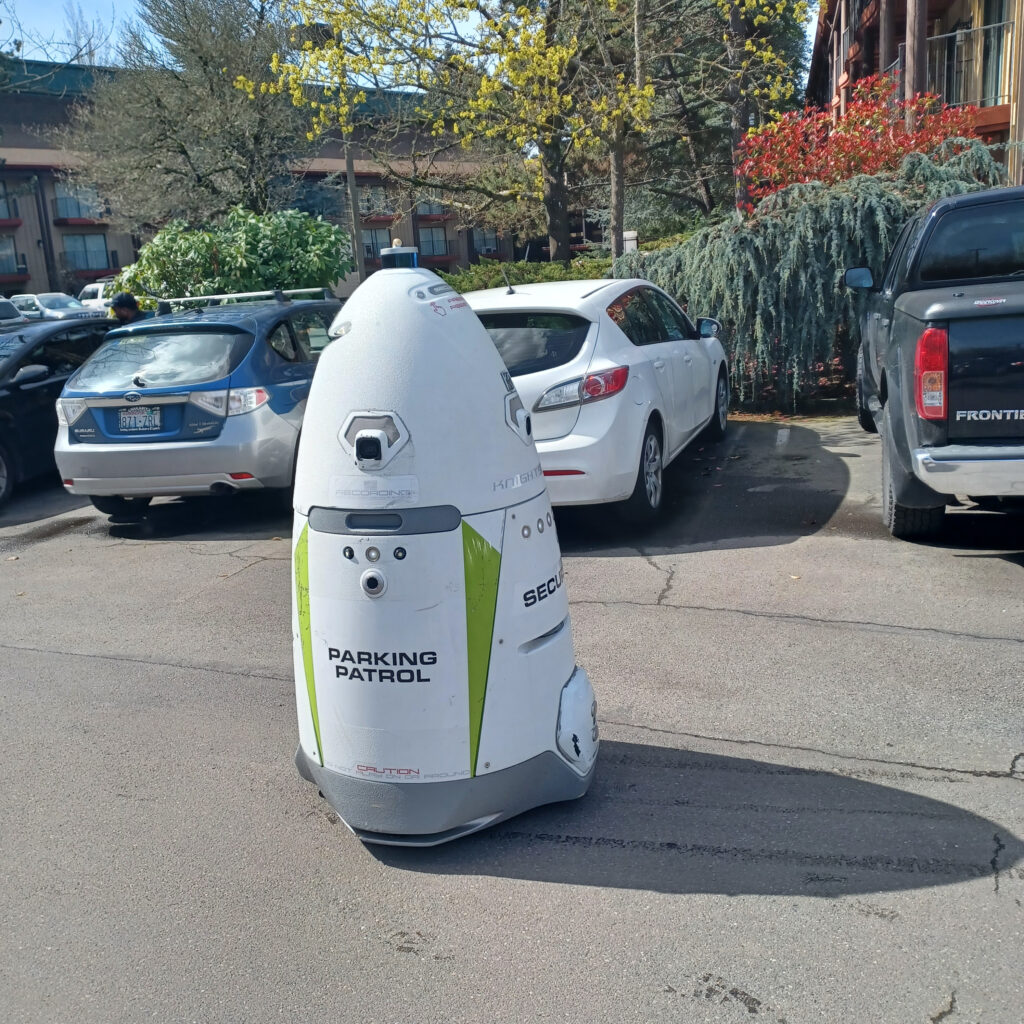






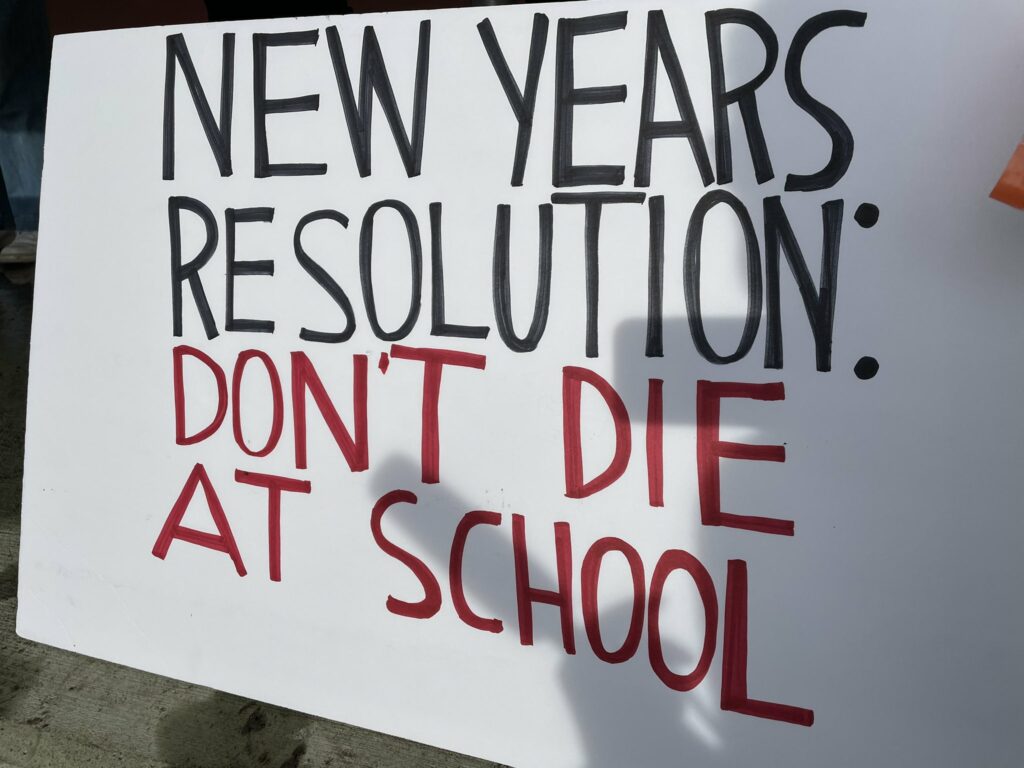

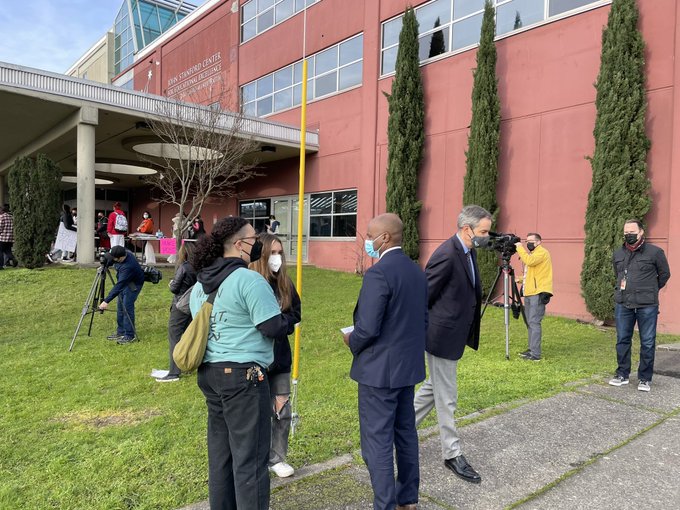
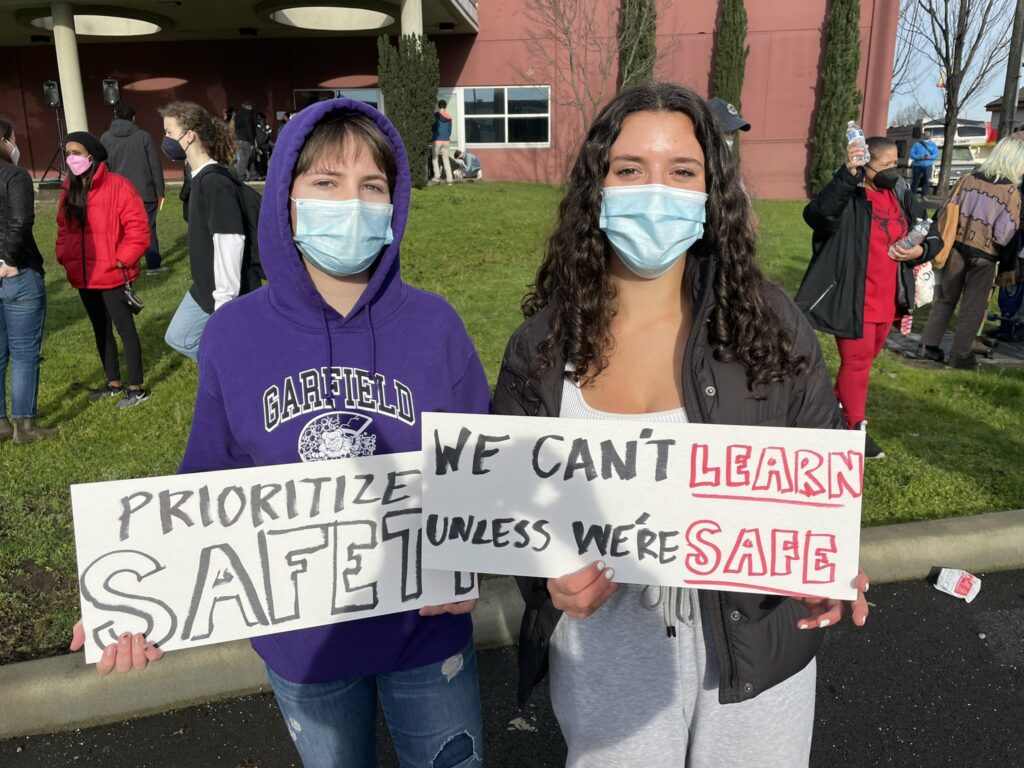
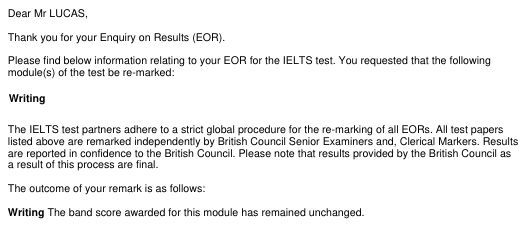
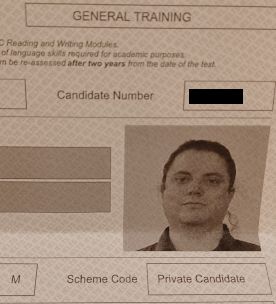
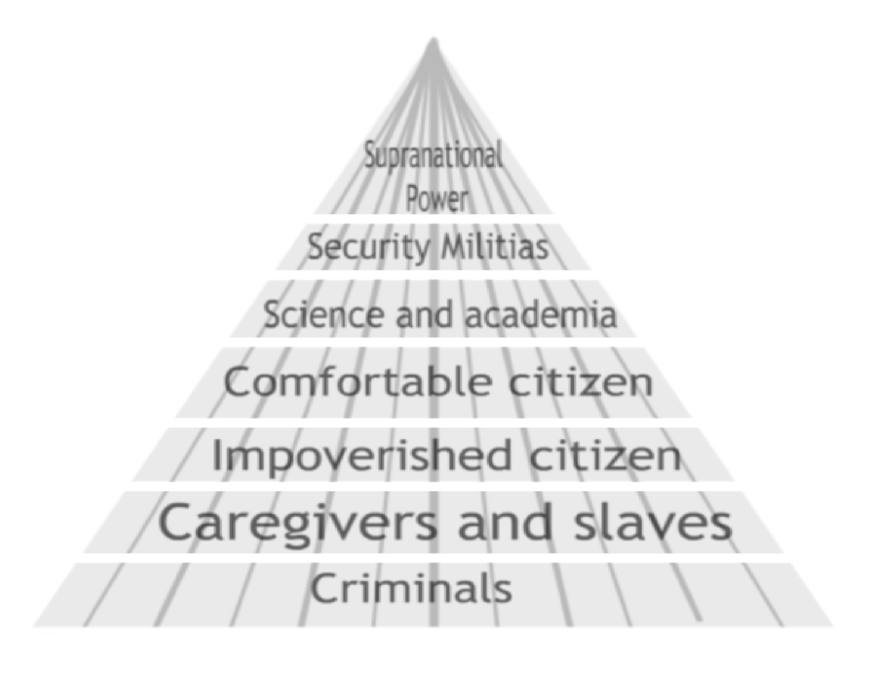


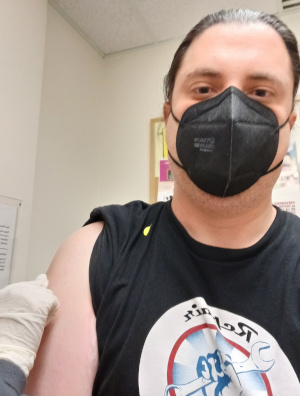


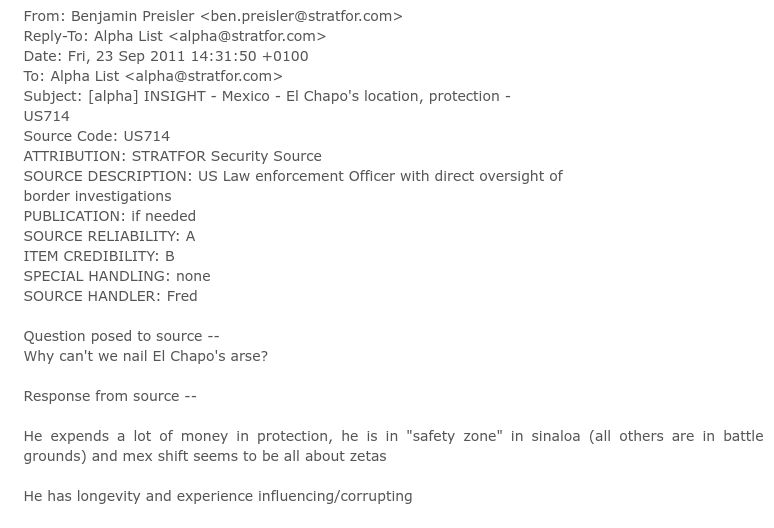
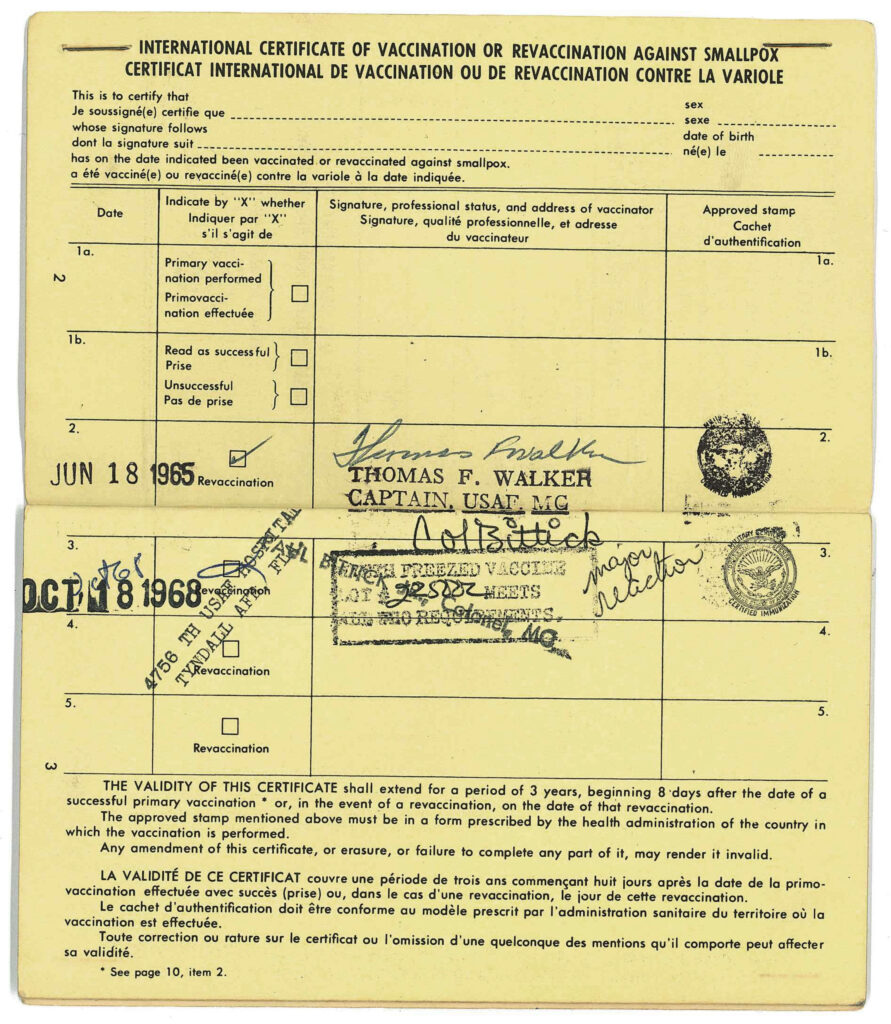











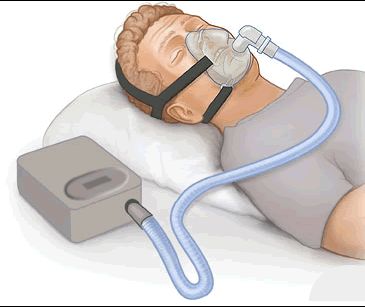







































 Twitter:


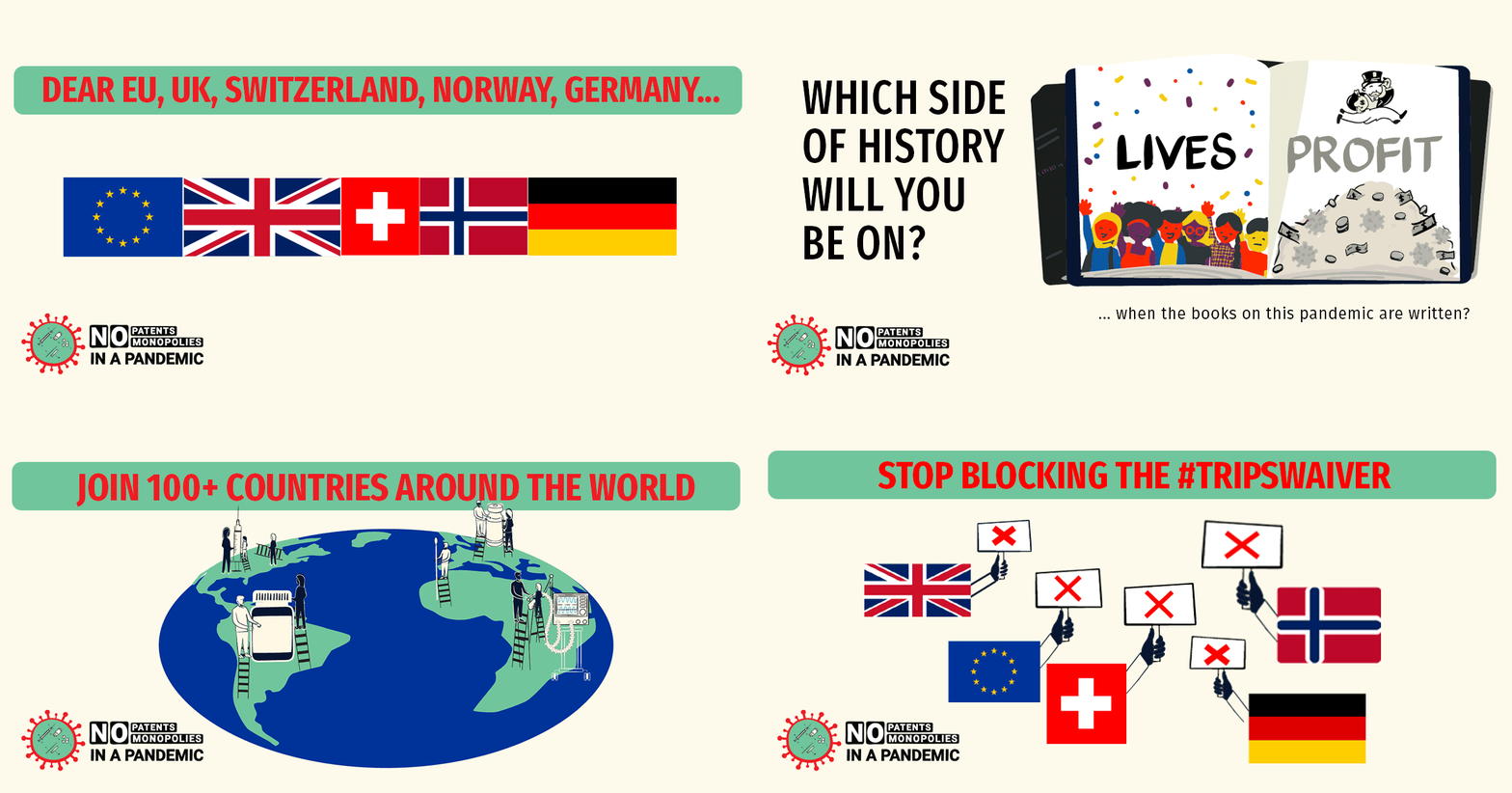
.svg)
Join the conversation