Note: In 2021 I’ll publish one blog post per week. Here’s entry 12 of 52.
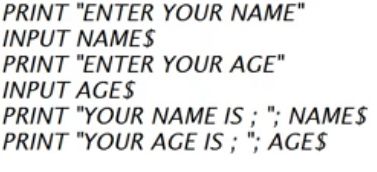
Screenshot of a tutorial for QBasic, a Microsoft programming language from the early nineties
In 2004, I began asking others to call me by my first name, Douglas. Before that, I’d been called a variant of my middle name (which I won’t share here for mundane privacy purposes). I wanted a fresh start, because I was just entering my first semester at a university, and also, I was annoyed by the various paperwork hassles seemingly everywhere when your legal name and the name you go by differ. For example, class rosters not specifying how you’re actually called encourage teachers to address you by what appears on the roster. Since many teachers labor under the unfair requirement that they educate very large class sizes, and thus face far too many students to always memorize the preferences of each successfully, try as they might, you as a student can go through months and months of unpleasantly trying to correct a teacher about your name, something that’s supposed to intimately characterize you. The indignity of being called wrongly is even more profound for those whose name changes signal giant shifts in their personhood, such as those who switch names as part of gender or religious transitions. Me, I just thought a fresh start and an end to the paperwork hassles would be nice.
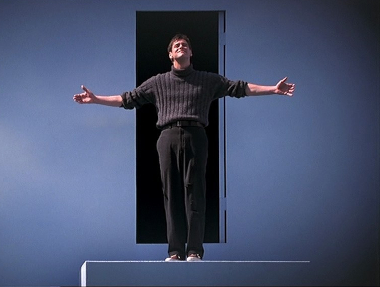
Image from The Truman Show
It’s strange how names characterize us, isn’t it? Consider the eponymous name of the protagonist in the 1998 movie The Truman Show: unlike those around him pretending to be his neighbors, Truman is a true man. But names, at least when initially given, actually characterize the parents/caregivers, their aspirations for the infant who’s receiving some particular name in the first place. A sense of this reality is frequently missing from fiction, when authors pick a name to symbolize or allude to something about a character, rather than about that character’s parents or environment (including economic class). In other fiction, such disparities between a character’s true self and their name are portrayed, especially if the story involves a name change. While authors spend lots of time thinking over the given names characters go by among their peers, I think surnames in fiction don’t receive much scrutiny, particularly in terms of migration. If an author is writing a story set in 2030 in Nebraska, and currently in 2021 nearly all people alive with surname X live only in France, should the author provide backstory for why someone with surname X is living in Nebraska just nine years into the future? Or are surnames freebies for authors and readers alike? As long as it sounds good and plausible enough, maybe no bulletproof backstory is required. You could reduce such realism problems to absurdity by requiring an author depicting a coffeepot in a story to know how it got there, tracing it all the way back to the specific particles emerging from the Big Bang. On the other hand, books too often expect readers to assume narrators are white and show WASP-y names as the norm, presenting anything else as exceptions in need of explanations.
Since 2004, there’s been a certain discomfort with my first name, for many of those using it and me alike. I’m regularly asked the same question when meeting people: “Do you prefer Doug or Douglas?” The question stumped me for a very long time. Whenever I looked within, I discovered I legitimately don’t have a preference. Either is cool with me! So I couldn’t advise the question-askers, who as far as I could make out, wanted to be caring and accommodating. Just about every time I replied that I have no preference, the question-asker became frustrated. They said I should have a preference. But I didn’t. Maybe I hurt their feelings, as though they were going out of their way in offering to remember my preference, and my not having one stung like a rebuke, in some transactional world they exist in. Only this past month have I finally figured out something more about the question. I’ve been doing core strengthening in physical therapy to help with one of my legs (two surgeries on it in my life so far), and the physical therapist is extremely knowledgeable and competent. I like him, and I’m really grateful to have his excellent help. He told me he has a thing for trying to remember the best names to call people by. We were both a bit flummoxed by my lack of a preference between Doug or Douglas. I thought it over. I think the fact I get along well with this superb physical therapist enabled me to see something more about the question and my lack of a preference.
Here’s the answer, what’s been the answer all along: Doug and Douglas are the same name — just at different diction levels. Doug is informal; Douglas is formal. Compare “What’s up, Doug?” with “Listen, Douglas, we need to have a talk.” They’re the same name in two different forms. I don’t want to micromanage which level of formality my interlocutor picks for any particular conversation. I trust the appropriate diction level can just emerge naturally, simply from both parties’ interactions and the environment at large. Because I realized all this just a few weeks ago, I haven’t had the opportunity to test it out in real life yet. But the next time someone asks me, Do you prefer Doug or Douglas?, I’m going to tell them one’s for informal, the other’s for formal, and that they can select between the two as they think proper. I wonder what will happen. As long as they don’t call me Doogie.
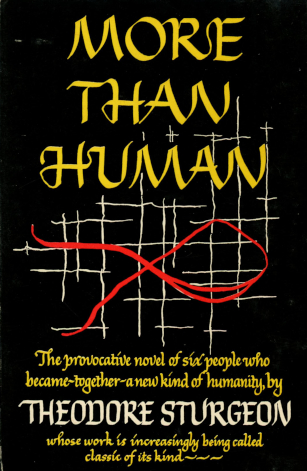
Original hardback cover of Sturgeon’s best-known novel
A common thread in the above — asking others to use my first name (revealingly, sometimes frenemies from the past still don’t, pointedly refusing to honor my request); trying to justify to readers a surname’s presence in a geographic location and time period; attempting to explain to strangers that the two forms of a single name are for different diction levels — is a sense of individuals having to legitimize their names, and perhaps themselves, to others. Names are usually social, bestowed upon us and by us as we pass life down through generations. In Ursula K. Le Guin’s 1974 novel The Dispossessed, each character on an anarchist moon has but one name, handed out by a central computer registry to keep things organized. In contrast to this socially-focused system, in Theodore Sturgeon’s 1953 novel More Than Human, there’s a gripping moment when the first character we encounter, a lonely outsider, finally names himself. Initially, “Men turned away from him, women would not look”; however, after roughly five years living and working with the Prodd farming family, he learns to speak, though “always he preferred not to.” Eventually the farmer Mr Prodd asks him for his name (get it? Prodd as in prodding him). Because he has come to trust Mr Prodd, he’s able to fulfill this request. He thinks that a name “is the single thing which is me and what I have done and been and learned.” Despite his growing connection with the Prodds, he picks the name Alone, which he can manage to pronounce merely as a single syllable, Lone. That seems very individualist, but he chooses a name only when someone else asks him for it, so it’s an event both personal and social. (The book later follows Lone gathering what Sturgeon calls a gestalt, kind of a chosen family, from other outlier outsiders.) Does a person living on a desert island like a castaway need a name at all? Might they forget their own name? Finally, look at the concept of true names in Le Guin’s Earthsea fiction. Characters and objects in that univese have two names, a common one that’s safely shareable, and a second, secret, true name that empowers them and gives others power over them if it’s discovered. In neither case, however, are the names chosen.
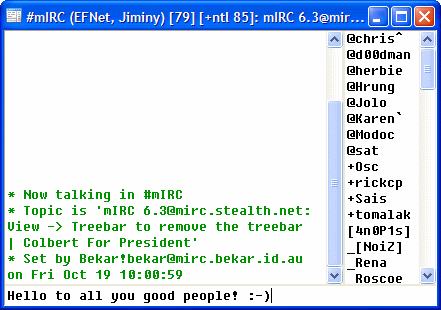
Internet Relay Chat, what I was doing in the nineties
Online, as in certain types of radio communication, users choose handles, also known as pseudonyms or simply nyms. These lessen tendencies in conversation/debate toward the logical fallacies of personal attacks and arguments from authority, where interlocuters waste time saying “You only believe that because you are [insert identity attribute here]”, as in, because you’re tall/short/rich/poor/white/of color, etc. With nyms, individuals can choose personally meaningful ways to describe themselves, and the handles can become so meaningful that among those heavily involved in computers (or perhaps simply involved in online chatting), it’s common to go by the handles even in face-to-face conversation, rather than by legal names. Some users, in contrast, choose random characters (for example: ang) to identify themselves, not wanting to give their personal story away to strangers. And some change nyms frequently, rebooting their name over and over, trying to prevent others from assuming things based on what might have been past interactions with the person. When I play around with it, this aspect of computing (akin to writing under a psuedonym) can feel very liberating.
Must everything be so stressful?
It seems names should be a touching aspect of life, and fun to ponder, but they’re commonly just another battleground. Picking a name can feel empowering (because how could an unchosen name really represent/express who you are?), while keeping a name bestowed by others can offer connection linking the past, present, and future together. Maybe, like successful accounts of trauma that provide healing, names need to be simultaneously personally meaningful, and effective and connecting in social contexts. Really thinking names through, as opposed to dissociation from life (“it’s all a blur”), as well as good relationships for experimenting with names, seem very helpful for individuals trying to determine what might be their own best path.
Note: In 2020, I’m writing 52 blog posts, one per week, released on Mondays or so…except when I’m not because reasons, life, etc. This is a placeholder ‘oops’ post for Week 15.Except with something short and fun quickly thrown in, as follows:
If, like me, you’re something of an aspiring housewife (sorry not sorry, redpill manospheremasculinists), or also like me, you’re maybe just a human who isn’t sadly dissociated from the obvious biological reality that eating food is relevant and thus you might want to become skilled at all subjects around it — including cleaning your kitchen — rather than lumber on as a Trumpenstein Monster powered by corporate fast food and corporate Diet Coke / Killer Coke, then, you might be just as glad as I am to watch the world’s most informative video. In about thirty seconds of history making, this video exposes the classified secret of how to defeat evil garbage bags that refuse to open in your hands, especially when you’re stressed. This revelatory video has changed my life for the better. Now it will change yours. Behold:
For anyone who can’t access the video, as for example, the entire human race when Silicon Valley decides to unplug everything, and you’re reading this off a print-out or the backs of your eyelids, it’s a Texan with a kickass accent, somewhat from round about the parts where I grew up, explaining a great trick for opening a recalcitrant garbage bag. In my words, the trick is simple: Wet your fingers a tad under a faucet or some such, and then try again to open the garbage bag. It will now marvelously obey your intentions and manifestations of love and light, etc.
Googling “how to reduce the need for affection” doesn’t turn up all that much, and if you ask your friends, they’re just gonna laugh at you. Until weeks later, after they’ve been ditched by whomever it was for them that month, and they come to you, tail between legs, asking “Hey…did you ever find out how to reduce the need for affection?” This has happened to me multiple times!
In researching reducing the need for affection, I’ve come across plenty of articles that try to dodge the issue by avoiding the word “affection.” They claim people are seeking “attention” or “prestige” or “approval” or some other medical-sounding reward. But I think the situation is a lot hotter than that, and by hot I mean a warm fuzzy HUG — get your mind out of the gutter.
A lot of the search results you DO get (YGMV*) are content-farm articles on how to spay or neuter your pet (…so that’s what they’re calling it now?) or y so srs/pitiful pieces in the Huffington Post about how to make your man show you more affection (…she really hasn’t figured that out yet?). I lost the very few useful links I came across. But here’s what I’ve discovered:
Get busy working on an idealistic project(s).
Get a pet (this is more of a hack: route around humans).
Get lost. Aloneness becomes a more comfortable habit given time.
And keep in mind this Theodore Sturgeon quote from his novel Godbody, which the character Britt Svenglund ascribes to the character Dan Currier: “any person who cannot be by himself, it’s because when he is by himself he thinks he is not in good company.”
In the last year, I’ve been in a totally unprecedented situation: I’ve had lots of friends! And I’ve conducted a lot of socializing. (Mostly at this excellent coffeehouse & computer repair shop in Fort Worth.) The whole experience startled me. “Wow, so this is what all the people I hated in high school were doing!” It gets so thoroughly, disgustingly addictive. You wake up one day, and your emotions are beseeching the universe to deliver you affection from others. Your long-lasting contributions to humanity? Yeah, screw those. WAIT NO!
You have to consciously pull yourself away if you get addicted. (Twitter, I’m looking at you.)
Now, you might not want to become a recluse. Currently you gotta interact with people to get where you want to go in life, and it turns out social skills are useful for that. Plus, a good social space generates good random. You encounter people who give you knowledge and paying gigs and culture. This happens in cyberspace, too, but it happens differently in meatspace; I’m not sure how to describe the difference, or why both are valuable.
Brain in a Vat Doesn’t Need Your Meatspace (Pic stolen from here).
A pickup artist is going to look at people with alleged affection-deficits and offer to teach them how to acquire more affection. Which, when you think about it, is not unlike a nicer (or at least nicer-sounding) Thrasymachus, who (according to Plato) taught that justice is nothing but “the advantage of the stronger.” (In the fifth century BCE, in ancient Greece, you could buy teachings from sophists such as Thrasymachus. Early-day Tony Robbins.) Pickup artists have a term: One-itis. Urban Dictionary as usual has the best definition:
Often confused with love, this is the feeling that a particular woman is actually special. This is just an illusion; she is the same as the other three or so billion. “Go fuck ten other women” is the most commonly prescribed treatment for this “disease” (hence the “itis”), as it tends to show quite quickly how very alike people are.
But everyone is a special snowflake, dammit (srsly, you are. And aren’t at the same time, too. Paradox WOAH!). Anyway, it is just remarkable, the difference in perspective, when faced with the question: “What do I do about my affection-deficit?” 1) Become more skilled at manipulating people into giving you affection; or 2) Reduce the need for affection. I’ll take option 2.
Not so fast, the psychiatrists are here. They describe “the self-effacing solution” of wanting too much affection, and the resignation solution of (among others) schizotypals wherein you want too little. Oh, good, the psychiatrists left. Continuing on.
Once I was chatting online with someone, importuning the person for attention affection, and found myself rebuffed; instantly my mind generated epic narratives about how they were full of shit and one day, despite my anger and bitterness, I would triumph before all! AT THE EXACT SAME TIME in another chat window someone was importuning me for attention affection, all plaintive, and I was like, geez, this person’s annoying, won’t they go away, like srsly. Humans are up to here in this affection-acquiring attention-economy business. It’s the pits.
So you want the golden mean of affection and social interaction that suits your purposes and not the purposes your addictions or inexperience define for you. (A golden mean is not necessarily in the middle of the continuum, and not necessarily any sort of average.) On the other hand, maybe you’re such an awesome mystic that you flat-out don’t need to interact with others at all. In which case … can we meet?
INTERLUDE. Let’s take a break for a second.
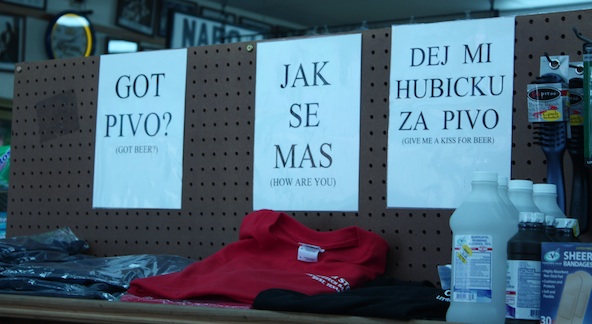
* YGMV: Your Google May Vary, depending of factors such as your IP address. Which is one reason why proxy networks such as Tor are fun: “Today I’m gonna Google from the point of view of someone in the Czech Republic. Podívejte!“
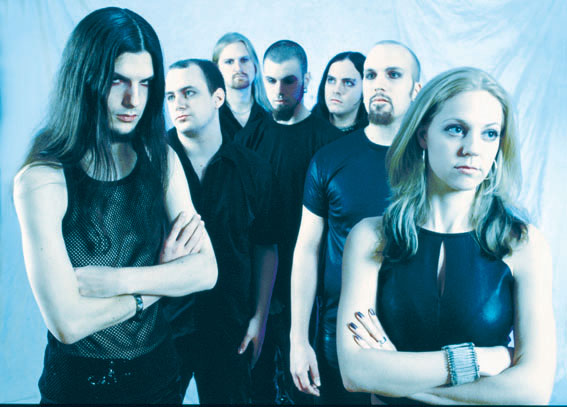
Writing this I found out there’s a now-defunct Swedish goth metal band called Beseech.
They appear not to want my affection…but is it a reverse psychology trick?
Beseech covered ABBA’s “Gimme! Gimme! Gimme! (A Man After Midnight)” which is both awesome and horrible, and most fitting for this post.
Half past twelve / And I’m watching the late show in my flat all alone / How I hate to spend the evening on my own! … [Yeah I can’t take any more of this either.]
END INTERLUDE. Back to srs bizns.
I should point out that killing a social addiction is most conducive to creative thought. Which is much more useful to the world and (less important) much more happiness-producing than nightlife. What other people think really gets into you and mucks with your invention wellspring. Of course, not so good to invent something without people in it, so at least say hi to somebody today, okay? Or maybe just this week. (Even if just online ;-)
After Monday’s suicide of Russell Armstrong (a Real Housewives of Beverly Hills star’s estranged husband), Matt Zoller Seitz of Salon.com called reality TV “A blood sport that must change.” Seitz said:
The type of so-called reality show represented by the “Real Housewives” franchise is the soft-bellied, 21st century American TV version of a gladiatorial contest. It has no agenda except giving viewers the basest sort of entertainment: the spectacle of people doing violence to each other and suffering violence themselves. Instead of going at each other like gladiators with swords and clubs, or like boxers hurling punches, participants in this kind of unscripted show attack each other psychologically. The show’s appeal is the spectacle of emotional violence. The participants — or “cast members,” as they are revealingly labeled — suffer and bleed emotionally while we watch and guffaw. […]
Unscripted shows encourage, and sometimes cause, emotional damage. That’s the whole point of their existence — the reason they get on the air, the reason we watch and discuss them. They record intense, bizarre, sometimes ginned-up conflicts during production. They transform the participants into caricatures of themselves […]
Yesterday I asked a story editor on a long-running dating series who did not want her name used in this story if, during her years of working on these shows, she had ever heard a producer express authentic concern for a participant’s well-being as a person rather than an abstracted “character.” She laughed and said, “No. That just doesn’t happen. If anybody working on this kind of show thought that way, it would make the shows less entertaining, and that person would lose their job.”
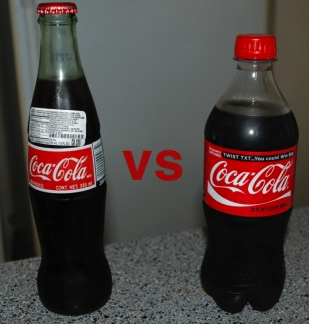
Tonight I went to the corner grocery store to buy Wifely some Skinny Cow dessert and me some Mexican Coke. The cashier, a young woman, wore a nametag that, under her name, said:
I LOVE U :)
I thought to myself: that’s an exuberant nametag. Although people who aren’t actually in my skull insist otherwise, I do automatically, non-voluntarily think such words as “exuberant.” If that annoys you, you probably shouldn’t be reading my blog, but rather watching Real Housewives of Beverly Hills.
No one was in the lane behind me, nor was anyone nearing the lane. For a moment I considered saying something or other to the cashier about her nametag. After all, I’ve checked out through her lane enough times for us to share mutual recognition, though just barely. I prefer to interact with a person when checking out, instead of using the self check-out lanes, because something worthwhile, interesting and unique and unpredictable, might happen during my encounter with another human being.
Then for another moment I considered not saying something about her nametag. Because by now the time for exchanging a greeting had nearly ended, she was starting to scan my Mexican Coke, she was about to ask if I’d brought my rewards card (I always lie and say I forgot; cashiers then scan theirs on my behalf, and not only do I not have to deal with signing up for one, but also I singlehandedly defeat the company’s entire research division). But the only word coming to mind during this expiring hourglass time was exuberant.
I decided not to chicken out, to go for it.
“That’s an exuberant nametag,” I said.
Her smile wriggled as happily and confusedly as she did until she stopped to ask what “exuberant” meant. Ah-ha, I thought, a person who doesn’t become angry like so many do when someone else uses a word they don’t know, but instead has the laudable reaction of curiosity. Now it was my turn to wriggle my hand happily and confusedly, trying to pantomime the meaning of exude while telling her, “It means, like, … happiness … like …” I managed to stop stumbling and say “It means something like, ‘Shining out happiness.'”
She said, “I really like that,” and I sensed she meant it. A few moments of silent, shared satisfaction passed as she scanned my items.
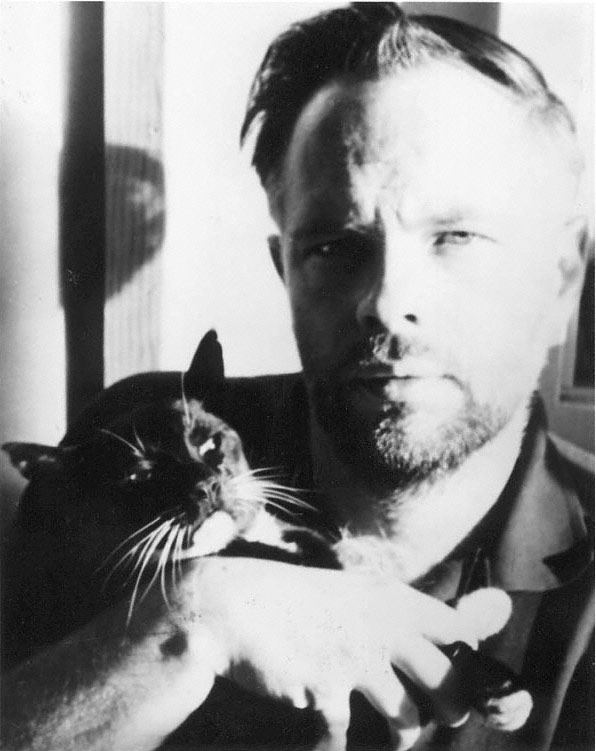
Photo ofPhilip K. Dick by Anne Dick “I ask, in my writing, What is real? Because unceasingly we are bombarded with pseudo-realities” — PKD
One of the commonplace remarks about reality TV is that it “isn’t real,” that it’s merely “so-called” reality TV. This supposed phoniness is alleged to cover up the “natural” way of being, the “real” way, which is usually not identified by the shows’ deriders.
As I paid for the grocery items, I nervously — as if invisible judges were watching — began to, as they say, “walk it back”: retract and qualify what I said. Anxiously I told the increasingly disappointed cashier the following nonfiction anecdote from a few days back:
I walked down an aisle at this same corner grocery store to pick up some ice cream. A middle-aged female customer was squatting down with a freezer door opened, scrutinizing the vanilla flavors. Without my saying anything, she suddenly started talking haphazardly about the proliferation of vanillas. French vanilla, old-fashioned vanilla, vanilla bean and more. “She told me to get vanilla; I wonder which she meant? There are too many!” In a bad mood, I didn’t want to talk at first; like a person wearing sunglasses indoors, I didn’t want to interact with anyone, didn’t want to engage with people. I resented her a little for introducing conversation. Then I regretted my self-absorption and told her I suspected old-fashioned vanilla would do the trick. The woman half-nodded sorta-assent, and said, as I walked away, “‘Tis a quandary.”
Walking away still, I looked back at her, and she was still squatting, not looking at me. I felt irritated that she hadn’t continued the conversation, that she’d used the word ‘quandary.’ How would she have known I knew what it meant, anyway? Now I was feeling like those who call big vocabulary pretentious. But I guess something small helped her recognize that I’m the sort of odd person who knows odd words. I still feel bad for not engaging with her, for choosing instead to cultivate my sour mood.
I explained all this to the I LOVE U :) cashier who, like I said above, appeared disappointed with me for walking-back the happy shared moment of exuberant. I was disappointed with me, too. But at least when I was driving home I thought up this blog post; I realized there was a big connection between these interactions and the reality TV issue.
At their peak the destructive emotions flaring during these reality TV shows are definitely real. (Perhaps those who decry the shows and miss this point don’t actually see much of them.) Real doesn’t imply good, doesn’t imply that the shows shouldn’t be changed. (I like Seitz’s suggestion of psychologists and better screenings; you can’t eliminate a phenomenon like reality TV; and, to pretend an underbelly doesn’t exist doesn’t help anything.)
Here’s the point. I think that in our postmodern world, people are so hungry for authentic moments of human experience that, even it means havoc or worse for the participants’ lives, they’ll take what these shows offer, if that’s all they know how to find. Because sincerely engaging with other people during the day, even through a good work of art, and sincerely emoting, is a scary risk.
A few weeks back Wifely and I stayed at a (h/m)otel because our home AC motor blew up. All our creatures — Gibson the Dog, Betty the Cat, and Henry the Cat — stayed with us. I loved the clarity of the clean rooms — there wasn’t Stuff all over the place. Just us, just what we needed to MY TEETH LOOKED EXTREMELY WHITE SO THAT WAS LIKE AN AWESOME THING (Sorry! Her TV interrupted my blog!) I was saying, It was just us, it was just a little home with only what Kate and I needed to be together. DARK AS THE FRICKIN’, LIKE, CHALKBOARD (Sorry again; trying to ignore it!)
Wifely was watching one of her most cherished shows, Jersey Shore.
One of my earliest memories of TV is watching, from across the room, a friend and his brother watch it. I remember their hands descending into the popcorn dish, lifting the popcorn to their mouths, their mouths chewing, gazes never leaving the screen, not even when it changed from one show to another, because it didn’t matter to them what they were perceiving. Unlike readers, who actively collaborate with texts to create stories in their minds, these two were passive receptacles of whatever was decided by whomever to be stuffed down their eyeballs.
I’m not opposed to entertainment; I’m opposed to mindless entertainment. He better not hope I don’t find out his name, bro. (What?)
A 2010 BLS survey says on average almost everyone 15 and up in the States watched nearly three hours of TV per day every day and I assume they will do so for the rest of their lives. There’s enough time to be mindless when you’re dead. I’m from THE SHORE BITCH!!! (Okay?)
Give me a piece of my preferred mindless entertainment and you will receive a lengthy confabulation justifying its importance. One man’s treasure, yadda. Actually I think it’s the BIG LOUD BASHING NOISE of TV that bothers me, the whole disorderly, sensate chaos of the thing. How the hell is that relaxing? I must be the wrong Myers-Briggs. Somebody pull out the McLuhan and say something wiser, because right now I have to put on some headphones and go write a scholarly article on the hobbies of the Puritans.
When I’m really excited about a book or movie, I make a point of ignoring the reviews, the jacket copy, the trailers, etc. — I prefer to experience the full-length artwork cold. Then afterward I go back and check out the peripheral stuff.
So as some sort of ‘cautious supporter at a distance’ (or whatever) of Wikileaks — and especially of journos and fiction-writers bravely discussing radical transparency, technology, civil liberties — I got excited about what at first appeared, on the Wikileaks Central website here, to be a vague “Global WikiLeaks support rally.” Anyone apparently can claim one of these things, not unlike this or that tea party or this or that libertation front meeting. I put the date, time, and place (16 Feb, 7pm, the University of Houston Main Campus University Center Room 242) on my calendar and waited a good month or so for the day to arrive. I didn’t even research the event, really, let alone its periphery.
Imperialist diplomacy exposed: Behind the witch-hunt of WikiLeaks.
Really? Some dudes in Houston (and elsewhere!) have discerned the one and only witch-hunt and they’re going to expose it? Ah, but being charitable as I am, and being forewarned as I am about the loose nature of de-centralized rallies/discussions, I decided just to show up, see who’d be there, what’d happen there, benefit of the doubt and all.
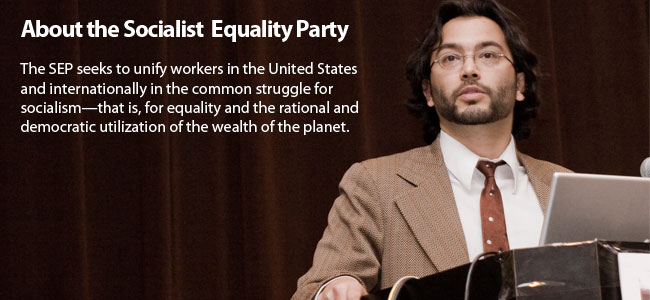
A day or two before driving down to Houston, I double-checked the event’s meager webpage at the World Socialist Web Site (notWikileaks Central) and noticed a name had been slotted in as a “Speaker”: JoeKishore. (I think I have the timeline of these webpage changes accurate from memory, but if you find any cache or archive discrepancies, please tell in the comments.)
I ripped this image of Joe Kishore off the World Socialist Web Site since they don’t believe in property
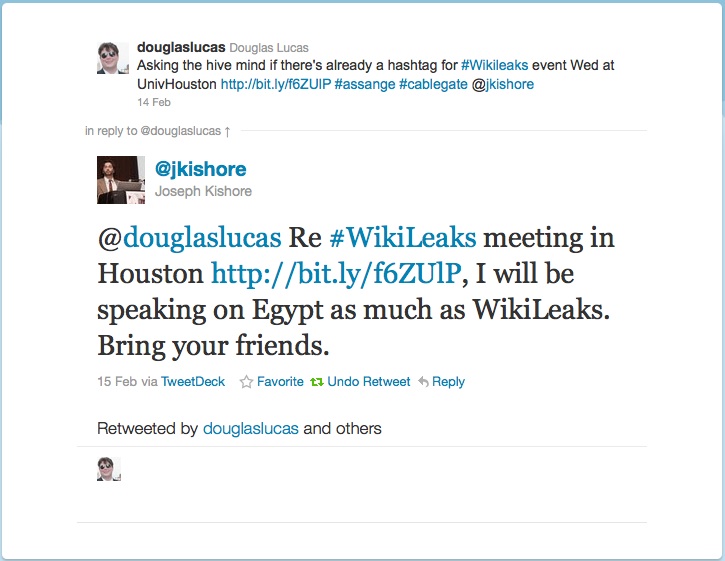
I found his Twitter username and included it in a public tweet spanning Wikileaks-related hashtags in search of other people who might be attending. Kishore responded:
I SEE YOU TOO
Not long after this exchange, the World Socialist Web Site added an additional sentence describing the Houston event: “The topic of this meeting has been changed to The Revolution in Egypt.” Maybe I’m imagining things, but it is relevant to point out that anyone can find out with two clicks on Twitter that my wife works as a television producer, and this event started as a political rally seeking attention. As for the Wikileaks Central page, they continued (and still continue) to describe the Houston meeting as a “support rally” and a “discuss[ion]”.
The day of the event, I used one of my school’s faculty restrooms to change out of my Clark Kent button-down & slacks and into a comfortable pair of blue jeans, my trusty O9 F9 T-shirt, and a hoodie-like thing with a “BLAME IT ON THE MEDIA” button in place of a flag pin. (Blame everything on the mediated nature of higher-order human consciousness!) And I got into my little hatchback and off through the Republic of Texas I went.
At about 8:00pm — missing all of the event except the last few Q&As! — I entered the room with my camera around my neck and my briefcase and, as quietly as possible so as not to distract anyone, made my way to the back of the room and took a chair. I decided photography would be rude, since I was such a late arrival, so unfortunately, no pictures here. But from memory, the demographics of the audience: about 15 students of the typical college age, late teens to early to mid-twenties, mostly non-white, males and females equally visible. I don’t think there were any professors in the room, as there sometimes are at talks. There were, however, two middle-aged white guys accompanying the National Secretary, Houston locals I think. Kishore told me later he was thirty.
I really only heard two or three audience questions. With one, a young woman asked about similar events elsewhere in the Middle East, and I was thinking, that’s what Twitter’s for, not really paying attention, as I was jacking-in to Twitter myself, tethering with my iPhone. Also I seem to remember a young man sitting across the aisle from me rising, shaking his head as if thinking this National Socialist Secretary Dude is kind of legit but also kind of wack, and then hastening out of the room, despite Kishore’s call for him to buy a pamphlet or sign up for an email list or something. But again, I don’t remember this all too clearly. I’d just driven about 5 hours and sat down and jacked-in, surrounded by an in-progress discussion.
Kishore asked if there were any more questions, and I asked what his Socialist Equality Party’s take was on the Pirate Party that has had some success in Sweden and is (sorta) beginning to appear in the USA, as well as for his party’s take on reform-minded alliances between progressive groups and libertarian groups, which is drawing the attention of some Wikileaks supporters &tc.?
Well, Kishore replied, incremental reform is window-dressing, coalition-building is white-washing, because we the people need revolution, one undergirded by a no-compromise socialist cultural movement; pamphlets on sale in the back would explain further.
I didn’t quite believe my ears. Revolution? Huh? Seriously, you think you are going to sell that in the ballot box to Americans with food in their stomachs and roofs over their heads, today, right now? That’s your political platform? If you’re really working in politics, you’re not a revolutionary, you’re a reformer. No wonder the Socialist Equality Party achieves only 0.000000000001% of the vote (if that) with their contradictions.
I stayed for a while as the ~15 students trickled out, talking with National Secretary Kishore and his two friends, er, comrades. (So at this point everyone in the room is male and thoroughly bourgeois.) I gave the Socialist Equality Party $2 in cash to get a pamphlet (pictured left) that attacks the student loan industry, as a dark-humor gag gift for Wifely Kate; hopefully that $2 doesn’t count as material support for anything illegal. (It did strike me as goofy that the pamphlets weren’t free, but I decided not to ask.)
I questioned the three guys on their Trostsky-ite philosophy, and they “refudiated” my points each in their own way. Kishore spoke in quotes, often picking up pamphlets to find them, and sometimes ducked aside enigmatically for cell phone communiques. One of the other two just stared at me silently with those all-seeing/sightless eyes I know too well from having interacted with Scientologists (a tiny bit) and with Ayn Rand-ers (way too much). The third seemed very, very nervous, fidgeting, trying to figure out which world he belonged to. Eventually — I forget on whose suggestion — we decided to go to a nearby sports bar to continue talking. Again, I try to be charitable and support everyone’s right to be weird, you know? And, having mentioned this event to so many others beforehand, I felt a writer’s duty to plumb its depths.
Leaving the main of the campus, I started asking the 5 W’s and 1 H: Who What When Where Why and How. That was when the bad vibes I was getting began crescendo-ing; like I said, I can be overly generous and charitable when interpreting others’ behavior. I asked how they got ahold of the room. The very, very nervous man said this was their second time at the University of Houston, and so far, the school hadn’t been ruffled by their Socialist Equality Party name — he seemed to imply, darkly, that such problems were not uncommon in the capitalist United States. (I saw Steve Best, a self-appointed spokesperson for the Animal Liberation Front, give a talk at Texas Christian University; I don’t think the Socialist Equality Party has much to worry about on this room issue besides paying any pertinent bills.) These three guys only mentioned their first names when they introduced themselves. You know, creepy stuff like that. But I pushed forward in the conversation, circling in on the logical flaws of, you know, burning the entire world to the ground and starting from zero.
Like, “You support democratic decision-making, but since as you say that requires an educated populace, how are you going to teach a bunch of people with infrastructure in collapse?” Kishore: “You can educate people in a hurry.” And I should have said, “Yeah, when you have all the bananas and education means agreeing with you.” This was the place where we parted ways.
Joe Kishore of the Socialist Equality Party apparently shares the chairperson title with David North, and plenty of stops on the Intertubes, such as this LJ post, this Usenet thread, and this blog post allege David North = David W. Green, rich CEO of a capitalist publishing operation, Grand River Printing & Imaging. They assert David W. Green is making money of these pamphlets and expected donations from members, using Joe Kishore as his (un?)witting mouthpiece. Maybe those posts are wrong. Like the X–Files TV show says, “The Truth Is Out There” — but I’m too disgusted to look for it.
Three things remain. One, when I was deeply involved in the most hardcore of the Ayn Rand groups as a teenager, somebody else inadvertently sparked my getting out of it by means of pranking one of our online meetings with humor, and then, when I messaged him directly to say “Help,” he talked with me — selflessly — for hours, assuring me I’d still find friends once I got out of that twisted group, to which he too used to belong. So I feel an obligation to post this in case any of those three guys (or their associates) are looking for some words to help them find their way out. (Though I do not wish to communicate with the three I met personally.)
And second, it’s all so easy to assume your in-groups are normal, and your out-groups are somehow wrongly weird. You don’t need Foucault or Wittgenstein to see the problem here, you just need courage. Pick your most cherished affiliation — religious, political, whatever. Question yourself about it, in writing maybe. Eventually you’ll learn that human beings fashion narratives to survive; they need story-lines to manage their surroundings. Narratives edit out other possibilities (“this is the story, not that”); they provide absolutes for a while, even for centuries, and you must use them to function. But everything in reality is in flux, so narratives are always deficient. Flexibility with narratives is a life skill essential to writers, and to anyone who doesn’t want to remain locked on their own island, surrounded by a wall, screaming at the world and its groups to get off their lawn as the number of people who will stay beside them declines and declines.
And third: this, I think, is why so few Americans actually participate in local politics, where their actions can make an enormous difference, and escape to national or global politics, where it’s easy to point fingers at situations you *actually* know very little about. It’s so easy to refuse the challenge of interacting with compassion and empathy to understand one another in person, learn from one another’s partisan divides, … and to instead riff on stereotypes about how so many of “those people” over on the other side of the world are, you know, weird. That’s the easy way out, the easy way to become anchored to a nice safe island that has nothing on it.
So on Feb 16 2011, did the Socialist Equality Party take over a de-centralized pro-Wikileaks rally in order to gain followers and money? Yes, just like we all go to de-centralized places in order to profit in various ways. The difference is that, from what I can tell, people in the Socialist Equality Party are interested in cold hard private-property cash, and they’re lying about it. Even down to David North’s very name. Then again, I wasn’t there for the whole thing. None of us ever are.
My good friend CynthiaShearer said something in a long-ago (long-ago in net years) blog post, a review of Richard Yates’ novel Revolutionary Road, that has puzzled me for a while. Before I get all critical of a single phrase in her post, lemme say some positive stuff to block any negative feelings.
Her blog post’s awesome.
Cynthia’s awesome and her blog’s awesome.
Revolutionary Road and Richard Yates are awesome.
Thanks to Cynthia’s review, Wifely and I both read the novel, and we found it so worthwhile, the book has since become something of a touchstone in some of our conversations.
Now with the kindnesses out of the way, here’s my quarrel, or really, quibble jumping-off point. In the course of otherwise spot-on praise for Yates’ novel, Cynthia gives the following as a thought on the book:
The novel is flawlessly structured, three acts, and eminently filmable.
Confirming what I thought, my OS X dictionary gives the following definition for “eminently”:
used to emphasize the presence of a positive quality
Maybe Cynthia wasn’t using the word so specifically, but regardless of authorial intent…and setting aside commerce, writers upping their audience — i.e., considering aesthetics alone — why is it a positive (or a negative) quality for a book to be filmable? We don’t say: “That’s a great sculpture; after all, it’d make a fantastic piece of photography” or “That’s a great painting; after all, it’d make an excellent symphonic work.”
Connections between artistic content remixed into another art form can be worth pursuing and elaborating and evaluating, but I don’t see any basis for using as a criterion of aesthetic appraisal the ease with which an artistic piece can be remixed to another art form.
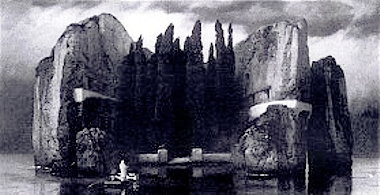
By the way, one of my favorite remixes of artistic subjects is Rachmaninoff’s symphonic poem Isle of the Dead Op. 29, composed in the early 20th century and then recorded with Rachmaninoff himself conducting. And yes, it’s “beginner’s classical,” shut up. Arnold Böcklin’s painting Isle of the Dead inspired Rachmaninoff’s piece — apparently the black-and-white version:
Here’s the color version:
And the music, low-fi and split into two parts due to copyright and YouTube limitations:
Anyway, the (wrongheaded!) idea of using as a criterion of qualitative judgment an artwork’s capability to be transformed from one art form to another got me to thinking: what can a novel do that no other art form can do? The closest (non-textual) art forms are probably plays (in performance) and movies (“movies,” not “films”; I don’t screen films, I watch movies). What can novels do that those art forms can’t do? I’ll not consider plays, as I haven’t thought much about them. So: movies.
In my tentative answers I’m going to put aside style, too, since sentence-level quality, I think, is a) not obligatory for a novel to be good, and b) not inherently novelistic. So, my first tentative answer: maybe novels can represent time, the workings of memory, changing perspectives, and the inner experience of emotions and thoughts better than any other form. As an example of what I mean (UPDATE: screenhead.com’s list of the hardest novels to film), Theodore Sturgeon’s excellent short story The Man Who Lost the Sea (legal full text at link) — warning, spoiler in the third quoted paragraph:
Say you’re a kid, and one dark night you’re running along the cold sand with this helicopter in your hand, saying very fast witchy-witchy-witchy. You pass the sick man and he wants you to shove off with that thing. Maybe he thinks you’re too old to play with toys. So you squat next to him in the sand and tell him it isn’t a toy, it’s a model. You tell him look here, here’s something most people don’t know about helicopters. You take a blade of the rotor in your fingers and show him how it can move in the hub, up and down a little, back and forth a little, and twist a little, to change pitch. You start to tell him how this flexibility does away with the gyroscopic effect, but he won’t listen. He doesn’t want to think about flying, about helicopters, or about you, and he most especially does not want explanations about anything by anybody. Not now. Now, he wants to think about the sea. So you go away. […]
His head isn’t working right. But he knows clearly that it isn’t working right, which is a strange thing that happens to people in shock sometimes. Say you were that kid, you could say how it was, because once you woke up lying in the gym office in high school and asked what had happened. They explained how you tried something on the parallel bars and fell on your head. You understood exactly, though you couldn’t remember falling. Then a minute later you asked again what had happened and they told you. You understood it. And a minute later . . . forty-one times they told you, and you understood. It was just that no matter how many times they pushed it into your head, it wouldn’t stick there; but all the while you knew that your head would start working again in time. And in time it did. . . . Of course, if you were that kid, always explaining things to people and to yourself, you wouldn’t want to bother the sick man with it now. […]
Say you were that kid: say, instead, at last, that you are the sick man, for they are the same; surely then you can understand why of all things, even while shattered, shocked, sick with radiation calculated (leaving) radiation computed (arriving) and radiation past all bearing (lying in the wreckage of Delta) you would want to think of the sea. For no farmer who fingers the soil with love and knowledge, no poet who sings of it, artist, contractor, engineer, even child bursting into tears at the inexpressible beauty of a field of daffodils—none of these is as intimate with Earth as those who live on, live with, breathe and drift in its seas. So of these things you must think; with these you must dwell until you are less sick and more ready to face the truth.
(Oddly for a science fiction story originally published in a straight-up “genre” magazine — The Magazine of Fantasy & Science Fiction — “The Man Who Lost the Sea” was selected for the 1960 edition of The Best American Short Stories.)
I’m not sure a play or a movie could represent the Sturgeon story, its workings of time, memory, changing perspectives, and inner experience as well and as concisely — or even at all. But that’s a huge disjunction: are plays and movies able to represent the Sturgeon story — just not concisely or well — or is there something inherent to the story that cannot be translated to another art form? I think that depends on how inherent an aspect of an artwork has to be for it to be considered inherent. ;-) And, how good does the movie have to be? The movie could voice-over or crawl tons of text to get closer to the original fiction format, but that (probably) would become annoying. You never know, however; artists are always figuring out new techniques. All the same, because representing time, memory, changing perspectives, and inner experience is at least a huge strength of fiction (and especially the novel), more and more I try to emphasize those qualities in my own writing.
I said first tentative answer, so how about this second one, which I can describe best in a metaphorical way? Novels are like multicharacter, revised, organized daydreams — or, imagine being a kid and playing with dolls or figurines, making up stories. That’s basically what novels are, I think, but not so much created daydreams worlds as the daydream-y experience of personal identity as a network of multiple narratives, comprised of images, emotions, etc., and stuck into the context of particular settings and social histories/influences and so forth. Sorta sounds like Bakhtin’s account of polyphony in Dostoevsky. But I haven’t read enough Bakhtin yet to say much; besides, his name sounds like Bactine.
Please don’t DMCA-takedown me, Bayer
This way of looking at what’s unique to novelistic form doesn’t seem to strongly entail the memory rumination or time aspects or changing perspectives I mentioned earlier, but yeah, I think fiction — especially when it avoids too much exposition and abstraction — stages a vehicle for experiencing a daydream related to identity and traveling in a specific historical or social context. Yet in “When Narrative Fails,” an article in May 2004’s Philosophy, Psychiatry, & Psychology, J. Melvin Woody makes an interesting case that other forms of art can do this, too:
“Why […] should we limit our understanding of the constitution of the self to the narrative? Indeed, why limit ourselves to language? Do not music and dance often articulate our passions more eloquently than any literary form?”
Nevertheless I think my second answer is pretty strong, and pertinent to why reading fiction is not just another hobby or preference, but something people who have the ability and resources and time to read it really should do so.
I'm a Texas-born, Seattle-based freelance writer/journalist currently living in Chiapas, México. Published at Rolling Stone, Foreign Policy, Salon, WhoWhatWhy, the Texas Observer, the Daily Dot, others. I write about anything and everything, but usually current events meets investigative journalism and philosophy; liberatory mental health; education; science fiction and fantasy; technology; justice; more. Also a former public ed substitute teacher.
Email: DAL@RISEUP.NET (ask for pgp key or check keyservers if you want encryption)
Snailmail (United States Postal Service only): Douglas Lucas / PO Box 75656 / Seattle WA 98175 / United States
Snailmail (Private carriers such as UPS, Fedex, DHL, Amazon): Douglas Lucas / 11036 8th Ave NE #75656 / Seattle WA 98125 / United States
Note the single-character change in ZIP codes, between the address for USPS (98175) and the address for private carriers (98125), is not a typo.













 Twitter:
Join the conversation