Note: This post inspired by #OpDeathEaters, about which you can learn more here, including bona fides from the ivory tower.
Students from Pathfinder K-8 walked out today to protest gun violence against kids (source)
Lifelong learning is something we should aspire to; adults often act as if they’ve got it all figured enough, but as the latest school shooting shows, we have a lot of work to do, particularly in confronting head on the awful things that happen to kids — and addressing them.
From regular learning to social emotional learning
Imagine elementary schoolkids practicing reading on a classroom computer. They get points upon finishing a book, and then their next book is at a higher reading level: it’s more challenging to decipher, with bigger words, longer sentences, and new punctuation marks. In contrast, adults often assume they’re finally on thrones forever, at a permanent level of knowledge and fit to judge anything that passes before them. If a difficult-to-read text comes their way, these lordly adults presume the writing must be poor and put the book down. How could it possibly be that their reading level still could improve further?
The same is true of ear-training. Little schoolkids are sometimes taught to recognize the sound of a major chord versus a minor chord. They’re awed to observe their auditory perception of music improving, much like someone with bad vision putting on a pair of corrective eyeglasses for the first time. But when adulthood arrives, well, exhausted wage-slaves are frequently boxed into making the choice they’ve watched their friends make. Kill curiosity! For sadly, it’s practical to do so, sort of. Don’t think too hard. Don’t care too much. The genius of a bop improvisation or a book using open rather than closed punctuation remains perpetually out of reach.
People need support and freedom to develop, even as adults. The oligarchs (name names!) undermining and blocking our growth as individuals and societies must be arrested, and their antisocial systems replaced with prosocial ones. The obstacles to doing so are far less about technical solutions and far more about, to use an education industry buzzword, our social emotional learning.
A look at two stories of trauma can convey a sense of the social emotional development required to free up lifelong education in safety for all. Education, knowledge: they lead to everything else, including gun-free campuses.
Seeking a savior from out the skies to answer his pleas
One of the key reasons we don’t rescue kids from danger is our habit of looking for messiah/savior politicians or celebrities who will do it for us while we munch popcorn and discuss the relative merits of their televised appearances.
I’m not immune to this. My close friends know that in the past year, I’ve gained a slightly embarrassing taste for autobiographies by the heavy metal musicians I idolized in my teens. It’s like Real Housewives, but dudetastic.
Last month, when no one was looking, I finished up Confess by Rob Halford, mostly known as the longtime singer and lyricist of Judas Priest, a very influential heavy metal band that began in Birmingham in 1969.
A common theme in Halford’s lyrics is messiahs, saviors who will arrive, likely on a flying motorcycle, to fix things for us (so we can keep doomscrolling). Consider these excerpts from his lyrics to “Exciter,” the opening track from Priest’s 1978 album Stained Class:
Stand by for Exciter Salvation is his task […] Who is this man? Where is he from? Exciter comes for everyone […] He’s come to make you snap out Of the state that you are in Look around and make you See the light again […] Only when there’s order Will his job be done.
[Exciter sounds like a strongman politician imposing “order.” right?]
Once offensive, it’s now harmless dad metal. So it goes
Similarly, an excerpt from Halford’s lyrics to 1990’s falsetto freakshow “Painkiller”, the title track off Judas Priest’s 1990 album by the same name.
Planet’s devastated Mankind’s on its knees A savior comes from out the skies In answer to their pleas […] Flying high on rapture […] With mankind resurrected Forever to survive Returns from Armageddon to the skies He is the Painkiller This is the Painkiller Wings of steel Painkiller Deadly wheels Painkiller
If we look beneath the shiny songs with shiny saviors, we can ask: Why might this theme be so prevalent for Halford? I’m not certain, of course, and things in life are rarely so direct, but I think it’s interesting how his childhood trauma fits with the lyrics of multiple classic Judas Priest songs.
Confession time
On pages 24-26 of the hardback edition of his autobiography, Halford discusses how, at approximately 14 years old, a pedosadist at an after-school program raped (“fondling”) him and some of his friends.
I was scrabbling around for information [about sex in general and homosexuality in specific], and getting nowhere. It was all a mystery to me. And what happened at my latest after-school activity didn’t help.
A small local metalworks began an informal scheme where kids could go down one day a week after school and learn to use equipment like lathes, vices, and drills. I suppose the thinking was that they would get ’em young and we might be interested enough to take up apprenticeships with them a year or two later.
Even though I had no interest in working in the factories—as I’ve said, the idea horrified me—I still went along with a couple of my schoolmates. It was only for an hour after school and, well, it was something to do. It beat being bored at home.
Unfortunately, we quickly found that the bloke giving the mini-workshops had a very different take on the idea of “get ’em young.” He wasn’t interested in teaching us the finer points of engineering. He just wanted to cop a feel.
The mustachioed, middle-aged bloke would show us how to make garden trowels or pokers for the fire, then hover over us. He’d give me a piece of metal marked with a pen line, tell me to file down to the line, and, as I filed away, he’d put his hand on my bum or down the front of my trousers.
The guy would walk round the workshop, from boy to boy, feeling us all up, and nobody said a thing. He never said a single word to us while he was doing it. It happened every week … and yet me and my mates never even discussed it. It was like it never happened.
I was struggling to come to terms with being gay, and while what he was doing didn’t arouse me—it seemed dirty, and sordid, and nasty—I just thought, Well, OK, is this what gay guys do? Is this how it works? It even made me wonder: Does this stuff go on in all the factories, then?
The weird thing was that we kept going, for six weeks at least. Fuck knows why. I just didn’t know what else to do. Then one week, after a particularly intrusive fondling, I mentioned to one of my mates on the way home that I was bit bored of the sessions.
“Me too!” he said, with what sounded a lot like relief. “Shall we stop going, then?”
“Ar,” I said [in Black Country accent].
And that was it. We never mentioned it again.
On pages 31-32, Halford describes in some detail how, when he started working in theater as a teen, he was raped by an older pedo coworker, and how, during that crime, Halford similarly experienced a child’s horrifying inability to understand, let alone stop, what was happening.
Did you notice how child Halford and his child friends never mentioned the fondling aloud to each other, and they stopped going to the pedo after-school program by discussing quitting it in an only indirect manner?
Dissociation is one term used for this. I’ve heard dissociation defined loosely as tuning out in the face of overwhelming emotion. Maybe he sang for decades of saviors because he hadn’t been able to process what had happened to him.
What happened to Halford (either time) is sort of what’s happening to adults today, except grown-ups have more choice and responsibility. Scary information about coronavirus—hey, did you hear about this company Center for Covid Control that’s a scam?—swirls around, and like the schoolkids at the metalworks after-school program, too many adults have trouble processing what is happening, and won’t even admit that much, Gollumizing about how their pain is unique and special rather than quite similar to that of everyone else in their town. After lengthy struggles, people might slip away from an abusive organization here or there, but the idea of going on radical campaigns against all of them is left to fantasy novels and video games. It’s just too much to face, or so adults typically claim.
Clearly nobody showed up to help young Rob Halford in the two very sad and infuriating situations. Not to idolize him or anything, but in the end he had to help himself, of course with assistance from his allies, by coming out as gay publicly in 1998, by releasing his autobiography in 2020, and so on. Don’t we all wish this could happen faster and we could work together? So we don’t have to look back, 15 years from now, saying I wish I’d known in 2022 that…
A look at another story, this one of non-trauma, shows how all can turn out very different.
Saving a Child’s Life
In January, the documentary filmmaker and former therapist Daniel Mackler posted one of his musing videos to his youtube channel, where he’s quite profilic. I find Mackler’s videos thought-provoking, although I disagree with some of his perspective, and I really appreciate the ones where he shares anecdotes and observations from his travels.
In the video, titled “Saving a Child’s Life — A First In My Life” and about 12 minutes in length, Mackler talks about saving a drowning kid out of a hot spring in the country of Georgia. Not only that, but he talks about the aftermath, how the child handled this trauma. I’ll transcribe the relevant parts below.
I was in the capital of Georgia, in Tbilisi, which from what I learned in Georgian means something along the lines of ‘hot water’ because there are hot springs […]
And one day, while I was sitting in [a hot spring], a father brought a little boy, and they were at the edge of the pool, and the boy was maybe four years old — three, four years old was what he looked like to me, but I was sitting there without my glasses, so I couldn’t see very well […]
I was just in my own world, I wasn’t really there to interact […] At some point, I was sitting out of the water, with just my legs in the pool, and I looked and I noticed that the little boy was there dipping his legs in the pool in the other side, and the father was gone. And I thought to myself, That’s not a very good idea […] but there were other people around […] I just thought, Okay, people are watching […]
So I just went back into my world; I was sitting […] eyes closed […] a little bit in lala land, it’s really hot […]
I look up and the little boy’s not there. […] He’s in the middle of the pool of water, under the water, but I’m really blind [with my eyeglasses off …] He’s waving his arms […] like he’s kind of swimming, but not swimming very well […] Nobody’s doing anything […] I’m seeing this kid move his arms and […] suddenly I realized, this kid’s not swimming [… I’d wondered] is this kid holding his breath and playing? […] Something in me, this little voice in my head says: Get this kid out of this water. So I jump in […] I’m like, Dude get in the water and get this kid out!
I picked him up and I realized: he wasn’t breathing. And he was pretty much limp. And I noticed his belly was all distended, with [hot] water in it […]
I brought him to the edge of the pool […] I turn him around, and I did the Heimlich Maneuver on his belly, not hard enough to really hurt him, but just to expel the water and it actually expelled the water first from his lungs […] and he coughed out all this water […] oh my God, he was drowning […] I turned him around to make sure he’s okay, and suddenly he vomited all over me […] he vomited all this yellow vomit all over me and into the pool of hot water […] he vomited some more […] suddenly the place erupted: people were coming over, and this guy who was in the pool also, he came over, and he’s talking to me in Georgian and Russian, and I’m trying to talk to this kid […] the kid kind of clings on to me like a little animal […] And I’m just holding him […]
The father was in the bathroom; he went to the bathroom and left his kid alone. Not a good idea! His kid could have died. So I handed the kid to him and the father took him and went off with the kid […] And then this guy who was sitting there in the pool started talking to me. And it turned out that the guy spoke Spanish. And I speak Spanish. He was a Georgian fellow, but he spoke Spanish. Well, he told me in Spanish, he goes, You just saved this kid’s life. And I realized it was true. […]
I suddenly just started crying. It was just overwhelming […]
The father came back [… he was from Moldova …] thanking me in Russian and shaking my hand.
And then the little boy came and he wanted to shake my hand. And I was worried that he’d be traumatized. As it turned out, I stayed in the hot water and just tried to skim the vomit off the water. And I stayed there.
The little boy did come back and he wanted to get in the water. And I talked about it with the guy who spoke Spanish. And I was like, This little kid, do you think he’ll be traumatized? And [the Spanish-speaking guy] wasn’t sure!
But what happened is the little boy did come in the water. But he kept taking water in his mouth *spit* and spitting it out, like in an arc! So I started doing it with him! And the two of us were doing it sort of as a game. And I realized, he was replicating his trauma. […] This little boy had no fear of me. And he wanted to bump me, he’d fist-bump me like a million times, he wanted to splash water on me. And I realized, he really loved me! And the thing is, I felt this! I loved him! It was like, you know, I don’t have children, but I do have children: and he was one of my children. It was so dear. […] If I hadn’t jumped in the water and saved him, if it had gone on for another minute, for all I know, he would have died […]
By playing with me in the water, by spitting the water out, and me spitting it with him, and us having fun, it was like he got back on the horse, as it were. And he made it his own experience. Where he made a new friend out of it! And I really don’t think he was traumatized by it! And that was so important to me; that was something that was very meaningful to me, because it’s a horrible and sad thing when a child learns very early on to become afraid of something that’s beautiful like the water. […] I don’t think this boy felt that, because he came [back] in the water. And he also learned that adults who are not his family, complete strangers, can be beautiful people, they can save your life.
Lessons from the two stories
When Halford sings of messiahs and saviours, it makes sense: for children. A kid of three or four doesn’t understand how to assess the risk of entering a hot spring. A kid of three or four doesn’t understand how to assess their swimming skills. A young teen troubled about sex does not know what is going to occur his first day at the theater or entering an after-school program. In Halford’s case, he was raped.
Who does understand these matters? Adults. Sometimes, though, out of our comfort zones, any of us can be surprisingly uninformed about what we will find. We might not know, right off the bat, know how we will find the inner strength to do the right thing. And there will always be for each of us consequences grave. Comfort zones cannot remain lifelong excuses. That’s because adults can, at least to a little degree, and then increasingly, self-direct, self-educate, and improve, especially when collaborating.
In most places people are taught collaboration means something extroverted and flashy: to succeed means to have a bestselling, raunchy book called Confess published. But it can also be “just” saving a drowning kid in a hot spring (and, as Mackler goes on to say in the video, making a new friend from the experience: the Spanish-speaker invited him back to his family’s house in a different part of Georgia, and Mackler took him up on the invitation a few weeks later, went and lived with the Spanish-speaker’s family for a while.) Or it can be both.
Since United States public education is on the ropes, possibly even disappearing, we really will have to teach each other, which, even though it’s the hard way, is in the long run, better. Confronting and openly discussing childhood trauma of ourselves and others is a good way to start.
Note: In 2021, I’m writing a new blog post every weekend or so. This is number 40 of 52.I skipped weeks 37, 38, and 39.
Note: My two entries in August providing sleep tips (Part 1 and Part 2) recommended sleep lab founder Matt Walker’s book Why We Sleep. But it turns out the book is sketchy. In November 2019, Moscow-based independent researcher Alexey Guzey, who has a background in economics and math, posted a devastating critique of Walker’s bestseller, which Guzey put together across two months (and updated most recently in April 2021).I updated my two sleep tips posts with this information. I regret the blunder and suggest checking out Guzey’s critique.
When confronting a challenge, I often throw myself into it, paying attention to educational materials on the subject only concurrently, not in advance. It was this way with substitute-teaching or volunteering with Food Not Bombs. “Take these to the dish pit,” a Seattle FNB non-leader leader said during the last decade, handing me dirty trays as we cleaned a Thai buffet in exchange for surplus food to redirect to the dispossessed, including some of our own number. “What’s a dish pit?” I asked. Looking back, such incidents are amusing moments, but at the time, they can be embarrassing, painful. It’s what happens when you throw yourself into things. Thankfully, if a person sticks with something—and has an inquisitive, adaptable mind that stays out of ruts—improvement also happens.
Another doc from planet paperwork
For leaving the United States, I knew if I continued comparing countries via watching youtube videos, and kept on musing endlessly about possibilities, I’d never get anywhere (literally). That’s why, while messing around with Canada’s Express Entry eligibility estimator, I decided to, among other actions, just go take the computer-based IELTS General exam in San Diego to prove English proficiency as required of non-students seeking permanent residency in the northern nation. I crammed for two days and, as expected, aced the reading and speaking sections, but made a sole mistake in the listening part (you hear audio texts only once, so no wandering attention nor confusion with the test format allowed!) and—I bungled the writing component. Despite a summa cum laude bachelor’s—a double-major in philosophy and, wait for it, writing—and despite years and years of paid freelance writing, including multiple news media publications, standardized writing tests and I simply don’t get along. Long ago, I similarly bombed the GRE’s writing section, repeatedly! Yeah, shove it, standardized tests.
I took the IELTS General on September 9 (see previous post); my test report form, dated September 11, eventually arrived in my PO Box showing the following scores: 8.5 overall, 9 reading, 9 speaking, 8.5 listening, and 7.5 writing. Since higher IELTS General scores help a non-student migrant gain admission to Canada and a handful of other Anglosphere countries, I got grumpy about that last grade, and looked to see what my options were for vengeance.
Turns out, there’s a procedure called Enquiry on Results, or equivalently, for the sake of SEO keyword stuffing, Inquiry on Results or simply EoR. Within six weeks of a test report form’s date, an IELTS test-taker can get a section(s) re-marked, for, of course, a fee.
The completely contingent order of things. (Source)
Anecdotal reports suggest EoR cannot lower your score; however, I couldn’t find official documentation from IELTS authorities proving that’s the policy. Google-savvy and forum participants suggested official documentation doesn’t exist, at least not online. I thought briefly about phoning the IELTS authorities overseas, but then decided, whatever, it fits my general knowledge of academia that it’s unlikely for EoR to lower my score, only keep it the same or raise it. Make no mistake, these myriad migration paperwork hurdles have the distinctive reek of academia/intelligentsia. Well, my destination thoughts were shifting from Canada to the Netherlands anyway. Better just to wing it, to purchase an Enquiry on Results for my writing section. YOLO!
I called the testing center and was asked to email the director with EoR in the subject line. I did. After some back-and-forth, my EoR request was officially in and paid for on October 4. Pretty ironic: the first task on the IELTS General’s writing section tells candidates to type an everyday letter, say to a newspaper or in order to complain to a company—and here I was, asking for that task to be re-graded, by means of me writing email letters with the testing center staff, communicating with perfect competence.
The higher-up graders re-marked my writing section and by email I received the new, or rather, not new, score in a PDF on October 6. You can see the outcome in the screenshot starting this post. My score didn’t change a smidge. Blegh. Vengeance denied. Had I prepared better, I would have spent more time with official practice materials or free/low cost courses specifically on the IELTS General writing section available on MOOC platforms such as edX, Udemy, Coursera, etc. Because as we all know, exams don’t evaluate your writing or English proficiency. They test how well you take the test. But the point was to throw myself into the actual emigration process. Psychology score, A+. Home economics score…F.
Well Canada, you and I had a few flirty dates, but it looks like there won’t be any more nights out on the town for the two of us. I don’t have enough points to meet your high standards. That’s okay, I have gray—oops, grey…er, grijs—in my stubble now; I’m no teen who can’t handle rejection. Besides, you have mining companies with active licenses for profiteering off the genocide in Ethiopia’s Tigray region. And your money-laundering transnational criminals in Vancouver are protected by Chinese spies. *Hangs up*
This past workweek in West Seattle, antivaxx and antimask protesters waved signs during five o’clock traffic in my neighborhood. Aside from the bald dude in the, what’s that Dutch word, *scrolls up*, grijs hoodie, who, though he lacks camo pants, sorta resembles a typical contractor you’d find working for a company like Craft International (a merk firm and friend of spy biz Stratfor with a mysterious habit of hanging around events like the Boston Bombing)—I have no idea who the grijs dude is, just sayin’ he looks a bit creepy—it seemed a fairly ordinary group of Seattle rightwingers of the new school. I stopped my car in the parking lot behind these vaccine hesitant folks to get a photo for the blog entry you’re reading now.
When I saw the flag, I knew it was going to be bad
Giving their respiration a wide berth, I walked to a suitable site to hold my phone up at ’em. Seemingly in unison, the women chorused, “Are you going to write about us?!?!” The ;) ;) @}->– @}->– flattery in their voices twisted this writer’s face into an involuntary smile. Like thundering storm clouds above a parched man in a desert dropping rain: acid rain. I told them Yes and continued thumbing my phone. Then one protester lady asked: “Are you going to write ill of us?” Interesting choice of words, there. They asked where to read, so above the noisy traffic I shouted: “DouglasLucas dot com!” Maybe they’ll comment and tell us more about Mister Grijs Hoodie.
A satisfactory photo achieved, I headed back to my car by the same circuitous route in reverse. I crossed the street. Suddenly I was passed by Mister Grijs Hoodie! He had his bald head down, his face sternly focused, and he was powerfully striding alone, whither I know not. I should specify, relative to being a Craft International employee (which I’m including almost entirely for joke and to link readers to stuff), it’s far more likely he’s a complete nobody, for instance a run-of-the-mill bargain bin patriarchy boss of some local Kik group for definitely-not-advisable hookups (read: loss-leads), which, as #OpDeathEaters has been pointing out since 2014, is, like, same diff, or can be, you know, more precisely, the everyday consequences of supranational pedo propaganda from above swamping populations with dolla dolla bill masculinist ideology rebranded to sound like freedom. Not to mention human trafficking. [Hey! Are you an editor or other potential payor reading my blog? Find academics vouching for #OpDeathEaters in that same diff link. That’s the completely contingent order of things—for now!]
Nothing hurts me except bad hair days
A surprisingly high portion of the cars passing the protest were repeatedly honked in favor. Not surprisingly, those one-note vehicles tended to be jacked-up pickups with needless stickers of an out-of-character Calvin urinating. I saw only one person indicate disapproval: a driver doing their daily grind, gripping the steering wheel with one hand and with the other, like a time-warped Roman emperor, presenting an unmistakable thumbs-down.
The wild hyperlocal antivaxx advertising blitz appearing in my neighborhood did not detain me from getting my third Pfizer (booster) jab Friday, courtesy of my public education employment. Although I follow news on twitter, email lists, and elsewhere too much from my own good, even I almost missed last Monday’s study in The Lancet, among the globe’s most prestigious medical journals—a study written up by The Hill. To oversimplify, the research indicates Pfizer-BioNTech protection against novel coronavirus infection drops significantly—approximately in half!—four to six months after the second jab, with the specifics varying depending on the scenario, mutation, etc. Thus, boosters. As with, say, the tetanus shot. According to the CDC and FDA in September, certain Team Pfizer folks can get the third jab once a minimum of six months since their second jabs has elapsed. Hopefully better vaccines (here’s looking at you, University of Washington) will be approved soon and become widely accessible for all, so we can be done with these less than ideal, but still very helpful, interim measures.
I took this photo in West Seattle’s Lincoln Park this past workweek. The image shows happiness
I embed an image from the exam room not to boast, but to model good behavior, to encourage people to get vaccinated. Of course I know Pfizer and other Big Pharma companies have horrifying histories of wrongdoing (an easy peasy first stop, Wikipedia criticism section footnotes, when they exist), but the risks thereof are, in my case, far less than the risks of suffering COVID-19. The Pfizer press release about the third jab has the expected advertising but also a lot of interesting links for people who might want to dig.
I’m too exhausted by the coronavirus vaccination debate to go into more detail, but the big picture might be helpful: if you don’t experience something firsthand (while knowing what you’re looking at, too), you have to decide whether to trust information from others. Documents may be more reliable than most people, but even with documents, you have to trust they’re real and not forgeries. How do we accomplish this as humans?
Like we always have: with trust networks. As far as I know, that’s a term that kinda originated with cryptography, but the phrase intuitively makes sense, right? My unfairly overworked primary care physician, whose performance is usually stellar, recommended the bestseller Why We Sleep to me (see note above starting this entry). I assumed she had read it closely, when probably—I’ll ask next time I see her, because mapping trust networks, even for oneself, is of life-and-death importance—she heard about it on a podcast or something, while HIIT sprinting or Wim Hof breathing. I presume she then passed the recommendation from the podcast (or whatever) to me, and despite the intuitive misgivings I initially felt about Matt Walker’s marketing image, I got swept-up a bit in his glitz. I mostly listened to Why We Sleep, while driving or exercising, meaning I didn’t read individual sentences in print, a way of reading that makes it easier to be careful and critical. I just had it on in the background to learn by osmosis. So I got fooled.
From what I’ve read so far, Walker’s never directly acknowledged his critic, the Moscow-based independent researcher Alexey Guzey.
Corporate spotlight decreasingly needed for winning crushes’ attention … but will our ability to search for non-corporate knowledge-sharers be fully seized by the powers that be?
Example of actual public diplomacy. @TheBoobla versus @sleepdiplomat … Fight! … Boobla wins!
Having read most of the devastating critique by Guzey, who ended up on international news himself to tear apart Walker, I lowered the glitzy guy’s reliability score as a science source in my personal trust network, and updated my blog entries accordingly. Actually, early on, I emailed Walker’s press person once or twice with various questions—on twitter, Walker goes by @sleepdiplomat, and says he wants to spread his message everywhere—and never got a reply; he could have been occupied, of course, but sometimes, mentioning my news publications gets me at least a politer version of He’s too busy for you (e.g., I’ll ask him!! <3 <3 <3 and then they never do). Based on how my primary care physician reacts when I ask her about this, I’ll adjust her trust network reliability score (especially on the topic of book recommendations) down, up, or not at all. Same for whatever podcast (or other source) she got her Why We Sleep info from. Unlike cryptographers, I don’t have actual numbers scoring people in my head (each person would have multiple scores, one per topic). It’s just something I think humans do all the time, semi-automatically, unless they’re effectively brain dead. (Oops, that’s rude to actual brain-dead people, who, uh, won’t be reading this.)
Imagine if IELTS and academia tested people, not on avoiding typos during unrealistic, one-shot English exams, but on the everyday life-and-death practice of adjusting trust networks. You know, critical reasoning and media literacy classes. In fact, spy agencies (public or private) use trust networks too. For a few years, I read thousands of Stratfor emails, and their staff was expected, when relaying to internal email lists the insights they heard from their sources, to give each source a letter grade to indicate their reliability (as well as other information about the source, the reliability of the particular insight, timeliness, and so on). There were similar trust network instances in the zillions of State Department cables and additional public, classified, or otherwise restricted documents I’ve read. We all do this when evaluating information. It’s just that the spies’ goals are antisocial, and mine, and hopefully yours, are prosocial. BTW, spying these days doesn’t merely mean cloak-and-dagger stuff, like car-bombing journalists critical of Belarus dictator Alexander Lukashenko’s regime, as in this April 2012 conversation: a 24-minute excerpt of the bugged recording of Lukashenko’s then-spymaster was published by EUobserver in January 2021 here (see also the 12-page English transcript or the 8-page Russian transcript; this related DW article in English too). Spying also means high-level marketing crap like Stratfor employees writing the majority of this or that article released by your favorite corporate media outlets. That’s an observation still true yet a bit past its sell-by date, since now the Dems openly run CIA and military spy candidates; heck, might as well openly put them on mainstream media mastheads while they’re at it. (If your bar is lesser evil, explain it not to me, but imagine how you’d get ratio’d for explaining it to actual torture victims who use twitter.)
Example of spies using their trust network with sourcing criteria. US714 was Aaron Christopher Grigsby, then a director of the Texas state police Ranger divison. Source a decade ago.
I’ll close this section with three more observations. First, I know wonderful people who are far too busy (perhaps a single mother or a prisoner with limited or no computer access) to do the countless hours of reading required to really evaluate, say, scientific papers. So they often have to go by, for instance, their affinity for a rando shiny podcaster, because again, we all use trust networks. What else are we going to do, not look up information, not sift through reading options by some means? I understand, but get slightly annoyed, when twitter radicals call these people fascists; in a remote-controlled (autogenocide) way they are, but that’s like shooting fish in a barrel, when radicals could try instead to save them from the peril (by aiming at the top authoritarians cuz else, regrowing hydra heads). Similarly for academics who’ve lived their whole lives in the ivory tower and have never stepped foot in a prison, long-term psychiatric lockup facility, non-Western country (me!), and on and on. We’re all in this sort of boat, just for different topics.
1960s international smallpox vaccine records of US citizen
Second, a few short years ago it was fashionable in the hacktivism/transparency realm to fund vaporware websites with a Great Man on top supposedly to change things, but these vaporware projects didn’t employ trust networks (among other problems), just glitzy marketing. We were supposed to trust our emergency-based need to get wrapped up in trusting their machismo. GetGee, the global commons for public data, allows users to employ trust networks when looking at research.
Third, if disinfo feels hopeless, remember it’s startling how effective a) history and b) reframing things can be. For instance, if someone’s para about vaccine passports, you can show them international smallpox vaccination records for US citizens from more than fifty years ago, or reframe the concept by saying, hey, to go into a bar serving alcohol, or to pilot a two-ton metal box powered by explosions down the freeway, we have to show age passports. And yes, I know both the conventional and alternative medical industries can be untrustworthy (see links on my blogroll), everything around ‘securitized’ border enforcement too, and that COVID-19’s origins deserve more investigation; but, uninformed speculation is cheap and funding investigative journalism (which sometimes requires travel to do well) is expensive.
So yeah, I got my third Pfizer jab Friday, and Sunday, 48 hours later, pfno pfside pfeffects pfso pfar.
Blog update
Recently I received a donation for my blog from a reader—thank you! (Hic haec hoc, huius huius huius!) The donation encourages me to keep blogging. For anyone else who might be interested in donating, here are the donation options, to which I just added snailmail.
This past month I made tinkery updates across the website, mostly under the hood; some, though, you might notice. Do tell if you spot any problems or have any suggestions. I overhauled the blogroll (see right sidebar, up) for the first time in years and years. I replaced http:// links across my site with absolute https:// links. Digitizing my belongings to prepare for emigration, I came across a nice print ad for the 2017 bookstore talk I did, and added that to the in the media section, where it looks, um, good! I grumble about the monkey see, monkey do requirement of social proof in marketing (completely contingent social order…for now!), but, whatever, it’s good to have more, how shall I say, self-esteem or something like that, and enjoy these sorts of thingymaboppers, at least while I’m still a loudmouth resident of the loudmouth United States!
By the way, the bookstore I spoke at is called Burning Books; it’s in Buffalo, New York. After over ten years, they’re now expanding, more than tripling their floor plan and adding designated event space, all without leaving their location. Everything will be fully accessible, too. Below, their fundraising video and gofundme link.
Because these blog posts usually take more than a day to write when they’re lengthy, and because offline readers have advised me that shorter posts would be easier for them to take in (time-wise), I need to figure out how to change this blog, and how to modify my time and energy investments in my overall writing more generally. A few weeks ago, I was working on a very long post about Beto O’Rourke and realized I really need to rethink my efforts. Diverting huge chunks of my time and energy away from my longform fiction- and nonfiction-writing goals to pin down, by skimming seemingly identical NPR articles at 3 a.m., the exact date the Del Rio international bridge closed during the ongoing refugee crisis, and who actually issued the order to close it (various local/regional mini-authorities stumbled over each other trying implausibly to claim the ugly credit in the media spotlight), is fascinating, but maybe not the best sort of time-sink every single weekend. I do enjoy writing journalism (especially were I able to do more investigative work uncovering as-yet-unknown ‘revelations’). And summarizing/analyzing other journalists’ work in reframed language weekly is, to borrow from Pokémon Go, super effective, biz-wise and persuasion-wise, in terms of staying in readers’ minds on a regular basis. For example, these posts not infrequently convert into incoming messages from people I haven’t heard from in awhile, asking me what’s up and what do I think of xyz popular issue. Yet such posts should just be a sole theater of war among several, not my only battlefield.
Then there’s the damage to psychophysical health from end-gaining (sacrificing healthy means to ensure ends are achieved, which might compare with emergency-based structures). To write something called lengthy, like this blog post, it helps the writer tremendously to keep the material in short-term memory (RAM for computerheads) while working. Especially if the content’s not strictly outlined (this piece is pretty outlined). The more creative, the more the creator needs to have all the data (even imaginative data) for the piece readily accessible in their minds, even to the point of boiling, such that the energy must be discharged (mixing my engineering metaphors). Taking breaks to tend to houseplants, do the dishes, or complete other sanity- and health-maintaining tasks risks losing the data’s salience. So you find yourself with a hacker hunch, crooked over the laptop, flies circling the sink, and Dutch roommates, if you have those, perhaps eyeing you suspiciously. Good luck with the 9-5 schedule, too. While potentially liberating, such pedal-to-the-metal practices can be risky, especially if an inexperienced and/or broke person doesn’t intersperse them with rest and/or has insufficient social support.
The problem is particularly acute for me in terms of creating a freelance/entrepreneurial business plan to meet migration requirements of the Dutch American Friendship Treaty. I haven’t picked the Netherlands for certain yet, but I imagine I will have in roughly two or three weeks, at which point I’ll buy a one-way overseas plane ticket months ahead of schedule to give me salient countdown timer motivation. (Psychology score, A+; home economics…) The business plan for writing in the Netherlands is mandatory. That’s why, despite frequent exercise and cooking super-healthy veggie-rich meals at home, I’ve been suffering moodiness and lethargy lately: much of it revolves around my fear that I’ll soon have to devote most of my time and energy, i.e.my life, to content-marketing, not the reading and writing I’d rather do. Though it’d perhaps be fun to run a content-marketing business in the Netherlands for vegan restaurants, free software firms, and antipsychiatry / critical psychiatry service providers called something like, Idealistic Content Marketing (how do you say that in Dutch?). With long-term substitute-teaching assignments and CELTA training, I was able to squeze some blog posts and fiction-writing in, but it wasn’t easy, and I found that eventually the employment system—at least in the United States—beats avocational activities out of overworked employees. Optimizing routines, honing goals + plans, and the like can help tremendously, and cutting costs through, say, miraculously finding good roommates, but, also, let’s not kid ourselves.
Another photo I took, same day, same park… lovely place
To close off this section, let’s consider how I’ll blog for this year’s remaining 12 weeks. The last post will of course sum up my 2021 year of blogging. The penultimate entry will explain with bullet points how I made it through a full calendar year, for the first time since 2013, without a manic episode or psych lockup. That leaves 10 weeks. Then there are three series I started in 2021 with a single post and never finished: Meet new president Joe Biden, part 1 of 2; Views of happiness: Journey versus destination, part one of two (this should actually be three parts); and Review of education books, part one of two (this should actually be four parts). That’s six posts needed to conclude those series. Leaving four weeks. I want to post about trees in Seattle, and maybe finish the Beto O’Rourke URL-as-tome. That would leave two weeks … I also wanted to do news blasts for Colombia, and I never finished with the Haitian presidential assassination news blasts, but no one has solved that murder yet, so nobody else finished the story, either.
Division of labor makes an interesting way to look at this business plan, life plan challenge. The titles change, but in the forms of media-writing I know, including print-only fiction and journalism, there are usually four roles in my experience (call them what you want): researcher at the most granular level, then writer, then editor, then producer at the most birds eye-view level. I need better self-production skills, so I imagine there’s, if not an app for that, then quality courses I could check out on the various MOOC platforms, and book recommendations I could ask friends/mentors for. Just not any books by disgraced sleep diplomat Matt Walker.
Maybe the best plan for my blog in 2022 would be the following formula, to which there could be occasional exceptions: one observation from daily life, one philosophical/political/whatever lesson drawn from it, and then an international news blast or two. Heck, maybe even a music and fiction section after the news blasts! (See, I keep adding stuff…) If anyone has thoughts, suggestions, or requests for this blog, I’d love to hear them!
Does it? Much, though not all, wrongdoing is in the open nowadays. Other factors may be more important than darkness, such as lack of good framing, endless grains of news sand staying decontextualized, and the antisocial system of carrots and sticks that corporations condition us for. Oh, and don’t forget cowardice
United States. On September 23, the Washington Post published a lengthy op-ed by influential neocon Robert Kagan, cofounder of the notorious warmonger thinktank Project for the New American Century. Kagan’s op-ed is titled “Our constitutional crisis is already here” (full text at Cryptome) and argues that, unless his health fails entirely, Trump will be the next Republican presidential candidate. Kagan says come November 2024, the United States will reach its biggest crisis since 1861, with widespread mass violence and a federal system breaking completely. He blames the cults of personality surrounding demagogues for the impending doom, and just like the Washington Post itself, he makes the evergreen claim that democracy will die, though Kagan prefers November 2024 as the date to put on the coroner’s report.
While we’re still forced to work, in some senses, alongside liberal states against outright fascism because innovative alternatives to the liberal order need greater amplification and effort and funding (and uh, commissions from editors) and knowledge of self, health, and wealth—the sneak attack, the edutainment style returns like that, my philosophy keeps it plain and simple, the kingdom of hip-hop is within you—it might be a worthy endeavor to introduce some rigor upon these sales slogans about democracies dying and failed states. Nation-state is an incoherent package-deal concept, but to roll with it for a while, the idea of an international order of liberal nation-states is typically traced back to 1648’s Peace of Westphalia. The Peace of Whatphalia? I must have been roaming the hallways that day in AP European History. What criteria must such liberal nation-state countries meet to count as successful or failed, alive or dead? There are of course readable scholarly books on such subjects, for those with time, i.e., not salaried at the Washington Post or Idealistic Content Marketing.
Youtube offers plenty of videos from US individuals who’ve relocated to China as obedient reflectors, playing by the rules and keeping their mouths shut. Footage from these moneymaking individuals suggest they have a pretty good life in China, happy but helpless. Well, good for them. Now let’s talk about the Chinese Communist Party, the CCP, and the propaganda war around it in the United States. Trump, who tweeted in April 2013 that China owns DC, won reactionary hearts by telling his followers he would resist the Chinese government’s encroachments on the United States, but he himself has been a bigly CCP beneficiary. In October 2020, Forbes put together a helpful guide to The Donald’s debt, which astonishingly totaled at least a billion dollars. (And you thought your student loan debt was bad!) The Forbes guide looks at multiple Trump properties, but let’s just consider the 1290 Avenue of the Americas location. More than two hundred million dollars for that New York City property came from the CCP-owned Bank of China. That bank says the debt was sold to Vornado Realty Trust. Maybe so. But without transparency, maybe Bank of China is still a creditor on the building, if say, after the sale, Vornado sold it right back. Opaque transactions we can’t audit don’t help explain. Whoever the current creditors are, guess when the debt comes due: November 2022, the mid-term elections. There are more connections between Trump and China, such as his pledge- and likely constitution-violating hiring of firms with majority CCP ownership in early 2017, and the eighteen trademarks granted to Donald and Ivanka Trump in late 2018 by guess who, the Chinese government. That’s the reality, while they’re telling their fans they hate China. As the top predators block their constituents on social media, they party together and laugh about you wearing their T-shirts, didn’t you know? Meanwhile the US left is misled by garbage-news from channels loyal to the CCP and Putin (see here and especially threads here and here). Note it’s both obviously bad Trump and wrongly beloved Obama who sided with Putin to bring us to this brickbat BRICS point. A busy and hardworking activist asked me the other day to explain what the problem with fake news website The Grayzone is. “Red-brown alliance,” I started off succinctly, meaning the longstanding and continuing pattern of Commies allying with Nazis (see news blast above regarding the thankless duty of grumbling anarchists, when forced to pick between the two, to support the liberal order over the outright fascists, while still shoving reframing, truth-bombs, and nonviolent/self-defense other bom—nevermind, into faces). Grayzone founder and head honcho, your local Assad apologist Max Blumenthal, successfully pressured the Southern Poverty Law Center to take down this article. I dare him to try my website, I’ve shielded myself with lengthy paragraphs! The article explains, on the Internet Archive at least, how presently, fascist propagandists like Steve Bannon use intermediatry hops to convert left-wing resentment (paging Nietzsche, or better, The Creation of Me, Them, and Us on the struggle between reflectors and negative images in Hegelian setups) into unwitting support for Putin-, CCP-, Assad-, etc. aligned talking points. As the first track of Lupe Fiasco’s Birth of the Cool album propounds, check your ingredients before you overdose on the cool. Might be a bit Tatmadaw when those discussing the CCP’s horrifying Uyghur genocide find themselves told by USians that it’s a “Karen” move to feel cross-border, cross-sect empathy: “Yeah, tell us again Karen, how the Uyghur genocide actually affects you” and the like. Nope, empathy across distances is a good thing. Finally, whataboutism is increasingly not accepted online, so I don’t have to put a long disclaimer in here about multiple awful genocides caused by the US.
“What is this garbage you’re watching?” the US fifties father says, thrusting the remote control like a gavel. “I want to watch the news!” (Points for those who know the music video source.)
Well, if there’s anyone still reading after that giga-paragraph, such was my understanding prior to this blast, so now we crank the volume! I’m basing the below largely on the September 28 YAC.news article, “Prelude to war: China’s plot for world domination,” and the links therein. Heather Marsh’s 2014 post “World War III: Pillage and plunder” provides some helpful historical background about power shifting from the British empire / Five Eyes / etc. to the Chinese empire, and then her 2020 post “The catalyst effect of COVID-19,” offers more crucial background, regarding the present attempt at a planetary mono-empire, transcending the Cold War binary and dangerously trying to sublate us all into obedient nothing-humans. Back to the YAC.news post.
The excellent article explains “China’s goal is global ideological and economic domination. To achieve that, it is spreading propaganda, expanding information operations, amassing economic and social influence, and sabotaging democratic political systems.” The article gives backstory and context such as “The CCP has had a monopoly on power in China since Mao Zedong first obtained control in 1949 after a grueling civil war. The CCP currently has more than ninety million members, not including non-Chinese loyalists scattered worldwide. Over 70 percent of the CCP’s members are men” but in 2019, more than 42% of new members are women, contemporary gender parity in joining authoritarian destruction. Here’s a key paragraph from YAC.news:
The CCP does not seek ideological conformity but rather power, security, and global influence. President Xi promotes China’s authoritarian governance as being superior to democratic political systems and seeks to spread “Chinese wisdom” throughout the world as a “contribution to mankind.” Xi speaks of China’s prosperity as proof that the path to prosperity does not lead through democracy. Unlike the United States and the fallen Soviet Union, China is currently not spreading its ideology through the installment of authoritarian strongmen or through military conquest. Instead, it promotes itself as “a new option for other countries and nations who want to speed up their development while preserving their independence”. Chinese officials commonly speak of the “right” of nations to choose their political systems, often advocating the right of countries to be ruled by nondemocratic regimes. When paired with China’s economic and political measures China’s policy reinforces authoritarian regimes and weakens democratic systems around the world.
What does it take to descibe more than just the US as imperial?
Speaking of war, note that like the physically unfit Trump, China is campaigning against effeminate men and other non-machismo experiments with beauty. China’s TV regulator this month banned the “abnormal aesthetics” of “sissy men”; in February, Wang Hailin, the screenwriter vice president of China’s National Film Literature Association, ranted in moronic binary form: “If a man pays too much attention to his outfits and his makeup, it means that he is trying to avoid responsibility and our society is going backward. …If we have more sporty and manly men, it means that our society is moving forward and improving.” Gee, so simple even authoritarians can understand it, unlike, say, cutting their toenails.
The Chinese government harasses Chinese nationals on Canadian soil. The Toronto Starreported last month that a Chinese student located in Canada retweeted three posts critical of the CCP or against its interests, from his fake-name twitter account with only two followers. That was all it took for the Chinese authorities to contact him (in Canada) and his family (in China) with threats. They told him to delete the posts or “face trouble.”
In November 2019, the Toronto Sundetailed how dozens of Chinese in the Vancouver area are getting in person visits on Canadian soil from “Chinese officials” due to their anti-CCP online posts. “When we meet in my office, they want the blinds closed,” Brad West, mayor of Port Coquitlam (just outside Vancouver), told the paper. “They’re that fearful.” He said the Canadian “government has been doubling down on the same approach [to this problem] for decades now and the proof is in the pudding. There hasn’t been a change and things have gotten worse.” The article concludes with the mayor saying, “Maybe I’m being too simplistic in thinking, but when dealing with a bully, there does come a point where you just have to stand up for yourself.”
Wray testifying to Congress. Yeah, I don’t trust his agency or face either, but look. The FBI director isn’t talking to us. Neither is Reuters. They’re both talking to other wack members of the security services, intelligentsia, etc. We’re the (presumed apathetic) public listening in on this particular regional gang giving each other data about another regional gang, the CCP, and we’re deciding not only to care, but to act.
Where else is the CCP harassing Chinese nationals? In the United States. In July 2020, Reuters reported on FBI director Christopher Wray’s explanation of China’s “Fox Hunt” program in an hour-long presentation to the conservative militarists at the Hudson Institute. The program sees Chinese citizens, some also US green card holders or US citizens, who are anti-CCP dissidents, finding themselves blackmailed on US soil—told “return to China promptly or commit suicide” for example—by CCP “emissaries” suddenly showing up and using the Fox Hunt targets’ family members back in China and even in the United States “for leverage.” At the Hudson Institute, Wray said there are “hundreds of [Fox Hunt] victims” in the United States, and the CCP forces use “a variety of means of coercion” against them. “If you use your imagination,” Wray said, “you’re not going to be far off.”
The FBI director points out that any Chinese company is required to give the CCP any information its requests on anything. That includes data of USians using Tik Tok, owned by a Chinese firm that tries to censor mention of the Xinjiang concentration camps where Uyghur and other minorities are incarcerated by the CCP for indoctrination, torture, rape, and death. The CCP has also created an international state-sponsored organ trafficking industry.
Canada and the United States aren’t the only places China’s influence activities reach. As linked in the YAC.news article, intelligentsia guy Larry Diamond and other intelligentsia guy Orville Schell, wrote a November 2018 report at the influential conservative Hoover Institution think tank, on the Stanford campus, about China reaching beyond its borders in nefarious ways. The report’s 48-page second appendix, titled Chinese influence activities in select countries, draws on typical intelligentsia sources (journalists, academics, bureaucrats, yadda) to list example after example of CCP influence and harassment operations in Australia, Canada, France, Germany, Japan, New Zealand, Singapore, and the United Kingdom. Quoting from the second appendix:
China seeks to make itself more palatable to democratic societies by using many of the customary vehicles of soft power—such as state-funded research centers, media outlets, university ties, and people-to-people exchange programs […] In conjunction with the dramatic expansion of Chinese economic interests abroad, the Chinese government has focused its influence initiatives on obscuring its policies and suppressing, to the extent possible, voices beyond China’s borders that are critical of the CCP. Targeting the media, academia, and the policy community, Beijing seeks to penetrate institutions in democratic states that might draw attention or raise obstacles to CCP interests, creating disincentives for any such resistance. Chinese economic activity is another important tool in this effort. Beijing is particularly skilled at using economic leverage to advance political goals in the realm of ideas […]
[For Australia, for instance:] In June 2017, a joint investigation by the Australian Broadcasting Corporation and Fairfax Media revealed that the Australian Security Intelligence Organization (ASIO) had warned the major political parties that two of Australia’s most generous political donors had “strong connections to the Chinese Communisty Party” and that their “donations might come with strings attached.”
More of CCP leader Xi Jinping … I wonder what kind of red wine that is?
YAC.news published a separate article on September 21, “China’s war on global education,” which says: “The Chinese government is actively working towards undermining academic freedom globally. Currently the CCP is influencing academic discussions, monitoring Chinese students abroad, and censoring scholarly inquiry. Chinese nationals have reportedly had to alter their behavior and self-censor to avoid threats, harassment, and authoritative backlash. Individuals who show interest in democracy, pro-democracy movements, or criticize the ruling class are monitored and reported on by CCP informants and spies.” To help combat such CCP coercion on university campuses, Human Rights Watch in March 2019 issued a 12-point code of conduct (3-page PDF). It advises measures such as speaking out in defense of academic freedom, recording instances of CCP infrigements on same, disclosing Chinese funding, and more.
The September 28 YAC.news “Prelude to war” article concludes:
China is not only on the warpath to subvert democracy but also pervert our global social contract built around human rights which was designed to in theory protect us from the blood lust of tyrants after the second world war. While the weakening of the human rights charter has been underway for more than half a century by despots that go unchallenged or democratic countries such as the United States that violate it with impunity, China’s plot for power aims to outright erase it. […]
Any effort to combat the CCP’s growing influence and reach must start with cracking down on transnational organized crime, especially that originating from the Golden Triangle and being spearheaded by China-linked Triads. Aggressive anti-money laundering measures need to be put in place across North America and Europe to cut off CCP funding. Anti-money laundering measures must include an international crackdown on illicit or suspicious real-estate and luxury asset acquisition across major metropolitan cities such as Vancouver, Canada, San Francisco, U.S., and London, U.K, among many others. A serious inquiry and crackdown on the vast network of Triad linked – Chinese diaspora based businesses used as fronts for human trafficking, such as spas, beauty salons, and general stores is also necessary. Any effort to curb China’s dark money should avoid arousing xenophobic sentiments, which would only serve to distance potential allies and disenfranchised Chinese in diaspora leading them back to the grip of the CCP. Legislation must also be amended to hold politicians and officials found to be colluding with the CCP judicially accountable. Those actively receiving funds from CCP linked organizations while promoting the party’s interest also need to be subject to transparency measures and held judicially accountable if found complicit […]
In order to secure democracy journalism across democratic countries must regain independence from CCP complicit media moguls and sponsors. Civil society must also be given the tools and training to allow complete transparency on the whereabouts of its funding and any CCP linked connections of its most vocal members. In order to circumvent China’s financial grip, with the Belt and Road Initiative, on financially strained countries, wealthy democratic countries must provide, corruption free, infrastructure development. Accountability and an end to impunity for officials, royals, and wealthy individuals residing in democratic countries must also gain priority to counter China’s narrative of western hypocrisy and instability […]
Currently some democratic states have sent naval assets to the Pacific to curtail CCP expansionist actions however without serious moves at home China grows bolder and stronger. Ultimately if China’s plot is not stopped and democracy is not reinforced the countdown to military confrontation at a global scale is underway.
Record-breaking numbers of container ships in August 2021 backed up off the coast of southern California (Source)
A year and a half ago, in her post “The catalyst effect of COVID-19,” philosopher Heather Marsh wrote: “We are, or will be, going through the most radical transformation the world has ever seen; people are justly terrified, excited, depressed, heartbroken and hopeful, all at once. […] the [trade] economy is not going to be nearly as important as it was before. This may be unimaginable to people who have been accustomed to framing all of our problems in terms of economics, but think of how religions and states faded as the dominant endogroups [cults, to oversimplify] when new transcendental endogroups appeared. Things that appear essential to society can fade into irrelevance if they are based only on endoreality [cult mindsets, to oversimplify], as economics is. The crash we started the year off with will not simply produce a depression and then recovery. Instead, it will illustrate the fact that economics now is simply an abstracted [consider] power structure with no underlying support in universal reality (like all endoreality). Economics as we know it, is dead. This does not mean it will disappear completely overnight, or that it will not remain in some form in some places, but, like religions, states, families, and other formerly dominant endogroups, it will no longer be the dominant or authoritative power structure in our lives. This is explained in great detail in The Approval Economy which will be published one day.” She then goes on to supply a list of specific opportunities that activists could pursue during the pandemic to establish/defend a world that’s much more exosocial [based on balanced, euphoric interactions rather than predatory, draining transactions].
In Seattle, when I stop by grocery store news-stands for a few moments, the papers are full of the latest headlines about the ongoing implosion of the trade economy. Maybe your area news-stands are similar. Even booksellers are affected, as Quartzreported on September 16: “Publishers are warning sellers and consumers that supply chain issues have forced a major slowdown in book production and threaten a shortage of certain titles for the rest of the year. Supply chain problems have touched almost every aspect of book production, storage, and delivery, mostly as a result of Covid-related bottlenecks. […] because many books are printed in China, the route from printer to the bookstore is currently fraught with bottlenecks. Port congestion, lack of shipping containers, a shortage of dockworkers, and trucking staffing problems are impeding the movement of books from warehouses to store […] publishing delays are likely to hit independent booksellers harder.” On September 13, Tubby & Boo’s, a New Orleans independent bookstore focusing on science fiction and fantasy along with titles of interest to queer communities, put together a 15-tweet thread detailing problems with raw materials, costs of production, distribution/circulation of commodities, and so on.
System collapse — that’s the warning from global supply chain workers according to a September 29 article posted by CNN Business. The piece centers on the joint open letter from International Chamber of Shipping and other shipping industry groups to heads of state attending the United Nations General Assembly last month. The industry organizations asked the UN “that our transport workers are given priority to receive [World Health Organization] recognised vaccines and heads of government work together to create globally harmonised, digital, mutually recognised vaccination certificate and processes for demonstrating health credentials (including vaccination status and COVID-19 test results), which are paramount to ensure transport workers can cross international borders. We also call on the WHO to take our message to health ministries.” The supply chains are expected to buckle further toward the end of the year when employment contracts come up for renewal.
What does trade’s downward spiral mean for how we organize ourselves? Today, wage slavery is compulsory: the completely contingent order of things—for now—is that almost everyone must pick between Employer A or Employer B or Employer C to toil for moneytokens, or feel shame for begging in a world where free essentials aren’t cheerfully shared, or die. Sometimes the authoritarians describe this wage slavery as freedom; other times, they admit it’s compulsory, as in late September, when Gary D. Cohn, chief economic adviser to Donald Trump, also an IBM vice president, told Yahoo Finance that “we need to force people, in many respects, to reenter the workforce.” For more on IBM’s witting complicity with fascists, read investigative journalist Edwin Black’s IBM and the Holocaust: How America’s Most Powerful Corporation Helped Nazi Germany Count the Jews.
I’ll try to make the worldwide trade economy collapse/change a recurring feature of my news blasts. If you feel dismay, remember, as John Donne (sorta) said in other words centuries ago, don’t respond by building emotional walls and blaming yourself for the corporate destruction making our lives difficult. I think I’m taking a little liberty with Mr Donne. Point is, reach out, talk about shame to throw it out the airlock, strengthen yourself, build bridges, and stick up for yourself and others!
Art Blasts: Theodore Sturgeon, Wanda Landowska
Since from now on it might be fun to include blasts, timely and untimely, about all forms of art, let’s look at some fiction and music real quick. Like trying to get a cranky vehicle started, I’ve been having trouble getting my own fiction-writing going as much as I’d like (although it is going, just slowly), so someone (Hoi!) recommend a while back that I do stuff about fiction to build up enthusiasm. Art blasts may help with that. This weekend’s are apropos of nothing; most aren’t timely at all!
Fiction, other) I have a friend who just published a poetry book, and another friend who just sold two fiction tales, but I haven’t read them yet. Sorry for the delay, y’all. I’ll get to your work soon!
Fiction, Theodore Sturgeon) One of my favorite writers is the late Theodore Sturgeon, mostly known for his stories of science fiction and fantasy. His work might be described as a bridge between the so-called Golden Age of Science Fiction (circa 1938 – 1946), in which scientists like Isaac Asimov portrayed cerebral, familyless men exploring the universe and saving it nearly singlehandedly with hard rationality, and the New Wave of Science Fiction (1960s and 1970s), in which anti-authoritarian authors, such as Ursula K. Le Guin and Philip K. Dick, focused on soft sciences (anthropology, sociology, etc.) and promoted/debated counterculture ideals. Sturgeon’s ponderings on love and his lyrical style, seen for instance in his screenplay for the famous Star Trek: TOS Amok Time episode, was a huge influence on the far more famous Ray Bradbury.
This two-minute, 2013 video from Open Road Media, which has been digitizing Sturgeon’s backlist, will vibe you with the author quickly:
The above Sturgeon video and facts have been familiar to me for a long time, but this past week I was delighted to stumble, for the first time, on the last issue of the Steam Engine Time fanzine, from March 2012, which contains a lengthy, well-sourced biographic and analytical essay on Sturgeon’s work by Matthew Davis, and ruminations on Sturgeon’s 1953 story “The World Well Lost” by Dick Jenssen aka Ditmar. Jenssen explores how “The World Well Lost,” written at a time when in the United States homosexuality was still voted by psychiatrists into being a diagnosable mental illness, shows bigoted homophobes as objectifiers obsessed with superficial appearances, while love is shown as a connection between what people have on the inside, regardless of the anatomy of their naughty bits. Before reading Davis’s essay, I already knew a lot about Sturgeon, but his piece told me things even I didn’t know. For instance,Sturgeon wrote for the black-and-white TV show Tales of Tomorrow (1951-1953), which predated The Twilight Zone. I love the latter, but have never seen the former, so I was startled to learn from Davis that Sturgeon wrote the very first Tales of Tomorrow episode, “Verdict from Space.” I haven’t seen it yet, but the full 28 minutes are on youtube, giving me something to watch asap!
Music,Wanda Landowska) At the end of Sturgeon’s best known novel, 1953’s More Than Human, he describes ethereal post-humans inspiring humanity, and one result of the inspiration is “a child Landowska listening to a harpsichord.” He means Wanda Landowska, Polish pianist and harpsichordist, born 1879, died 1959. If you enjoy Bach, as I do, you might be more familiar with the widely available interpretations of his music by eccentric and deceased Canadian pianist Glenn Gould. Yet Landowska was very famous in her day, and still is among those knowledgeable on the musical era. Both keyboardists performed Bach’s 1735 Italian Concerto. We can use Gould’s popular interpretations as a sort of baseline to compare Landowska’s earlier interpretations against.
Glenn Gould, piano, squeaky chair, and mumbles, 1959
Wanda Landowska, harpischord, 1936
Same thing for Bach’s two- and three-part inventions from 1723, pieces I used to annoy my family with by playing them on the piano over and over. Both Gould and Landowska recorded the inventions, Gould in 1963-64 and Landowska in 1959. Hers are all up at the Internet Archive; his are all on youtube here. We might compare Landowska and Gould’s performances of a single piece from that set of compositions, the 13th two-part invention, in A minor:
Gould, piano, squeaky chair, and mumbling, 1963-64
Landowska, harpsichord, 1959
Sorry to disappoint, but I don’t have anything to say about Gould, Landowska, and JS Bach right now—I was just sharing. In future posts, I hope to share music by Debussy, Grimes, Queensrÿche, Savant, and others. It’s been a weekend of typing; now I’m at last spent of words. Until next time!
Note: In 2021, I’m blogging once a week, typically on weekends, but I’m more or less skipping this week (Sunday Jun 27 through Saturday July 3) due to travel. This entry, something of a placeholder, is number 26 of 52. We’re halfway through the year! So far, counting today’s non-entry entry as a missed post, I’ve missed only 3 posts in 2021.That means halfway through 2021, I’ve posted to my blog 23 times so far this year!
Photo by me, 23 June ’21, from Mt Emily Recreation Area, NE Oregon
I’m travelling this weekend, so I’ll get back to blog-posting in earnest next weekend. In the meantime, I’ll leave any readers out there with two videos.
First is the 34-second TV promo from the 1990s for a Season 3 episode of Star Trek: The Next Generation, “Hollow Pursuits.” So far, of Star Trek — I grew up in a Star Wars household, so I didn’t watch the better franchise until recently — I’ve completed The Original Series, The Animated Series, the first five movies, and the first three seasons of The Next Generation, and besides the wonderful fourth movie The Voyage Home (better known as the one with the whales), “Hollow Pursuits” is my favorite Star Trek story. I think the episode, which introduces the Lt. Barclay character, is amazing, but you wouldn’t know it from the hilariously ridiculous promo clip, which focuses on things other than the thought-provoking and empathy-generating story. Which I’ll admit, plot-wise, is over the top, in that so-bad-it’s-good campy way. Don’t be fooled by the goofy promo clip! Watch the actual episode someday, especially if you’re interested in mental health topics. It says a lot about psychosis and recovery: just replace the external, computer-created Holodeck room with a holodeck of extreme fantasy/delusion/escape inside a person’s head, but in either case keep the important help of social support and meaningful work.
https://www.youtube.com/watch?v=MvmYxFjFYqE
“She’s accelerating out of control!”
Second is the music video, about five and a half minutes long, for the song “Johnny & the Sea” by one of my favorite musicians working today, Jordan Reyne. Here’s her Wikipedia entry. I could have picked any number of her songs, but while I was travelling through eastern Washington state and Northeast Oregon recently, “Johnny & the Sea” repeatedly came to my mind. I like her lyric lines “It’s through nausea and fear that we come to know how we are made” and “You forget how to swim once your life doesn’t throw you too far.” If you like the song, I recommend checking out the rest of her music, for instance the whole album that has “Johnny & the Sea” as its opening track, 2012’s Children of a Factory Nation. I love so many of the songs on that disc (to use an outdated term), but if you’re in a hurry, maybe check out “Wait (I Run Too Slow).” Or, for a more recent song of hers, listen to 2017’s “Birth Ritual.” What sticks out to me in her music are her vocals, her lyrics, her compositional style, and how well she plays her acoustic guitar (idk how she manages to get that bright percussive attack sound!). So yeah, everything about her music :-) She is her own person with her own unique style.
“none of these is as intimate with Earth as those who live on, live with, breathe and drift in its seas” — Theodore Sturgeon
Maybe I should someday post to my blog reviews of Star Trek, and more reviews of music…
Note: In 2021, I’m writing one blog post per week. This entry is a placeholder for Week 16 (approx Apr 19 – Apr 25), the first and only time this year so far that I’ve missed my self-imposed weekly deadline.
My favorite Looney Tunes character crying
The time committment of my day job has required me to implement a fairly strict schedule for each day, which has been both good and bad. Last week, I decided to break the regimen and visit with a friend in person, since in several months I hadn’t seen offline friends much. That choice, combined with staying up late the Friday night before to research for fiction (another need: creativity), threw a wrench into things, contributing to me not getting a blog post done. But, life happens. I’ll pump out a new entry here within a few hours from now.
Readers have been telling me that they’d like shorter posts, explaining that they don’t usually have time to read lengthy writings. I’ll try to write more compact entries to accommodate people. Besides, it’s the fiction I’m writing longhand (set in 2036 and, at least initially, in northeastern Oregon), and the nonfiction I’m writing longhand (about hacktivism), that’s meant to be distinctive and polished. I’d like my blog posts to be faster and perhaps more timely; creating such texts is a meritorious skill in and of itself. It requires planning ahead. For instance, this morning, while out running, I outlined this week’s (forthcoming) post in my mind. I recalled something I discovered a few years ago, when I ghostwrote a zillion content marketing posts in a hurry for cybersecurity and retail technology firms. Decide on all the subheads first. That prevents the piece from sprawling, and even when tired, I can put together paragraphs below each subhead to get the work done in a jiffy.
After my day job assignment concludes on May 20, I’ll be able to put more thought into my blog. I have three multi-part posts — one about Biden, another about happiness, and a third with book reviews of education texts — that I’ll finish up, including my reviews of the books You Failed Us and Pedagogy of the Oppressed. And I’d like to dig around in the tech plumbing of this website enough to figure out two additions: ensuring commenters optionally get an email notifying them when their comments have been approved, and ensuring commenters optionally get email updates when others pitch in with comments too.
Thanks for your patience and for sticking around my blog! With all the focus nowadays on youtube videos, I feel like a fossil from 2010 writing blog posts every week, but hey, some of us are simply untimely no matter what we do. Yet people are reading. :)
Just for fun, I’ll leave you with two songs I’ve lately been listening to on repeat. The first is “Stranded” by the French heavy metal band Gojira, originally released in 2016, but in the youtube clip below, performed live in their home country in 2019. If you’re not in the mood for something probably stress-inducing, consider skipping “Stranded”; for a lot of people, the purpose of music is to calm them down after a stressful day at work, but for those who don’t rule out tension and anger, and maybe even integrate those scary and admittedly over-emphasized states into their whole being, well, go to Gojira. The second song I just discovered last night. It’s “Gajumaru” by Seattle-based band Yaima. “Gajumaru” was originally released in 2014. The song came across my radar by chance. It’s common in rock music for a bass guitar to pedal out tonic notes over and over, filling up whole measures with the same note again and again, but when the algorithms threw the unfamiliar “Gajumaru” at me, I was taken by surprise to hear a singer do something similar: with interesting lyrics, she often hits the same note multiple times per measure, with lots of staccato. I found the effect, that seems to mix chant and rock techniques, really addictive, plus her nice voice. “Gajumaru” is about as opposite of “Stranded” as you could get.
“Stranded” by Gojira, released ’16, performed ’19 in France. It’s the chorus that really gets me, and that weird grasshopper guitar effect ahead of the verses
The soothing and serene “Gajumaru” by Seattle-based Yaima, released in 2014
Here’s a playlist of thirteen songs I like with antipsychiatry themes. If you aren’t familiar with the topic, this post of mine from two weeks ago is as good a place to start as any.
I ordered the playlist not in any ranking, but in a sequence I find enjoyable for listening, akin to a mixtape from the days of old. I added very broad genre tags to each title; such categorizations are infinitely debatable, which can get boring. I simply put the tags there to aid hurried people who might prefer not to invest a lot of time trying out a type of music they hate.
After each youtube embed, you’ll find the song’s lyrics and then a paragraph from me commenting on the music. If you can suggest any additional entries for the playlist, please do so in the comments. Enjoy!
1. Metallica’s “Welcome Home (Sanitarium)” live in Seattle 1989, originally from their 1986 album Master of Puppets. Genre: Heavy Metal
Welcome to where time stands still
No one leaves and no one will
Moon is full, never seems to change
Labeled mentally deranged
Dream the same thing every night
I see our freedom in my sight
No locked doors, no windows barred
No things to make my brain seem scarred

Sleep my friend and you will see
That dream is my reality
They keep me locked up in this cage
Can't they see it's why my brain says "rage"

Sanitarium, leave me be
Sanitarium, just leave me alone

Build my fear of what's out there
Cannot breathe the open air
Whisper things into my brain
Assuring me that I'm insane
They think our heads are in their hands
But violent use brings violent plans
Keep him tied, it makes him well
He's getting better, can't you tell?

No more can they keep us in
Listen, damn it, we will win
They see it right, they see it well
But they think this saves us from our hell

Sanitarium, leave me be
Sanitarium, just leave me alone
Sanitarium, just leave me alone

Fear of living on
Natives getting restless now
Mutiny in the air
Got some death to do
Mirror stares back hard
Kill, it's such a friendly word
Seems the only way
For reaching out again
I must have listened to “Sanitarium” a million times in middle and high school. (I’ve never heard a metalhead call this song “Welcome Home”; everyone just calls it “Sanitarium,” an old term for psychiatric hospital.) The live footage above is from Metallica’s peak period, no doubt accelerated by, not psych drugs, but the recreational kind. It’s nice to see Lars Ulrich putting in effort on the drums, unlike in recent decades. The lyrics portray well how psychiatrists typically just make things worse, leading their locked up patients to resent them and fire back, a doomed dance so long as genuine help remains drowned out by corporate volume. But it’s a little silly to imagine hospitalized patients staging a rebellion; realistically, people confined in in-patient settings are far too drugged and beaten down to resist much, and meanwhile, getting with the program, or pretending to, is how patients get discharged. I once saw a tall, muscular black patient repeatedly insist, for days, to the staff that he didn’t like how he was being treated. He talked with other patients, suggesting that they too speak up. The other patients kept their distance; plenty of patients in general nowadays say their hospitalizations are helpful, comparing them to worse family/friend situations instead of to what’s possible if people just tried. Anyway, the staff kept giving the outspoken black man Thorazine pills, and as far as I ever saw, he was made sluggish, tamping down on his efforts. Back to the song, I like Kirk Hammett’s melodic guitar solos early on. The fast section ending this tune, like the equivalent fast section ending many metal songs, sounds good, though a bit generic to me. A frenzied solo plays and cymbals bang, as more or less as expected. Thankfully the underlying chord progression is dramatic and enjoyable.
2. Suicidal Tendencies’ “Institutionalized” the single from their 1983 self-titled debut album Suicidal Tendencies. Genre: Metal/Punk crossover
Sometimes I try to do things and it just doesn't work out the way I want it to.
And I get real frustrated and, like, I try hard to do it and I, like, take my time and it doesn't work out the way I want it to.
It's like I concentrate on it real hard but it just doesn't work out.
And everything I do and everything I try, it never turns out.
It's like, I need time to figure these things out.
But there's always someone there going: "Hey Mike, you know, we've been noticing you've been having a lot of problems lately, you know? Maybe you should get away and, like, maybe you should talk about it, you'll feel a lot better."
And I go: "No, it's okay, you know. I'll figure it out, just leave me alone, I'll figure it out, you know. I'm just working on myself."
And they go: "Well you know, if you want to talk about it, I'll be here, you know. And you'll probably feel a lot better if you talk about it. So why don't you talk about it?"
I go: "No, I don't want to, I'm okay, I'll figure it out myself."
But they just keep bugging me, and they just keep bugging me, and it builds up inside.
So you're gonna be institutionalized
You'll come out brainwashed with bloodshot eyes
You won't have any say
They'll brainwash you until you see their way.
I'm not crazy — Institution
You're the one that's crazy —Institution
You're driving me crazy — Institution
They stuck me in an institution,
Said it was the only solution,
to give me the needed professional help,
to protect me from the enemy: myself.
I was in my room and I was just, like, staring at the wall thinking about everything,
But then again, I was thinking about nothing.
And then my mom came in and I didn't even know she was there.
She called my name and I didn't hear her and then she started screaming: "MIKE! MIKE!"
And I go: "What, what's the matter?"
She goes: "What's the matter with you?"
I go: "There's nothing wrong, Mom."
She goes: "Don't tell me that, you're on drugs!"
I go: "No Mom, I'm not on drugs, I'm okay, I'm just thinking you know, why don't you get me a Pepsi?"
She goes: "No, you're on drugs!"
I go: "Mom I'm okay, I'm just thinking."
And she goes: "No, you're not thinking, you're on drugs! Normal people don't be acting that way!"
I go: "Mom, just get me a Pepsi, please. All I want is a Pepsi."
And she wouldn't give it to me.
All I wanted was a Pepsi, just one Pepsi, and she wouldn't give it to me.
Just a Pepsi.
They give you a white shirt with long sleeves
Tied around you're back, you're treated like thieves
Drug you up because they're lazy
It's too much work to help a crazy.
I'm not crazy — Institution
You're the one who's crazy — Institution
You're driving me crazy — Institution
They stuck me in an institution,
Said it was the only solution,
to give me the needed professional help,
to protect me from the enemy: myself.
I was sitting in my room and my mom and my dad came in, and they pulled up a chair and they sat down.
They go: 'Mike, we need to talk to you."
And I go: "Okay, what's the matter?"
They go: 'Me and your mom have been noticing lately that you've been having a lot of problems, and you've been going off for no reason and we're afraid you're going to hurt somebody, and we're afraid you're going to hurt yourself! So we decided that it would be in you're best interest if we put you somewhere where you could get the help that you need."
And I go: "Wait, what are you talking about, WE decided!? MY best interests?! How do you know what MY best interest is? How can you say what MY best interest is? What are you trying to say, I'M crazy? When I went to YOUR schools, I went to YOUR churches, I went to YOUR institutional learning facilities?! So how can you say I'm crazy?'
They say they're gonna fix my brain
Alleviate my suffering and my pain
But by the time they fix my head
Mentally I'll be dead.
I'm not crazy —Institution
You're the one who's crazy — Institution
You're driving me crazy — Institution
They stuck me in an institution
Said it was the only solution
to give me the needed professional help,
to protect me from the enemy: myself.
Doesn't matter, I'll probably get hit by a car anyways.
Unfortunately I never really checked out Suicidal Tendencies besides this one particular song, an MTV hit in its day. The lyrics are probably pretty relatable for many teenagers even today. One of the interesting facts about severe mental health problems is that they usually begin — plenty of exceptions, but usually — during adolescence, when people are expected to transition from childhood to “adulthood,” which is what we call complicity with corporations and their ancillaries (such as the education system) and the adoption of non-philosophies like Don’t think too hard, don’t care too much, get a job any job. There are a lot of ways to bail on this “adulthood,” and one of them is to develop the semi-involuntary, semi-voluntary capability to escape into altered states, especially when suffering extreme emotions, a kind of “non-compliance” with the corporate/military world that surrounds everyone. Thus fittingly, the lyrics of “Institutionalized”, and many other songs on this list, portray characters’ teenage years. I don’t know much about singer Mike Muir, who formed the band as a teen himself, but his vocalizations of the run-on sentence lyrics sound like he lived something like the lyrics describe, see for instance his use of psych industry jargon with the phrase “institutional learning facility.” Musically, I like the dramatic tension created by the chromatic chord progression in the chorus, chords going up and down over and over by just a half step. There’s also a neat bit on the electric guitar that’s easy to miss between about 1:34 and about 1:40, palm-muted arpeggios, I think in the middle of the guitar neck, that sound really dissonant and abnormal/deviant (insane) for a song’s verse section. I also like how in the music video, Muir’s bandmates in their eye-catching white car function as his rescuers; Muir’s existential answers rest with them, and at the video’s close, in the front passenger seat, he rides off with his comrades into the night.
3. Dead Kennedys’ “Insight” from their 1987 album Give Me Convenience Or Give Me Death. Genre: Punk
Who's that kid in the back of the room?
Who's that kid in the back of the room?
He's setting all his papers on fire
He's setting all his papers on fire
Where did he get that crazy smile?
Where did he get that crazy smile?
We all think he's really weird
We all think he's really weird

We never talk to him
He never looks quite right
He laughs at us, we just beat him up
What he sees escapes our sight
Sight!

We never see him with the girls
We never see him with the girls
He's talking to himself again
He's talking to himself again
Why doesn't he want tons of friends?
Why doesn't he want tons of friends?
Says he's bored when we hang around
Says he's bored when we hang around

We never talk to him
He never looks quite right
He laughs at us, we just beat him up
What he sees escapes our sight
Sight!

We're all planning our careers
We're all planning our careers
We're all planning our careers
He says we're growing old
I really like this song. It’s short, like so many Dead Kennedys and punk songs in general are. Having grown up on metal, I’m always like, “Where’s the guitar solo?” Anyway, check out the lyrics: they’re told from the perspective of the conformist teens at school, who can’t fathom someone who gets “bored” with them and doesn’t need “tons of friends.” The chorus has some good musical humor that matches the lyrics, not just singer Jello Biafra’s goofy modulation of the word “sight” (right after “escapes our”), but that bass line too. I’m not sure how to characterize it, except both the bass line and the guitar chords in the background are really Beginner 101 stuff musically, and that serves to highlight the stupid conformity of the song’s narrators. Jello Biafra dancing around like a goofball on stage makes it even more indicting somehow… a little like their improvised(?) live song “Night of the Living Rednecks” from Portland Oregon in 1979 — which also mentions pretending to be a mental patient. Back to “Insight,” a quick dissonant chord progression ends the song, with Biafra’s lyrics hitting a usual point for him, the barrenness of careerism.
4. Daniel Mackler’s “The Psych Med Song” from his 2009 album Songs from the Locked Ward. Genre: Folk
Prozac Buspar Xanax too
Haloperidol for you
Zoloft Zyban Trazodone
Antabuse and Methadone

If neuroleptics make you shake
then Benztropine you must take
They profit from the drugs they sell
From the side effects as well

Thorazine Amphetamine
Luvox Carbamazapine
Clozapine and Stelazine
Protripyline lamotrigine

Valium and Ativan
viagra for the modern man
But now some ladies take it too
Off-label is good for you!

Abilify and Mellaril
Klonopin Anafrinil
Naltrexone oxazepam
Rozerem triazolam

Celexa went generic, oh
So let's brand name it Lexapro
Tweak the formula a touch
Sells for thirty times as much

Venlafaxine Doxepin
Benificat and Ambien
Cymbalta and Adderall
Serzone and Propanolol

Bupropion does not sound fun
So market it as Wellbutrin
If its drug name makes you chafe
Change its name so it sounds safe

Effexor and Vistaril
Lunesta and Tofranil
Librium and Nembutal
Zeldox Phenobarbital

It takes a town to raise a kid
But barring that there’s Ritalin
Pills are good for kids I know
The FDA it told me so

Topomax and Trilafon
Depakote and Geodon
Methylin Modafinil
Dexedrine and Dogmatil

Lobotomy has since evolved
Nowadays there’s Risperdal
Zyprexa shrinks a monkey’s brain
You tell me now who’s insane

Nardil Paxil Elavil
Prolixin and Seroquel
Moban Marplan and Navane
Benadryl and Loxitane

Lithium will soothe your mood
If it doesn’t poison you
If you think they’re danger free
Buy the Brooklyn Bridge from me

Mirtazipine Nortriptyline
Procyclidine fluphenazine
Eldepryl and Loxapine
Flurazepam Desipramine
Symmetrel Reboxetine
Halcion Trimipramine

La la la—la la la
La la la la la la….
“The Psych Med Song” is quite charming, the lyrics and the video both. The rhythm guitar parts are simple and clean, and over them the song has that little silly cute melody on the thin strings (reminding me somehow of the goofy beep melodies in Kraftwerk’s 1981 song “Pocket Calculator“). “The Psych Med Song” really shows what a musician can accomplish by merely using a flawless, even if simple, chord progression chugging away in the background, a nice memorable melody on the guitar repeating a few times (toward the end with harmony), and then clever lyrics with quality singing. The subject is something Mackler knows intimately from over a decade of experience as a therapist and documentary filmmaker, so that clearly touches his singing, and you can hear it in his voice.
5. Daniel Mackler’s “Bullshit” from his 2009 album Songs from the Locked Ward. Genre: Folk
They tell me my problem’s genetic,
I'm born with a flaw in my brain
They tell me I need medication,
and force me to bury my pain
Bullshit, bullshit, I’ve learned to smell bullshit from miles and miles
Bullshit, bullshit, I’ve learned to smell bullshit from miles
Their pills make me shaky and sweaty,
I fear that they’re breaking my will
They told me that this is quite normal,
and added another new pillBullshit, bullshit, I’ve learned to smell bullshit from miles and miles
Bullshit, bullshit, I’ve learned to smell bullshit from miles
They put me inside a straitjacket,
they locked me inside of a cage
They inject me with Haldol to calm me,
yet wonder why I'm full of rage.Bullshit, bullshit, I’ve learned to smell bullshit from miles and miles
Bullshit, bullshit, I’ve learned to smell bullshit from miles
They give me a shrink I can talk to,
but she is just spiritually dead.
She only repeats the same question:
“Are you still taking your meds?”
Bullshit, bullshit, I’ve learned to smell bullshit from miles and miles
Bullshit, bullshit, I’ve learned to smell bullshit from miles
They forcefed me E. Fuller Torrey,
But he is sadistic and gross.
I asked them about Peter Breggin,
They replied by increasing my dose.
Bullshit, bullshit, I’ve learned to smell bullshit from miles and miles
Bullshit, bullshit, I’ve learned to smell bullshit from miles
Their studies are so scientific,
and based on assiduous work.
But they don’t share their affiliations
with Lilly and Janssen and Merck.Bullshit, bullshit, I’ve learned to smell bullshit from miles and miles
Bullshit, bullshit, I’ve learned to smell bullshit from miles
They absolve all of my traumatizers,
the horrors that they did to me.
They tell me to put it behind me,
and say that I need ECT.Bullshit, bullshit, I’ve learned to smell bullshit from miles and miles
Bullshit, bullshit, I’ve learned to smell bullshit from miles
I said I think I can recover,
And taper off all of these meds.
They tell me that’s just my delusion,
An illness that lives in my head.Bullshit, bullshit, I’ve learned to smell bullshit from miles and miles
Bullshit, bullshit, I’ve learned to smell bullshit from miles
A very combative song here from Daniel Mackler. His three songs in this playlist are all available on his 2009 album, which I still need to purchase myself. The rhythm guitar on “Bullshit” plays along steadily in the song’s background, like in “The Psych Med Song,” except instead of 4/4 time, “Bullshit” is in 6/4, sounding akin to a music box. I like the descending scalar runs from the lead guitar; it fits the 6/4 time somehow, like we’re placed into this dreamy world, except it’s not a good one; it’s the rose-tinted glasses dreamy world of conventional psychiatry, where if you just keep taking your “meds,” everything will be fine, no need to question or research who came up with the chemical imbalance theory and what the arguments for and against it are. The lyrics do a great, concise job of explaining why just going along with everything is bullshit and what’s really at stake.
6. Daniel Mackler’s “Little Bottles” from his 2009 album Songs from the Locked Ward. Genre: Folk
Little bottles in the cabinetLittle bottles full of chemicalsLittle bottles from the doctorLittle bottles for your head.
There's a green pillAnd a pink pill
and a blue pill
and a yellow pill
And they're all made out of chemicals
And they make you feel good.
There's Zyprexa and there's ProzacAnd Ritalin and lithiumAnd Xanax and RisperidalAnd the MAOIsThey're for depression and bipolarAnd anxiety and schizophreniaAnd for panic and for smoking and PTSD.
There's a green pillAnd a pink pill
and a blue pill
and a yellow pill
And they're all made out of chemicals
And they make you feel good.
But the people who take themOften get all sorts of funny side effects
Like twitching and weight gain
And some things that are worse
Like loss of feelings
And loss of passion
Loss of focus and no erections
And addictions and heart disease
And sometimes suicide.
There's a green pillAnd a pink pill
and a blue pill
and a yellow pill
And they're all made out of chemicals
And they make you feel good.
Yet the shrinks all recommend themWith their thousand-dollar consultationsBut you should trust themBecause after all, half the shrinks take them tooNumb the symptoms, ditch the therapy,Support the pharmaceutical industry
Deny the traumas that caused the misery
And pass them all on to your kids.There's a green pillAnd a pink pill
and a blue pill
and a yellow pill
And they're all made out of chemicals
And they make you feel good.
“Little Bottles” is very sad… It’s amazing how much can be accomplished with that simple rhythm guitar in the background (now mostly in 3/4 time), a singer singing of something he’s very experienced with and passionate about, and that repetition of There’s a green pill / And a pink pill / and a blue pill / and a yellow pill. When all is said and done, when all the fancy corporate science studies and voted-into-existence diagnostic codes and abusive legal jargon are over with, once we’ve finally finished hearing the multisyllabic vocabulary from above, then the traumatized person is left alone in the bathroom with a bottle of green pills, pink pills, blue pills to swallow… a ritual that says, You can’t take care of your mind without these, plus all the adverse side effects and no understanding of why extreme, altered emotional experiences are happening to the patients and increasingly more and more of humanity. Continuing to “Deny the traumas that caused the misery” will have really bad long-term consequences for everyone. Thankfully via Twitter and other sources, everyone can see people really risking themselves to improve the world, from climate activist Greta Thunberg to the numerous examples amplified by @YourAnonCentral (see also @yaccreate for solely good news). We can learn things to try out ourselves; we can empower ourselves.
7. Daniel Johnston’s “The Story of an Artist” from his 1982 album Don’t Be Scared. Genre: Lo-fi, outsider
(I don't know.
It's like when you go to read your own poetry
And you get all choked up.)

Listen up and I'll tell a story
About an artist growing old
Some would try for fame and glory
Others aren't so bold.

Everyone and friends and family
Saying, "Hey, get a job!
Why do you only do that only?
Why are you so odd?"

"We don't really like what you do
We don't think anyone ever will.
It's a problem that you have,
And this problem's made you ill."

Listen up and I'll tell a story
About an artist growing old.
Some would try for fame and glory
Others aren't so bold.

The artist walks alone
Someone says behind his back,
"He's got his gall to call himself that!
He doesn't even know where he's at."

The artist walks among the flowers
Appreciating the sun.
He does this all his waking hours
But is it really so wrong?

They sit in front of their TVs.
Saying, "Hey, this is fun!"
And they laugh at the artist,
Saying, "He doesn't know how to have fun."

The best things in life are truly free.
Singing birds and laughing bees.
You got me wrong, says he.
The sun don't shine in your TV.

Listen up and I'll tell a story
About an artist growing old.
Some would try for fame and glory
Others aren't so bold.

Everyone and friends and family.
Saying, "Hey, get a job!
Why do you only do that only?
Why are you so odd?"

"We don't really like what you do
We don't think anyone ever will
It's a problem that you have
And this problem's made you ill."

Listen up and I'll tell a story
About an artist growing old
Some would try for fame and glory
Others just like to watch the world.
“The Story of an Artist” is the only song I know by Daniel Johnston. He died in 2019; he was diagnosed with manic-depression and spent time in psychiatric hospitals. There’s a documentary about him that I haven’t seen. The lyrics are great. They make me want to spend more time outdoors instead of at my day job… The music, well, it reminds everyone that technical ability — so often prioritized to the exclusion of everything else by music teachers, music schools, etc. — is really not that important compared with creating/performing from the heart.
8. The Avalanches’ “Frontier Psychiatrist” from their 2000 debut album Since I Left You. Genre: Electronica
(Mr Kirk:) Is Dexter ill, is Dexter ill, is Dexter ill, is Dexter ill today?
(Ms Fishborne:) Mr Kirk, Dexter's in school.
(Mr Kirk:) I'm afraid he's not, Ms Fishborne. Dexter's truancy problem is way out of hand.
The Baltimore County school board have decided to expel Dexter from the entire public school system.
(Ms Fishborne:) Oh Mr Kirk, I'm as upset as you to learn of Dexter's truancy.
But surely, expulsion is not the answer!
(Mr Kirk:) I'm afraid expulsion is the only answer.
It's the opinion of the entire staff that Dexter is criminally insane!

That boy needs therapy, psychosomatic
That boy needs therapy, purely psychosomatic
That boy needs therapy
Lie down on the couch! What does that mean?
You're a nut! You're crazy in the coconut!
What does that mean? That boy needs therapy
I'm gonna kill you, that boy needs therapy
Play the kazoo, let's have it tune
On the count of three.
That, that, that, that, that boy...boy needs therapy
He was white as a sheet
And he also made false teeth

Avalanche is above, business continues below

Did I ever tell you the story about—
Cowboys! Mi—mi—midgets and the Indians and frontier psychiatrist
I, I felt strangely hypnotized
I was in another world, a world of 20,000 girls
And milk! Rectangles, to an optometrist, a man with a golden eyeball
And tighten your buttocks, pour juice on your chin.
I promise my girlfriend I'd—the violin, violin, violin

Frontier Psychiatrist.
Frontier, frontier, frontier, frontier
Frontier, frontier, frontier, frontier

That boy needs therapy, psychosomatic
That boy needs therapy, purely psychosomatic
That boy needs therapy
Lie down on the couch, what does that mean?
You're a nut! You're crazy in the coconut!
What does that mean? That boy needs therapy
I'm gonna kill you, that boy needs therapy
Ranagazoo, let's have a tune
Now when I count three
That, that, that, that, that boy...boy needs therapy
He was white as a sheet
And he also made false teeth

Frontier Psychiatrist

Can you think of anything else that talks, other than a person?
Uh um, uh um, a bird? Yeah!
Sometimes a parrot talks
Ha ha ha ha ha !!!!
Yes, some birds are funny when they talk...
Can you think of anything else?
Um, a record, record, record?
“Frontier Psychiatrist” is an electronica collage of surreal samples and lyrics set to a hypnotizing drum beat and a repetitive chromatic progression (up and down a single half step) with various melodies coming and going on top of it. Kind of like how in psychiatric hospitals, patients are recommended to create collages with glue sticks, infantilizing, as if they’re elementary school students. The song, especially with the extremely surreal music video (be sure to watch it!), captures the weird insanity of Freudian philosophy. The video shows old white psychiatrists in suits jabbing their pointing fingers and saying over and over “That boy needs therapy!” while bizarre mental health memes float by: patients lying on a couch, odd references to sex, the repetition of “What does that mean?” (something you must pay a psychoanalyst to find out), depictions of legal power (expelling Dexter from the school system), and more. The song sounds like the internal world of someone dreaming or being psychoanalyzed. Regarding the infectious music (see what I did there), it’s amazing what artists can create when they follow their own curiosity instead of others’ expectations. This song isn’t something generic you’d expect from commercial radio or similar safe sources, but surprisingly, the song did well commercially, including on radio.
9. Wall of Voodoo’s “Mexican Radio” single from their 1982 album Call of the West. Genre: New wave
I feel a hot wind on my shoulder
And the touch of a world that is older.
I turn the switch and check the number
I leave it on when in bed I slumber.
I hear the rhythms of the music
I buy the product but never use it.
I hear the talking of the DJ
Can't understand, just what does he say?
I'm on a Mexican radio
I'm on a Mexican radio
I dial it in and tune the station
They talk about the U.S. inflation.
I understand just a little
No comprende--it's a riddle.
I'm on a Mexican radio
I'm on a Mexican radio
I wish I was in Tijuana
Eating barbequediguana.
I'd take requests on the telephone
I'm on a wavelength far from home.
I feel a hot wind on my shoulder
I dial it in from south of the border
I hear the talking of the DJ
Can't understand, just what does he say?
Radio radio…
It might be a little off (deviant, abnormal) to consider Wall of Voodoo’s “Mexican Radio” an antipsychiatry song, but to me it counts as one somehow. The singer’s radio tuner-like vocal modulations, the persistence of the hyped-up electronica beat (resembling radio equipment or medical machinery), and the mind-bending bleeps at the start and following the choruses, sound like a depleted mental state feels, everything stressed, tense, and crazed… The lyrics express the info-junkie’s addiction to unusual sources of information, whether the border blasters (unregulated radio stations) that inspired this song, or the less known corners of the Internet today; and, some degree of that info-addiction appears common in people with severe mental health problems, in my experience. Perhaps too much of our technology just makes our mental lives worse. That being said, “Mexican Radio” is a very fun song, and without strong conduits to important knowledge (including contemporary samizdat), people just stay stuck in the default corporate/military echo chamber. The character in the lyrics is “on a wavelength far from home.” That’s similar in feel to the pursuit of unusual interests often wrongly categorized as characteristic of mental problems instead of as healthy curiosity. I guess the question is, will the character’s hobby/passion hurt or help the person? The character remains dedicated to radio regardless.
10. Nujabes’ “The Sign” from his 2005 album Modal Soul. Genre: Nu Jazz
Do we wanna watch it fall apart?
Every time I walk, I watchI look, I notice, I observe, I read the signsAnd the signs are pointing in the wrong directionThe signs are not naming the streetsOr leading me to the highwayThe signs are naming names.Tombstones to mark the death of children not even bornAnd I don't mean abortion, I mean what is to comeThe signs are telling me to turn back aroundThe signs are telling me to research my pastThe signs are telling me to learn from my mistakesThe signs are asking me questions.Do you wanna watch it all fall apart?Do you have any control?Is there anything that you can do?Time is not a nice personI know because the sign said itTime can be generous but ultimately time is indifferentTime does not give two damns or a fuckSo what will you do?What will we do?So I'm in the middle of the street talkin' to the signsAnd people are lookin' at me pointing and laughingLike, "This mothafucker's crazy!"But do they not see the signs?Do you not see the signs?If there is one thing in this worldThat you can depend onThat you can bet your last dollar onIt's the ignorance of the American peopleBut still I have faithAnd still I read the signsAnd they are indeed thereSome of us are lost and will not find our wayNo matter what the signs saySome of us do not see the signs because we are too busy shoppingSome of us do not see the signs because we can't help but stop and look at the accidents and stareWe are in a daze, we are amazed by the world's displaysSome of us do not see the signs because we are giving spare change to the homelessWe are getting gas, we are volunteering for duty, and we are watching televisionWe are driving around in circles on spinners and we are working eight to sixWe are on our way to the clubWe are high, we are drunk, and we are soberAnd we do not see the signsWe are listening to a moron babbleWe are listening to tongues that lieWe give them an ear, we give them a hand, we give them both eyesSo we cannot see the signs.Slow, there are children playing in the streetsAnd they cannot read the signsThey are only children.Stop. Stop!I fear there is no U-turnAnd that this road dead-endsBecause we cannot read the signsDo you not see the signs?We must read the signsAnd we must turn aroundWe must turn aroundWe gotta turn this shit aroundAnd we gotta read the signsWe must read the signs...We must read the signs...We must read the signs...We gotta read the signs...We gotta turn this shit around...We gotta turn this shit around...We gotta read the signs...
The late Nujabes’ song “The Sign” has some really chill music. It’s great to hear an upright bass after all the fretted electric basses in the previous songs on this playlist. The piano is very pretty, and the rain stick (I think that’s what’s used) provides a soothing rhythm throughout. In front of this calming instrumental backdrop, Nujabes collaborator Pase Rock gives a strong, slightly abrasive spoken word performance. The lyrics express frustration with conformity, ignorance, and just going along with things, while at the same time valuing persistence (“And still I read the signs”) and some degree of optimism, that things might could be turned around. The subject of the lyrics is evocative of the delusions of reference experience in altered states, in which everyday perceptions seem to present exaggerated personal meanings, or grandiose personal salience, like supranormal stimuli does in various addictions (e.g., amphetamine seems to reveal that you’re special…but actually you’re just high).
11. A Tribe Called Red’s “We Are the Halluci Nation” from their 2016 album We Are the Halluci Nation. Genre: Electronica
We are the tribe that they cannot see
We live on an industrial reservation
We are the Halluci Nation
We have been called the Indians
We have been called Native American
We have been called hostile
We have been called Pagan
We have been called militant
We have been called many names
We are the Halluci Nation
We are the human beings
The callers of names cannot see us, but we can see them
We are the Halluci Nation
Our DNA is of earth and sky
Our DNA is of past and future
We are the Halluci Nation
We are the evolution, the continuation
Halluci Nation
The Halluci Nation
We are the Halluci Nation
We are the Halluci Nation
The private school, Western philosophy, pro-psychiatry world I grew up in would call it a stretch to suggest that it could have a serious harmful effect on a person’s mental health to walk around where genocide happened while not caring or taking action about it. From all I’ve learned in the last half decade, it’s really obvious such things do have effects on us. Just like savants can memorize mass amounts (or some people can’t forget anything), it’s completely sensible to suggest that regularly driving past First Nation centers or reservations would stir up the subject in people’s minds, even when they try to ignore it. Not in the sense that psychiatrists might accept, as if a little imaginary particle (say) floats from the reservation and penetrating an individual’s barriers and lodging itself into their psyche, causing abnormality. But rather, that we’re all trying to live in this weakened, self-destructive web, surrounded by pollution and other corporate-caused problems, while psychiatrists lecture us about and drug us into showing up for corporate work (or for corporations’ ancillaries) while maintaining a “good work ethic” and being “realistic” and all that, while our human needs are very, very different than our day jobs. If we don’t meet our needs, and instead file bureaucratic paperwork all day in some office job like members of the Imperial Civil Service, we might space out enough to forget our pains, but they’re still there along with the unmet needs, and rear their heads eventually. I like how early on in the song, the lyrics list various insults First Nations peoples have received, and then the song says: “The callers of names cannot see us, but we can see them.” Since their pseudo-scientific justifications are garbage, psychiatrists (after bullying or intimidating patients into not researching for themselves), basically are just name-calling others. You’re an autistic, you’re a bipolar, you’re a schizophrenic, you’re a this, you’re a that. And patients sometimes get so into becoming “consumers” of products produced for their particular label-from-above that they (in one case I saw) tattoo their DSM code on an ankle — the patient I knew who did that, later committed suicide, sadly. People forget the “earth and sky,” the “past and future.” Sure, people might pay some quick lip service to Nature and interconnected, transgenerational history, but when you look at where most of their time/effort goes, psychiatry focuses on maintaining the status quo and telling you it’s “unrealistic” to resist/replace the system in your own life. Ask your psychiatrist/therapist if you should quit your job, sell your possessions, and go defend natural resources with other water protectors as people I’ve known personally have done at great risk to themselves, and see what your mental health professionals advise you to do. So the real hallucination is replacing living in harmony with the environment, with driving in bumper-to-bumper traffic to weekly psychiatrist appointments to find out what you’re permitted to believe to stay “realistic.” And people (for a while anyway) “cannot see” this, but those underfoot “can see them.” And with those underfoot is where “the evolution, the continuation” lies, not in gated communities. As for the music, I like the keyboard’s tone, the reverb and vibrato on the notes. The driven drumbeat is also powerful and declarative.
12. David Rovics’ “Oppositional Defiant Disorder” from his 2007 live album The Commons, originally from his 2004 album Songs for Mahmud. Genre: Folk
Alex is a member of my record label
Teenager though he is
He joined Ever Reviled Records
And the indie music biz
His parents didn't like such turns of events
So they called up a couple of thugs
Send him back to Utah, lock him up
And pump him full of drugs
They say he's got problems with authority
Yes this is what they claim
And their psychiatric analysis
Has even got a name
Oppositional Defiant Disorder
I think I got it, too
Oppositional Defiant Disorder
He's sick and so are you
If you think George Bush is a moron
And Tony Blair's a liar
If you fantasize about setting
Your local Wal-Mart on fire
If you don't like Tom Brokaw
And you think he's full of it
If you feel a Rush Limbaugh punching bag
Might be kinda fun to hit
If bombing other countries
Makes you feel appalled
You have got a problem
And this is what it's calledOppositional Defiant Disorder
I think I got it, too
Oppositional Defiant Disorder
He's sick and so are youIf you think school is boringAnd your teacher is a foolIf you don't like your CongressmanAnd you called him a corporate toolIf you were not standingTo sing "Save the Queen"If you turn down hamburgersAnd eat rice and beansWe've got a diagnosisNo matter whether you agreeJust do what the doctor tells you
Thank god for psychiatryOppositional Defiant Disorder
I think I got it, too
Oppositional Defiant Disorder
He's sick and so are you
“Oppositional Defiant Disorder” is only the second David Rovics song I’ve known; the first was “I’m a Better Anarchist Than You,” on youtube here live in Seattle 1995. When I used to write music, I’d have multiple parts going at once, threaded together, more than I could play singlehandedly or even with a second bandmate. So I’m very impressed when much is done with little, as in “Oppositional Defiant Disorder,” just acoustic guitar and vocals. The rhythm guitar is pretty straightforward. The lyrics are clever and fun. A little formulaic compositionally, but a nice, enjoyable song on topic.
13. Quiet Riot’s “Metal Health (Bang Your Head)” from their 1983 album Metal Health. Genre: Heavy Metal
Well I'm an axe-grinder, piledriver
Momma says that I never never mind her
Got no brains, I'm insane
The teacher says that I'm one big pain.
I'm like a laser, six-string razor
I got a mouth like an alligator.
I want it louder
More power
I'm gonna rock ya till it strikes the hour.
Bang your head! Metal Health'll drive you mad
Bang your head! Metal Health'll drive you mad
Well I'm remonstrated
OutdatedI really want to be over-rated.
I'm a finder and I'm a keeper
I'm not a loser and I ain't no weeper.
I got the boys to make the noise
Won't ever let up
Hope it annoys you!
Join the pack
Fill the crack
Well now you're here
There's no way back.
Bang your head! Metal Health'll drive you mad
Bang your head! Metal Health'll drive you mad
Metal Health'll cure your crazy
Metal Health'll cure your mad
Metal Health is what we all need
It's what you ought to have
Bang your head
Wake the dead
We're all metal mad It's all you have
So bang your head
And raise the dead
Oh yeah!
Metal Health
It's not too bad, bad, bad
Bang your head! Metal health'll drive you mad
Oh get your straitjackets on tonight, ohThe bad boys are gonna set you right!Rock on, Rock on, Rock onBang your head!Metal health'll drive you mad
Bang your head!
This anthemic song is pretty cheeky. “Get your straitjackets on tonight”? Rudy Sarzo plays his loud bass lines with massive staccato, emphasizing the separateness of each individual note, the way a lot of ’70s and ’80s metal bassists did. “Metal Health” was probably intended to simultaneously get radio play (it’s easy on the ears, nothing complicated structurally or with the notes) — the album was the first in heavy metal to top the Billboard 200, displacing the Police’s Synchronicity record — and piss off worried parents, thus appealing to “non-compliant” teenagers. The album cover art (shown in the youtube thumbnail embedded above) has a guy in a straitjacket next to the words METAL HEALTH. I think that speaks for itself. Hey, gotta rebel somehow.
Note: In 2021 I’ll publish at least one blog post per week, ideally on Wednesdays. Here’s entry 6 of 52.
Note: I received a few comments on previous blog posts. Just yesterday I found them in my moderation queue and approved them. Thanks for your patience! Later this month, another post on Biden and a post about some Seattle graffiti.Also, I revised the Gamestop post from earlier this month a little, and fixed the aspect ratio on the snow pictures in my preceding entry.
Today the official Chick Corea website announced the fusion jazz keyboardist, who won 23 Grammys and recorded with legendary trumpeter Miles Davis, died Tuesday at age 79, due to a rare form of cancer. His official website currently shows the announcement on its front page. Here’s the unfairly meager New York Times obituary. For the uninitiated, the fusion genre means something like rock + jazz, often with electric rather than acoustic instruments. It was huge in the seventies.
Amusing photo of Corea, in red slippers, from his 1986 album
In my teens, I took lessons for several years on the electric bass guitar from an amazing jazz player. Before the lessons, this teacher would sit in the music store’s basement practice room, rehearsing alone. One thing he would play in these solo moments was the speedy intro to Chick Corea’s song “Got a Match?” with all the excellent articulation in his right hand that you hear from longtime Chick Corea bandmate John Patitucci. I’d stand outside in the hallway, not wanting to enter and start the lesson just yet, so that I could hold my breath and simply listen.
Learning to play parts of such songs myself, with the help of the instructor, taught me to really appreciate a lot of jazz, including Chick Corea. It was his self-titled 1986 album The Chick Corea Elektric Band that really stuck with me. (I still haven’t put in enough effort to get into his other work; my bad.) The song “No Zone” was nicely otherworldly, speaking of mood states and possible meanings far away from the familiar world of corporate radio and conformist peers. “No Zone” leads into “King Cockroach,” an epic tune with a deservedly grandiose ending. I must have listened to that album at least a thousand times in my life so far.
When I played the 1986 compact disc for others, they too often said, as if pronouncing a verdict of no worth, “This sounds like video game music” or “This sounds like porn music” or “This sounds like weird Miami Vice drug/coke music.” I’ve never been much for group affiliation, so saying A is bad because it resembles B is an argument I quickly reject. Why not just evaluate A on its own merits? Being in a hurry is one legit reason I can think of, and I’ve heard it said that ethics requires analogous reasoning: the only way to rationally show that an act is unjust is if it’s shown to be sufficiently similar to another act already agreed to be unjust. I don’t know what to make of that and its infinite regress. I do think it’s bizarre to listen to music and quickly dislike it merely because it bears similarities to some other music/thing.
Note: In 2020, I’m writing 52 blog posts, one per week, released on Mondays or so…except when I’m not because reasons, life, pandemics, etc. This is a placeholder ‘oops’ post for Week 17, where in theory there would have been a post for roughly Monday 27 April 2020.Thanks for your patience!
I’ll just embed a youtube video below and move along, hopefully bringing you a full post this coming Wednesday, and then the week after as well. The ~72-minute youtube video embedded below picks up on my oops blog post for last week, Week 16.
According to the youtube description, this concert is Black Sabbath live in Worcester (not sure which Worcester) in November 1983. With Ian Gillan from Deep Purple on vocals, Tony Iommi on guitar, Geezer Butler on bass, Bev Bevan on drums, and Geoff Nicholls on keyboards. The track listing is pretty amazing. For instance, much of the original Black Sabbath lineup playing Deep Purple’s “Smoke on the Water,” a Deep Purple singer (Ian Gillan) singing Dio-era Sabbath’s “Heaven and Hell,” etc.
Children of the Grave
Hot Line
War Pigs
Iron Man
The Dark/Zero the Hero
Heaven and Hell
Iommi solo
Digital Bitch
Black Sabbath
Smoke on the Water
Paranoid
Rather than write a bunch here about, maybe, dopamine/adrenaline vs. oxytocin (e.g. Sikh chant) in music, or any other number of topics, I’ll simply say, if you like this kind of music sometimes, as I most certainly do, please enjoy!
Note: In 2020, I’m writing 52 blog posts, one per week, released on Mondays or so…except when I’m not because reasons, life, etc. This is a placeholder ‘oops’ post for Week 16.
Previously I had a few paragraphs here, but then decided I didn’t like ’em, and deleted. What remains: three embeds, songs of the Black Sabbath era with Ian Gillan from Deep Purple on vocals, and all the rest of the members the original Black Sabbath crew: Tony Iommi on guitar, Geezer Butler on bass, and Bill Ward on drums. That Ian Gillan Black Sabbath lineup did only one album together, in 1983: Born Again. The first track off the album is “Trashed,” and that’s the first embed below. The other two embeds are from the same lineup live in 1983 at the Reading Festival: Deep Purple’s “Smoke on the Water” and Black Sabbath’s “War Pigs.” All three of these embeds are from, and are all available, on the 2011 deluxe expanded edition of Born Again, which was remastered but not remixed, so the original infamous muffled production quality remains. Have fun if you enjoy this sort of music. I never knew until recently that Black Sabbath at one point had a singer from Deep Purple!
Note: In 2020, I’m writing 52 blog posts, one per week, released on Mondays or so…except when I’m not: I missed week 9!
Hey there, apologies, I missed another week of my blog. However, last week’s oops post draws together an excerpt from Saint Augustine, Rachmaninoff, and Pussy Riot, so despite its oopsident status you might enjoy it—and this one commenting on a tepid New York Times article published today.
Generic bad guy, dressed as if for wedding, walks around looking stern
A New York Times article reminds me of me and everyone else
The piece, “Erik Prince Recruits Ex-Spies to Help Infiltrate Liberal Groups,” should be the stimulus of an article by me, though what makes near as much sense is to list related links under bolded subheads, as I’m about to do below. Sure, weaving the threads into a story would most excellently impart knowledge; however, I have lesson planning and grading to do this weekend, since I’m substitute teaching for a stint of a few weeks.
I investigated and reported on private spies for years, namely Stratfor but not just them, Erik Prince’s sister Betsy DeVos heads the Department of Education under which I teach, plus I’m quite informed about coronavirus, including here in Seattle, as I’ll be posting about on my blog asap, and finally I’m very aware of what Seattle Public Schools’ flimsy response to COVID-19 actually looks like on the ground. These topics, which may seem disparate, really do tie together…basically: fuck you, kill the poor first as well as all other humans plants and animals, and don’t hyperlink solutions because then people feel bad since their
‘already living my best life’
‘I don’t care what anyone thinks; I already know everything, and need no one to tell me anything ever since I’m da best’
‘I throw a fit if someone uses an unfamiliar word: I don’t know what that means‘
bubbles are punctured. But I can say it in more thorough, cited, and academic-except-upside-down language. Probably as an opinion piece so the most difficult thing maybe happens: my hyperlinks to solutions/answers stay in.
There are many other reasons why I’m well-positioned to write about the material in the NYT article. What I don’t have these days is a commissioning editor. I could make a list of freelance pitch recipients for some of my readers to consider pinging, recommending they commission me? Just an idea…
Regardless, sure, I’ll spit out freelance pitches (yet again!) to the usual suspects in the corporate and corporate-imitating media, using the New York Times piece as a news peg (sadly, major events including wars and genocides are not considered news pegs, but corporate articles, as major news events, are)… but if any of you out there in our coronavirus world might be able to expedite things by connecting me with a commissioning editor, I might not backstab you and your antisocial friends, on behalf of the prosocial worldwide, for at least a few weeks! (I’m such a good businessman!)
The short version of what activists need to know: if you take on some corporation or state, it’s not just them who will come at you in return, nor also the opposing activists who disagree or are simply envious of you since you manage to get out of bed and do something, but also the private mercenaries they hire, private spies who are professionals at defeating activists and laughing as they make I-refuse-to-read-outside-my-comfort-zone activists chase their own tails till extinction. These are ex-spy agency people, ex-special forces people, ex-supercop people, whoever gets off via a contract to hurt more massively than usual those who help themselves and others and refuse to comply. Don’t forget, these enemies will use the Duchin formula (see below) against you or already have, and your plan countering that is…?
The playbook: isolate the radicals, “cultivate” the idealists and “educate” them into becoming realists. Then co-opt the realists.
Free Jeremy Hammond, the whistleblowing hacker who exfiltrated more than five million emails from Stratfor and is now doing extra time behind bars for resisting the federal grand jury into all that computer-y hacktivism/transparency stuff. Also Twin Trouble, Jeremy’s podcast from confinement (really!) with his twin Jason Hammond, known for his antifascist, antiracist successes.
security for them means immunity from criminal prosecution, not just for their actions against so-called enemies but against anyone. The current CIA head talks about a bureaucracy that slows down the CIA – that bureaucracy is our human rights and that is how they see our lives – as bureaucracy. If they kill too many of us at once they have to fill out a form. And that slows them down. Pompeo wants ‘agile’ assassins. He wants killers who ‘fail fast and break things’, as if they were writing stupid apps instead of murdering children. He wants ‘disruptive’ terrorism. And their security is the freedom to do this with impunity and in secrecy.
And who is this nation they want security for? The US were supposedly enemies with Syria and allies with Canada when they were abducting Canadians to be tortured in Assad’s prisons. Their allegiances change at the drop of a hat and they all have each other’s secrets anyway. That is the whole point of their industry. The entire supranational intelligence community has access to each other’s secrets – they need security from the rest of us finding out. And their nation is anyone with enough money to pay them, corporations or states. You had Erik Prince speaking here a while back, the crown prince of mercenary contractors. He made his fortune at the top ranks of US military and intelligence and then contracted all that information to supposedly US enemy China. I believe David Shedd is also now in international private practice. Their nations are whoever can pay. We didn’t really need the US Patriot Act to tell us our intelligence agencies may be allies but the people in our states are certainly not their allies.
This is not national security. It is certainly not security for my nation. My nation consists of the caregivers of communities and the environment all over the world. They aren’t spying on corporations and telling communities what corporations are up to, they are spying on communities and selling that information to corporations. The victims of Jeffrey Epstein, all the victims whose abusers are protected by official secrets and taxpayer funded NDA’s, none of these victims are part of their nation. Their nation is the international intelligence community and the politicians and corporations who can afford to pay them. This is not national security. It is a mafia protection racket available to the highest bidder.
Erik Prince
A billionaire connected with Trump and also a lot of dead bodies killed especially illegally and unethically in exchange for dolla dolla bill.
This has been known for the last 10 to 15 years; furthermore, more scrutiny should be placed on Prince's relationship with Guiliani and the FBI workers Union. As well as allegations of weapons trafficking & murder of witnesses in Iraq. https://t.co/SGu4gEtSrO
Democracy Nowtopic tag for Erik Prince, though there’s probably a lot better out there, maybe try an “Erik Prince” site:aljazeera.com Google search for starters.
Betsy DeVos
Articles, other involving the head of the Department of Education, Betsy DeVos, Erik Prince’s sister, linked by Rachel Anne Levy, a writer, teacher, and education activist in Virginia
I would also try searching “Betsy DeVos” site:democracynow.org on Google. Democracy Nowdoesn’t seem to have a tag for Betsy DeVos the way they do for her brother.
Anyway, if anyone who knows a commissioning editor with access to a large audience, I’ll write all this up into a ‘tell a story’ format, an article that looks mostly like hard news but the publisher can put in the opinion section, with more thoroughness and whatnot than this post, but until then, I’m working on my forthcoming COVID-19 blog post, another blog post concluding my USian escapes the bubble series about my Summer 2019 adventure to British Columbia, and lesson planning + grading.
Meanwhile, gonna listen to the late jazz bassist Jaco Pastorius, who died far too early, in 1987, essentially as a result of what got diagnosed as manic depression, or better put, the lack of effective support for him and everyone else on this planet. Below, two videos that transmit, much like classified information, some transmutation into good moods for me and you.
Bassist Jerry Jemmott interviews Jaco Pastorius in the 1985 Jaco Pastorius Bass Guitar Instructional Video, Modern Electric Bass
“Three Views of a Secret” composed by Jaco Pastorius and released in 1981. Not sure when this live performance is from. Story behind the song by The Music Aficionado
“Liberty City” composed by Jaco Pastorius and released in 1981. This version from his 1981 live ‘birthday concert’
This blog post, Reads on the private spy industry aka oops I missed week 9, by Douglas Lucas, is licensed under a Creative Commons Attribution-NonCommercial-ShareAlike 4.0 International License (human-readable summary of license). The license is based on a work at this URL: https://douglaslucas.com/blog/2020/03/07/oops-i-missed-week-9/ You can view the full license (the legal code aka the legalese) here. For learning more about Creative Commons, I suggest this article and the Creative Commons Frequently Asked Questions. Seeking permissions beyond the scope of this license, or want to correspond with me about this post otherwise? Please email me: dal@riseup.net.
Note: In 2020, I’m writing 52 blog posts, one per week, released on Mondays or so…except when I’m not: I missed week 8!
Sorry! I missed last week’s post! Here’s something of a placeholder post for week 8, to apologize and self-flagellate in sackcloth!
Carlo Crivelli’s painting, late 15th century, likely of St. Augustine (Source; More)
Years ago, when I read primary source excerpts of St. Augustine, contextualized by WT Jones, I always liked reading them, for whatever reasons…
Woe be upon me for missing last week’s post!
At least I didn’t fling stolen pears at hogs—as in his Confessions, written in Latin around 400 a.d., St. Augustine described doing in his youth (or, well, he flung stolen pears to hogs):
A pear tree there was near our vineyard, laden with fruit, tempting neither for colour nor taste. To shake and rob this, some lewd young fellows of us went, late one night (having according to our pestilent custom prolonged our sports in the streets till then), and took huge loads, not for our eating, but to fling to the very hogs, having only tasted them. And this, but to do what we liked only, because it was misliked. Behold my heart, O God, behold my heart, which Thou hadst pity upon in the bottom of the bottomless pit. Now, behold, let my heart tell Thee what it sought there, that I should be gratuitously evil, having no temptation to ill, but the ill itself. It was foul, and I loved it
Purify my soul! Etc etc ad nauseam! What is there that can bring back faith in my blog? Perhaps this a cappella choral composition by one of my favorite classical composers (vies only with JS Bach for first place in my pantheon), the All-Night Vigil (sometimes incorrectly called the Vespers) by Sergei Rachmaninoff. It premiered during this month, 95 years ago, in Moscow…
https://www.youtube.com/watch?v=VIxQ_B3Wpzg
Then there’s the Pussy Riot take, part of which incorporates a motif from the Rachmaninoff. In February 2012, Pussy Riot performed their song in a cathedral and got arrested and later convicted of “hooliganism based on religious hatred,” but they also made an ethics landmark in Russia, spread their effective message, and won fans around the world. I’ll be seeing the band here in Seattle later this month (update 7 March 2020: well, coronavirus). An edited video for their song, “Mother of God, Chase Putin Away,” subtitled in English and drawing upon the February 2012 performance, below (more info):
Wow, now I really feel better (no more unnecessary, stupid patriarchal/perfectionist guilt/shame/etc), and hopefully you do too. Happy first day of meteorological spring to those like me in the northern hemisphere, and happy first day of meteorological autumn to those in the southern hemisphere!
I'm a Texas-born, Seattle-based freelance writer/journalist currently living in Chiapas, México. Published at Rolling Stone, Foreign Policy, Salon, WhoWhatWhy, the Texas Observer, the Daily Dot, others. I write about anything and everything, but usually current events meets investigative journalism and philosophy; liberatory mental health; education; science fiction and fantasy; technology; justice; more. Also a former public ed substitute teacher.
Email: DAL@RISEUP.NET (ask for pgp key or check keyservers if you want encryption)
Snailmail (United States Postal Service only): Douglas Lucas / PO Box 75656 / Seattle WA 98175 / United States
Snailmail (Private carriers such as UPS, Fedex, DHL, Amazon): Douglas Lucas / 11036 8th Ave NE #75656 / Seattle WA 98125 / United States
Note the single-character change in ZIP codes, between the address for USPS (98175) and the address for private carriers (98125), is not a typo.



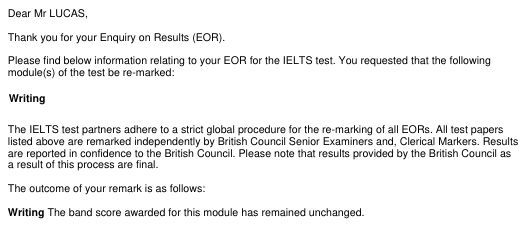

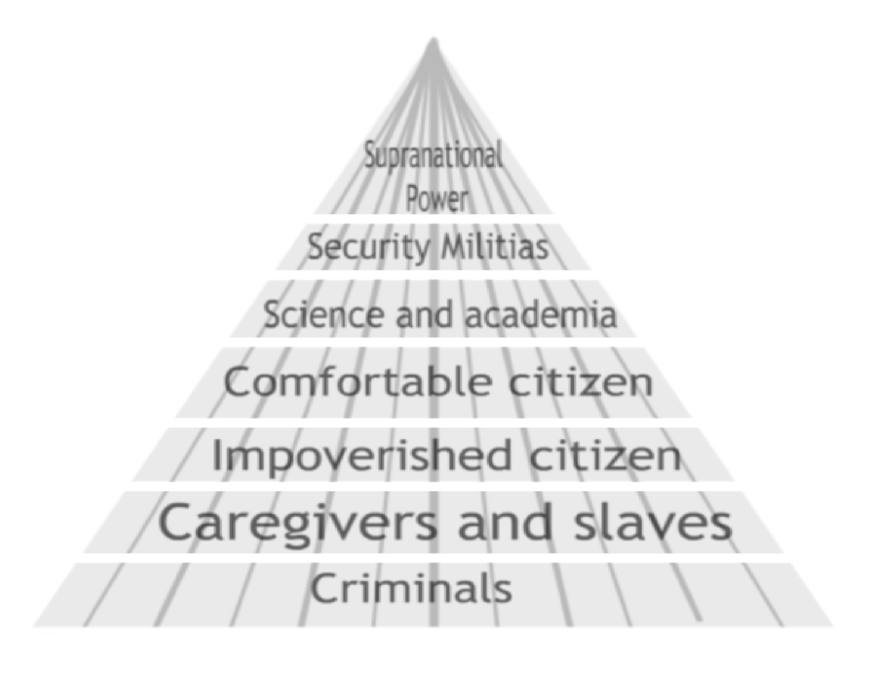






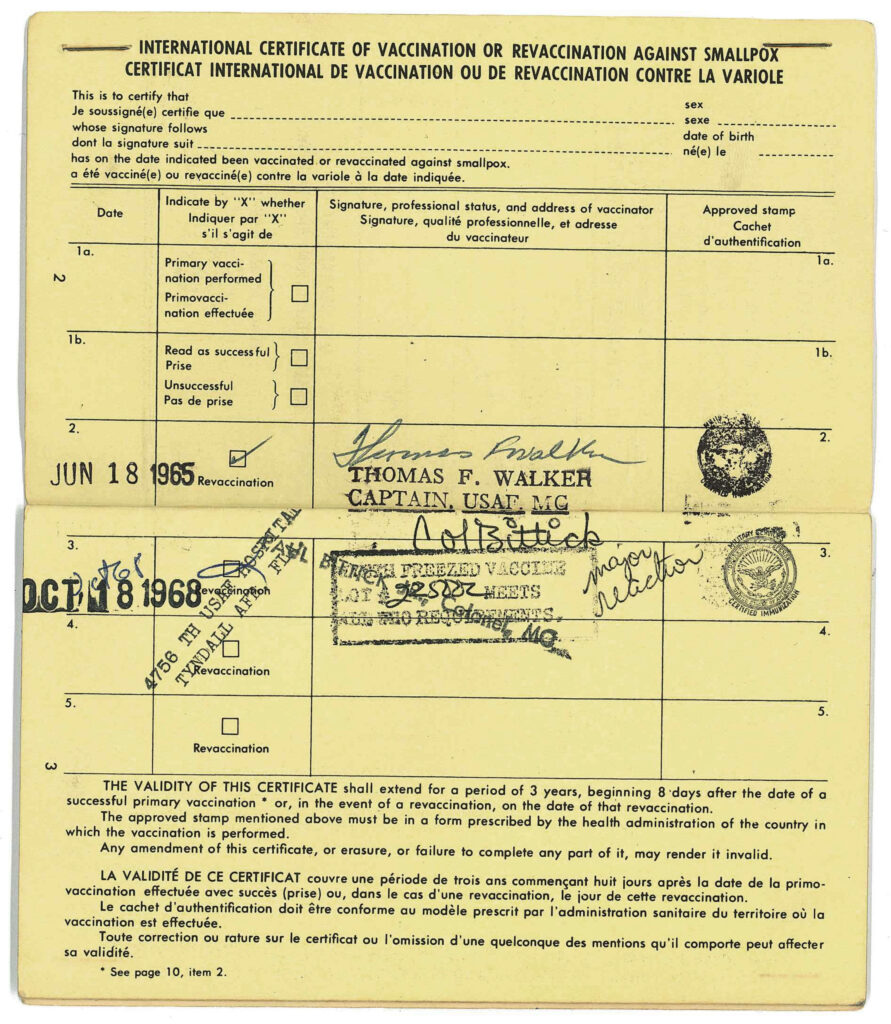
















 Twitter:

Join the conversation