On August 3, I woke to see on my smartphone a text from David Shedd, a retired career intelligence officer who started at the CIA as an intern decades ago and climbed the ranks to senior management, even meeting with Obama face to face in 2008 to discuss continuing the agency’s torture program. Why is a lifelong spy who also headed the Defense Intelligence Agency messaging me at five in the morning? He’s as spooky as anybody in international espionage: he was on the transition team of organized crime-linked Donald Trump, he’s on faculty at Patrick Henry University — a Creationist school requiring all students and staff to attest that the Bible is their deity’s inerrant word — and who knows what else. And now he’s in my texts.
Back to back in 2018, I wrote one article, for Buffalo’s Daily Public, and contributed to the writing of another, at Boing Boing, regarding video footage Shedd ordered censored that year. So that’s why I’m on his radar generally. But all that was more than four years ago. Why ping me now?
First, some background to contextualize his odd message.
The Backstory
Left to right on the whistleblowing panel: Heather Marsh, moderator Laali Vadlamani, David Shedd, Ewen MacAskill
On February 27, 2018, the Oxford Union held, then censored at Shedd’s demand, a three-person panel on the very topic of whistleblowing. Here in the United States we don’t hear much about this debating society, but in the United Kingdom the Oxford Union is a huge deal: not only have Malcolm X, Winston Churchill, and additional historic figures spoken there, but over the years three of their student presidents have become U.K. prime ministers. A few months ago, one of the planet’s biggest newspapers offered the headline: How the Oxford Union created today’s ruling political class.
The controversial panel, held in the forum’s Goodman Library, consisted of philosopher and human rights activist Heather Marsh, longtime Guardian reporter Ewen MacAskill, and Shedd. Toward the end of the evening, the spy didn’t fare well in a back-and-forth with Marsh about torture and other subjects involving how hurting people in shadowy cages is bad actually, so with a politican’s pettiness, Shedd told the Union never to release the video recording. Marsh and her lawyers contend the Union is contractually obliged to upload the film as promised to youtube, which they’ve so far failed to do. The handful of photos they posted don’t count.
Marsh, Shedd debating during panel. Her friend is former Guantanamo Bay prisoner Omar Khadr.
A few months later, Marsh became a whistleblower herself, posting audio of her portion of the panel as well as a transcript. She wrote an accompanying analysis of the censorship, too, discussing how free speech for corporations, predators, and tyrants is shrilly upheld but the words of women and other marginalized people against the powerful are regularly shut down. When the Oxford Union bills itself as the “world’s most prestigious debating society” and the “last bastion of free speech” — then agrees to third party censorship of their own footage of a panel on whistleblowing — the society reveals its ultimate loyalty to the likes of Shedd making up the protection racket that today’s governance amounts to, where the arch-abusers run wild, occasionally promising security and belonging to the gullible who surrender their self and become obedient.
Learning of Marsh defeating Shedd, and Shedd’s subsequent censorship demand, I decided to cover the story and bought phone numbers for the his homes so I could ask him for comment. Through public records sites, personally identifiable information of just about anyone in the United States, king or streetsweeper, is available online legally in exchange for lucre. I politely called the Shedd-associated numbers, which did not include the one he texted me from. His wife — I think that’s who answered — came to the phone, but didn’t put him on the line. “Stop with the harassing phone calls!” she said, though I’d been well mannered, and though her husband had been a senior manager at a notorious worldwide purveyor of waterboarding, stress positions, sleep deprivation — you know, harassing people, to say the least.
Marsh, Shedd debating during panel. Read more about ICE.
Politely seeking comment is harassment? They clearly have an outsize sense of persecution. I simply wanted to ask him straightforward questions such as Mr Shedd, should I describe you in my article as petulant? Or do you prefer petty? How about sore loser? Anyway, my calls to his homes were the only contact I’ve ever had with Clan Shedd, and since I didn’t get ahold of the man himself, I’d never had contact with him until his weird SMS. It’s a routine thing: journalist writing article requests comment; doesn’t hear back. But more than four years later, a sudden text?
To finish up the backstory, note that while the Oxford Union student newspaper mentioned the controversy in 2018, and so did the World Socialist Web Site that same year (one; two; three; four), nobody else — besides me (with my in-depth reporting), Marsh, and social media supporters — has uttered a peep. Even Ewen MacAskill, the third panelist, has said nothing from his perch on good terms with the highly influential Guardian newspaper. Likely that’s because in the aftermath of the censorship, the Oxford Union gave MacAskill a paid lecture series to talk to audiences about, you guessed it, whistleblowing. You see, experts on whistleblowing don’t talk about censorship they know of. They keep quiet like good puppies awaiting treats. War is peace. Freedom is slavery. Ignorance is strength.
Now fast-forward to this summer, what triggered Shedd to contact me out of the blue.
Why now?
In the time frame of Shedd’s message, two things were occuring that might have prompted him to send me his strange little note.
One: Unbeknownst to me until late August, the Oxford Union in July asked Marsh to give a solo talk, something she wrote about today on her Patreon in a public post. She asked if they’d post the panel video — with Shedd blurred and muted if necessary, something they’ve done before when an individual didn’t want her performance published. In response, the Union ghosted Marsh. Presumably the debating society, following up on her question, asked Shedd if he’d change his mind, and the hierarch must have said No. And had nothing better to do than text a freelance journalist deceptively — petty and petulant and a sore loser — worrying about how all this is going to reflect on his legacy. Silverbacks like Shedd love legacy: parades, presidental libraries, pyramids. Retired and aging, he must fear the facts around February 27, 2018 will correctly tarnish his status in history. Books and articles are routinely published that trumpet Shedd (and separately, the Oxford Union), so he’s accustomed to accolades, not dissent.
Subterfuge Shedd losing debate
The other: On an ongoing basis I have for years submitted pieces to mainstream and alternative media sites that either focus on, or include, Shedd’s censorship. Revelation of the facts in a large venue would greatly help impute guilt to Shedd in the public record so he can accordingly be shunned and feel shame, unless of course his emotional processing is atrophied, which it probably is from aiding in the command of the CIA. That organization has a long history of propagandistic manipulations of the media. See for instance Watergate reporter Carl Bernstein’s 1977 Rolling Stonedeep dive on the topic addressing cover-ups of how the United States news media “worked hand in glove with the Central Intelligence Agency.” All that said — to indicate the water I’m swimming in — I have no evidence, nor even intuition, that anything illicit has happened with my freelancing, but it’s within the realm of possibility somebody at such a venue told somebody who told somebody who told somebody a freelancer named Doug is still working on winning amplification for this story, and it reached Shedd’s ears.
With the 2018 and 2022 contexts established, let’s scrutinize the spy’s missive.
Scaredy cat’s sneak attack
Good morning Ed. This is David Shedd writing from our new place in south Florida in response to your wonderful update letter. Before writing more, I want to make sure that you get this note and the text works. Warm regards, David
The message arrived at 5:20 a.m. Pacific time (I’m in Seattle). Assuming he was actually in Florida, that would be 8:20 a.m. Eastern. Pretty early to shoot off a mysterious communiqué — maybe he was in a bad mood, rising on the wrong side of the bed after earlier listening to the Oxford Union ask his permission to publish the video. Since he apparently controls them now and apparently told them No way.
I have no idea who Ed is, if anyone. In December 2020, Shedd authored an op-ed titled “Edward Snowden Should Not Get A Pardon Under Any Circumstances,” so I don’t think Shedd means him.
Shedd on the debate panel he lost
As stated above, I’d never before seen this (703) 408-2506 number, but it’s a northeastern Virginia area code where the CIA is located some ten miles from D.C. And my trusty public records services confirmed it belongs to David R. Shedd. Now I have a convenient number to call him at in case I need to request comments again. And so do you.
Regarding Shedd obtaining my phone number, maybe he paid for public records too, maybe he successfully stored my digits for over four years and put in the effort to move them to his (703) 408-2506 device, or maybe, as I documented the Austin-based private spy firm Stratfor assisting with in an unrelated but similar matter, he called a friend with access to surveillance databases and got it that way, saved himself a few bucks. He spearheaded the 2008 revisions to Executive Order 12333, which outlines when and how federal intelligence agencies may spy, so I’m sure he knows multiple ways to grab someone’s digits.
Here’s the big question. Why the deception gambit? The message asks the recipient to respond to confirm the connection is good. Why not just address me as Douglas and say … what exactly? Stop talking about me getting whopped in that debate?
Surely after more than four years, it was no mere pocket-dial or oopsident. If you’ve spent time reading leaked cables between government agents and the like, you know they pick words carefully and stamp security classifications on their papers and all that jazz. Somebody in the spy-versus-spy, backstabber-versus-backstabber world of meetings in the White House and the intelligence agencies is probably going to take his communications pretty seriously especially in light of Marsh concurrently asking the Oxford Union to release the recording.
To understand this better, let’s turn to the spy glossary created by that Austin firm Stratfor, sometimes called a “shadow CIA,” staffed with former military, former intelligence agency spooks, and an assistant to corporations in defending against activists. They define disinformation in part as “A plausible story designed to confuse the other side or to create an uncomfortable political situation.” Pinging the system means in part “Emitting information that is designed to be intercepted by the other side. Usual purpose: figure out their response patterns. Other uses, confusing the other side.” In short, subterfuge is a way of life for these people, including propaganda and manipulation of media like freelance journalists. They’re not serving the public honestly; they’re serving the shareholders and themselves; so why expect a message from a straight shooter?
My guess is Shedd, too timid to use his own name, was trying to bait me into responding, and/or stress me out: I’m watching. CIA is watching. But if you ask them for comment, they’ll just say I must have dialed the wrong number. Hahaha!
Since vanishingly few have ever published about the whistleblowing panel censorship, you have to wonder who else besides the Oxford Union Shedd is intimidating. He’s not stopping me.
David Shedd keeps losing
Such childish antics are among the activities of egregious human rights-violating hierarchs — when they’re not losing debates. Because on their side, they don’t have the truth. He prefers propaganda and fears the facts.
If Shedd’s goal was to scare me, he failed. Fragile Shedd lost again. Whatever the CIA (or Stratfor) may say, protection rackets for the highest bidders, as Marsh pointed out on the panel, aren’t security. As she said, “security is strong involved and supportive communities networked with other communities.” When I moved to Seattle in 2016, I began participating with local chapters of the Hearing Voices Network and Food Not Bombs. These egalitarian movements — and more associations with genuine activists — have afforded me close friends who, unlike many among the civilian/loyalist population, understand my work and show up to support me regularly or when something spooky happens like Shedd’s text. Protective, interlocking horizontal networks turned Shedd’s grenade into a grape bouncing off me harmlessly.
I think, somehow, one day, the whistleblowing video will be released. And then Shedd will have an opportunity to realize he’s not entitled to exceptional treatment. It’s not just his lifelong subterfuge that he tried to deploy on me. I think he’s also trying to fool himself. The longer the footage stays secret, the more easily he — and the public — can follow the head-in-sand, pro-impunity bipartisan philosophy of “look forward, not back” to avoid facing the truths Marsh (and others) have brought forward about our real legacy of torture, governance protection rackets, and so many more injustices. And the more petty and petulant Shedd’s sore loser legacy becomes.
Note (added 31 August 2022): Two philosophically minded Greek physicians, Aretaeus of Cappadocia, who lived around the second century AD, and Hippocrates of Kos, aka the Father of Medicine, who lived in the fourth and fifth centuries BCE, would have made stronger examples of severe misogyny in ancient thinkers— read here to see why —but the philosophers I discuss below, Thales and Hippo of Samos, are revealing too.
Protest at US Supreme Court today after ruling
Today the United States Supreme Court overturned Roe v. Wade, giving states the green light to criminalize abortion. Half the fifty states are now expected to do so. This is an authoritarian assertion of control over women’s bodies; it is forced childbirth for those pregnant.
Some 2600 years ago, the progenitors of Western philosophy walked around ancient Greece conversing with each other, their followers, and the military leaders who grew up with them as tutors. (Anaxagoras taught Pericles; Aristotle taught Alexander the Great.)
The received view sees these men, and their conversations, as the starting point of Western philosophy. The ivory tower, the think tanks, the intelligentsia all starts with them.
Even Supreme Court decisions, the justices’ clerks pouring through tomes in the library, are built on this intellectual edifice that rests on ancient Greek philosophers.
The ancient thinkers kicked off Western philosophy with masculinist bias. For those not familiar with the word masculinism, consider it the opposite of feminism. In The Creation of Me, Them and Us, contemporary philosopher Heather Marsh defines masculinist theory as “based on research that only includes men or is presented from an exclusively male point of view or which sets the experience of men as the normative standard.”
Read W.T. Jones’ five-volume A History of Western Philosophy, covering thousands of years, and you will see not a single woman is included in all those pages. That’s masculinist theory for you. The tomes discuss battle and blood and sweat, but nearly nothing about caregiving and reproduction.
When the foundations of the intelligentsia were being built in ancient Greece, how did masculinist theory arise? After all, women have been heard more and more lately through #TimesUp, #MeToo, and #OpDeathEaters; today’s ruling is a slap in the face, trying to turn the volume down on women and the topics often associated with them.
Thales: All is what?
Drawing of Thales by Ernst Wallis based on a posthumous bust that was itself guesswork; note the heroic appearance given to the ancient philosopher
W.T. Jones and others present Thales as the father of Western philosophy. In the sixth century BCE, he lived on the Mediterranean shores of what is now Turkey.
If you look at standard resources such as the Internet Encyclopedia of Philosophy’s entry on him (provided by the University of Tennessee at Martin), you will learn the most important idea of Thales was that all is water.
His metaphysical theory — all is water — is classified as material monism. Material meaning he didn’t say all is something nebulous such as energy, but all is something definitively material, water. As for monism, that means all is just one thing. Unlike, say, Empedocles, another philosopher of the era, who reduced existence to four different things he called “roots,” Thales credited water alone with being the universe’s fundamental stuff.
In her highly readable book Thales of Miletus, philosophy professor Patricia F. O’Grady explains what all is water actually means. Thales envisaged water as a cyclical, pervasive medium. Cyclical like the water cycle: puddles evaporate into clouds which rain; the rain solidifies into mud and maybe rock that eventually liquefies. Pervasive as in water existing everywhere as a kind of backdrop from which familiar objects (trees, sand, etc.) emerge and back into which they dissipate as they move and change. Thales is awarded historical importance for his theory partly because it is held to represent the beginnings of looking at the world scientifically: attributing happenings to the natural substance of water rather than supernatural divinities.
That may be the complete story of Thales’ idea.
However, it is a speculative reading, but Thales may have meant his water to have semen-like qualities. This is not something explicit I have come across in readings on Thales, but a passage by the famous ancient philosopher Aristotle suggests it to me. (Thales left no primary source writings, so we depend on other philosophers, particularly Aristotle, to learn his views.)
Conjecturing how Thales arrived at his watery theory, Aristotle suggests Thales may have observed that “the semina of all things have a moist nature, whereas water is the first principle of the nature of moist things” (983 b27).
The “semina of all things have a moist nature” is a pretty evocative phrase: it says all things include semina, or seeds — seeds in a broader sense than just sperm — and that these seeds are moist. He then says water is the first (fundamental) thing, when it comes to moist items, which apparently include everything since all things have moist semina.
It also seems to me Aristotle, or Aristotle’s Thales, is trying to associate the two — the water and the moist semina.
Not so much a “I proved he certainly meant this” and instead a psychological reading, as in: Gee, what do you think these guys are really talking about here with all this stuff about moist generative seeds?
He may have just meant botanical seeds, or Aristotle may be suggesting that an observant Thales saw, ubiquitous, moistness and seeds — even sperm, which is watery. Maybe the metaphysical water of Thales was intended to be understood as sperm or more plausibly sperm-like, with motive and generative powers, as Thales imbued it.
I could be flat-out wrong. Thales’s word for water, ὕδωρ, does not mean semen anywhere in ancient Greek. But I think the Aristotle passage is pliable enough for us to consider that Thales might have connoted, not “all is semen,” but “all is water, which is a lot like semen.”
Aristotle’s hypothetical Thales going on about semina, and seeds (of some sort) somehow being relevant to his foundational water, suggests the founder of Western philosophy may have been arbitrarily prioritizing men, a way of making men’s seminal fluid close to the foundational stuff of reality. After all, why could it not have been vaginal arousal fluid or amniotic fluid? If Thales was giving his foundational water qualities of semen, that would mean other, non-semen things fall in approval by comparison. A woman risking childbirth, a dangerous feat, would not be of foundational importance, if what’s close to the most important thing (water) is semen rather than her fluids. And if so, that is the historical origins of today’s Western intelligentsia: masculinist bias.
(I should note there are probably other ancient thinkers with views about sperm that I am simply unaware of. I just happen to have recently studied Thales and Hippo of Samos.)
Hippo of Samos:Listen up, men produce the soul
Ancient Greek vase showing physician bloodletting a patient
Roughly a century after Thales, in the fifth century BCE, the philosopher and physician Hippo of Samos said something similarly prioritizing semen in his explanation of the universe. He is conventionally described as coming from the island of Samos, but in fact he may have come from any number of places in the ancient world.
The theologian Hippolytus from a few centuries later records in his book Refutation of All Heresies the otherwise unavailable words of Hippo of Samos: “semen […] manifests itself to us […] from moisture […] it is from this [i.e. the seed] that, [Hippo] says, the soul is produced.”
In other words, Hippo believed the soul derives from semen. Moist semen, if you want the details. The soul is not the entire universe, but of course the soul is rather important.
If we agree it is semen, and nothing else, from which the soul is derived, then we might look down on other substances. What about vaginal arousal fluid or amniotic fluid? These are not soul-producers, according to Hippo of Samos, but we nevertheless know their importance in reproduction. They are left out of soul-production by Hippo of Samos because of masculinist bias: he’s established an exclusively male point of view, setting the experience of only men as the normative standard. He’s arbitrarily left out vaginal arousal fluid and amniotic fluid (and other things) to focus exclusively on semen.
Again, these ancient thinkers are those held by the ivory tower to be their system’s origins. It’s a commonplace that an undergraduate philosophy degree is good preparation for law school, with philosophy majors besting other majors in LSAT scores. Learning that everything is semen or that nothing but semen has a role in producing the soul sends a clear message as to whose voices are to be heard: men’s. Moving from that in the classroom to law school to clerking for the Supreme Court … well, you get the idea.
There are probably other ancients besides Thales and Hippo of Samos who have outlined masculinist systems. In The Creation of Me, Them and Us, Marsh writes the opinion that women are “subjugated by nature” is “an opinion philosophers and scientists have pontificated about for centuries with long treatises on passive eggs and active sperm.” It seems injustices need justification; we give way too much honor to philosophers justifying the unjustifiable.
The eye of biology
A single man can inseminate many, many women. But if you want humanity to survive, you wouldn’t want your species to consist of a single woman. She might die in childbirth (which is more dangerous an activity than often realized) and at the very least she will have to dedicate massive amounts of time and energy to pregnancy and presumably caring for a completely dependent infant across years. So, multiple women are needed, whereas just one man can get the evolutionary ejaculatory job done. Therefore we have a glut of inseminators: too many men. But humanity has to make sure to have enough women. Ergo, women are of higher survival value to the species than men. This argument appears to me rigorously true.
From unheard to heard
When men do not hear women, they pay a price.
I have spent many hours in coffeeshops sitting with some male friend discussing Western philosophers. What about the ancient philosopher Anaximenes, a material monist who said all is air? Stroking our chins, wondering whether we’re made entirely of water or entirely of air, seems a silly question isolated people on thrones would talk to each other about if they are exempted from salt-of-the-Earth efforts such as domestic cleaning, childbirth, taking care of houseplants, etc.
Old, small pot on the left; new, larger pot on the right. The reverse spider plant is named The Enterplant after Star Trek’s Enterprise spaceships
Of course, intelligentsia paints a lot of prestige onto philosophers — think of elaborate printed editions for the complete works of WhicheverAncientopholes — and I haven’t had too much success convincing my guy friends it’s all a bunch of hype. There’s a kind of machismo of the intellect, I’ve read more Empedocles than you, which to many men is worth more than successfully repotting a houseplant for the first time (as I did today!) or planning a hike with a friend and her dog.
The masculinist intelligentsia has spent millenia downplaying basic activities of life, activities frequently associated with women. Look at billionaire celebrity Elon Musk, promising Mars without ever once discussing who will provide the caregiving on his spaceships. He is speaking of a masculinist space fantasy, like those old Arthur C. Clarke science fiction novels with familyless protagonists who fly around the universe and save it singlehandedly without ever needing to do laundry or cook a meal. Maybe those who say laundry and cooking are irrelevant are often those who have someone else to do it for them.
Too many of my male acquaintances who look up to the right-wing machismos, the Jordan Petersons, the berating ex-military youtube coaches, are the very same guys I know who are simultaneously in financial desperation, abusing opioids, and at risk of (or already committed) suicide.
It may seem dramatic, but it really is a battle between life and death. In her essay “The Carrier Bag Theory of Fiction,” science fiction writer Ursula K. Le Guin explores her lack of interest in the warfare superiority stories told by the conventional sources, and her preference for stories about, say, gathering food with children:
(“What Freud mistook for her lack of civilization is woman’s lack of loyalty to civilization,” Lillian Smith observed.) The society, the civilization they were talking about, these theoreticians, was evidently theirs; they owned it, they liked it; they were human, fully human, bashing, sticking, thrusting, killing. Wanting to be human too, I sought for evidence that I was; but if that’s what it took, to make a weapon and kill with it, then evidently I was either extremely defective as a human being, or not human at all.
That’s right, they said. What you are is a woman. Possibly not human at all, certainly defective. Now be quiet while we go on telling the Story of the Ascent of Man the Hero.
Go on, say I, wandering off towards the wild oats, with Oo Oo in the sling and little Oom carrying the basket. You just go on telling how the mammoth fell on Boob and how Cain fell on Abel and how the bomb fell on Nagasaki and how the burning jelly fell on the villagers and how the missiles will fall on the Evil Empire, and all the other steps in the Ascent of Man.
Men can also feel disgust at bombings and delight at gathering food. We men need to stop telling ourselves the stories of masculinism and ask women what they know. Maybe someday men can provide traditional male virtues too, such as strength, in ways that are not harmful but helpful.
Resistance
Mexico’s movement for abortion rights took several years of effort, but it paid off
Even amid the masculinist forces of hierarchy and war, to flourish in life requires growing, increasing one’s autonomy; the Supreme Court pushed women down today, taking autonomy away, but things don’t have to end here. The stakes are higher than many just seeing the headlines might know. For example, the National Right to Life Committee is calling for criminalizing aiding people in finding abortions. (Planned Parenthood and others currently continue to assist pregnant individuals in just that manner.)
In Mexico, the abortion rights movement took several years to build the capacity for marches, occupations, and even strikes, and it paid off: in September 2021, the Mexican Supreme Court decriminalized abortion across the country. Those in the United States may be unfamiliar with having a prosocial, genuine nation around oneself, and may be unfamiliar with the kind of work put in by such a people to win political gains. From Sofia Tafich’s excellent article “Abortion Rights Movement Grows in Mexico“:
on March 9, 22 million women participated in a milestone national strike, #UnDíaSinNosotras (A Day Without Us), to visualize a Mexico without women. No women in the streets, no women at work, no women in school, no women shopping, no women on social media. The business group Concanaco Servytur estimated that if every woman took part, their absence could cost the economy up to 1.37 billion dollars. Women who couldn’t participate for personal reasons were invited to wear purple as a sign of solidarity.
Instead of accepting defeat, individuals in the United States can join forces and escalate their efforts, perhaps starting with some of these tactics. Responding to the Supreme Court, Putingate whistleblower Reality Winner tweeted today:
— Reality Winner – Reez Nuts (@reazlepuff) June 24, 2022
Dethrone and turn the volume down on wrongly hallowed masculinist philosophers and academics — don’t be fooled by their weighty editions in fancy fonts — and turn the volume up on people putting in the work for great justice.
Note: A letter to my late father written early this morning. I don’t have a current mailing address for him, so I’m putting the message here.
Me playing Little League baseball catcher in 1992
Dear Dad,
You promised me that when you turned 50 we would go on a ski trip to South America. But on 1 March 1994, when you were 49, you shot yourself to death.
For the past 28 years, I have remembered that promise several times a year. It enters my mind of its own accord and leaves likewise. A loop that seems impossible to close.
I didn’t even like skiing. In fact, I hated it. It terrified me when you would send me, an ungainly child, down black diamonds and double black diamonds.
But I was a boy who wanted to be with his father.
For the past 28 years, when I have thought of you and your self-destruction, it has been with excuses for you. With one exception. In 2019 a nurse told me to write a letter to you with my nondominant hand. I did and was surprised at how angry it was. I put the letter away. The excuses for you continued.
This week I went to a West Seattle park that has a small baseball diamond. A dad brought his middle school son and his son’s friend there to play. I watched what a good father this man was. He listened to what both boys said with his undivided attention. He handicapped himself to level the playing field. He gave both boys enthusiastic encouragement.
You weren’t there.
You had a responsibility as a father to teach me how to take care of myself. How to provide myself with self-generated safety. But you abdicated that responsibility, broke that parental promise.
I more or less know how to generate safety for myself, how to work as a substitute teacher for Seattle Public Schools and cook for myself and much more; however, I just can’t seem to make myself believe it’s efficacious enough. There has been no father to confirm my adulthood by showing pride in my skillful successes. That results in a constant low-level anxiety that I soothe with constant intense thought, talk, and writing.
It is correct to say that there are many angles from which to view your death, including the role of your own family and wider social forces. But Mom is getting much older now and one of my nephews killed himself earlier this year. After decades, I’m done, for now, with giving you the “to some extent” and “on the other hand” treatment.
After three or so years of just talking about doing it, I’ve finally hung up inspirational quotes and photos around my home. It is far past time to no longer be on your side, apologizing for you to onlookers.
Note: This post inspired by #OpDeathEaters, about which you can learn more here, including bona fides from the ivory tower.
Students from Pathfinder K-8 walked out today to protest gun violence against kids (source)
Lifelong learning is something we should aspire to; adults often act as if they’ve got it all figured enough, but as the latest school shooting shows, we have a lot of work to do, particularly in confronting head on the awful things that happen to kids — and addressing them.
From regular learning to social emotional learning
Imagine elementary schoolkids practicing reading on a classroom computer. They get points upon finishing a book, and then their next book is at a higher reading level: it’s more challenging to decipher, with bigger words, longer sentences, and new punctuation marks. In contrast, adults often assume they’re finally on thrones forever, at a permanent level of knowledge and fit to judge anything that passes before them. If a difficult-to-read text comes their way, these lordly adults presume the writing must be poor and put the book down. How could it possibly be that their reading level still could improve further?
The same is true of ear-training. Little schoolkids are sometimes taught to recognize the sound of a major chord versus a minor chord. They’re awed to observe their auditory perception of music improving, much like someone with bad vision putting on a pair of corrective eyeglasses for the first time. But when adulthood arrives, well, exhausted wage-slaves are frequently boxed into making the choice they’ve watched their friends make. Kill curiosity! For sadly, it’s practical to do so, sort of. Don’t think too hard. Don’t care too much. The genius of a bop improvisation or a book using open rather than closed punctuation remains perpetually out of reach.
People need support and freedom to develop, even as adults. The oligarchs (name names!) undermining and blocking our growth as individuals and societies must be arrested, and their antisocial systems replaced with prosocial ones. The obstacles to doing so are far less about technical solutions and far more about, to use an education industry buzzword, our social emotional learning.
A look at two stories of trauma can convey a sense of the social emotional development required to free up lifelong education in safety for all. Education, knowledge: they lead to everything else, including gun-free campuses.
Seeking a savior from out the skies to answer his pleas
One of the key reasons we don’t rescue kids from danger is our habit of looking for messiah/savior politicians or celebrities who will do it for us while we munch popcorn and discuss the relative merits of their televised appearances.
I’m not immune to this. My close friends know that in the past year, I’ve gained a slightly embarrassing taste for autobiographies by the heavy metal musicians I idolized in my teens. It’s like Real Housewives, but dudetastic.
Last month, when no one was looking, I finished up Confess by Rob Halford, mostly known as the longtime singer and lyricist of Judas Priest, a very influential heavy metal band that began in Birmingham in 1969.
A common theme in Halford’s lyrics is messiahs, saviors who will arrive, likely on a flying motorcycle, to fix things for us (so we can keep doomscrolling). Consider these excerpts from his lyrics to “Exciter,” the opening track from Priest’s 1978 album Stained Class:
Stand by for Exciter Salvation is his task […] Who is this man? Where is he from? Exciter comes for everyone […] He’s come to make you snap out Of the state that you are in Look around and make you See the light again […] Only when there’s order Will his job be done.
[Exciter sounds like a strongman politician imposing “order.” right?]
Once offensive, it’s now harmless dad metal. So it goes
Similarly, an excerpt from Halford’s lyrics to 1990’s falsetto freakshow “Painkiller”, the title track off Judas Priest’s 1990 album by the same name.
Planet’s devastated Mankind’s on its knees A savior comes from out the skies In answer to their pleas […] Flying high on rapture […] With mankind resurrected Forever to survive Returns from Armageddon to the skies He is the Painkiller This is the Painkiller Wings of steel Painkiller Deadly wheels Painkiller
If we look beneath the shiny songs with shiny saviors, we can ask: Why might this theme be so prevalent for Halford? I’m not certain, of course, and things in life are rarely so direct, but I think it’s interesting how his childhood trauma fits with the lyrics of multiple classic Judas Priest songs.
Confession time
On pages 24-26 of the hardback edition of his autobiography, Halford discusses how, at approximately 14 years old, a pedosadist at an after-school program raped (“fondling”) him and some of his friends.
I was scrabbling around for information [about sex in general and homosexuality in specific], and getting nowhere. It was all a mystery to me. And what happened at my latest after-school activity didn’t help.
A small local metalworks began an informal scheme where kids could go down one day a week after school and learn to use equipment like lathes, vices, and drills. I suppose the thinking was that they would get ’em young and we might be interested enough to take up apprenticeships with them a year or two later.
Even though I had no interest in working in the factories—as I’ve said, the idea horrified me—I still went along with a couple of my schoolmates. It was only for an hour after school and, well, it was something to do. It beat being bored at home.
Unfortunately, we quickly found that the bloke giving the mini-workshops had a very different take on the idea of “get ’em young.” He wasn’t interested in teaching us the finer points of engineering. He just wanted to cop a feel.
The mustachioed, middle-aged bloke would show us how to make garden trowels or pokers for the fire, then hover over us. He’d give me a piece of metal marked with a pen line, tell me to file down to the line, and, as I filed away, he’d put his hand on my bum or down the front of my trousers.
The guy would walk round the workshop, from boy to boy, feeling us all up, and nobody said a thing. He never said a single word to us while he was doing it. It happened every week … and yet me and my mates never even discussed it. It was like it never happened.
I was struggling to come to terms with being gay, and while what he was doing didn’t arouse me—it seemed dirty, and sordid, and nasty—I just thought, Well, OK, is this what gay guys do? Is this how it works? It even made me wonder: Does this stuff go on in all the factories, then?
The weird thing was that we kept going, for six weeks at least. Fuck knows why. I just didn’t know what else to do. Then one week, after a particularly intrusive fondling, I mentioned to one of my mates on the way home that I was bit bored of the sessions.
“Me too!” he said, with what sounded a lot like relief. “Shall we stop going, then?”
“Ar,” I said [in Black Country accent].
And that was it. We never mentioned it again.
On pages 31-32, Halford describes in some detail how, when he started working in theater as a teen, he was raped by an older pedo coworker, and how, during that crime, Halford similarly experienced a child’s horrifying inability to understand, let alone stop, what was happening.
Did you notice how child Halford and his child friends never mentioned the fondling aloud to each other, and they stopped going to the pedo after-school program by discussing quitting it in an only indirect manner?
Dissociation is one term used for this. I’ve heard dissociation defined loosely as tuning out in the face of overwhelming emotion. Maybe he sang for decades of saviors because he hadn’t been able to process what had happened to him.
What happened to Halford (either time) is sort of what’s happening to adults today, except grown-ups have more choice and responsibility. Scary information about coronavirus—hey, did you hear about this company Center for Covid Control that’s a scam?—swirls around, and like the schoolkids at the metalworks after-school program, too many adults have trouble processing what is happening, and won’t even admit that much, Gollumizing about how their pain is unique and special rather than quite similar to that of everyone else in their town. After lengthy struggles, people might slip away from an abusive organization here or there, but the idea of going on radical campaigns against all of them is left to fantasy novels and video games. It’s just too much to face, or so adults typically claim.
Clearly nobody showed up to help young Rob Halford in the two very sad and infuriating situations. Not to idolize him or anything, but in the end he had to help himself, of course with assistance from his allies, by coming out as gay publicly in 1998, by releasing his autobiography in 2020, and so on. Don’t we all wish this could happen faster and we could work together? So we don’t have to look back, 15 years from now, saying I wish I’d known in 2022 that…
A look at another story, this one of non-trauma, shows how all can turn out very different.
Saving a Child’s Life
In January, the documentary filmmaker and former therapist Daniel Mackler posted one of his musing videos to his youtube channel, where he’s quite profilic. I find Mackler’s videos thought-provoking, although I disagree with some of his perspective, and I really appreciate the ones where he shares anecdotes and observations from his travels.
In the video, titled “Saving a Child’s Life — A First In My Life” and about 12 minutes in length, Mackler talks about saving a drowning kid out of a hot spring in the country of Georgia. Not only that, but he talks about the aftermath, how the child handled this trauma. I’ll transcribe the relevant parts below.
I was in the capital of Georgia, in Tbilisi, which from what I learned in Georgian means something along the lines of ‘hot water’ because there are hot springs […]
And one day, while I was sitting in [a hot spring], a father brought a little boy, and they were at the edge of the pool, and the boy was maybe four years old — three, four years old was what he looked like to me, but I was sitting there without my glasses, so I couldn’t see very well […]
I was just in my own world, I wasn’t really there to interact […] At some point, I was sitting out of the water, with just my legs in the pool, and I looked and I noticed that the little boy was there dipping his legs in the pool in the other side, and the father was gone. And I thought to myself, That’s not a very good idea […] but there were other people around […] I just thought, Okay, people are watching […]
So I just went back into my world; I was sitting […] eyes closed […] a little bit in lala land, it’s really hot […]
I look up and the little boy’s not there. […] He’s in the middle of the pool of water, under the water, but I’m really blind [with my eyeglasses off …] He’s waving his arms […] like he’s kind of swimming, but not swimming very well […] Nobody’s doing anything […] I’m seeing this kid move his arms and […] suddenly I realized, this kid’s not swimming [… I’d wondered] is this kid holding his breath and playing? […] Something in me, this little voice in my head says: Get this kid out of this water. So I jump in […] I’m like, Dude get in the water and get this kid out!
I picked him up and I realized: he wasn’t breathing. And he was pretty much limp. And I noticed his belly was all distended, with [hot] water in it […]
I brought him to the edge of the pool […] I turn him around, and I did the Heimlich Maneuver on his belly, not hard enough to really hurt him, but just to expel the water and it actually expelled the water first from his lungs […] and he coughed out all this water […] oh my God, he was drowning […] I turned him around to make sure he’s okay, and suddenly he vomited all over me […] he vomited all this yellow vomit all over me and into the pool of hot water […] he vomited some more […] suddenly the place erupted: people were coming over, and this guy who was in the pool also, he came over, and he’s talking to me in Georgian and Russian, and I’m trying to talk to this kid […] the kid kind of clings on to me like a little animal […] And I’m just holding him […]
The father was in the bathroom; he went to the bathroom and left his kid alone. Not a good idea! His kid could have died. So I handed the kid to him and the father took him and went off with the kid […] And then this guy who was sitting there in the pool started talking to me. And it turned out that the guy spoke Spanish. And I speak Spanish. He was a Georgian fellow, but he spoke Spanish. Well, he told me in Spanish, he goes, You just saved this kid’s life. And I realized it was true. […]
I suddenly just started crying. It was just overwhelming […]
The father came back [… he was from Moldova …] thanking me in Russian and shaking my hand.
And then the little boy came and he wanted to shake my hand. And I was worried that he’d be traumatized. As it turned out, I stayed in the hot water and just tried to skim the vomit off the water. And I stayed there.
The little boy did come back and he wanted to get in the water. And I talked about it with the guy who spoke Spanish. And I was like, This little kid, do you think he’ll be traumatized? And [the Spanish-speaking guy] wasn’t sure!
But what happened is the little boy did come in the water. But he kept taking water in his mouth *spit* and spitting it out, like in an arc! So I started doing it with him! And the two of us were doing it sort of as a game. And I realized, he was replicating his trauma. […] This little boy had no fear of me. And he wanted to bump me, he’d fist-bump me like a million times, he wanted to splash water on me. And I realized, he really loved me! And the thing is, I felt this! I loved him! It was like, you know, I don’t have children, but I do have children: and he was one of my children. It was so dear. […] If I hadn’t jumped in the water and saved him, if it had gone on for another minute, for all I know, he would have died […]
By playing with me in the water, by spitting the water out, and me spitting it with him, and us having fun, it was like he got back on the horse, as it were. And he made it his own experience. Where he made a new friend out of it! And I really don’t think he was traumatized by it! And that was so important to me; that was something that was very meaningful to me, because it’s a horrible and sad thing when a child learns very early on to become afraid of something that’s beautiful like the water. […] I don’t think this boy felt that, because he came [back] in the water. And he also learned that adults who are not his family, complete strangers, can be beautiful people, they can save your life.
Lessons from the two stories
When Halford sings of messiahs and saviours, it makes sense: for children. A kid of three or four doesn’t understand how to assess the risk of entering a hot spring. A kid of three or four doesn’t understand how to assess their swimming skills. A young teen troubled about sex does not know what is going to occur his first day at the theater or entering an after-school program. In Halford’s case, he was raped.
Who does understand these matters? Adults. Sometimes, though, out of our comfort zones, any of us can be surprisingly uninformed about what we will find. We might not know, right off the bat, know how we will find the inner strength to do the right thing. And there will always be for each of us consequences grave. Comfort zones cannot remain lifelong excuses. That’s because adults can, at least to a little degree, and then increasingly, self-direct, self-educate, and improve, especially when collaborating.
In most places people are taught collaboration means something extroverted and flashy: to succeed means to have a bestselling, raunchy book called Confess published. But it can also be “just” saving a drowning kid in a hot spring (and, as Mackler goes on to say in the video, making a new friend from the experience: the Spanish-speaker invited him back to his family’s house in a different part of Georgia, and Mackler took him up on the invitation a few weeks later, went and lived with the Spanish-speaker’s family for a while.) Or it can be both.
Since United States public education is on the ropes, possibly even disappearing, we really will have to teach each other, which, even though it’s the hard way, is in the long run, better. Confronting and openly discussing childhood trauma of ourselves and others is a good way to start.
Note: In 2022, I’m once again writing 52 blog entries, posted every Sunday. Today: Post 2 of 52. Flash fiction by me will soon arrive weekly too, by February, with these regular nonfiction blog postscontinuing.
Note: The photos in this entry are from this seven-tweet threadby NPR journalist Libby Denkmann who attended a student-led protest outside Seattle Public Schools headquarters on Thursday.
For one or more days this past workweek, according to data firm Burbio (accessed today), 6,003 public schools in the United States have been actively disrupted, defined as campuses not offering in-person learning. The country has around 130,000 public K-12s, but the Burbio statistic is still shocking. On Thursday, Seattle Public Schools said: “Due to very high absentee and quarantine rates, several Seattle Public Schools have either transitioned to remote learning or have been closed.”
On Friday, the Washington Postreported on the sickout movement: schoolkids countrywide, sparked by the increasing number of illnesses and deaths from the current Omicron mutation wave, are refusing to attend compulsory face-to-face classes unless adequate COVID safeguards are put into place. Many educators are sicking out as well; other industries are seeing their own sickouts, the term there referring to employees not showing up due to the ‘rona (current infection or risk thereof) and perhaps with r/antiwork-style resisistance thrown in too.
The Omicron wave has surrounded my own life. Here in the Emerald City, I’ve watched a friend suffer his own breakthrough illness from the latest variant in the last month; I’ve seen multiple businesses temporarily closing due to staffing shortages. (And during Spring 2021, a brave student in a math class I taught informed us she’d contracted a pre-Omicron version of novel coronavirus, a scary ordeal for her and the rest of us.)
U.S. authorities have provided the public with mere bargain bin quasi-solutions
“Do you guys care more about our well being? Or our test scores?”
Many of the public health measures in the United States are only half functional, akin to leftovers from the discount pile. School district spokespeople talk up ventilation and (years back) handwashing, but anyone who has entered campuses in poor neighborhoods knows about unopenable windows and empty soap dispensers. Meanwhile, The Center for Covid Control—accused profiteers running pop-up testing sites from coast to coast—has been reported, by health departments and city governments and consumers and journalists and others, to the Washington state attorney general, the attorney general in Florida, and attorney generals elsewhere for fraud, notably sending people invented test results while they were still waiting in line to produce samples. And the three vaccines offered in the U.S. offer only some protection (I received three doses of Pfizer), decreasingly so as mutations erupt continually, as anyone who has endured, or received a text message about, a breakthrough case realizes.
For USians, better public health measures found around the world feel shrouded in a fog of war. The multiple other vaccines planetwide, let alone the laws/pacts controlling who can ship them internationally, aren’t on the radar of the average stressed person trying to get by. Even the University of Washington nanoparticle vaccine (study in Cell), which should be making headlines regularly and prompting inquisitive auditing from investigative journalists, is largely unknown. That one, presently in stage three trials, aims to inoculate against SARS, MERS, SARS-CoV-2, and every other present or future coronavirus (and variant thereof) in the beta segment. (Orthocoronavirinae, to which the popular term ‘coronavirus’ typically refers, has 45 virii divided into four genera, one of which, and nowadays the most dangerous to humans of which, is the beta segment containing 14 of the 45 species.)
Staff for Seattle Public Schools superintendent Dr. Brent Jones stopped media from questioning him
Who has the time and freedom to educate themselves on the COVID trainwreck such that herd mentality may be minimized? Very few have hours and hours available to conduct independent (and thus usually unpaid or underpaid) autodidactic research on an unfamiliar issue to an understanding approaching intermediate level or above. That leaves many to affiliate with a meme-simplified, speculation-heavy side such as right or left, vaxx or antivaxx, probably partly in hopes of cliquing up with others for sheer survival rather than mastering a topic in accordance with impersonal logic. There are professionals who in theory are paid to address crises expertly, but they succumb to untruth too.
Such politicization is evidenced, for example, in the additional information, released Tuesday, about emails involving chief White House medical advisor Dr Anthony Fauci. You might recall that Fauci emails from the initial months of the pandemic were published in June 2021 in redacted form by Buzzfeed News (3234 pages of emails) and the Washington Post (866 pages of emails). Republicans on the federal House Committee on Oversight and Reform saw unredacted versions made available in camera by the Department of Health and Human Services and, while they couldn’t make copies, they were allowed to take notes on them, a task I assume done by skilled transcriber underlings.
The additional information newly revealed includes records related to a February 1, 2020 phone conference between Dr Fauci, his then-boss Francis Collins, and several of the world’s leading virologists.
It shows some of the world-renowned scientists believed, at the time, that it was likely the novel coronavirus was human-altered and that it may somehow have escaped a Wuhan lab. Virologist Robert Garry, for instance, wrote that he was unconvinced the pathogen evolved naturally. Evolutionary biologist Andrew Rambau wrote: “The biggest hinderance at the moment (for this and more generally) is the lack of data and information […] I think the only people with sufficient information or access to samples to address it would be the teams working in Wuhan.” There are no certain answers yet; just sufficient smoke to point to a serious fire of some sort.
Definitely the National Institutes of Health officials wanted an ass-pull cover-up for political reasons. Garry told The Intercept that after the call, he was advised not to “mention a lab origin as that will just add fuel to the conspiracists.” Dutch virologist Ron Fouchier wrote in one email: “further debate would do unnecessary harm to science in general and science in China in particular” (see also; see especially). Fauci’s boss Francis Collins advised the virologists to shut down talk of unnatural evolution or a lab leak—to protect “international harmony.”
By March 2020, Garry had changed his mind based on scientific evidence, coming to believe instead that SARS-CoV-2 likely developed without human intervention, but the recently exposed NIH officials’ insistences a month prior don’t exactly inspire trust in the intelligentsia, now do they.
Tuesday’s news connects with ongoing reporting from Vanity Fair about NYC-based EcoHealth Alliance and its pre-pandemic interest in working with Wuhan virologists (all institutions in China are mixed up with the Chinese Communist Party). In October 2021, the magazine reported the National Institutes of Health belatedly acknowledged EcoHealth Alliance enhanced the capacity of coronavirus to infect humans to such an extreme that the nonprofit had violated its own grant conditions by not reporting the danger they’d created. The same Vanity Fair piece discusses the grant proposal EcoHealth Alliance sent to the Pentagon’s research arm DARPA in 2018, recommending a partnership with the Wuhan Institute of Virology to construct SARS-related coronaviruses into which they would insert “human-specific cleavage sites” as a way to “evaluate growth potential” of the pathogens.
The connection between those reports and last week’s? Virologists on the February 2020 conference call expressed startlement at an unusual segment of the novel coronavirus’s genetic code: a furin cleavage site that makes the virus more infectious by allowing it to efficiently enter human cells. A month later, in Nature Medicine, a peer-reviewed journal that’s part of the prestigious Nature Publishing Group portfolio, scientists on the conference call, including Garry, published “The Proximal Origin of SARS-CoV-2,” in which they downgrade February 2020 suspicions that novel coronavirus was likely to have been lab-altered to possible but unlikely. I’m told that, in oversimplified terms, such virology research essentially entails comparing protein shapes of various virii strains to one another statistically to assess likelihoods of how precisely the pathogens may have changed or evolved over time.
Pointing to the Proximal Origin study, Garry corresponded with The Intercept about its report on this past workweek’s newest puzzle piece to say the March 2020 study reflects his revised view. In any case, the latest information involving the February 2020 conference call is a story of top virologists told to downplay their then-suspicions not for scientific reasons, but for political ones. That’s obviously bad for scientific integrity. And the March 2020 paper doesn’t rule out that SARS-CoV-2 could have been created through artifical techniques.
Shall we speculate about the origins of COVID-19? One possibility is that scientists pursued making coronavirii far more dangerous for whatever good or bad reasons, a practice controversial among scientists, and then SARS-CoV-2, perhaps enhanced in its danger to humans, slipped out of a Wuhan lab accidentally. Then maybe people associated with the research panicked, because money was being misused, and anything they might try to say to explain themselves would just sound nefarious. There’s no smoking gun; at minimum, it’s yet another example of opaque or mostly opaque systems impairing science and public health.
And we can all imagine less charitable possibilities.
Now what?
Weakening scientific integrity (requested cover-up) and radical science (transparency, intellectual independence) predictably worsens large-scale public health problems. That’s very evident in the somewhat separate but still COVID19-related case of Department of Health and Human Services whistleblower Dr Rick Bright, if you study the formal complaint he filed in May 2020 (exhibits; some exhibits missing).
Politicizing science, as NIH brass sought in February 2020, certainly doesn’t help reveal the origins of the pandemic, one of the more recent iterations of the powerful’s longstanding and ongoing genocide of global humanity, particularly those disabled or dispossessed. Authoritarians don’t need to put soldiers on the streets (though they do that as well) to terrify or decrease populations when they can just ignore their public health needs from yachts.
Thankfully, the pandemic’s origins don’t need to be completely understood for clear-eyed students to fight for their right not to inhale this thing, something of extra importance for people blocked from nutritious food, aerobic exercise, or other boons strengthening respiratory and immune systems, as well as blocked from free quality masks, infection testing that actually works, and the legal entitlement (for those with disabilities, which is ultimately everyone if you think about it) to free appropriate public education that should include transparency for all of us to learn exactly what the powerful—both government and corporate actors—are doing to us.
Some but not enough educators have been supportive of the schoolkids, but will more adults support them as is their grown-up responsibility, and if so, how? I’ll write about that next weekend.
After all, why should children have to be the ones to do this?
Note: In 2022, I’m once again writing 52 blog entries, posted every Sunday. Flash fiction by me will soon arrive weekly too, by February, after I finish figuring out the tech details of where precisely on this website I might place itso you can conveniently leave comments.
Trash can lid got wrecked; image sent, as explained below, to the Something Corporation
In that post, I explained techniques to save money, such as cold-calling companies and asking for a discount. That, in my own experience, can yield exasperated annoyance from customer service staff at one extreme, and at the opposite extreme, third-off coupon codes good forever. Another great idea is to join (or start!) your local Food Not Bombs chapter, where long-term volunteers frequently have brilliant ideas for grabbing free grub, among them identifying which restaurants share surplus food, locating which dumpsters offer scavenging divers the best cuisine, and more.
Today I’d like to tell you about this one time I got something for zero bucks from a corporation. Except it ain’t fancy feast.
Time for the trash can
Mainlain that meme truth
The Internet of Things is the market segment for turning everyday consumer objects into online gizmos. If you fondly sing the praises of CRT televisions—no, not Critical Race Theory TVs, I mean Cathode Ray Tube ones—because they work unfailingly for half a century, and you correctly cast insults down upon giant flat-screen televisions that cost thousands but don’t work since they suddenly require downloading a patch from Samsung or some other corp, then you too know the pitfalls of the Internet of Shit.
Gizmo-ification of everything even extends to trash cans. Of course, finding a trash can for your kitchen at the thrift store is the best! But at embarrassing moments, I’ve dragged myself into awful domestic big box stores such as Bed Bath and Beyond (beyond … where?). Those shameful moments when I’ve been absolutely convinced I immediately need a towel of a certain color or some stupidity like that. Besides punishing shoppers with in-store video advertising so loud you can hear it clear across the building, a nightmare retailer of this type will showcase for you the very latest in consumerist horror.
Yes, I mean today’s trash cans, the Internet-equipped ones you can talk to.
Let’s get something straight. Such technology can be important for people with disabilities and for other situations that may not leap to the minds of the privileged. I’m all for such innovations and would love to hear about them in the comments. Lemme know if I’m wrong, but I somehow doubt the trash cans at Bed Bath and Beyoncé are the ideal options for such scenarios. And yeah, maybe a USian with a disability—like, say, infatuation—is driven to go to Bed Bath and BayBey because the legit need to impress a love interest has somehow got twisted into the anxiety-laden, bonkers idea that it all hinges on having that towel of the exact right color. We’ve all been there, mutatis mutandis, right?
Gotta save money betterez now, because reasons, i.e., ladies first
That said, before discussing saving money on a trash can, let’s by all means inspect a newfangled, expensive trash can that talks.
Oh Goddess, please (don’t ever) trash me
Witness, if you will, the 58 liter, dual compartment, voice-activated, motion-capable, stainless steel—excuse me, make that brushed stainless steel—trash can a California-based company lovingly crafted just for o̶u̶r̶ ̶w̶a̶l̶l̶e̶t̶s̶ us.
“This is the evolution of 20 years of science and technology, bringing you the best of the best” in trash
Our world-class instance of talking trash above has on Amazon 5 stars after more than 10,000 reviews, which, the way things are headed, I may be adding to soon enough myself as a drunk but giggling ghostwriter. For the uninitiated, that’s writing fake reviews for dough, Mac. Gotta fund unpaid/underpaid human rights investigative journalism and random musings somehow, for example, with donations from people who have $200 trash cans and a sense of humor.
A three-star Amazon review by the mononymous, TP-astute Paul sounds, to be conciliatory, fair and balanced:
I love everything but the fact that you can not turn off the voice sensor. I play music in the background all day. The can open when it hears something close to “open can” in the music. And it happens alot. It will wear out real fast. There is no switch to turn off the voice sensor and keep the motion senor on. I can not find a microphone hole to plug it with tissue paper as a hack to fix the issue.
The $200 price tag does not include tax, nor your crucial rush-speed shipping and handling. And don’t forget the recurring expense of the bespoke liners—admittedly featuring swank double-seam construction and an even swankier perfect fit, to be sure—for which you’re gonna need to liquidate your entire cryptocoin portfolio.
By the way, California’s top-tier trash can company is called: simplehuman.
News you can use: today’s token-saving tip
As the renowned economist Snoop Dogg suggested implicitly in his scholarly, NSFW treatise Drop It Like It’s Hot—ticking my tongue like said rapper when that song came out in 2004, I practiced its beat on my shower wall for cumulative hours and hours, not knowing myself to someday become an aspiring if reluctant ace businessman aiming for European citizenship plus frugal trash cans—a scientific study (reportedly) shows handling cash is like snorting coke, and probably only partly because many dolla dolla bills are themselves contaminated with traces of cocaine. Illustrating unSnoopy high diction, the scientists of the latter link write dryly:
The contamination may occur through direct contact during drug trafficking with the same people handling the cocaine powder and the money; or rolling up the banknote for sniffing the powder through the tube formed.
[link added, obviously]
If subject matter experts reading this know the (likely news-savvy) researchers in question are lacking in scientific integrity and are as desperate for clicks as DJ Snoopadelic (and freelance bloggers), then please, correct me in the comments. Hiphop historians, I admit, I’m curious about The Snoopzilla’s personal trash can …
Anyhow, another way to ask corporations for freebies is to amuse them.
For example, this past week, akin to fond memories of Julia Child a century ago corresponding with her faraway penpal via slow snailmail across the Atlantic, I corresponded, via chat with support agent, with some outsource contractor as bored as I was. I needed to know if my auto insurance provided roadside assistance at no or minimal additional charge. I forget how it started, but she typed a lol; I sent a <3. I asked if her roadside assistance coverage included all of North America. “Yes, it covers the United States,” she said, PR-perfect. Hmm, I said, how about Mars? “That would cost millions to get your car up there,” she said, “and it would cost us millions to get our tow truck up there, so no :)” How about Jupiter, I inquired. She and I left it there—sorry, no wedding to invite you to—out of my perhaps overly cautious reticence, not wanting to creep out a random employee accidentally, though in my experience, internet customer service agents appreciate this sort of thing as an escape from raging Karens. And, to the point, they’ll not infrequently become far more helpful and suddenly drop, as though its temperature has been heated, a discount code. (Don’t try this, incels; learn how to take a shower first, then baby-steps from there.)
Sup, I gotta question too, ’bout those docs you dropped, Doc
In terms of trash cans, not too long after the latest pandemic hit Seattle, I tripped over my trash can lid—which was on the floor from, essentially, pandemic stress incl. my unpaid/underpaid researching of the good DHHS whistleblower Dr Rick Bright (where the rest of those exhibits, Doc? Beware testing the patience of this otherwise supportive-of-you indie journalist, not to mention bewaring the possibility of a forthcoming appeal, after which comes a lawsuit in a summons carriage, where my pro bono lawyers at?). The lid broke. I despaired of buying or even finding another such flawless trash can. That beaut was dirt cheap, yet supplied all my funky kitchen needs. It didn’t have WiFi. And best of all, I didn’t need to talk to it, and it didn’t try to talk to me.
Thus, hoping for a free lid, I typed a politely obsequious message into the website of the Something Corporation, clicked submit, and promptly forgot about it. I don’t want to name the corp, lest I be accused of doing product placement—this is my real name byline website, where I aim to give you the truth, not my ghostwriting hack jobs, which hey, if you want those, email me at dal@riseup.net, yo! And let’s face it, I don’t think the Something Corporation wants to be on my blog, either, where I recommend dat research shizzle showing which corporate actors are connected to which others, etc. As for simplehuman, fuck them.
Here’s a slightly redacted version of what I sent on an April 2020 Friday:
Exact image for the exacting, sent by me to the Something Corporation
Dear [Something Corp],
About 2-3 months ago, I bought my black [Something] trash can #xxxx at a small hardware store here in Seattle. I can try to find the receipt if you need it. I’ve been really excited about your product because not only did I not want a flimsy cheap trash can, I also didn’t want some ridiculously expensive voice-activated trash can either. I do not need to talk with my trash can! Yours is Just Right and fits my kitchen perfectly.
However, yesterday, due to covid19 stress my kitchen was a mess with random stuff lying all over the tiled floor, including the black lid to your #xxxx black trash can (don’t ask). Then I, while cooking, tripped and fell, like something out of slapstick, sending olive oil flying everywhere and my foot landing on your trash can lid, breaking it, including cracking pieces and everything. Sad face!
So I’m wondering if you could sell me a black #xxxx trash can lid independently of the lower section of the trash can. I took 3 quick pictures and stuck them on my website to show you what I mean, see links below. 1 of 3 shows the #xxxx black lower trash can body, which is still standing completely fine where it should be, just now sadly bereft of a lid. 2 of 3 shows the broken lid on the floor, complete with olive oil goo all over it. 3 of 3 shows the impressive damage I managed to do while falling, breaking off that black piece of the lid.
1 of 3: [deleted]
2 of 3: [deleted]
3 of 3: [deleted]
[…]
Soooooooooo how much would you charge me for just the black lid thingie to go on top of my black #xxxx, to replace my broken lid? How would payment be processed and so on?
Thank you very much,
Imagine my grateful surprise when on the following Monday I received a response. Behind the 1950s corporate mask of a writing style, you can almost see the employee (not a contractor, judging by his email addy) laughing, or at least smiling, as he beneficently elects to exercise mercy on behalf of the nonhuman Something Corporation:
Dear Douglas,
Thank you for contacting [Something Corporation].
Thank you for the images. As a general practice, [Something Corporation] does not provide replacement parts as products are manufactured and are sold as a unit.
However, as a onetime courtesy I have arranged to pull one lid from production. Delivery might take up to 14 days via UPS ground […]
Sincerely,
First M. Last Something Corporation E-mail: FLast@Something.com
“pull one lid from production” … I’ve always wondered what happened to the rest of that particular trash can, its lid perhaps raised away on a forklift-plus-pincer by a burly Joycean laborer and, like a commodity out of Das Kapital Volume 2, transported and transported, ultimately to land on the doorstep of my wizardly Seattle high castle. Maybe it’s at, if not Snoop Dogg’s, then First M. Last’s house.
In trash canclusion
Radicals made bitter sometimes assume corporations and their outsource contractor firms to be full of evil enemies. They are! But also, they’re full of bored people who might hate their CEOs more than radicals do. And besides, people aren’t static blocks. They might be an evil enemy in the morning, a bored boss by the afternoon, and a true hero in the night. And so on. Ideological purity doesn’t generate prosocial change—it’s at best just a stopgap measure that makes our social/emotional pain and uncomfortable questions go away … for the short run.
And besides, you really wanna save money on trash cans? Use old grocery bags. Even the smartest of us are sometimes stupid and in need of the genius obvious.
Note: In 2021, I wrote a new blog post every weekend or so. I skipped Week 51 for various reasons. But here’s the final entry for this year, number 52!
In 2021, I blogged for an entire year consistently for the first time in my life. I wrote a new entry each and every weekend, pretty much. The effort totaled 42 posts.
This post describes what I learned from the experience as well as my writing plans for 2022. Then in closing, a list of all 42 posts from 2021 with their titles and hyperlinks; the ones I recommend most are in bold.
What I learned from a year of blogging
Year 2021 completed
Before 2021, I wrote blog posts often, but I was either rusty (years back) or simply hadn’t yet managed to pull off a full year of nonfiction blogging (2020). That’s now changed with my completed year of blogging in 2021.
My blog entries this year have usually been about matters of social significance … except in many ways, I wrote them for me, primarily to improve my blogging skills and consistency. Putting together an entry remains a lot of underpaid/unpaid work—often a single post, when all is said and done, eats up an entire weekend—but it no longer feels particularly overwhelming. Nowadays I’m confident I can bust out such a blog post easily. Might feel sleep deprived and a bit out-of-body after making phone calls and staring at PDF details for ten hours straight, but such mild nuisances are at this point mere matters of routine.
Regarding writing craft. Readers have told me they don’t have much time to read my posts, what with crumbs to clean and kids to feed. They’ve asked for shorter posts. And I have been shifting toward providing shorter entries. Plus, I usually now include reader-friendly subheads and try to stick to a single point or two, or at least mark where my train of thought diverts to a side topic. That wasn’t the case when I began in January, but now it thankfully is.
Another big lesson I learned was how important the under-the-hood elements of a blog are. For example, this year, for the first time in half a decade, I updated the blogroll (list of links on the right side). To oversimplify, online writers shifted from the blogosphere to social media half a decade or more ago, but now we seem to be returning, at least a very little, to individual URLs, so it was time to spiff mine up. I added, across my website (here and here specifically), images of publicity I’ve received over a decade-plus from various venues. I scrutinized my whole website to upgrade hyperlinks from HTTP to HTTPS. I improved the leave-a-comment area to hopefully make it more enticing for readers to use. For instance, it now optionally sends you a notification email after I approve your comment following its initial hold in the moderation queue. All that stuff took not exactly gigantic, but still significant, amounts of time.
Many of my posts include original research, the result of excitedly engaging sheer curiosity. While writing about the Belarusian dictatorship declaring opposition leader Sviatlana Tsikhanouskaya a terrorist, to take one example of dozens, I found the Belarusian KGB’s online Excel spreadsheet (since taken down) where you could see her designation on Sheet 1, Row 730. It’s my hope that readers might share my curiosity and click through to see such a crazy spreadsheet, and thereby become more invested in themselves (their own curiosity, passion, etc.) as well as in the Belarusian pro-democracy resistance that involves the United States too. Hopefully such research—even if some items, like the online KGB spreadsheet, aren’t exactly revelations—makes my posts unique in a field where journalistic competitors often offer nothing more than speculation. I remembered what I already knew from a decade ago, my days of pouring through Stratfor emails, that it takes quite a lot of time to conduct such research and fit it into a post, especially since researchers never know ahead of time for sure what they will or won’t find.
I don’t like the dumbed-down approach, even if it would generate dolla dolla bill. Yet I’m having to slowly drag myself in that direction, kicking and screaming, since this blog made, in 2021, less than $20 USD in donations. Bear with me for a moment; I’m not going to complain, just point out some facts that impact whether this blog will continue, not in 2022, but in 2023. Too often, audiences haven’t deigned to consider any story wherein they themselves might need to change, including when it comes to forking over cash; since in the blog relationship, audiences monopolize the power of the purse, that leaves us with a story about how independent content creators should alone bear the burden of changing. Have you tried Patreon? Are you on Medium? I’ve heard people are having success on Substack, why aren’t you there yet? When I do comply with those requests, audiences typically move the goalposts, mentioning yet another site they expect me to add a profile to instead of opening their wallets. In the final analysis, just as audiences are slow to change from banal complicity with oligarchs to amazing resistance against them, so they’re likewise slow to warm up to the idea that they could deliver donations instead of unsolicited advice about how I might could milk donations out of some other third party. Well, authors have been complaining, er not complaining, about this for only hundreds of years. And besides, blogging, even unpaid, is a much better way to spend time than being forced to work in a mine or not having any freedom of expression. It’s just, when I leave the United States for the Netherlands in mid- to late 2022 if they approve my business plan (under the Dutch-American Friendship Treaty), there’s every reason to think I just might have to quit blogging in 2023 due to lack of income from it.
I’ve ghostwritten oodles of content marketing pieces in the past decade and I’ve recently begun a highly regarded content marketing certification course—but I hope not to revamp my blog in that style. Thankfully, even putting out verbose, meandering posts routinely led to or at least likely facilitated additional opportunities for me this year, including giving a talk at a college hacker club and a quite sizable, important venue commissioning a nonfiction essay from me for 2022. And I’m not much for another option sometimes seen: the telegraphic, truncated style of listing seemingly endless human rights violations. I hope some readers find the variety of subject matters, quotations, history, literature, etc., threaded together in my posts a valuable and somewhat unique sales point rather than an erroneous lack of message discipline.
Readers separate blogs from diaries, as, uh, Castlevania reminds us …
Speaking of impact, that was the best thing about this year of blogging. In a handful of instances, individuals contacted me, perhaps people I hadn’t heard from in a long time, asking for more information about something in one of my posts. Because of a June entry, for example, pharmaceutical consumers who’d never heard of how and why to use compounding pharmacies until my writings are now getting their pills in custom dosages, whereas they were previously limited to the manufacturers’ increments due to fog of war, lack of knowledge. When I wrote about the Belarusian KGB’s murder of Andrei Zeltser, an employee of a Pennsylvania-based IT firm who like that company opposed the Lukashenko dictatorship, I wrote about how his wife Maryja Uspenskaya, the sole witness to his shoot-out death—about which the regime created propaganda footage that spread around the world—was placed in a psychiatric hospital, with, worryingly, no info available in English about her whereabouts or well-being for more than a month. I mentioned how Uspenskaya had been left off lists of Belarusian political prisoners. The day after my entry, the opposition leader herself tweeted to recognize Maryja Uspenskaya as a political prisoner. (Progress on her case still needs to be made.) The point of these examples is not to humble-brag but to show that, instead of centering a career/life on complying with corporate publishers, DIY bloggers can have impact, so why not try it yourself? And definitely, much thanks to everyone who’s been reading this blog, commenting, contacting me, sharing the entries, critiquing, donating, and more. That’s what separates a blog from a diary.
My writing plans for 2022
There’s more I need to do for my website on the technical side of things. In terms of design, readers understandably want something formatted well on their phones and tablets. I could make improvements there. I need to install and regularly use better analytics so I can observe factually what’s happening with reader traffic, not just imagine things in my needy head. Probably I should provide chatty video with screensharing graphics of open records requests and the like; in 2021, I did start a youtube channel.
In 2022, I’ll aim to post on the same day—maybe even at the same time—every week, as that consistency would probably increase audience loyalty and prevent audience attrition. For the United States, Sunday mornings would likely be best, meaning I could write and line everything up on Saturday, then do a final revision in the morning after a night of sleeping on the prose, then click publish and shoot off the teed-up social media posts.
In 2021, I took off several weekends—ten, to be exact—but some additional weeks I took halfway off, so to speak, putting up short “placeholder” posts instead of leaving the blog blank of new entries. In 2022, I want to hit all 52 Sundays, even if some entries will be very short. That consistency will let you know you can tune in at the same bat time, same bat channel, every single weekend.
I’ll make my final decisions on these matters in the next workweek, but in short, douglaslucas.com/blog will continue more or less as is for 2022, just with the above changes in the pipeline. I’ll even keep the same Note: In 202x… intro, except modified for 2022!
My big news for 2022, however, is that I’ll start writing and self-publishing new flash fiction! That means each item will be 1000 words or less. My web hosting service told me DouglasLucas.com can have more than one WordPress blog installation. Pretty soon, you’ll be able to say hello and leave comments at a new subfolder of this site, probably douglaslucas.com/fiction/2022, which doesn’t exist just yet. At first—in January 2022 and perhaps in February 2022—I’ll simply make available two of my already completed “trunk” stories (old stories) that haven’t ever been published, self- or otherwise. I’ll get the new fiction blog configured and maybe write up some of my research into northeast Oregon and the year 2036, the setting of some of my forthcoming fiction. But the main focus will be new flash fiction pieces. They might or might not connect with my 2036 setting (still thinking that through).
The 2022 fiction blog will mainly be intended to do for my fiction-writing what my 2021 nonfiction blog did for my nonfiction-writing. Get me accustomed to quickly and consistently creating what one of my creative writer friends, Aelius Blythe, calls literary graffiti fiction. To that end, I’ll probably use plot formula, standard tropes, prefab characterizations (e.g., Star Trek characters as in fanfic), and so on. The 2022 fiction blog isn’t supposed to win any prizes; it’s supposed to be fun; it’s supposed to repair the rust on my fiction-writing gears. Though you can still comment, share, donate, etc. if you want! I’ll try to engage a visual artist(s) to sketch. Maybe each entry can have a single, quickly sketched image at the top.
And while the 2022 nonfiction blog (this one) will continue mostly in the same vein as in 2021, I hope to focus more on original investigative journalism work, although that might end up in other-published places since I have some sneaky biz ideas for commissions. Whether the original investigative journalism work is self-published here or other-published, some of my posts here, whatever the content, will remain defiantly noodly, philosophical, random, simply about the moments of our strangely global lives …
List of all 42 posts from 2021
Behold, listed below, all 42 of my 2021 blog posts. The 22 in bold are the entries I most recommend. And what’s this? Ahem, that’s my donation page! So that you and I and anyone else can continue enjoying this site without paywalls, without advertisements, without wrong walls ….
Note: In 2021, I’m writing a new blog post every weekend or so. This is entry 50 of 52.
On October 27, I gave an in-person talk to the University of Washington computer security club Batman’s Kitchen. The presentation was simultaneously virtual over Zoom. I obtained the video file back a bit, but was busy substitute-teaching at the local youth jail for three weeks; that assignment completed Friday, I’m today making the video available, right above!
The title of the talk on the first slide, Hacktivism meets journalism (or something like that), is a little misleading. Because of time constraints—I created the presentation in a hurry, within something like a 48-hour period—the majority of the material I provide is actually intellectual history as it applies to people, especially young activists, interested in computer science, including but not limited to those going into the field as a profession.
Some helpful details. The footage is under two hours and fifteen minutes (since hundreds of years of philosophical history can’t particularly be conveyed in a quick monosyllabic bumper sticker slogan). The Questions & Answers section begins at 1:48:12. Download the .MP4 file or the powerpoint if you like. I’ve added this event to both the in the media page and the front page of this website.
In related news, I created a youtube channel finally, where this Zoom footage may be found. If 100 people subscribe to my nascent youtube channel, where I’ll use words like nascent without apology, I can customize my youtube URL. So whatever you do, don’t hit that like button, and definitely don’t smash subscribe, for we here all believe in reverse psychology.
Next talk, I’ll not waste time with cutesy images of cats and Castlevania—older generations in the United States want those things, but thankfully Gen Z doesn’t need them, I observed—and hopefully cut the metacognitive authorial intrusions that permeate my speech. Minor flaws aside, I hope people learn something from the video! Share as thou wilt.
Even more #PardonRealityWinner progress
Again an Ursula K. Le Guin stamp!
Yesterday, I put into a USPS dropbox my snailmail letter to the federal Office of the Pardon Attorney, advocating for a pardon of Putingate whistleblower Reality Winner, whose story you can read about here (my article from her sentencing), here (my entries about her on this blog), or by following her mother Billie J. Winner-Davis on twitter.
Reality Winner and her whistleblowing to alert everyone regarding Russian military hackers executing, just days before the 2016 elections, cyberattacks against US voting infrastructure, remain of key importance.
Consider, for example, Friday’s Washington Post opinion piece authored by three retired Army generals expressing grave concern that, in the aftermath of the 2024 election, a politically divided US military will be vulnerable to foreign attacks and will see rogue units supporting a successful coup by Trump (or some other reactionary demagogue). “Not a single leader who inspired” the January 6 coup attempt “has been held to account,” they write correctly. While failing to address the country’s private spies and private militias such as those Blackwater members pardoned by Trump, the three retired generals urge convictions for the January 6 conspirators, mandatory civics reviews for Pentagon members (hey throw in some international law while at it!), and coup-based war games along with defensive intelligence work.
Without Air Force veteran Reality Winner, it’s quite possible—maybe even probable—that such a WaPo piece wouldn’t exist, since we’d be living in a universe where Trump would be perceived as a horrible but legitimate ongoing occupant of the White House, akin to how many viewed George W. Bush while he was in office (prior to that war criminal’s latest rehabilitation as an affable, Michelle Obama-hugging grampa).
(Side note: The opinion piece also states: “Imagine competing commanders in chief […] Biden giving orders, versus Trump […] issuing orders as the head of a shadow government.” Well, imagine as well the public heading yet another shadow government that, instead of issuing orders much, horizontally helps one another in everyday ways as we do during natural disasters, another example of regular government breaking down. Imagine that shadow-government-of-the-public recognizing its own power and expanding it. That would be genuine self-governance.)
Achieving a pardon for Reality Winner would send a strong signal domestically and internationally that the United States refuses Trump/Putin-style autocracy. The Office of the Pardon Attorney does give advice to the president regarding pardons in some cases (I don’t yet know the details of that). Plus, whatever intern opens the envelope might start an interesting water cooler discussion, you know? And such things matter.
I based the letter on the one I sent last week (PDF) to Joe Biden; I improved the text overall, too. If you want to use my letter as a basis for your letter to the Office of the Pardon Attorney, clicky-click for a PDF or clicky-click the below embed to read it. You can always share your own beseeching of the Office in the comments below or online elsewhere. Consider using the #PardonRealityWinner hashtag.
Remember, smugly explaining to each other that wisdom means defeatism is out, whereas taking specific, real life, step by step, existent, active-y action yourself to achieve huge prosocial goals is in. If you prefer to be out, well, then just psychology reverse. :)
Note: In 2021, I’m writing a new blog post every weekend or so. This is entry 49 of 52.I skipped Week 48 due to day job time commitments.
Reality Winner just after her release from FMC Carswell, with background of August 2020 pro-democracy mass protests in Belarus
When I was a teenager, one of my best friends and I would often go driving around in my car, wherein we’d discuss philosophy. We wondered aloud what our goals in life should be. This led to our silly word golzar from “goals are.” In the middle of the night, we’d point at the red lights of faraway radio towers—Golzarian outposts, you see, from the strange species of Golzarians who perhaps knew the answers to life’s mysteries—and try to drive to them in those days before GPS on smartphones. Once, we even saw strange glowing white lights in the distance, and drove, drove, drove till at three in the morning we found ourselves, laughing, on the doorstep of a Midlothian, Texas toxic cement plant.
Nowadays, as an adult in Seattle, my many goals are more clear, and maybe yours are too. On this blog I’ve previously covered both the pro-democracy movement in Belarus and the story of Putingate whistleblower Reality Winner. Those two situations provide two goals for anyone interested: freeing Belarus from the clutches of Europe’s last dictator Alexander Lukashenko and pushing the White House to pardon the Texas veteran and vegan who at a critical point in contemporary history provided hard evidence of Russian military hackers’ cyberattacks against US voting systems just days prior to the 2016 elections. In short, #PardonRealityWinner and #FreeBelarus.
Outcomes for the eastern European country, the young Texan idealist, and the United States as a whole are more intertwined than they might initially seem. Not to make too much of a Manichean, Cold War-esque binary, but today most BRICS states are headed up by autocrat strongmen, Brazil: Jair Bolsonaro; Russia: Vladimir Putin; India: Narenda Modi; China: Xi Jinping. The NATO countries including the United States have a lot to answer for, and if they cleaned house of their own war criminals, spies, and others acting with impunity, their credibility would correctly increase, but at least in many of these countries human rights are something you can openly fight for, usually (certainly not always) without suffering arrest, torture, etc. Reality Winner’s sacrifice as a convicted whistleblower provided key evidence about the autocracy of one of the BRICS countries, Russia’s Putin regime, working to bring Donald Trump and thus overt fascism to the White House.
Lukashenko and Putin squandering taxpayer money together on a multimillion-dollar yacht (Source)
Just as Putin pushes Trump in the United States, so Putin protects dictator Lukashenko in Belarus. Caught in the middle of the (oversimplified) binary in a possibly fragmenting Europe, Belarus now sees pro-democracy opposition leader Sviatlana Tsikhanouskaya seeking free and open elections for the country, elections in which, among other things, Belarusians would decide democratically on strengthening or weakening the ties between their country and the Russian government. But like the United States confronting Donald Trump and his quite likely return in November 2024, Belarus must throw off dictator Lukashenko first in order to achieve open democracy. Akin to internet packets and immunizable pandemics, superpredators and publics alike are presently all connected globally, and we must collaborate across the imposed borders—or else, worldwide overt fascism.
Supporting political prisoners who fight to achieve goals such as freeing Belarus from Lukashenko or exposing the Putin regime’s sabotage of the United States is crucial. They deserve it as individuals, and it shows others that if they similarly take heroic actions, there will still be support for them afterward if they’re arrested and punished. Belarusian or USian, these are all individuals who are being persecuted unjustly for their prosocial political deeds.
This post demonstrates the progress another person and I have made toward the two goals, partly in the hopes that our completed tasks may serve as a sort of model for anyone who also might like to work toward the same aims. Feel free to share your progress in the comment section or by email (dal@riseup.net), and I’ll include your efforts in my next progress entry on these topics.
#PardonRealityWinner: Rep. Filemon Vela, Rep. Pramila Jayapal, Office of the Pardon Attorney, White House
Last Sunday, Reality Winner on 60 Minutes
Last Sunday, December 5, 60 Minutes interviewed Reality Winner, bringing a surge of interest to her case. You can find the aired portion and the extra portions here. I highly recommend watching all of the 60 Minutes footage: the part that aired is under 14 minutes, and the bonus clips are around four to eight minutes each. With one awful Trump administration behind us and another possibly on its way, the whistleblower who most proved that emperor has no clothes and who received the worst prison sentence ever for a domestic leak to the news press in return, should get more support.
Reality Winner was demonized in court because she knew how to change her sim card for her phone. She had to, as she was on our plan and upgraded or replaced broken phones while stationed in different states in the military. Women aren't supposed to be independent.
Rep. Filemon Vela. The first thing I did this past workweek toward the goal of this whistleblower receiving a pardon was phone the DC office of Filemon Vela Jr., a Democratic Congressional representative in the federal House. Despite military and veterans groups contacting his office repeatedly, he’s refused to meet with Billie J. Winner-Davis, the whistleblower’s mother, who’s part of his constituency. So he must need additional calls, more carrots, and more sticks. Links to transparency/reporting about whom he depends upon (his dependencies, to use a Linux-y word) would aid the effort as well.
I want to remind everyone that even though I made repeated requests, my US Representative @FilemonVela@RepFilemonVela REFUSED TO MEET WITH ME. REFUSED!
Actually, @FilemonVela@RepFilemonVela is Democrat. His office had me fill out a formal request form, which I did & they ignored it. 2 Military & Veterans groups called his offices nonstop trying to get me an appt. Our country is broken when those who work for us ignore us.
When I called Representative Vela’s DC office as a freelance journalist mentioning the 60 Minutes interview and requesting a statement explaining why he won’t meet with Reality Winner’s mother Billie J. Winner-Davis, staff assistant Addison Sheppard, who answered, said “I will definitely let him know” about my question. I gave Sheppard my phone and email contact information and the deadline of end of business Friday December 17. “Awesome,” Sheppard said. “Thank you so much. I will definitely let the Congressman know.” While some may feel cynical, I am not easily defeated, so I’m looking forward to hearing Representative Vela’s statement.
Pretty much anyone can call Representative Vela in any capacity and push for him to explain himself and/or meet with Billie J. Winner-Davis. In fact, it only takes about five minutes to call Vela’s DC office! It might help you, as it helps me, to type out what to say in a text editor beforehand, and stare at it on a screen while holding the phone.
Rep. Pramila Jayapal. I also called US House Representative Pramila Jayapal, whose constituency I am in. Although I dialed her Seattle office during workday business hours, a recorded voice answered, saying “You have reached our voicemail. We are currently short staffed so please understand we may not get to all calls.” I’ve written before on my blog about the lights apparently turning off at the US federal government, such as at the State Department; Pramila Jayapal short of staff might be another piece of evidence indicating our politicians and their underlings are abandoning ship, though of course there are other possible explanations. I’ll call Jayapal’s office again this next workweek. Take a break from doomscrolling and maybe try it yourself, too. It’s fun, a politer and prosocial version of the prank calls many of us did as kids.
Office of the Pardon Attorney.
Photo of RFK Justice building in DC which holds the Office of the Pardon Attorney (Source)
This past workweek I contacted the Office of the Pardon Attorney at the federal Department of, uh, Justice. First, I emailed them at USPardon.Attorney@usdoj.gov. I kept the subject line vague—”Regarding pardon application”—in hopes they’d read it instead of ignore something like “Pardon Reality Winner Now Now Now Now Now!” as an irrelevant comment from an irrelevant commoner. But your mileage may vary, and in fact, I think it’s best if these bureaucrats are hit on all sides with all manner/variety of content styles. Having fun is important! The body of my HTML email said:
Dear Office of the Pardon Attorney,
I’m a Seattle-based freelance journalist who reported in-person from Putingate whistleblower Ms Reality Leigh Winner’s sentencing. 60 Minutes interviewed Ms Winner (Register Number: 22056-021; released 23 Nov 2021) last Sunday, as I hope your Office had a chance to see and discuss internally. I’m writing to recommend you facilitate President Biden’s needfully forthcoming signature on her pardon application! After all, a pardon for Ms Winner would send an enormous domestic and international signal that the United States does not endorse TrumPutin-style autocracy. In the interests of justice and open democracy, the United States Government can and should pardon Ms Winner not just for her, as she so greatly deserves, but also for itself and for the domestic and global publics.
Sincerely,
Douglas Lucas
I’m not sure “needfully forthcoming” means what I wanted it to mean, but I suppose we’ll find out! Below my name I added my phone number since that helps demonstrate I’m a real person and not a bot or, in this instance anyway, a ghostwriter.
The Office of the Pardon Attorney’s website says “The President always retains the plenary power granted to him by the Constitution to pardon or commute sentences at his sole discretion, with or without the advice of the Pardon Attorney and Department of Justice.” That means this office does give the US president advice on whom to pardon. I wonder what that advice generally consists of; a good question to ask their public affairs people or submit open records requests about, along with any and all files they have related to Reality Leigh Winner, even if at present they might deny such requests due to ongoing blah blah blah. Filing requests still proves public interest in her case, right?
I called the Office of the Pardon Attorney too, and since no human answered, I left a voicemail to the same effect as my email. If you’re in a hurry, press 4 to get connected to that leave a message at the tone prompt, or explore their phone tree yourself and tell everyone if you find anything interesting. Another option I’ve yet to do myself is snailmailing them: US Department of Justice / Office of the Pardon Attorney / 950 Pennsylvania Avenue – RFK Main Justice Building / Washington, DC 20530.
The White House. Finally, I contacted the White House! I called 202-456-1111, but the recording said they take comments only between 11 a.m. and 3 p.m. Eastern time, Tuesday through Thursday. More evidence of increasingly, nobody home at the US federal government? Anyway, I sent snailmail as well. Surely Joe Biden himself will be hurrying down to the mailbag in a week or two to pick up my envelope and have a read. Either that or an intern might learn something new and exciting that prompts action. From my letter, or, say, your letter to the White House!
Ursula K. Le Guin stamp and the adaptability to refrain from unhelpfully slashing my zeroes out of habit
Here’s my full letter:
In the letter, I mention showing related video in my social studies classes (as a substitute teacher currently in a weeks-long assignment at a youth jail):
A pardon for this whistleblower who before the judge took responsibility for her action would send a very strong signal domestically and internationally that the United States does not support Trump/Putin-style autocracy. You of course met with Vladimir Putin last Tuesday, so you understand the gravity of the global situation. I showed my social studies classes the Reuters footage of that meeting. Students said Putin looked fearless and you looked scared. I hope you will pardon Reality Leigh Winner so I can tell them otherwise.
#FreeBelarus: Mailing Maryja Uspenskaya, Akihiro Gaevsky-Khanada, and Sergei Tikhanovsky
On November 27, I blogged about my plans to write Belarusian political prisoners Sergei Tikhanovsky and Maryja Uspenskaya. I pointed out how for a month and a half, there had been no updates in English that I could find about the whereabouts and well-being of Maryja Uspenskaya, Andrei Zeltser’s widow who was the sole witness to his murder by the Belarusian KGB—the subject of Lukashenko regime propaganda footage that, as I researched, certain corporate media outlets republished in the United States uncritically while raising doubts about Andrei Zeltser’s (apparently US) citizenship, something that should have taken a corporate media reporter five minutes to confirm with a simple phone call. Maryja Uspenskaya (and presumably Andrei Zeltser) had been helping collect signatures for pro-democracy opposition leader Sviatlana Tsikhanouskaya’s challenge to Lukashenko’s faked 2020 presidential win. That activism seems to have been the cause of the attack on them by the Belarusian KGB, though there could be more to the story for sure. After the death of her husband, whose telegenic/demographic appearance should have ensured a huge news story in the United States especially given his employment with a (pro-opposition) Pennsylvania-based IT company, Maryja Uspenskaya was sent to a psychiatric hospital. The last English update on her had apparently been October 22. The day after I promoted my blog post on social media with the #StandWithBelarus and #FreeBelarus hashtags—I’d also noted Maryja Uspenskaya’s absence from lists of Belarusian political prisoners—the opposition leader herself tweeted that the psychiatric patient is (now) recognized as a political prisoner:
Maryia Uspenskaya is recognized as a political prisoner. She is the widow of Andrei Zeltser, who was shot dead during a KGB raid of their apartment. Maryia, as the only witness, was sent to a psychiatric hospital. As of today, there are 891 political prisoners in Belarus. pic.twitter.com/u3aul6Fa9v
Maryja Uspenskaya. So I wrote her! With another person providing some edits, a random friendly redditor translated my English letter, about 150 words, into Russian on my behalf, free of charge. I took the translated letter to the benevolent Alki Mail shop here in West Seattle. They sent it via the United States Postal Service. Alki Mail’s computer required me to give the return and destination addresses in English (not Russian); hopefully the snailmail still goes through. While US prisons do not allow snailmailers to include free stamps and other letter-writing supplies for their pen pals to write back with, apparently Belarusian prisons (and psychiatric hospitals?) do, but where exactly am I going to obtain Belarusian postage? The internet, of course. But I haven’t yet. Given time constraints, I decided to send my snailmail to Maryja Uspenskaya and Sergei Tikhanovsky anyway, despite the two concerns, since I can do more research in the future as to how to address the envelopes in Russian and how to best include Belarusian letter-writing supplies. Now, some outside Belarus write political prisoners via activist-run online services, but I wanted to send international snailmail physically myself as an interesting and tangible experiment. It was, however, expensive: $71.68 for a single envelope. Well, life is short, and this is fun!
My envelope to Maryja Uspenskaya at Belarusian psychiatric hospital
Another person aiming to #FreeBelarus, who prefers to remain anonymous, found Akihiro Gaevsky-Khanada to write by searching through Viasna’s database, looking for non-white Belarusian political prisoners. A son of a Belarusian karate coach father (Svyatoslav Gaevsky) and a Japanese mother (Tomoko Hanada) who’s a secretary of culture for Japan’s embassy in the eastern European country, Akihiro Gaevsky-Khanada is an anarchist of about twenty-one years in age. He was beaten by the KGB and arrested for his participation in the August 2020 protests against Lukashenko’s faked election victory (the dictator has been illegitimately holding onto power in Belarus since 1994). Despite peaceful protest, Akihiro Gaevsky-Khanada was charged under Part 2 of Article 293 of the Belarusian Criminal Code for alleged “participation in riots” and later in a separate criminal case under Part 2 of Article 285 of the Belarusian Criminal Code for alleged “participation in a criminal organization in any other form.” He’s also the recipient of a special scholarship fund for gifted students. You can write him by snailmail at: Akihiro Hayeuski-Hanada / Zhodino st. Sovetskaya 22a / 222163 ST-8 / Belarus. Or, as the person who prefers to remain anonymous did, you can type a message to him via vkletochku, whose activists will forward your letter on your behalf, and optionally send back to you any replies. Below, a screenshot the anonymous person took of their vkletochku virtual letter to Akihiro Gaevsky-Khanada.
You can find out more about Akihiro Gaevsky-Khanada here, here, or here.
Sergei Tikhanovsky. The husband of pro-democracy opposition leader Sviatlana Tikhanovsky and the father of her two children, Sergei Tikhanovsky is a popular vlogger in his forties who in 2019 started the youtube channel “A Country for Life” to advocate for a better Belarus. He was arrested right after announcing his presidential candidacy against Lukashenko in May 2020, at which point his wife Sviatlana stepped in to run for president against Lukashenko herself (she’s now exiled in Lithuania).
My process of snailmailing Sergei Tikhanovsky was very similar to my process of snailmailing Maryja Uspenskaya. The same random friendly redditor translated my English letter of about 150 words into Russian, with another person providing some edits. Then I went down to Alki Mail who put the letter into a USPS priority mail envelope. Same steep price: $71.68 USD. Same two issues: the Alki Mail computer (the software or the keyboard, tho?) required addressing the envelope in English and I had no Belarusian stamps or other supplies to insert into the envelope. Well, we’ll see what happens. Hopefully I get a letter back from him and Uspenskaya both!
My envelope to Sergei Tikhanovsky in Belarusian prison
Success is for those who seek it
Tucker Carlson recently supporting Vladimir Putin
Defeatism isn’t the flex the cynical think it is. If all the relevant legislative and executive federal bureaucrats are surrounded at work and at home every single day with crowds demanding a pardon for Reality Winner, things will change. If USians deface Belarusian regime websites, discuss books about Belarus (can anyone recommend good ones in English?), figure out ways to protect Belarusian political prisoners, uncover and object powerfully to connections between the Belarusian dictator and local companies, and openly determine what options will have the most impact in dethroning Lukashenko, maybe we won’t have to deal with TrumPutin in 2024 after all. And our sense of self will expand far beyond the usual walls.
There’s a cornucopia of wild daring tactics anyone can experiment with to pursue the two goals, #PardonRealityWinner and #FreeBelarus. Although it can be helpful and enjoyable to compare notes with others, to ask for and receive suggestions, to join letter-writing parties, or even to read and provide lists of ideas and steps, for huge goals like these, no individual needs to wait around for hierarchical orders, or to beg agreement for consensus votes, to make progress. To oversimplify, the indirect collaboration of stigmergy means picking goals and pursuing them as you youself see fit. That’s it. Just do it!
I’ll give the next-to-last words to Sviatlana Tsikhanouskaya, what she said in a 47-second video she uploaded in a December 11 tweet:
Recently, I heard from one foreign minister I’ve met “We did everything we could and nothing worked.” There was frustration and fatigue in his voice, unfortunately. But Belarusians can’t say We did everything we could and nothing worked. We cannot go home. Our home is taken from us. And until we get it back, we will not stop. Ladies and gentlemen, supporting democracy, supporting Belarusians is a process, not a one-time action. The international community is much more powerful than it pretends to be.
The same goes for #PardonRealityWinner: the international community can support her (including by sending emails and snailmails) from outside the United States, just as those outside Belarus can support the pro-democracy movement there.
Note: In 2021, I’m writing a new blog post every weekend or so. This is entry 47 of 52.
Note: Thanks to Prison Abolition & Prisoner Support (PAPS) for connecting me with a researcher who prefers to remain anonymous.
Rally in Germany in June 2021 for Belarusian pro-democracy political prisoners. At center, opposition leader Sviatlana Tsikhanouskaya holding up a picture of her imprisoned husband
Today, Saturday 27 November 2021, is the international day of solidarity with political prisoners of the pro-democracy opposition movement in Belarus. I picked out two to write, Sergei Tikhanovsky and Maryja Uspenskaya, whose biographies are below. I explain how you can write Belarusian prisoners too, whether by snailmail like me or via online only. Plus, I supply a refresher and updates on Belarus overall, explanations why the United States public should support the Belarusian pro-democracy activists, and some additional knowledge-drops.
Quick refresher and updates on Belarus
Regular readers of my blog know I’ve covered Belarus here before; to review that material, just click my Belarus tag.
As his uniform suggests, Lukashenko’s living in the past
For those new to the subject and for anyone else wanting a quick refresher on Belarus, here’s the situation. To the surprise of many, Europe still has one last dictator, Alexander Lukashenko, predictably called “father” by his supporters. Protected by and allied with Russia’s Putin regime, Lukashenko ascended to the presidency of the landlocked eastern European country, formerly part of the Soviet Union, in 1994. Recently, he’s kept power by stealing the country’s 2020 presidential election. Besides his embarrasingly out-of-fashion USSR-style clothes, Lukashenko controls the country’s media and industry; he also maintains the death penalty in the only European country to have it (the executed are shot in the head). Meanwhile, his riot police arrest protesters, snatch-and-grabbing innocent bystanders as well (see two-minute Human Rights Watch video). The dictatorship plots or carries out assassinations (including murdering a journalist), his forces engage in widespread torture, beatings, rape, and he particularly goes after those Belarusians who challenge his fake authority.
Pro-democracy protest in Minsk, 16 August 2020, photographed by Максим Шикунец
The country’s opposition movement is led by former English teacher Sviatlana Tsikhanouskaya, who rightfully won the 2020 Belarusian presidential election. Detained immediately after her victory when she challenged the bogus results giving the presidency to Lukashenko, she was then apparently forced to record hostage-like videos conceding the election and calling herself a “weak woman.” Previously I wrote up my research about the NY Post publishing strangely edited footage of Belarusian opposition supporter Andrei Zeltser’s murder, footage originally created by the regime, without informing their readers the video initially came from the dictatorship. Further, as #OpGabon/#OpDeathEaters first noted nearly three years ago, and the Washington Postdeigned to cover only less than two years ago, video “deepfakes” in politics is becoming a norm. Shortly after the coerced videos, the strong Sviatlana Tsikhanouskaya made it to Lithuania, where she remains today with her two children. For Belarus, she chiefly seeks release of political prisoners and free and fair elections. She also supports term limits, human rights, and allowing Belarusians to vote on the question of getting away from union / integration with Russia.
As for updates on Belarus, consider two stories from this month. First, the refugees on the border between Poland and Belarus. In retaliation for sanctions placed on Belarus by the European Union, Lukashenko is threatening to cut off gas from Russia to the EU, energy deliveries that pipe through “his” country. To strengthen his position, Lukashenko has weaponized refugees, creating a political crisis for neighboring Poland and endangering human lives. Using the state-owned travel company Tsentrkurort, the dictatorship lured Iraqi citizens to the Belarus-Poland border by helping them obtain fast, easy Belarusian visas. They also turned people from elsewhere into refugees on the same border. They did this by organizing their travel and, according to witnesses, forcibly transporting people by truckload. The refugees are now trapped in grave danger, including risky weather conditions and beatings, since Poland is violating its obligations under international law by refusing to help them. In short, the dictatorship, with tricks and trafficking, is treating these desperate people as pawns for its European geopolitical struggles. Thankfully, some locals and other human rights defenders have been rendering direct aid to the refugees, but more help is very much needed. Second, via a million-dollar deal, an ex-warden in Lithuania—he worked in the carceral system for nearly forty years—apparently helped the Lukashenko regime dodge those same EU sanctions, meant to impair the dictatorship, by arranging for the banned export of heavy-duty trucks manufactured by the sanctioned regime-owned company BelAZ. The furious Lukashenko is trying to stop alleged leaks of sanctions breaches (perhaps including this ex-warden story), saying publicly that “bastards” are “spying” and “seeking to inform the collective West” of his human rights-violating regime evading sanctions.
Meet Sergei Tikhanovsky
Vlogger Sergei Tikhanovsky, imprisoned husband of opposition leader Sviatlana Tikhanovsky
The first political prisoner I picked out to write is Sergei Tikhanovsky. He’s the husband of opposition leader Sviatlana Tikhanovsky and the father of her two children. A popular vlogger in his forties, Sergei Tikhanovsky in 2019 started the youtube channel “A Country for Life” to advocate for a better Belarus. The channel, still active thanks to his allies, often focuses on the stories of everyday entreprenuers, a topic of great importance in a former Soviet country. In May 2020, Sergei Tikhanovsky announced his candidacy for presidency and was arrested, supposedly for his participation in a protest against the integration of Belarus and Russia but primarily for his candidacy, leading to Amnesty International declaring him a prisoner of conscience. That’s when his wife stepped in to run for the presidency herself. Sergei Tikhanovsky remains in prison to this day. You can find additional biographical information on him here in Russian; you can translate that webpage into English using Chrome.
Embedded below, a May 2020 episode, 71 minutes long, from “A Country for Life” comparing living in the United States with living in Belarus. It’s Sergei Tikhanovsky, two months before his arrest, interviewing Kate about her impressions returning to Belarus following her 14 years in the United States.
Write:
Sergei Tikhanovsky 222163 ST-8 Zhodino Street Sovietskaya 22a Belarus
Meet Maryja Uspenskaya
Maryja Uspenskaya, apparently now incarcerated at a mental health center, in the background of propaganda footage purportedly showing the Belarusian KGB’s murder of Andrei Zeltser
The second political prisoner I picked out to mail is Maryja Uspenskaya. She’s the wife of Andrei Zeltser, whose murder in the Belarusian capital of Minsk at the hands of Lukashenko’s KGB I wrote about previously on my blog. I also discussed how Zeltser, an employee of the Pennsylvania-based IT firm EPAM Systems whose founder supports the Belarusian pro-democracy movement, is reportedly a US citizen, but the US media outlets which loudly questioned his citizenship immediately after his death never bothered to follow up and answer their own question; I discussed how I’ve been trying to contact the US State Department to get a definitive answer on his nationality, but in addition to the Department of State shutting down the phone number for journalists to call, and their mail server bouncing back emails, other evidence suggests, perhaps due to brain drain, the lights are slowly turning off at the State Department: increasingly, nobody’s home. That’s overstating things a little, yet still, for my US friends, renew your passports now.
For all the valid news concern over Andrei Zeltser’s murder, there’s simultaneously an unwarranted dearth of information surrounding his wife Maryja Uspenskaya (are we seeing a pattern yet?), who to all appearances is in the background of the KGB’s propaganda footage of the murder. In fact, the apartment where Zeltser was shot to death likely belongs to Maryja Uspenskaya or her brother. Her family seems to own the unit; maybe she was subleasing. That would help explain why Zeltser called the local cops as plainclothes strangers busted down his door: likely he didn’t think it was the KBG arriving, just random criminals instead. And maybe the KGB wasn’t even after Andrei Zeltser. Perhaps they were primarily after Maryja Uspenskaya’s brother or Maryja Uspenskaya herself. After all, the couple had been going door to door to collect signatures required for, I believe, Sviatlana Tsikhanouskaya’s dispute of Lukashenko’s election theft.
On October 9, the pro-opposition online media outlet Nexta (as in “next generation”) tweeted that Maryja Uspenskaya was tortured in the notorious police detention center Okrestina, known for severe abuse of pro-democracy protesters. (“I admit it,” Lukashenkt told the BBC this month. “People were beaten in the Okrestina detention centre.”) Nexta went on to say Maryaj Uspenskaya’s “outerwear was seized and the heating in cell was turned off in -1 degree outside.Maria doesn’t have any basic things with her — change of clothes and toothbrush.”
❗️Andrei Zeltser's widow was tortured in prison
The torture of Maria Uspenskaya took place in Okrestina.The woman's outerwear was seized and the heating in cell was turned off in -1 degree outside.Maria doesn't have any basic things with her — change of clothes and toothbrush. pic.twitter.com/LRMrUBXrwV
On October 22, a twitter account created two months ago and using the name Oleg But tweeted that “Andrei Zeltser’s wife was transferred from the pre-trial detention center to Novinki. Maria Uspenskaya will undergo a psychiatric examination.” Novinki means the Republican Scientific and Practical Center for Mental Health. I assume she’s currently there, but I’ve found no other source corroborating that tweet.
Andrei Zeltser's wife was transferred from the pre-trial detention center to Novinki. Maria Uspenskaya will undergo a psychiatric examination. pic.twitter.com/Csm0rp2ANI
As far as I can discern so far, no current information on Maryja Uspenskaya’s status is available in English, which is highly worrisome.
Based on interviewing her acquaintances, Charter 97 approvingly describes Maryja Uspenskaya as a “very energetic and combative” person. Observers noticed how Andrei Zeltser was handsome and younger than she. Charter 97 also describes Uspenskaya as “positive, very cheerful. She loved her husband very much and treasured her relationship with him. She and Andrei went to psychologists: they had no problems but just wanted to build an even stronger relationship.” That’s really cool!
How to write Belarusian pro-democracy political prisoners
Mailman for Hermiston Oregon’s first snailmail route, begun May 1914
The Minsk-based Human Rights Center Viasna, formed in 1996 to aid arrested pro-democracy protesters and their families in Belarus, maintains this database of Belarusian political prisoners (but oddly, it lacks entries for Sergei Tikhanovsky and Maryja Uspenskaya). You can pick prisoners from there and/or write the two I selected.
If you want to send mail via online only, check out the Vkletochku project. According to the English version of their webpage, their volunteers will translate what you type into this form, even, optionally, sending you by email any reply.
If you want to write via snailmail, then Human Rights Center Viasna provides this helpful article with the lovely title “Support has no boundaries: how to write letters to political prisoners if you are outside of Belarus.” It answers many frequently asked questions about snailmailing the prisoners. The prisons are more likely to accept handwritten letters, for instance, and they require letters to be written in Belarusian or Russian. The Viasna article also supplies handy templates translating prefab English letters into Belarusian and Russian.
The following three articles from various sources, all in Russian but available in English via Google Translate in Chrome, provide additional nitty-gritty tips: 1, 2, 3.
For those like me writing by snailmail from the United States, the first step, if like me you don’t speak Belarusian or Russian, is to write your letters in English, then have them translated. You can ask around for translation help; check individuals using the relevant hashtags like #StandWithBelarus and #FreeBelarus to see if any will translate for you or connect you with translators. After handwriting your translated letters into unfamiliar script on white pages, add supplies for the prisoners to snailmail you back. In theory, the United States Postal Service should be able to answer what kind of postage they will need; if not, hopefully someone else can answer this. Take the finished envelope to the USPS station, photograph your work to share online, and talk with a postal worker to have it snailmailed. The postal worker, or quite possibly, the postal worker’s supervisor, might explain various additional requirements. I’ll try this myself next Saturday. In the meantime, USPS Publication 141 has some additional information on PDF page 143, and maybe the @USPSHelp twitter account will reply to a question of mine with extra details.
Whether you send mail via online only, or by old-fashioned postal service, take a screenshot or photograph of your work, then wipe metadata, then share the images online and/or share them with me (dal@riseup.net). I’ll post my work and anyone else’s next weekend.
Why the United States public should support the Belarus opposition
Guitar pick with anarchy sign
Because it’s fun and even euphoric to interact not with stupid frenemies but courageous individuals who deserve support. Yes, it can also induce irrational shame-attacks as a result of growing up in and being surrounded by a smug population hostile to effortful activism; but, the only way out is through. With time and supportive networks, such an irrational shame-attack can be consciously disagreed with and it can pass like nothing more than a brief spooky breeze.
Also, the United States public tends to imagine that its presidential elections revolve around voting. Besides the flaws in the secretive, corporate, closed-source computerized election equipment that have been well documented for decades, consider that pressuring the authorities to support the Belarusian opposition instead of Alexander Lukashenko could really improve domestic well-being in the US as well as the country’s international standing. The leaders of the red religion in the United States support Trump, who in turn supports Putin, who in turn supports Lukashenko, ironic since Lukashenko loves the USSR while top pro-democracy Belarusian opposition figures like Sergei Tikhanovsky are huge advocates for small-biz entreprenuers. The leaders of the blue religion in the United States — who, as a commenter on last weekend’s post noted, may not mind TrumPutin all that much since hate for TrumPutin takes heat off Democrats as Joe Biden continues to enjoy power — can at least be pressured to change policies if the public puts in massive effort.
Next weekend: Progress of #StandWithBelarus letter-writing and #PardonRealityWinner efforts
Speaking of effort, as stated above, next weekend I’ll post to my blog how my snailmailing the two Belarusian political prisoners went, e.g., any issues at the USPS station.
I'm a Texas-born, Seattle-based freelance writer/journalist currently living in Chiapas, México. Published at Rolling Stone, Foreign Policy, Salon, WhoWhatWhy, the Texas Observer, the Daily Dot, others. I write about anything and everything, but usually current events meets investigative journalism and philosophy; liberatory mental health; education; science fiction and fantasy; technology; justice; more. Also a former public ed substitute teacher.
Email: DAL@RISEUP.NET (ask for pgp key or check keyservers if you want encryption)
Snailmail (United States Postal Service only): Douglas Lucas / PO Box 75656 / Seattle WA 98175 / United States
Snailmail (Private carriers such as UPS, Fedex, DHL, Amazon): Douglas Lucas / 11036 8th Ave NE #75656 / Seattle WA 98125 / United States
Note the single-character change in ZIP codes, between the address for USPS (98175) and the address for private carriers (98125), is not a typo.
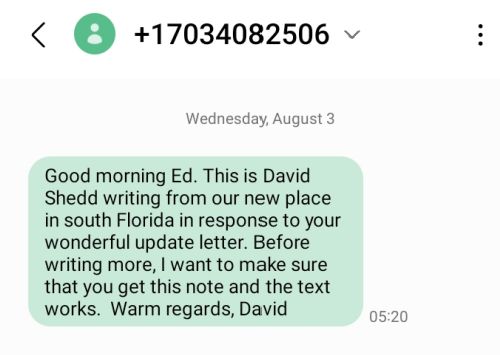

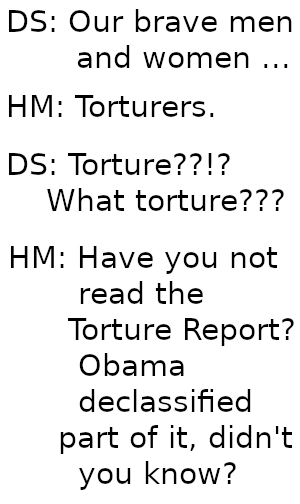
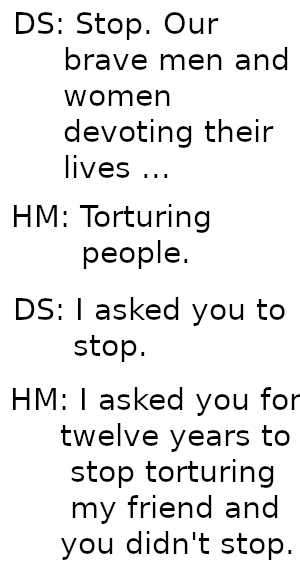
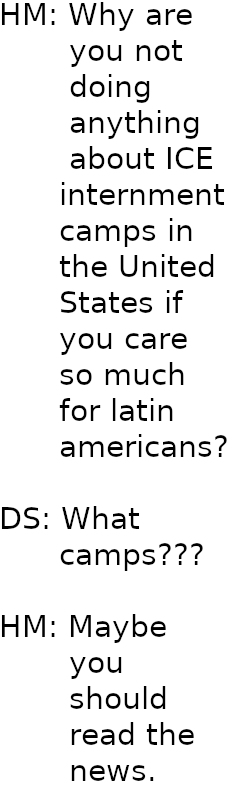
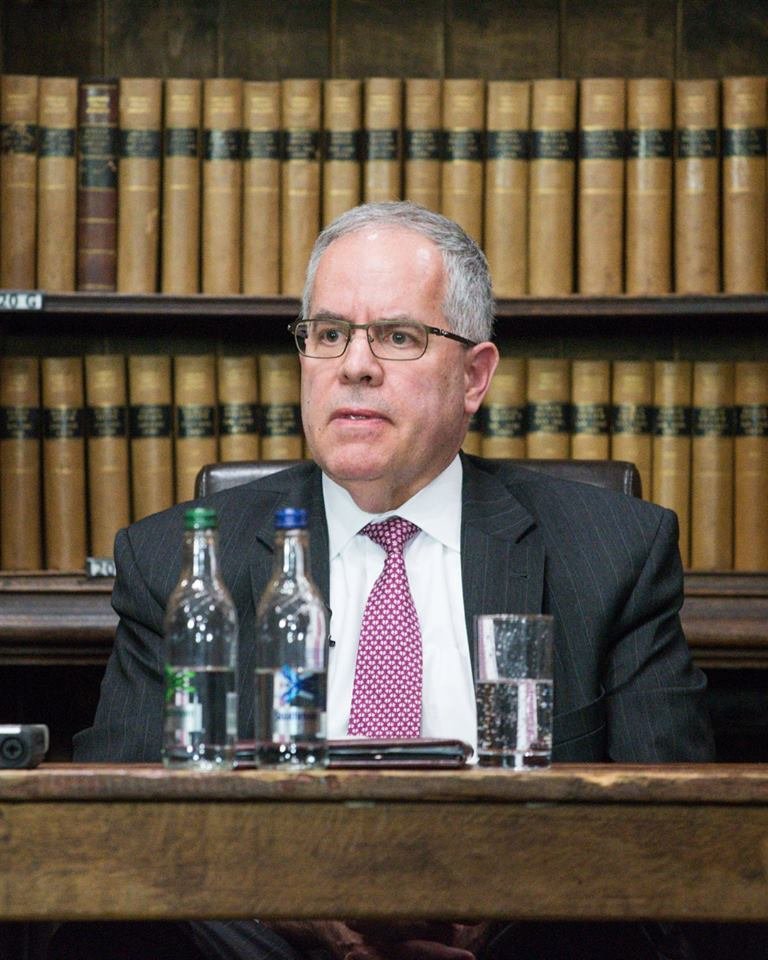





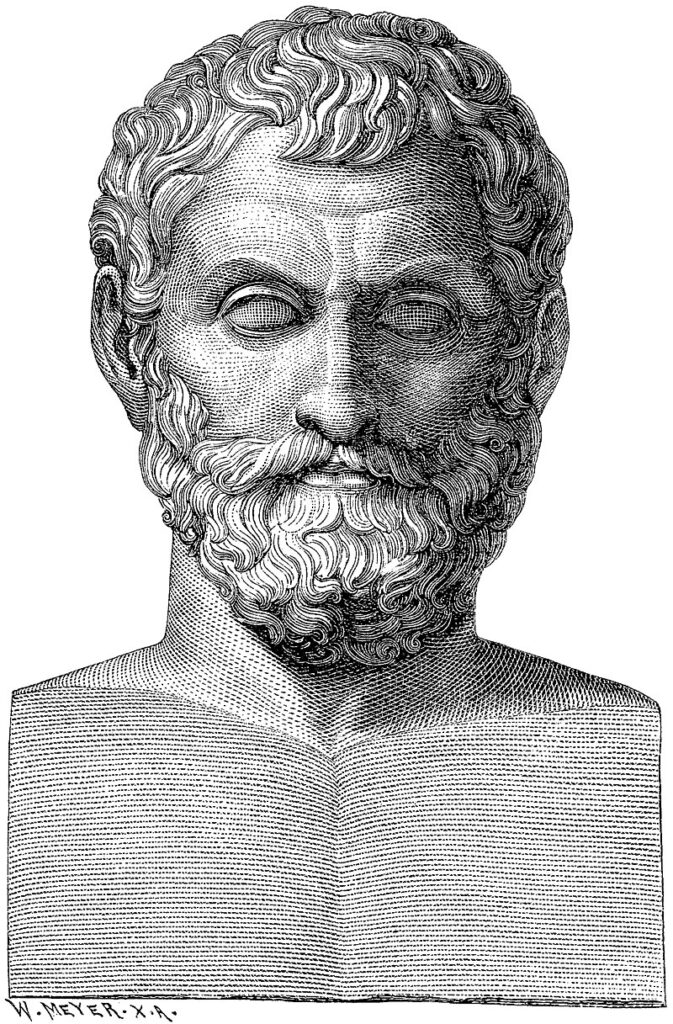




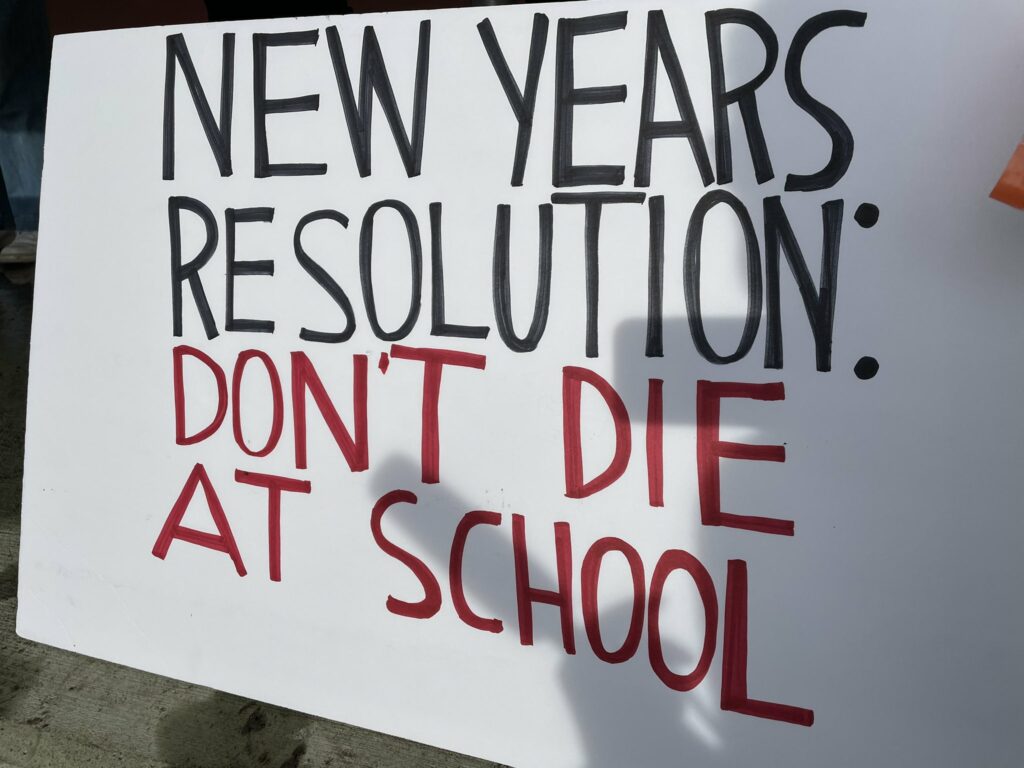
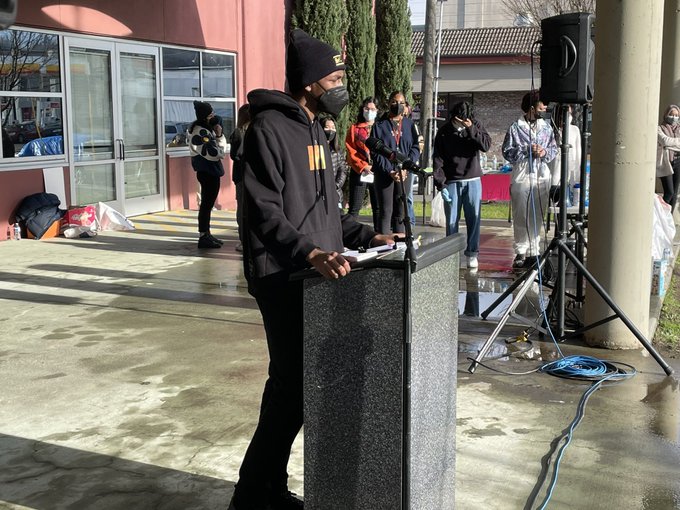
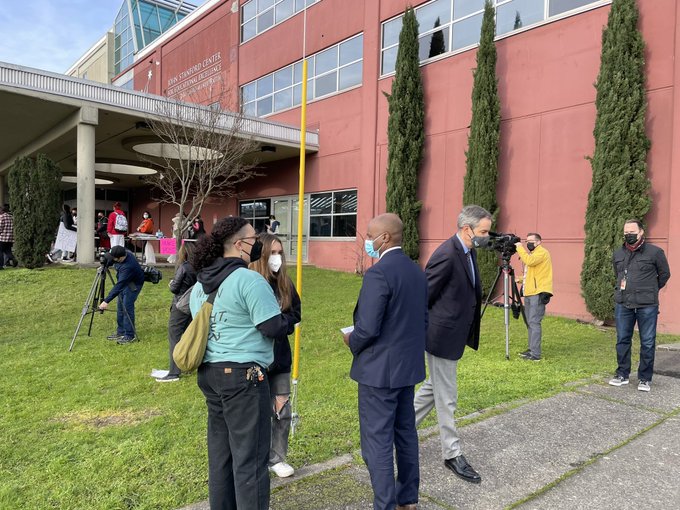
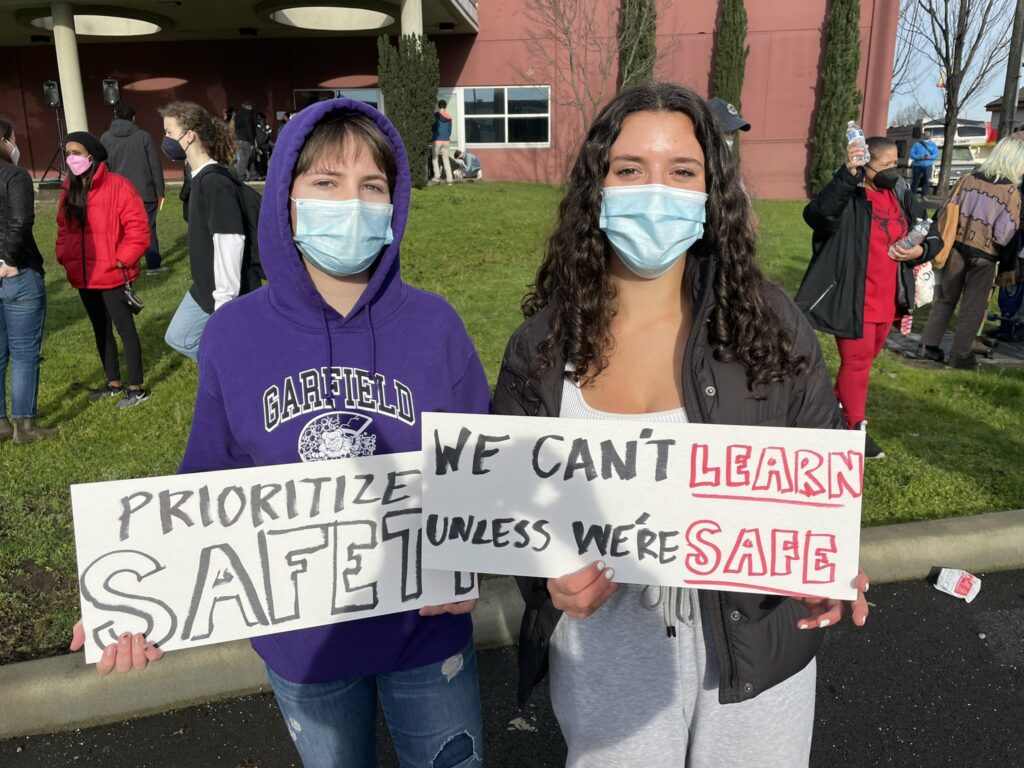





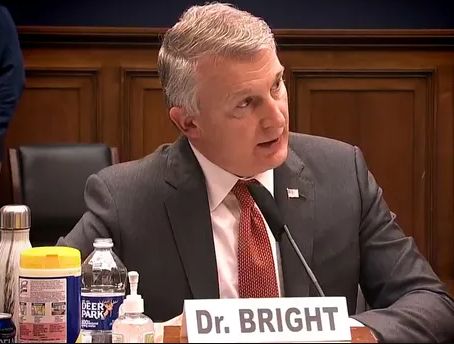
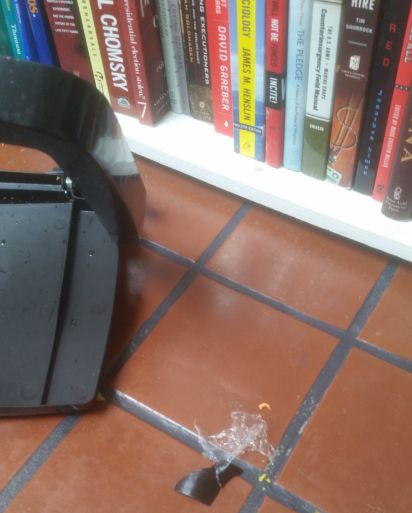




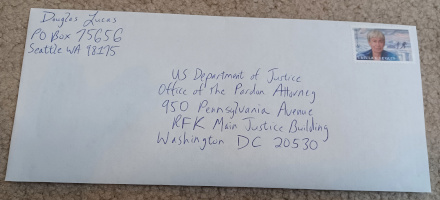



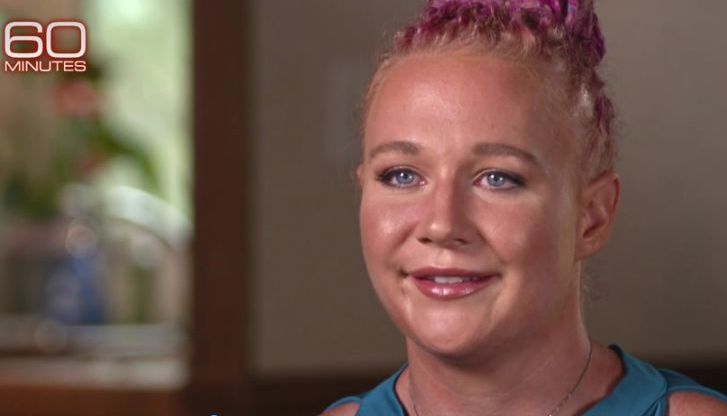


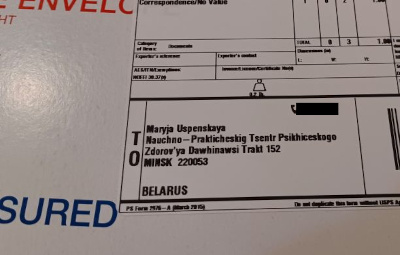

![The portion of the letter visible in the screenshot reads: "Hello, Akihiro, My name is [redacted], and I am a Taiwanese American writing with solidarity from the United ..."](https://douglaslucas.com/blog/wp-content/uploads/2021/12/Letter-1-1024x742.jpg)

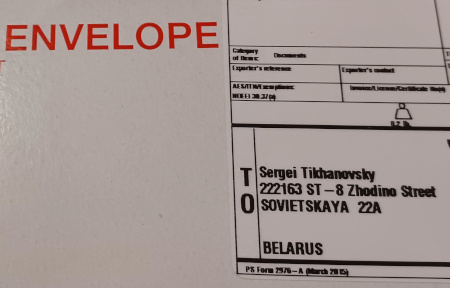

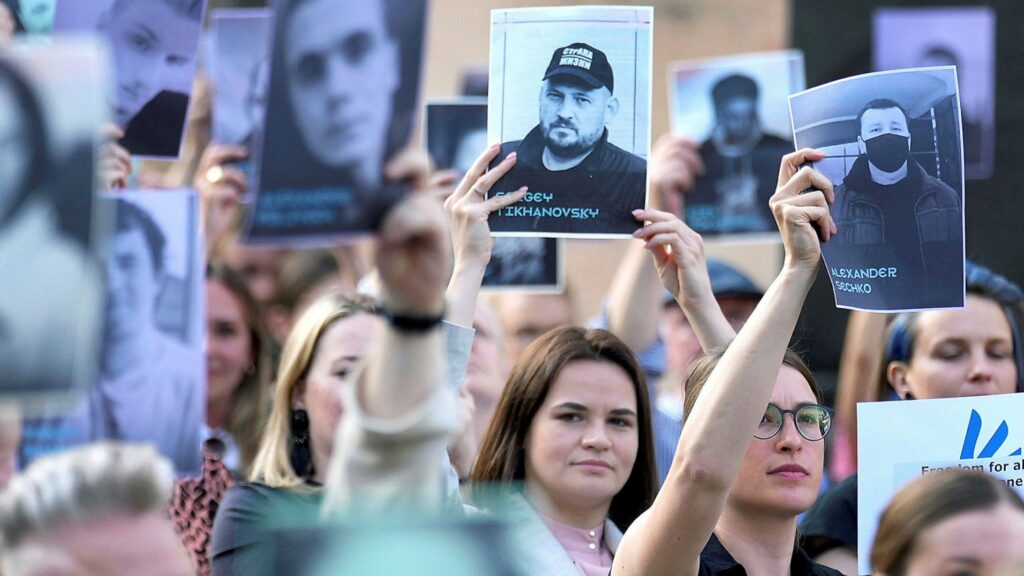


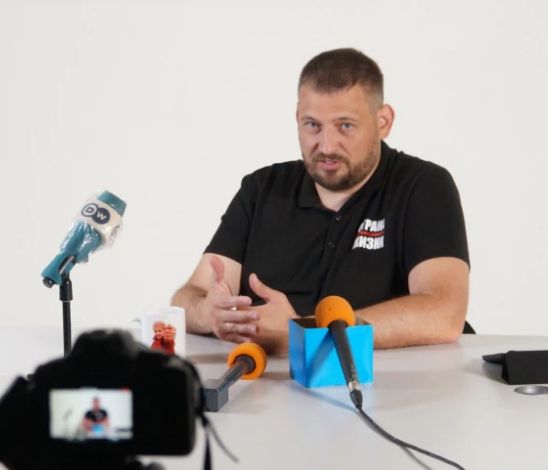


 Twitter:

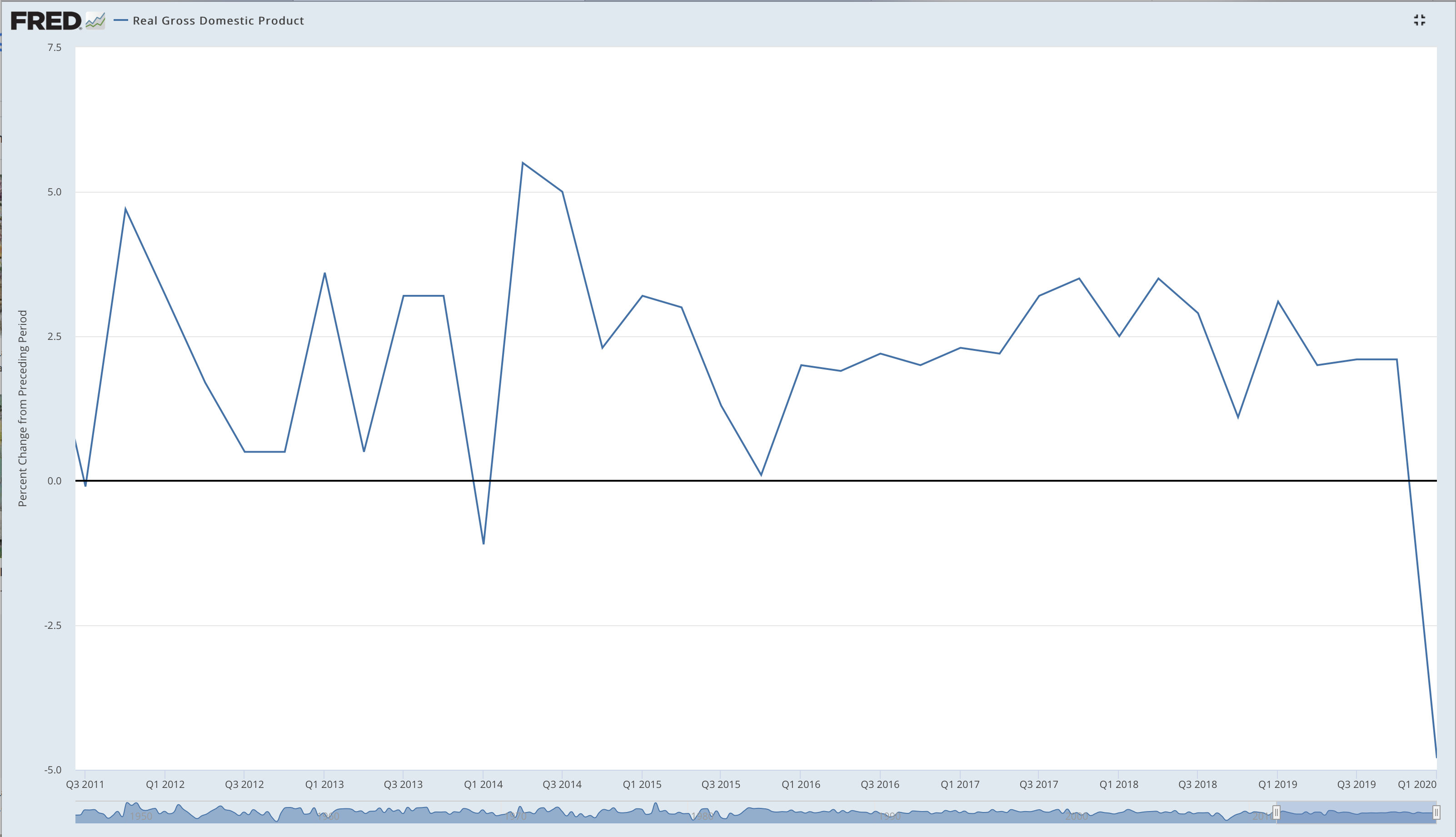

Join the conversation